
Cat weight chart: what a healthy cat actually weighs
Four kilos is ideal for one cat and overweight for another. The number on the scales means nothing without the frame it is sitting on.
Helen Marsh
Feline behaviourist and ReMews. staff writer
Published 21 September 2026

Dr Tomas Reyes, DVM
The short version
- A single weight figure is meaningless without the cat's frame; four kilos is ideal for some breeds and heavy for others.
- Ideal body condition is ribs easy to feel, a visible waist from above and a slight belly tuck from the side.
- Safe weight loss is one to two per cent of body weight a week, no faster.
- Unexplained weight loss in a cat that is eating well is one of the earliest signs of disease.
- Weigh monthly on the same scales and write it down; the trend matters more than any reading.
Ask the internet what a cat should weigh and you get four kilos. It is not a bad average, and it is useless as a target. A Singapura at four kilos is carrying weight it does not need. A Maine Coon at four kilos is thin enough to worry about.
Weight charts are still worth having, as long as you use them the way vets do: as a starting bracket, checked against the cat's frame with your hands. Most cats in Europe and North America are now above their ideal weight, and most of their owners have not noticed, because gradual weight gain in a furry animal is genuinely difficult to see.
Why a single number misleads
Cats vary in frame far more than the four kilo figure suggests. Skeleton size, breed, sex and neuter status all shift the healthy range, and so does muscle: a lean, well-muscled cat weighs more than a soft cat of the same shape.
Two cats of the same weight can sit two points apart on a body condition scale. Which is why the professional standard is not weight alone, but weight tracked over time alongside a nine point body condition score.
Indicative healthy ranges
These are typical adult ranges for well-muscled, neutered cats. Males sit towards the upper end, females the lower. Individual frame beats the table every time.
| Type or breed | Typical healthy adult weight |
|---|---|
| --- | --- |
| Small-framed breeds: Singapura, Cornish Rex, Devon Rex | 2.5 to 4 kg |
| Slender orientals: Siamese, Abyssinian, Oriental | 3 to 5 kg |
| Average domestic shorthair or longhair | 3.5 to 5.5 kg |
| Semi-longhairs: Ragdoll, Birman, Norwegian Forest | 4.5 to 7 kg |
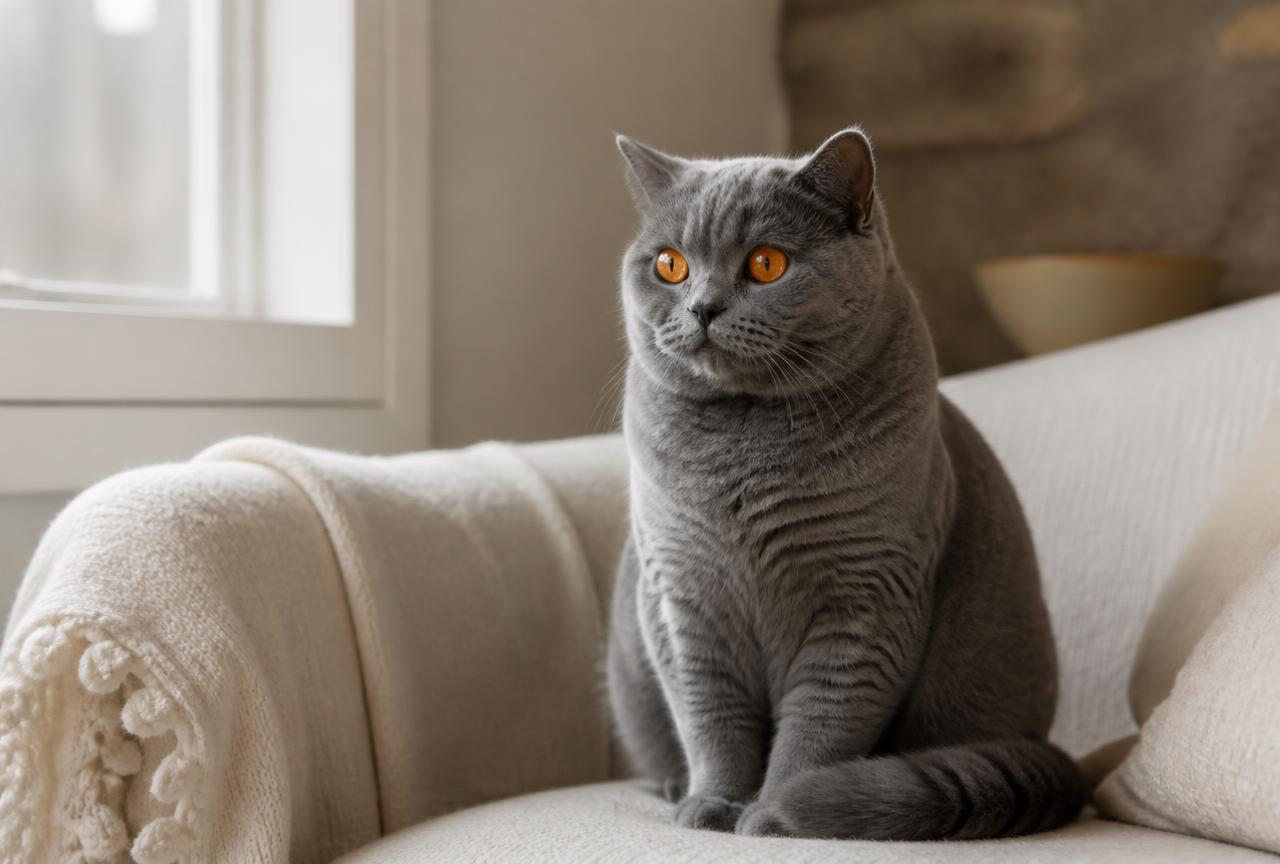
| Sturdy breeds: British Shorthair, Persian, Bombay | 4 to 7 kg |
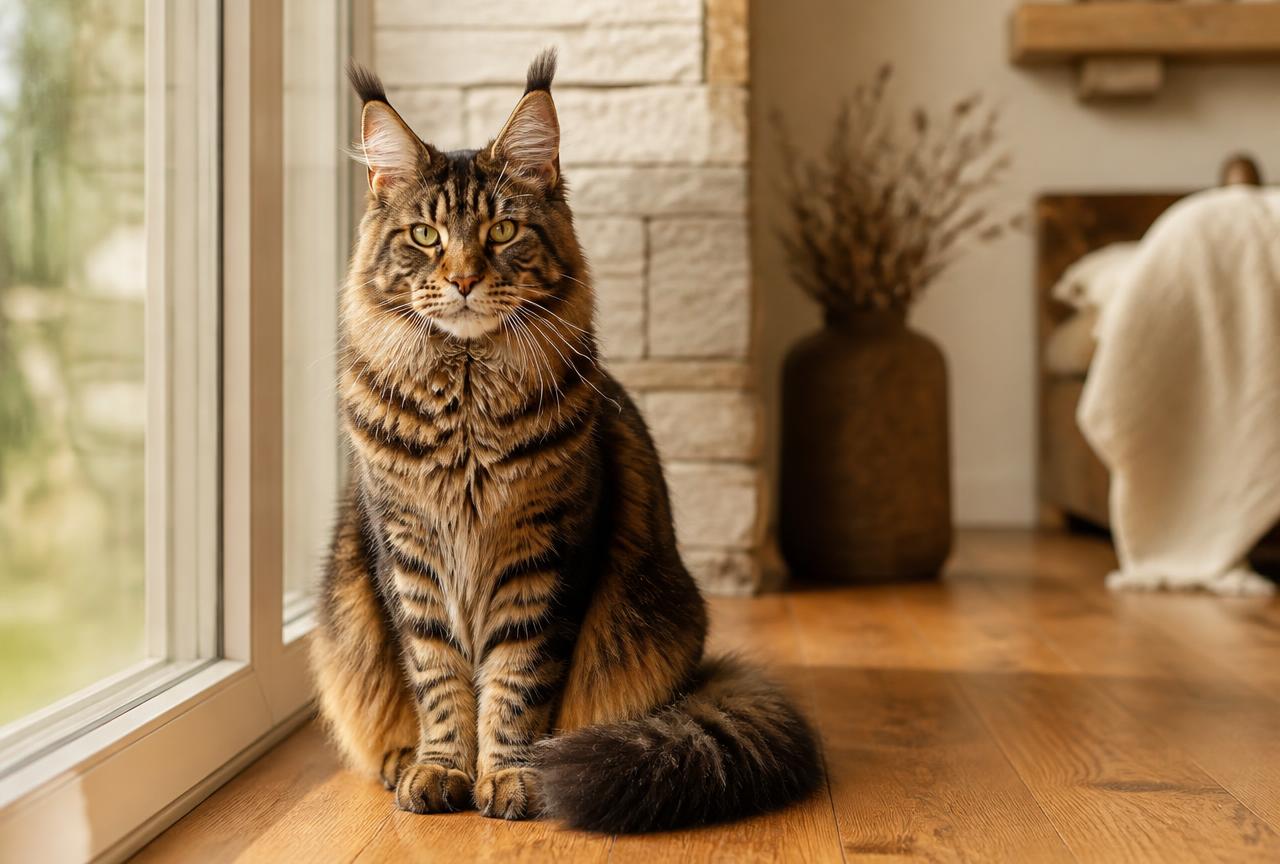
| Large breeds: Maine Coon, Savannah, Turkish Van | 5 to 9 kg |
And by life stage, for an average-framed cat:
| Life stage | Age | Typical weight |
|---|---|---|
| --- | --- | --- |
| Newborn | 0 to 2 weeks | 90 to 150 g |
| Young kitten | 8 weeks | 800 g to 1 kg |
| Kitten | 12 weeks | 1.2 to 1.6 kg |
| Adolescent | 6 months | 2.5 to 3.5 kg |
| Young adult | 12 months | 3.5 to 5 kg |
| Adult | 1 to 10 years | Stable, whatever the frame supports |
| Senior | 11 years and over | Often drifts down; loss here is a warning |
A kitten gains roughly 100 grams a week for its first six months. A senior cat that loses 500 grams over a year has lost around ten per cent of itself, and that is a reason to book bloods.
Body condition, in plain language
The nine point scale sounds clinical and is simply three checks with your hands and eyes. Ideal is four to five.
- Ribs. Run flat palms along the chest. You should feel the ribs easily, under a thin covering, like knuckles on a loosely closed fist. Sharp and obvious is too thin; hard to find is too heavy.
- Waist from above. Stand over the cat. There should be a visible narrowing behind the ribs, a gentle hourglass. Straight sides mean overweight; wider at the waist than the ribs means considerably so.
- Belly from the side. The line should rise slightly from the ribs towards the hind legs. Hanging level or sagging is fat, not loose skin, in most cats under twelve.
The primordial pouch confuses people here. Many cats have a loose flap of skin low on the belly that swings when they walk, and it is entirely normal, present even in lean cats. Fat sits higher and feels firm and continuous. If you can grasp it and it is thin and empty, that is a pouch, not a problem.
Score the cat in front of you with the tool below.
How to weigh a cat properly at home
- 1Use a baby scale or kitchen scale for kittens and small cats, in grams.
- 2For adults, weigh yourself, pick the cat up, weigh again, subtract. Accurate to around 100 grams, which is enough for monthly tracking.
- 3Better: put the carrier on a bathroom scale, note it, then add the cat.
- 4Same scale, same time of day, once a month. Comparing different scales creates phantom changes.
- 5Write it down with the date. Trend matters far more than any single figure.
- 6Score condition on the same day so weight and shape are recorded together.
A twelve week plan for an overweight cat
Safe loss is roughly one to two per cent of body weight a week. Faster than that risks serious liver problems in cats, so this is genuinely a case where patience is medical advice rather than encouragement.
- 1Week one. Weigh and score. Ask your vet to set a target weight and a measured daily ration. Rule out anything medical.
- 2Week one. Weigh food with kitchen scales rather than using a cup. Cups overdeliver by twenty per cent or more in most households.
- 3Week two. Split the ration into four or five small meals, or use a timed feeder. Cats beg from routine as much as hunger.
- 4Week three. Move treats inside the ration rather than on top of it. Treats are the commonest reason a plan stalls.
- 5Week four. Add movement: two short wand toy sessions a day, food hidden in puzzle feeders, a climbing route added to the main room.
- 6Week five to eight. Weigh fortnightly. Adjust only if loss is under half a per cent a week, and then by ten per cent of the ration, not more.
- 7Week nine to twelve. Rescore condition. Expect the waist to reappear before the scales impress you.
- 8Throughout. In a multi-cat house, feed separately. Otherwise you are dieting one cat and feeding another twice.
Our portion calculator sets the daily ration from weight and life stage, and the ideal weight calculator works back from body condition to a sensible target.
Checklist for keeping weight steady
- Monthly weigh-in, written down with the date
- Condition scored every three months
- Food weighed, not scooped
- Treats counted inside the daily total
- Wet food used to add volume without adding much energy
- Two play sessions a day, five minutes each
- Separate feeding in multi-cat homes
- Any unexplained loss investigated rather than welcomed
That last line is the one people get wrong. Owners celebrate weight loss in a cat they were worried about, and unexplained loss in a cat eating normally is one of the most reliable early signs of disease in the species. Hyperthyroidism, diabetes, kidney disease and dental pain all present that way.
By household
Kitten in the house. Weigh weekly. Roughly 100 grams a week is the expectation, and a kitten that stalls for a fortnight needs seeing. See the first ninety days.
One indoor adult. The highest-risk group for gradual gain. Measured portions, puzzle feeders and a climbing route do most of the work. Indoor enrichment covers the setup.
Large breed. Do not use the four kilo figure at all. Use condition scoring and your breed's range, and remember that big breeds finish growing at three to four years rather than one.
Senior cat. Weigh monthly without fail. Slow loss after eleven is common and is not benign; it is the earliest measurable sign of most senior conditions. See signs of ageing.
Multi-cat home. Weigh each cat separately and feed them apart. Shared bowls make individual weight management impossible.
When to call your vet
Book an appointment if your cat:
- Has lost five per cent or more of its body weight without a deliberate diet
- Is eating well and still losing weight
- Has gained weight rapidly over a few weeks
- Has a hard, evenly swollen belly rather than a soft pouch
- Is drinking noticeably more alongside any weight change
- Is due a diet plan, so a target and a ration can be set properly
Never crash diet a cat, and never withhold food for more than a day. Cats mobilise fat to the liver quickly, and a starved cat can develop hepatic lipidosis, which is far more dangerous than the weight it started with.
Weight is the most useful number you can keep on a cat, precisely because it moves before behaviour does. A set of scales, a notebook and ten seconds a month will tell you things your cat has no way of saying. Our comparison of wet and dry food covers how the diet side interacts with all of it.
Questions people actually ask
How much should a cat weigh?
For an average-framed adult domestic cat, roughly 3.5 to 5.5 kilos, with males towards the top. Small breeds sit near 2.5 to 4 kilos and large breeds such as the Maine Coon can be healthy anywhere from 5 to 9. Frame beats any chart, so check ribs, waist and belly rather than the number alone.
Is my cat overweight?
Use three checks. If you cannot easily feel the ribs under a thin cover, if there is no narrowing behind the ribs when you look down from above, and if the belly line hangs level rather than tucking up, the cat is carrying more than it needs. That corresponds to six or above on the nine point scale.
How fast can a cat safely lose weight?
One to two per cent of body weight a week. For a five kilo cat that is 50 to 100 grams. Faster loss risks hepatic lipidosis, a serious liver condition, so a weight plan should be measured in months. Ask your vet to set the target and the daily ration.
What is the saggy bit on my cat's belly?
Usually the primordial pouch, a normal flap of loose skin low on the abdomen that swings slightly when the cat walks. Lean cats have it too. Fat sits higher, feels firm and continuous, and cannot be grasped as an empty fold. A hard, evenly swollen belly is something else and warrants a vet visit.
How much should a kitten weigh?
Kittens gain roughly 100 grams a week for the first six months. Around 800 grams to a kilo at eight weeks, 1.2 to 1.6 kilos at twelve weeks, and 2.5 to 3.5 kilos at six months for an average frame. Weigh weekly: a kitten that stalls for a fortnight should be seen.
My cat is losing weight but eating well. Why?
That combination points to a medical cause rather than the diet. Hyperthyroidism is the classic one, and diabetes, kidney disease, intestinal disease and dental pain all do it too. Book an appointment for bloods rather than increasing the food, especially in a cat over ten.
How do I weigh a cat at home?
Weigh yourself, pick the cat up, weigh again and subtract, or put the carrier on the scales and note its weight before adding the cat. Use the same scales at the same time of day, once a month, and write the figure down with the date. Grams matter for kittens, so use a kitchen or baby scale for those.
Sources
- Body condition scoring in cats, WSAVA Global Nutrition Committee
- Obesity and weight management in cats, International Cat Care
- Feline weight management guidelines, American Animal Hospital Association
- Nutrient requirements of cats, National Research Council
Breeds mentioned


Put it into practice
Read next
Cat asthma: the cough people mistake for a hairball
Feline asthma looks exactly like a cat trying to bring up a hairball. Here is how to tell the difference, and how the condition is controlled.