
Hyperthyroidism in cats: the signs, the tests, the treatment choices
An overactive thyroid is the most common hormone disorder of older cats, and one of the most treatable. The trick is spotting a disease that disguises itself as a healthy appetite.
Helen Marsh
Feline behaviourist and ReMews. staff writer
Published 21 September 2026
Dr Tomas Reyes, DVM
The short version
- Weight loss despite a good or ravenous appetite in a cat over ten is the single most suggestive sign of hyperthyroidism
- Increased thirst, night restlessness and a scruffy coat complete the classic pattern
- A total T4 blood test confirms or rules out the diagnosis and is inexpensive relative to months of uncertainty
- Four real treatment paths exist: daily medicine, a strict iodine-free diet, radioactive iodine, or surgery
- Radioactive iodine is the closest option to a cure: one treatment, no daily medication afterwards
- Early treatment protects the heart and kidneys from years of overwork
Your thirteen-year-old cat is eating like a teenager and shrinking like a jumper in a hot wash. The water bowl empties faster. There is a new, weird energy at two in the morning. Put those three things together and any vet in the country will reach for the same first suspicion: an overactive thyroid.
Hyperthyroidism is the most common hormone disorder of older cats, and one of the most successfully treatable. It is also one of the most commonly missed for months, sometimes years, because every single sign has an innocent explanation. Big appetite? Good eater. Weight loss? Getting old. Night restlessness? Cats, eh.
This piece walks through what is actually happening, the signs in the order they usually appear, what the vet visit involves, and the four treatment paths, compared honestly, because they differ a great deal in cost, commitment and outcome.
What the thyroid does, and what goes wrong
The thyroid is a small pair of glands sitting either side of the windpipe in the neck. Its job is to set the metabolic speed of the whole body: heart rate, temperature, how fast food is burned. In hyperthyroidism, one or both glands grow a benign tumour (almost always benign, cancer accounts for only a small minority of cases) and start producing far too much hormone.
The cat's engine, in effect, gets stuck in a high gear. Food burns too fast to keep weight on. The heart runs faster and harder than it should. Blood pressure climbs. Left alone for years, the overwork damages the heart muscle and the kidneys, which is why this is a condition worth catching early rather than managing later.
It is overwhelmingly a disease of older cats. It is rare under the age of seven, uncommon under ten, and one of the first things a vet checks in any cat over twelve who is losing weight.
The signs, in the order they usually show up
The classic picture is a specific combination, and it is the combination that matters. Any one sign alone has a dozen explanations.
| Sign | What it looks like at home | How specific it is |
|---|---|---|
| --- | --- | --- |
| Weight loss with a good or huge appetite | Ribs easier to feel, spine bonier, still begging for food | The most suggestive single pattern |
| Increased thirst and urination | Water bowl empties faster, bigger clumps in the tray | Also seen in kidney disease and diabetes |
| Restlessness and night activity | Pacing, yowling at night, unable to settle | Easy to dismiss as personality |
| Coat changes | Greasy, matted or unkempt fur in a cat who used to groom | Gradual, often noticed in photos |
| Vomiting or diarrhoea | Occasional, intermittent, unexplained | Shared with many gut conditions |
| Fast heart rate | Not visible at home; found at the vet | Measured on examination |
The pattern that should book the appointment is weight loss despite a hearty appetite in a cat over ten. Add increased thirst or new night-time restlessness and the suspicion gets strong.
The checker below weighs the same everyday observations the way a vet weighs them. It cannot diagnose anything; only a blood test can do that. It can tell you whether the pattern you are living with is worth a phone call this week or a mention at the next routine visit.
What happens at the vet
The first visit is short and inexpensive relative to what it rules in or out. The vet will feel the neck for an enlarged gland, listen to the heart for rate and rhythm, check body condition and weigh the cat. Then, if suspicion holds, a blood sample.
The core test is total T4, the main thyroid hormone. A clearly raised T4 in an older cat with matching signs is usually enough for a diagnosis. Borderline results happen, and then the vet may repeat the test in a few weeks or add a free T4 measurement. Many vets will run kidney values at the same time, because the two conditions often travel together in older cats, and treating one can unmask the other.
The blood test that answers the question costs less than a month of guessing.
The four treatment paths, compared honestly
There is no single right answer here. There are four real options, and the best one depends on the cat's age, other conditions, your budget over years, and how your cat feels about daily tablets.
| Treatment | What it involves | Ongoing cost (indicative) | Curative? | Main drawback |
|---|---|---|---|---|
| --- | --- | --- | --- | --- |
| Daily tablets or liquid | Anti-thyroid medicine once or twice daily for life | Roughly 30 to 60 EUR a month plus check-ups | No, controls it | Pilling a cat daily, for years; regular blood tests |
| Prescription diet | A strictly iodine-restricted food as the only food | Similar to premium food, plus monitoring | No, controls it | Nothing else may ever pass the cat's lips; hard in multi-cat homes |
| Radioactive iodine | One injection, then a short stay at a specialist centre | A one-off cost, often 1,200 to 2,000 EUR | Yes, in most cats | Availability, the hospital stay, the upfront sum |
| Surgery | Removal of the affected gland under anaesthetic | A one-off cost, varies widely | Often | Anaesthetic risk in older cats; not offered everywhere |
Vets who see a lot of these cases tend to describe radioactive iodine as the closest thing to a cure: one treatment, high success rate, no daily medication afterwards. Its obstacles are practical: not every region has a centre, the cat stays hospitalised for days while the radioactivity clears, and the upfront cost is real, even if it often works out cheaper than five years of tablets and blood tests.
Tablets are where most cats start, because they work quickly, are reversible if the kidneys object, and buy time to decide on something definitive. The prescription diet is genuinely effective, but only in households where the cat cannot steal a single bite of anything else, ever.
The first month after diagnosis: a plan
- 1Start the chosen control, usually tablets. Expect the first blood recheck in two to four weeks to adjust the dose.
- 2Weigh weekly, same scales, same time of day. Write the number down. Regaining weight is the clearest sign the treatment is biting.
- 3Watch the water bowl and the tray. Thirst should ease over the first month. If it does not, say so at the recheck.
- 4Expect the personality to come back. Owners regularly report the same thing: within a month, the cat is calmer at night, more themselves, hungrier in a normal way rather than a frantic one.
- 5Book the three-month review. Kidney values are rechecked once the thyroid is controlled, because the two interact.
- 6Decide on the long game. If tablets are going smoothly and the cat is young-ish, talk to the vet about referral for radioactive iodine while the cat is a good candidate.
Why it happens, and what nobody knows yet
The honest answer to "why my cat?" is that nobody fully knows. The benign tumours behind hyperthyroidism became common in cats in the late twentieth century, and researchers have spent decades chasing the reason. The suspects investigated include certain flame retardants in household dust, compounds from some tinned-food linings, and iodine levels in commercial diets. None has been proven, and no dietary choice you made caused this.
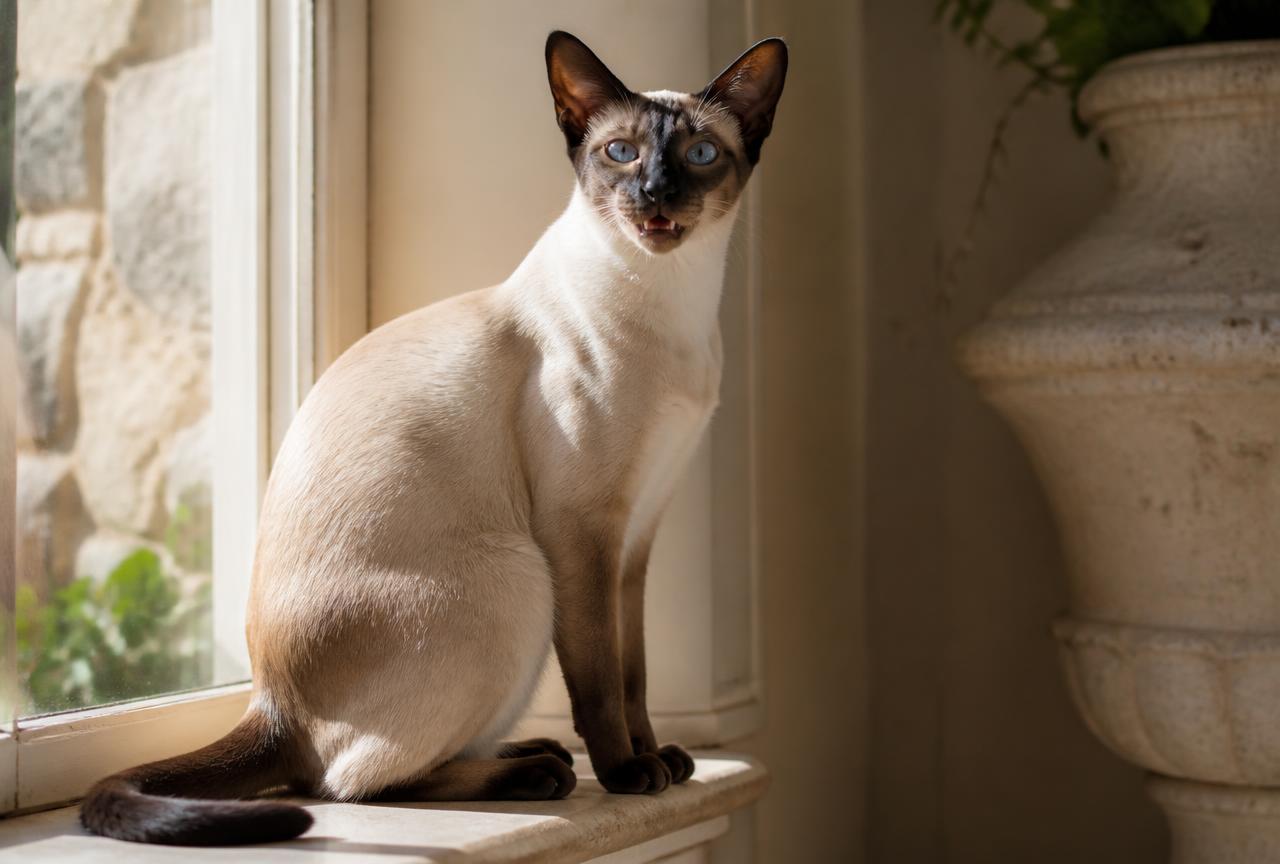
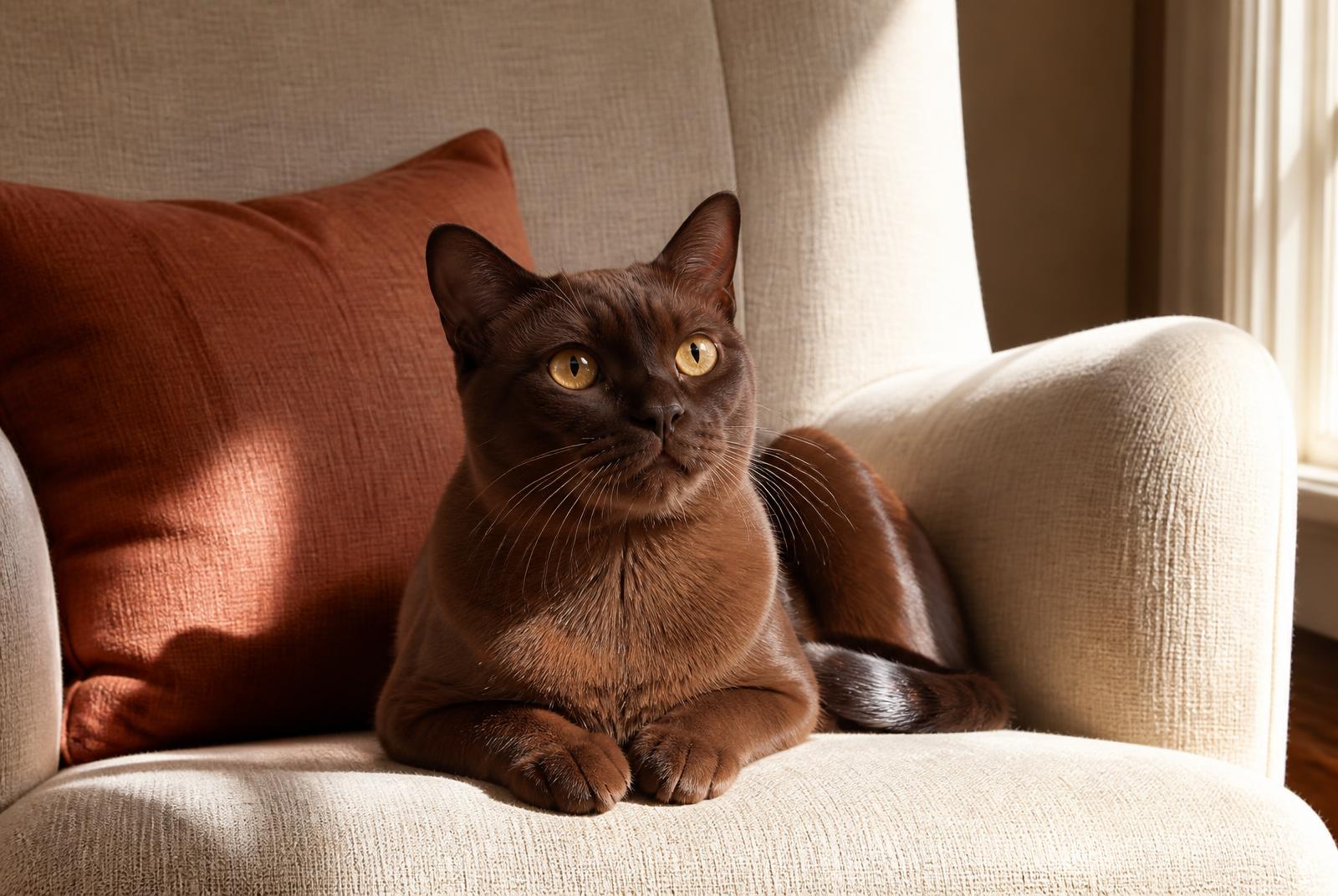
What is known is more useful. It is a disease of ageing, which is why the risk climbs steeply after ten. It is not catching, not inherited in any way that should affect breed choice, and not caused by anything you fed or failed to feed. Some breeds appear slightly less often in studies, but every breed and every moggie gets it.
The practical takeaway is not prevention, which nobody can promise, but detection: annual or twice-yearly vet checks after ten, and a kitchen-scale weigh-in once a month at home. This disease shouts through the scales long before it shouts anywhere else.
Living with it, by household
- Multi-cat homes: the prescription diet is close to unworkable unless the hyperthyroid cat eats alone, behind a microchip feeder or a closed door. Tablets are usually simpler.
- Cats who cannot be pilled: ask about the liquid formulation, a transdermal gel applied to the inner ear, or the diet. Do not silently stop the tablets; there is almost always another route.
- Tight budgets: tablets plus a recheck blood test two to three times a year is the lowest monthly outlay, though the years add up. Some charities and clinics run senior cat clinics at reduced cost.
- Younger cats (under ten): the case for a curative option is strongest here, because a decade of daily medication and monitoring is a long commitment.
When to call your vet, urgently
Most of hyperthyroidism is a calm, scheduled affair. A few things are not. A cat on treatment who suddenly goes off food completely, vomits repeatedly, becomes wobbly or collapses, or whose breathing turns fast and laboured at rest needs to be seen the same day. A previously diagnosed cat who stops tablets for any reason and then declines quickly should be treated as urgent too.
And one quiet plea: if your older cat is losing weight and eating well, do not wait for it to get dramatic. The early version of this disease is the cheapest, kindest and most treatable version.
Frequently asked questions
See below: the questions people actually search, answered straight.
Questions people actually ask
What are the first signs of hyperthyroidism in cats?
The earliest and most suggestive sign is weight loss despite a normal or increased appetite. Increased thirst and urination, new restlessness at night, a greasy or unkempt coat, and intermittent vomiting usually follow. In a cat over ten, this combination justifies a blood test.
How is hyperthyroidism in cats diagnosed?
A vet examines the cat, feels the neck for an enlarged thyroid and checks the heart rate, then takes a blood sample for a total T4 test. A clearly raised T4 with matching signs usually confirms it. Kidney values are often checked at the same time.
What is the best treatment for feline hyperthyroidism?
It depends on the cat and household. Radioactive iodine is curative in most cats and needs no daily medication, but costs more upfront and requires a specialist centre. Daily tablets control it well and are the commonest starting point. A strict prescription diet or surgery suit some situations.
How long can a cat live with hyperthyroidism?
With treatment, many cats live for years with a good quality of life; studies of cats treated with radioactive iodine report median survival times of several years. Untreated, the disease progressively damages the heart and kidneys and shortens life considerably.
Is hyperthyroidism painful for cats?
The condition itself is not described as painful, but it is uncomfortable: a racing metabolism leaves cats restless, hungry and unable to settle, and the strain on the heart and blood pressure causes harm over time. Treatment typically restores a visibly calmer, more contented cat within weeks.
Can hyperthyroidism in cats be cured?
Radioactive iodine treatment cures the large majority of cats with a single injection, and surgery can cure selected cases. Daily anti-thyroid medication and the iodine-restricted diet control the condition effectively but must continue for life.
Sources
- Hyperthyroidism in cats, International Cat Care
- Feline hyperthyroidism, Cornell Feline Health Center
- Hyperthyroidism in cats, American Veterinary Medical Association
- Radioiodine therapy, International Cat Care
Breeds mentioned
Put it into practice
Read next
Ear infections in cats: the signs, the causes and the honest fix
Cat ear infection signs are easy to miss until the scratching starts. What causes them, how they differ from mites and wax, and why cleaning is not a cure.