Burma (Myanmar) via the United States, developed from the 1930s
Burmese
Siamese sociability with a softer voice and a rounder outline. One of the most affectionate cats in this index, and one of the worst suited to an empty house.
The ReMews. desk
A satin-coated extrovert that treats your lap as an allocated seat.
The short version
- Heavier than it looks, a compact, muscular cat under a very short satin coat that needs almost no grooming.
- Extremely people-focused, playful into old age, and a poor choice for a home that is empty all day. Two is often the right answer.
- Talkative, though lower and rounder in voice than a Siamese.
- Ask the breeder about DNA testing for Burmese head defect and hypokalaemia, and about dental health in the line.
- Food-motivated with an above-average diabetes risk: measured meals and monthly weigh-ins, not a full bowl left out.
- Weight
- 3–6 kg
- Lifespan
- 13–18 yrs
- Coat
- Short
- Size
- Medium
- Grown male
- 4–6 kg
- Grown female
- 3–4.5 kg
- Years to full size
- about 2
- One-off setup
- €240–520
Get one if…
- Someone is home much of the day, or you will home two
- You want a cat in your lap, on your desk and in your bed
- You will play twice a day, every day
- There are children or other cat-friendly pets
- You want almost no grooming work
Think again if…
- The home is empty eight or more hours a day and this would be the only cat
- You want a quiet, undemanding, independent cat
- You free-feed and would rather not weigh a cat
- You dislike being talked to
Trait profile
Highest affection score in this index alongside the Ragdoll, with grooming at the bottom. The number that decides suitability is company, not coat.
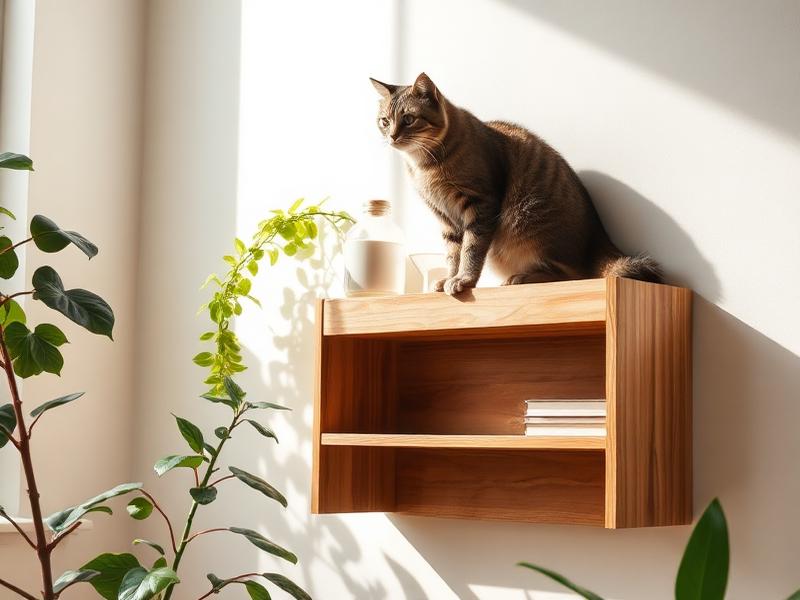
Space & setup. Very well suited to a flat. Compact, uninterested in vast floor space, and happiest wherever the people are. Provide a scratching post, a window perch and daily play.
Allergies. Not hypoallergenic. The coat is short and sheds little, which reduces visible hair, but Fel d 1 is produced in saliva and skin regardless of coat length.
The review
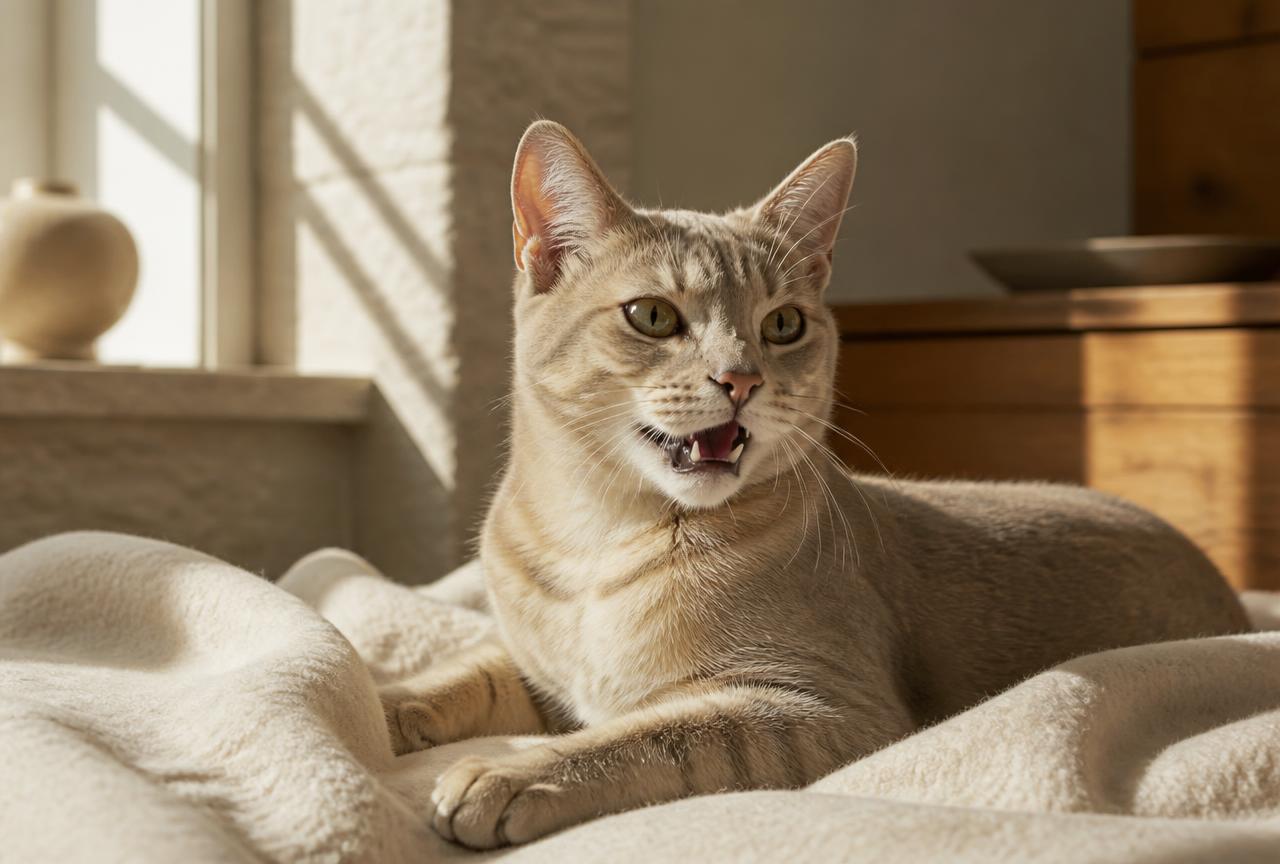
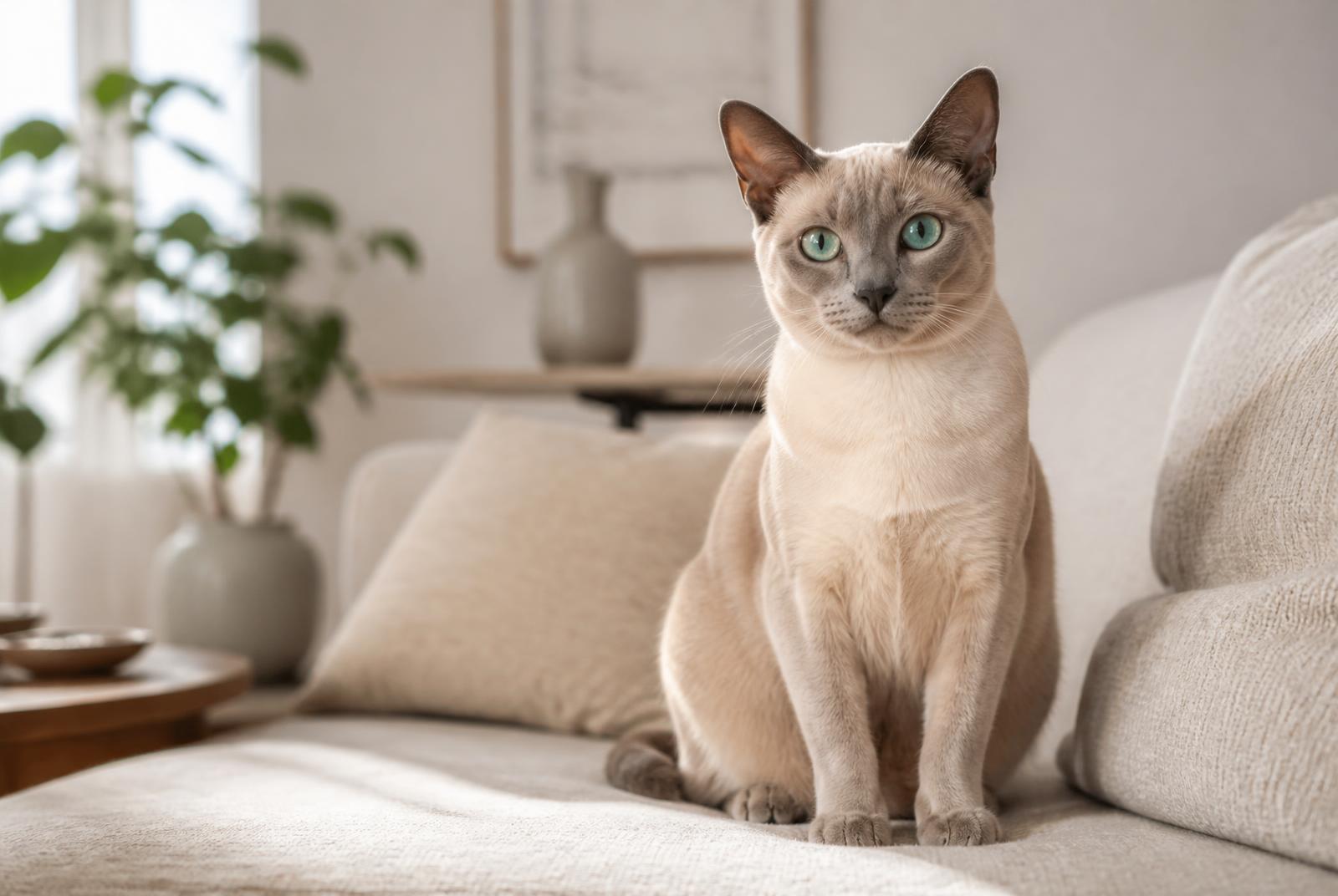
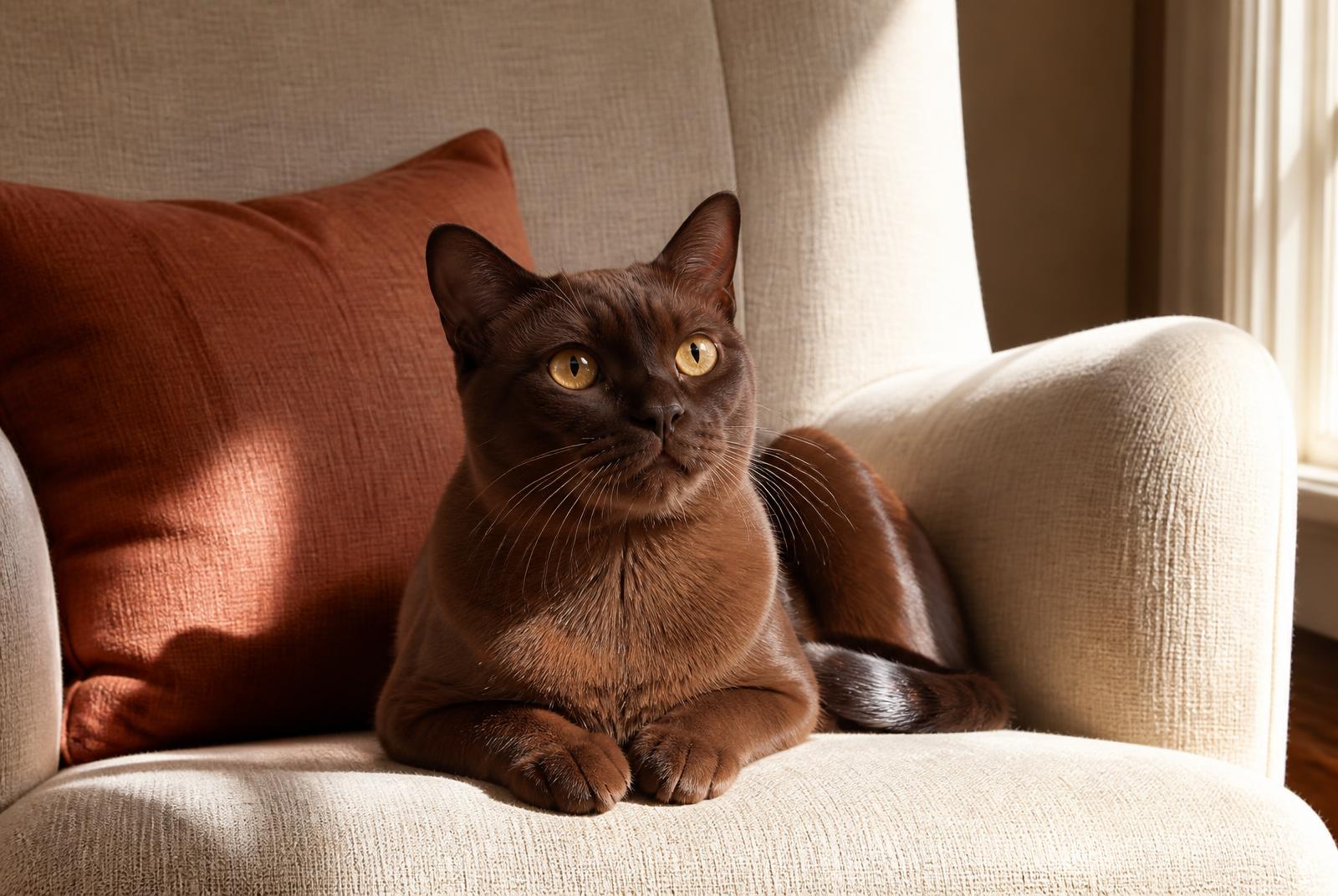
A compact, surprisingly heavy shorthaired cat with a glossy satin coat, round golden eyes and an extremely people-focused temperament. Playful well into adulthood and rarely content to be alone.
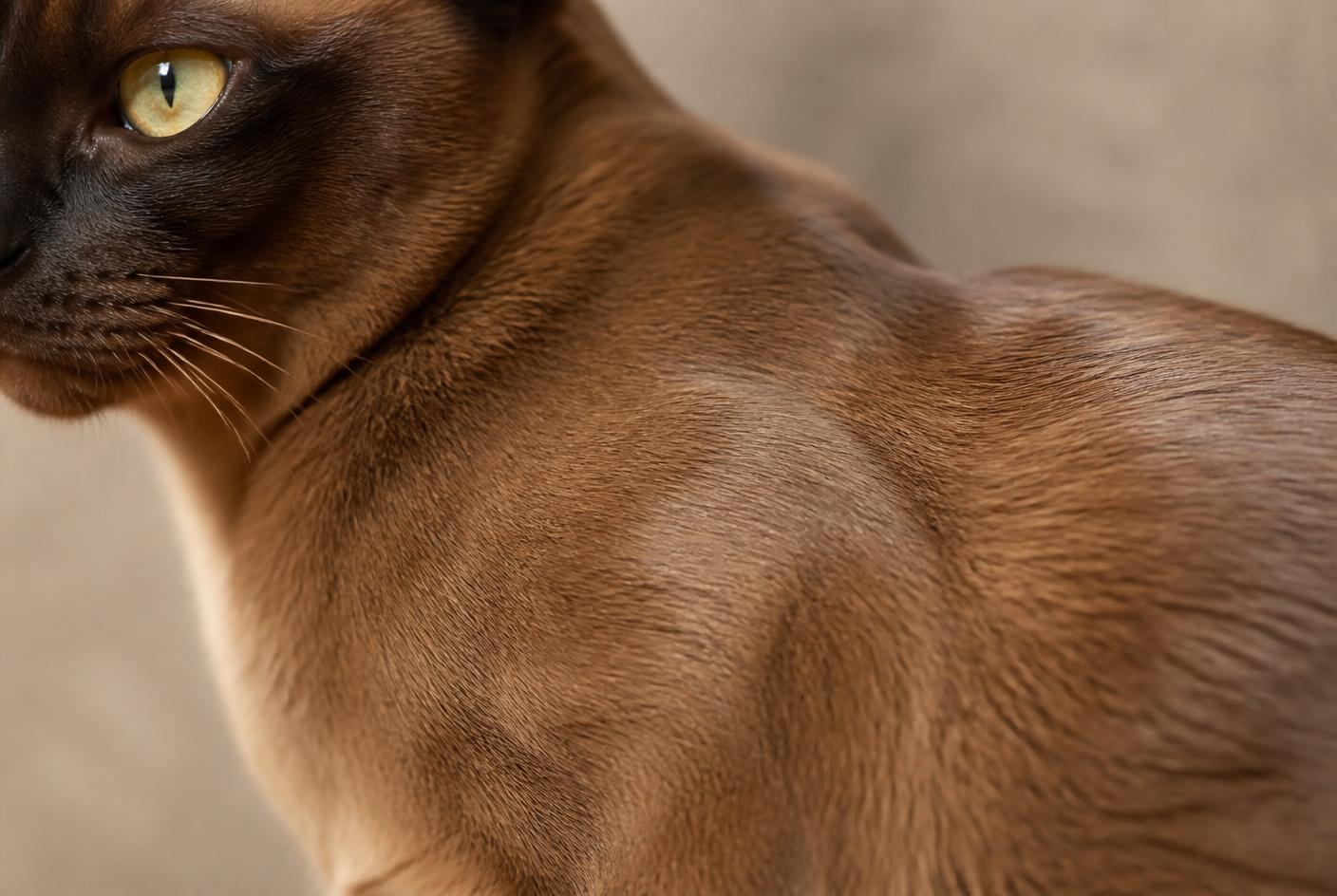
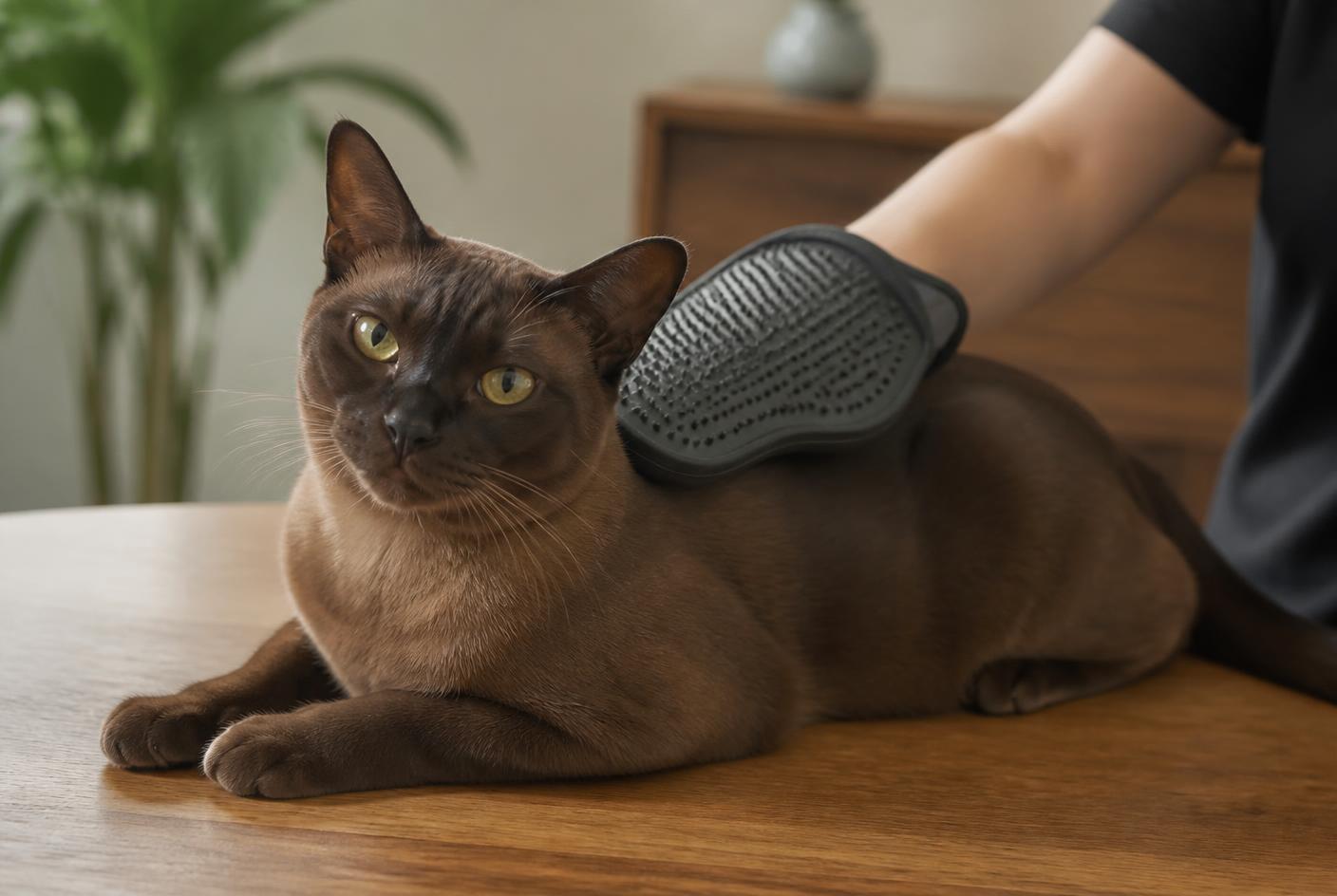
Pick up a Burmese and the first thing you notice is that it weighs more than it looks. The breed is often described as a brick wrapped in silk, and the description is exact: a compact, muscular, densely built cat under a short satin coat that lies close enough to show every line of the body underneath. The coat itself is one of the shortest and finest in the pedigree world, with almost no undercoat, which is why grooming amounts to a weekly pass with a rubber mitt and nothing else.
The classic colour is sable, a deep, warm, almost seal brown that catches light like polished wood, but blue, chocolate, lilac, red, cream and tortie all exist, and all show the same characteristic sheen. Eyes are large, round and gold to yellow, set in a rounded head that gives the breed a distinctly open, enquiring expression. Kittens are born paler and darken over the first year, so the colour you see at twelve weeks is not the colour you keep.
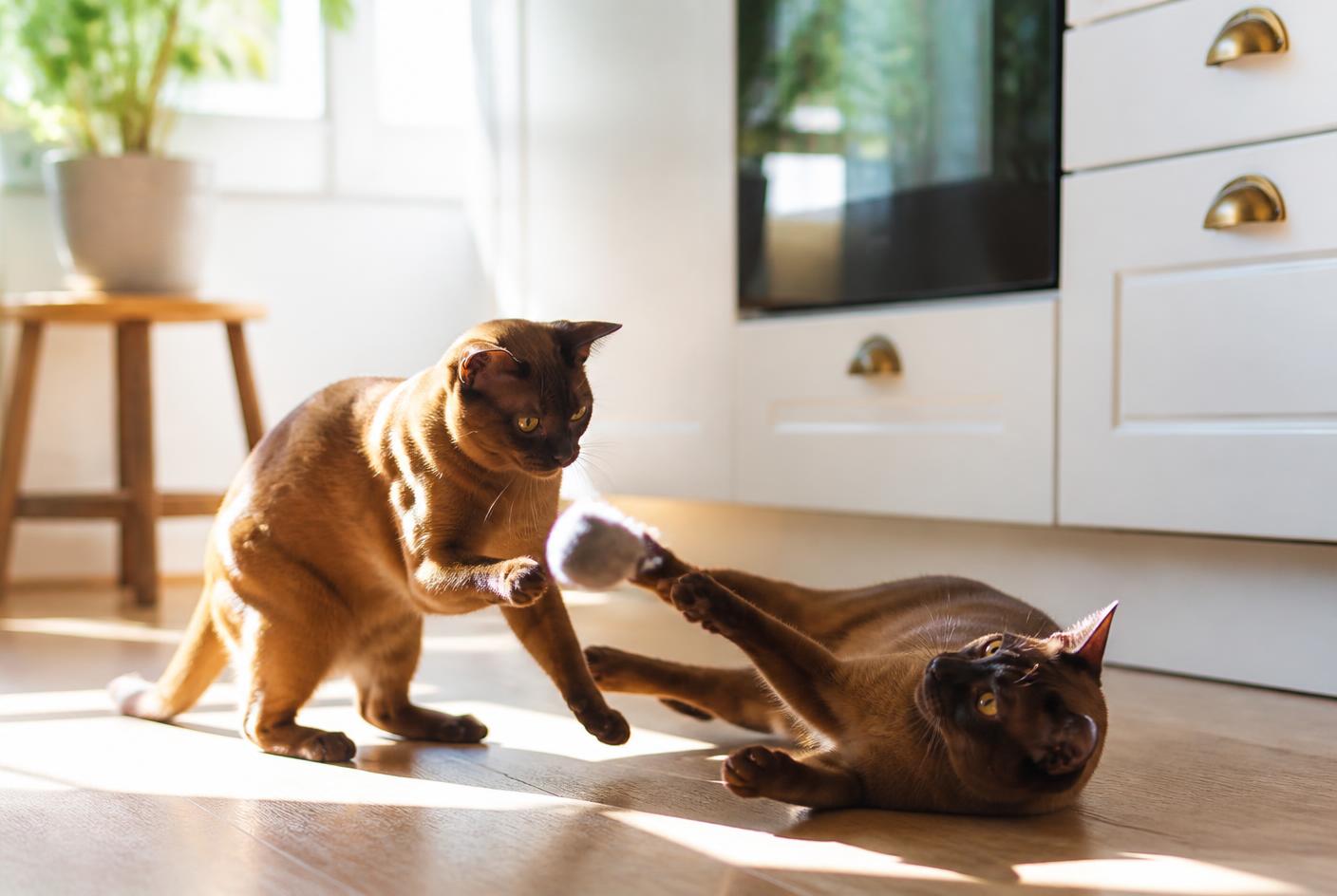
Temperament is the reason this breed has such devoted owners, and the reason it is so easy to get wrong. A Burmese is not merely affectionate; it is oriented towards people the way a dog is. It follows you from room to room, supervises what you are doing, sits on the desk while you work, gets into the bed, and greets visitors at the door rather than hiding from them. It plays hard, and it keeps playing well past the age at which most cats settle into dignified middle age. Owners of ten-year-old Burmese still report retrieving toy mice from under the sofa on a daily basis.
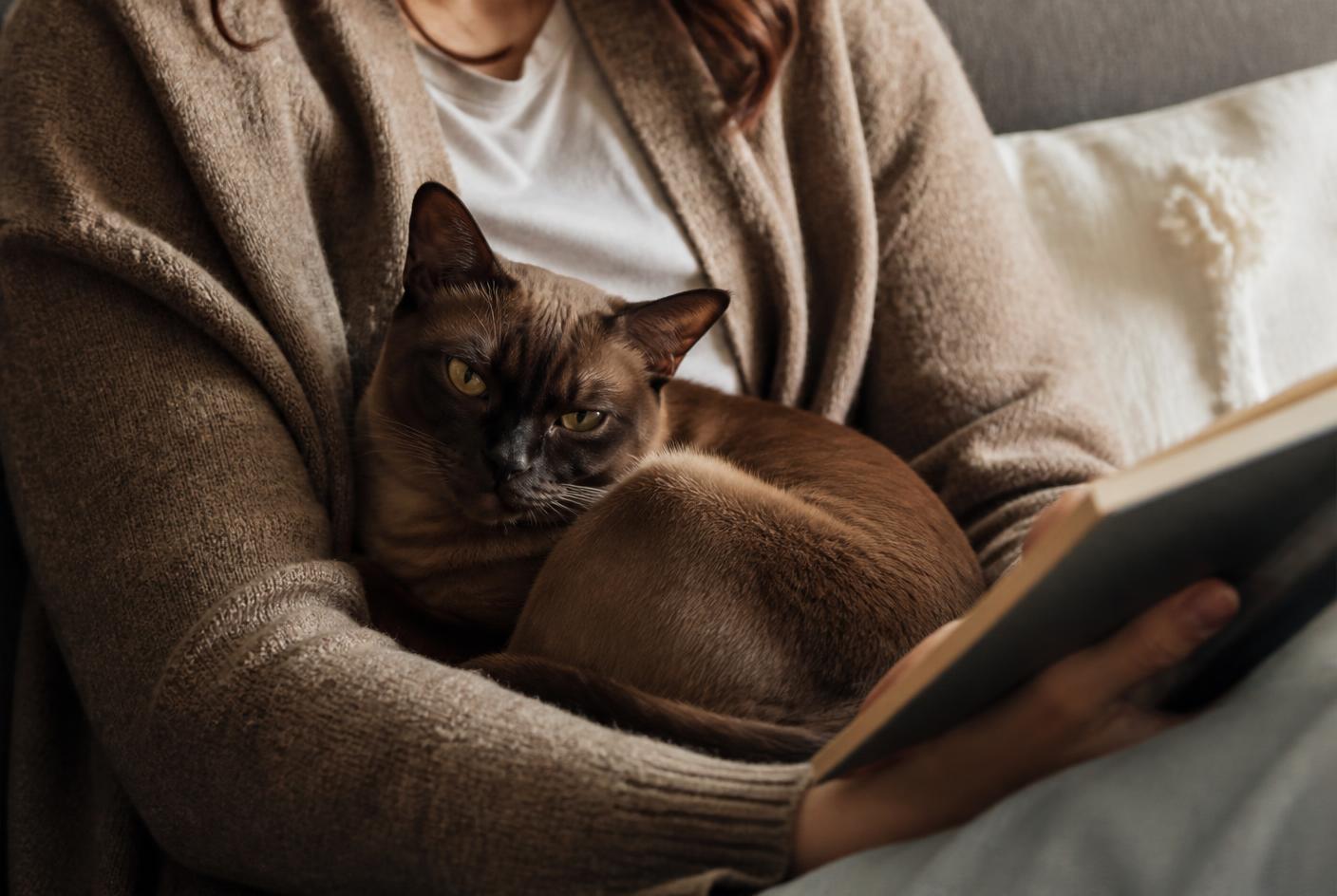
The voice is worth flagging. A Burmese is talkative, less piercing than a Siamese, lower and rounder in tone, but persistent, and used to make specific requests. If you dislike being addressed by a cat, this is not your breed. If you find it charming, you will get a great deal of it.
All of which brings us to the one hard constraint. A Burmese left alone in an empty flat for eight or nine hours a day is not a cat quietly making do. It is a highly social animal without an outlet, and the results are predictable: excessive vocalisation, obsessive attention-seeking when you return, and a talent for opening cupboards, unrolling toilet paper and rearranging anything portable. The breed's own registries are unusually direct about this. Where the household is out all day, home two. A pair of Burmese entertain each other, and the difference in behaviour is dramatic.
Physically the breed is a gift. The coat needs almost nothing, a weekly rubber mitt or a soft brush removes what little is shed, and a Burmese sheds noticeably less than most shorthairs. Nails need trimming every two to three weeks. Teeth need brushing, and here the breed earns a genuine warning: gingivitis and periodontal disease are more common in Burmese than in cats generally, and an established brushing habit from kittenhood is worth more than any dental treat on the market.
There are two other health items to raise with a breeder. Burmese head defect, a serious inherited craniofacial condition, is fatal in affected kittens and is managed by responsible breeders through DNA testing and careful pairing; ask directly whether the line is tested. Hypokalaemia, low blood potassium, causing episodic weakness and a characteristically drooping head and neck, has a known genetic basis in the breed and a straightforward DNA test. Diabetes mellitus also appears at above-average rates in some Burmese populations, which makes lean body condition and measured meals more than a cosmetic concern. Take that seriously: this is a food-motivated breed with a compact frame, and a kilogram of excess weight on a four-kilogram cat is a great deal.
Set against all that, the breed is long-lived, robust in daily life, cheap to groom and easy to travel with. It asks for one thing and asks for it constantly: your company. Give it, and few cats give more back.
The cat for people who want a companion in the fullest sense, and the wrong cat for anyone out of the house all day.
Grooming, realistically
- 1Pass a rubber grooming mitt or soft brush over the coat once a week, that is genuinely the whole coat routine.
- 2Brush teeth at least three times a week, ideally daily; this breed has an above-average risk of gingivitis.
- 3Trim nails every two to three weeks.
- 4Check ears monthly and wipe only the visible part with a damp pad.
- 5Weigh monthly and record it. On a four-kilogram cat, half a kilogram is a serious change.
- 6Run two dedicated play sessions a day and rotate toys weekly to keep them interesting.
What you actually need
- Rubber grooming mitt
- Soft bristle brush
- Nail clippers
- Cat toothbrush and enzymatic paste
- Puzzle feeders
- Wand toys, several types
- Kitchen or pet scales
Kitten to adult
| Age | Male | Female | What is happening |
|---|---|---|---|
| Birth | Born pale; the adult colour deepens over the first year. | ||
| 8 weeks | Already dense and muscular for its size. Begin tooth brushing and nail handling now. | ||
| 6 months | Peak mischief. Set the measured-portion habit before free-feeding becomes normal. | ||
| 12 months | Close to adult weight. Colour still darkening; coat at its glossiest. | ||
| 2 years | Full size. Males noticeably heavier. Ribs should be easy to feel with flat fingers. |
Ranges are typical, not targets. Judge condition by ribs and waist, and check with the ideal weight checker.
What to ask a breeder
- Is your line DNA-tested for Burmese head defect, and may I see the results?
- Has hypokalaemia been tested for, and has it ever appeared in your cats?
- What is dental health like in your adults at five and eight years old?
- Have any of your cats been diagnosed with diabetes?
- Are kittens raised underfoot in the house, and handled daily?
- Would you recommend two kittens for a household that is out during the day?
- What do you feed, and what measured portion do you suggest at six and twelve months?
Health watch-list
What to ask a breeder about, and what to watch for over a lifetime. This is orientation, not veterinary advice, anything you notice belongs in front of a vet.
Burmese head defect
RareA serious inherited craniofacial defect, fatal in affected kittens. Managed by DNA testing and careful pairing, ask to see results.
Hypokalaemia
UncommonLow blood potassium causing episodic weakness and a drooping head and neck. A DNA test exists; ask whether the line is tested.
Diabetes mellitus
UncommonReported at above-average rates in some Burmese populations. Lean body condition and measured meals genuinely reduce the risk.
Gingivitis and periodontal disease
CommonMore frequent in this breed than in cats generally. Establish tooth brushing in kittenhood, not at five years old.
Hypertrophic cardiomyopathy
UncommonOccurs as in most pedigree breeds. Breeding cats should be echocardiogram-screened.
Flat chested kitten syndrome
RareA developmental chest deformity seen in some Burmese litters. Mild cases resolve; severe cases do not survive. Ask about litter history.
What it costs to keep one
Realistic running cost
€81 / month
About €972 a year, or roughly €15,552 across a 16-year life, before purchase price, neutering and one-off vet events.
Before the cat arrives. Budget roughly €240–520 for trays, carrier, posts, bowls, bedding and grooming kit sized for this breed. Figures throughout are indicative and vary a good deal between countries.
Interactive · built for this breed
Is a Burmese right for your home?
This is a breed that decides it belongs to you. Five questions on company, noise, play and the hours your home sits empty.
Verdict
An unusually good match
Company, contact and play, you have all three, and this breed asks for little else.
Keep the weight honest with the ideal weight tool, or compare the alternatives in the matchmaker.
The verdict, by household
Family with young children
Excellent
Flat dweller
Excellent
First-time owner
Very good
Multi-cat home
Excellent
Out all day
Poor
Older or quieter owner
Mixed
When to call your vet
- Sudden episodic weakness or a drooping head and neck
- Increased thirst, increased urination or unexplained weight loss
- Red, receding or bleeding gums, or reluctance to eat hard food
- Persistent vocalising at night in a cat that did not do it before
- Breathlessness or reduced exercise tolerance
- Any change in litter tray habits lasting more than a day or two
Nothing here is a diagnosis. Breathing difficulty, sudden hind-leg weakness and straining to urinate are emergencies, go the same day.
Burmese vs the closest alternatives
Burmese questions, answered
Can a Burmese be left alone all day?
Not happily, and not alone. This is one of the most people-oriented breeds in the index, and a single Burmese in an empty flat for eight or nine hours reliably becomes vocal, obsessive and destructive. If your household is out all day, home two so they have each other.
Are Burmese cats loud?
Talkative, yes, but the voice is lower and rounder than a Siamese's and less piercing. Expect specific, repeated requests rather than continuous noise. If you dislike being addressed by a cat, choose a quieter breed.
Burmese or Siamese?
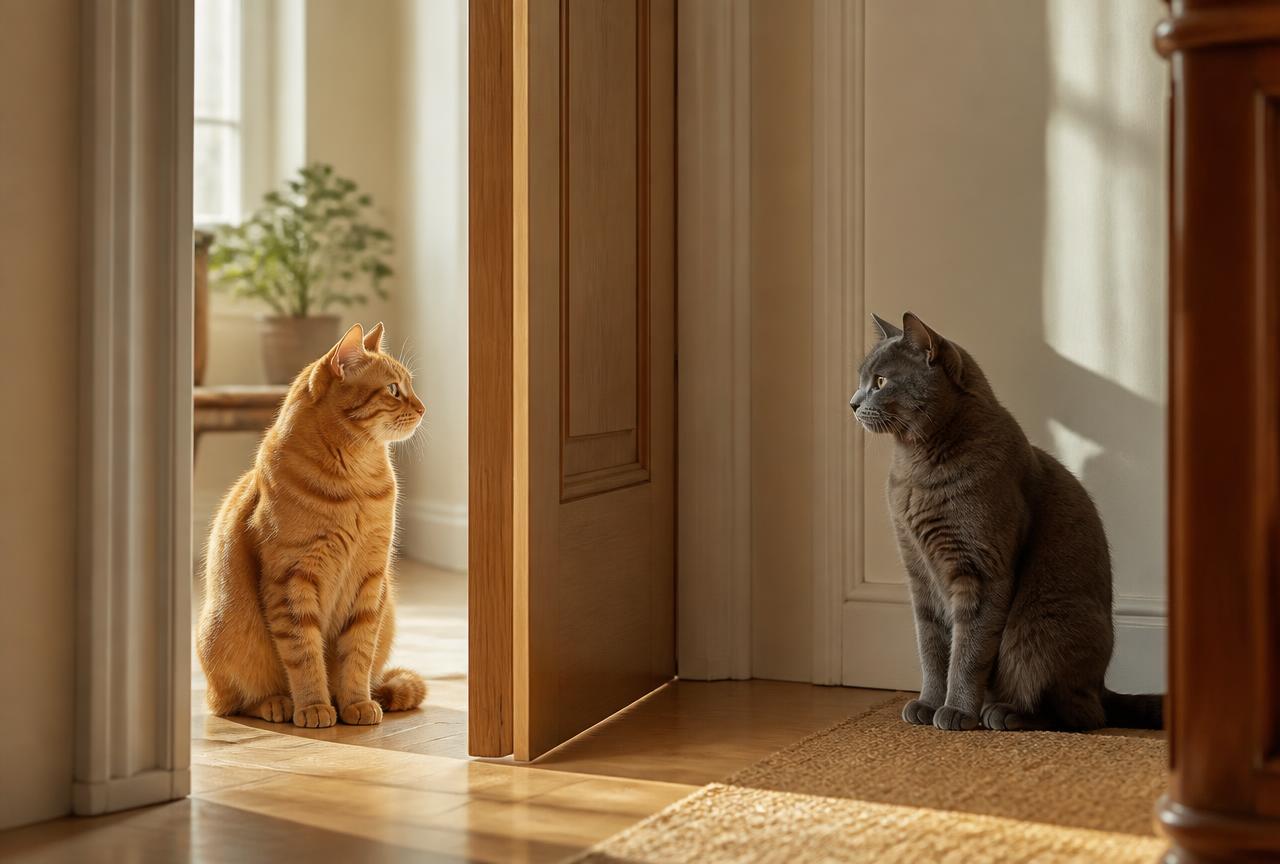
Similar sociability, different packaging. The Burmese is rounder, heavier for its size, softer-voiced and slightly less intense; the Siamese is more angular, louder and more demanding. Both need company; the Siamese needs it even more insistently.
Do Burmese cats need much grooming?
Almost none. One weekly pass with a rubber mitt or soft brush is the whole coat routine. Spend the time you save on brushing their teeth, which this breed genuinely needs.
What health tests should a Burmese breeder have done?
Ask specifically about DNA testing for Burmese head defect and for hypokalaemia, and about echocardiogram screening for hypertrophic cardiomyopathy. Also ask what dental condition their adults are in at five to eight years, and whether any cat in the line has been diagnosed with diabetes.
How long do Burmese cats live?
Thirteen to eighteen years is typical, and well-kept cats often reach the upper end. Keeping the cat lean is the single biggest thing an owner controls.
Are Burmese good with children and dogs?
Very. They are sociable, robust for their size and genuinely interested in activity rather than hiding from it. Teach gentle handling and provide a high retreat for downtime.