Canada / Thailand / United States
Tonkinese
A sociable, conversational cat that wants to be part of every household activity.
ReMews. veterinary review board
The diplomat between chatty and cuddly
The short version
- Medium-sized, muscular cat with a short, low-maintenance coat
- Highly vocal and people-oriented; needs company
- Generally healthy, but screen for PRA and HCM
- Lives 12–16 years with good care
- Excellent with children and other pets
- Weight
- 2.5–5.5 kg
- Lifespan
- 12–16 yrs
- Coat
- Short
- Size
- Medium
- Grown male
- 3.5–5.5 kg
- Grown female
- 2.5–4.5 kg
- Years to full size
- about 1.5
- One-off setup
- €950–1650
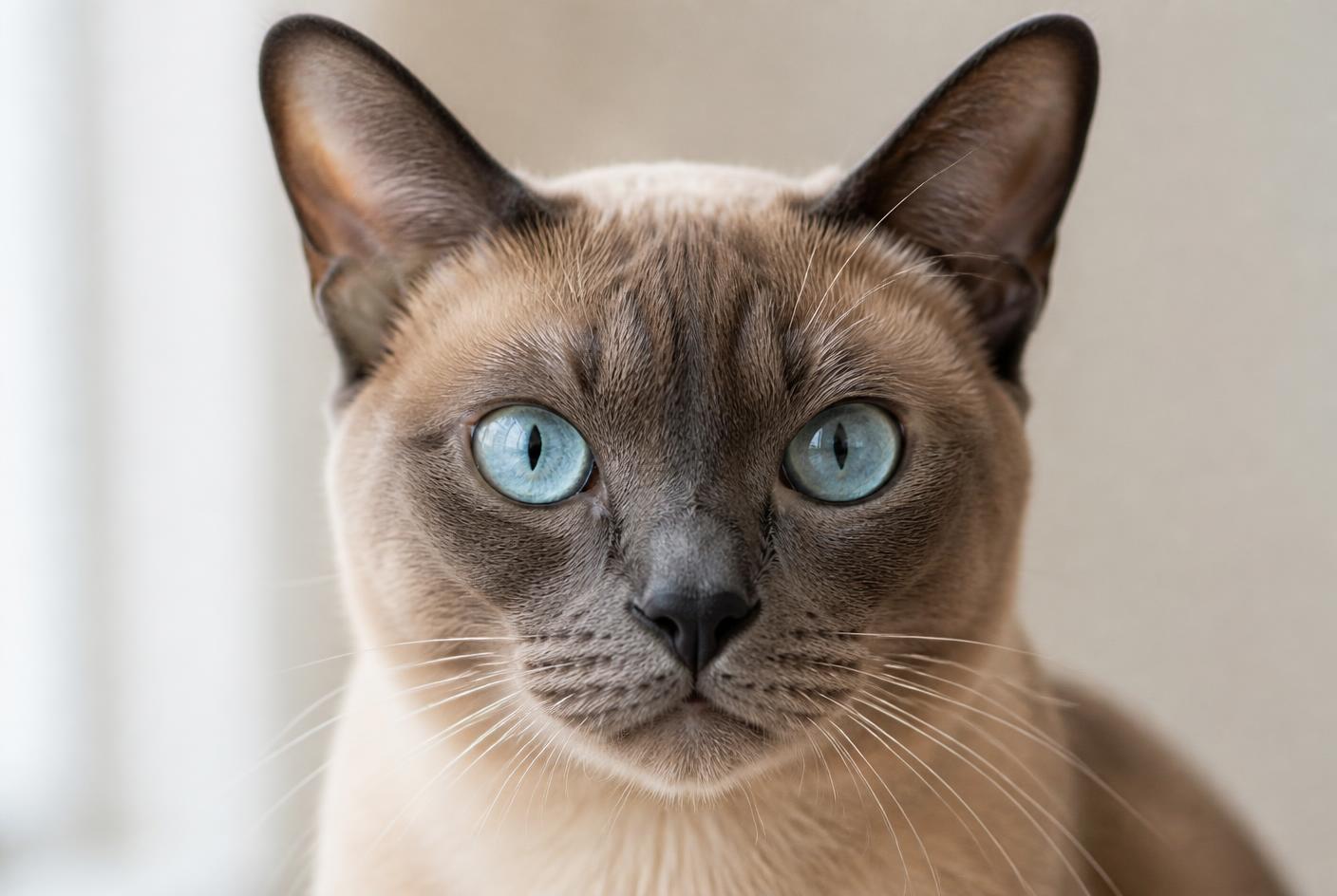
Get one if…
- People who want an interactive, talkative cat
- Homes where someone is around most of the day
- Families with gentle children and other pets
Think again if…
- Households that need silence
- People away for long workdays without a companion cat
- Anyone who wants a cat that keeps to itself
Trait profile
Tonkinese are the midpoint between Burmese warmth and Siamese talkativeness: compact, people-focused and playful into adulthood.
Space & setup. Apartments are fine if there is company, vertical space and play. A bored Tonkinese will find its own entertainment, usually noisily.
Allergies. No cat is hypoallergenic, and the allergen is in saliva and skin secretions, not hair. The short coat may spread less around the home than a long coat, but spend time with adults before committing.
The review
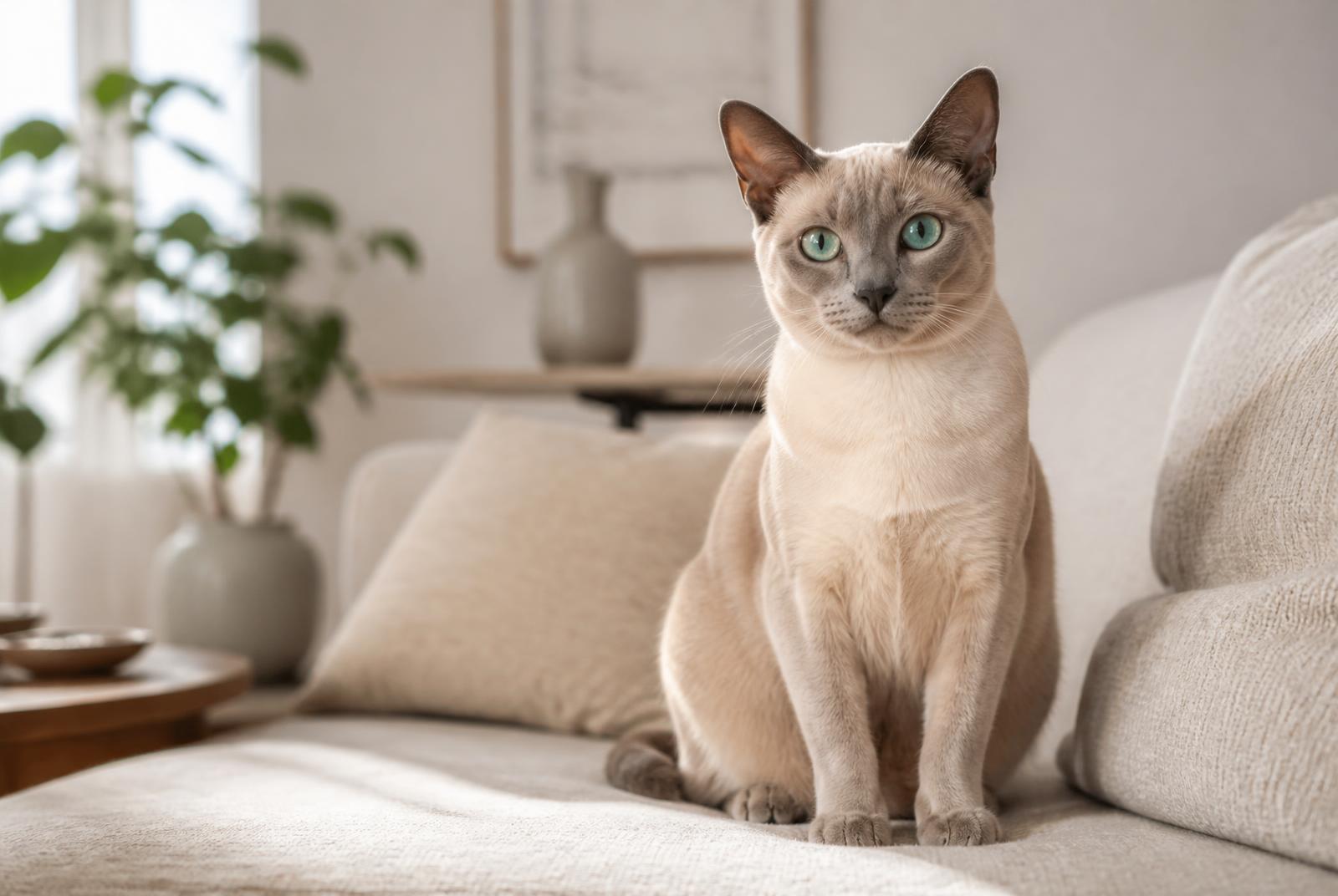
Tonkinese are a deliberate blend of Burmese and Siamese: the compact, people-focused body of one and the bright, conversational voice of the other. They are medium-sized, muscular cats that want to be wherever you are, ideally on you.
No-one who meets a Tonkinese forgets the voice. It is not the full-volume Siamese yowl, but it is persistent, musical and impossible to ignore. They comment on meals, doorbells, weather, and any conversation that excludes them. If you want a quiet cat, stop reading now. If you want a cat that treats you as its main social group, read on.
The breed was developed in North America by crossing Siamese and Burmese, aiming for a middle ground: the colour range and body type of the Burmese, the clarity and talkativeness of the Siamese. What emerged is a compact, rounded cat with slightly less extreme lines than either parent, and a personality that is often described as dog-like in its devotion.
Tonkinese are physically sturdy for a medium breed. Males usually finish between 3.5 and 5.5 kg, females between 2.5 and 4.5 kg. They are muscular rather than delicate, with a broad chest and a wedge-shaped head set on a thick neck. The coat is short, fine and close-lying, so grooming is minimal, a weekly polish with a soft brush is usually enough.
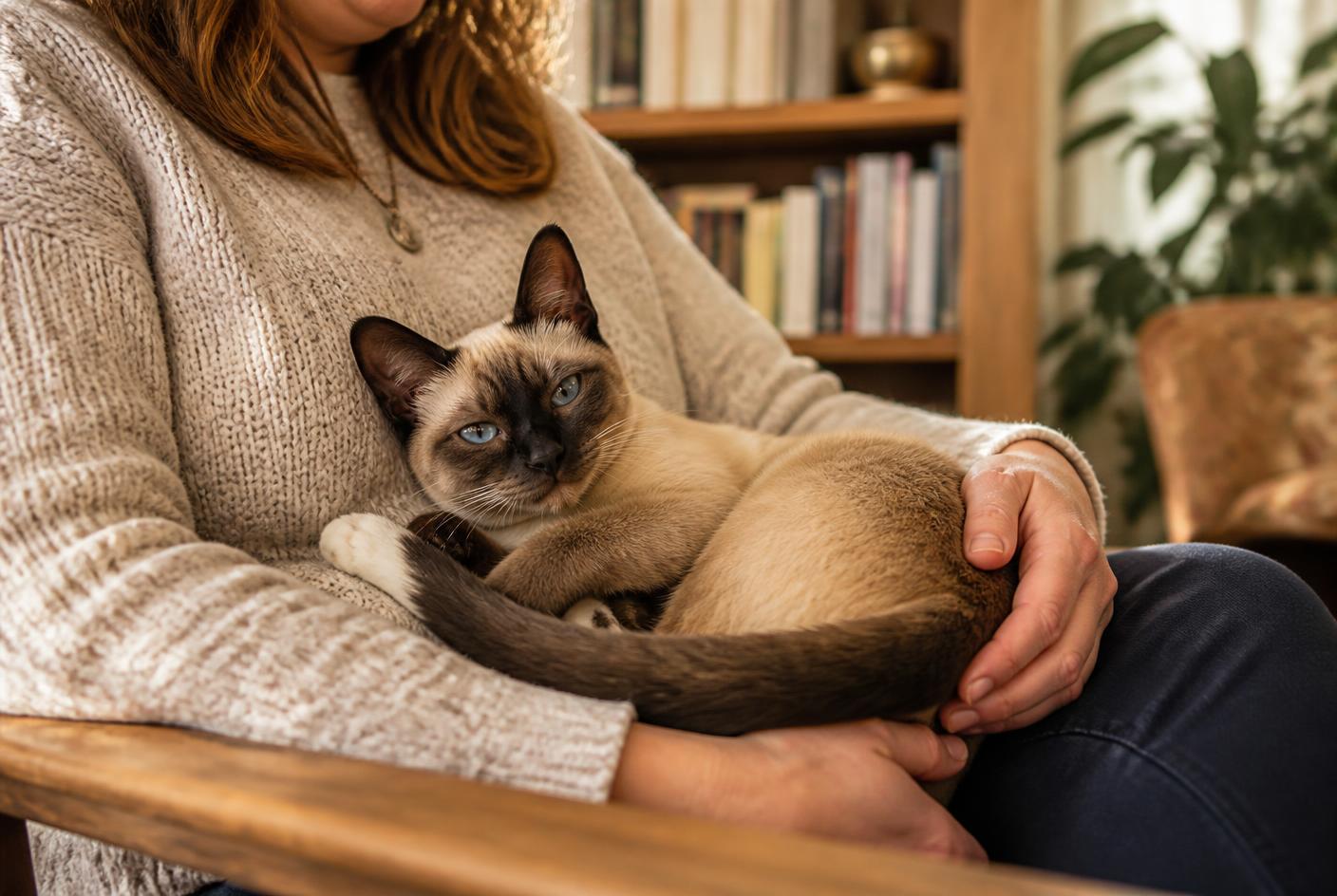
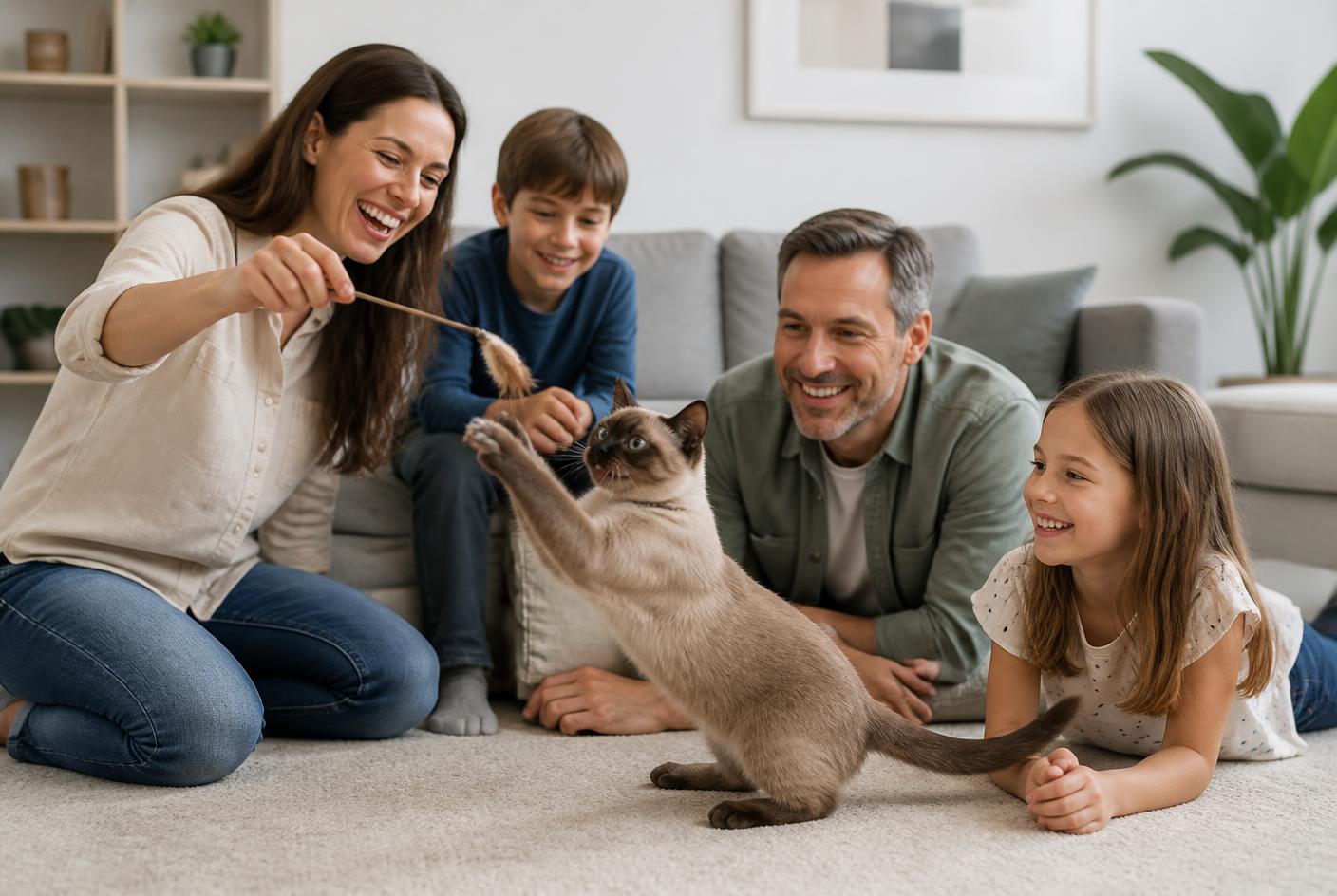
Socially, this is the defining trait: they do not do well alone. A Tonkinese left without company for long stretches will become loud, destructive or depressed. Two cats together, another friendly cat in the house, or a household where someone is usually present is the realistic minimum. They also stay kittenish for years; a five-year-old Tonkinese will still pounce on a dragged string.
Health is generally good. The main concerns are inherited from the founding breeds: progressive retinal atrophy, an HCM risk, and the occasional respiratory sensitivity because of the short face, though they are far less brachycephalic than Persians or Exotics. Dental disease, as in every breed, becomes common with age if home care is skipped.
The ideal home has people around, conversation tolerated, and play sessions built into the day. They are excellent with children who handle them gently, and they usually make peace with cat-friendly dogs. Apartments are fine provided there is enough vertical space and company.
A Tonkinese is a cat that has opinions and expects you to hear them. It is one of the most people-oriented breeds, but the noise and need for company are real.
Grooming, realistically
- 1Weekly brush with a soft bristle brush or grooming mitt
- 2Wipe the face gently if tear staining appears
- 3Trim claws every two to three weeks
- 4Check ears for wax when grooming
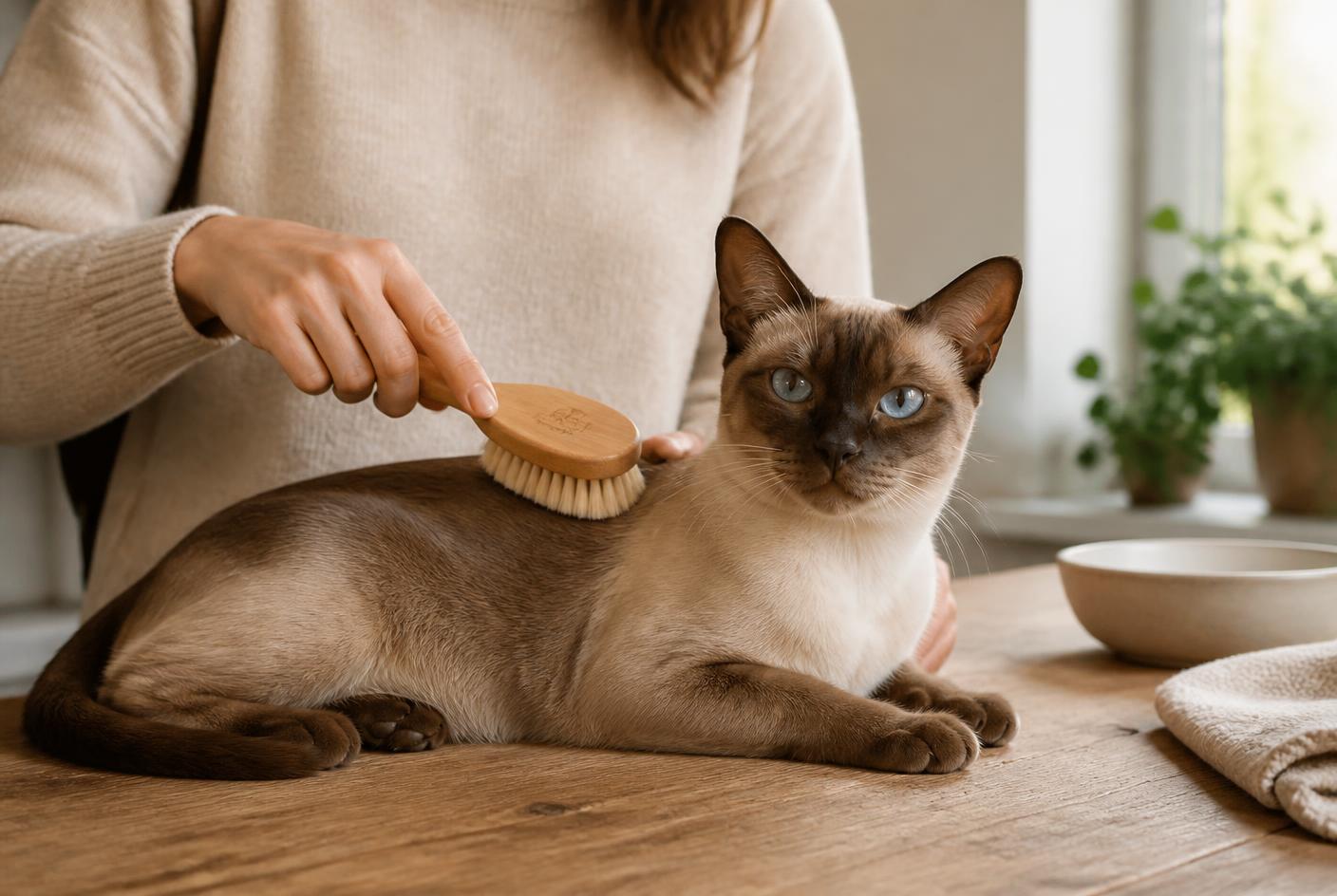
What you actually need
- Soft bristle brush or grooming mitt
- Nail clippers
- Pet-safe ear wipes
- Dental treats or finger brush
Kitten to adult
| Age | Male | Female | What is happening |
|---|---|---|---|
| 3 months | |||
| 6 months | |||
| 9 months | |||
| 12 months | |||
| Full size |
Ranges are typical, not targets. Judge condition by ribs and waist, and check with the ideal weight checker.
What to ask a breeder
- Have the parents been tested for PRA and HCM?
- Can I meet the mother and see how sociable she is?
- How were the kittens socialised with people and other pets?
- What age will the kitten leave the breeder?
Health watch-list
What to ask a breeder about, and what to watch for over a lifetime. This is orientation, not veterinary advice, anything you notice belongs in front of a vet.
Progressive retinal atrophy
NotableAn inherited eye disorder linked to the founding breeds. Responsible breeders test for it. Watch for night blindness or dilated pupils in low light.
Hypertrophic cardiomyopathy
NotableHeart muscle thickening can occur in lines with Siamese or Burmese background. Echocardiogram screening of breeding cats is the best evidence.
Respiratory sensitivity
UncommonSome lines have a slightly shorter face than average, which can mean snoring or heat sensitivity. Not as extreme as brachycephalic breeds.
Dental disease
Common with agePlaque and gingivitis are the usual age-related risk. Brushing and professional checks are the prevention.
Obesity
Very likely if overfedA compact, muscular cat can hide weight well. Measure food and watch the waistline.
Anxiety-related behaviours
Likely if lonelyThe most common behavioural issue is loneliness. A single Tonkinese in an empty house may over-groom, cry or become destructive.
What it costs to keep one
Realistic running cost
€79 / month
About €948 a year, or roughly €13,272 across a 14-year life, before purchase price, neutering and one-off vet events.
Before the cat arrives. Budget roughly €950–1650 for trays, carrier, posts, bowls, bedding and grooming kit sized for this breed. Figures throughout are indicative and vary a good deal between countries.
Interactive · built for this breed
Is a Tonkinese right for your home?
A sociable, talkative breed that sits halfway between Burmese and Siamese. Five questions on noise, closeness, play and the hours your home is empty.
Verdict
An excellent match
You want conversation, contact and play, exactly what this breed offers.
Keep the weight honest with the ideal weight tool, or compare the alternatives in the matchmaker.
The verdict, by household
Gentle, playful and tolerant. One of the better pedigree choices for busy family homes.
Fine for space, but company matters more than square metres. A solo flat with long workdays is not ideal.
Affectionate and rewarding, but the vocal demands and need for company can surprise unprepared owners.
Usually happy with another cat or a cat-savvy dog. They prefer not to be the only animal.
When to call your vet
- Persistent loud crying when left alone
- Laboured breathing or open-mouth breathing
- Sudden hind-leg weakness or collapse
- Cloudiness or changes in the eyes
- Reluctance to eat or dramatic weight loss
Nothing here is a diagnosis. Breathing difficulty, sudden hind-leg weakness and straining to urinate are emergencies, go the same day.
Tonkinese vs the closest alternatives
| Breed | Weight | Energy | Grooming | € / month |
|---|---|---|---|---|
| Tonkinese | 2.5–5.5 kg | 8/10 | 3/10 | €79 |
| Japanese Bobtail | 2.5–4.5 kg | 8/10 | 3/10 | €77 |
| Burmese | 3–6 kg | 8/10 | 2/10 | €81 |
| Balinese | 2.5–5 kg | 8/10 | 5/10 | €84 |
Tonkinese questions, answered
How vocal is a Tonkinese compared with a Siamese?
Less piercing than a Siamese but more persistent than most breeds. They use a range of chirps, trills and conversational meows. If you want silence, neither breed is suitable.
Do Tonkinese cats need a companion?
They strongly prefer company. A single Tonkinese left alone for long workdays is likely to become lonely and noisy. Two cats together, or a household where someone is usually home, is ideal.
How much grooming does a Tonkinese need?
Very little. A weekly brush with a soft bristle brush or grooming mitt is usually enough to remove loose hair and distribute skin oils.
Are Tonkinese good with children?
Yes, with gentle children. They are playful and tolerant, but like any cat they should be handled respectfully and never carried roughly.
What colours do Tonkinese come in?
Natural, champagne, blue, platinum and variations, with coat patterns ranging from solid to mink to pointed. Eye colour varies with coat pattern.
Are Tonkinese hypoallergenic?
No. No cat is hypoallergenic. The allergen is a protein in saliva and skin secretions, not the hair. Spend time with adults before committing.
What health tests should a Tonkinese breeder provide?
PRA testing, HCM screening by echocardiogram, and evidence of general health checks. Ask to see certificates rather than accept verbal assurances.