Thailand
Khao Manee
Rare, pure white and often odd-eyed. Deeply people-focused and genuinely conversational, with hearing worth checking before you buy.
Helen Marsh
The white jewel of Thailand, and a cat who talks
The short version
- One of the most talkative breeds. Expect commentary, not the occasional meow.
- Very people-focused and poorly suited to long days alone. A second cat often helps.
- A white coat with blue eyes raises the chance of congenital deafness. Ask about hearing testing.
- Grooming is minimal: a weekly wipe is enough for the short single coat.
- Genuinely rare outside Thailand. Quick availability is a warning sign, not good luck.
- Weight
- 2.7–5 kg
- Lifespan
- 10–15 yrs
- Coat
- Short
- Size
- Medium
- Grown male
- 3.5–5 kg
- Grown female
- 2.7–4 kg
- Years to full size
- about 1.5
- One-off setup
- €300–600
Get one if…
- Homes where someone is around most of the day
- People who enjoy a talkative, involved cat
- Households happy to keep two cats
- Families with sensible older children
- Flat dwellers with climbing space
Think again if…
- Anyone wanting a quiet cat
- Households out for long working days
- Owners who cannot keep a deaf cat indoors
- People unwilling to wait for a well-bred kitten
Trait profile
High affection and high vocality together. This is a cat who wants to be involved in everything and will tell you about it.
Space & setup. Content in a flat given climbing and company. Hours alone matter more than square metres.
Allergies. Not hypoallergenic. The coat is short but sheds normally and carries dander.
The review
An ancient Thai breed with a pure white short coat and striking eyes, frequently one blue and one gold. Active, vocal and closely attached to their people, and still rare outside Thailand.
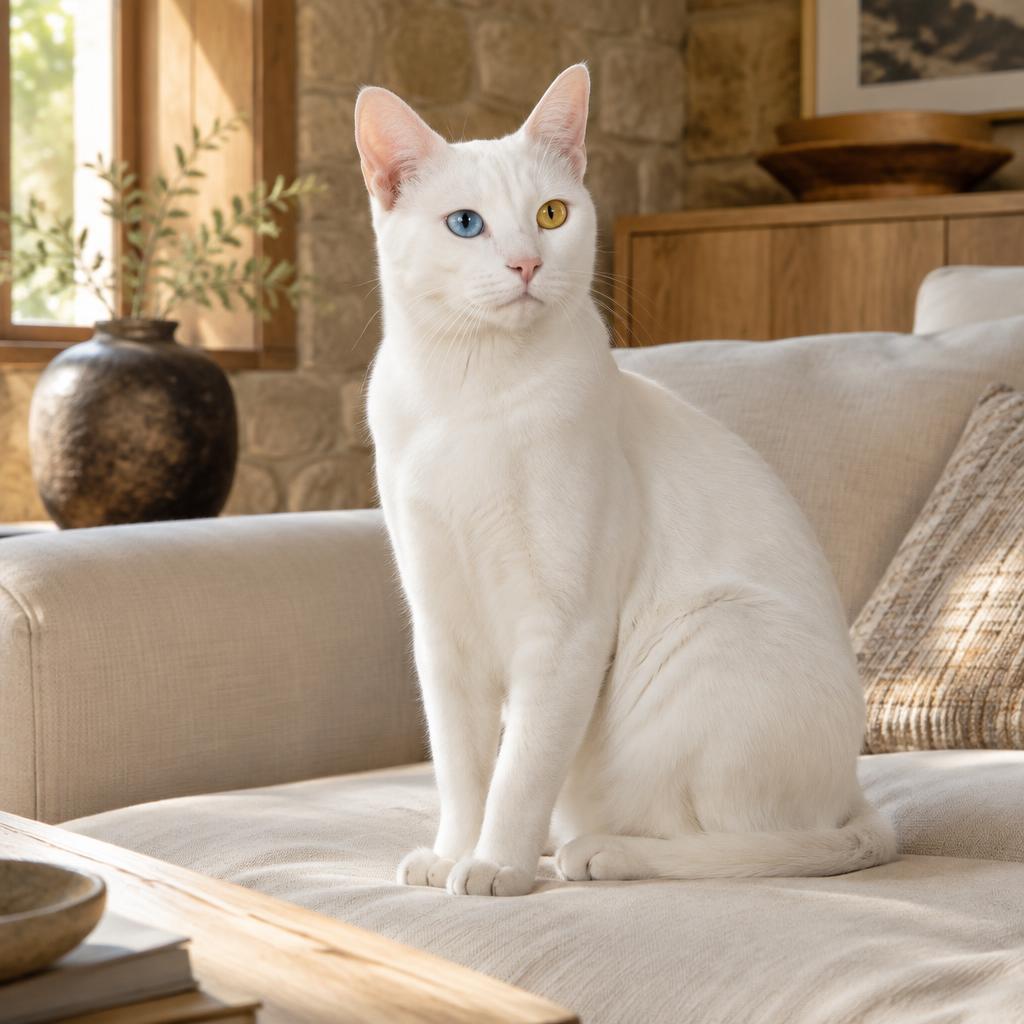
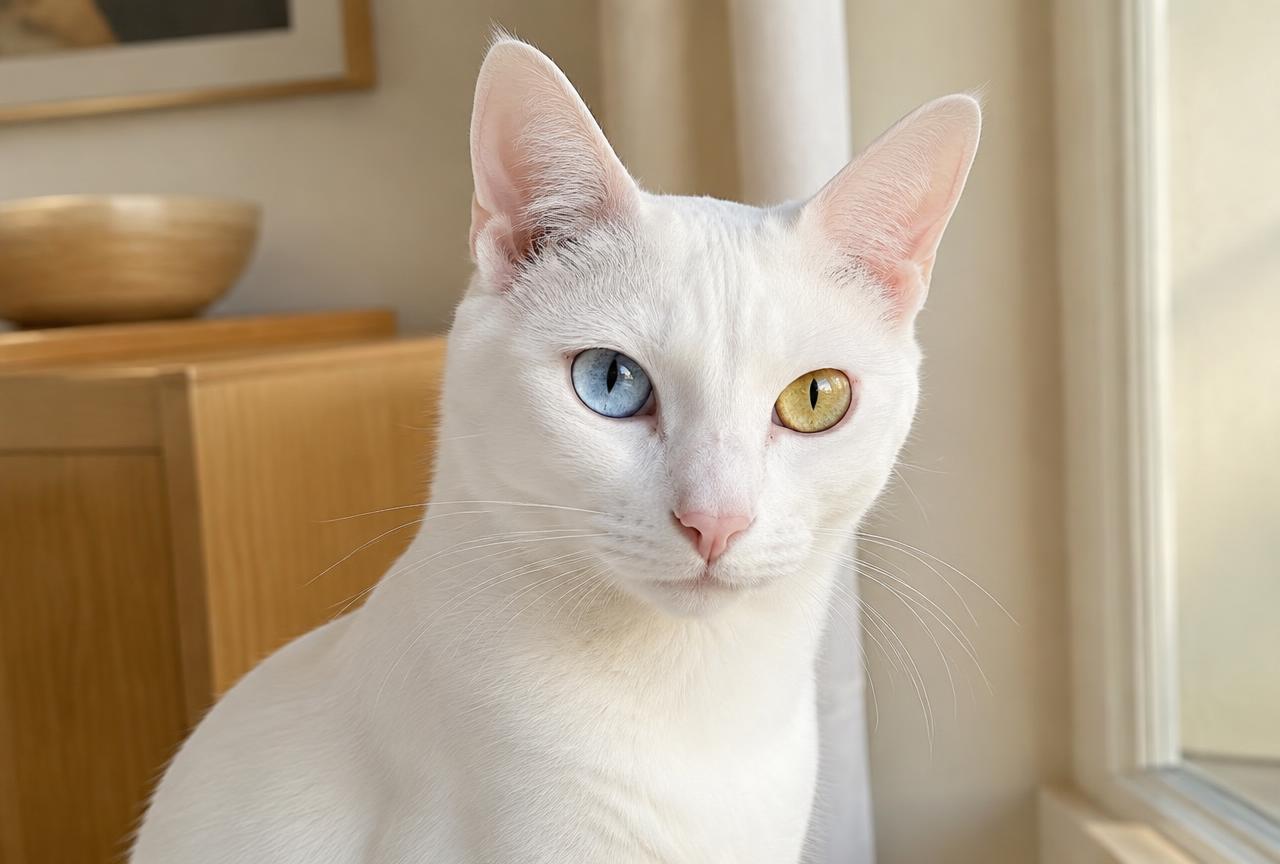
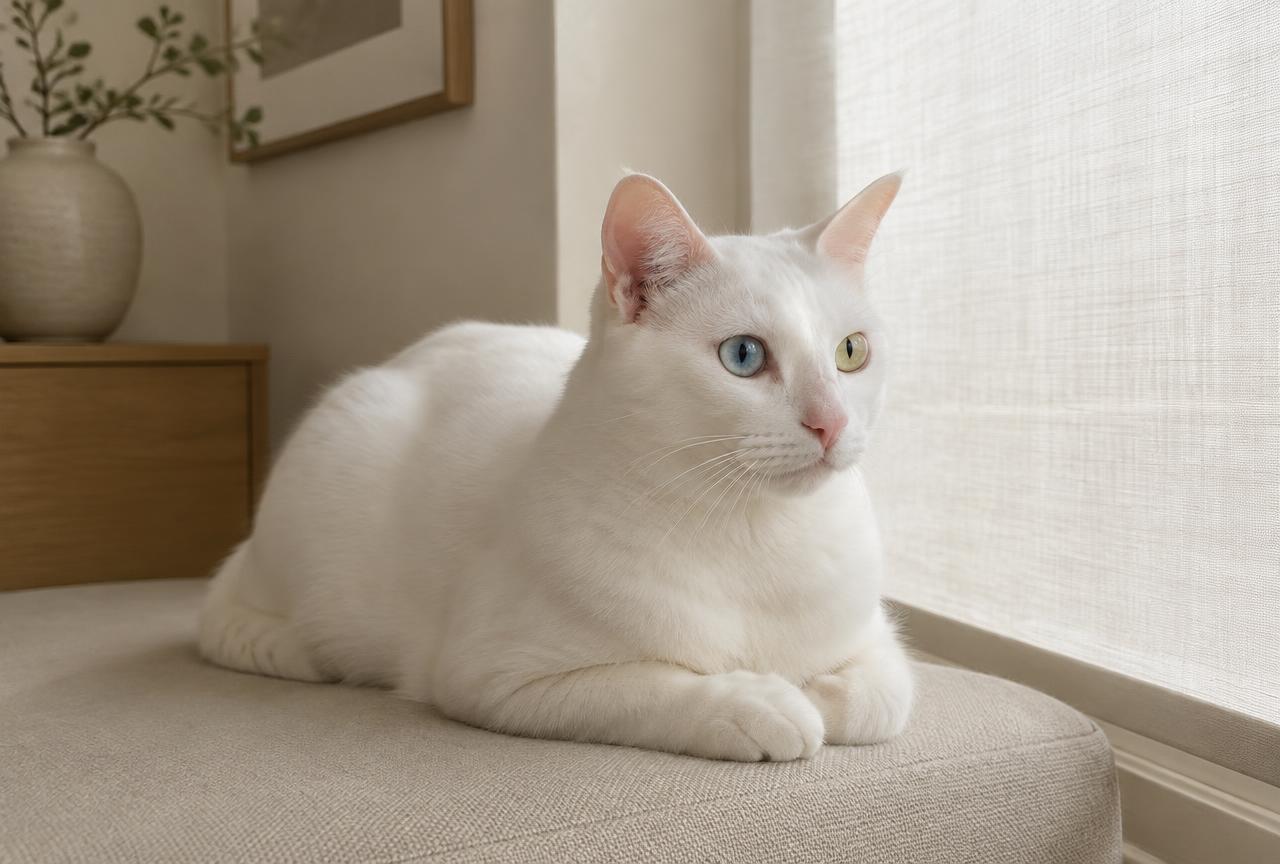
The Khao Manee has been documented in Thailand for centuries, described in old manuscripts and kept, by tradition, in royal households. The name translates roughly as white gem, and the breed standard is essentially a description of purity: a short, close-lying, pure white coat with no markings, a muscular medium body, and eyes that are the whole point. They may be blue, gold or, most prized of all, one of each. An odd-eyed Khao Manee in sunlight is one of the more arresting sights in the cat world.
Character, happily, matches the appearance. These are warm, busy, intensely sociable cats. A Khao Manee follows their person from room to room, supervises cooking, sits on whatever you are reading, and greets you at the door. They get on well with children who handle them sensibly, they usually accept dogs, and they take to a second cat readily. Intelligence is high, and they respond well to puzzle feeders, fetch and clicker training, all of which are worth setting up early to give the energy somewhere to go.
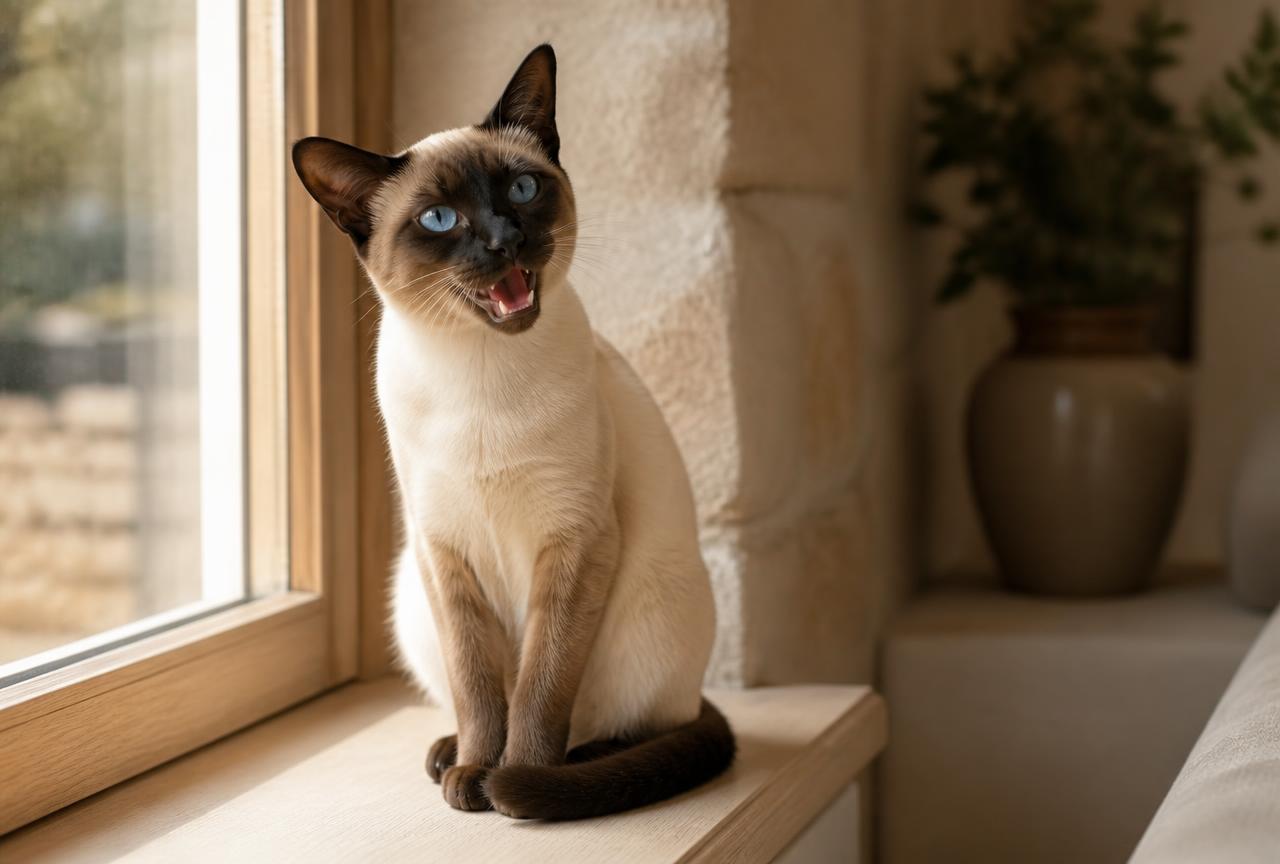
The voice deserves its own paragraph, because it is the single most common reason people find the breed harder than expected. A Khao Manee is not simply capable of meowing. They keep up a running commentary, with a range of tones for hunger, boredom, greeting and general opinion, and the volume is not shy. Siamese owners will recognise the pattern. If a quiet home is important to you, this is not your breed, and no amount of training will make it so.
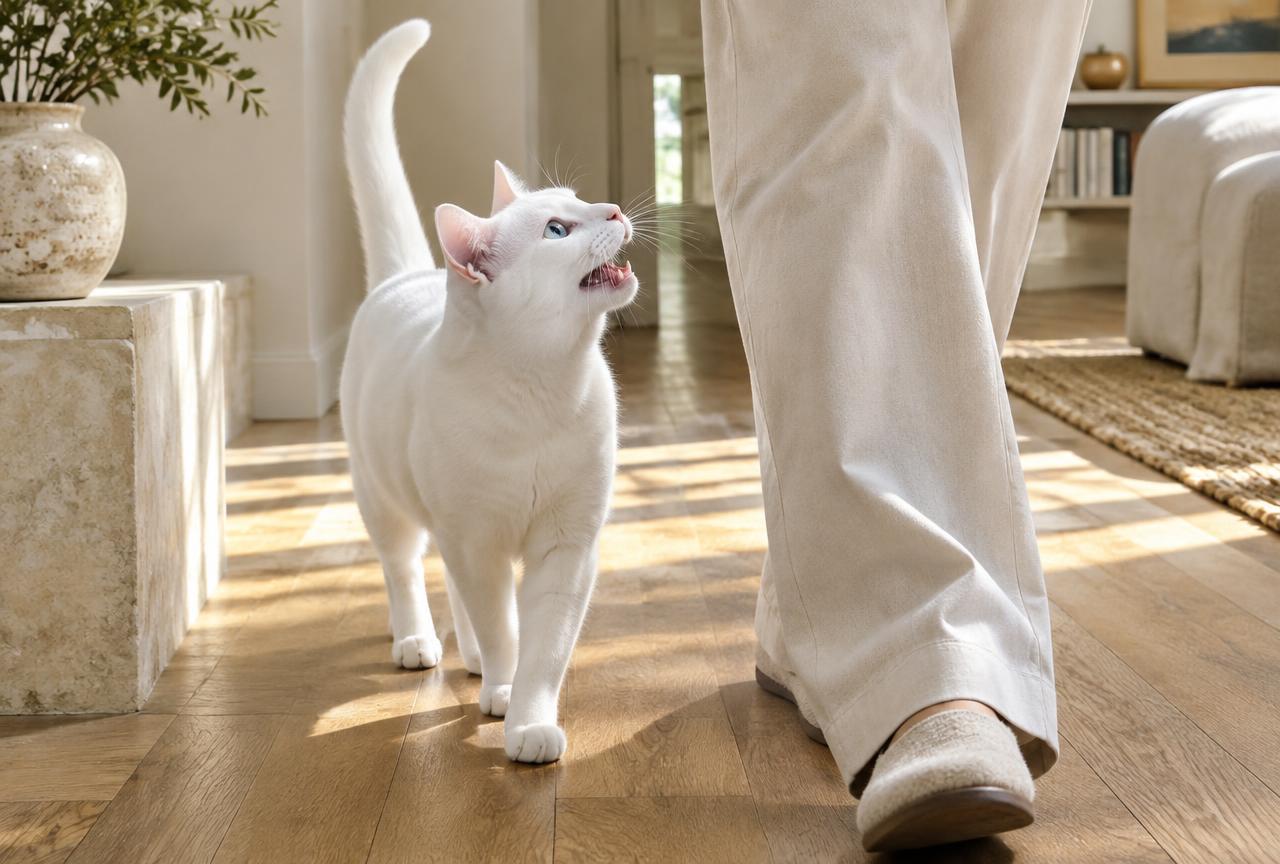
The second consideration is time alone. This is a cat who does badly on a long working day with nobody home. Boredom in a Khao Manee turns into vocalising, attention-seeking and sometimes destructive behaviour. Two cats together solve most of this, and a home where somebody is around for part of the day solves the rest. It is worth being honest with yourself about this before you join a waiting list.
Hearing is the health point that matters most and is most often glossed over. The gene that produces a dominant white coat is associated with congenital deafness, and the association is stronger in cats with blue eyes. Many Khao Manee hear perfectly well, including odd-eyed cats, whose hearing may differ between sides. A good breeder will have assessed hearing and will tell you plainly. A deaf cat can live a completely full and happy life, with two provisos: they must be kept indoors or in a secure enclosure, since they cannot hear traffic or dogs, and it is kinder to wake them with a touch on the bedding rather than suddenly. Sun protection is a smaller related point, since pink skin at the ears and nose burns; shaded rest spots in strong sunlight are sensible.
Beyond that, health is reasonable for a naturally occurring breed. The population outside Thailand is small, which means the gene pool is limited and a careful breeder matters more than usual. Ask for heart screening by ultrasound, since hypertrophic cardiomyopathy appears across many breeds, and ask about kidney health in older relatives. Dental care is the everyday task, as with any cat.
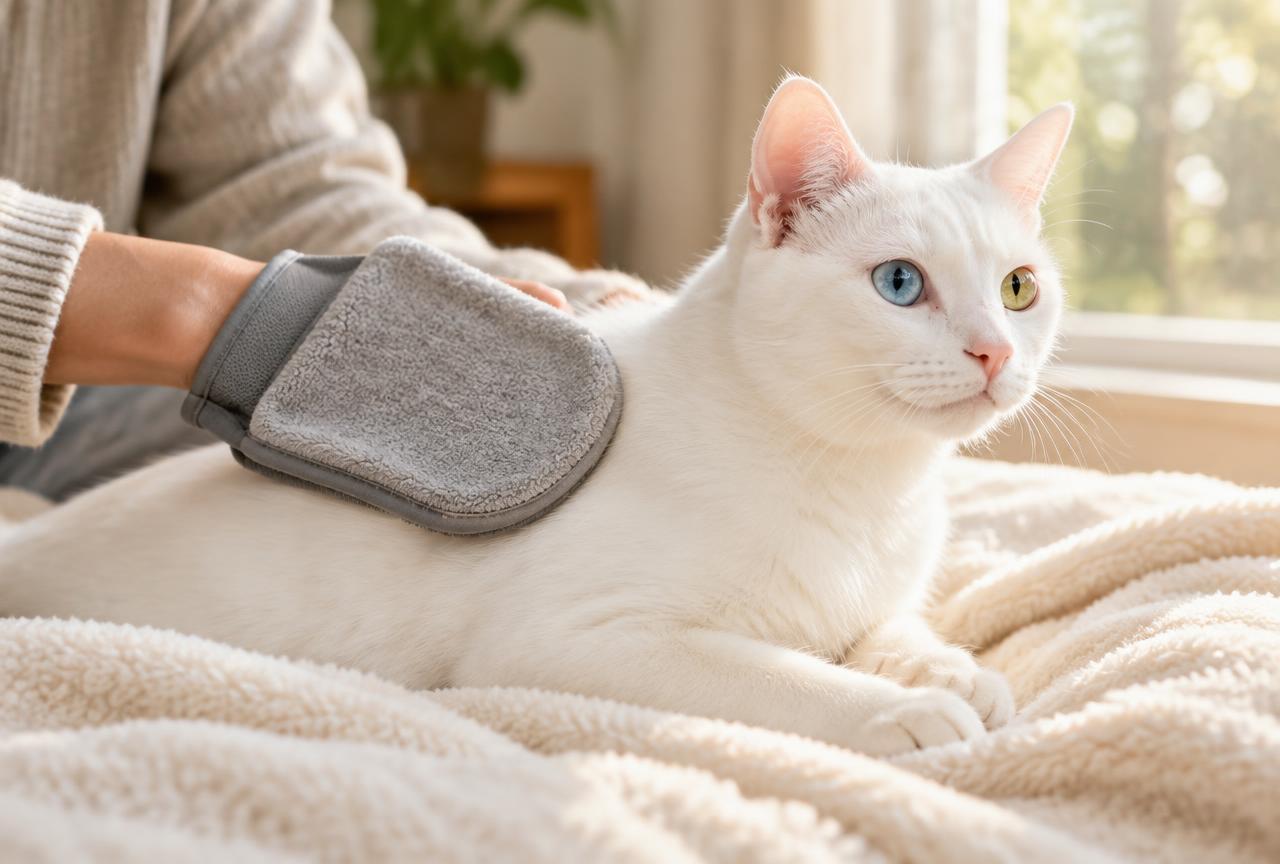
Practical care is simple. A weekly wipe with a soft mitt or a damp cloth keeps the white coat bright and controls loose hair. Claws every three or four weeks, ears fortnightly, teeth daily if you can manage it. Keep them lean, since they are stocky under the coat and gain quietly.
Our verdict: an outstanding companion for the right household, and an expensive mistake for the wrong one. The right household has company for most of the day, tolerance for constant conversation, a tall climbing frame, and the patience to wait for a kitten from a breeder who tests hearing and hearts. If waiting a year is unacceptable to you, that is a useful signal about whether this breed suits your temperament as much as your home.
Grooming, realistically
- 1Wipe the coat weekly with a soft grooming mitt or damp cloth to lift loose hair and keep the white bright.
- 2Check the ears fortnightly and clean with a cat-safe wipe.
- 3Trim claws every three to four weeks.
- 4Provide shaded rest spots; pink ears and noses burn in strong sun.
- 5Brush teeth daily or use dental chews, and weigh monthly.
What you actually need
- Soft grooming mitt
- Damp microfibre cloth
- Blunt-nosed claw clippers
- Cat-safe ear wipes
- Puzzle feeders and a tall climbing frame
Kitten to adult
| Age | Male | Female | What is happening |
|---|---|---|---|
| 8 weeks | 0.8-1.1 kg | 0.7-1.0 kg | Eye colour settling. Ask for hearing results before deposit. |
| 3 months | 1.4-1.9 kg | 1.3-1.7 kg | Vocal and busy. Start puzzle feeders and training. |
| 6 months | 2.4-3.2 kg | 2.1-2.8 kg | Lean and athletic; energy peaks. |
| 12 months | 3.2-4.2 kg | 2.7-3.6 kg | Close to adult. Set portions carefully. |
| 18 months | 3.5-5.0 kg | 2.7-4.0 kg | Final weight. Stocky under the short coat, so check the waist. |
Ranges are typical, not targets. Judge condition by ribs and waist, and check with the ideal weight checker.
What to ask a breeder
- Has this kitten had hearing tested, and what were the results for each ear?
- Have both parents been heart-screened by ultrasound?
- How closely related are the parents, given the small gene pool?
- How do you socialise kittens, and are they used to other animals?
- What is your waiting list, and what support do you offer after the kitten leaves?
Health watch-list
What to ask a breeder about, and what to watch for over a lifetime. This is orientation, not veterinary advice, anything you notice belongs in front of a vet.
Congenital deafness
Raised risk, especially with blue eyesLinked to the dominant white gene. Ask for hearing test results for each ear.
Sunburn on ears and nose
Common in strong sunPink skin under white fur burns. Provide shaded rest spots.
Hypertrophic cardiomyopathy
UncommonAsk whether parents have been heart-screened by ultrasound.
Limited gene pool effects
Relevant outside ThailandSmall populations raise inherited risk. Ask how closely related the parents are.
Chronic kidney disease
Common with age in all catsWatch thirst and urination in older cats and test annually from around eight years.
Dental disease
Common in all catsDaily brushing is the single most effective preventive measure.
What it costs to keep one
Realistic running cost
€77 / month
About €924 a year, or roughly €12,012 across a 13-year life, before purchase price, neutering and one-off vet events.
Before the cat arrives. Budget roughly €300–600 for trays, carrier, posts, bowls, bedding and grooming kit sized for this breed. Figures throughout are indicative and vary a good deal between countries.
Interactive · built for this breed
Is a Khao Manee right for your home?
Rare, talkative and very people-focused. Four questions to see whether the match works before you join a waiting list.
Verdict
A strong match
Company, conversation and patience. That is what this breed asks for, and you have it.
Keep the weight honest with the ideal weight tool, or compare the alternatives in the matchmaker.
The verdict, by household
Flat dwellers
Very good
Space matters less than company and climbing. A tall frame and a second cat work well.
Families with young children
Good, with supervision
Sociable and playful. Teach gentle handling and give the cat an escape route.
First-time owners
Good, if you like noise
Care is simple. The voice and the need for company are the real commitments.
Multi-pet homes
Excellent
Often happiest with another cat, and generally fine with calm dogs.
Long working days
Poor alone
Get two, or choose a more independent breed.
When to call your vet
- No response to sounds behind them, which suggests deafness
- Sore, reddened or crusting skin on the ears or nose after sun exposure
- Breathlessness, lethargy or collapse, which can indicate heart disease
- Increased thirst or urination in an older cat
- A marked change in the voice, or new night-time calling in a senior cat
Nothing here is a diagnosis. Breathing difficulty, sudden hind-leg weakness and straining to urinate are emergencies, go the same day.
Khao Manee vs the closest alternatives
| Breed | Weight | Energy | Grooming | € / month |
|---|---|---|---|---|
| Khao Manee | 2.7–5 kg | 8/10 | 2/10 | €77 |
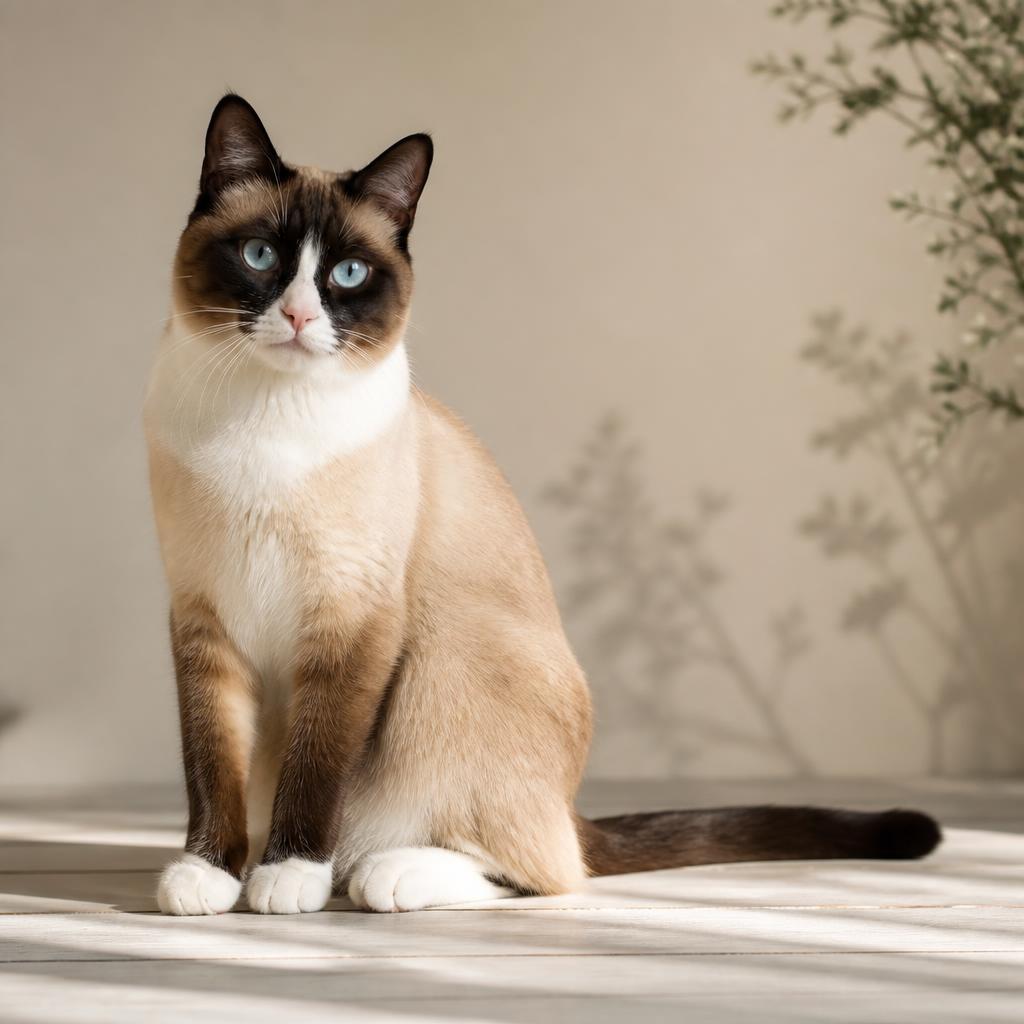
| Snowshoe | 2.5–5.5 kg | 8/10 | 3/10 | €78 |
| Siamese | 3–6 kg | 8/10 | 2/10 | €72 |
| Oriental Shorthair | 3–5.5 kg | 9/10 | 2/10 | €75 |
Khao Manee questions, answered
What makes the Khao Manee special?
A pure white short coat with no markings, and striking eyes that may be blue, gold or one of each. It is an old Thai breed, historically kept in royal households, and remains rare outside Thailand. The temperament is as distinctive as the look: talkative, affectionate and thoroughly involved in your day.
Are Khao Manee cats deaf?
Some are. The dominant white gene that produces the coat is associated with congenital deafness, and blue-eyed cats carry a higher risk, with odd-eyed cats sometimes deaf on one side only. A good breeder tests hearing and tells you the result. A deaf cat lives well indoors, but must not have free outdoor access.
How vocal are they really?
Very. This is a running-commentary breed, comparable to a Siamese, with different tones for greeting, hunger, boredom and general opinion, and it is not quiet. Training will not change it, so it needs to be something you enjoy rather than tolerate.
Can they be left alone while I work?
Not comfortably for a full day. They are strongly people-focused and become vocal and unsettled when bored. Keeping two cats together, or having someone home for part of the day, makes a substantial difference.
Do they need much grooming?
No. The coat is short and single, so a weekly wipe with a soft mitt lifts loose hair and keeps the white bright. Claws every three to four weeks, ears fortnightly, and daily tooth brushing if you can establish it.
Do white cats need sun protection?
The pink skin at the ears and nose can burn in strong sunlight. Provide shaded rest spots and avoid long stretches in direct midday sun, particularly behind glass, which offers less protection than people assume.
How easy is it to find one?
Difficult outside Thailand, where numbers remain small. A wait of many months to a year is normal with a reputable breeder. Immediate availability at a high price is a reason to ask more questions, not fewer.