United Kingdom, from Siamese lines
Oriental Shorthair
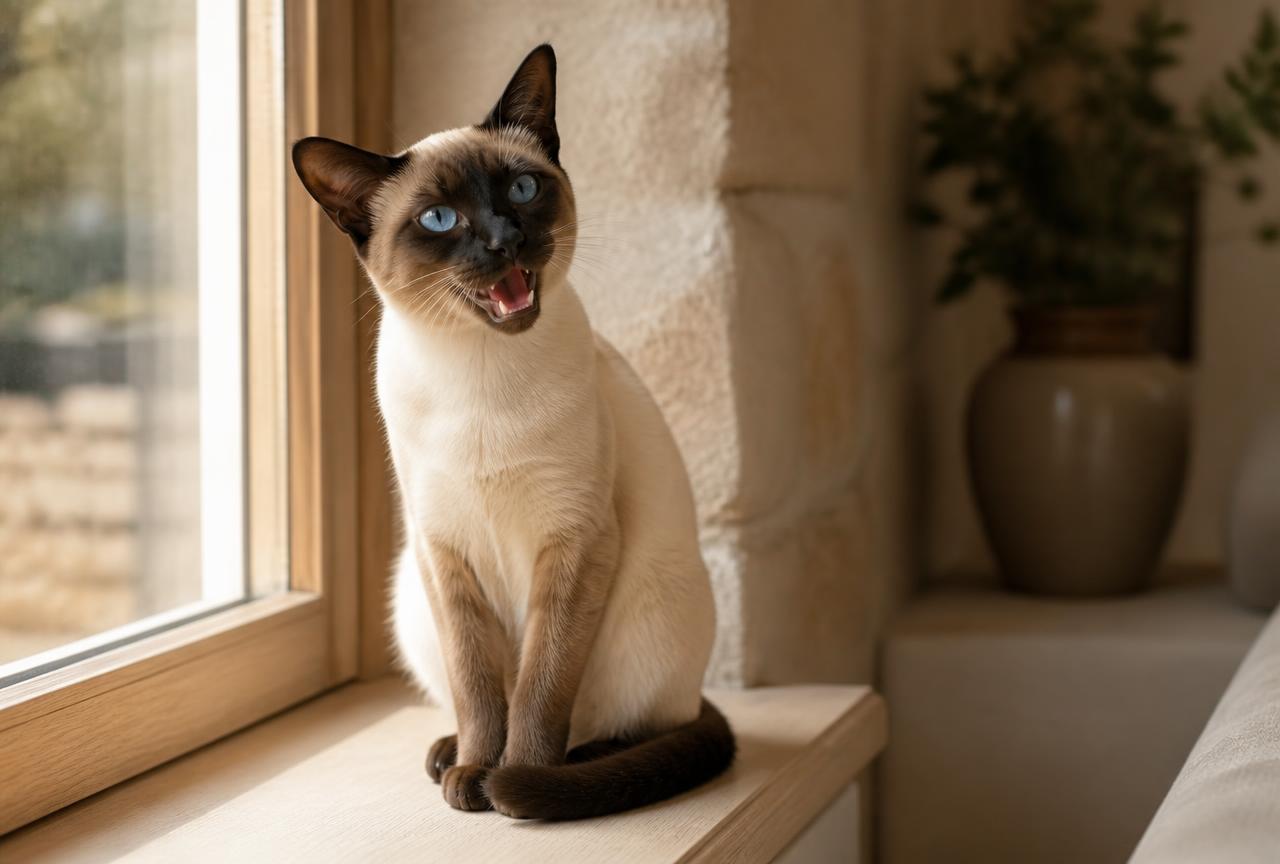
Take a Siamese, keep the voice and the need for company, and open the colour chart. What you get is an athlete with enormous ears and no talent whatsoever for being ignored.
The ReMews. desk
The Siamese in three hundred colours, with the volume knob left where it was.
The short version
- Genetically a Siamese in every colour except the pointed pattern, same body, same temperament, same voice.
- Among the most vocal breeds in this index, with a loud flat call used deliberately to get a response.
- Needs company. An empty flat eight hours a day makes a destructive, unhappy cat; two is often kinder than one.
- Grooming is almost nothing: a weekly rub-over with a soft mitt and routine nails and teeth.
- Very little coat and no fat reserve, so warmth matters, covered beds and a heated room in winter.
- Health watch-list is inherited from Siamese lines: heart muscle disease, progressive retinal atrophy and amyloidosis; ask what the breeder screens for.
- Weight
- 3–5.5 kg
- Lifespan
- 12–15 yrs
- Coat
- Short
- Size
- Medium
- Grown male
- 4–5.5 kg
- Grown female
- 3–4.5 kg
- Years to full size
- about 2
- One-off setup
- €280–600
Get one if…
- You want a cat that follows you room to room and comments on it
- Someone is home for much of the day, or there is a second cat
- You can provide real climbing height
- You enjoy a cat that learns games, fetch and door handles
Think again if…
- You need a quiet home, or work on calls all day
- The flat is empty eight hours a day and this would be the only cat
- You want a cat that entertains itself
- You dislike being woken for conversation
Trait profile
Vocality at the top of the scale is not decoration, it is the defining fact of living with this cat, and it goes up when you ignore it. High energy and high affection describe the same animal: an Oriental follows the household around and expects to be included. The very low grooming score is honest, and close to the only easy thing here.
Space & setup. Floor area matters less than height. Give it a tall tree, shelf routes and window perches, and a modest flat works well.
Allergies. Not hypoallergenic. A very short single coat sheds little, which helps with visible hair but does nothing about Fel d 1, the protein most people react to.
The review
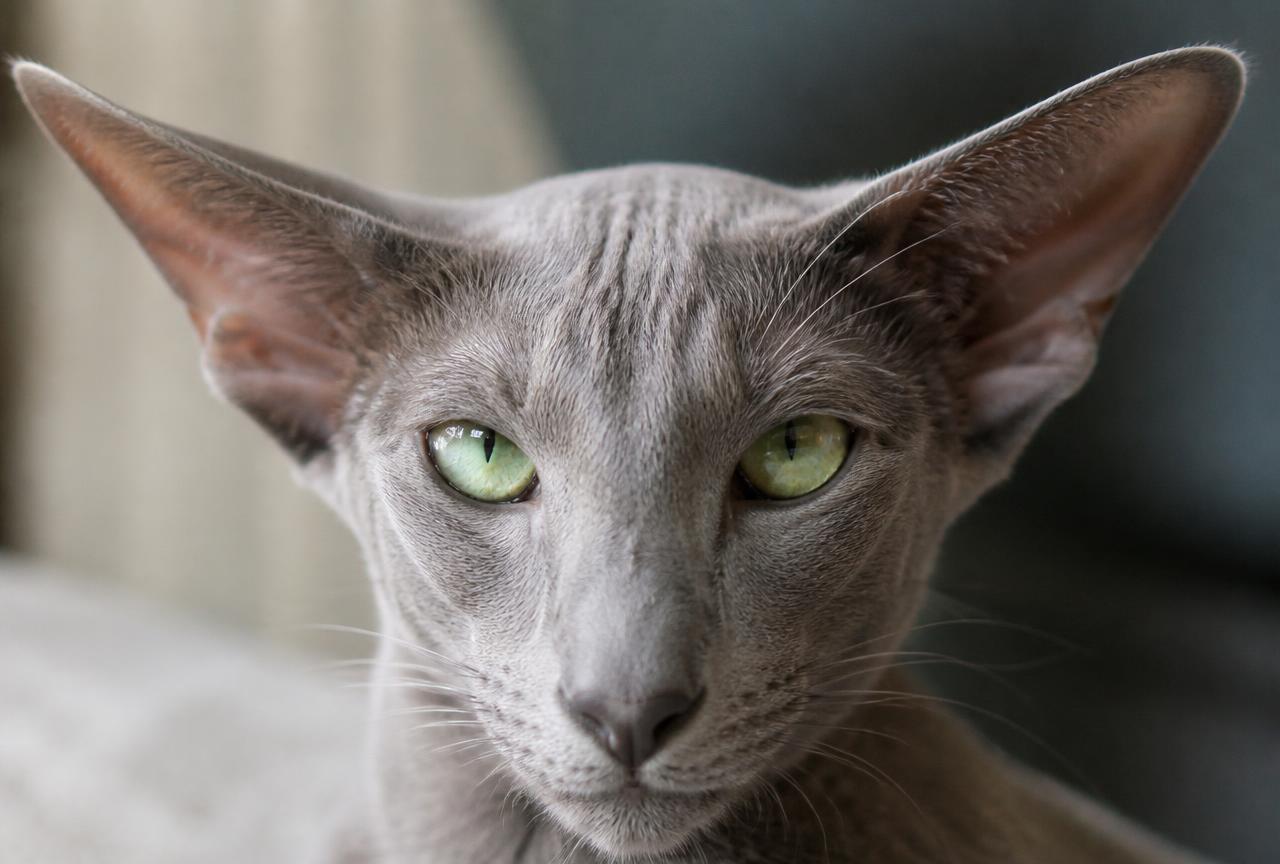
A slender, long-legged, enormously eared cat bred from Siamese lines and available in almost every colour and pattern a cat can be. Intensely social, athletic and famously talkative.
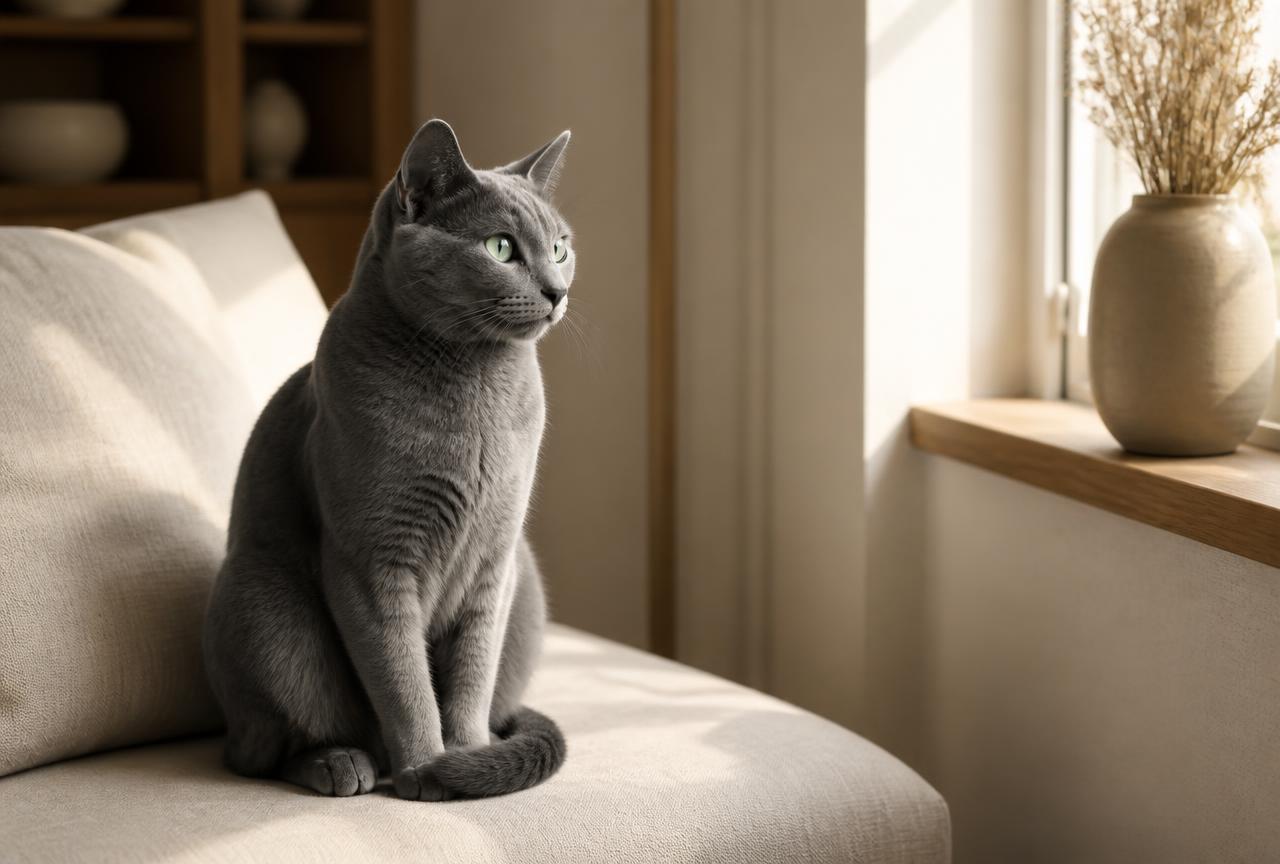
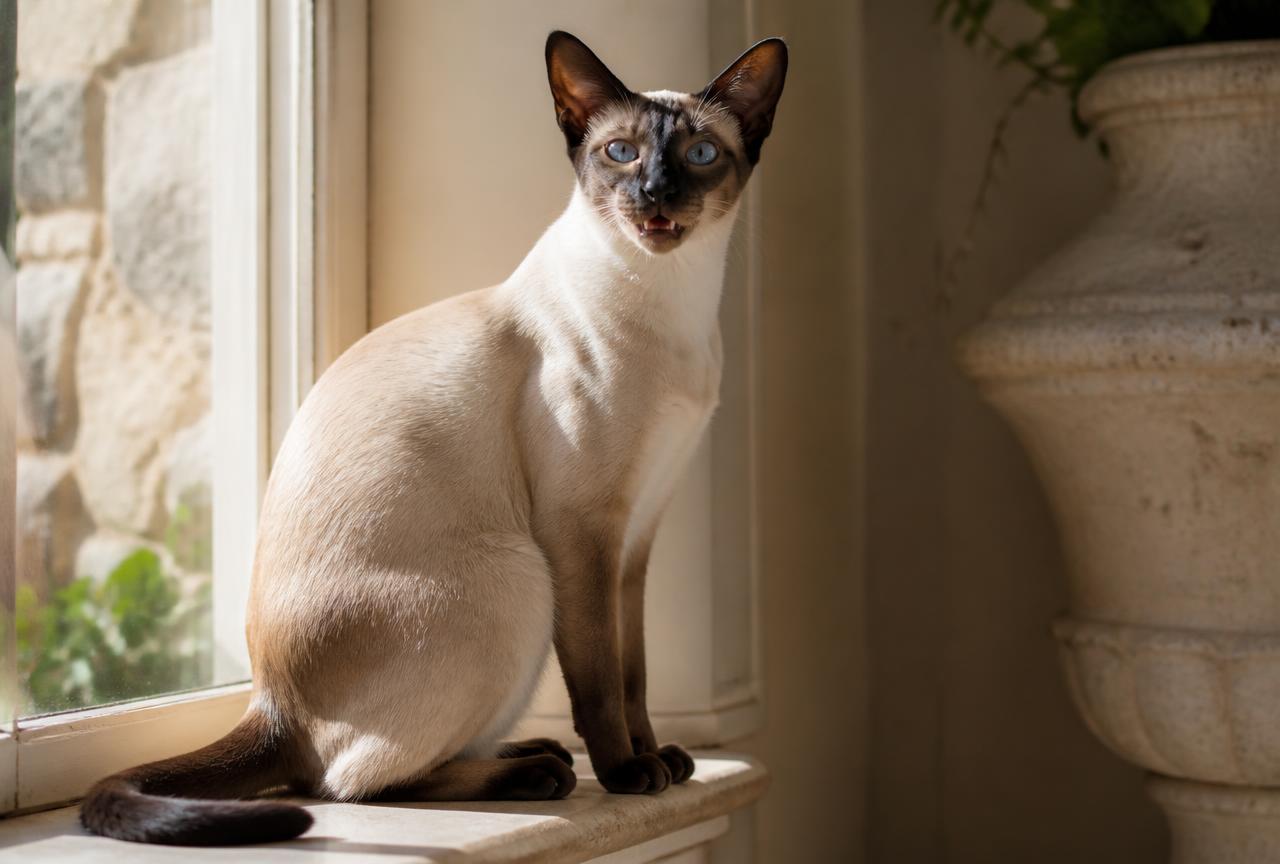
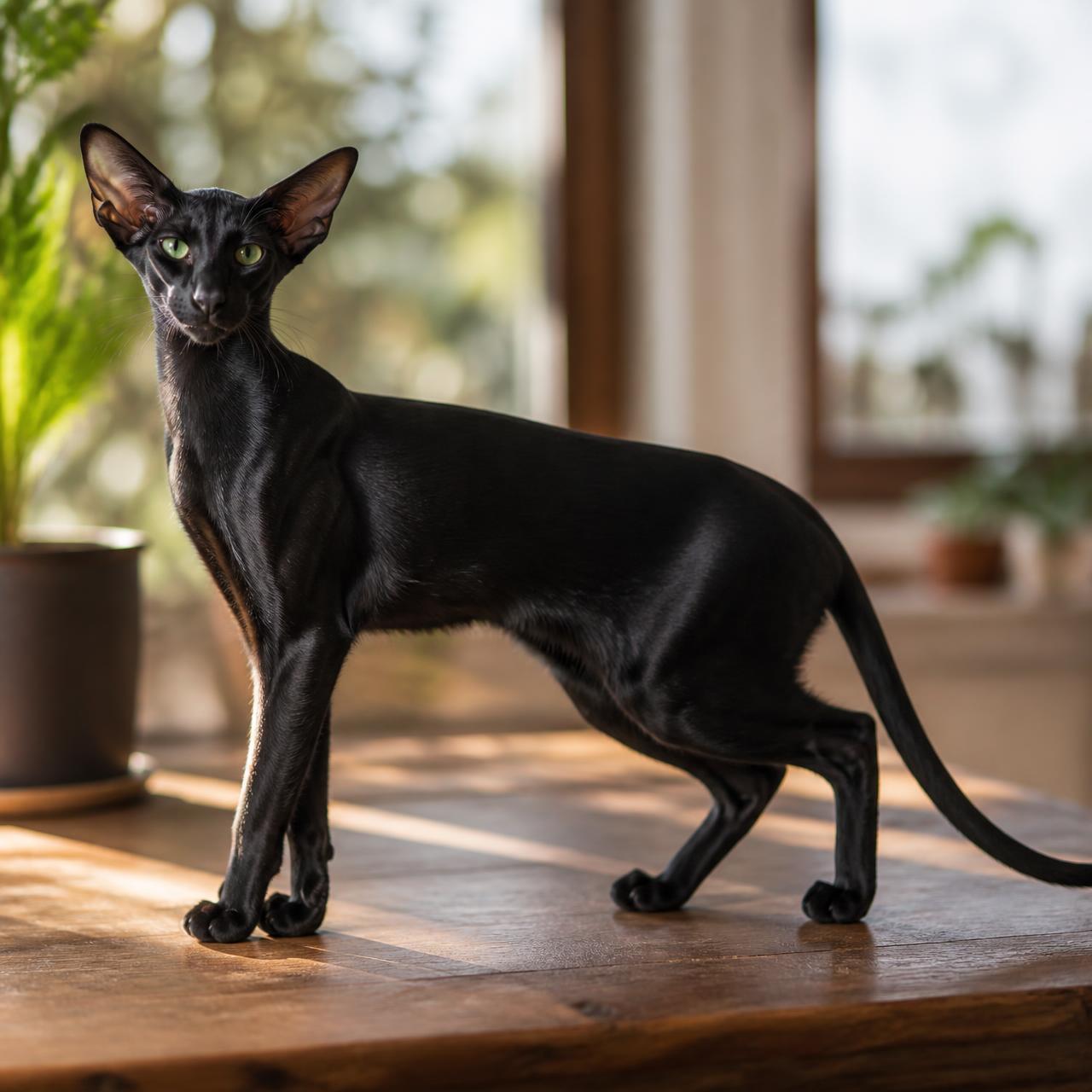
The Oriental Shorthair is the same cat as the Siamese with the colour restriction removed. That is not a marketing line but a genetic fact: the two share ancestry and, in several registries, breeding programmes, and a litter can contain both. What separates them is the pointed pattern. Remove it and you can have this body in solid ebony, blue, lilac, cinnamon, fawn, red, cream, tortoiseshell, smoke, shaded, and every tabby pattern, in something over three hundred recognised combinations. Everything else, the wedge head, the improbable ears, the long-legged, whip-tailed build, the temperament, the voice, comes with it.
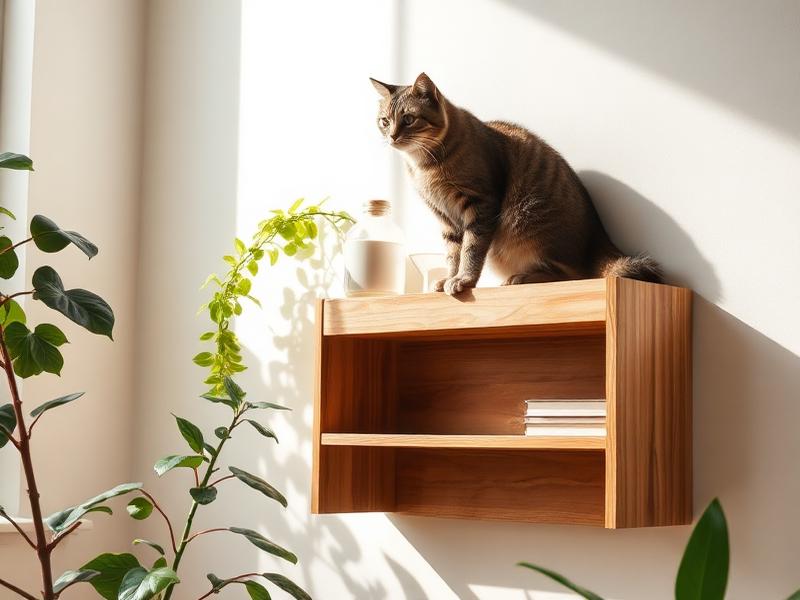
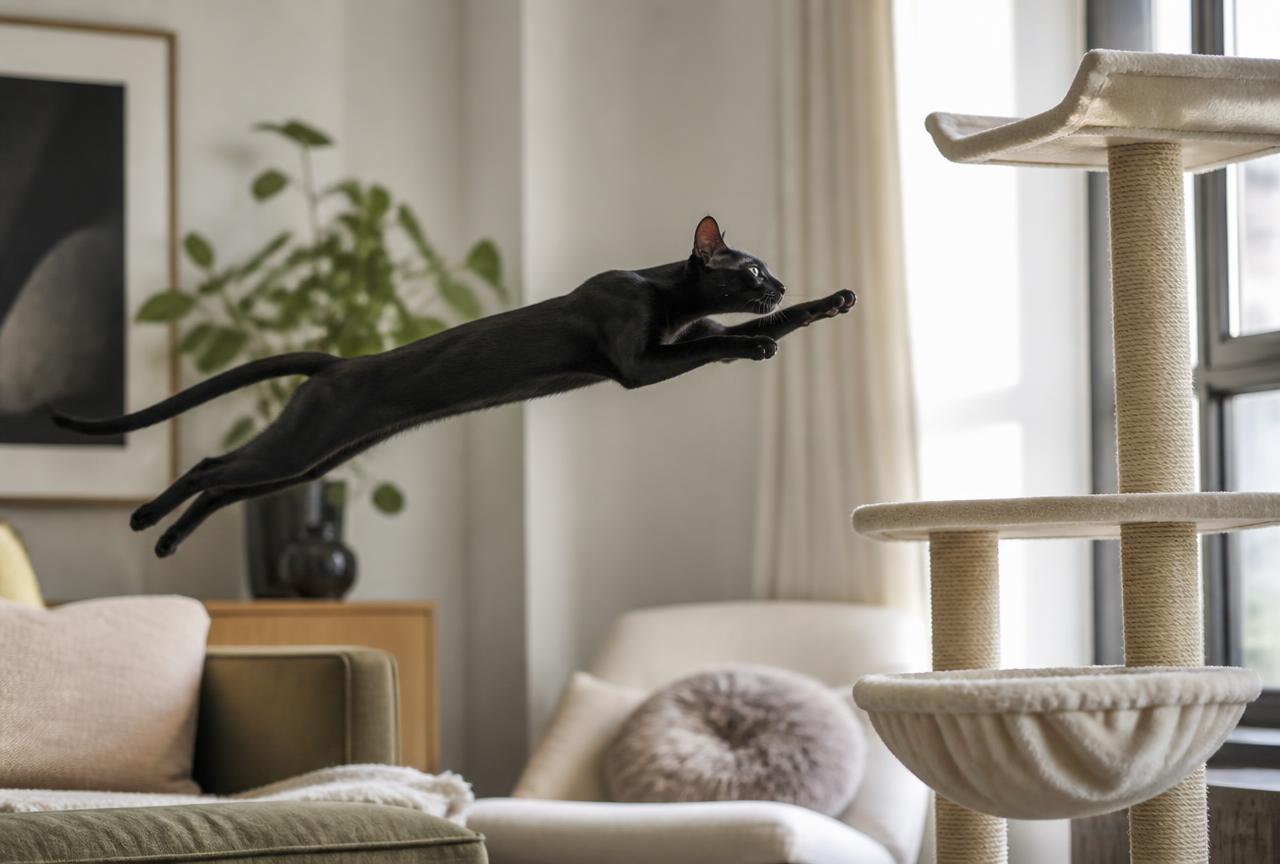
The silhouette is genuinely striking and is why most people arrive here. In the flesh the cat is lighter than it looks. There is very little coat, no undercoat to speak of, and almost no fat, so an Oriental in good condition feels like a warm bundle of muscle and bone. It is also considerably more athletic than a decorative cat has any right to be. Ours would go from floor to the top of a door frame in two moves. Give this cat legitimate height, a full-height tree, shelves, a run along the tops of cupboards, and it will use them; withhold it and the bookcase becomes the route, with everything on the shelves as collateral.
Then there is the voice, and it deserves the space it gets here because it is what makes or breaks the match. An Oriental talks. Not the occasional chirp of a domestic shorthair but a loud, flat, insistent call, used deliberately, aimed at a specific person, and repeated with increasing conviction until it gets a response. It comments on the day, on the arrival of anyone at the door, on the state of the food bowl and on your having sat down without it. There is nothing wrong with the cat. This is a breed selected for a hundred years to engage with people, and the noise is engagement. If you work from home on calls, or share thin walls with neighbours, take it seriously before you fall for the ears.
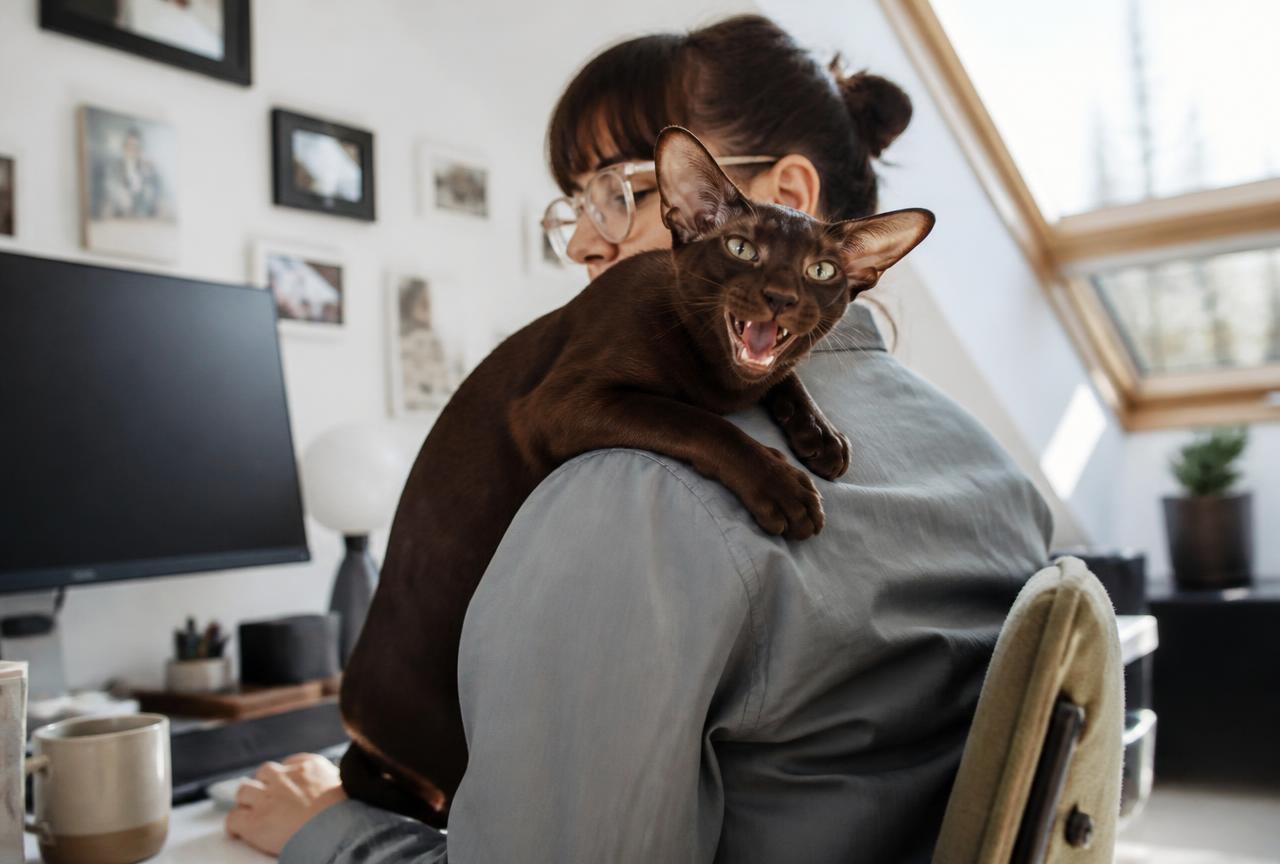
Company is the other non-negotiable. The Oriental attaches hard, usually to one person, and follows that person from room to room, into the bathroom, onto the desk, under the duvet. Left alone in an empty flat for a full working day, this is not a cat that sleeps through it; it becomes bored, destructive and louder. Our standing advice for this breed is to take two, ideally littermates. It costs marginally more, halves the neediness, and gives the cat something to do that is not opening your kitchen cupboards. If it must be a single cat, the home should rarely be empty.
Care is otherwise as easy as it gets. The coat needs a weekly rub-over with a rubber mitt or a soft brush, which removes the little that sheds and mostly serves as a bonding routine. Nails every two to three weeks. Teeth several times a week, because dental disease is common across the Siamese-derived breeds and a slim cat with a narrow jaw does not hide it well. Watch weight in the other direction from most breeds: an Oriental should be lean, and a rounded one is carrying more than its frame is built for.
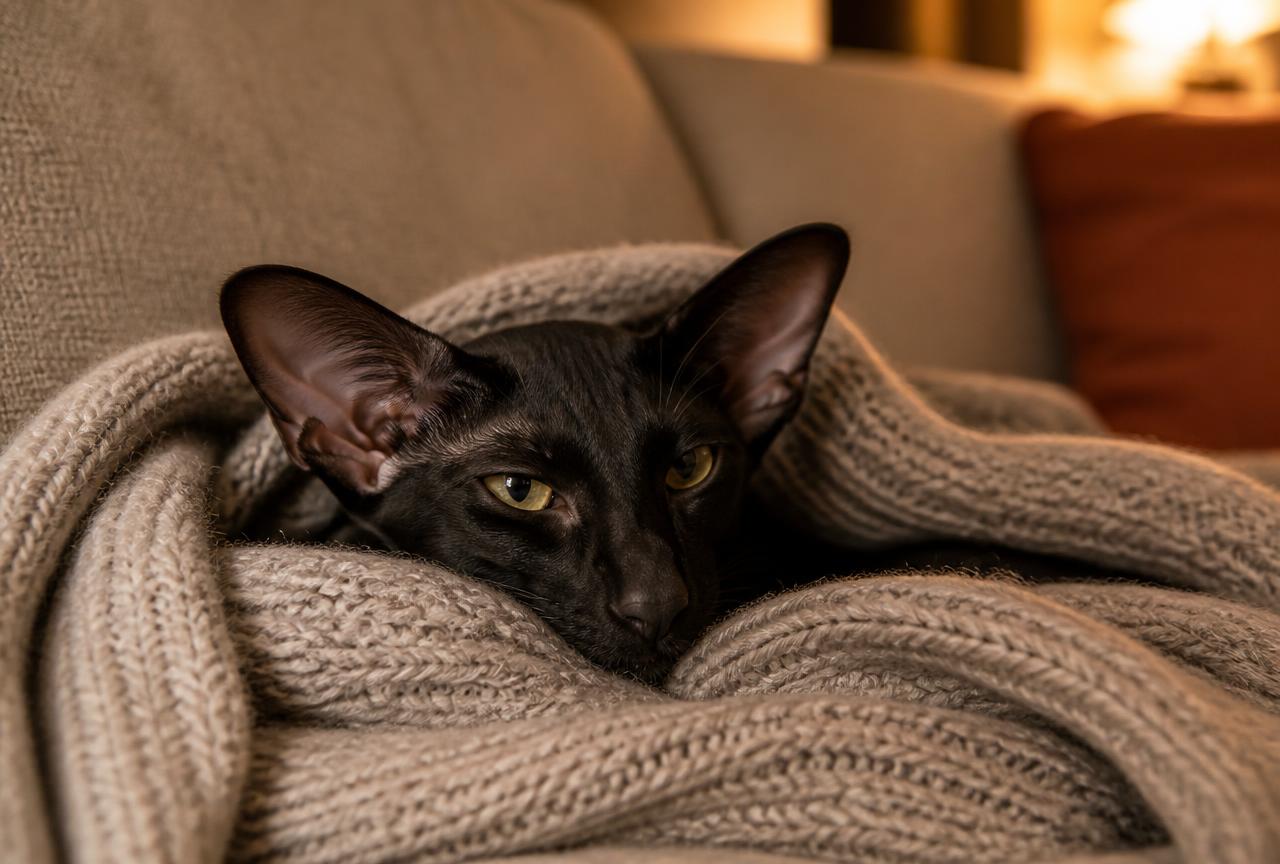
Warmth is the quiet practical point people miss. With a whisper of a coat and no reserve, this cat seeks heat constantly, under blankets, on laptops, against people, in patches of sun. Provide covered beds, leave a blanket on the sofa and keep at least one room comfortably warm in winter. A cold Oriental is a miserable one, and it will tell you at length.
Health follows the Siamese lines it comes from. Hypertrophic cardiomyopathy appears across many pedigree breeds and should be screened by echocardiogram in breeding cats. Progressive retinal atrophy has a DNA test, and a good breeder will show the certificate rather than describe it. Amyloidosis, chiefly affecting the liver, is documented in Siamese-related lines and is the one to raise directly, since there is no simple test, what you want is a breeder who knows the older cats in their line and will talk honestly about them. Dental disease and, in some cats, food sensitivities round out the list.
The verdict is unusually clear-cut for this index. The Oriental Shorthair is one of the most rewarding cats to live with if you actively want a companion animal in the fullest sense, one that participates, learns, fetches, greets and argues. It is one of the worst possible choices if what you wanted was an elegant ornament with a low maintenance requirement. The ears do not tell you which of those you are getting. The volume does.
One of the most engaged cats you can live with, and one of the loudest. Buy it for the temperament, not the silhouette.
Grooming, realistically
- 1Rub the coat over weekly with a rubber mitt or soft brush; it takes two minutes and removes most of what sheds.
- 2Trim nails every two to three weeks, an active climber does real damage to furniture with sharp claws.
- 3Brush teeth several times a week; dental disease is common across Siamese-derived breeds.
- 4Wipe the large ears out monthly with a damp pad only if visibly waxy, never with cotton buds.
- 5Weigh monthly and keep the cat lean; ribs should be easy to feel with a light touch.
- 6Provide covered or heated beds through the winter and check the cat is not seeking heat from unsafe places.
What you actually need
- Rubber grooming mitt
- Nail clippers
- Cat toothbrush and enzymatic paste
- Full-height cat tree, ideally floor to ceiling
- Covered or self-warming bed
- Puzzle feeders and wand toys for daily play
Kitten to adult
| Age | Male | Female | What is happening |
|---|---|---|---|
| 8 weeks | Ears already look absurd relative to the head. Kittens should be confident and forward, not hiding. | ||
| 4 months | All legs. Climbing starts in earnest, get the tall tree in place now. | ||
| 8 months | Slim and long. Resist the urge to feed up; this frame is meant to look lean. | ||
| 12 months | Near adult length, still filling out through the chest. | ||
| 2 years | Full maturity. Males noticeably heavier; ribs should be easy to feel under the skin. |
Ranges are typical, not targets. Judge condition by ribs and waist, and check with the ideal weight checker.
What to ask a breeder
- Have both parents been echocardiogram-screened for hypertrophic cardiomyopathy, and when?
- Can I see the DNA test certificate for progressive retinal atrophy?
- Has amyloidosis appeared anywhere in this line, and how old are the oldest cats you have bred?
- How are kittens socialised, and are they raised underfoot in the house?
- Do you recommend homing two together, and do you have a pair available?
- What are the parents like vocally, how loud, and how persistent?
- What is the diet, and have any cats in the line had food sensitivities?
Health watch-list
What to ask a breeder about, and what to watch for over a lifetime. This is orientation, not veterinary advice, anything you notice belongs in front of a vet.
Hypertrophic cardiomyopathy
UncommonThickening of the heart muscle, reported across many pedigree breeds. Breeding cats should be screened by echocardiogram; ask when the parents were last scanned. Fast breathing at rest or sudden hind-leg weakness needs same-day veterinary attention.
Progressive retinal atrophy
UncommonAn inherited degeneration of the retina documented in Siamese-related lines, leading to gradual vision loss. A DNA test exists and is inexpensive, ask to see the certificate for both parents rather than a verbal assurance.
Amyloidosis
UncommonAbnormal protein deposition, chiefly in the liver, described in Siamese and related breeds. There is no simple screening test, so the useful question is how long the cats in a breeder''s line have lived and what they died of.
Dental disease
CommonPeriodontal disease and tooth resorption are frequent across the Siamese-derived breeds. Home brushing several times a week and an oral check at every visit is the cheapest prevention available.
Cold intolerance
CommonNot a disease but a real welfare issue. A single short coat over a lean frame means this cat seeks heat constantly. Provide covered beds and a warm room, and check it is not settling somewhere unsafe.
Food sensitivity and vomiting
OccasionalSome lines are prone to digestive upset. Change diets over seven to ten days, and treat vomiting more than about once a week as a reason to investigate rather than a habit.
What it costs to keep one
Realistic running cost
€75 / month
About €900 a year, or roughly €12,600 across a 14-year life, before purchase price, neutering and one-off vet events.
Before the cat arrives. Budget roughly €280–600 for trays, carrier, posts, bowls, bedding and grooming kit sized for this breed. Figures throughout are indicative and vary a good deal between countries.
Interactive · built for this breed
Is an Oriental Shorthair right for your home?
Five honest answers. The volume question is the one people underestimate.
Verdict
Made for this cat
Company, height, warmth and a tolerance for conversation. An Oriental would thrive here, and you would get one of the most engaged cats in the index.
Learn what the noise means in the Siamese voice decoder, or fill the day with indoor enrichment.
The verdict, by household
Flat dweller
Good, with height
Family with young children
Very good
First-time owner
Only with eyes open
Multi-cat home
Excellent
Allergy-conscious
No advantage
Home worker on calls
Think again
When to call your vet
- Faster or laboured breathing at rest, or open-mouthed breathing after mild activity
- Sudden weakness or paralysis in the hind legs, an emergency associated with heart disease
- Bumping into furniture, or reluctance to move around in dim light
- Weight loss in a cat already lean, or a drop in appetite lasting more than a day
- Persistent vomiting, jaundice or a swollen abdomen
- Bad breath, drooling or dropping food, which is common and painful across these lines
- A cat that goes quiet and withdrawn, in this breed, silence is the warning sign
Nothing here is a diagnosis. Breathing difficulty, sudden hind-leg weakness and straining to urinate are emergencies, go the same day.
Oriental Shorthair vs the closest alternatives
| Breed | Weight | Energy | Grooming | € / month |
|---|---|---|---|---|
| Oriental Shorthair | 3–5.5 kg | 9/10 | 2/10 | €75 |
| Siamese | 3–6 kg | 8/10 | 2/10 | €72 |
| Ocicat | 3.5–7 kg | 9/10 | 3/10 | €85 |
| Cornish Rex | 2.5–4.5 kg | 10/10 | 2/10 | €80 |
Oriental Shorthair questions, answered
What is the difference between an Oriental Shorthair and a Siamese?
Chiefly the coat pattern. They share ancestry and, in several registries, breeding programmes, so a single litter can contain both. A Siamese is pointed; an Oriental can be almost any colour or pattern except that. Body type, temperament and voice are the same, which is the part buyers should be reading.
Are Oriental Shorthairs really that loud?
Yes. Among the most vocal breeds we cover. The call is loud, flat and repeated, aimed at a specific person, and it escalates when ignored because escalation works. This is not a training problem to be solved; it is the breed doing what a century of selection produced.
Can an Oriental Shorthair be left alone all day?
Not comfortably. A full working day in an empty flat produces a bored, destructive and noisier cat rather than a resigned one. If your hours cannot change, home two together, ideally littermates, so the company requirement is met by another cat rather than by you at midnight.
Are they hypoallergenic?
No. The very short single coat sheds little, so you see less hair on the sofa, but visible hair is not what most people react to. Fel d 1, the protein in saliva and skin secretions, is produced at ordinary levels. Spend time with an adult of the breed before assuming otherwise.
How much grooming does one need?
Almost none. A weekly rub with a rubber mitt takes two minutes and collects most of what sheds. The real routine is nails every two to three weeks and teeth several times a week, because dental disease is common in these lines and this is the part owners skip.
Do they get cold?
Frequently. There is minimal coat, no undercoat and very little body fat, so an Oriental hunts heat all winter, under duvets, on laptops, against people. Give it covered or self-warming beds and keep at least one room properly warm. Heat-seeking in odd places is a sign the home is too cold, not a quirk.
What should I ask a breeder?
Three health questions and one temperament question. Echocardiogram screening for both parents, the DNA certificate for progressive retinal atrophy, and an honest answer on whether amyloidosis has appeared in the line. Then ask how loud the parents are, vocality is heritable, and the honest breeders will tell you.