Why is my cat so vocal? Decoding the Siamese voice
Oriental cats talk more than any other type, and they do it for a reason. Understanding what each sound is asking for is the difference between a conversation and a nightly argument.
Nadia Ferreira
Feline behaviour writer, ReMews. desk
Published 7 August 2026 · Updated 4 September 2026
Written against ISFM and AAFP behaviour guidance
The short version
- Adult cats barely meow at each other. The meow is aimed at us, and it is shaped by which version of it worked before.
- Oriental breeds are genuinely louder and more persistent, and they were bred that way. It is a temperament trait, not a fault to correct.
- Sound plus context plus time of day gives you the meaning. Any one of the three on its own tells you very little.
- Feed to a clock, never to the voice. Rewarding the loud version teaches escalation within a fortnight.
- Reward the quiet ask: answer trills and short calls, and let the yowl arrive at nothing.
- New, night-time or escalating vocalising in a cat over ten is a medical question first: thyroid, blood pressure, pain, cognitive decline.
Adult cats living wild barely meow at one another. They hiss, they growl, they yowl over territory and mating, and they trill to kittens. The everyday meow, the one that lands somewhere between a question and an accusation, is almost entirely reserved for us.
That is the first thing worth absorbing. Your cat is not talking. It is talking to you, in a register it developed because we respond to it, and it has spent its whole life narrowing down which version of it works fastest.
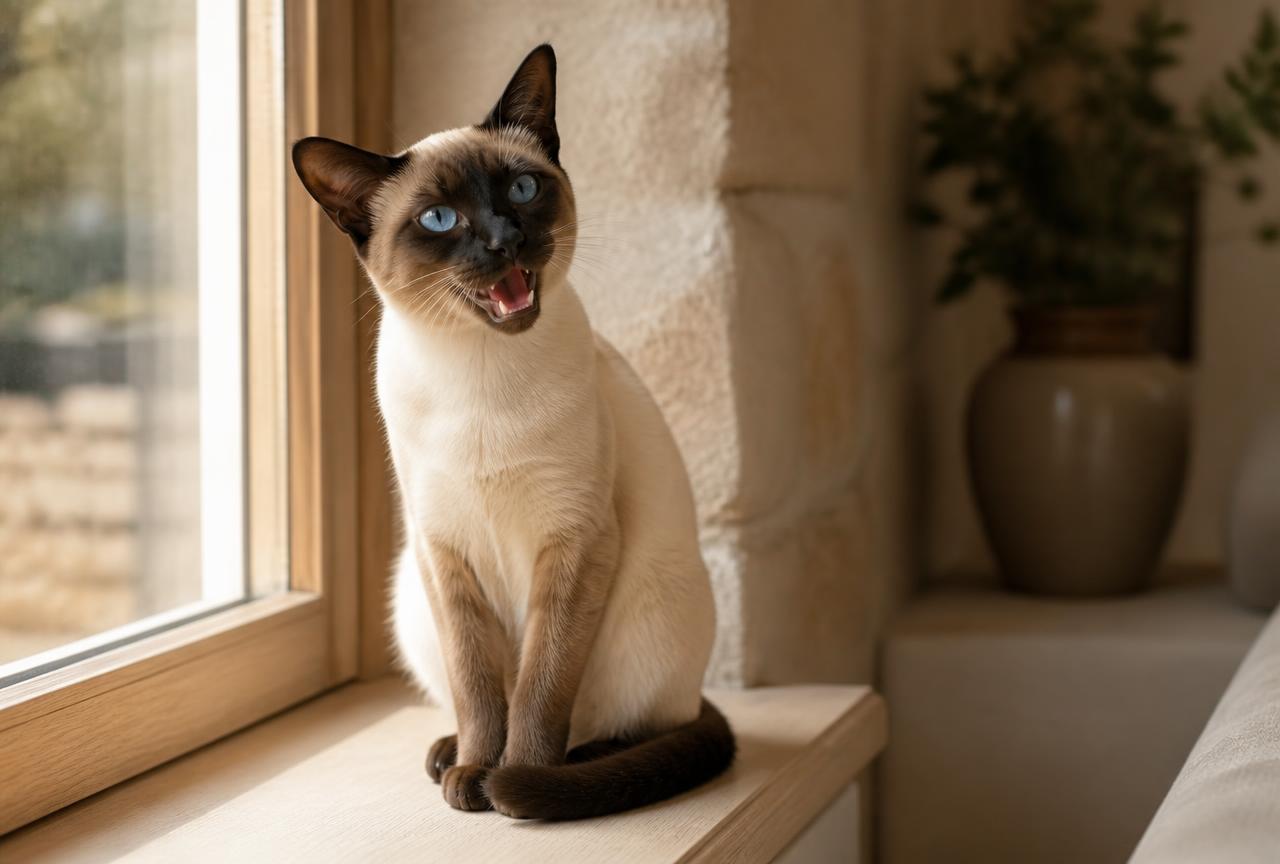
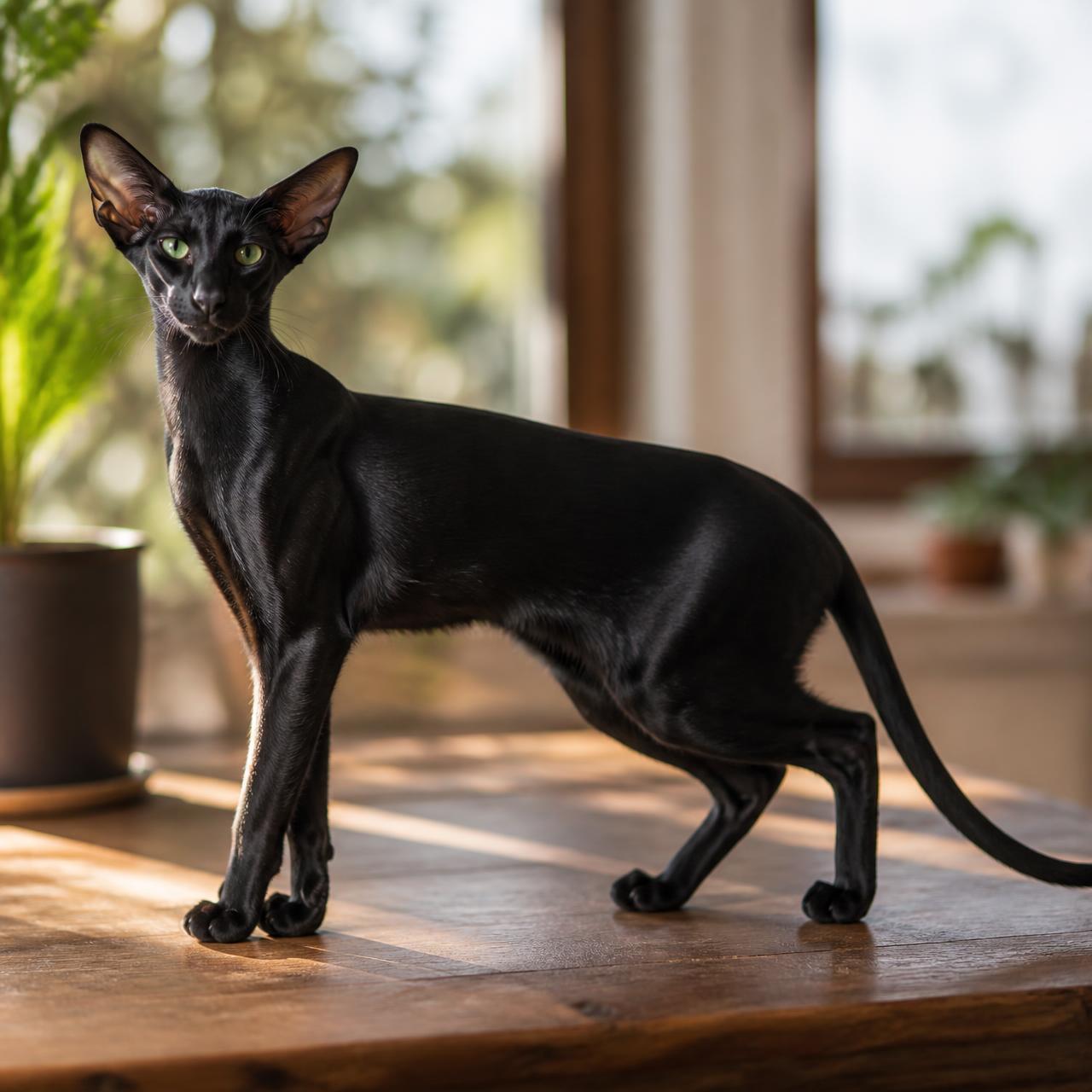
Siamese and Oriental cats simply do more of this, more insistently, in a voice that carries through a closed door. Handled well, it is one of the most rewarding things about living with them. Handled badly, it becomes a nightly negotiation you lose.
The meow is aimed at humans, and shaped by us
Kittens call to their mother; the queen trills back. Most cats let that channel fade as they mature. Cats living with people do the opposite: they keep it, aim it at us, and refine it.
Research into cat vocalisation keeps arriving at the same conclusion, that domestic cats produce calls that human ears find harder to ignore than the equivalent wild ones. The solicitation purr is the clearest case, a purr with a higher-frequency component embedded in it that people consistently rate as urgent.
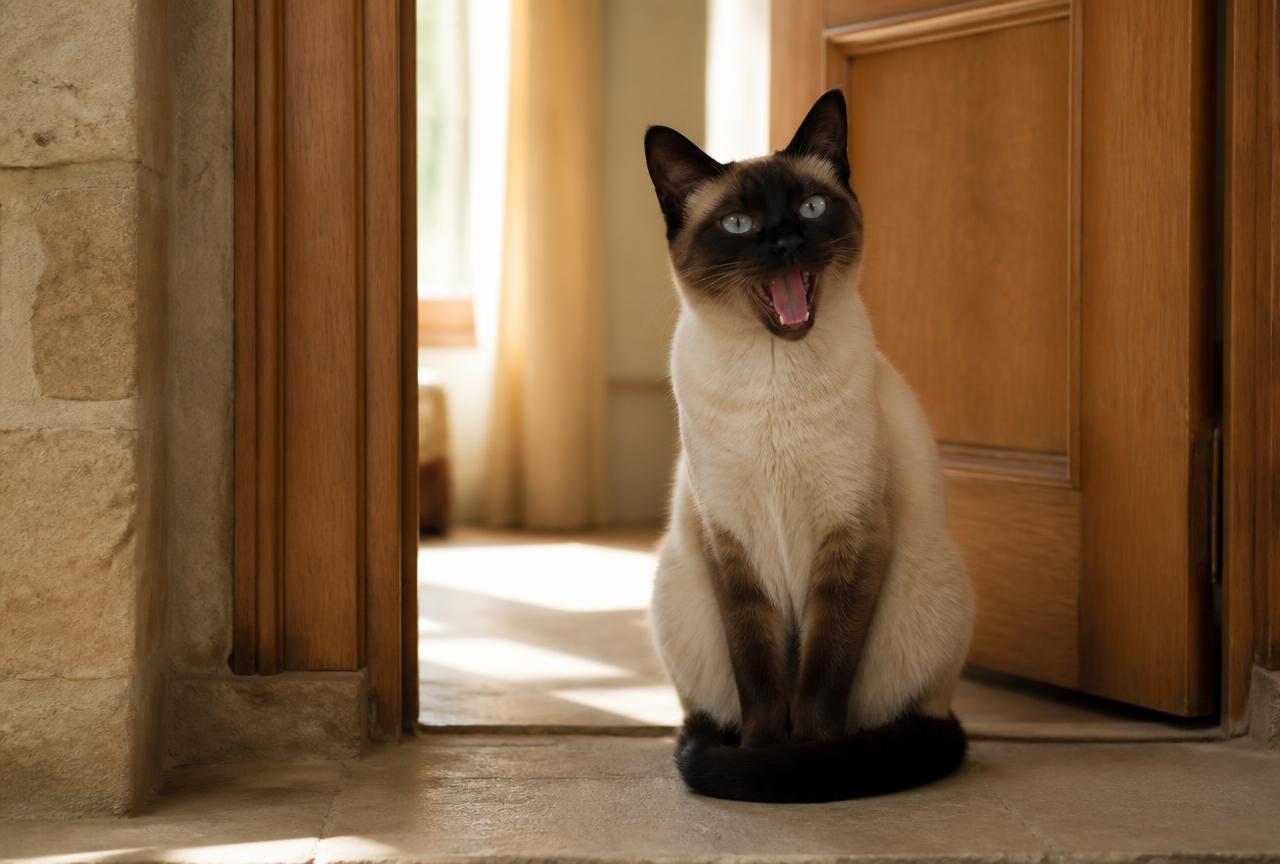
The meow you hear most is the meow that worked. Every household trains its own dialect without noticing.
Which is why two Siamese in two homes sound different. One learned that a short chirrup gets a reply. The other learned that nothing short of a sustained yowl outside the bedroom door produces breakfast.
Why Oriental breeds talk more
This is a genuine breed trait, not a stereotype. Siamese and Oriental Shorthair cats were selected over centuries by people who wanted a cat that engaged, followed them around, and answered back. Sociability and vocality travelled together.
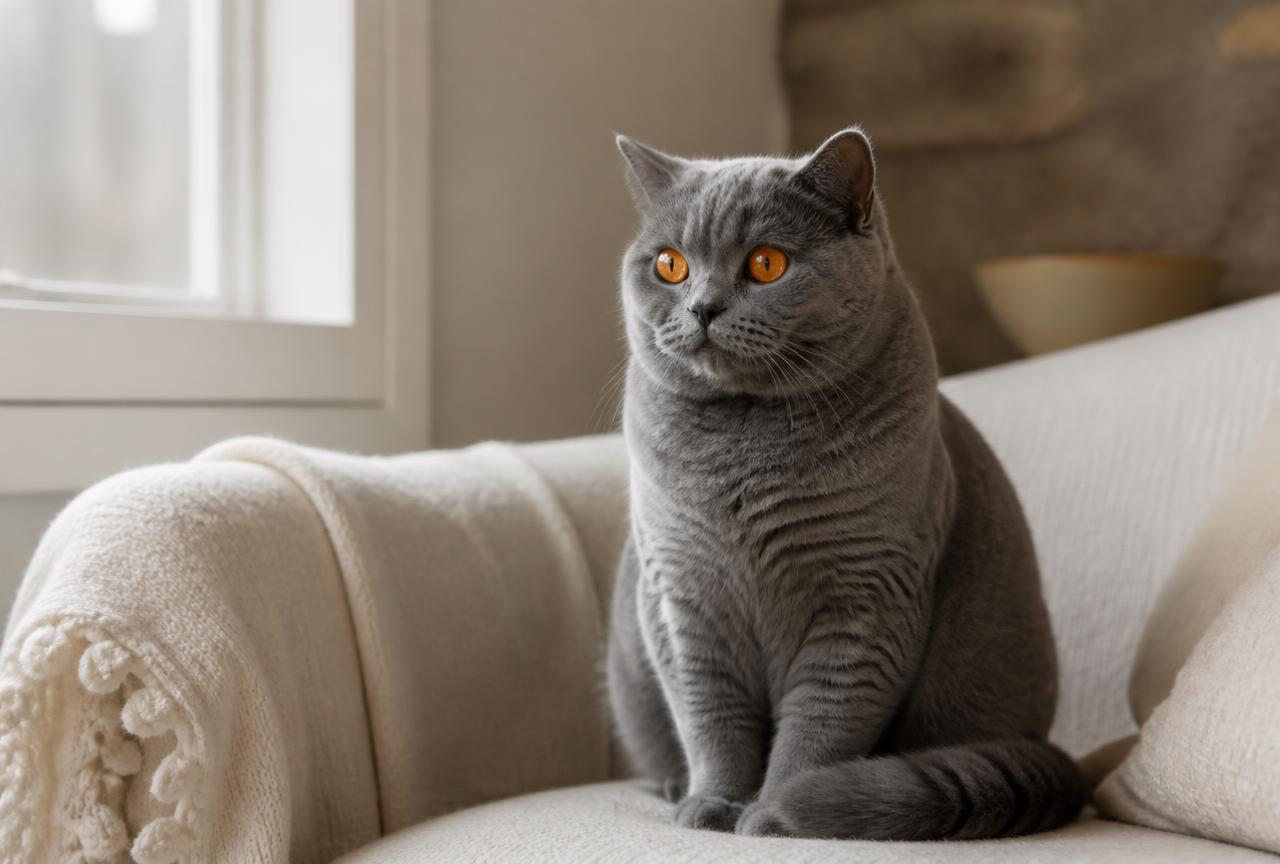
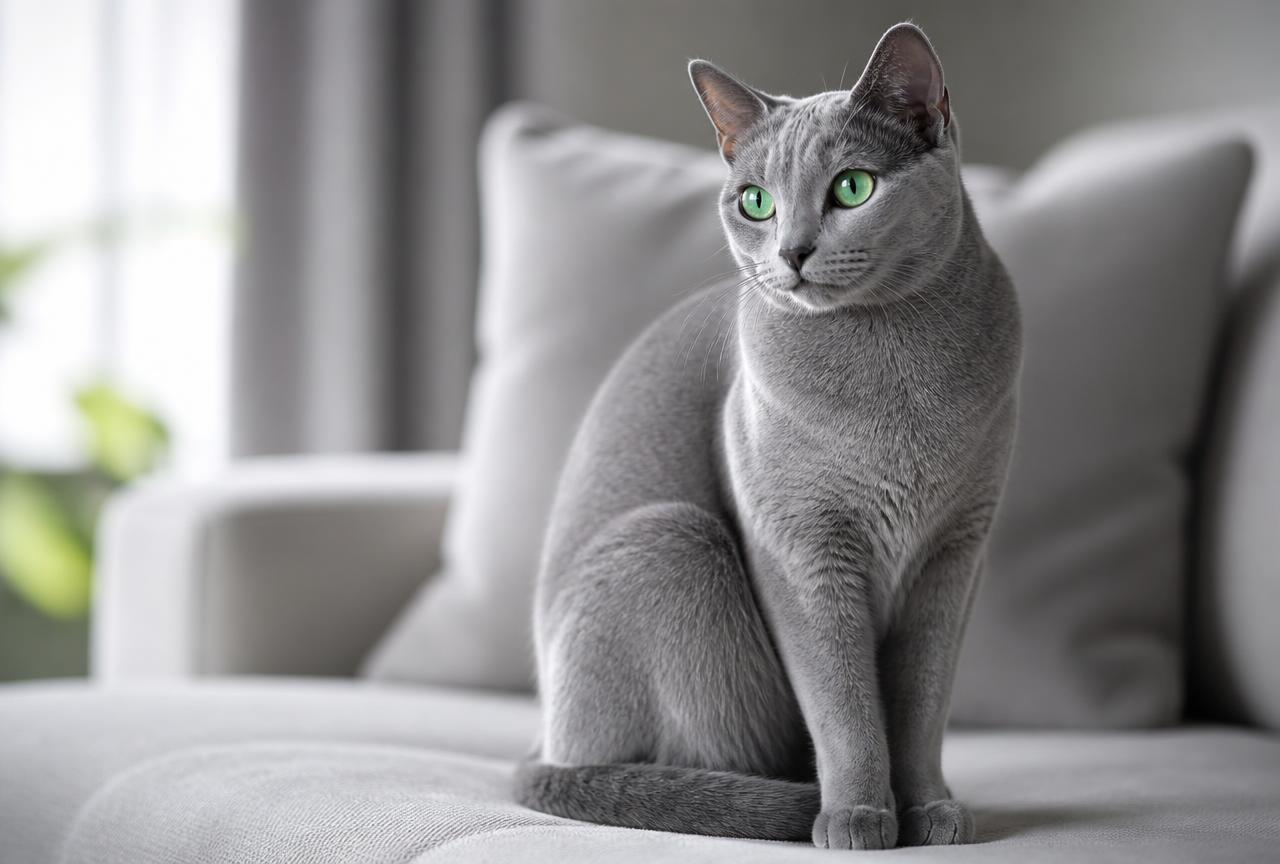
The practical consequences: more calls per day, longer calls, greater persistence in the face of being ignored, and a strong dislike of being left alone. A talkative cat is not a defective quiet cat. If silence is what you want, our breed matchmaker will steer you towards a Russian Blue or a British Shorthair instead, and you should let it.
| Sound | What it usually means | Your move |
|---|---|---|
| --- | --- | --- |
| Trill or chirrup | Friendly greeting, contact call | Answer it; trill back |
| Short meow | Small request or acknowledgement | Reply, then act if there is an object |
| Long mrrraaaow | Escalated request; the short one failed | Find the door, bowl or tray in question |
| Solicitation purr | Affection plus a request, deliberately hard to refuse | Indulge the affection, keep meals on the clock |
| Chattering | Thwarted hunting, prey out of reach | Run a wand-toy hunt within the hour |
| Yowl or howl | High arousal: frustration, cycle, learned demand | Rule out medical, then fix the routine |
| Hiss or growl | Fear or pain; a request for distance | Stop, back off, give an exit |
| Silent meow | Call is outside your hearing, or the throat hurts | Once is nothing; persistent needs a check |
Context does most of the work. The same long call means one thing beside an empty bowl and something considerably more urgent beside the litter tray.
The kitchen is a trained transaction
Nine out of ten "my cat won't stop meowing" cases are a feeding schedule the cat has learned to override. Cats are excellent at this. They do not need many repetitions to work out that the twelfth call produces a bowl, and once they know, they start at the twelfth.
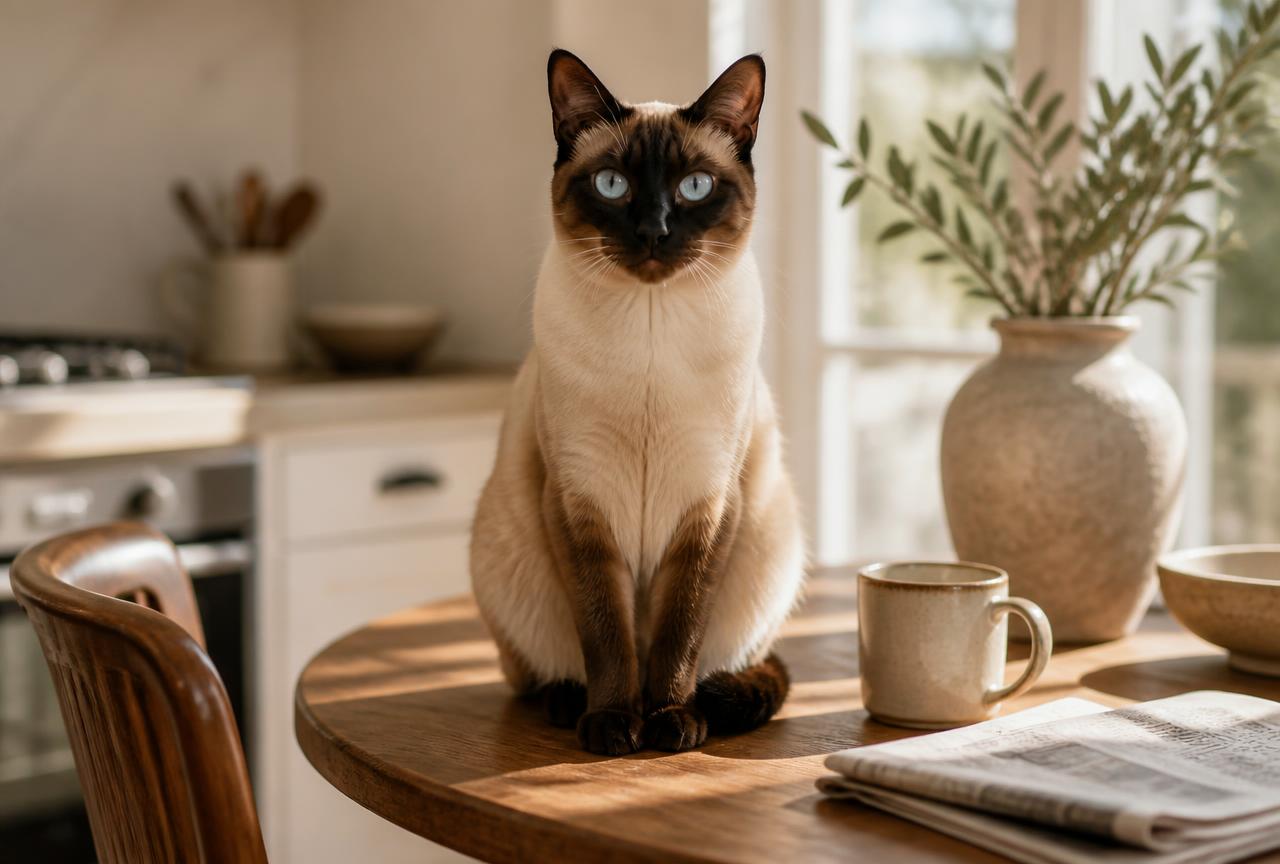
The fix is unglamorous and it works:
- 1Feed to a clock, not to the voice. Pick times and hold them.
- 2Split the ration into three or four smaller meals so the hungry gap shortens. Work out the real daily amount in the portion calculator.
- 3Move breakfast off your waking time by twenty minutes, so your alarm stops being the cue.
- 4Feed part of it from a puzzle, which turns eating into work rather than an event to demand.
- 5Never feed during a calling episode, even once. One reward resets the whole project.
- 6Expect a worse week before a better one. The behaviour gets louder before it fades; that is the extinction burst and it means it is working.
If wet food is part of the routine, our wet versus dry piece covers how to split the day without adding a fourth negotiation.
Doors, and the geometry of frustration
The second great category is access. Cats care about closed doors out of all proportion, and Orientals care most of all, because a closed door is a room where you might be and they are not.
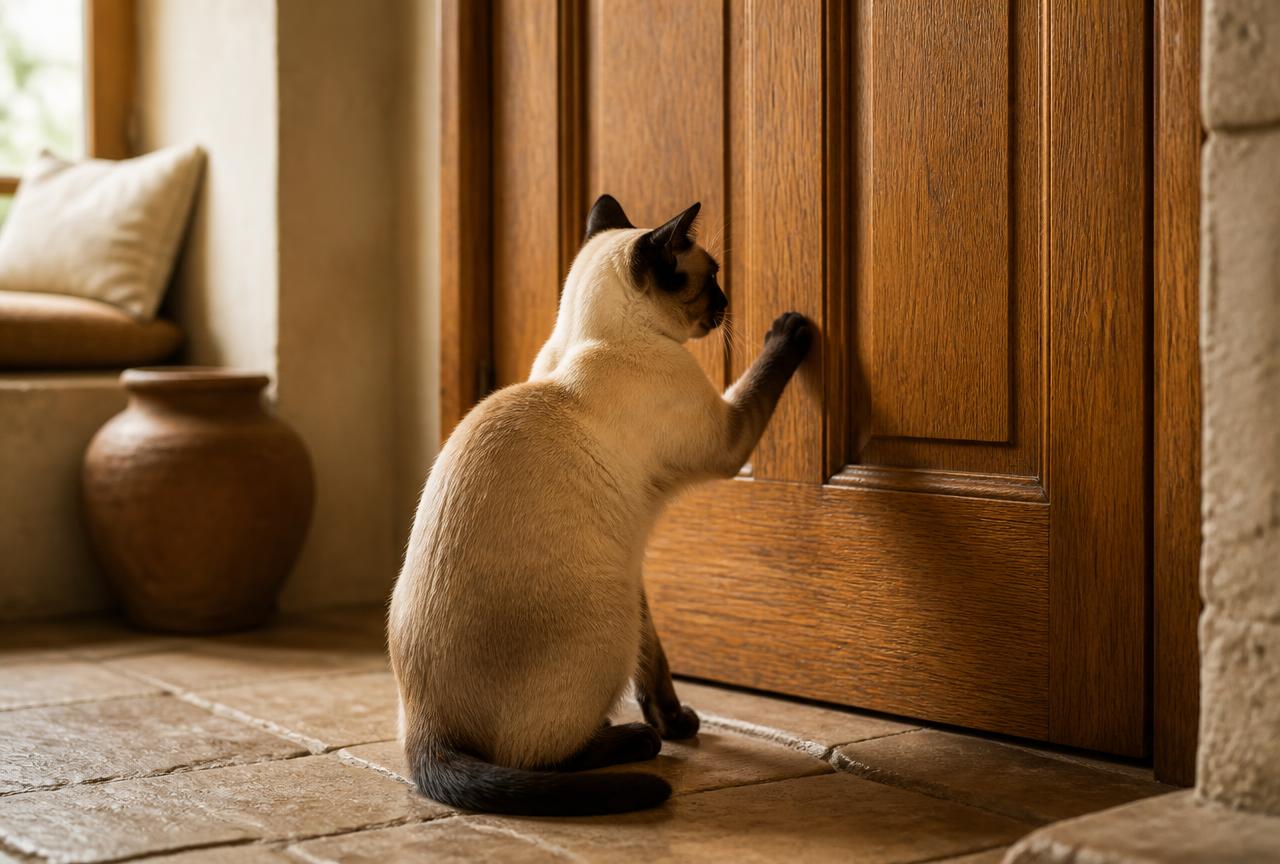
Where you can, leave interior doors ajar, and give the cat a route and a resting place on your side of the ones you cannot. If your bedroom must stay shut at night, the answer is a genuinely good sleeping arrangement outside it, plus the biggest play session and the last meal of the day immediately before bed. See our indoor enrichment guide for the vertical routes that make a shut door tolerable.
Reward the quiet ask
This is the whole training programme, and it fits in a sentence: respond to the version of the sound you want to hear more of.
- Answer trills and short meows verbally, every time, promptly
- Let long yowls arrive at nothing, with no eye contact and no walking towards the cat
- Never punish, spray, or shout: it removes the signal but keeps the need, and it costs you trust
- Give attention on your initiative several times a day, so the cat does not have to ask
- Log the times of night calls for a week before you decide anything
- Keep the two play-and-feed sessions, morning and last thing, absolutely fixed
Use the decoder below before you conclude that a sound is just noise. It combines what you are hearing with where and when, and flags the combinations that belong in a vet appointment rather than a training plan.
Interactive · built for this article
Vocal decoder
Pick the sound, where it happens and when. It gives the most likely meaning, what to do about it, and whether it belongs in a vet conversation instead.
Most likely meaning
An insistent, escalated request. The short version did not work, so the cat lengthened it. In the kitchen, this is a learned transaction rather than hunger.
Normal conversation
What to do
Feed to a fixed clock, never to the voice. Split into more, smaller meals if the gap is long. Move breakfast off your waking time so your alarm stops being the cue.
An interpretation aid, not a diagnosis. Any new or escalating vocalising, particularly in a cat over ten, deserves a vet appointment before a behaviour plan. Wondering whether the breed is the cause? Read the Siamese review.
When it is medical, not conversational
Some vocalising is a symptom. Treat the following as a vet question first:
- Any new or escalating vocalising in a cat over ten
- Night yowling with weight loss, a big appetite or a racing heart, which suggests hyperthyroidism
- Calling with disorientation, staring at walls, or forgetting the tray, which suggests cognitive dysfunction
- Vocalising in or beside the tray, straining, or frequent tiny urinations. In a male cat this can be a blocked bladder and it is a same-day emergency
- Crying when picked up, or when a particular area is touched, which is pain
- Sudden loss of voice, or a silent call with gagging
- Yowling in an unneutered cat of either sex, which is hormonal and resolves with neutering
Our senior signals piece covers the age-related picture in more detail, and the cat age calculator will tell you whether your cat has quietly crossed into the bracket where these questions change.
By household
- First Siamese, quiet flat: budget for noise and interaction, not for silence. Two play sessions and a fixed feeding clock will save you months of arguing.
- Working long days: the calling is often loneliness rather than hunger. Puzzle-feed the midday portion, and consider a compatible second cat before considering a quieter one.
- Thin walls, close neighbours: never feed to the voice, keep the bedroom door situation consistent, and get any night yowling checked early rather than late.
- Older cat, new noise: stop reading behaviour advice and book the appointment. Get thyroid bloods and blood pressure done, then come back to the routine.
- Children in the house: teach that a hiss means stop, immediately and without exception. It is the one sound in this article that is not a conversation.
What good looks like
A well-managed talkative cat still talks. It trills when you come home, comments on the weather, and tells you when the tray needs doing. What it does not do is stand outside your door at four in the morning building volume, because that has never once produced a result.
That is the trade with an Oriental cat. You get a genuinely interactive animal that involves you in its day, and in exchange you keep your side of the routine boringly predictable. Most of the noise people complain about is the sound of a routine that is not.
Questions people actually ask
Why is my cat so vocal all of a sudden?
Sudden vocalising is a change, and changes have causes. In cats under ten, look for a shifted routine, an empty bowl, a dirty tray, a closed door, or an unspayed cycle. In cats over ten, treat it as medical until proven otherwise: hyperthyroidism, high blood pressure, kidney disease, pain and cognitive decline all present as a cat that has started talking at night.
Are Siamese cats really louder than other cats?
Yes, measurably so in frequency and persistence rather than sheer volume. Siamese and Oriental breeds have been selected for centuries alongside people who liked a responsive, interactive cat, and the voice came with the sociability. If a talkative cat would grate on you, this is the wrong breed and no amount of training will change it.
What do different cat meows mean?
Short meows are greetings and small requests. Long drawn-out calls are escalated requests, usually about a door, a bowl or a tray. Trills and chirrups are friendly contact calls. Chattering is thwarted hunting. Purring with a meow pushed through it is the solicitation purr, which is engineered to be hard to ignore. Hissing and growling are requests for distance.
How do I stop my cat meowing for food?
Break the link between the voice and the bowl. Feed at fixed times regardless of what the cat says, split the ration into more, smaller meals so the gaps are shorter, and feed part of it from puzzles so eating takes effort. Expect a week of louder protest before it improves, and do not give in during that week.
Why does my cat yowl at night?
In a young cat it is usually unspent energy, an access request, or a routine that has trained it. Move the biggest play session and the last meal to just before your bedtime. In a cat over ten, night yowling is one of the most reliable early signs of hyperthyroidism, hypertension or cognitive dysfunction, and it needs bloods and blood pressure taken.
Why does my cat chatter at the window?
Chattering, or teeth-clacking, appears when a cat can see prey it cannot reach. It is frustration in the middle of the hunting sequence rather than excitement. The kind fix is to give the hunt an ending: a wand-toy session that finishes with a catch and a meal, within an hour of the window session.
Should I answer my cat when it meows?
Answer the quiet versions and ignore the loud ones. Cats learn precisely which volume works, so replying to a trill or a short meow while letting a yowl arrive at nothing shapes a conversational cat rather than a demanding one. Never punish vocalising: it suppresses the signal, not the underlying need.
Sources
- Cat behaviour: communication and vocalisation, International Cat Care (icatcare)
- AAFP and ISFM Feline Environmental Needs Guidelines, American Association of Feline Practitioners
- Hyperthyroidism in cats, Cornell Feline Health Center
- Cognitive dysfunction in senior cats, International Cat Care (icatcare)
- Why do cats meow at humans?, Blue Cross
Breeds mentioned
Put it into practice
Read next
Why do cats sleep so much? Normal hours, odd habits and the red flags
Why do cats sleep so much? What 12–16 hours a day really means, the light doze vs deep sleep, and the changes that actually matter.