Russia
Russian Blue
The quiet aristocrat: reserved with the world, devoted to exactly one or two people in it.
Reviewed against TICA and International Cat Care breed profiles
A quiet cat with a long memory
The short version
- The signature trait is the bond: a Russian Blue typically chooses one person and devotes itself, treating everyone else with courteous reserve.
- Calm house, steady routine, predictable mealtimes, this breed reads safety in the shape of the day.
- One of the best breeds for a working household: self-sufficient by day, quietly affectionate by evening.
- The plush double coat is nearly maintenance-free; a weekly once-over and it gleams.
- Robust and long-lived, with few breed-specific diseases, the real watch-item is middle-age weight gain in a cat that loves routine, including dinner.
- Weight
- 3–7 kg
- Lifespan
- 15–20 yrs
- Coat
- Short
- Size
- Medium
- Grown male
- 4–5.5 kg
- Grown female
- 3–4.5 kg
- Years to full size
- about 2
- One-off setup
- €200–480
Get one if…
- Quiet, routine-driven households
- Single owners or couples
- Flats and noise-sensitive buildings
- Allergy-prone people who tolerate some cats
Think again if…
- Busy homes with frequent visitors
- Households with young grabbing children
- Anyone wanting instant affection from a new cat
Trait profile
Read the low scores correctly: the modest affection figure is the public face, not the private one. With its chosen person this is one of the most affectionate breeds there is, it simply does not audition for strangers. Low vocality and moderate everything else is the profile of a cat engineered for calm households.
Space & setup. Content in small flats; wants a quiet high retreat and stable furniture arrangements.
Allergies. Often better tolerated by allergy sufferers thanks to lower Fel d 1 and a dander-trapping double coat, test in person first.
The review
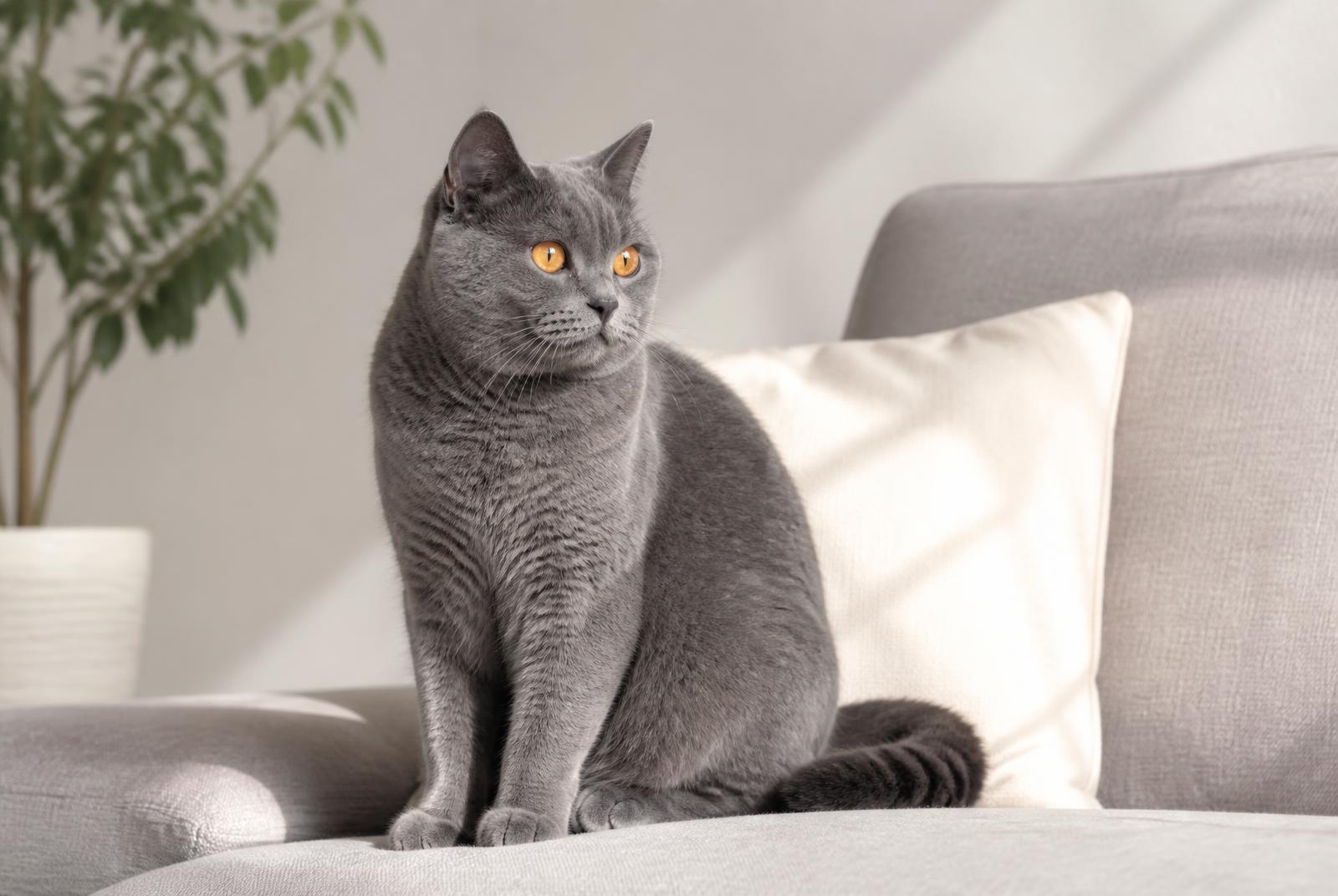
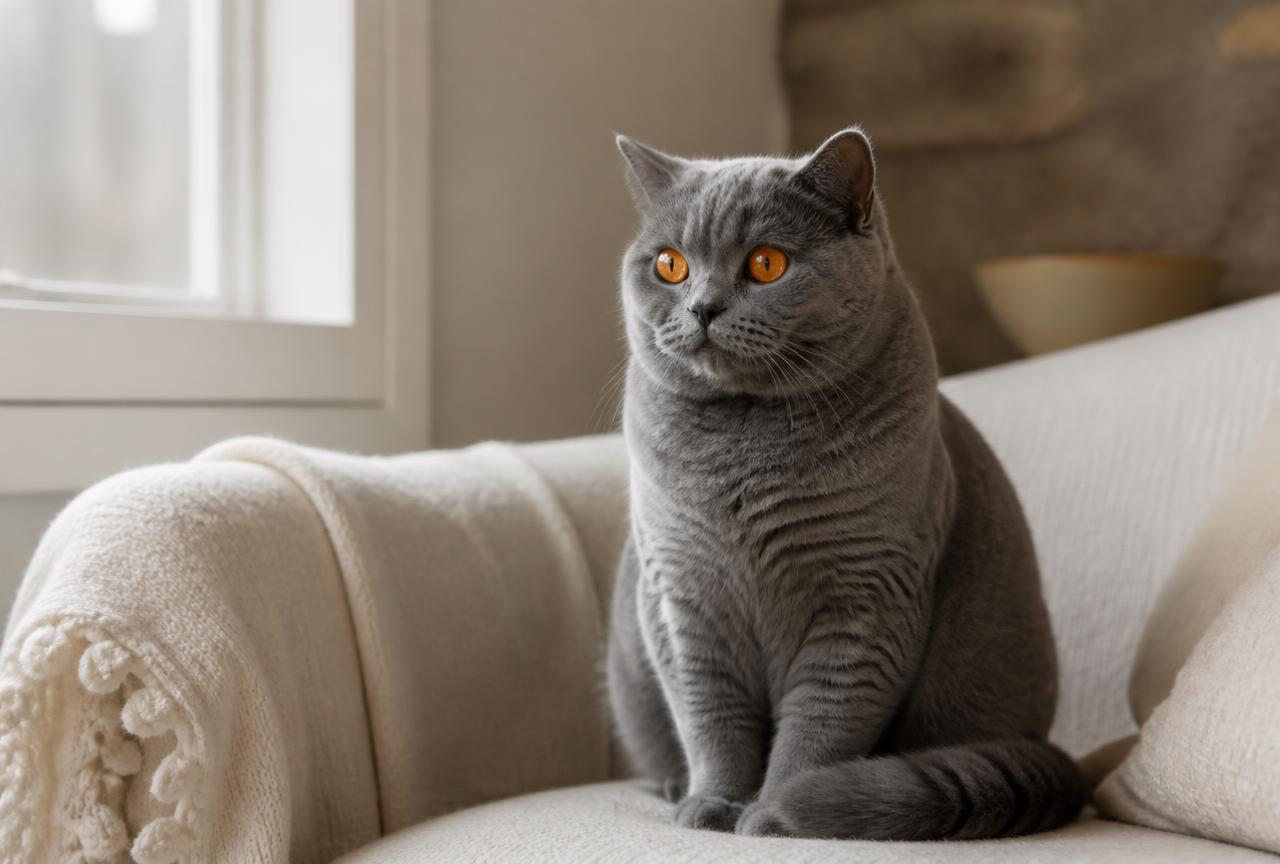
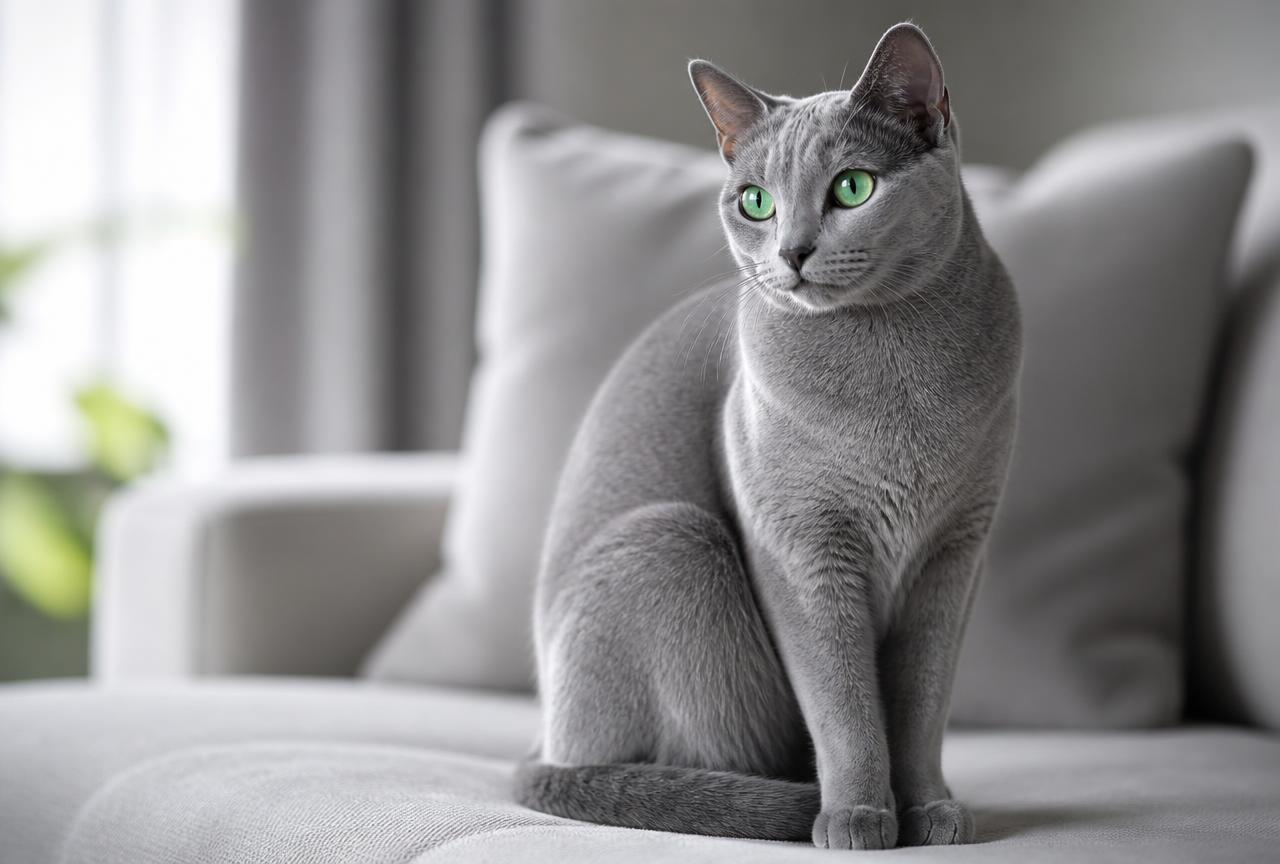
Silver-blue double coat, vivid green eyes, and a reserved but deeply loyal personality. Russian Blues bond to a small circle and dislike disruption to routine.
Every breed has a marketing line, and the Russian Blue’s is usually the coat or the eyes, the plush silver-tipped blue, the emerald green that takes two years to arrive. Both are real and both are lovely, but they are not the reason people keep this breed for twenty years. The reason is the particular quality of the companionship: a Russian Blue loves a few people deeply, quietly and entirely on its own terms, and being on the inside of that arrangement is one of the better experiences in the cat world.
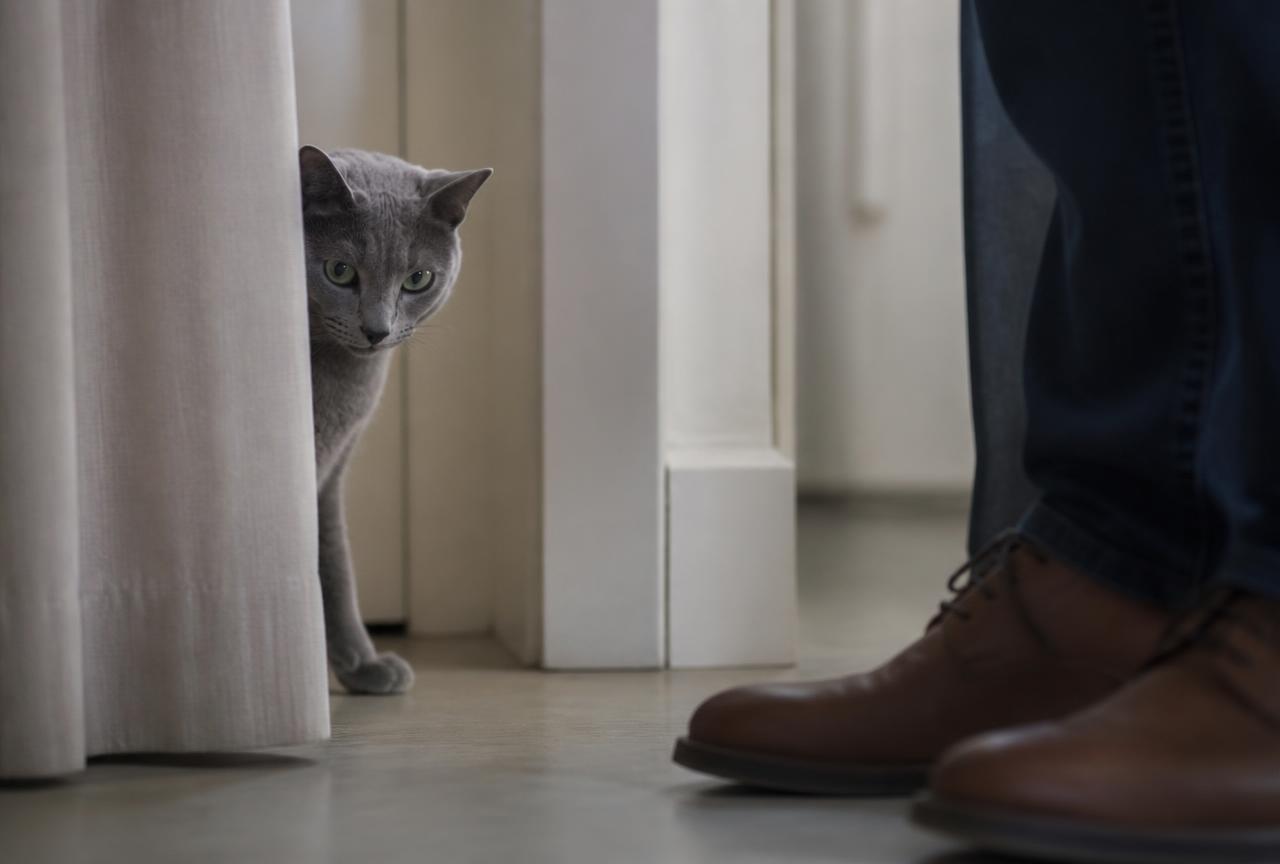
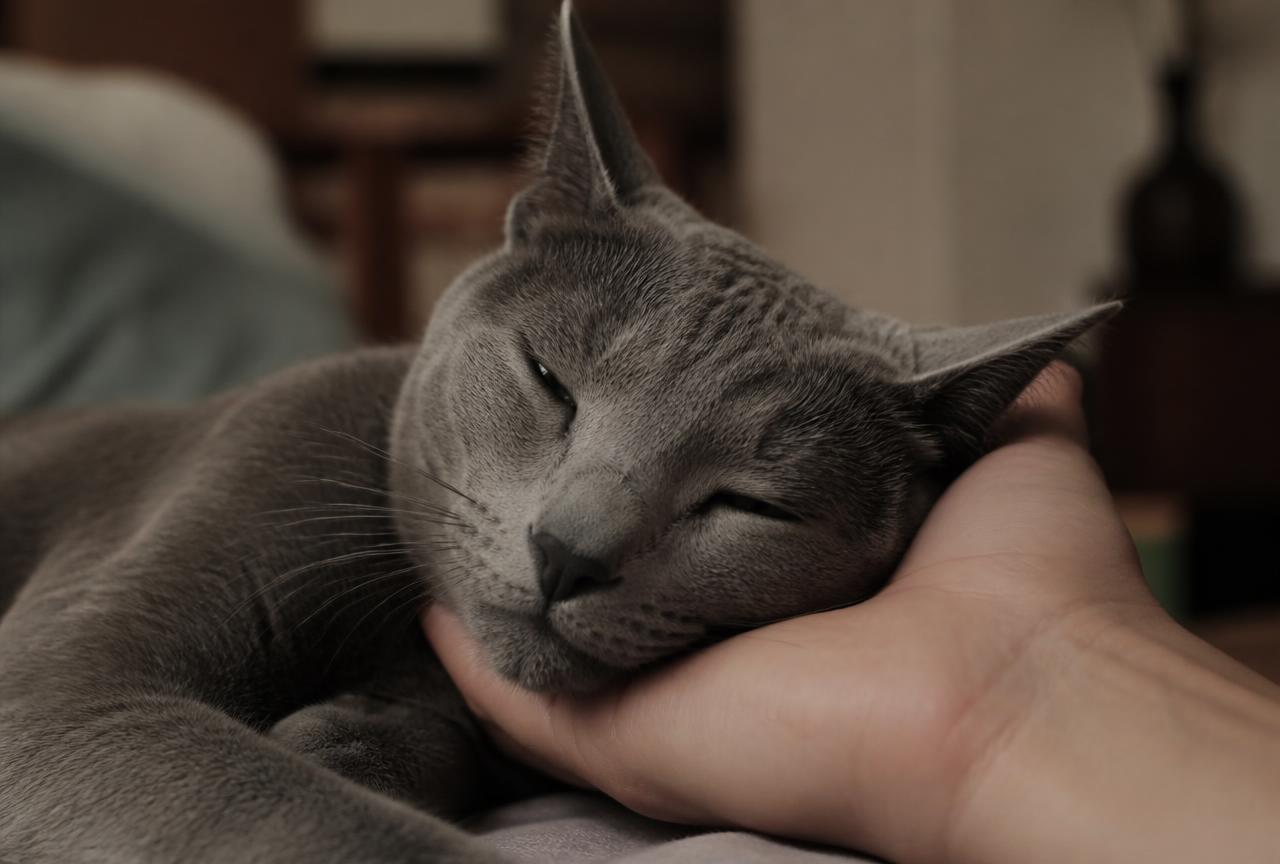
The shape of the relationship takes some explaining, because it inverts the usual pedigree-cat pitch. With strangers, a Russian Blue is reserved to the point of invisibility, visitors to a Russian Blue household often leave unsure there is a cat. This is not fear and it is not a flaw; it is a considered position. With its own people, and especially with its one chosen person, the same cat is a different animal: following from room to room, sleeping against a hip, greeting at the door, engaging in long soft conversations at close range. The transition from public cat to private cat happens once, over the first few weeks in a new home, and owners describe it as the cat deciding. After that, the bond is stable for life.
Routine is the other pillar. Russian Blues are famous among breeders for noticing time, dinner at six means dinner at six, and a cat that appears at your elbow at 17:58 has not been fed early in its life. This love of predictability is the key to the breed’s best trick: it copes with a working household better than almost any other affectionate breed. Left alone for a normal working day in a calm house, a Russian Blue simply keeps the place, sleeping and patrolling, saving its social self for the evening. For people who want a real bond with a cat but cannot be home all day, this is close to the ideal design.
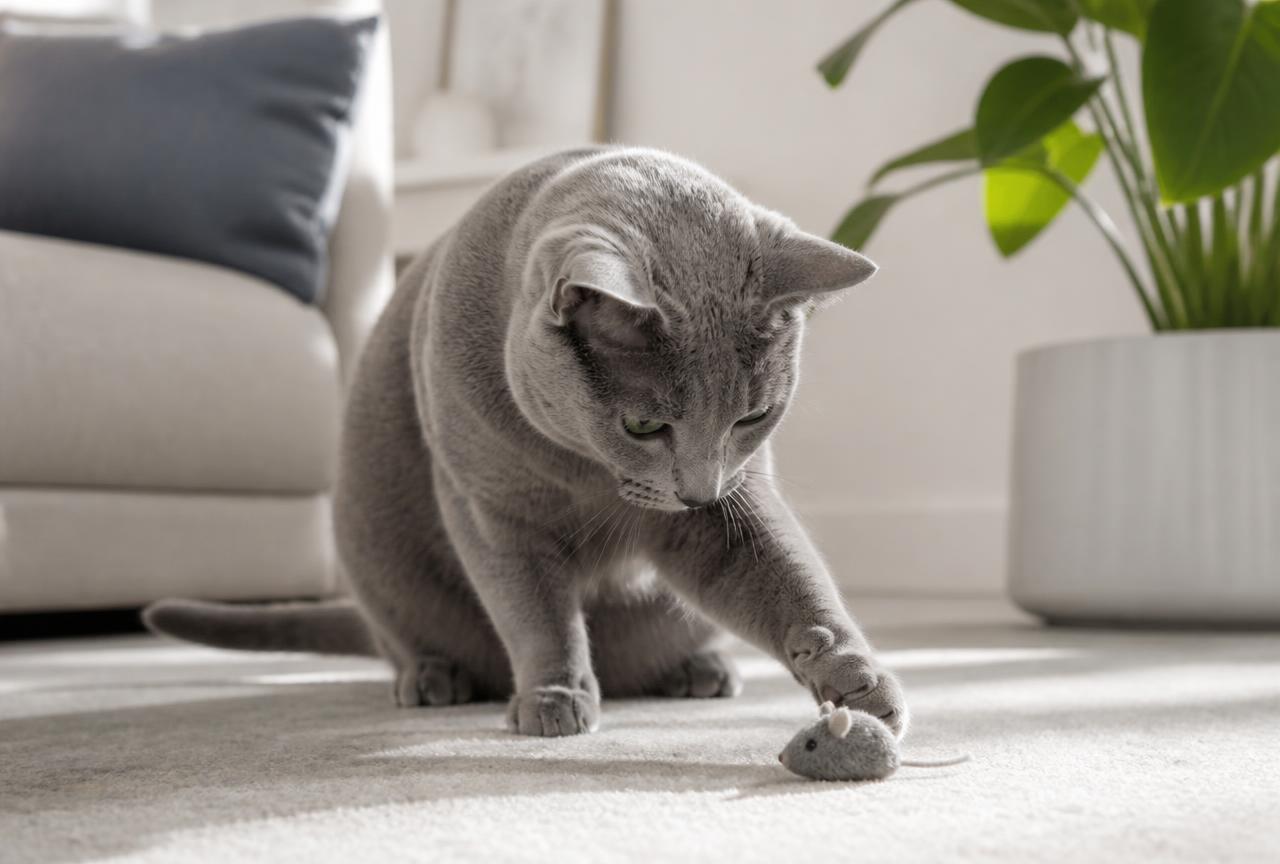
Play is gentle, skilful and slightly obsessive about one thing: fetch. A remarkable number of Russian Blues retrieve, small toys, foam balls, the occasional pen, and will conduct long sessions with their person, dropping the toy pointedly at a foot. It is play with rules, which suits the breed: lively but measured, athletic but never chaotic. They climb competently rather than obsessively and are notably careful around breakables, as if aware of their own reputation.
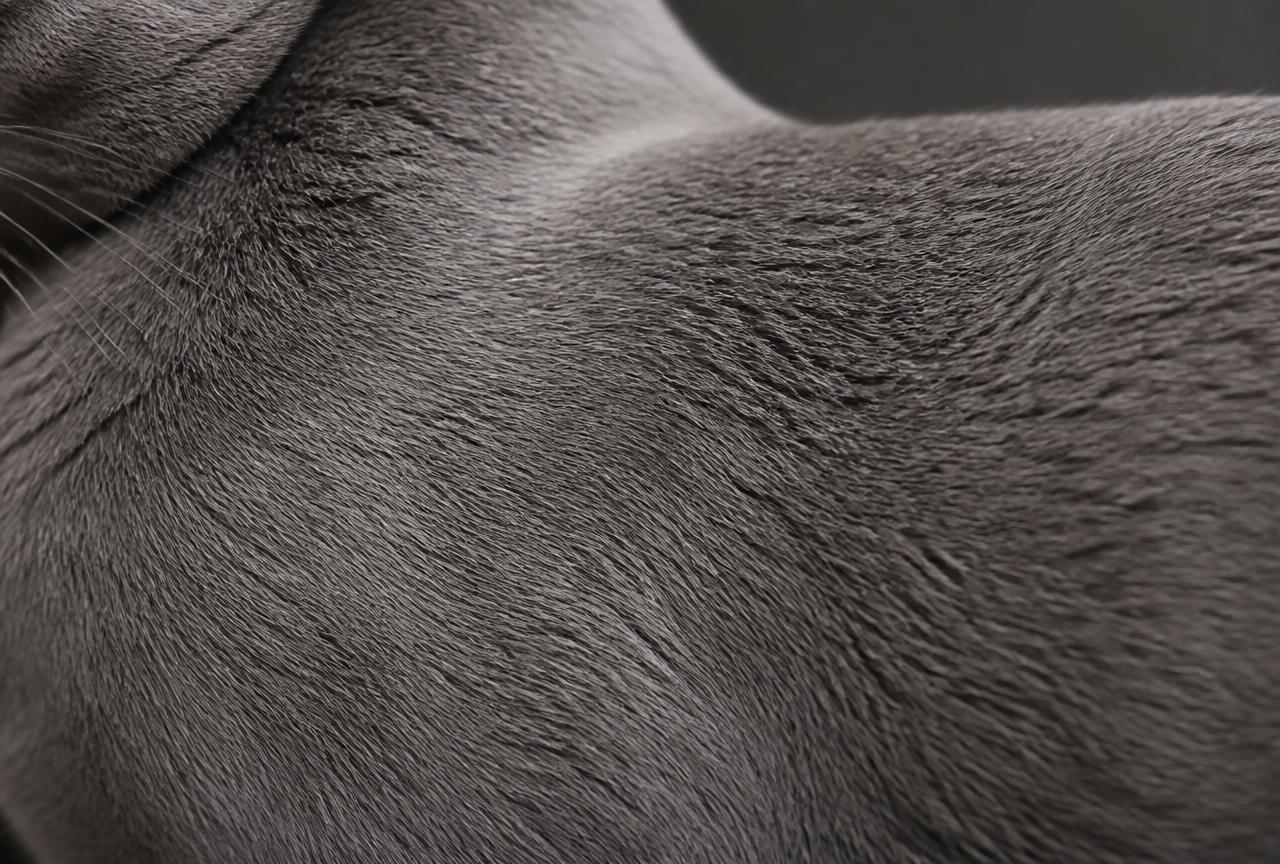
The coat deserves its paragraph because it is unusual and almost free. It is a double coat, but a short one, dense, fine, standing out from the body at an angle that makes it feel like velvet and gives the cat its characteristic plush outline. The silver tipping is what makes the blue shimmer when the cat moves. And the upkeep is a weekly once-over with a soft brush, mostly because the cat enjoys it. Shedding is moderate and undramatic. For people who love a beautiful-coated cat but baulk at the Persian timetable, this is the answer.
The breed’s reputation with allergy sufferers needs the honest treatment. Russian Blues are frequently listed as hypoallergenic, and some individuals do seem to produce less of the Fel d 1 protein, but the evidence is anecdotal and variable, and no breed is reliably safe. If allergies are in the household, spend real time with the specific line before committing; do not buy on the listicle.
Health is the quiet strength. This is a robust natural breed with no catalogue of inherited diseases, no routine screening programme exists because none is needed. The genuine watch-item is more mundane: weight. A routine-loving, food-appreciative, moderately active indoor cat is a textbook candidate for middle-age spread, and an overweight Russian Blue creeps up on you because the plush coat hides the waistline. Portion discipline from kittenhood is the breed’s one real management task.
Who should get one: calm households, singles and couples who want a deep one-on-one bond, working owners, tidy people (the breed is famously clean and litter-fastidious), and anyone who finds the idea of being quietly chosen more appealing than being loudly adored. Who should look elsewhere: busy open-door households, families wanting a cat that performs for guests, and anyone whose life runs without a schedule. For the right home, the Russian Blue is not just low-maintenance; it is one of the most quietly rewarding cats there is.
Ideal for a calm household. They vanish when guests arrive and reappear the moment the door closes, that is not shyness, it is taste.
Grooming, realistically
- 1Weekly: five minutes with a soft bristle brush or grooming mitt, mostly for the bonding, the double coat largely maintains itself.
- 2Weekly: ears and eyes, a quick check. The breed is fastidious and rarely needs intervention.
- 3Fortnightly: claw trim, or check that the scratching post is doing the job.
- 4Monthly: teeth and gums, get the handling routine established early, because this cat has a long memory for what it dislikes.
- 5Seasonally: a slightly more thorough brush-through in spring and autumn as the undercoat turns over.
What you actually need
- Soft bristle brush or grooming mitt
- Cat claw clippers
- Cat toothbrush and enzymatic paste
Kitten to adult
| Age | Male | Female | What is happening |
|---|---|---|---|
| 12 weeks | Kittens arrive reserved and open up over the first fortnight, do not judge the adult by the hiding kitten. | ||
| 6 months | Eyes still changing: kittens are born blue-eyed, pass through a yellowish stage, and settle to green by about two years. | ||
| 1 year | Elegant and essentially adult in size, though the eye colour and the coat's silver tipping keep deepening. | ||
| 2 years | Fully grown and fully green-eyed. This is also where portion discipline starts to matter, the breed drifts plump if dinner wins. |
Ranges are typical, not targets. Judge condition by ribs and waist, and check with the ideal weight checker.
What to ask a breeder
- How are the kittens socialised, and to what? The breed’s reserve is genetic, but confidence with household life, hoovers, doorbells, visitors, is made in the first twelve weeks.
- May I meet the mother, and how does she behave with a stranger? In this breed you are buying her temperament as much as her coat.
- What do the parents weigh, and may I see them from above? You are checking for the plumpness the breed drifts into.
- At what age do kittens leave, and what is the vaccination and worming record?
- Is there a contract covering early health problems, and will you take the cat back at any point if things go wrong? A breeder who says yes is a breeder to keep.
Health watch-list
What to ask a breeder about, and what to watch for over a lifetime. This is orientation, not veterinary advice, anything you notice belongs in front of a vet.
Weight gain and obesity
The real watch-itemA routine-loving, food-motivated, moderately active indoor cat is the textbook candidate for middle-age spread. Measure meals, use the portion calculator, and check ribs monthly, the plush coat lies.
Dental disease
As for all catsNo breed predisposition, but a cat that routinely lives past fifteen accumulates dental problems like any other. Gum handling from kittenhood and a yearly look pay off over the long run.
Urinary tract issues
Occasional reportStress-sensitive cats can express stress through the bladder, and this is a stress-sensitive breed. Any straining or tray avoidance is a same-week vet visit, not a wait-and-see.
Inherited disease
Notably absentThe quiet advantage of a natural breed: no established inherited-disease screening programme because none has proved necessary. The watch-list is lifestyle, not genetics.
What it costs to keep one
Realistic running cost
€73 / month
About €876 a year, or roughly €15,768 across a 18-year life, before purchase price, neutering and one-off vet events.
Before the cat arrives. Budget roughly €200–480 for trays, carrier, posts, bowls, bedding and grooming kit sized for this breed. Figures throughout are indicative and vary a good deal between countries.
Interactive · built for this breed
Is a Russian Blue right for your home?
Five honest answers. The verdict updates as you go, and the notes tell you what to change before a kitten arrives.
Verdict
An excellent match
A calm house, a steady clock and one person to belong to, you have described the exact conditions under which this breed turns into one of the great companion cats.
What to sort out first
- The environment the breed is made for. A Russian Blue in a calm house unfolds over a few weeks into a deeply affectionate cat.
- This is the breed's signature. A Russian Blue typically picks its person and devotes itself; everyone else gets courteous tolerance.
- You will get on beautifully. This breed notices when dinner is six minutes late and files it.
Reserved cats speak quietly, so learn the signals in how to read cat body language, or compare temperaments with the breed matchmaker.
The verdict, by household
Flat dweller
Excellent match
Family with young children
Depends on the children
First-time owner
Excellent match
Multi-cat home
Workable, choose carefully
Allergy-conscious
Cautious maybe
When to call your vet
- Weight you notice by hand before by eye: run a hand along the ribs monthly, because the plush coat hides a spreading waistline.
- A reserved cat that starts hiding from its own people, in this breed, withdrawal from the family is a symptom, not a mood.
- Any change in the famously reliable litter-tray habits: a clean cat that goes outside the tray is telling you something.
- Eating faster, begging harder, or gradual roundness after neutering, the breed’s one real management task starts here.
- Bad breath or dropping food: dental disease builds quietly in a long-lived cat, and this breed routinely lives past fifteen.
Nothing here is a diagnosis. Breathing difficulty, sudden hind-leg weakness and straining to urinate are emergencies, go the same day.
Russian Blue vs the closest alternatives
| Breed | Weight | Energy | Grooming | € / month |
|---|---|---|---|---|
| Russian Blue | 3–7 kg | 5/10 | 3/10 | €73 |
| Chartreux | 3–7 kg | 4/10 | 4/10 | €79 |
| British Shorthair | 4–8 kg | 4/10 | 4/10 | €76 |
| American Shorthair | 3.5–7 kg | 5/10 | 3/10 | €84 |
Russian Blue questions, answered
Are Russian Blues affectionate?
With their people, intensely, this is a breed that chooses one or two humans and devotes itself entirely: door greetings, room-following, sleeping in contact. With strangers, the same cat is courteously invisible. So the honest answer is yes, privately. If you want a cat whose affection is on public display for every guest, this is not that cat.
Are Russian Blues really hypoallergenic?
No breed is reliably hypoallergenic, and the Russian Blue’s reputation rests on thinner evidence than the listicles suggest, some individuals may produce less of the Fel d 1 allergen, but it varies cat to cat. If allergies are in the household, spend extended time with the specific breeder’s cats before committing. The low-shedding coat helps the cleaning, not the immune system.
Do Russian Blues like to be left alone?
They tolerate it better than almost any other affectionate breed, a calm house, a steady routine and a working day alone is a combination this cat handles gracefully. It is not preference so much as self-sufficiency: the social life is saved for the evening. Very long days, daily, still deserve a puzzle feeder and a window view, or a second calm cat.
Do Russian Blues shed?
Moderately and undramatically. The coat is double but short, and shedding is a steady low level rather than seasonal blizzards, with a slightly heavier turnover in spring and autumn. A weekly five-minute brush keeps it contained. For a cat with this much coat, it is one of the tidiest arrangements in the cat world.
Why does my Russian Blue follow a schedule so strictly?
Because routine is how the breed reads safety. Russian Blues famously anticipate mealtimes to the minute and notice when the household rhythm changes. It is endearing at six in the evening and less so at six on a Sunday morning. An automatic feeder takes the edge off the dawn shift; otherwise, the honest answer is that you have a cat with a calendar.
Are Russian Blues good with children and other pets?
Good with calm ones. The breed is gentle and never aggressive, but noise and chaos send it behind the furniture rather than into the fray. School-age children who understand quiet do well; toddlers are harder work. With other animals, match calm with calm, another Russian Blue, a British Shorthair, or a laid-back dog. A boisterous young Bengal will not be appreciated.
How long do Russian Blues live?
Fifteen to twenty years is common, and the breed’s general robustness is part of why. There is no inherited-disease catalogue to manage, so longevity comes down to the ordinary disciplines done consistently: measured portions, dental care, annual checks, and a calm life. It is one of the breeds where the twenty-year cat is a realistic ambition rather than a hope.