How long do cats live, and what actually adds years
The average is fifteen. The gap between a twelve-year cat and a twenty-year cat is mostly made of five decisions, and four of them are yours.
Nadia Ferreira
Feline behaviour and welfare writer, ten years in rescue and clinic settings
Published 4 September 2026
Written against WSAVA, ISFM and AAFP life-stage guidance
The short version
- Most cats now live 13 to 17 years, and a well-kept indoor cat reaching 18 is unremarkable rather than extraordinary.
- Unsupervised outdoor access is the single largest subtraction, worth roughly two to three years on population averages.
- Carrying two extra kilograms on a five-kilogram frame is not cosmetic: it shortens life and brings forward diabetes and arthritis.
- Dental disease is the most common untreated condition in cats and the easiest one to act on at home.
- Twice-yearly checks after eleven catch kidney disease, hyperthyroidism and high blood pressure while they are still cheap to manage.
- Breed matters less than most owners expect, except at the extremes of flat faces and very large frames.
Ask how long cats live and you will be told fifteen. It is a reasonable number and a useless one, because almost nobody owns an average cat. Large veterinary datasets put typical lifespan somewhere between thirteen and seventeen years, and the spread inside that range is not luck. It is the accumulated result of a handful of decisions that get made once and then repeated for a decade.
Cats have gained years over the last three decades. Neutering became routine, complete diets replaced kitchen scraps, vaccination and parasite control became normal, and far more cats moved indoors. None of that was a medical breakthrough. It was ordinary care applied consistently.
This piece sets out what the evidence says about lifespan, which factors genuinely move the number, and what to do differently depending on how old your cat is now.
The honest numbers
Averages from veterinary practice records cluster around thirteen to fifteen years. Indoor, neutered cats in stable homes sit at the top of that band and often beyond it. Cats with unsupervised outdoor access sit well below it, and the losses are concentrated in the first three years of life, when young cats explore roads and other cats' territory with equal confidence.
The record is thirty-eight years, held by a cat called Creme Puff. It is a lovely fact and it should not shape a single decision you make. The interesting question is never how to reach thirty-eight. It is how to reliably reach eighteen instead of thirteen.
Five years is the realistic prize. That is not an extra chapter, it is an extra third of a life.
What actually moves the number
Five factors carry most of the weight. Four of them are entirely within your control, and the fifth, breed, you choose once.
| Factor | Direction | Rough effect | How hard to change |
|---|---|---|---|
| --- | --- | --- | --- |
| Unsupervised outdoor access | Shortens | Two to three years | Moderate, needs a substitute |
| Body condition above ideal | Shortens | One to two years | Slow but reliable |
| Untreated dental disease | Shortens | Around one year | Easy at home, cheap early |
| Not neutered | Shortens | One to two years | One appointment |
| No routine vet contact | Shortens | One to two years | Diary entry |
| Flat face or very large frame | Shortens | One to two years | Decided at adoption |
Notice what is absent: expensive supplements, exotic diets, and most of what is marketed as longevity care. The levers that matter are dull.
Weight is the quiet one
An extra kilogram on a five-kilogram cat is the equivalent of twelve to fifteen kilograms on an adult human. It is not a cosmetic matter. Excess body fat drives insulin resistance, and cats are unusually prone to type two diabetes as a result. It loads joints that already lose cartilage with age, and it makes grooming physically difficult, which is why heavy cats develop matted fur along the back and flanks.
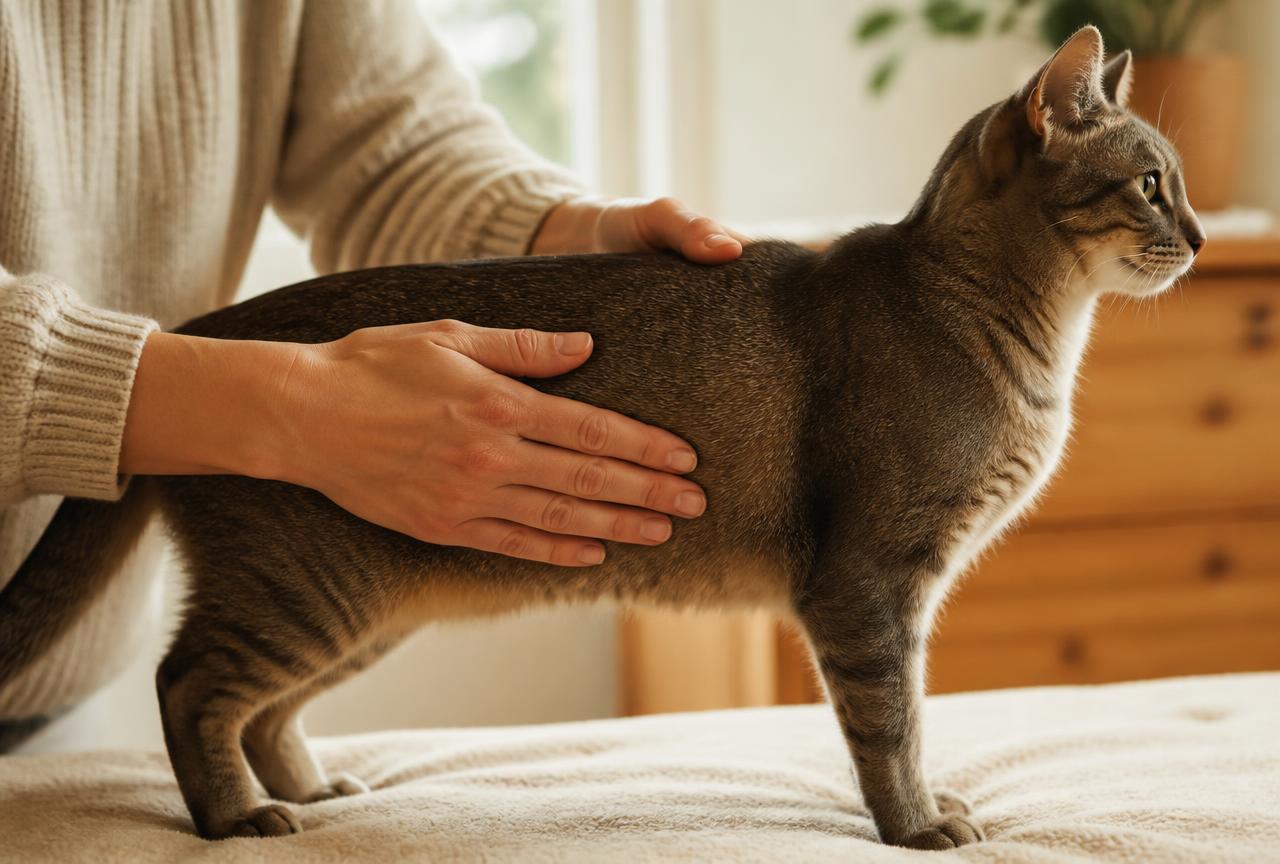
Run your palms flat along the ribcage. You should feel each rib through a thin layer, the way you feel the bones on the back of your own hand. If you have to press, there is fat to lose. Look down from above and look for a waist behind the ribs.
Weight loss in cats has to be slow. Aim for half a per cent to one per cent of body weight a week, because rapid loss risks hepatic lipidosis, a liver condition that is genuinely dangerous. Work out the target and the portions with the ideal weight calculator and the portion calculator, and weigh the food rather than guessing with a scoop. Our wet versus dry guide covers why the water content of the food changes how full a cat feels on the same calories.
Outdoors is the biggest single subtraction
Everything that kills young cats is outside: cars, other cats, dogs, antifreeze, lilies, and the infectious diseases that travel through fight wounds. This is not an argument for a bare flat and a bored cat. It is an argument for controlled access.
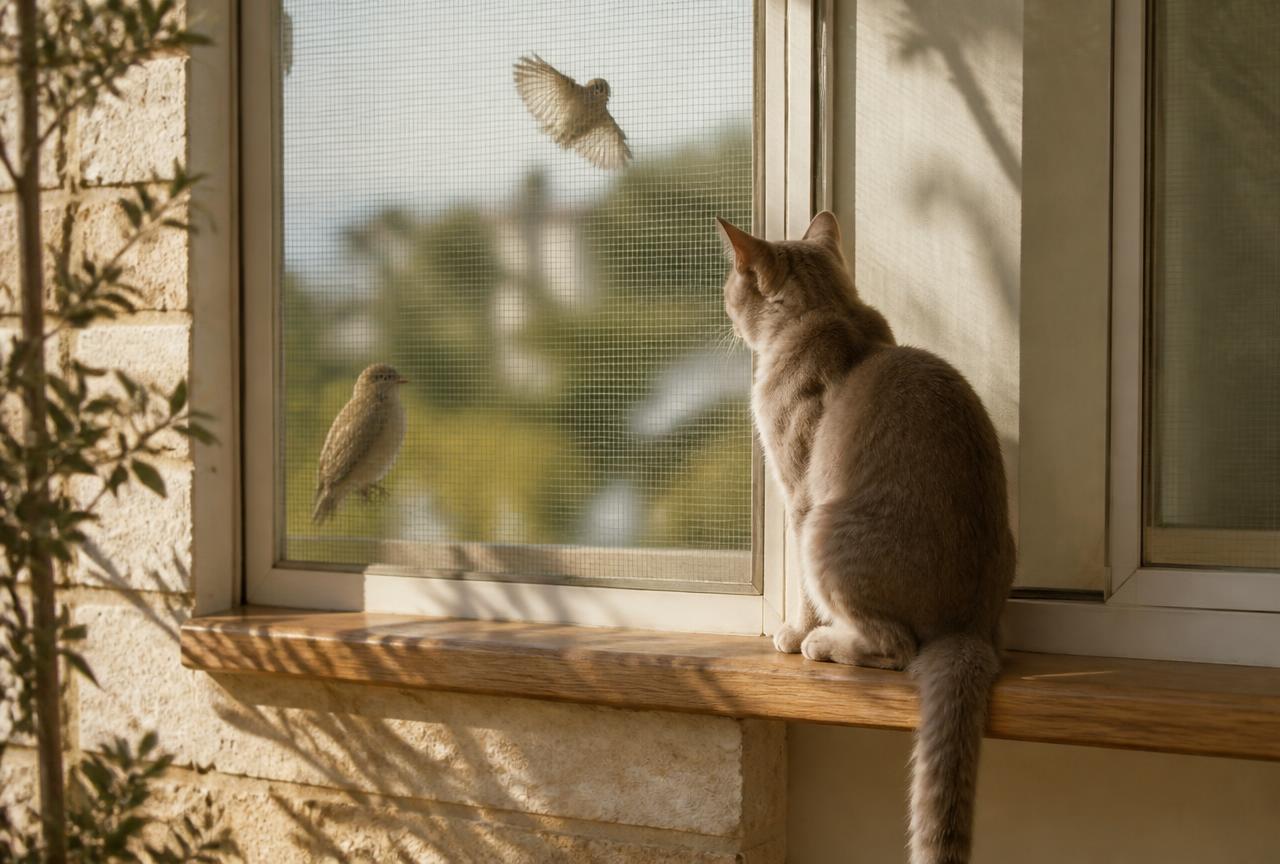
A screened balcony, a garden with a cat-proof fence topper, a mesh catio or harness walks all supply the smells, the movement and the temperature variation that indoor rooms lack. Where roaming is normal and safe in your area, the compromise most owners land on is daylight-only access with the cat in before dusk, when traffic risk and territorial disputes peak. Indoors-only cats need the shortfall paid back inside, which is what the enrichment guide is about.
Teeth: the most neglected organ
By middle age, a large majority of cats show some degree of periodontal disease. It is painful, it is chronic, and cats hide it almost perfectly, because a cat that stops eating in the wild dies. The consequence is that most owners discover it when a vet lifts the lip.
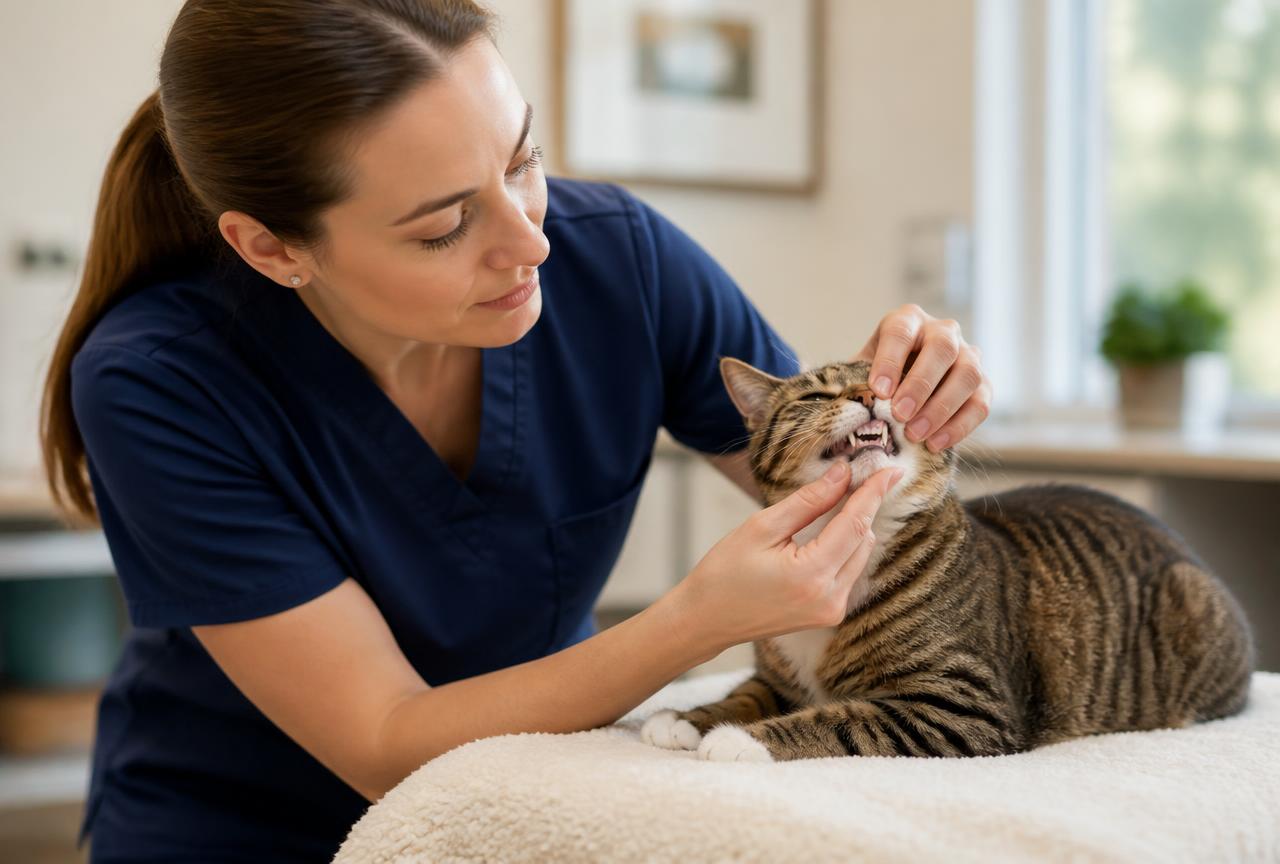
Brushing works and nothing else comes close. A soft brush and an enzymatic cat toothpaste, thirty seconds a side, most days. Start by letting the cat lick paste off your finger for a week before a brush touches anything. Dental diets and approved chews help at the margins. Water additives mostly do not.
The vet cadence that pays for itself
Cats decline invisibly, then collapse quickly. The three conditions that end most feline lives, chronic kidney disease, hyperthyroidism and cancer, all have a long window in which they are detectable and cheap to manage, and no window at all in which the cat looks unwell.
Use this interactive box to see how the factors above combine, and which one is currently costing your cat the most.
Interactive · built for this article
Life expectancy estimator
A population estimate, not a prediction for your individual cat. It exists to show which changes move the number most.
Estimated lifespan
13–18years
Around 11 more years from today on the middle estimate.
Biggest levers you still hold
- Dental care · -0.5 years
Brush most days and book the dental check your vet keeps mentioning.
Built from published population studies, so it describes averages rather than your cat. Check the weight side of it with the ideal weight calculator.
The cadence that matches life-stage guidance is straightforward.
- 1Kitten to two years: the vaccination course, neutering, and a weight check at every visit.
- 2Three to six years: annual check, weight recorded each time, teeth inspected.
- 3Seven to ten years: annual check plus a baseline blood and urine panel, so later results have something to be compared against.
- 4Eleven and over: twice a year, with blood pressure, kidney values and thyroid included.
- 5Fifteen and over: twice a year, plus a home weight check monthly, because a steady quarter-kilogram slide is the first sign of most geriatric disease.
What ageing well looks like
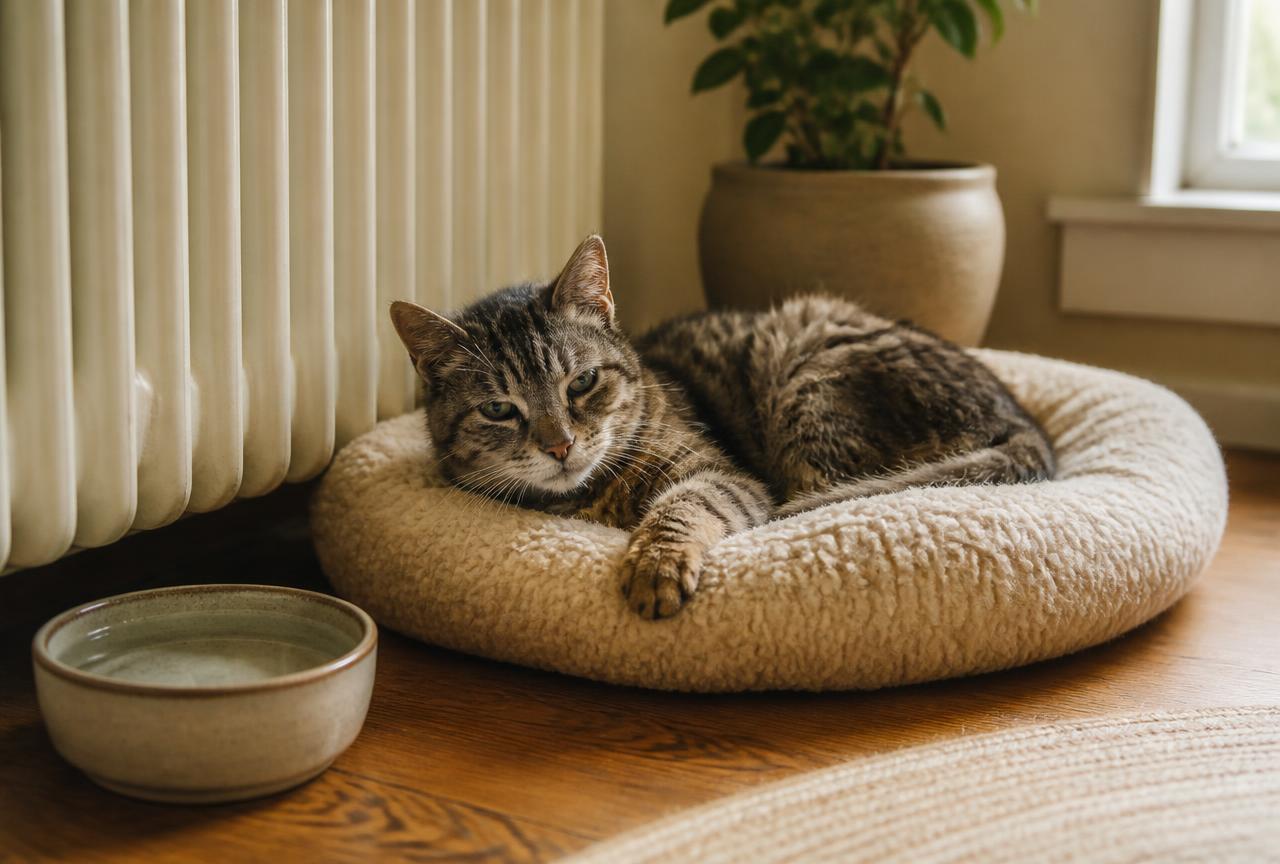
A well-aged cat holds its weight, keeps its coat in order, jumps to the same places it always did, and uses the tray without incident. Deterioration in cats is usually gradual enough to be mistaken for personality. The checklist below is worth running every few months once a cat passes eleven.
- Weighed at home and the number written down, not estimated
- Still jumping to its usual perch rather than taking the sofa route up
- Coat smooth along the back and flanks, no mats forming
- Drinking about as much as it always has, from about as many places
- Eating the same amount at the same speed
- Claws not overgrown from reduced scratching
- Litter tray used cleanly, no misses at the edge
- Sleeping in the usual spots rather than hiding in new ones
The verdict, by household
A new kitten. Neuter, keep it indoors or supervised, and set the food portion by weight from the start. Habits formed in the first year decide the next fifteen. Our kitten guide covers the first phase.
An adult cat that has crept up in weight. This is where the years are. A slow, measured reduction to ideal condition is the highest-value change available to you, and it costs nothing.
A pedigree with a flat face. Persians and other brachycephalic cats need breathing, eye and dental monitoring as a routine, not as a reaction. Ask specifically about tear duct function and jaw alignment at every visit.
A cat over eleven. Move to twice a year, insist on blood pressure, and start weighing at home monthly. This is the point at which early detection changes outcomes rather than just timelines.
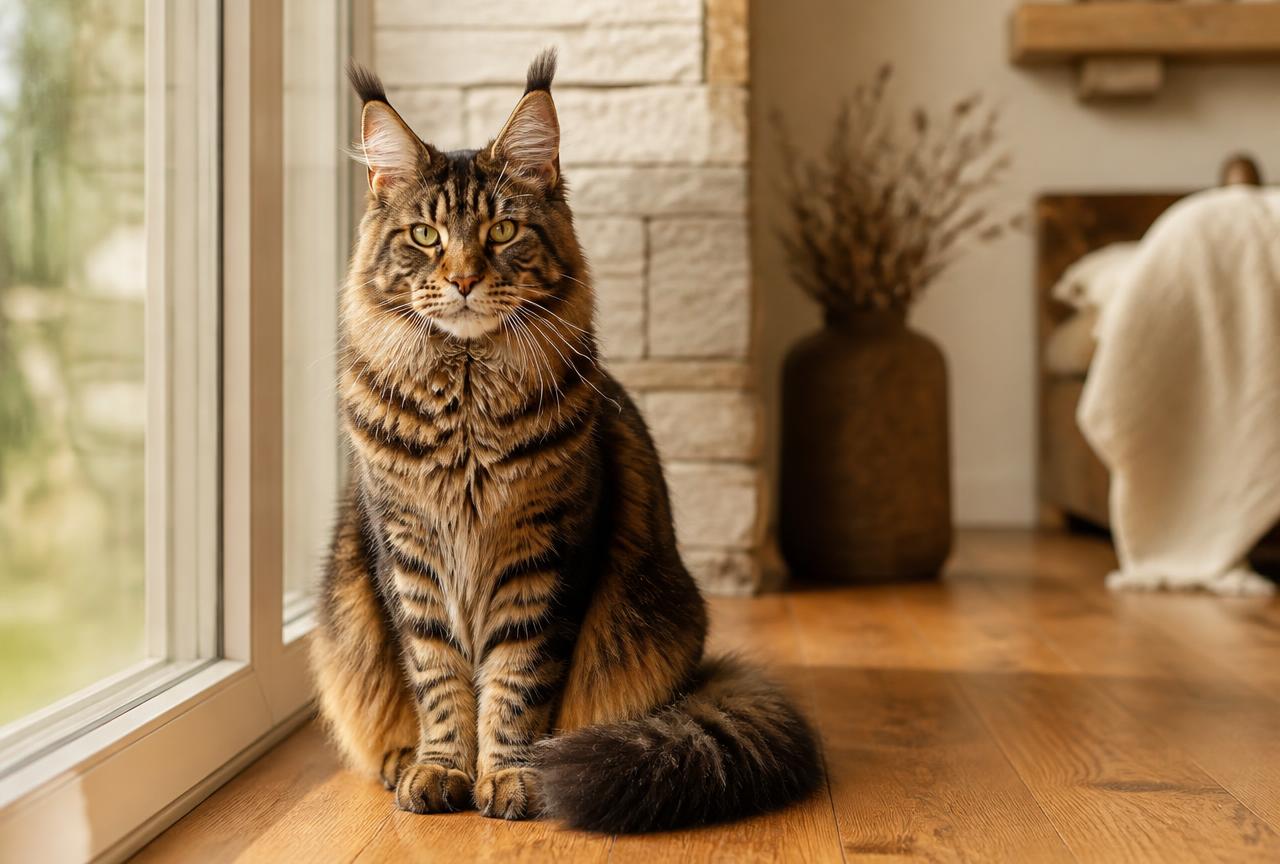
A large breed such as a [Maine Coon](/breeds/maine-coon). Ask about heart screening, keep the joints unloaded by keeping weight ideal, and provide steps to the places the cat already likes to sit.
When to call your vet
Book a same-week appointment for weight loss of more than five per cent, a sudden increase in drinking or urinating, bad breath with drooling or a dropped appetite, difficulty jumping, or hiding that is out of character. Call the same day for straining in the tray with nothing produced, open-mouth breathing, sudden blindness or disorientation, or any collapse. Straining is an emergency in male cats.
Nothing here replaces a clinical opinion. It is meant to make the appointment more useful: arrive with a weight history, a note of what changed, and a date on which you first noticed it.
Questions people actually ask
How long do cats live on average?
Population data from large veterinary databases puts the average at roughly 13 to 15 years, with well-kept indoor cats commonly reaching 17 or 18. Numbers have risen over three decades because of neutering, better nutrition, indoor living and routine vaccination, not because cats themselves changed.
Do indoor cats live longer than outdoor cats?
Yes, and the gap is large. Road traffic, fights, infectious disease and poisoning fall almost entirely on cats with unsupervised access. Studies consistently show several years of difference. A screened balcony, a cat-proof garden or harness walks keep most of the stimulation without the traffic.
What is the oldest a cat has lived?
The verified record is 38 years, held by a cat named Creme Puff. Treat it as a curiosity rather than a target: it tells you nothing useful about your own cat, whereas the difference between 13 and 18 years is decided by ordinary, repeatable care.
Which cat breeds live the longest?
Mixed-breed cats tend to do slightly better than pedigrees, and Siamese and Burmese lines are often cited among the longer-lived pedigrees. The bigger breed effects are negative: flat-faced cats carry breathing and eye problems, and very large breeds carry heart and joint risk.
Does neutering make a cat live longer?
On average, clearly yes. Neutering removes pregnancy risk, most roaming and fighting behaviour, and several reproductive cancers. The trade-off is a lower energy requirement, so portions have to come down after surgery or the weight cost cancels part of the gain.
At what age is a cat considered senior?
Current life-stage guidance calls cats mature from seven, senior from eleven, and geriatric from fifteen. Senior is a monitoring category, not a diagnosis: it is the point at which twice-yearly checks, weight tracking and blood pressure measurement start earning their keep.
How can I tell if my cat is ageing well?
Stable weight, a coat kept in order, easy jumps to familiar heights, normal appetite and thirst, and clean litter tray behaviour. Any one of those changing over a few weeks is worth a call, because in cats the early signs of kidney disease and hyperthyroidism look like ordinary ageing.
Sources
- Feline life stage guidelines, AAFP and AAHA
- How to tell your cat's age in human years, International Cat Care
- Feline obesity and its consequences, Cornell Feline Health Center
- Global dental guidelines, WSAVA
- Chronic kidney disease in cats, International Cat Care
Breeds mentioned


Put it into practice
Read next
Cat sneezing: colds, dust and the signs that need a vet
Cat sneezing a lot? Dust, viruses, dental roots and foreign bodies, how to sort the harmless from the signs that need a vet.