
Cat asthma: the cough people mistake for a hairball
A crouched cat, elbows out, neck stretched, hacking at nothing. Owners wait for a hairball that never arrives. That posture is one of the most recognisable signs of asthma in cats.
Helen Marsh
Feline behaviourist and ReMews. staff writer
Published 21 September 2026
Dr Tomas Reyes, DVM
The short version
- An asthma cough produces nothing; a hairball retch produces fur, foam or food.
- The classic posture is crouched low with elbows out and neck stretched forward.
- Triggers are almost all household: dusty litter, aerosols, candles, diffusers and smoke.
- Open-mouth breathing or effort at rest is an emergency, whatever the cause.
- Well-managed cats live normal lives on inhaled medication plus a cleaner household airspace.
Almost every owner of an asthmatic cat describes the same thing before diagnosis: the cat kept trying to bring up a hairball and never managed it. The posture is identical. The sound is close enough. The difference is what comes out, and in asthma nothing does.
Feline asthma affects somewhere between one and five per cent of cats, which makes it one of the more common chronic diseases in the species and one of the most under-recognised. It is not a cough that gets better, and it is not a cough to watch for six months. Airways that inflame repeatedly remodel permanently, and the window to prevent that is early.
What asthma actually is in a cat
Asthma is an allergic reaction in the lower airways. Something inhaled triggers the immune system, the airway lining swells, the muscle around it tightens, and mucus fills what is left of the tube. The cat coughs to shift the mucus and wheezes because air is squeezing through a narrower pipe than it should.
Two things follow from that. First, asthma is chronic: the trigger may be seasonal, but the tendency does not go away. Second, it is treatable, and well-managed cats live full lives on a fraction of the medication their first crisis suggested.
Cough or hairball? The five differences
| Asthma cough | Hairball retch | |
|---|---|---|
| --- | --- | --- |
| Posture | Crouched, elbows out, neck forward | Similar, but more abdominal heaving |
| Sound | Dry, hacking, repeated | Wet, gagging, fewer repeats |
| Result | Nothing produced | Fur, foam or food produced |
| Pattern | Clusters of episodes, often at the same time of day | One event, then normal |
| Breathing after | Sometimes faster or wheezy | Back to normal at once |
The single most useful thing you can bring to the appointment is a phone video of one episode. It short-circuits weeks of guesswork.
Use the sorter below on the last episode you saw.
What sets it off in an ordinary home
Triggers are household, which is the frustrating and the hopeful part of asthma.
- Dusty clay litters, especially the fine scoopable kinds poured from height
- Aerosols: deodorants, hairspray, air fresheners, cleaning sprays
- Scented candles, incense, plug-in diffusers, essential oils
- Cigarette and vape smoke, including residue on clothing
- Cooking smoke and open fires
- Pollen and grass seasons, mould in damp rooms, dust mites
- Dry indoor air in winter from heating
Reducing triggers, room by room
- 1The tray room. Switch to a low dust litter: paper, wood pellet or a dust-extracted mineral. Pour it slowly, close to the tray. Keep the tray out of confined cupboards.
- 2The living room. Stop candles, diffusers and air fresheners entirely. These are the easiest wins and the ones owners resist most.
- 3The kitchen. Extract cooking smoke properly. Keep the cat out while frying.
- 4The bedroom. Wash bedding weekly at sixty degrees for mites. Spray deodorant and hairspray in another room with the door shut.
- 5Whole house. Vacuum with a sealed filter twice a week. Damp dust rather than dry dust, which just relocates it.
- 6Air. In dry heated months, a simple humidifier eases airways. In damp months, address mould rather than masking it.
- 7Smoke. No smoking indoors, and change clothing before handling the cat.
How it is diagnosed
There is no single asthma test. Vets build the picture from chest X-rays, which classically show thickened bronchial walls and sometimes a collapsed lung lobe, plus bloods, a faecal test for lungworm, and often a wash of the airway to look at the cells present. Eosinophils in that sample point strongly at allergic airway disease.
Lungworm matters here because it mimics asthma exactly and is cured rather than managed. Heart disease, pleural fluid and chest tumours also enter the list. This is why a cough in a cat is a veterinary appointment rather than a home diagnosis, and why cats sometimes leave with a wormer before they leave with an inhaler.
Treatment, and what daily life looks like
Control rests on two drug groups. A steroid reduces the airway inflammation, and a bronchodilator relaxes the muscle during a crisis. Both can be given by inhaler through a feline spacer and mask, which puts the drug where it is needed and spares the rest of the body. Most cats accept a mask within a week or two if it is introduced gently, unloaded, with food afterwards.
The rhythm for a stable cat is a daily preventive dose, a rescue inhaler kept where everyone can find it, and a review every six to twelve months. Cats that flare badly may need oral steroids for a spell. Emergency episodes need oxygen and injectable treatment at a clinic.
Checklist for an asthmatic household
- Low dust litter, poured low and slowly
- No candles, diffusers, aerosols or indoor smoking
- Sealed-filter vacuum, twice weekly, damp dusting
- Rescue inhaler in a known place, with its expiry date checked
- A written log of episodes, dates and suspected triggers
- Resting breathing rate counted monthly while the cat sleeps
- Weight kept in the healthy range, since excess weight worsens breathlessness
- A plan for who takes the cat to the emergency vet, and where it is at night
Counting the resting breathing rate is the most useful skill here. With the cat asleep and settled, count chest movements for thirty seconds and double it. Under thirty breaths a minute is normal for most cats. A rate that climbs above forty at rest, in a cat with known airway disease, is a reason to call.
By household
One indoor cat, newly diagnosed. Focus on the trigger audit before you worry about long-term medication. Many cats need less once candles, sprays and dusty litter have gone.
Multi-cat home. The trigger changes apply to the whole house, not just the affected cat. Keep the inhaler routine separate and unhurried so it stays a calm ritual rather than a chase.
Home with a smoker. This is the single highest-impact change available, and it is not negotiable for an asthmatic cat. Outdoors, and change clothes after.
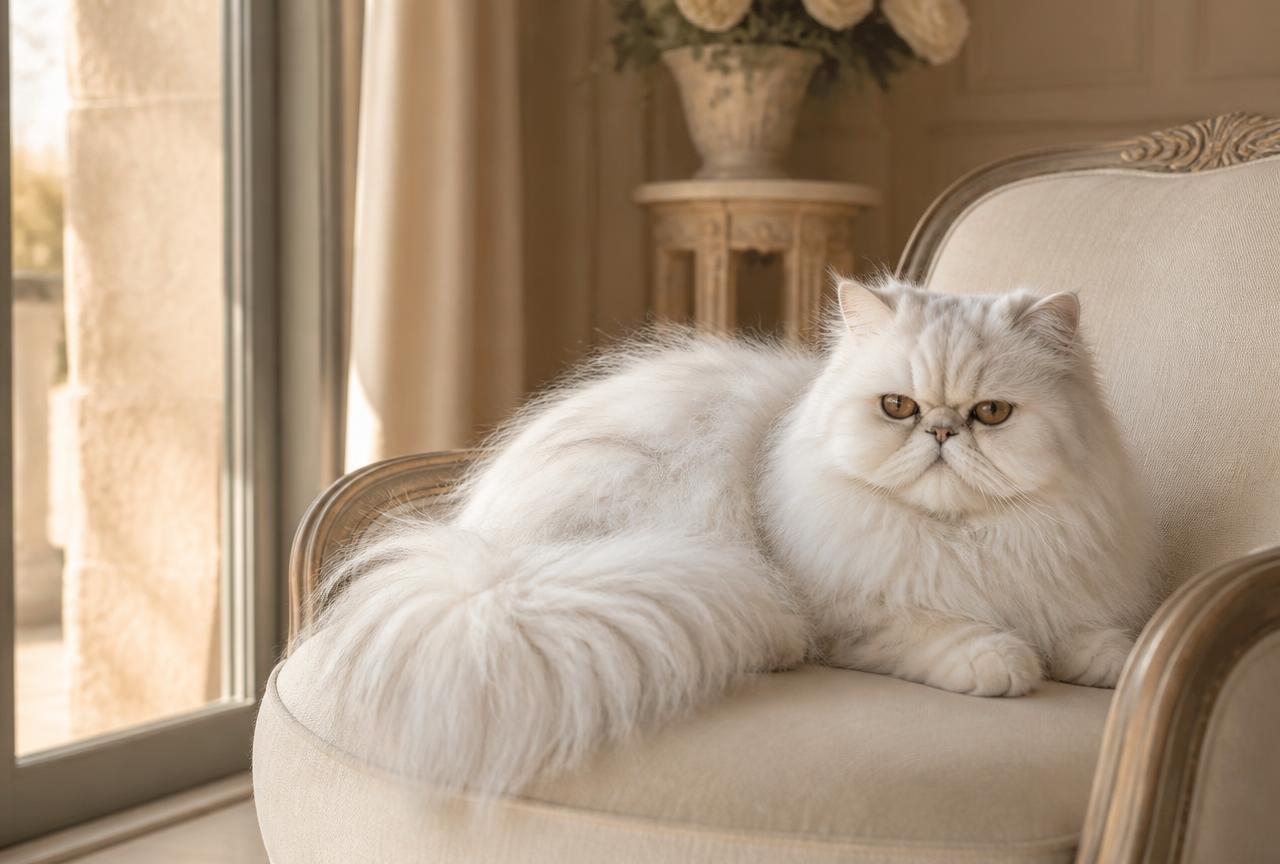
Long-haired breeds. Regular grooming reduces genuine hairballs, which makes the remaining episodes easier to interpret. See our hairball guide and the coat routine in coat routine.
When to call your vet
Go immediately if your cat:
- Breathes with its mouth open, or with obvious effort at rest
- Has blue or grey gums or tongue
- Sits with its neck extended and will not settle
- Has a resting breathing rate over forty and rising
- Collapses, or becomes suddenly quiet and unwilling to move
Book within the week for a cat with a dry cough and nothing produced, an audible wheeze, exercise that now ends in panting, or repeated episodes at the same time of day. A cough that has been dismissed as hairballs for months is worth a fresh look, especially if nothing has ever actually come up.
Asthma cannot be cured, but it can be quietly controlled for years. Most of that control is built at home, in the choices about what is in the air, and the rest is a small daily habit with a mask and a tin of something good afterwards. Our pieces on sneezing and vomiting cover the neighbouring signs owners often confuse with this one.
Questions people actually ask
How can I tell cat asthma from a hairball?
Watch what happens at the end. A hairball retch produces something: fur, foam or food. An asthma cough produces nothing, repeats in clusters, and often comes at a similar time of day. The posture looks almost identical, so the result and the pattern are the reliable clues. Film one episode and show your vet.
Can cat asthma be cured?
No, but it is controllable. The tendency to react does not go away, so treatment aims to keep airways calm enough that they do not scar. Many cats reach a stable point on a low daily inhaled dose plus a cleaner household airspace, with rescue medication kept for flare-ups.
What is a normal breathing rate for a cat at rest?
Under about thirty breaths a minute while asleep or fully settled. Count chest movements for thirty seconds and double the number. For a cat with known airway disease, a resting rate consistently above forty is a reason to phone your vet, and open-mouth breathing is a reason to go now.
Does litter cause asthma in cats?
It does not cause the underlying allergy, but dusty litter is one of the most common triggers for episodes. Fine clay litters poured from height create a cloud a cat then breathes at close range. Switching to paper, wood pellet or a dust-extracted mineral, and pouring slowly, removes that trigger.
How do you give a cat an inhaler?
Through a feline spacer with a soft mask. Introduce the mask unloaded for a few days, holding it near the face for two or three seconds and following with food. Then add the puff, hold the mask over nose and mouth for around seven to ten breaths, and reward. Most cats accept this within a fortnight.
Is coughing in cats ever an emergency?
The cough itself rarely is. The breathing between coughs can be. Open-mouth breathing, effort at rest, blue or grey gums, or a cat sitting with its neck extended and refusing to settle all mean go to an emergency vet immediately rather than wait for morning.
What does asthma treatment cost?
Indicative European ranges: diagnosis with imaging and testing commonly falls between 250 and 600 EUR. Ongoing inhaled medication with a spacer typically runs from 20 to 50 EUR a month once established. An emergency crisis with oxygen and hospitalisation is considerably higher, which is the argument for treating early rather than watching.
Sources
- Feline asthma and chronic bronchitis, International Cat Care
- Feline lower airway disease, Cornell University College of Veterinary Medicine
- Respiratory disease guidelines, American Association of Feline Practitioners
- Inhalation therapy in cats, World Small Animal Veterinary Association
Breeds mentioned

Put it into practice
Read next
Cat weight chart: what a healthy cat actually weighs
A cat weight chart is only half the answer. Here are indicative ranges by breed and life stage, plus how to score the cat in front of you.