Brushing, shedding and mats: a coat routine that sticks
Most cats do not need a complicated grooming regime. They need two minutes of the right brushing, done often enough that mats never get a start. Here is how to build the habit.
Helen Marsh
Feline behaviourist and ReMews. staff writer
Published 20 September 2026

Dr Amara Okonjo, DVM
The short version
- Match the tool to the coat: rubber brush for shorthairs, slicker plus comb for medium coats, wide-tooth comb then slicker for longhairs.
- Longhaired cats need daily combing; a Persian-type coat can mat within days without it.
- Keep early sessions to one or two minutes and stop before the cat objects, so the routine survives.
- Never cut mats with scissors: cat skin lifts into the mat and vets regularly stitch the results.
- Shedding peaks in spring and autumn; double your usual frequency during a moult.
- A weekly brush doubles as a health check: lumps, fleas, sore spots and weight change surface there first.
Every cat grooms itself, which is why so many owners conclude the cat needs no help. For a young, slim shorthair that conclusion mostly holds. But coats change: the cat ages, gains weight, grows a longer coat, or develops stiff joints, and suddenly the self-grooming that worked for years no longer reaches the lower back, the belly or behind the ears. That is when mats start, and mats, once formed, only ever get worse.
The good news is that coat care is the cheapest health habit in cat ownership. Two minutes, two or three times a week, catches loose fur before it becomes hairballs, catches mats while they are still tangles, and doubles as a weekly health check of the skin underneath. The hard part is not the technique. It is building a routine the cat will actually accept.
Match the tool to the coat
Using the wrong brush is the commonest reason grooming fails: the tool skates over the topcoat, achieves nothing, and the owner gives up. Match the tool to what is growing out of the cat.
- Short coats (Siamese, British Shorthair): a rubber brush, grooming glove or fine bristle brush. One or two sessions a week is genuinely enough.
- Medium and dense coats (Russian Blue, Ragdoll): a slicker brush for the topcoat plus a comb for the feathering. Two or three sessions a week, daily in moulting season.
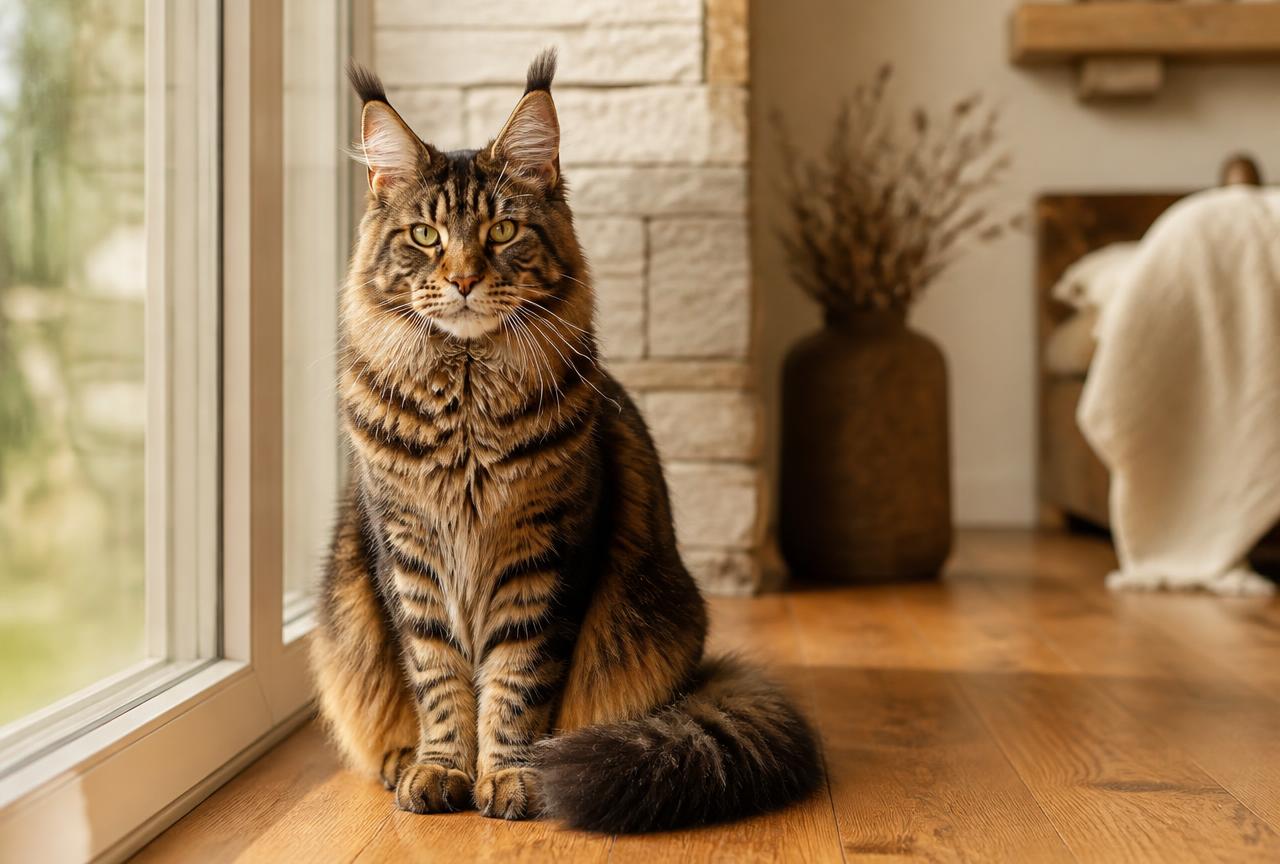
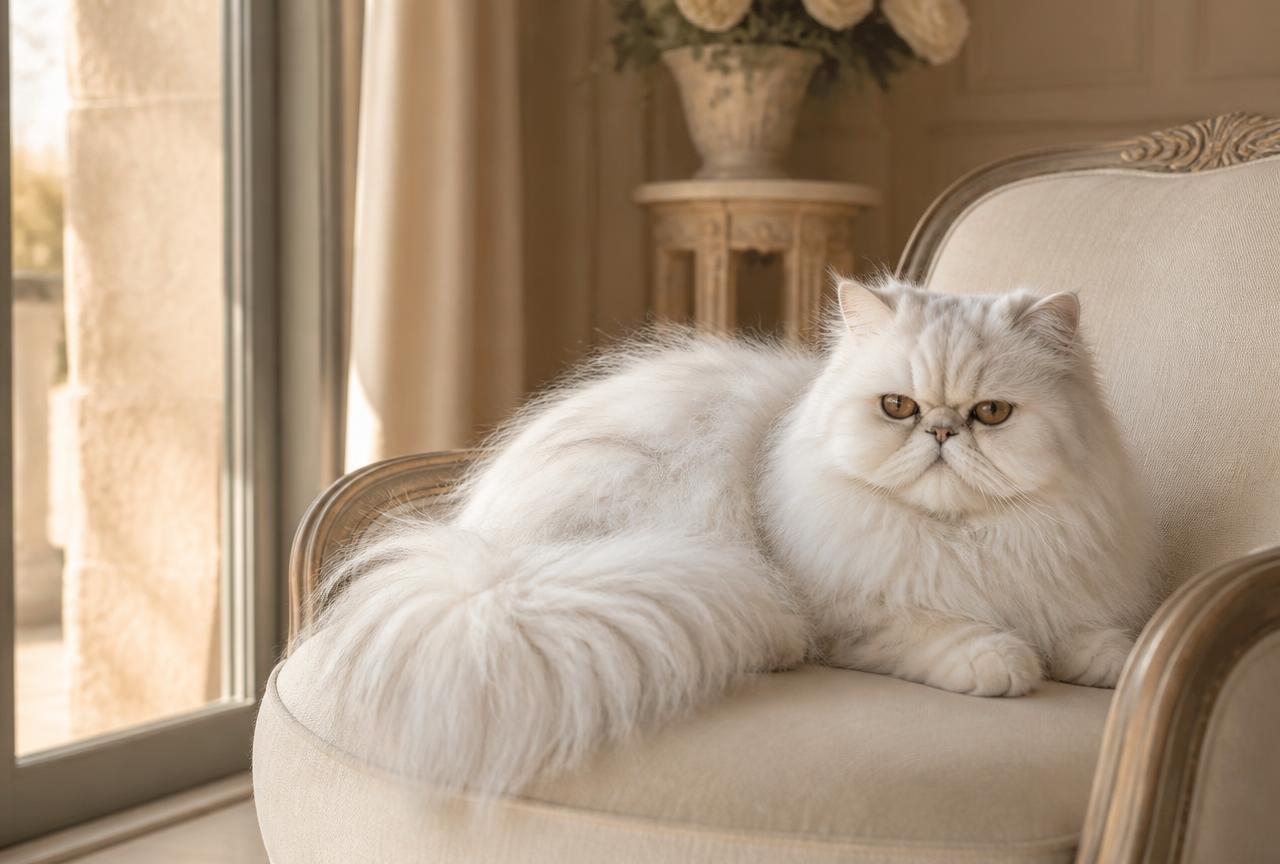
- Long coats (Persian, Maine Coon, Norwegian Forest Cat): a wide-tooth comb first, slicker second, every day. Not a preference, a requirement. A Persian's coat mats within days without it.
Shedding peaks twice a year in most climates, spring and autumn, as daylight hours change. Indoor cats under artificial light shed more evenly, all year, which is why flat-dwelling cats seem to moult constantly. Either way, expect to double your usual frequency during a moult.
The session that works
A grooming session a cat enjoys ends before the cat wants it to. That single principle drives everything else.
- 1Pick the same quiet spot and roughly the same time each session: after a meal, when the cat is sleepy, is ideal.
- 2Start where the cat likes to be touched, usually the cheeks and the top of the head. Thirty seconds there buys you the rest.
- 3Stroke with the growth of the fur, short passes, working from head towards tail. On long coats, comb in layers: lift the topcoat and comb the undercoat beneath it.
- 4Keep the first two weeks of sessions to one or two minutes, then stop, while the cat is still content. A small treat ends the session on the right note.
- 5Extend slowly towards the belly, armpits and trousers over the following weeks. These are the mat hot spots and the last places most cats allow.
If the tail starts lashing, the ears go back or the skin twitches, the session is over. Pushing through teaches the cat that grooming means restraint, and next time you will not get past the cheeks.
Dealing with mats
A mat is a tangle that has compacted into felt. The golden rule: never cut a mat with scissors. Cat skin is thinner than it looks and lifts into the mat, and vets regularly stitch scissor wounds that were meant to be kind. A mat clipper in untrained hands is little better.
Small, fresh tangles yield to patience: work the edge of the tangle with your fingers or the end tooth of a wide-tooth comb, teasing outward from the skin, a few hairs at a time. A pinch of cornflour worked into the tangle helps it release. If the mat is tight to the skin, larger than a coin, or anywhere near the armpit or groin, that is a groomer or vet-nurse job with proper clippers, and it is a routine appointment, not an emergency.
Brushing is not about the fur. It is the only weekly appointment where you run your hands over every centimetre of your cat. Lumps, fleas, weight change and sore spots all surface there first.
The routine builder
How much brushing a given cat needs depends on three things: coat length, how much the cat sheds, and how much the cat tolerates. The builder below turns those into a concrete weekly schedule and a short shopping list.
Verdict by household
- Shorthair, young and slim: weekly rubber brush, mostly for the bonding and the health check. That is genuinely sufficient.
- Longhair in a busy home: daily five-minute sessions at a fixed time beat a weekly half-hour battle. Involve every family member so the habit survives a holiday.
- The cat that hates brushes: start with a grooming glove and two strokes a day, treat every time. Expect the rebuild to take a month. It is worth it.
- The senior or overweight cat with a dull, flaky back: assume it can no longer reach. Take over the lower back and hindquarters yourself, and mention the change to the vet, since arthritis is often the reason.
When to call your vet
Grooming issues occasionally stop being grooming issues. See the vet if mats cover large areas or sit tight against the skin (they bruise and hide skin infection), if the coat has turned dull and greasy quickly, if you find bald patches rather than tangles, which points to overgrooming, or if a previously tolerant cat now resents being touched along the spine or hips, which is often pain, not temperament. Dandruff alongside a coat the cat can no longer reach is covered in our cat dandruff piece.
Questions people actually ask
How often should you brush a cat?
It depends on the coat. Shorthaired cats manage well on one or two sessions a week, medium and dense coats need two or three, and longhaired cats like Persians and Maine Coons need daily combing because their coats mat within days. During spring and autumn moults, double whatever frequency you normally use.
How do you get mats out of cat fur?
Fresh, small tangles can be teased apart with fingers or the end tooth of a wide-tooth comb, working from the skin outward a few hairs at a time, with a pinch of cornflour to help. Never use scissors: skin lifts into the mat and is easily cut. Tight, large or armpit mats belong to a groomer or vet nurse with clippers.
Why is my cat shedding so much all of a sudden?
Seasonal moults in spring and autumn are the usual reason, driven by daylight length rather than temperature, and indoor cats often shed evenly all year under artificial light. Shedding that arrives suddenly alongside a dull coat, bald patches, weight change or itchiness is different and deserves a vet check.
Do indoor cats need brushing?
Yes. Indoor cats shed year-round rather than seasonally, swallow more loose fur because they groom out of boredom, and get less natural wear on their coat from outdoor friction. A weekly session keeps loose fur, hairballs and skin problems down, and doubles as a hands-on health check.
What brush is best for a longhaired cat?
A wide-tooth metal comb first, worked in layers through the undercoat, followed by a slicker brush for the topcoat. Pay particular attention to the armpits, belly and the fur behind the ears and along the hindquarters, where mats form first. Plan on daily sessions of a few minutes rather than occasional long ones.
Sources
- Grooming your cat, International Cat Care (ISFM)
- How to groom your cat, PDSA
- Hairballs in cats, VCA Animal Hospitals
Breeds mentioned
Put it into practice
Read next
How to bathe a cat: when it is needed, and how to survive it
How to bathe a cat without bloodshed: when a bath is genuinely needed, the setup, the step-by-step, and when to call a groomer instead.