Low shedding cats: the breeds that leave the least hair behind
Some cats really do leave far less hair behind. The trick is knowing what each low shedding breed asks for in return.
Helen Marsh
Feline behaviourist and ReMews. staff writer
Published 11 October 2026
Dr Tomas Reyes, DVM
The short version
- Low shedding comes down to undercoat, not coat length.
- The Sphynx and the two rex breeds drop the least hair, but need skin care, warmth or gentle handling.
- Sleek single-coated breeds such as the Burmese, Bombay and Tonkinese are the easiest middle ground.
- Low shedding is not the same as allergy friendly: the main allergen lives in saliva and skin.
- A weekly grooming day and a washable throw cut household hair for any cat.
- Patchy or sudden hair loss is a reason to see a vet, not to brush harder.
If you have ever stood up from the sofa in dark trousers and found half a cat on your knees, you already know why people search for low shedding cats. The good news is that some breeds genuinely drop far less hair than others. The less advertised news is that every one of them asks for something in return.
This guide is about hair, not allergies. The two get tangled together constantly, and they should not be. A cat that sheds little can still make an allergic person wheeze, because the main allergen lives in saliva and skin, not in the hair itself. We cover that properly in our piece on hypoallergenic cats. Here the question is simpler: which cats will leave your home, your clothes and your car looking like you do not own a cat at all?
Below you will find how shedding actually works, the breeds that drop least, what each costs you in care, and a short plan for keeping any cat's hair under control.
Why some cats shed so much less
Most cats grow three kinds of hair: long guard hairs on the outside, a middle layer of awn hairs, and a soft, dense undercoat underneath. It is the undercoat that does most of the damage. It grows thick for winter, lets go in spring and autumn, and drifts into every corner of the house.
Low shedding breeds tend to have one of three things going for them. Some have very little undercoat at all, so there is less to lose. Some have hair that curls or waves, so loose strands catch in the coat instead of falling out. And one, the Sphynx, has almost no hair to shed in the first place.
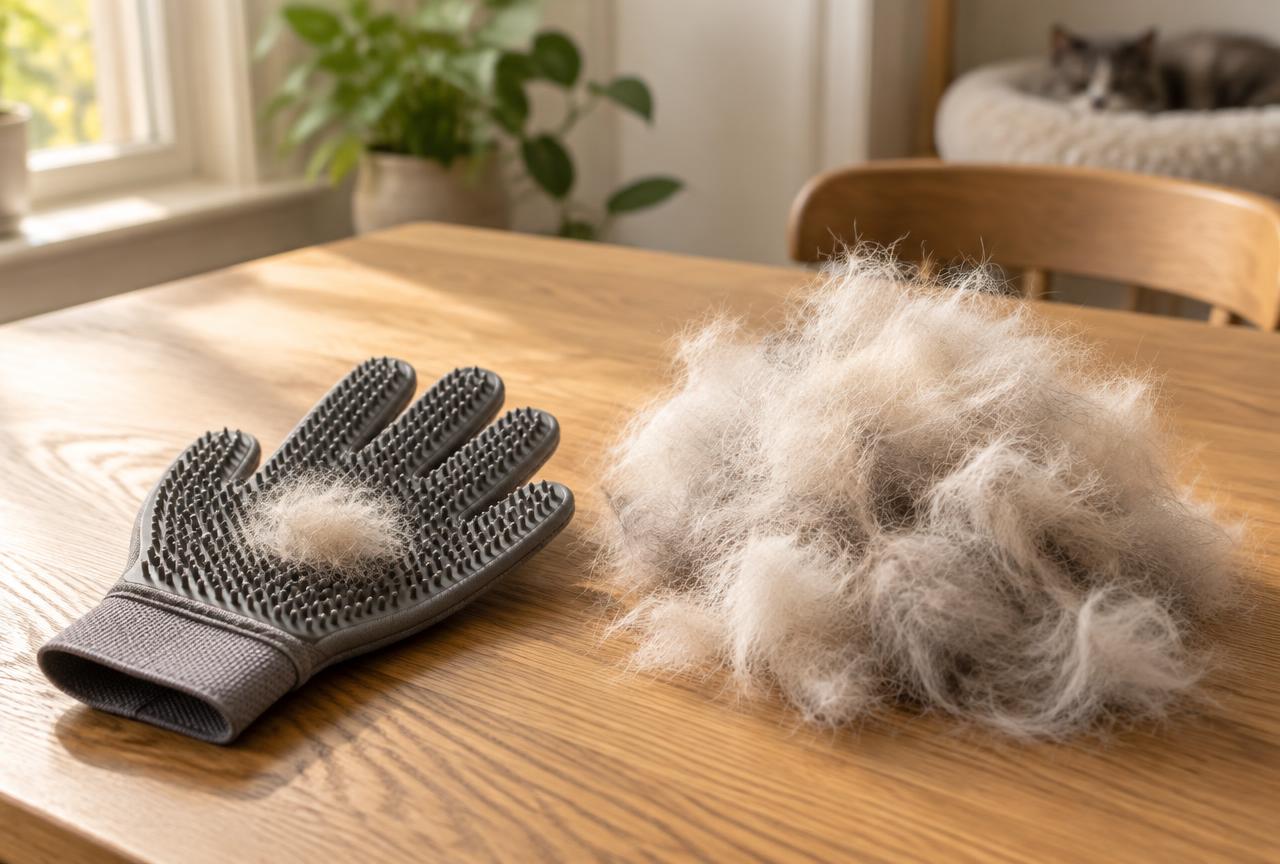
Length matters less than people think. A short coat with a dense undercoat, like a British Shorthair's, can shed more than a semi-long coat with a thin one. When you judge a breed, ask about the undercoat, not the length.
The low shedding breeds, compared
These are the breeds in our directory that consistently drop the least hair. Shedding is rated on our one to ten scale, where one is almost nothing.
| Breed | Coat | Shedding | What it asks of you |
|---|---|---|---|
| --- | --- | --- | --- |
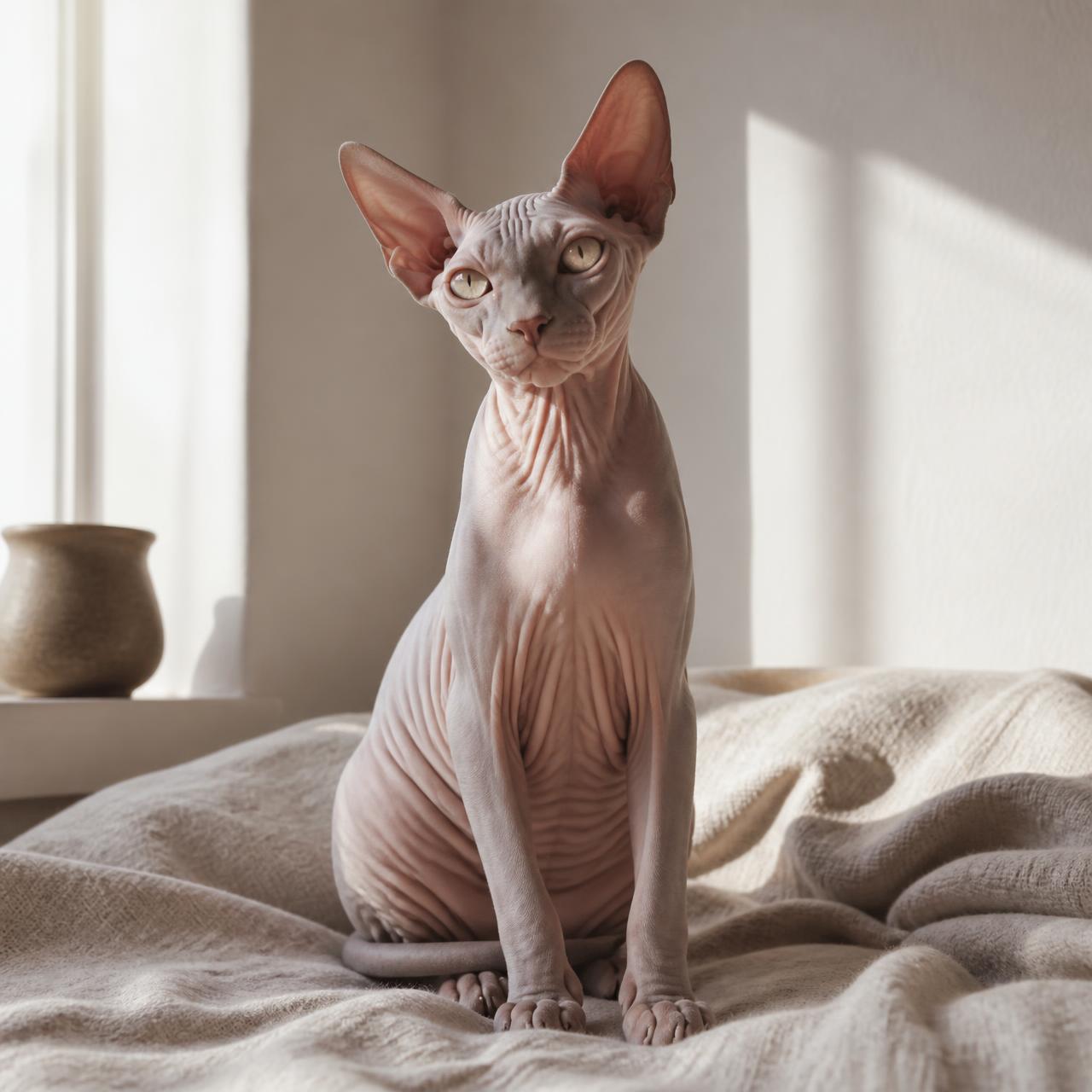
| Sphynx | Hairless, fine down | 1 | Weekly bath or wipe, warmth, ear cleaning |
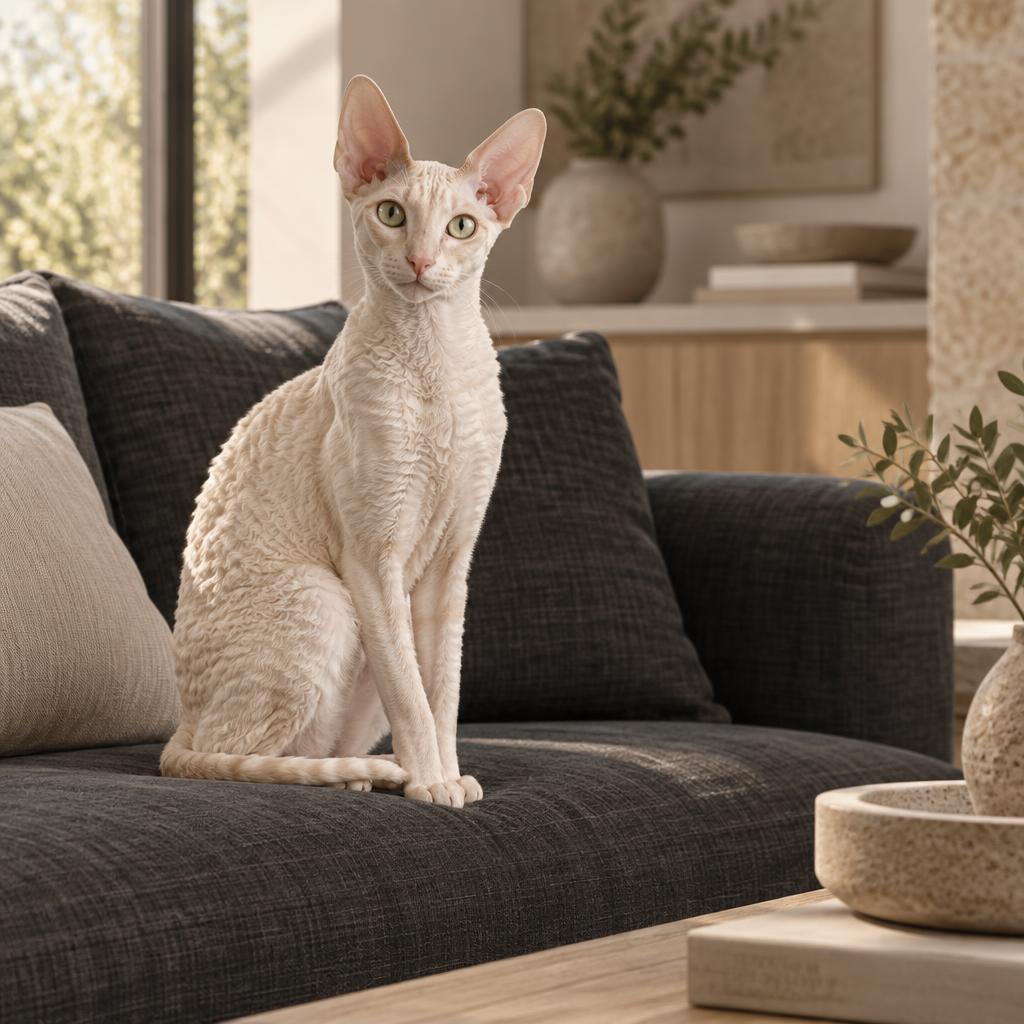
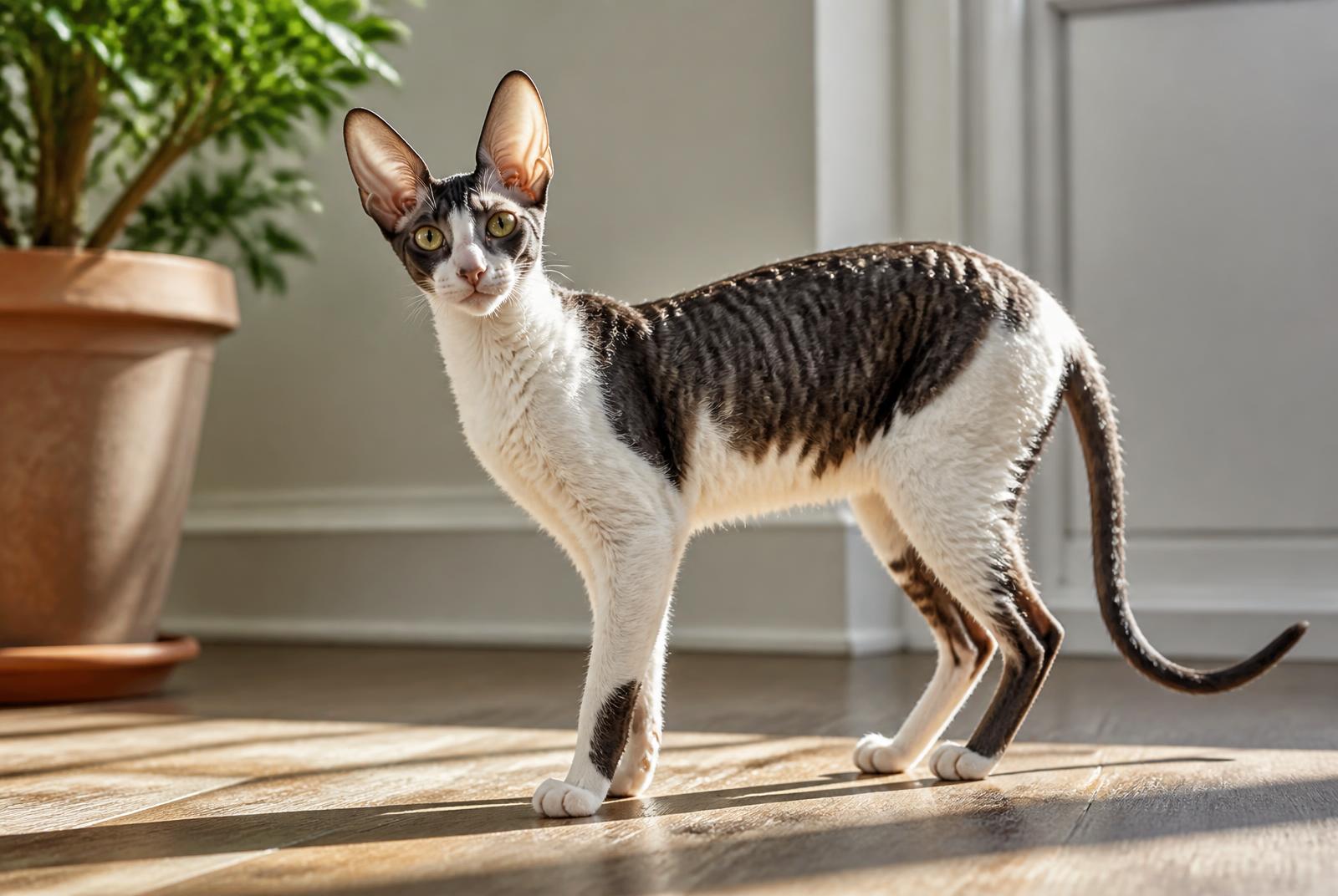
| Cornish Rex | Short, wavy, no guard hairs | 2 | Gentle handling, a warm spot, lots of play |
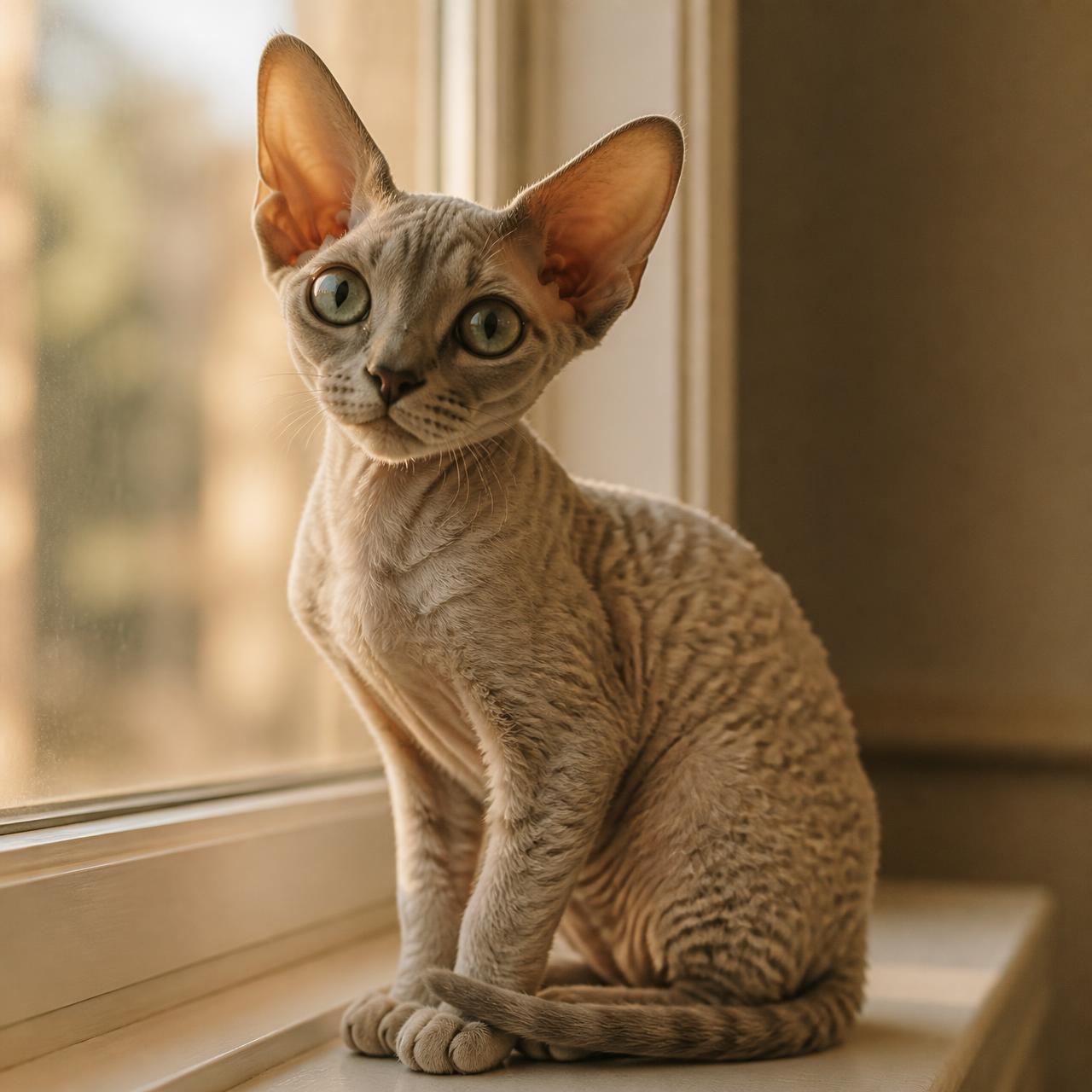
| Devon Rex | Loose curls, sparse | 2 | Soft brushing only, ear checks |
| Siamese | Short, close, little undercoat | 3 | Company and conversation |
| Oriental Shorthair | Satin short coat | 3 | A busy, sociable home |
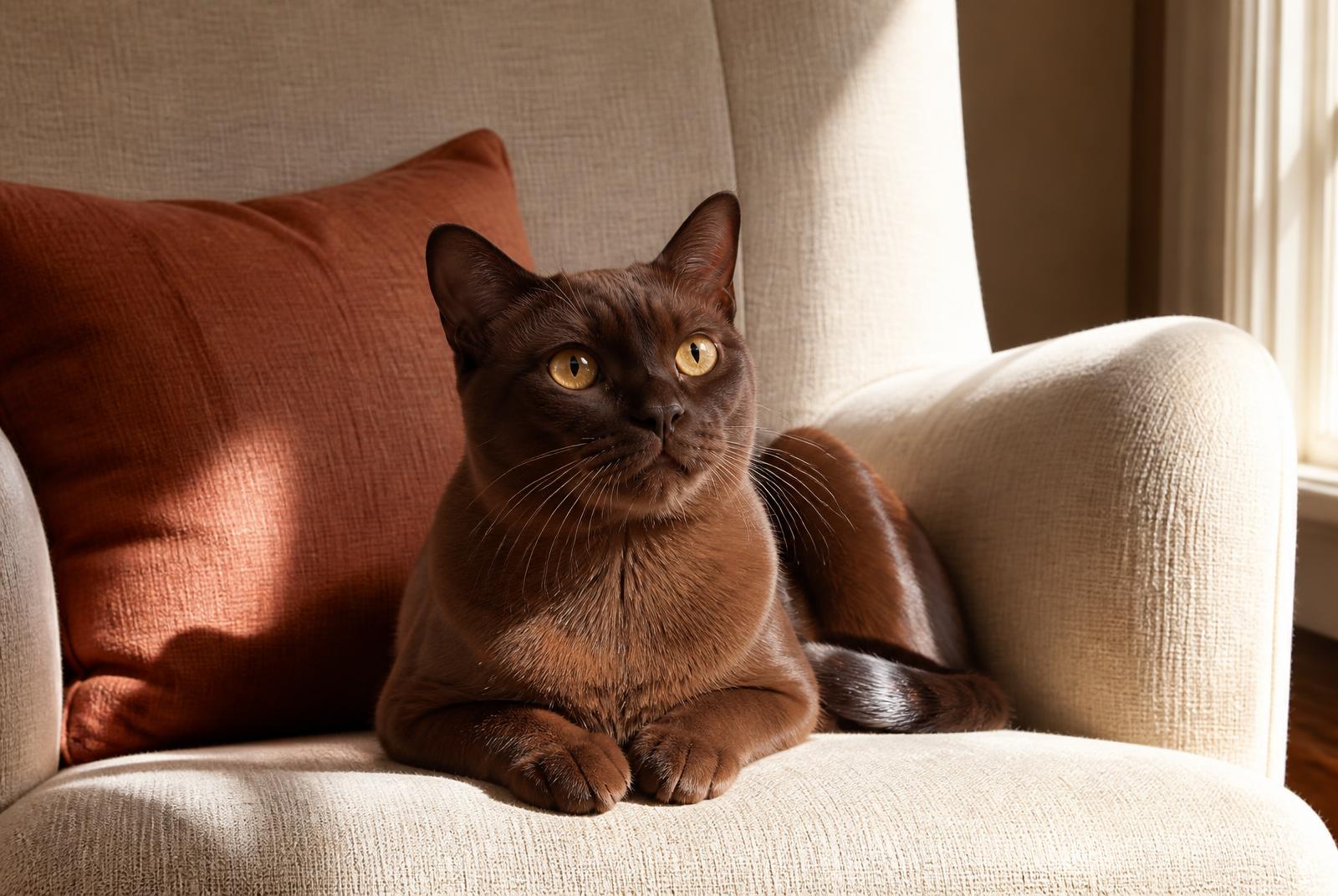
| Burmese | Glossy single coat | 3 | A glove stroke once a week |
| Tonkinese | Mink-soft short coat | 3 | Daily attention, little grooming |
| Bombay | Sleek black single coat | 3 | Very little, a calm lap |
| Abyssinian | Short ticked coat | 3 | Space to climb and explore |
The two rex breeds sit near the top because their curled coats trap loose hair. Read the full portraits of the Cornish Rex and Devon Rex before you decide; they are wonderful, demanding companions.
The Sphynx: no hair, different work
The Sphynx is the obvious answer to "which cat sheds least", and it is an honest one. There is almost nothing to find on the sofa. But the oils that a coat would normally absorb stay on the skin instead, and they build up.
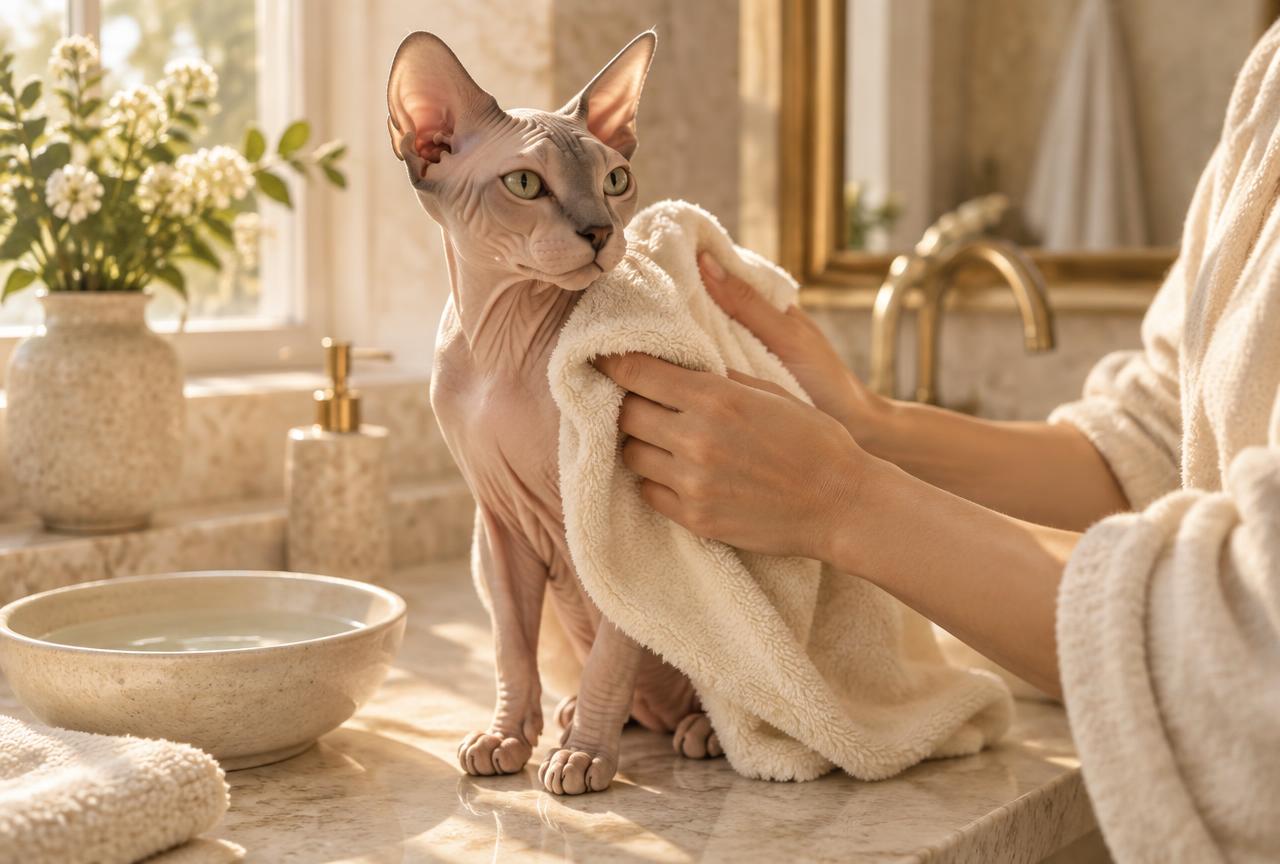
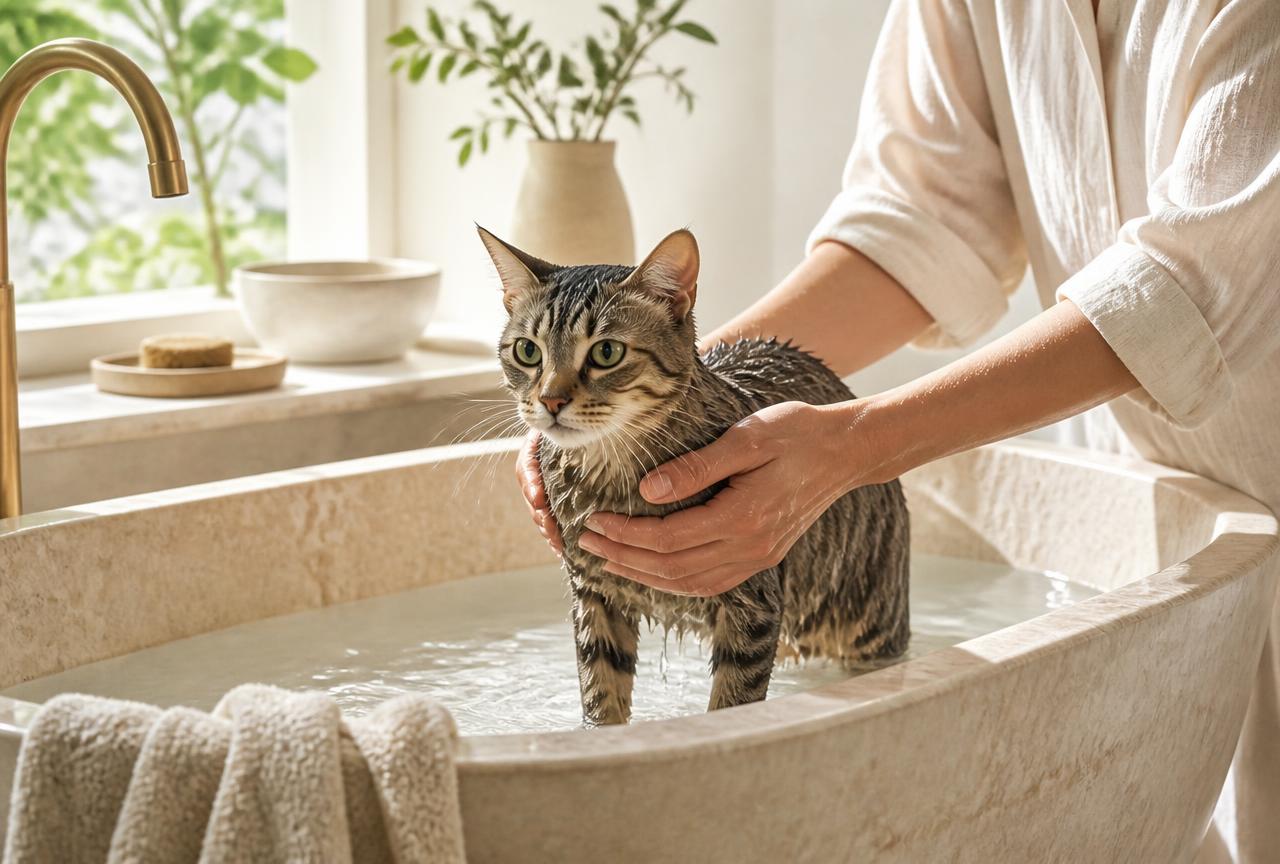
That means a weekly bath or a thorough wipe-down, regular ear cleaning, and a careful eye on the folds around the shoulders and legs. A Sphynx also feels the cold, so expect to provide warm beds and, in winter, the occasional jumper. And they are greasy on pale upholstery in a way that a shedding cat is not. You swap hair for oil marks. Some people prefer that trade; plenty do not.
A cat that sheds less is not a cat that needs less. The care moves somewhere else.
If the Sphynx appeals, our Sphynx breed page goes through the skin care routine in detail.
The sleek shorthairs: the easiest middle ground
For most households, the best balance sits with the sleek, single-coated breeds: the Siamese, Oriental Shorthair, Burmese, Tonkinese and Bombay. None of them is hair-free, but they lack the thick undercoat that drives heavy moults. A weekly once-over with a rubber glove lifts most of what would otherwise end up on your clothes.
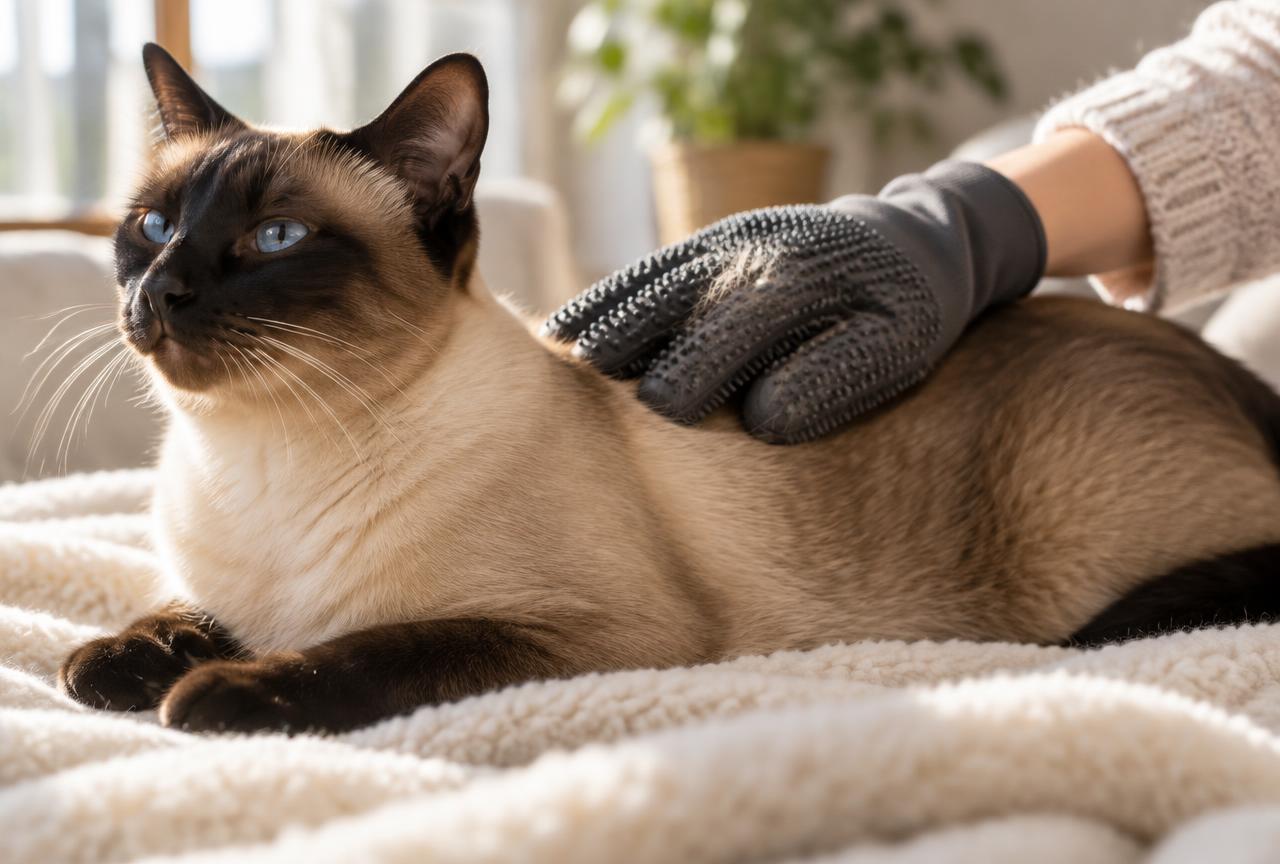
The catch here is temperament rather than coat. These are sociable, often vocal cats that dislike long hours alone. A Siamese in a quiet, empty flat all day will tell you about it. If you are out from eight until six, a calmer Bombay or Burmese will cope better than an Oriental.
Use the match below to weigh hair, care and energy together. It ranks the breeds above against your answers.
Interactive · built for this article
Low shedding match
Shedding is only one part of the fit. Tell us how much hair you can live with, how much grooming you will really do, and the energy you want, and see the three closest breeds.
Closest matches
- Burmese
Glossy single coat; a weekly glove stroke keeps it tidy. Steady and affectionate.
- Singapura
Tiny cat, fine short ticked coat, modest shedding.
- Khao Manee
Smooth white single coat, moderate energy, very people-focused.
Low shedding is not the same as allergy friendly. If anyone at home is allergic, spend time with the breed first. Compare more in the breed matchmaker.
Three shedding myths worth dropping
"Shaving a long-haired cat stops the shedding." It does not. The hair still grows and still falls out, just shorter, and clipping can upset a cat and leave the skin exposed to sun and scratches. A clip is a vet or groomer decision for matted coats, not a shedding fix.
"Indoor cats shed all year, so breed does not matter." Indoor cats under steady artificial light do moult more evenly through the year, rather than in two big waves. But a dense undercoat still sheds more than a thin one. Breed sets how much; light and season set when.
"Supplements will stop a cat shedding." A complete commercial diet already contains the fatty acids a healthy coat needs. Extra oils may improve a dull coat in a cat with a deficiency, but they will not turn a Maine Coon into a Burmese. If the coat looks poor, ask your vet before adding anything.
Mixed-breed cats are worth a mention too. A shelter cat with a short, close coat can shed as little as many pedigrees, and you can see and feel the coat before you commit. Run a hand against the lie of the fur: if you find a thick, woolly layer underneath, expect more hair; if the coat lies flat and thin, expect less.
Verdict by household
Different homes need different trade-offs. These are the matches we would suggest.
- You want the least hair possible and do not mind bath time: Sphynx, or a Cornish Rex if you would rather avoid weekly baths.
- You want little hair and very little grooming: Burmese, Bombay or Tonkinese.
- You are home a lot and enjoy a chatty, involved cat: Siamese or Oriental Shorthair.
- You have young children: Burmese or Tonkinese, both sturdy and tolerant, rather than the fragile-coated Devon Rex.
- Someone in the home has an allergy: treat shedding as secondary and read our hypoallergenic cats guide first.
Keeping hair down with any cat
Breed choice sets the baseline, but your routine decides what you actually live with. These steps help with any cat, including a long-haired one.
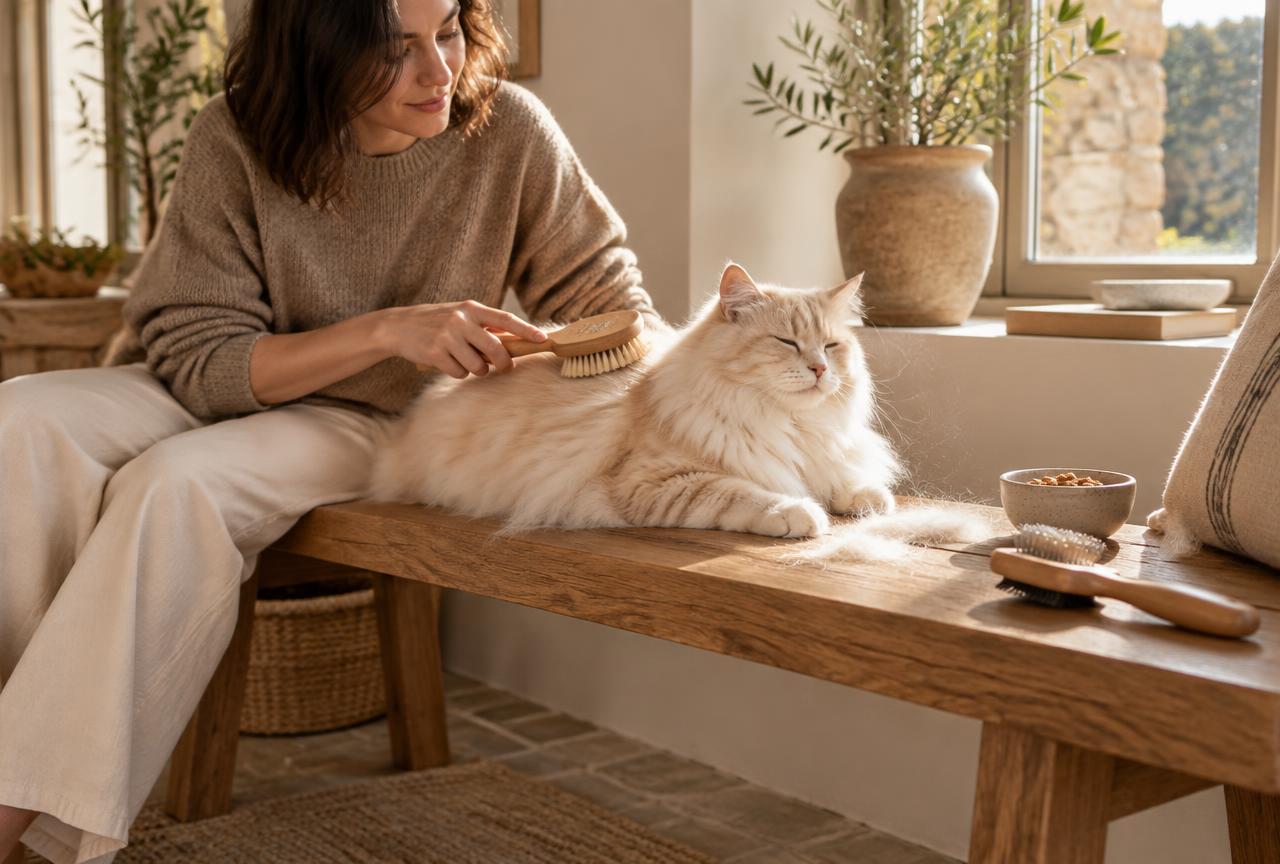
- 1Groom on a fixed day each week, more often during spring and autumn moults, so loose hair leaves on the brush rather than the sofa.
- 2Use the right tool: a rubber glove for short single coats, a fine comb for curls, a wide-toothed comb and slicker for double coats.
- 3Feed a complete diet with enough fat and protein; a dull, brittle coat sheds more. Our portion calculator helps you get the amount right.
- 4Keep a washable throw where the cat sleeps and wash it weekly.
- 5Run a vacuum with a good filter twice a week in the rooms the cat uses most.
- 6Brush the cat in the same spot each time, ideally outside or on a hard floor.
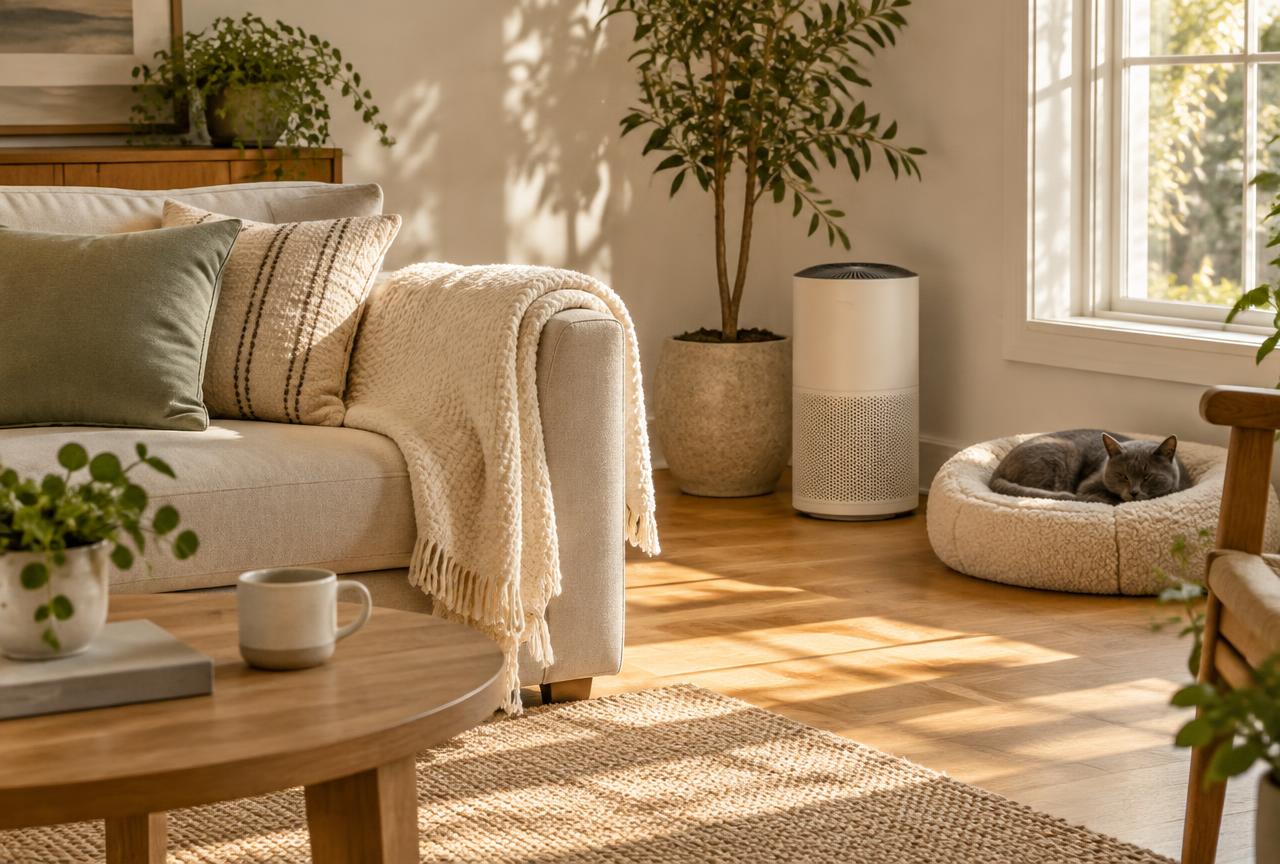
A short checklist for the home:
- A washable cover on the favourite sleeping spot
- A lint roller by the front door
- A vacuum with a sealed filter
- Hard floors or low-pile rugs where possible
- The grooming tool kept somewhere you will actually see it
When shedding is a health question
Normal seasonal shedding is even across the body and comes in waves. Some changes are worth a vet's attention rather than a better brush:
- Bald patches, broken hairs or thinning in one area, which can mean overgrooming from stress, allergy or pain. Our guide to overgrooming explains the causes.
- Round, scaly patches, which can be ringworm.
- Dandruff, redness or scabs alongside the hair loss.
- A sudden increase in shedding with weight loss, thirst or a change in appetite.
- Hair loss in a Sphynx's down, or spots and blackheads on the skin.
None of these is something to diet or groom away. Book a check-up, and mention when it started and what else has changed.
What to do next
Start with how much hair you can genuinely live with, then be honest about how much care you will give. If both answers are "very little", look first at the Burmese, Bombay and Tonkinese. If you want almost no hair and like a hands-on routine, meet a Sphynx or a rex. And spend time with any breed in person before you commit; one afternoon on someone's sofa tells you more than any chart.
Questions people actually ask
What are the best low shedding cats?
The Sphynx sheds least because it has almost no hair, followed by the Cornish Rex and Devon Rex, whose curled coats trap loose hair. Sleek single-coated breeds such as the Burmese, Bombay, Tonkinese, Siamese and Oriental Shorthair also shed lightly and need very little grooming, which makes them the easiest choice for most homes.
Is there a cat that does not shed at all?
No. Even the Sphynx has a fine down and sheds skin cells, and it needs regular baths to clear oil that a coat would normally absorb. Every cat sheds something. What changes between breeds is how much hair ends up on your furniture and what other care you take on instead.
Are low shedding cats hypoallergenic?
Not necessarily. The main cat allergen, Fel d 1, is made in saliva and skin glands and spreads when a cat grooms. A cat that drops little hair can still trigger symptoms. If someone at home is allergic, spend several hours with the breed before deciding, and talk to a doctor about managing the allergy.
Do short haired cats shed less than long haired cats?
Not always. What matters most is the undercoat. A short-coated breed with a dense undercoat, like the British Shorthair, can shed more than a breed with a longer but thinner coat. Ask about the undercoat when you compare breeds, rather than looking at length alone.
How can I reduce cat shedding at home?
Groom on a set day each week, and more often during spring and autumn moults. Use a rubber glove for short coats and a comb for longer ones, feed a complete diet, put a washable throw on the favourite sleeping spot and vacuum with a filtered machine twice a week.
When is cat shedding a health problem?
Normal shedding is even and seasonal. Bald patches, broken hairs, round scaly spots, scabs, redness or a sudden increase alongside weight loss or thirst are reasons to see a vet. These can point to stress overgrooming, parasites, allergies, ringworm or a hormonal condition.
Sources
- Hair loss in cats, International Cat Care
- Grooming your cat, International Cat Care
- Cat allergies, American College of Allergy, Asthma and Immunology
- Breeds, The Cat Fanciers' Association
Breeds mentioned
Put it into practice
Read next
How to give a cat a pill without losing its trust
How to give a cat a pill calmly: the hold that works, the food tricks that do not backfire, and what must never be crushed.