
Tool 01
How much should I feed my cat?
Start from the resting energy requirement clinics use, adjust for life stage, activity, neuter status and body condition, then turn the answer into grams of the food actually in your cupboard, per day and per meal.
Your cat
Ribs felt without pressing, visible waist, neat tuck. This is the target.
Your food, not a generic tin
Energy density varies wildly between brands. Copy the kcal per 100 g from your label and the grams below become real numbers rather than an average.
Your cat's daily target
260kcal
RER 216 kcal × factor 1.2
Meals
234 kcal
Treats
26 kcal
How that looks in the bowl
Your inputs stay on this device, so the page reopens where you left it.
The day, meal by meal
- Meal 1 · 07:30138 g wet or 31 g dry
- Meal 2 · 18:30138 g wet or 31 g dry
Times are a suggestion, consistency matters more than the clock. Kittens under six months do best on three or four meals.
How to read the result
The starting point is the resting energy requirement: 70 × body weight in kilograms to the power 0.75. That is what a cat burns doing nothing at all, and it does not scale in a straight line with weight, which is why a 6 kg cat needs nowhere near twice what a 3 kg cat needs.
Everything after that is a multiplier. Kittens are given roughly 2.5 times resting needs to build tissue. Neutered adults sit near 1.2 and intact adults near 1.4, because neutering lowers maintenance needs by 20–30% while appetite rarely follows. Seniors drop again, though very old cats often need more as they lose the ability to hold muscle.
Body condition then corrects for the honest truth that a 6 kg cat carrying two spare kilograms should not be fed as a 6 kg cat. This is why two cats of identical weight can legitimately need different amounts, and why the calculator asks you to look at your cat rather than only weigh it.
Treat any figure here as a starting portion, not a prescription. Feed it for two weeks, weigh, and adjust by 10% in the direction the scales point.
Score your cat at home
- 1Feel the ribsRun your palms along both sides of the chest. You should feel each rib easily, like knuckles under a thin cloth. If you have to press, the cat is carrying extra.
- 2Look down from aboveStanding over your cat, there should be a visible narrowing behind the ribs. A straight or bulging outline is a body condition score of 7 or more.
- 3Look from the sideThe belly line should rise from the ribcage towards the hind legs. A level or sagging line means fat, not loose skin, although older cats do keep a primordial pouch.
- 4Repeat monthlyScore and weigh on the same day each month. Gradual gain is invisible day to day; a written figure is the only reliable alarm.
Five mistakes that undo the maths
Leaving dry food out all day
Free-feeding removes any relationship between the calculated total and what the cat eats. Measure the day's allowance in the morning and let that be all there is.
Measuring dry food with a cup
Cup fills vary by up to 30% depending on kibble shape and how it settles. That is a third of a day's calories. Kitchen scales cost little and end the guesswork.
Treating treats as free
Ten dental treats can carry more calories than a pouch of food. Keep treats to about a tenth of the daily total and take those calories out of the meals.
Cutting the portion sharply for weight loss
Severe restriction risks muscle loss and liver disease, and produces a cat that hunts the kitchen all night. Aim for about 1% of body weight lost per week, agreed with your vet.
One bowl in a multi-cat home
Portions only mean something if you know who ate them. Feed cats in separate rooms or use microchip feeders, then weigh each cat monthly.
Questions people actually ask
How much should I feed my cat per day?
Most neutered indoor adult cats need roughly 190–250 kcal a day, which is about 220–290 g of wet food or 50–65 g of dry. The calculator narrows that to your cat by starting from resting energy needs and adjusting for life stage, activity, neuter status and body condition. Always cross-check against the kcal figure printed on your own food.
Is wet or dry food better for portion control?
Wet food is far easier to portion accurately because it is mostly water: a small measuring error costs few calories. Dry food is around four times more energy-dense, so a heaped scoop can add a third of a day's calories without looking like much. If you feed dry, weigh it on kitchen scales rather than using a cup.
Should treats count towards the daily total?
Yes. Treats, dental chews, milk drops and licks of your food all carry calories. Veterinary weight-management guidance keeps treats to no more than about 10% of the daily allowance, with the meals reduced to make room. The calculator sets that allowance aside for you rather than letting it sit on top.
How fast can a cat safely lose weight?
No more than about 1% of body weight a week, and only on a plan your vet has agreed. Faster loss risks hepatic lipidosis, a serious liver condition, and muscle loss. For a 6 kg cat that is roughly 60 g a week, which feels slow but is the difference between safe and dangerous.
Why does neutering change the number?
Neutering lowers maintenance energy needs by roughly 20–30% while appetite often stays the same, which is why so many cats gain in the year after the operation. Clinical formulas use a lower multiplier for neutered cats. Reducing the portion at the time of surgery, rather than after the weight appears, is the easier fix.
How many meals a day should a cat have?
Cats are natural trickle feeders and do well on two to four small meals. Kittens under six months need three or four. What matters more than the number is that the day's total is measured once and divided, rather than topped up whenever the bowl looks empty.
My cat is always hungry on the calculated amount, what now?
First confirm the food's kcal figure and weigh the portion. Then split the same total into more, smaller meals, add a puzzle feeder to slow eating, and switch some calories to wet food, which is more filling per gram. Persistent, dramatic hunger with weight loss deserves a vet visit; it can signal thyroid disease or diabetes.
Sources
- WSAVA Global Nutrition Guidelines, nutritional assessment and energy needs
- International Cat Care (ISFM), feeding and obesity in cats
- Cornell Feline Health Center, feline nutrition and body condition
- AAHA Nutrition and Weight Management Guidelines for Cats and Dogs
- FEDIAF Nutritional Guidelines for Complete and Complementary Pet Food
Editorial note
Written for an international audience: metric units throughout, no country-specific brands, shops or veterinary services, and any cost mentioned elsewhere on ReMews. is an indicative EUR range. This calculator is education, not diagnosis. If your cat's weight is changing without you changing the food, that is a reason to see a vet rather than to recalculate.
Next tool
Ideal weight checkerBreed-aware target weight and how far off your cat is today.Cat age converterLife stage in human years, and the care that matters next.Read alongside
 Wet vs dry cat food: the honest comparisonWhat the evidence supports, and how to switch safely.
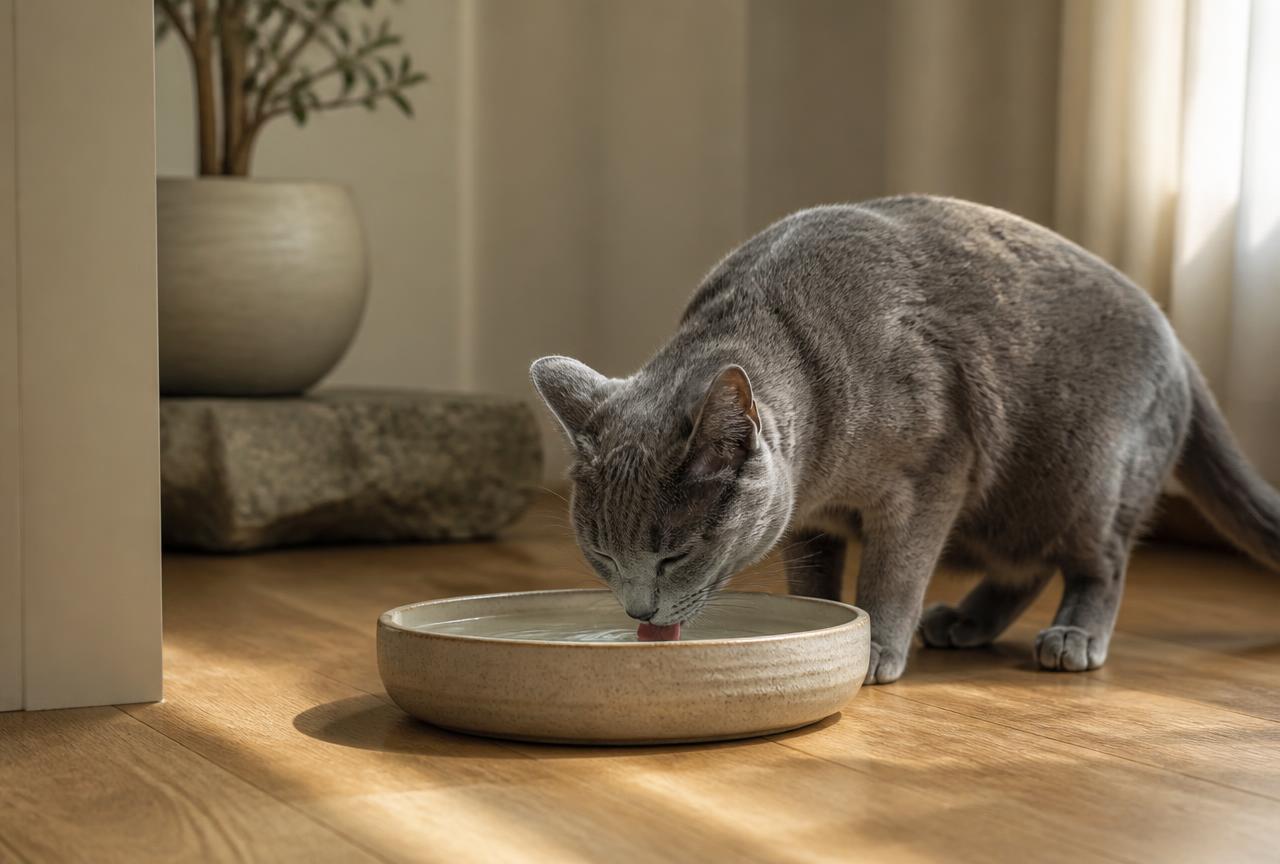 How much water should a cat drink?Why wet food changes the numbers in the bowl.
 Senior cat signals worth acting onWeight loss is often the first sign, long before anything else.