How much water should a cat drink?
Cats evolved to get their water from prey, not from bowls. That single fact explains most of what goes wrong with feline hydration, and most of what fixes it.
Nadia Ferreira
Feline health writer, ten years reporting on companion animal medicine
Published 4 September 2026
Checked against WSAVA, FEDIAF and ISFM guidance on feline nutrition and renal health
The short version
- Roughly 50 ml per kilogram per day, food included, so a 4 kg cat needs about 200 ml in total, not from the bowl alone.
- Wet food is about three quarters water and dry food under a tenth; cats on dry food drink more but not enough more.
- A cat on wet food may barely touch the bowl and be perfectly hydrated. Do the arithmetic before worrying.
- Wide, shallow, non-plastic bowls filled to the brim, kept away from food and trays, beat any fountain.
- Measure the bowl for three days now, while your cat is well. That baseline is what makes a later change meaningful.
- Drinking noticeably more than usual points at kidney disease, diabetes or an overactive thyroid, and needs a vet.
The domestic cat descends from a desert animal that drank very little, because it did not need to. A mouse is roughly seventy per cent water, and a cat eating whole prey takes in most of its daily fluid with dinner. The thirst drive that came with that arrangement is weak, weaker than a dog's, and far weaker than the situation demands when the diet is dry biscuit.
This matters clinically. Chronic low-grade dehydration is implicated in urinary tract disease and contributes to constipation, and dehydration is common in cats with kidney disease, which affects a large share of older cats. So "is my cat drinking enough" is a reasonable question. The answer, unhelpfully, is that you cannot judge it by watching the bowl, because the bowl is only part of the intake.
The number, and where it comes from
A widely used clinical guide is around 50 ml of water per kilogram of body weight per day, food included. A 4 kg cat therefore needs roughly 200 ml a day in total, and a 6 kg cat about 300 ml.
Two caveats. Needs rise in hot weather, with activity, during lactation and with several illnesses. And the total counts everything: the bowl, the wet food, the water clinging to a rinsed dish. A cat on a good wet diet may drink almost nothing from a bowl and be perfectly hydrated, which panics owners unnecessarily.
The upper limit is more useful than the target. Consistently drinking more than about 100 ml per kilogram per day is excessive, and is a reason to see a vet.
Where the water actually comes from
| Source | Water content | 200 g a day supplies |
|---|---|---|
| --- | --- | --- |
| Wet food, pouch or tin | 75 to 82 per cent | About 150 to 165 ml |
| Fresh or raw diet | 65 to 75 per cent | About 130 to 150 ml |
| Semi-moist | 25 to 35 per cent | About 50 to 70 ml |
| Dry food | 6 to 10 per cent | About 12 to 20 ml |
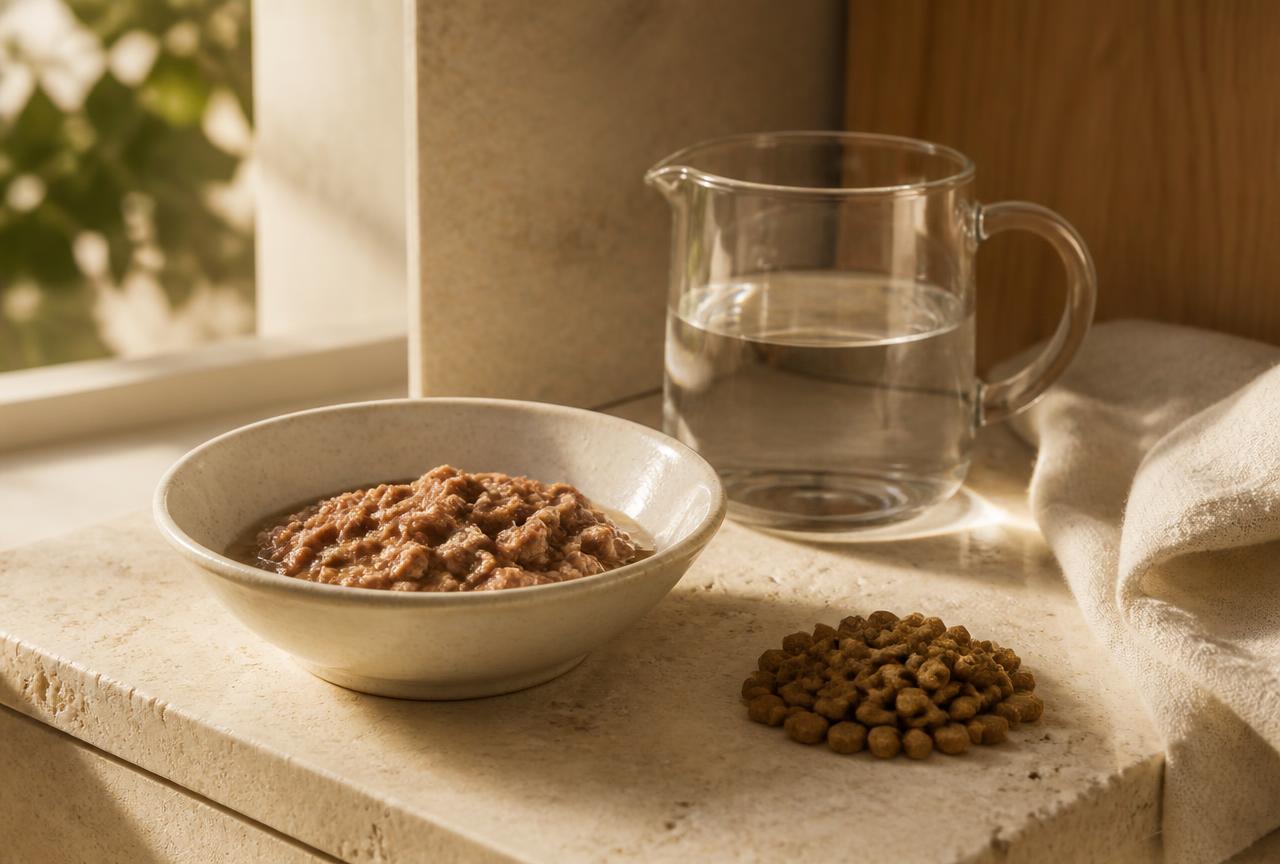
Cats on dry food do drink more, but studies consistently find they do not drink enough more: total water intake on a dry diet ends up lower than on wet. That is the central argument for including wet food, and it is covered in full in our wet versus dry comparison.
Work out your own cat's split below.
Interactive · built for this article
Water balance
How much water your cat needs a day, how much the food already supplies, and how much is left for the bowl to cover.
Daily target
225 ml
From food: 158 ml (70%). Left for the bowl: 67 ml.
Food is doing most of the work, bowl drinking will look low, and that is fine
Rough guide
- About 50 ml per kg per day, food included.
- Wet food is roughly three quarters water; dry food under a tenth.
- Over about 100 ml per kg per day is excessive and needs investigating.
Indicative only, needs rise with heat, activity and lactation. For calories rather than millilitres, use the portion calculator.
Why the fountain is overrated, and the bowl underrated
Fountains sell well and some cats love them. But the evidence that they meaningfully increase total intake is thin, and the more reliable variables are duller: bowl shape, bowl material, position and cleanliness.
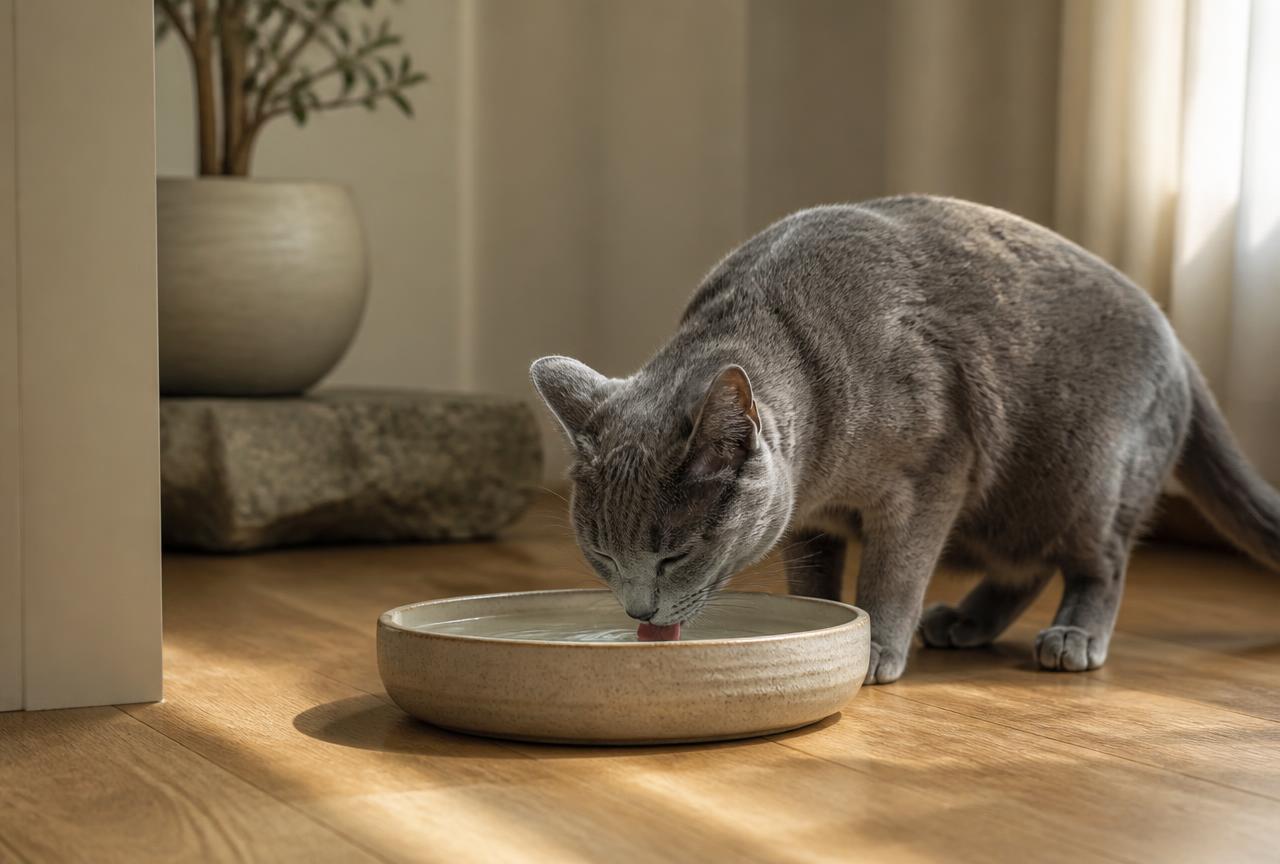
The main complaint cats have about bowls is whisker contact. A narrow, deep bowl presses on the whiskers, which are highly sensitive, and many cats simply drink less rather than tolerate it. Wide and shallow, filled to the brim, solves it.
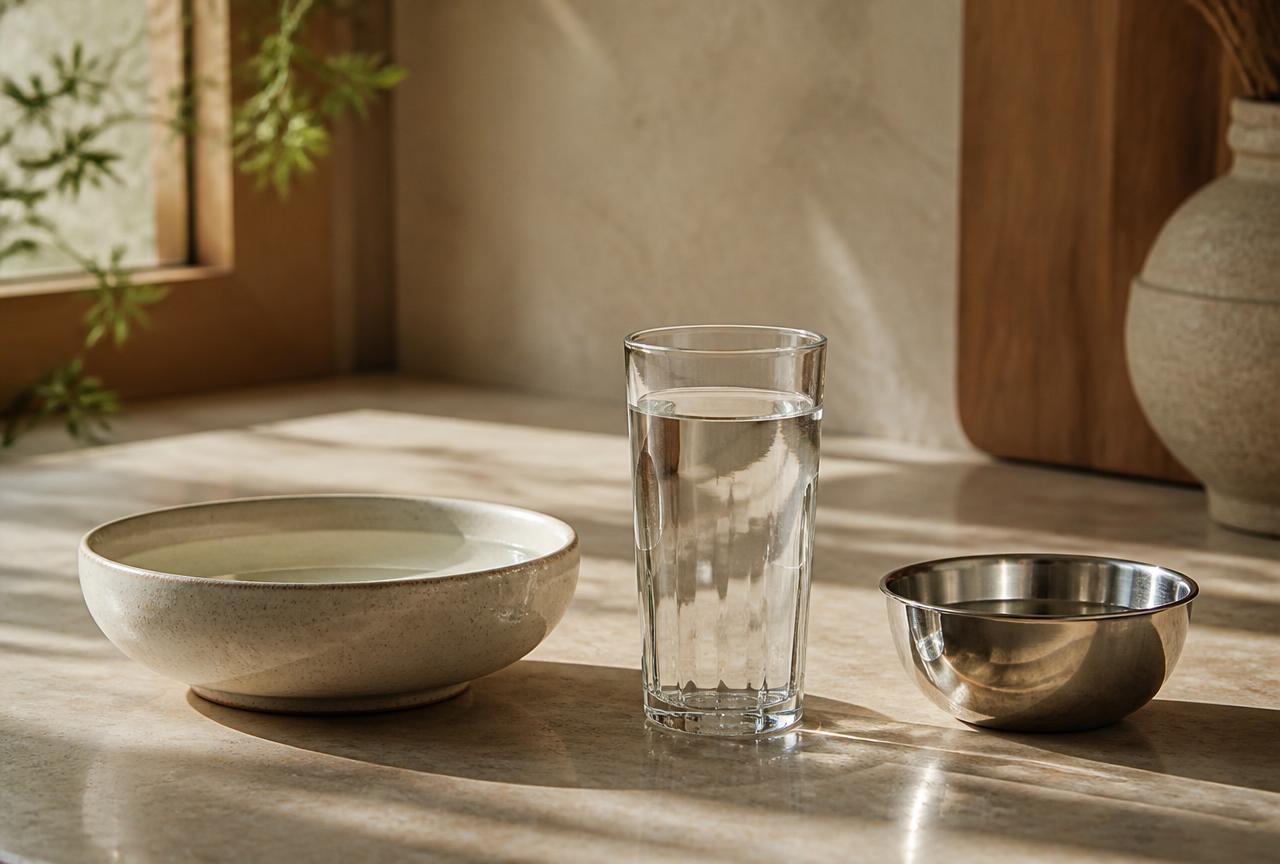
Material matters too. Ceramic, glass and stainless steel do not hold odour the way scratched plastic does. And plastic bowls acquire a taint over months that we cannot smell and cats can.
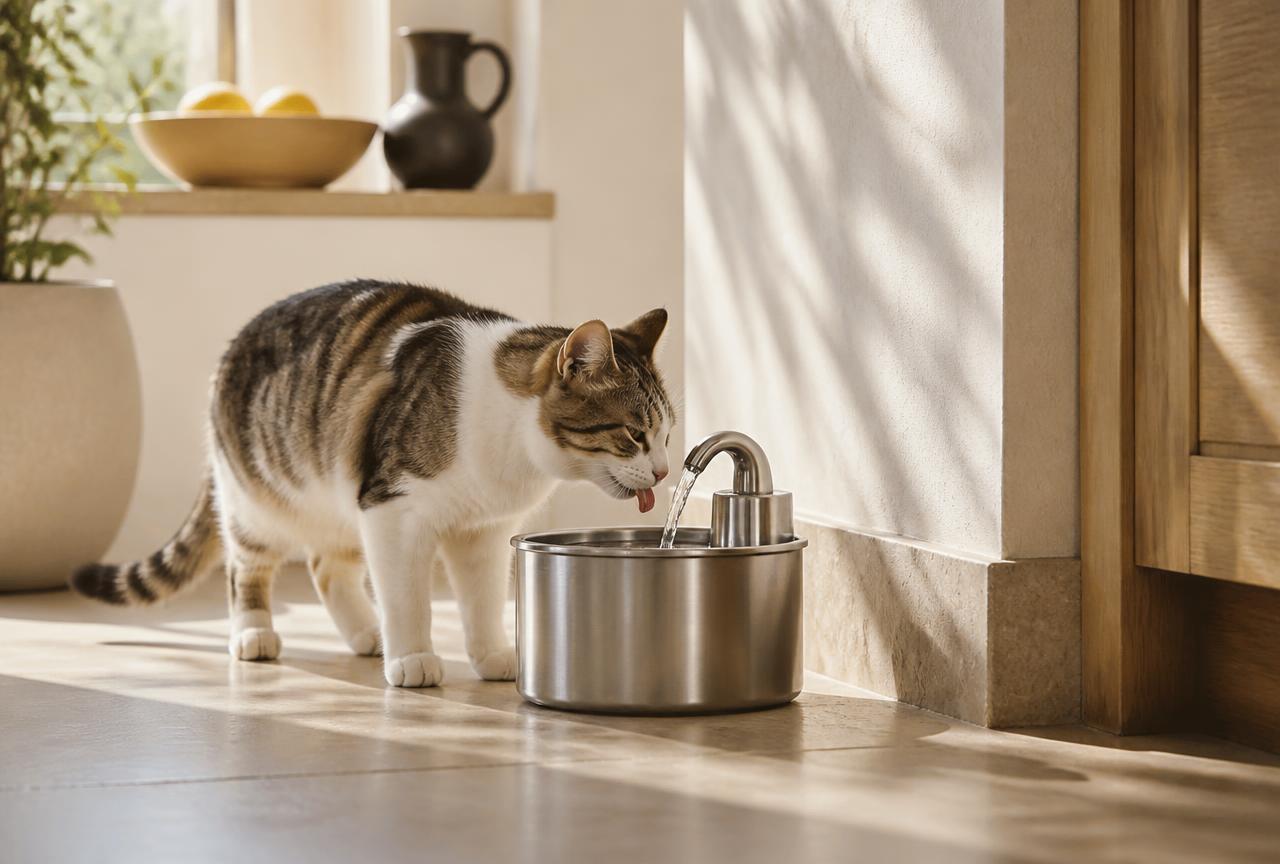
If you do buy a fountain: quiet pump, stainless or ceramic, and cleaned weekly, filters replaced on schedule. A slimy fountain is worse than a clean bowl.
The best hydration intervention is not a gadget. It is a shallow ceramic bowl, away from the food, refilled twice a day, plus wet food.
Placement: the rule people break
Cats do not like drinking beside their food. In the wild, water near a kill is water contaminated by it, and the preference persists. Separate the water station from the feeding station, different room if you can.

The rest of the placement rules:
- Two or three stations minimum, spread across the home and floors
- Never next to the litter tray
- Not beside a noisy appliance or in a corridor with through-traffic
- One on each floor a cat uses, especially for older cats
- Wide, shallow, non-plastic, filled to the brim
- Refilled at least daily, washed properly every few days
Practical ways to raise intake
Try these in order, the early ones do more than the later ones.
- 1Move to at least half wet food. Nothing else comes close. Split it across two or three meals.
- 2Add water to the wet food. A tablespoon or two stirred in is accepted by most cats, and you can increase it slowly.
- 3Add a splash to dry food if wet is refused, or soak kibble briefly in warm water.
- 4Buy one wide shallow ceramic bowl and fill it to the brim, positioned away from the food.
- 5Add a second and third station in different rooms.
- 6Refill twice a day rather than topping up. Cats prefer fresh.
- 7Try a low-sodium plain broth, no onion, no garlic, no salt added, if you need a temporary boost.
- 8Only then consider a fountain, and clean it weekly.
The signal that matters more than the target
Drinking more than usual is one of the most useful early signs in feline medicine, and it is worth far more attention than hitting a millilitre figure. In cats, increased thirst and increased urination together point mainly at chronic kidney disease, diabetes mellitus and hyperthyroidism, all common in older cats, all more manageable when caught early.
The trouble is that "more than usual" needs a baseline. Measure the bowl for three days now, while your cat is well: fill with a measured amount, measure what is left, note the wet food. Write it down. That figure is worth more to your future vet than any impression.
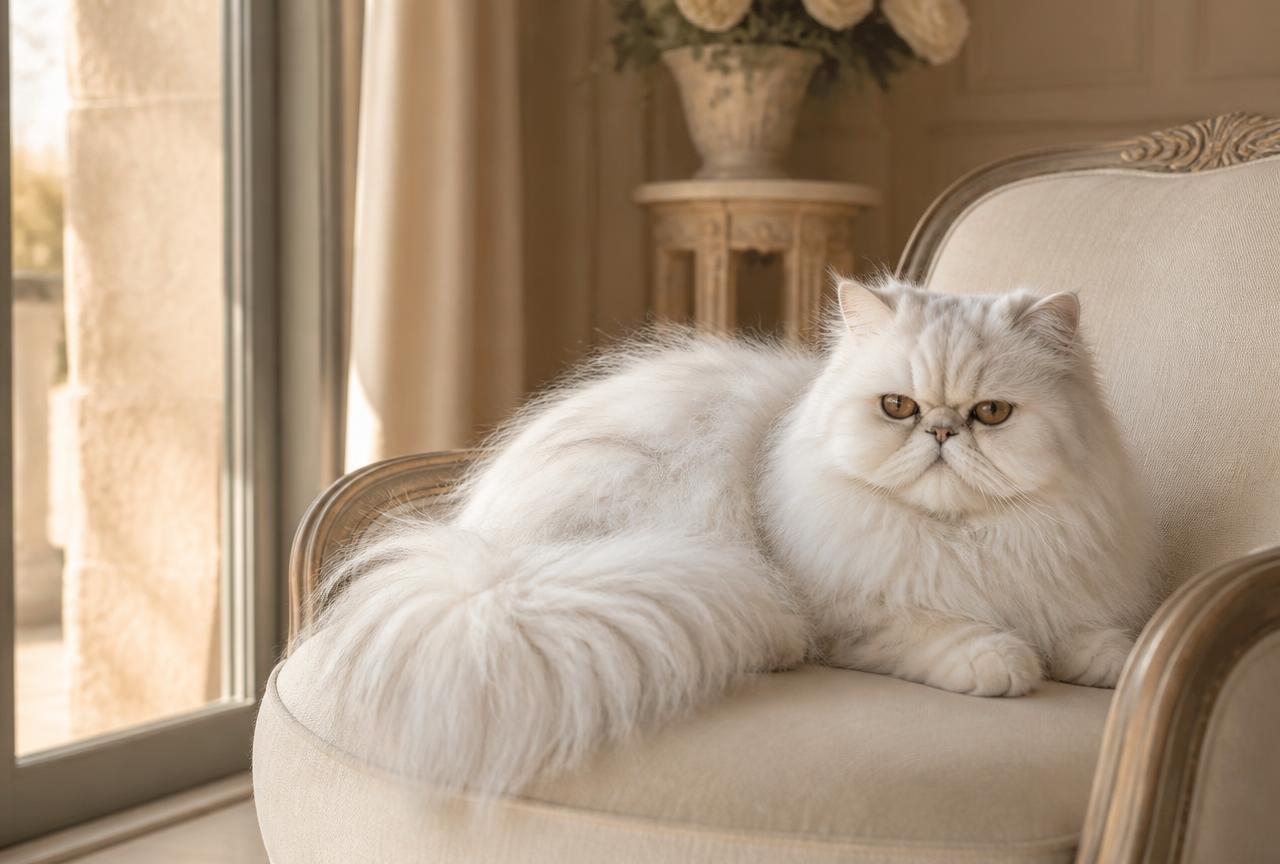
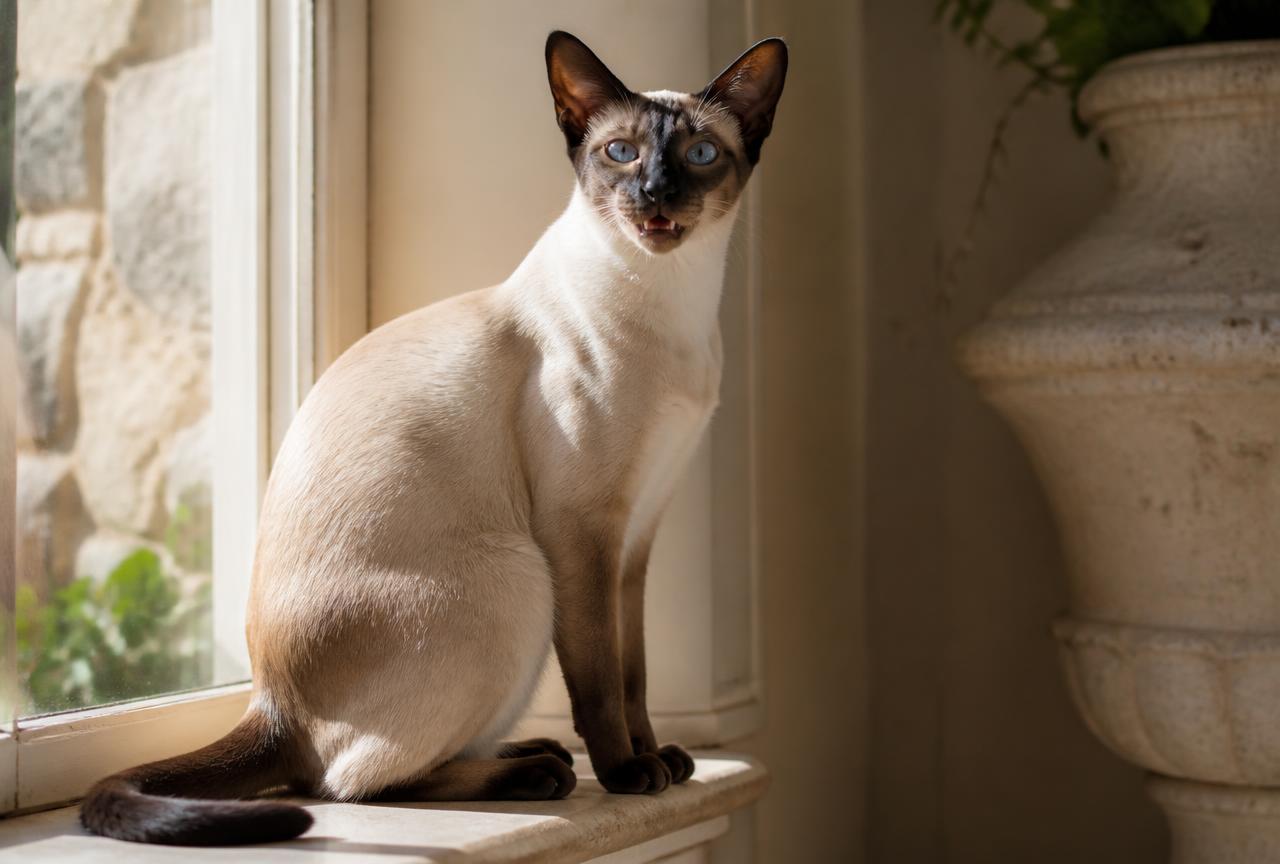
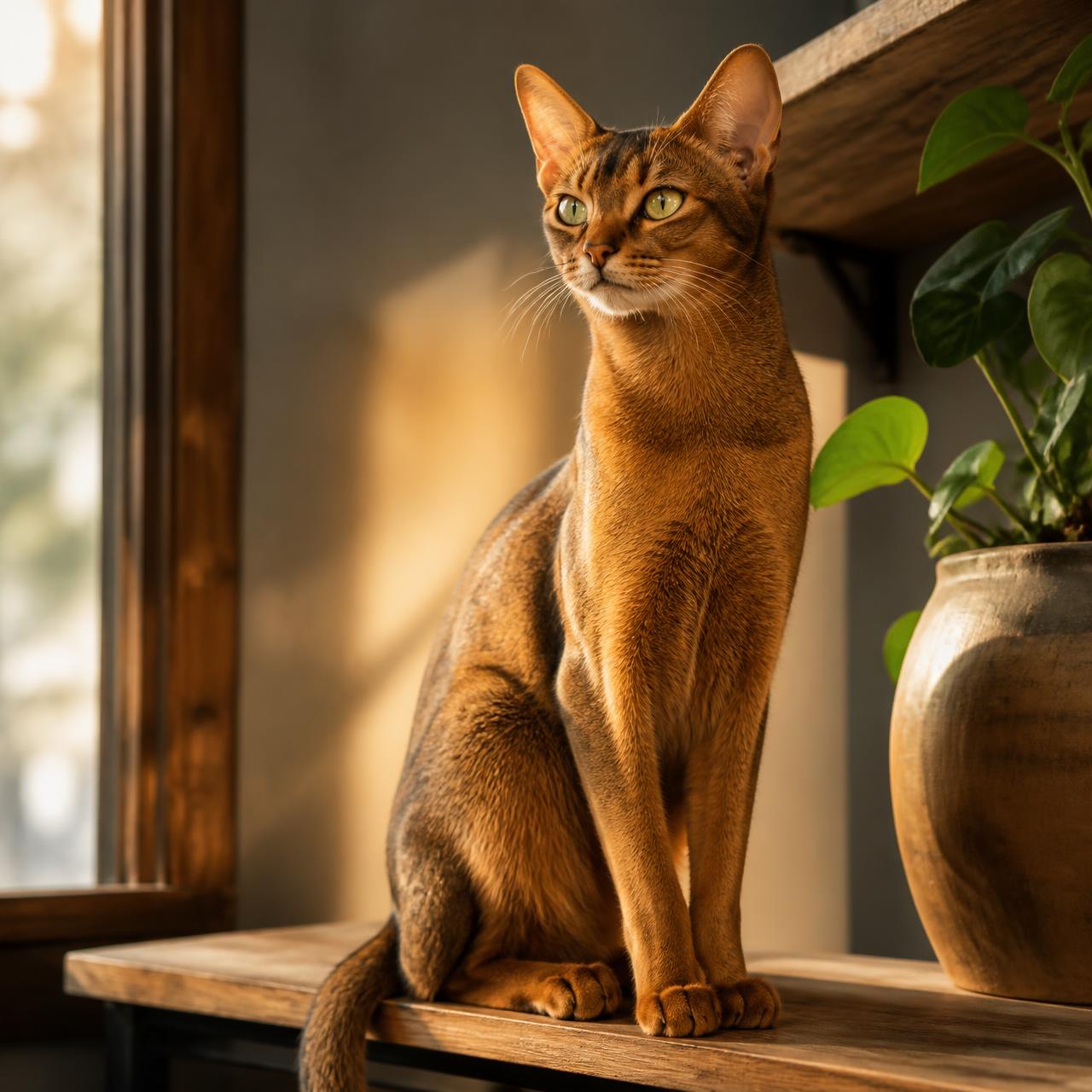
Breed predisposition plays a part. The Persian has an inherited risk of polycystic kidney disease, and Siamese and Abyssinian lines carry raised risks of other renal problems. Any cat past about eleven deserves annual bloods and urine, check the life stage with our cat age converter.
Verdict by household
Cat on wet food, rarely drinks. Almost certainly fine. Do the arithmetic above and stop worrying about the bowl.
Cat on dry food only. The highest-value change available to you is introducing wet food. Move slowly, over a week or two.
History of cystitis or crystals. Hydration is treatment, not prevention. Wet food, multiple stations, and follow your vet's diet advice.
Older cat. Water on every floor, wide shallow bowls at a comfortable height, and a measured baseline. Increased thirst in a senior cat is never nothing.
Multi-cat home. One water station per cat plus one, in separate places, so no cat can be blocked from drinking.
Cat that only drinks from the tap. Common and harmless. Meet it halfway: a running tap for a minute twice a day, plus bowls elsewhere.
When to call your vet
Same day for a cat that has stopped drinking and eating, for signs of dehydration, lethargy, sunken eyes, tacky gums, skin that stays tented when lifted, and for any cat straining to urinate or producing nothing, which is an emergency in males.
Within the week for a genuine increase in thirst or urine volume, for weight loss with a good appetite, for a cat over eleven that has never had bloods and urine checked, or for vomiting alongside increased drinking. Take your three-day measurement with you: it turns a vague worry into data, and often shortens the path to a diagnosis. If vomiting is part of the picture, our guide to why cats vomit covers what to record.
Questions people actually ask
How much water should a cat drink a day?
Around 50 ml per kilogram of body weight per day in total, food included, roughly 200 ml for a 4 kg cat. Wet food can supply most of that, so bowl drinking may look very low in a well-hydrated cat. Consistently above about 100 ml per kg per day is excessive and needs a vet.
Why does my cat not drink water?
Cats descend from a desert species with a weak thirst drive, and one eating wet food is already taking in most of its daily fluid with meals. Refusal can also be about the bowl: deep narrow bowls press on the whiskers, plastic holds odour, and water beside food or a litter tray is avoided.
Do cat water fountains actually help?
Some cats prefer moving water, but the evidence that fountains meaningfully raise total intake is weak. Bowl shape, material, position and freshness matter more. If you buy one, choose a quiet pump and stainless or ceramic, and clean it weekly, a neglected fountain is worse than a clean bowl.
Is wet food better for hydration than dry?
Yes, substantially. Wet food is 75 to 82 per cent water against 6 to 10 per cent for dry, so the same daily weight supplies roughly ten times the fluid. Cats on dry food drink more from the bowl but studies find their total intake still ends up lower.
Why is my cat suddenly drinking a lot of water?
Increased thirst is one of the most useful early signs in cats and it points mainly at chronic kidney disease, diabetes mellitus or an overactive thyroid. All three are more manageable caught early. Measure the bowl for three days, note the wet food, and book a vet visit with those figures.
How do I know if my cat is dehydrated?
Look for lethargy, tacky or dry gums, sunken-looking eyes, and skin over the shoulders that stays tented for a moment when gently lifted. Those signs mean a same-day vet visit. A cat that has stopped eating and drinking altogether is an urgent case, not a wait-and-see one.
Where should I put my cat's water bowl?
Away from the food and well away from the litter tray, in a quiet spot without through-traffic or noisy appliances. Two or three stations spread across the home, one on each floor the cat uses, get more use than a single bowl, and in multi-cat homes they stop one cat blocking access.
Sources
- WSAVA global nutrition guidelines, WSAVA
- Nutritional guidelines for complete and complementary pet food, FEDIAF
- Chronic kidney disease in cats, International Cat Care
- Feline lower urinary tract disease and hydration, Cornell Feline Health Center
Breeds mentioned
Put it into practice
Read next
Cat sneezing: colds, dust and the signs that need a vet
Cat sneezing a lot? Dust, viruses, dental roots and foreign bodies, how to sort the harmless from the signs that need a vet.