Ethiopia
Abyssinian
The most athletic cat in the index, and the least suited to a still house. An Abyssinian is a fifteen-year commitment to vertical space, daily play and a cat that would rather supervise than sit.
The ReMews. breed desk
Perpetual motion in a ticked coat
The short version
- This is an athlete, not an ornament: plan for climbing height and two real play sessions a day, every day, for fifteen years.
- The ticked coat is the lowest-maintenance in the index, a rubber mitt once a week is the entire grooming routine.
- Abyssinians dislike being alone. A household that is empty from morning to night should be considering two cats, not one.
- Watch the teeth and the eyes: periodontal disease is common, and responsible breeders test for progressive retinal atrophy and pyruvate kinase deficiency.
- Bored Abyssinians do not sulk, they redecorate. Almost every behaviour complaint about the breed is an energy budget problem.
- Weight
- 3–5.5 kg
- Lifespan
- 12–15 yrs
- Coat
- Short
- Size
- Medium
- Grown male
- 4–5.5 kg
- Grown female
- 3–4.5 kg
- Years to full size
- about 2
- One-off setup
- €320–700
Get one if…
- Active owners who want an interactive cat
- Homes with tall climbing space
- Households taking two active cats
- People who enjoy training and puzzle feeding
Think again if…
- Anyone wanting a calm lap cat
- Homes with no vertical space
- Owners who need tidy, untouched surfaces
Trait profile
Read the energy score literally, it is the highest in the index and it is not a personality quirk, it is a daily obligation. The high affection figure means involvement rather than lap-sitting: this cat wants to be in the room, on the work you are doing, at eye level. Low grooming and low shedding are real advantages, and low vocality is honest, an Abyssinian is a quiet cat that expresses itself with its whole body instead.
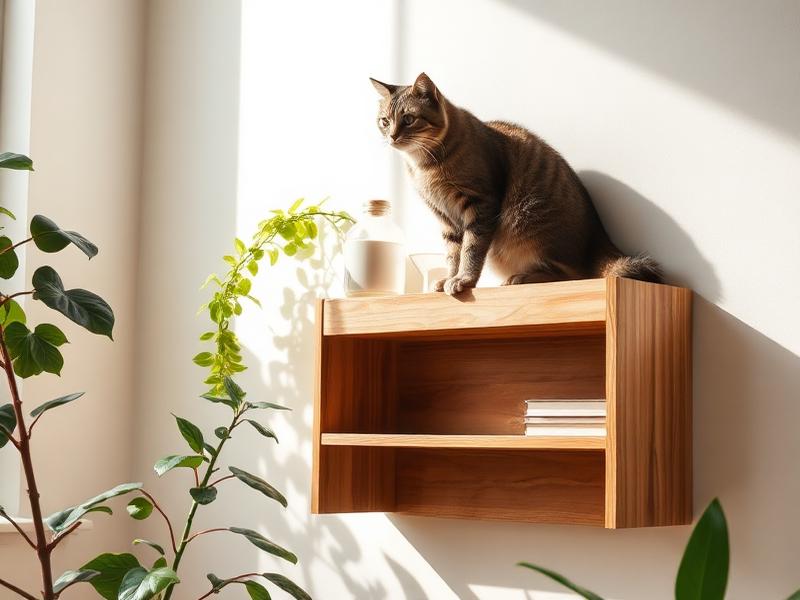
Space & setup. Height is essential, tall cat tree plus permitted high shelves; expect counter-surfing.
Allergies. Light shedder with a short coat, but dander levels are ordinary.
The review
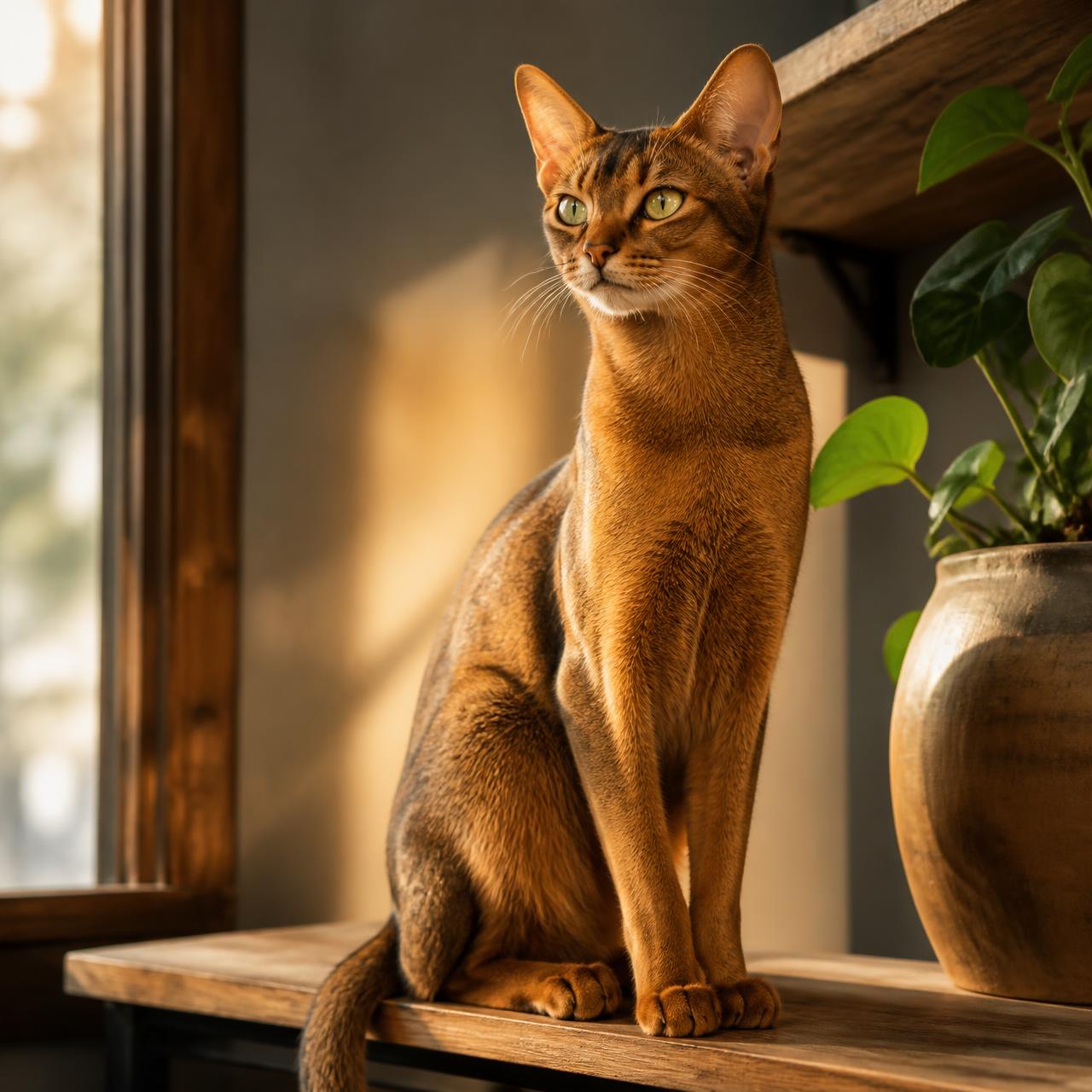
One of the oldest known breeds, the Abyssinian has a warm ticked coat and a lean, athletic frame. They are curious to the point of nosiness and rarely sit still for long.
There is a particular sound that tells you an Abyssinian has arrived in a house, and it is not a meow. It is the soft double thump of a cat landing on top of a wardrobe you had assumed was out of reach. Everything else about the breed follows from that: this is a cat built for altitude, curiosity and motion, and it will find all three whether or not you have planned for them.
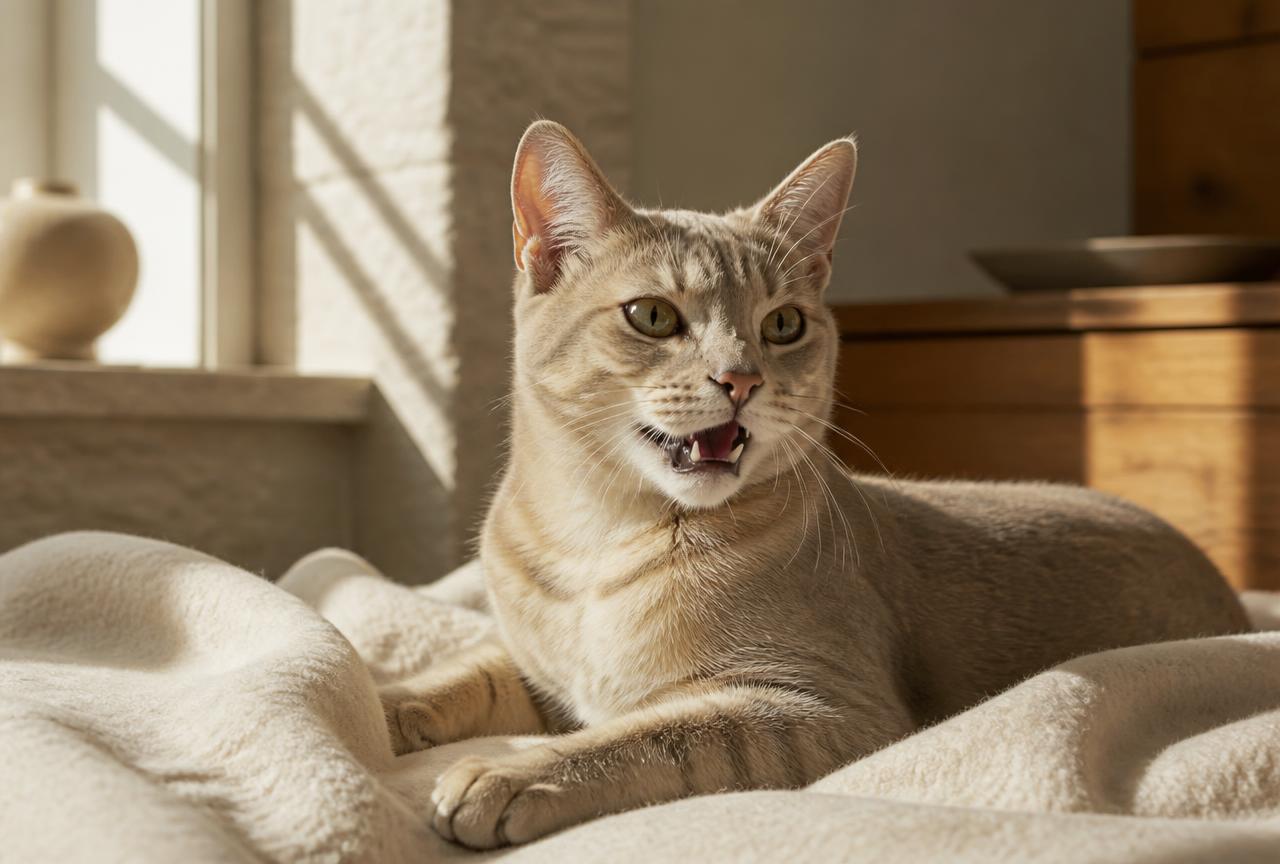
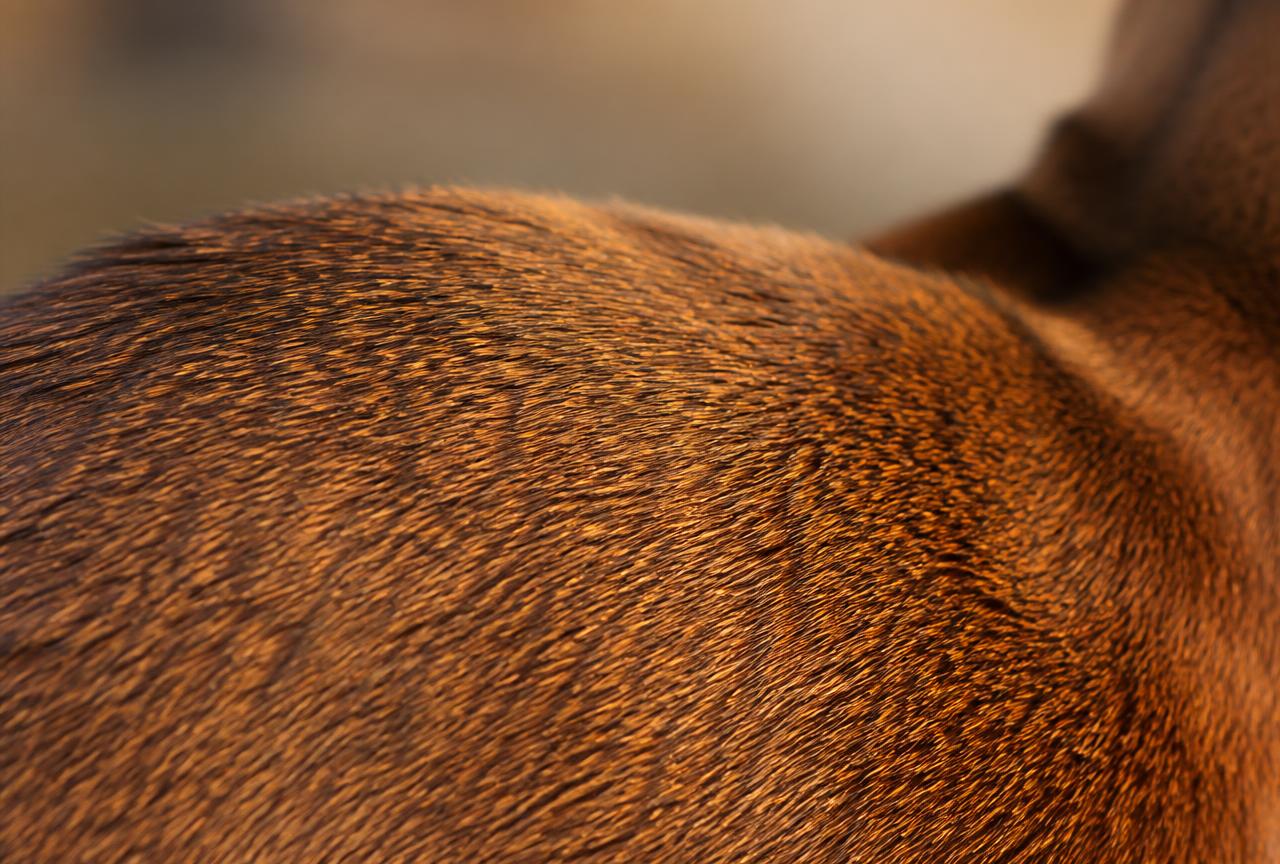
Physically, the Abyssinian is one of the most distinctive cats there is, and the coat is the reason. Each hair carries several bands of alternating colour, the ticking that gives the breed its wild-rabbit shimmer, so the cat appears to change shade as it moves through a room. Ruddy is the classic, but blue, cinnamon and fawn are all recognised by the major registries. The body underneath is long-legged and finely muscled, usually 3 to 5 kilograms, and considerably heavier in the hand than it looks. There is no bulk to an Abyssinian, only spring.
The temperament is where households succeed or fail with the breed. Abyssinians are relentlessly involved. They do not watch you cook; they stand on the counter and inspect the ingredients. They do not wait for you to finish at the desk; they lie across the keyboard because that is where the attention is. This is engaging when you have the time and exhausting when you do not, and it does not switch off with age, a nine-year-old Abyssinian is still opening cupboards. If you want a cat that decorates a sofa, this is emphatically the wrong listing.
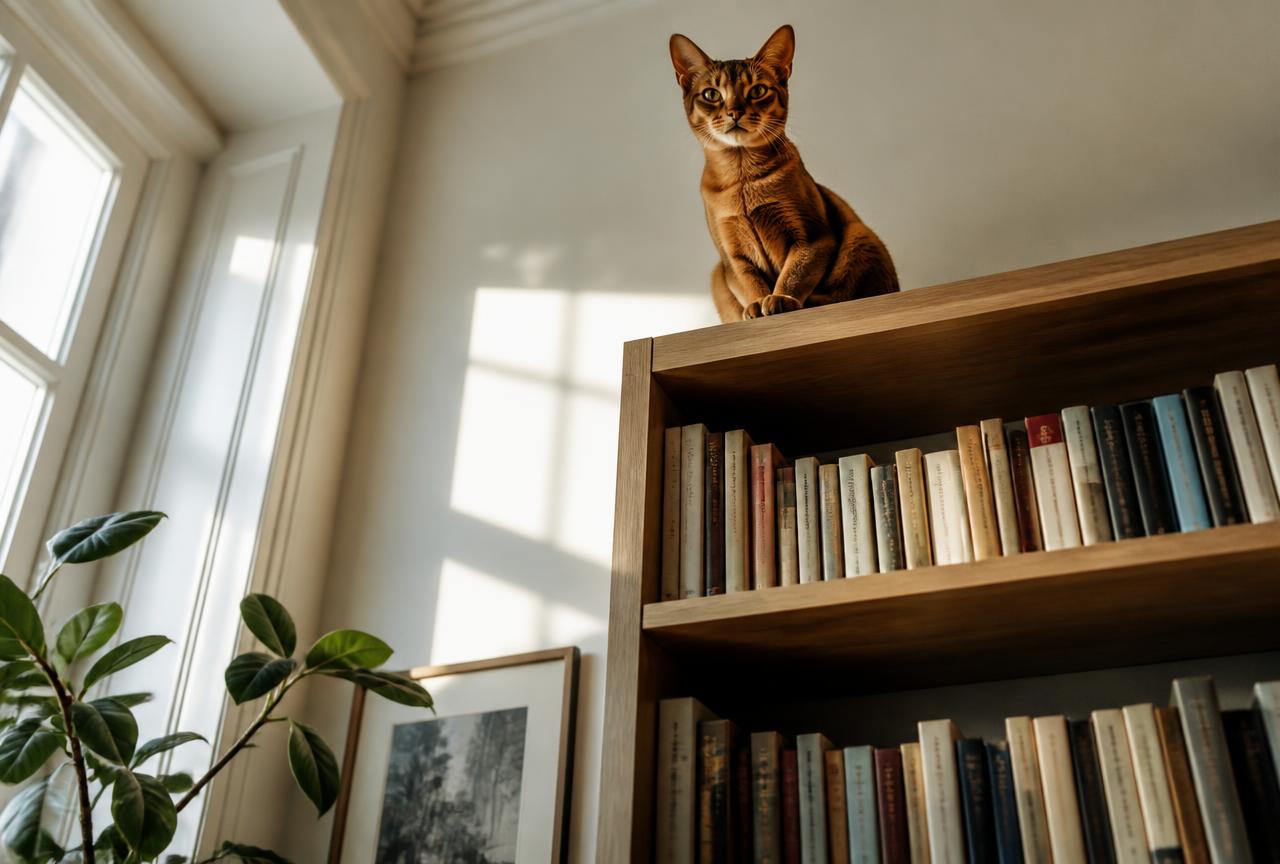
Lap-sitting, meanwhile, is not the deal. Plenty of Abyssinians will settle on you eventually, but the default is contact at a distance: on the chair arm, on the shoulder, on the shelf above your head. Affection here means presence and participation rather than weight in your lap, and owners who expected a Ragdoll and got an Abyssinian usually describe the difference in exactly those terms.
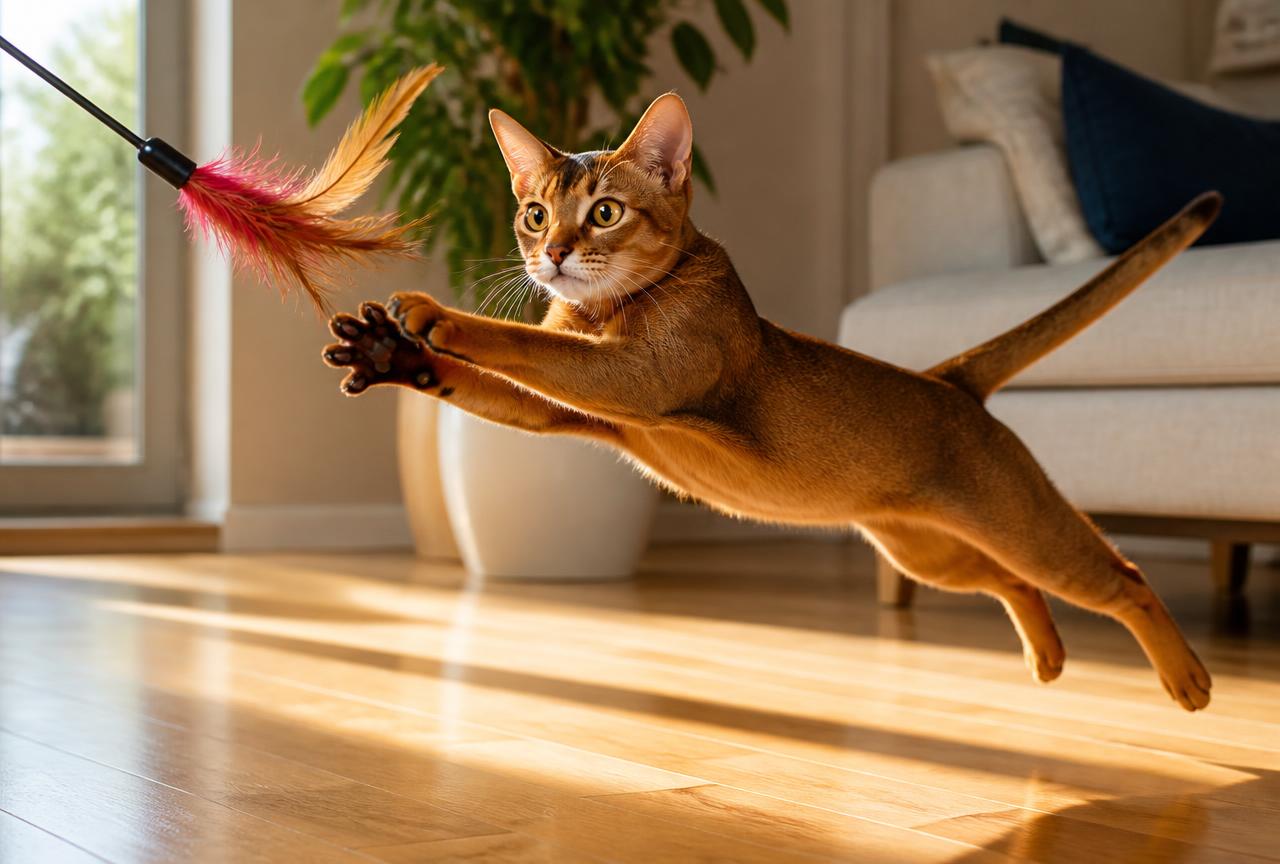
Vertical space is not optional. An Abyssinian denied legitimate high ground will take illegitimate high ground, and the difference between a well-behaved and a destructive one is almost always a question of how many perches the house offers. Tall cat trees, cleared shelf tops, a window platform in the sunniest room, spend the money there rather than on floor-level furniture. The same logic applies to play: two proper sessions a day with a wand toy, morning and evening, will do more for the cat's behaviour than any amount of passive enrichment. Puzzle feeders and a second active cat both help, but neither substitutes for a human at the end of a string.
The intelligence is genuine and comes with consequences. Abyssinians learn to open doors, lever lids off containers and operate lever taps. Many are fascinated by running water. Many will fetch, and a few will learn it faster than the household learns to stop throwing. Training an Abyssinian to a harness is realistic in a way it is not for most breeds, and clicker work suits them; the same brain that empties a cupboard will happily learn to sit on a target instead.
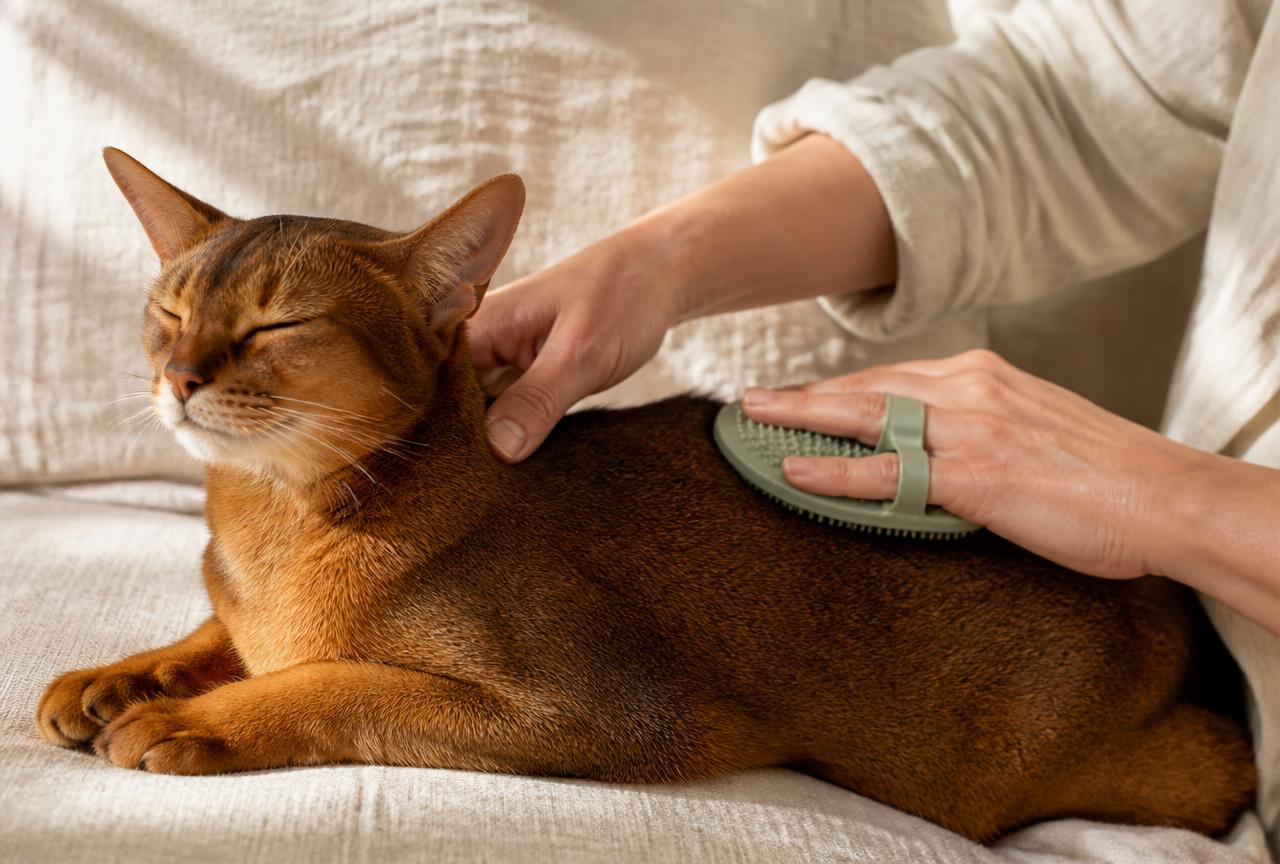
Grooming, by contrast, is the easiest part of owning one. The short ticked coat has almost no undercoat, sheds lightly, and needs a rubber mitt once a week to keep loose hair off the sofa. There is no matting, no professional groomer, no daily comb. Put the time you save into the teeth: dental disease is one of the most common health problems in cats generally, and it is a recognised watch-item in this breed. A cat that accepts tooth brushing as a kitten will accept it at twelve.
Health-wise, the Abyssinian is a well-studied breed with a small number of inherited conditions worth naming: progressive retinal atrophy leading to blindness, pyruvate kinase deficiency causing intermittent anaemia, and renal amyloidosis, which is uncommon but serious. Genetic tests exist for the first two and a responsible breeder will show you the results without being asked. None of this should frighten a buyer away, it should simply determine which breeder you buy from.
The honest verdict is that the Abyssinian is one of the best cats in the world for the right household and one of the worst choices for the wrong one, with very little middle ground. Give it height, company and a daily game and you get fifteen years of a cat that is genuinely funny to live with. Give it a quiet flat and an empty working week and you get an intelligent animal with nothing to do, which is the least fair thing you can do to this breed.
A wonderful cat for people who want engagement without a Bengal's intensity. Shelves, not sofas, are their preferred furniture.
Grooming, realistically
- 1Once a week, run a rubber grooming mitt over the whole cat, front to back, for about five minutes. That is the coat dealt with.
- 2Two or three times a week, brush the teeth with a cat-specific paste. Start in kittenhood; a cat that accepts this at four months accepts it for life.
- 3Every fortnight, check and trim the claw tips. This cat climbs constantly, and a snagged claw on a shelf edge is the common accident.
- 4Every fortnight, glance in the ears, clean and pale pink is normal. Dark crumbly debris means a vet visit, not a cotton bud.
- 5Daily, twice: a real play session with a wand toy, ten to fifteen minutes, ending with a catchable target and a meal.
What you actually need
- Rubber grooming mitt or soft slicker
- Cat toothbrush and enzymatic cat toothpaste (never human paste)
- Claw clippers with a safety guard
- Two or three wand toys, rotated so novelty lasts
- Puzzle feeders for the hours you are out
Kitten to adult
| Age | Male | Female | What is happening |
|---|---|---|---|
| 12 weeks | Already climbing everything. Kittens should leave the breeder at twelve weeks or later, fully socialised and vaccinated. | ||
| 6 months | Peak nuisance and peak charm. This is the window in which to establish tooth brushing, harness work and the daily play ritual. | ||
| 1 year | Essentially adult in size, still filling out in muscle. The coat's ticking deepens through this year. | ||
| 2 years | Fully grown. Males run heavier; both sexes should stay lean, an overweight Abyssinian is a mismanaged one. |
Ranges are typical, not targets. Judge condition by ribs and waist, and check with the ideal weight checker.
What to ask a breeder
- Can I see the DNA test results for progressive retinal atrophy (rdAc) and pyruvate kinase deficiency for both parents?
- Has renal amyloidosis ever appeared in this line, and what happened?
- At what age do kittens leave, and what have they been socialised with, children, dogs, vacuum cleaners?
- Have the kittens been raised underfoot in the house rather than in a cattery block?
- What is the health guarantee, and what happens if a genetic condition appears later?
- Can I meet the mother and see how she behaves with strangers?
Health watch-list
What to ask a breeder about, and what to watch for over a lifetime. This is orientation, not veterinary advice, anything you notice belongs in front of a vet.
Progressive retinal atrophy (rdAc)
Uncommon, but breed-associatedAn inherited degeneration of the retina that leads to blindness, typically appearing in middle age. A DNA test exists and responsible breeders test both parents.
Pyruvate kinase deficiency
Uncommon, but breed-associatedAn enzyme defect causing intermittent anaemia, often with vague signs, lethargy, pale gums, poor appetite. DNA testable; ask for the parents' results.
Renal amyloidosis
RareAbnormal protein deposits in the kidneys causing early kidney failure. No DNA test, so line history matters: ask whether it has ever occurred.
Periodontal disease
CommonVery common in the breed and painful long before it is obvious. Home brushing plus veterinary scaling when advised is the whole prevention plan.
Patellar luxation
UncommonA kneecap that slips out of position, occasionally seen in fine-boned breeds. Signs are a skipping step or a brief carried hind leg.
Stress-related overgrooming
OccasionalNot inherited but common in under-stimulated Abyssinians. Bald patches on the belly or flanks in a bored cat are a management problem first, a skin problem second.
What it costs to keep one
Realistic running cost
€74 / month
About €888 a year, or roughly €12,432 across a 14-year life, before purchase price, neutering and one-off vet events.
Before the cat arrives. Budget roughly €320–700 for trays, carrier, posts, bowls, bedding and grooming kit sized for this breed. Figures throughout are indicative and vary a good deal between countries.
Interactive · built for this breed
Is an Abyssinian right for your home?
Five honest answers. The verdict updates as you go, and the notes tell you what to change before a kitten arrives.
Verdict
An excellent match
Height, daily play and a household with a pulse, that is the whole recipe. An Abyssinian in this house will be the most entertaining thing in it.
Build the climbing properly with the indoor enrichment audit, or compare temperaments with the breed matchmaker.
The verdict, by household
Flat dweller
Workable, with conditions
Family with young children
Excellent match
First-time owner
Depends on the owner
Multi-cat home
Excellent match
Allergy-conscious
No better than average
When to call your vet
- Bumping into furniture, hesitating in dim light, or unusually wide pupils, possible progressive retinal atrophy.
- Pale gums, sudden lethargy or episodes of weakness that come and go, possible pyruvate kinase deficiency anaemia.
- Increased drinking and urination, weight loss or poor appetite in a young or middle-aged cat, ask about kidney function and amyloidosis.
- Bad breath, dropping food, pawing at the mouth or chewing on one side, dental disease is painful and common.
- A sudden drop in activity in a breed this active is a symptom in itself, whatever the cause.
Nothing here is a diagnosis. Breathing difficulty, sudden hind-leg weakness and straining to urinate are emergencies, go the same day.
Abyssinian vs the closest alternatives
| Breed | Weight | Energy | Grooming | € / month |
|---|---|---|---|---|
| Abyssinian | 3–5.5 kg | 10/10 | 2/10 | €74 |
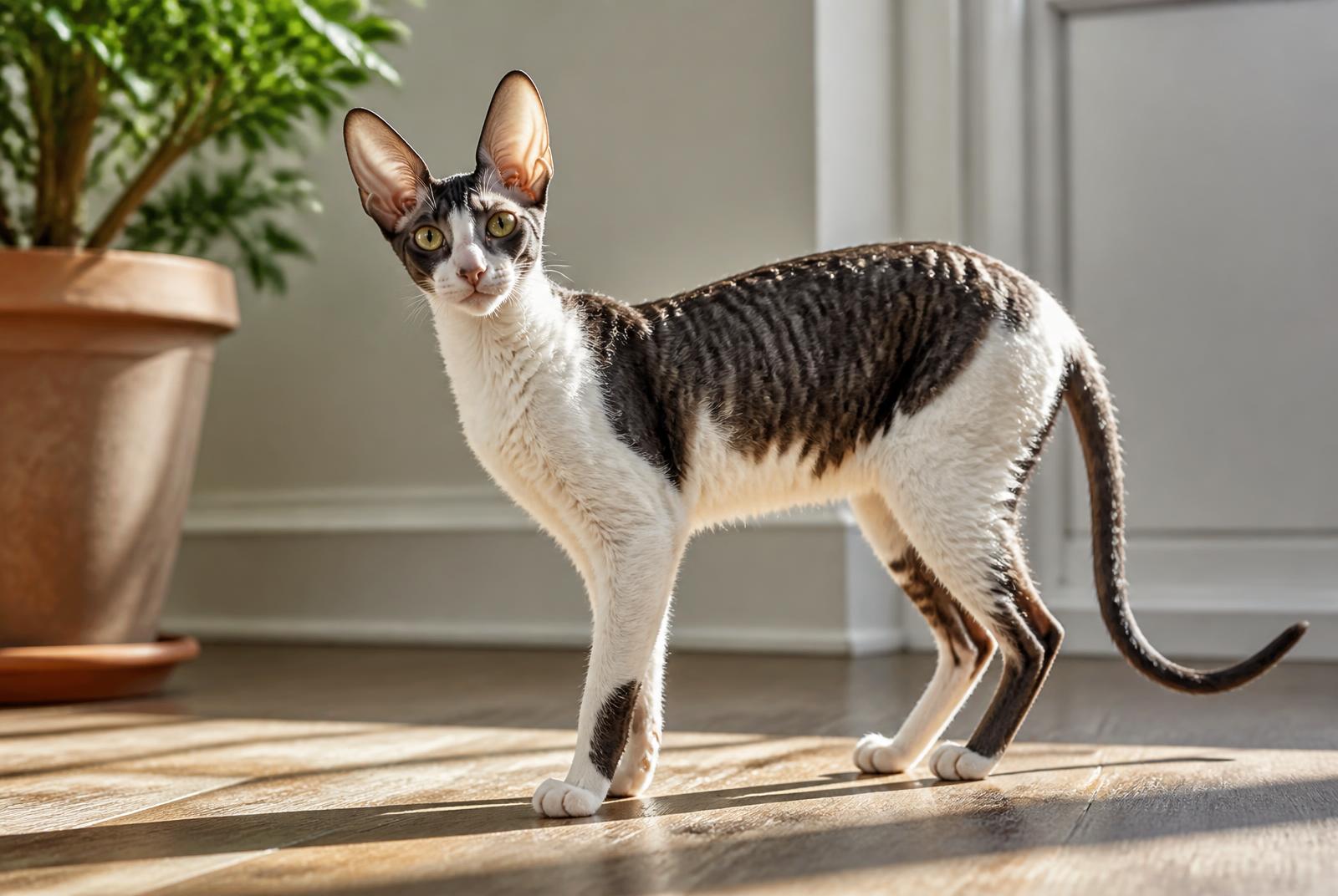
| Cornish Rex | 2.5–4.5 kg | 10/10 | 2/10 | €80 |
| Ocicat | 3.5–7 kg | 9/10 | 3/10 | €85 |
| Manx | 3.5–5.5 kg | 7/10 | 4/10 | €82 |
Abyssinian questions, answered
Are Abyssinians good for first-time owners?
They are easy to care for and hard to satisfy. Grooming is minimal and the breed is robust, but the energy and the need for company are relentless. A first-time owner who wants an involved, playful cat will do well. Anyone hoping for a low-effort companion should look at a British Shorthair or Russian Blue instead.
Can an Abyssinian live in a flat?
Yes, provided the flat goes upwards. Floor area matters far less to this breed than climbing height, so a small flat with a tall cat tree, cleared shelf tops and a window perch works better than a large one with nothing above knee level. Two daily play sessions are non-negotiable either way.
Do Abyssinians shed a lot?
No, the short ticked coat has almost no undercoat and sheds lightly. A rubber grooming mitt once a week keeps loose hair off the furniture, and there is no matting and no professional grooming to budget for. It is the lowest-maintenance coat in our index.
Are Abyssinians hypoallergenic?
No. No cat is. The allergen most people react to, Fel d 1, comes from saliva and skin rather than hair, so a short light-shedding coat changes very little. If someone in the household is allergic, spend time with adult cats of the breed before committing, and read our guide to hypoallergenic cats.
Can Abyssinians be left alone all day?
This is the breed most likely to struggle with it. Long, regular absences produce boredom behaviours: cupboard raiding, overgrooming, night activity. If the house is empty from morning to evening most days, plan on two cats, scatter food puzzles through the day, and give the cat a proper session the moment you are back.
How much does an Abyssinian cost to keep?
Running costs are ordinary, food, litter, insurance and almost nothing for grooming. The unusual line in the budget is enrichment: expect an indicative 320 to 700 EUR for the initial setup, weighted towards tall climbing furniture, and a steady trickle after that for replacement wand toys and puzzle feeders.
Do Abyssinians get on with dogs and other cats?
Generally very well. The confidence that makes them exhausting also makes them sociable, and a second active cat is often the best purchase an Abyssinian owner makes. Introduce properly and slowly regardless, our guide to introducing two cats sets out the scent-first method that avoids a long-running feud.