Cat dental care: the disease most owners never see
By middle age most cats have painful gum disease. Almost none of them show it, and almost none of them are being brushed.
Nadia Ferreira
Feline behaviour and welfare writer, ten years in rescue and clinic settings
Published 4 September 2026
Written against WSAVA global dental guidelines and AAFP oral health guidance
The short version
- Most cats over three have some periodontal disease, and the majority of it is never noticed at home.
- Cats conceal oral pain almost completely, so appetite is a poor test; look at the gum line instead.
- Brushing is the only measure with a large effect, and thirty seconds a side most days is enough.
- Tooth resorption is common, invisible without radiographs, and genuinely painful.
- Dental diets and approved chews help at the margins; water additives largely do not.
- A scale and polish requires general anaesthetic, and anaesthetic-free cleaning treats only the visible surface.
There is a disease that affects most adult cats, causes chronic pain, and is almost never mentioned by the owner. It is in the mouth, it develops over years, and the cat gives no reliable sign that it is happening.
The reason is evolutionary rather than mysterious. A cat that stops eating because of a sore mouth does not survive long in the wild, so cats eat through pain that would have a person in a dentist's chair the same afternoon. Appetite is therefore the worst possible test of oral health, and it is the one almost everybody uses.
This piece covers what to look for, what brushing actually requires, what the products are worth, and what happens when the mouth reaches the point of needing a general anaesthetic.
What is going on in there
Plaque forms within a day of a clean surface. Left in place it mineralises into tartar, which is rough and gives more plaque somewhere to hold. Bacteria under the gum line trigger inflammation, the gum recedes, the ligament that anchors the tooth weakens, and eventually the tooth loosens.
Cats add a second problem that dogs and humans mostly do not have. In tooth resorption, the body dismantles the tooth's own structure, usually starting below the gum, where nothing is visible. It is painful, common in adult cats, and only diagnosable with dental radiographs.
Appetite is not evidence. A cat with four resorptive lesions will still finish breakfast, and then chatter its jaw when you touch its cheek.
The thirty-second examination
Lift the upper lip while the cat is relaxed, and look at the line where gum meets tooth, above the canine and along the back teeth. That junction tells you nearly everything.
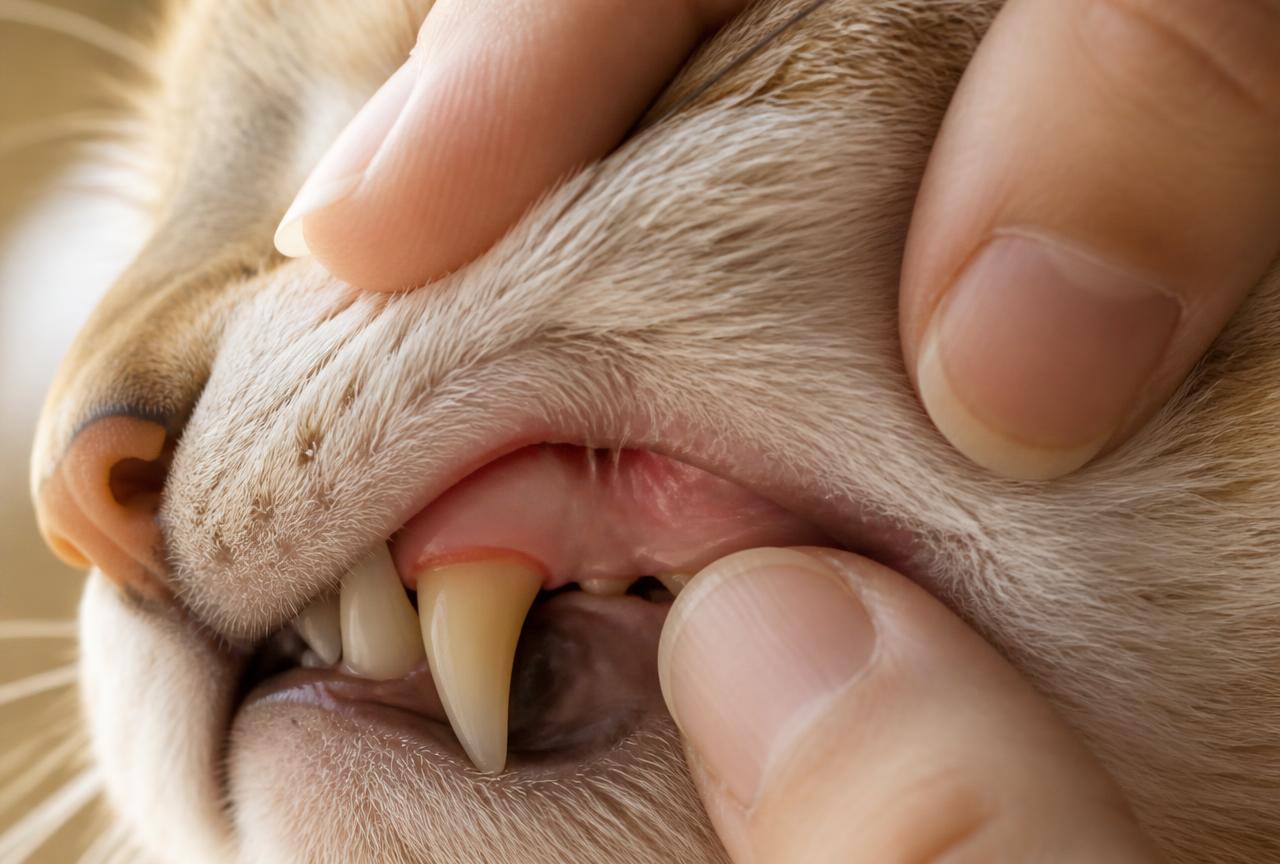
| What you see | What it means | What to do |
|---|---|---|
| --- | --- | --- |
| Pale pink, clean junction | Healthy | Brush to keep it that way |
| Thin red seam along the gum | Early gingivitis | Start brushing now, reversible |
| Brown build-up on back teeth | Established tartar | Vet examination, likely a scale |
| Receding gum, tooth looks longer | Periodontitis | Examination and radiographs |
| Red lump at the gum line of one tooth | Possible resorptive lesion | Radiographs, usually extraction |
| Bleeding, drooling, chattering jaw | Painful mouth | Same-week appointment |
Brushing is the whole game
Everything else is a rounding error. Mechanical disruption of plaque, most days, is the only intervention with a large effect, and the equipment costs less than a bag of treats.
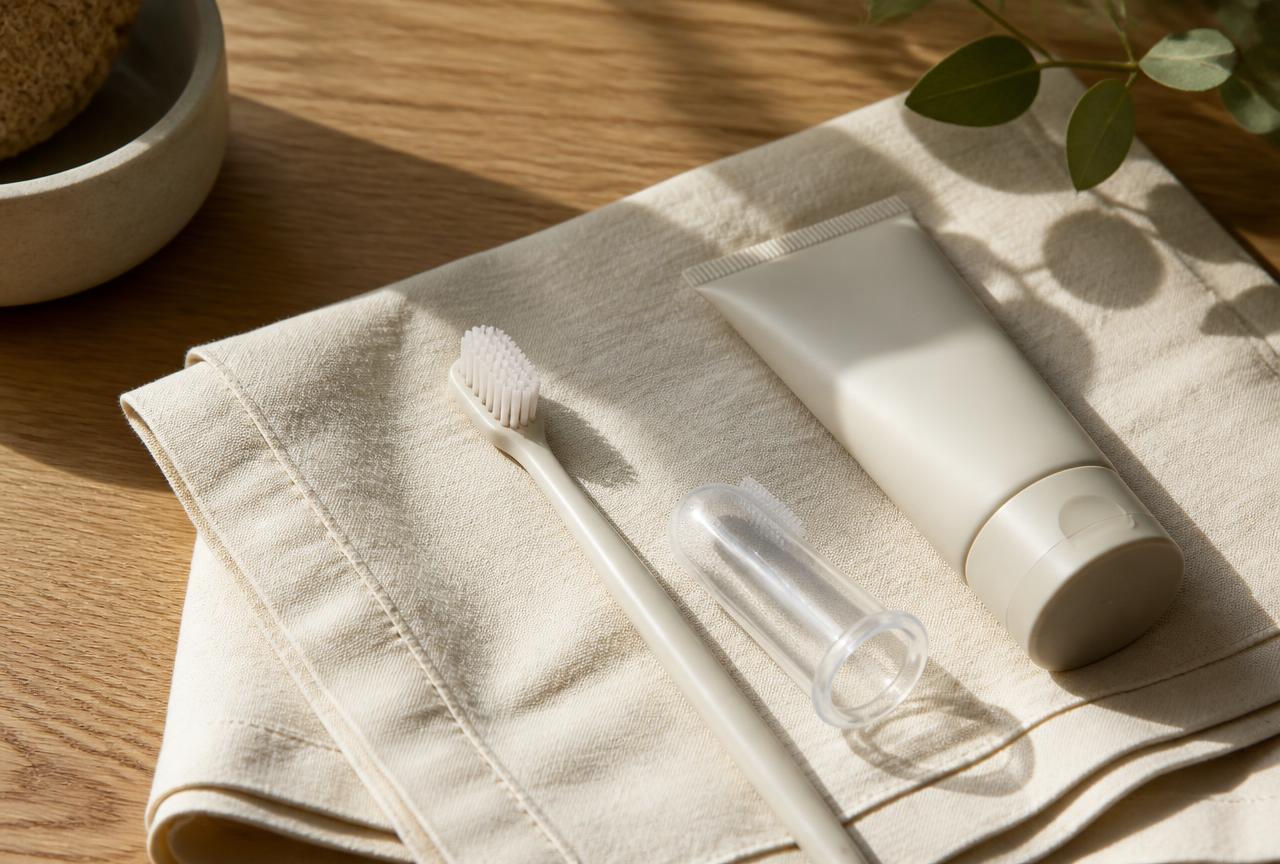
The mistake is starting with the brush. Cats object to the ambush, not the bristles. Build the habit over three weeks instead.
- 1Days one to five: let the cat lick a smear of enzymatic paste off your finger after a meal. Nothing else happens.
- 2Days six to ten: with paste on your finger, touch the outer surface of the upper canine for two seconds, then stop and reward.
- 3Days eleven to fourteen: swap to a finger brush or soft brush, same two seconds, same tooth.
- 4Days fifteen to eighteen: work along the outer upper teeth on one side for ten seconds.
- 5Days nineteen onwards: thirty seconds a side, outer surfaces only, most days of the week.
- 6Any session that ends with the cat leaving is a session that started too ambitiously. Go back a step.
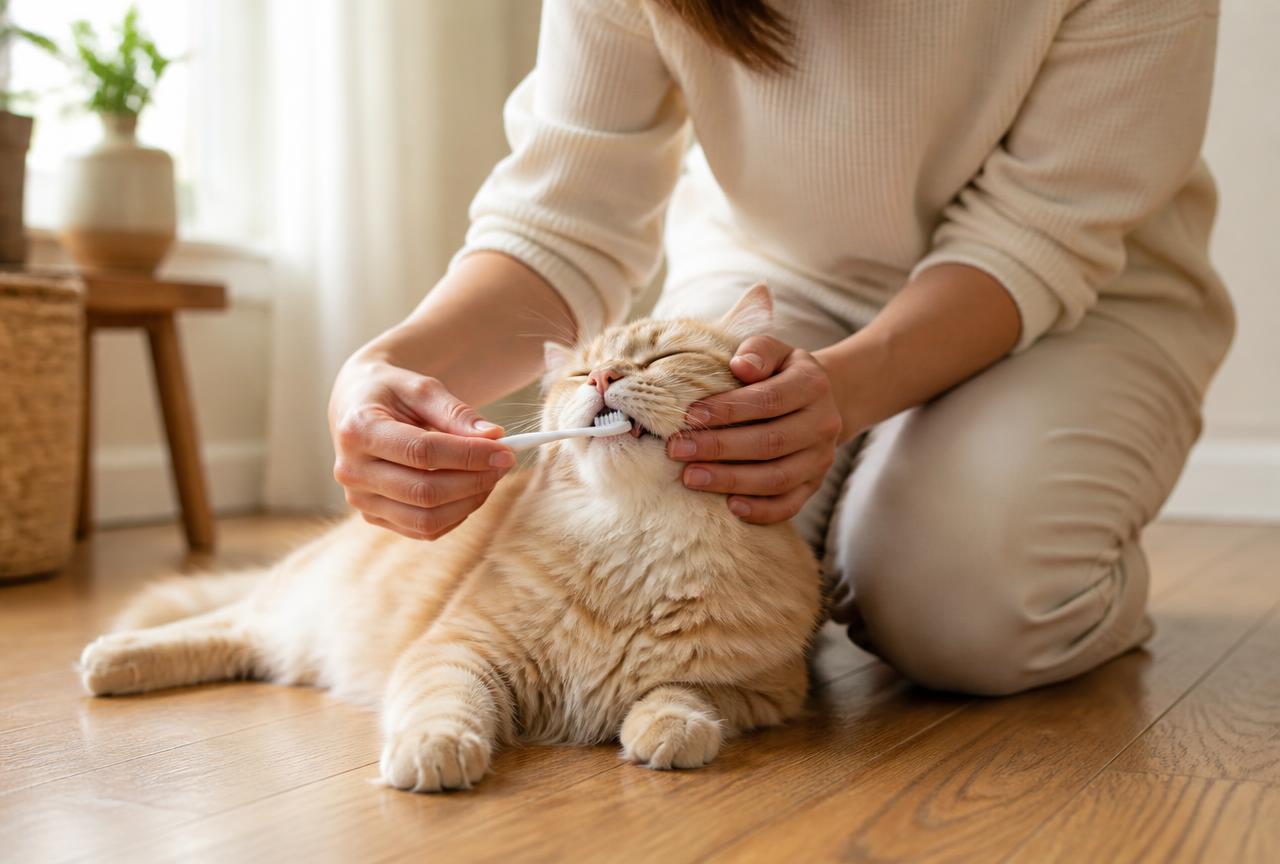
Angle the bristles at the gum line rather than the tooth face, because that is where the plaque that matters sits. If your cat will tolerate only one side, brush that side and take the win.
What the products are worth
The category is crowded and most of it is optimistic. A short, honest ranking:
- Dental diets: worthwhile. Larger kibble with aligned fibre shears through the tooth rather than shattering, so the surface gets wiped. Look for a Veterinary Oral Health Council seal rather than the word dental on the front.
- Approved dental chews: mild benefit, real calories. Deduct them from the daily allowance.
- Water additives: little evidence, and some cats drink less because of the taste, which is a bad trade in a species already prone to concentrated urine.
- Raw bones: not recommended. Fracture and contamination risks outweigh the abrasion benefit.
- Anaesthetic-free scaling: cosmetic. It polishes the visible crown and leaves the disease under the gum untouched.
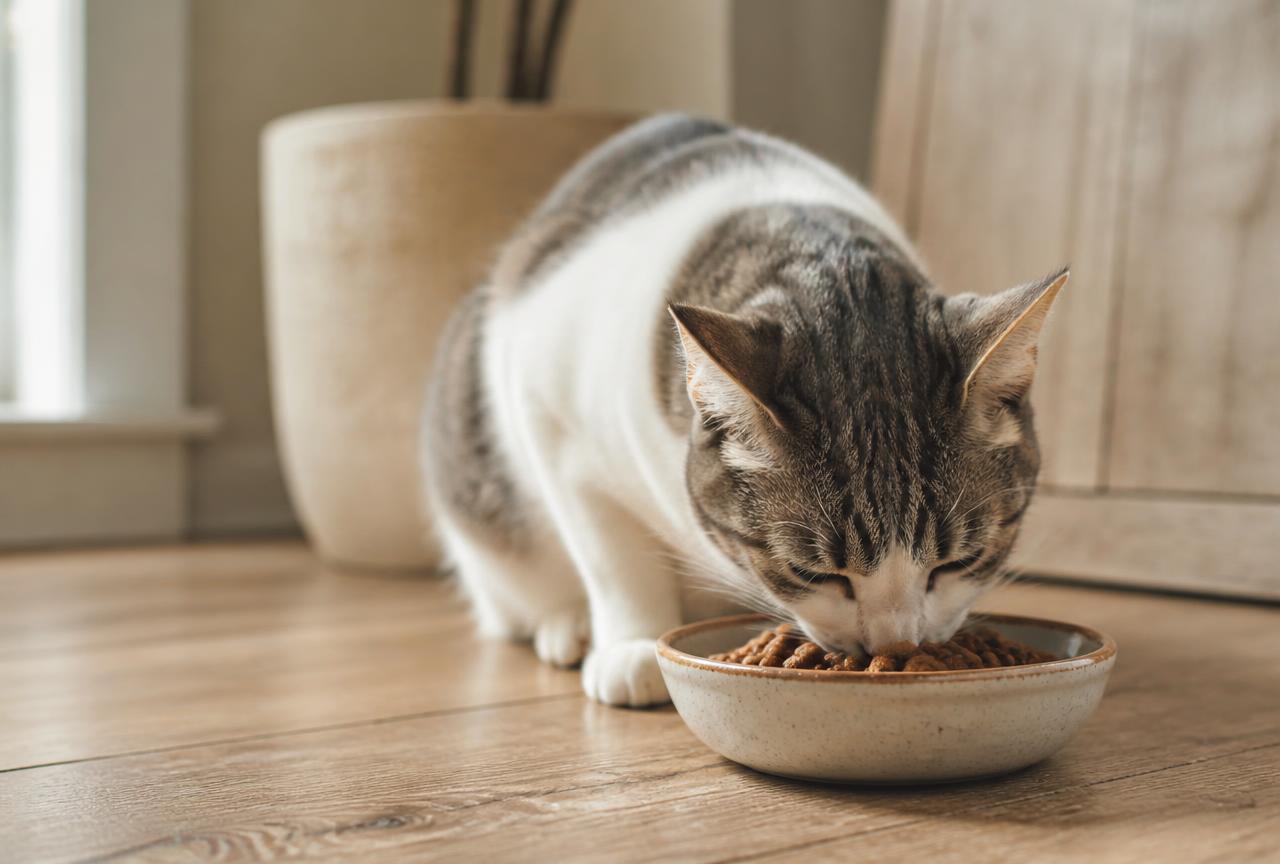
If your cat eats mostly wet food, that is not a dental failing. The evidence that wet feeding worsens teeth is weak, and the hydration benefits are well established, as our wet versus dry guide sets out. Brush either way.
Grade your own cat
Use the box below before your next appointment. It weighs what you can see against age, breed type and brushing history, and tells you what to ask for.
Interactive · built for this article
Dental risk check
Tick what you can see and answer four questions. It grades the likelihood of dental disease and tells you what to ask for.
What you can see
Risk score
8/ 34
Raise it at the next visit
A scoring aid, not a diagnosis: dental disease is graded by examination and radiographs, and much of it sits below the gum line where neither of us can see it. Working out the food side? Use the portion calculator.
What a dental appointment involves
A proper dental means a general anaesthetic, and that is not a clinic upselling you. A conscious cat cannot be radiographed, probed at every tooth, or scaled below the gum line.
Expect pre-operative bloods, an intravenous line, full-mouth radiographs, charting of each tooth, ultrasonic scaling above and below the gum, polishing, and extraction of any teeth that are beyond saving. Cats with several extractions usually eat within a day or two and, in the experience of most clinics, become noticeably more sociable within a fortnight, which tells you what the mouth had been doing to their mood.
Cost varies widely by country. As an indicative range, a scale with radiographs falls somewhere around 200 to 600 EUR, with extractions on top. The number rises with delay, never with prevention.
The verdict, by household
A kitten or young cat. Start the paste-on-a-finger routine now, before there is anything to treat. A cat that grew up with brushing does not need convincing at eight.
A cat that will not tolerate a brush. Get the enzymatic paste in anyway, on a finger, and add a VOHC-accepted diet. Half the intervention beats none, and ask your vet for a mouth grade annually.
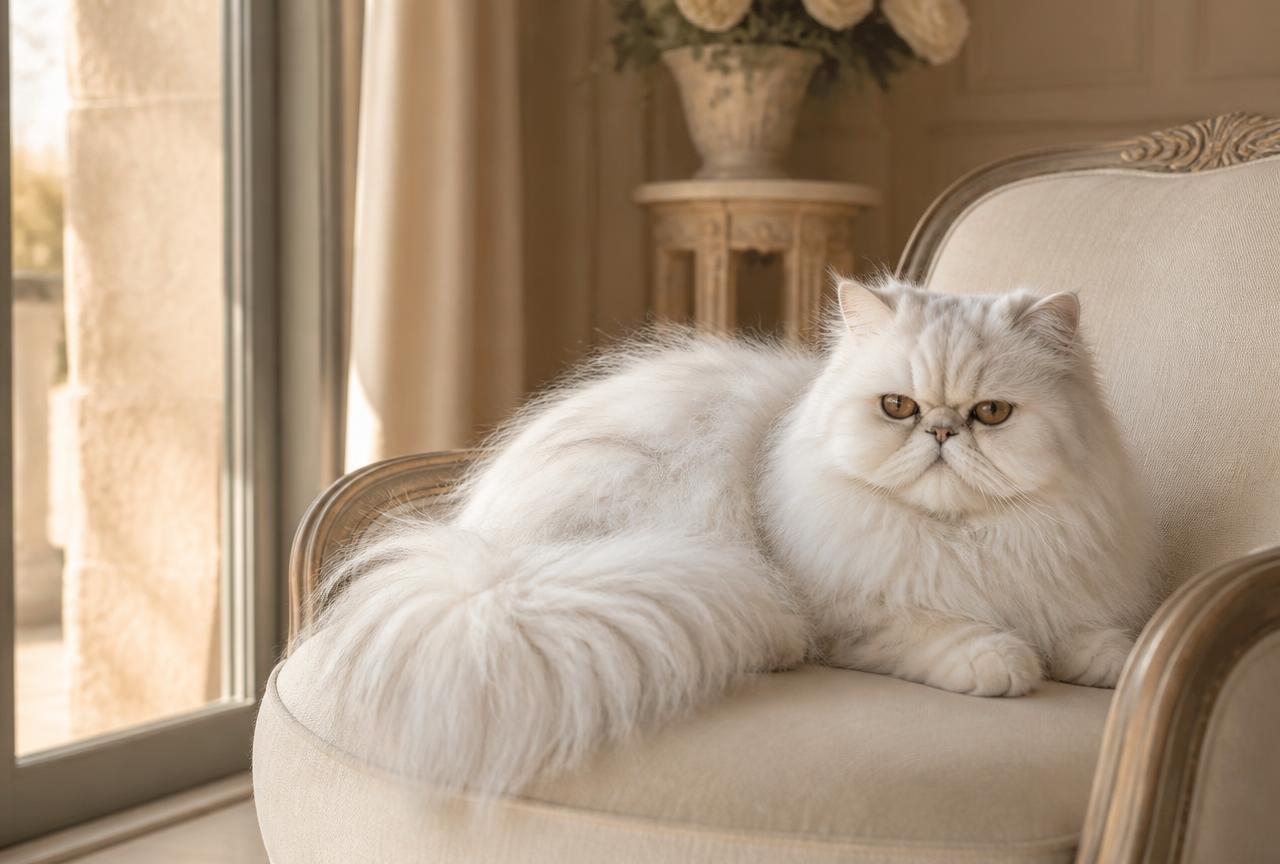
A [Persian](/breeds/persian) or other flat-faced cat. Crowded, rotated teeth trap plaque, so assume a shorter interval between professional cleans and inspect monthly.
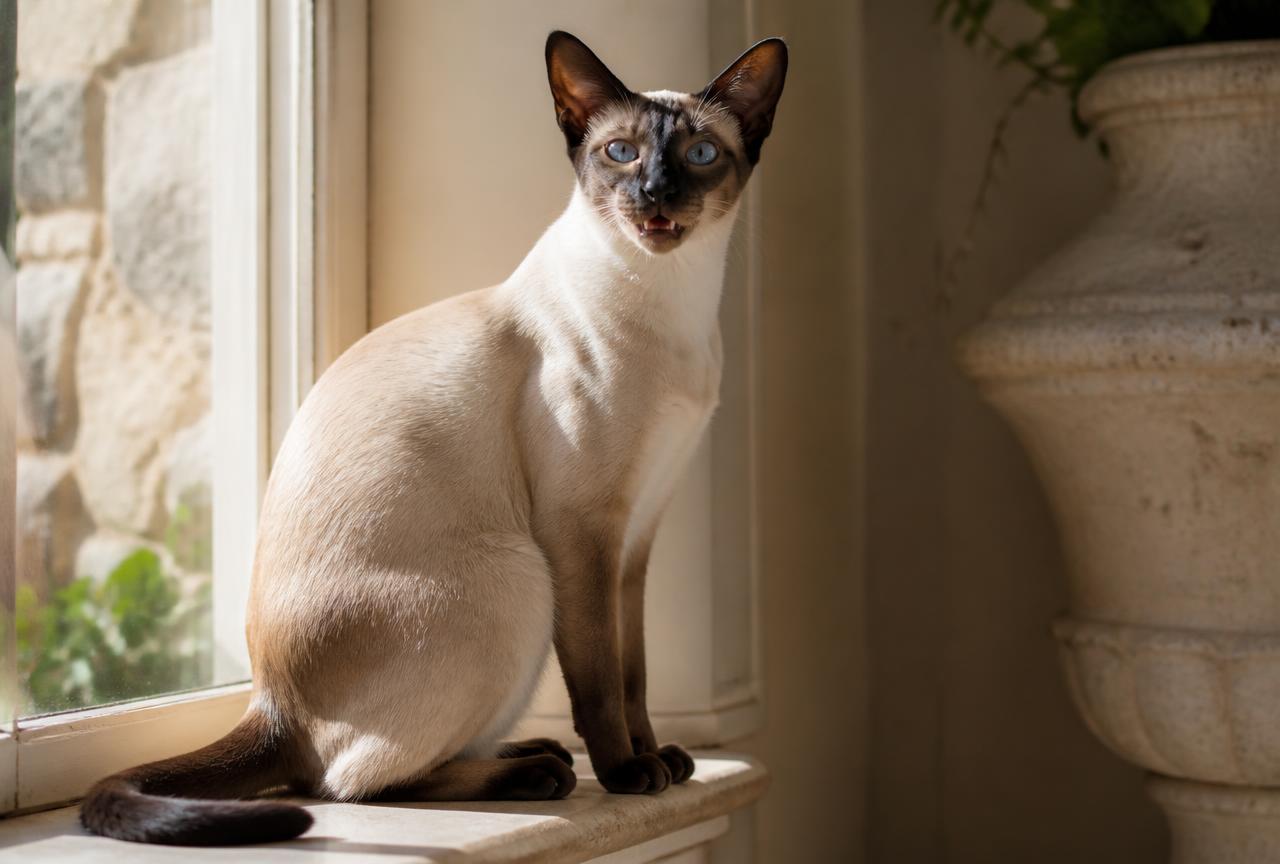
An [Abyssinian](/breeds/abyssinian), [Siamese](/breeds/siamese) or other oriental type. Some lines are prone to severe gingivitis in young adulthood. Red gums in a two-year-old are not normal teething and warrant a proper examination.
A cat over ten with no dental history. Ask for a full oral examination with radiographs at the next visit rather than a look. Our senior signals guide covers what else changes at this age, and the ideal weight calculator helps if the mouth has already cost the cat some condition.
When to call your vet
Book the same week for breath you can smell across the room, drooling, blood on toys or bedding, chewing on one side, dropping food, or pawing at the mouth. Call the same day for a cat that approaches food and then backs away repeatedly, for a swelling under the eye or along the jaw, or for a cat that will not let you near its head when it previously would.
None of this replaces an examination. It is meant to get you into the room earlier, when the answer is still a toothbrush rather than a surgery list.
Questions people actually ask
How do I brush my cat's teeth?
Use a soft brush or finger brush and an enzymatic toothpaste made for cats, never human paste. Spend a week letting the cat lick paste off your finger, then a week touching the brush to the outer canines, then build to thirty seconds a side. Only the outer surfaces matter; the tongue handles the inner ones.
What does cat gingivitis look like?
A red or angry pink line where gum meets tooth, most visible above the upper canines and back teeth. Healthy gum is pale pink and meets the tooth cleanly. Gingivitis at this stage is reversible with brushing; once tartar and gum recession appear, it is not.
Is bad breath in cats normal?
No. Cat breath should be almost neutral. A smell you notice from a metre away usually means bacterial load under the gum line. Sweet or acetone-like breath, or breath with an ammonia note, points instead at metabolic disease and needs a same-week appointment.
Do dental treats and diets actually work?
The better ones do, modestly. Dental diets use larger, fibre-aligned kibble that shears rather than shatters, and products carrying a Veterinary Oral Health Council seal have shown measured plaque or tartar reduction. None of them substitute for brushing, and treats add calories that have to come out of the daily allowance.
What is tooth resorption in cats?
Tooth structure is broken down by the body, usually starting below the gum line. It affects a large share of adult cats, cannot be seen without radiographs, and is painful. The classic sign is a jaw chatter when the area is touched. Treatment is extraction of the affected tooth.
Is anaesthetic-free dental cleaning safe?
It is not equivalent. Scaling the visible crown leaves the sub-gingival plaque that causes disease, no radiographs are taken, and the cat is restrained while conscious. Veterinary dental bodies advise against it. The anaesthetic risk in a healthy cat with pre-operative bloods is low and manageable.
How much does a cat dental cleaning cost?
Indicative rather than fixed, and it varies widely by country and clinic: expect roughly 200 to 600 EUR for a scale, polish and radiographs, and more if extractions are needed. Costs rise steeply with delay, because early gingivitis needs a brush and late disease needs surgery.
Sources
- Global dental guidelines, WSAVA
- Feline dental disease, Cornell Feline Health Center
- Dental disease in cats, International Cat Care
- Accepted products for cats, Veterinary Oral Health Council
- Feline oral health care guidelines, AAFP
Breeds mentioned

Put it into practice
Read next
Cat sneezing: colds, dust and the signs that need a vet
Cat sneezing a lot? Dust, viruses, dental roots and foreign bodies, how to sort the harmless from the signs that need a vet.