United States
Munchkin
Sociable, playful and unmistakable. The short legs come from a cartilage mutation, and that is a conversation every prospective owner should have before falling for the look.
Dr Amara Okonjo, DVM
The short-legged cat, and the debate that comes with it
The short version
- Short legs come from a dominant mutation affecting cartilage, and several registries decline to recognise the breed.
- Character is genuinely appealing: confident, sociable and playful with people and other pets.
- They run well but jump less confidently, so ramps and low steps matter at home.
- Keep them indoors or in a secure enclosure; they are poorly placed to escape danger outdoors.
- Ask any breeder about spinal and joint screening, and never buy from short-leg-to-short-leg pairings.
- Weight
- 2.5–4 kg
- Lifespan
- 12–15 yrs
- Coat
- Short
- Size
- Small
- Grown male
- 3–4 kg
- Grown female
- 2.5–3.6 kg
- Years to full size
- about 1.5
- One-off setup
- €280–520
Get one if…
- People who want a sociable, playful cat
- Flat dwellers willing to add ramps and low steps
- Families with older children
- Homes with dogs or other cats
- Owners committed to indoor-only or enclosed outdoor life
Think again if…
- Anyone uncomfortable with breeding for a skeletal mutation
- Homes where the cat would have free outdoor access
- Owners who want a high-jumping, shelf-living cat
- Households that cannot commit to weight control
Trait profile
High affection and sociability with moderate energy. The low grooming score reflects the coat, not the joints: the legs are the part of this breed that needs thought.
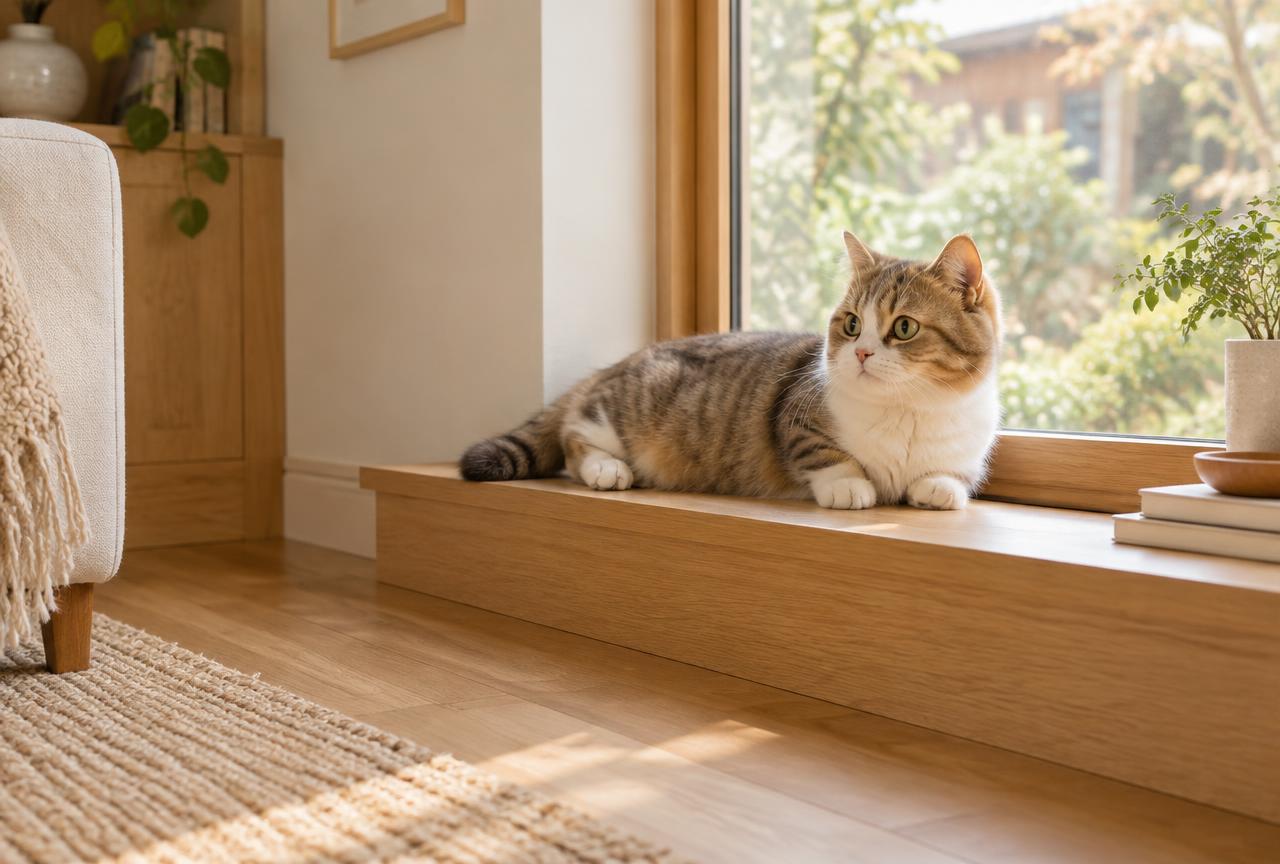
Space & setup. Fine in a flat, provided you add ramps or low steps to the sofa, bed and window sill.
Allergies. Not hypoallergenic. Short coats shed and carry dander like any other cat.
The review
A small to medium cat with markedly short legs caused by a dominant genetic mutation. Friendly and busy in character, but the breed is not recognised by every registry on welfare grounds.
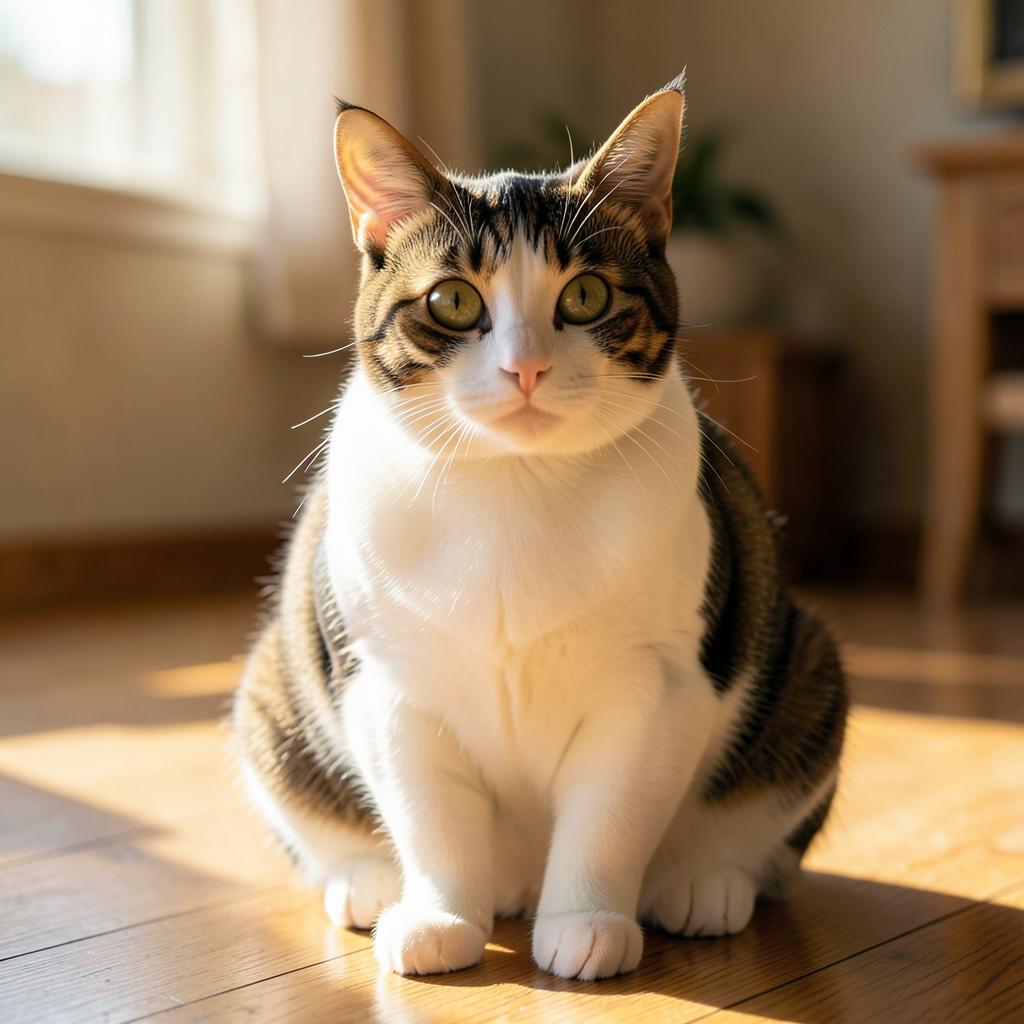
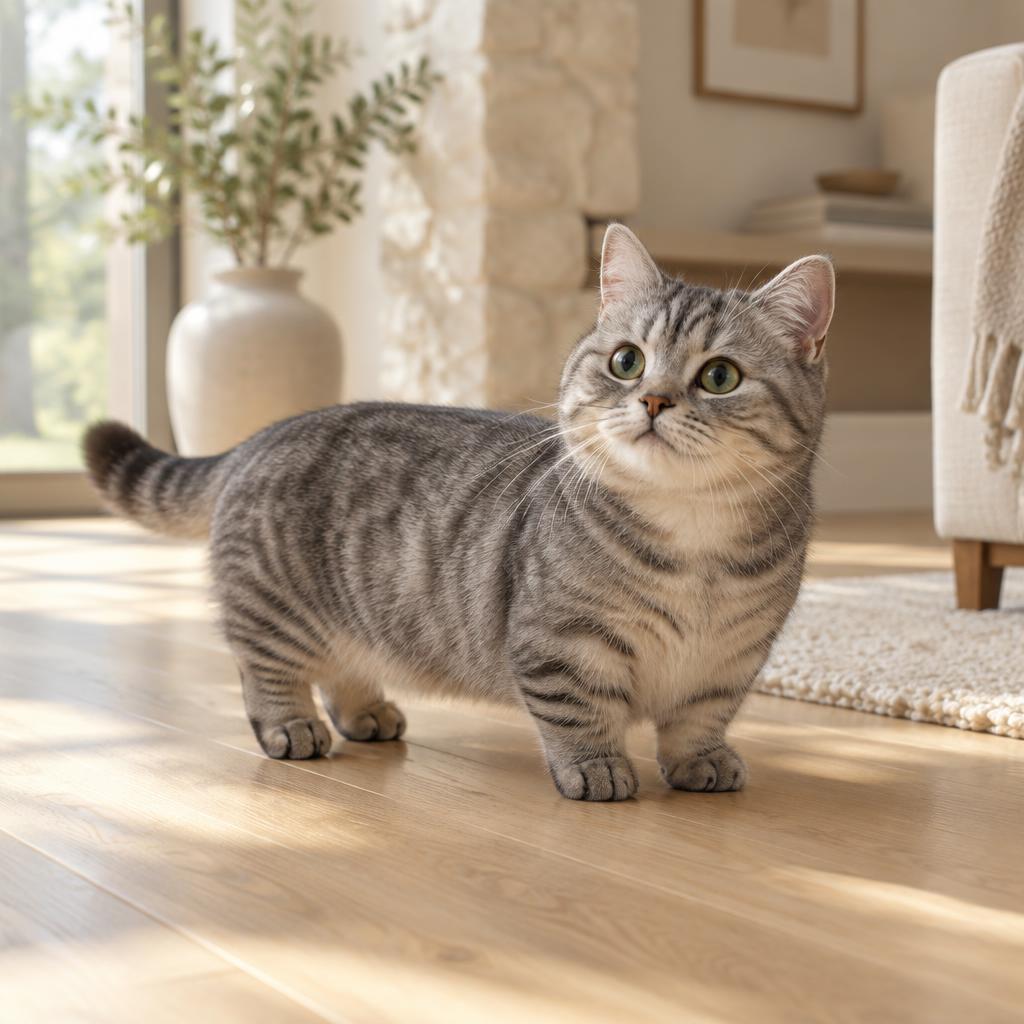
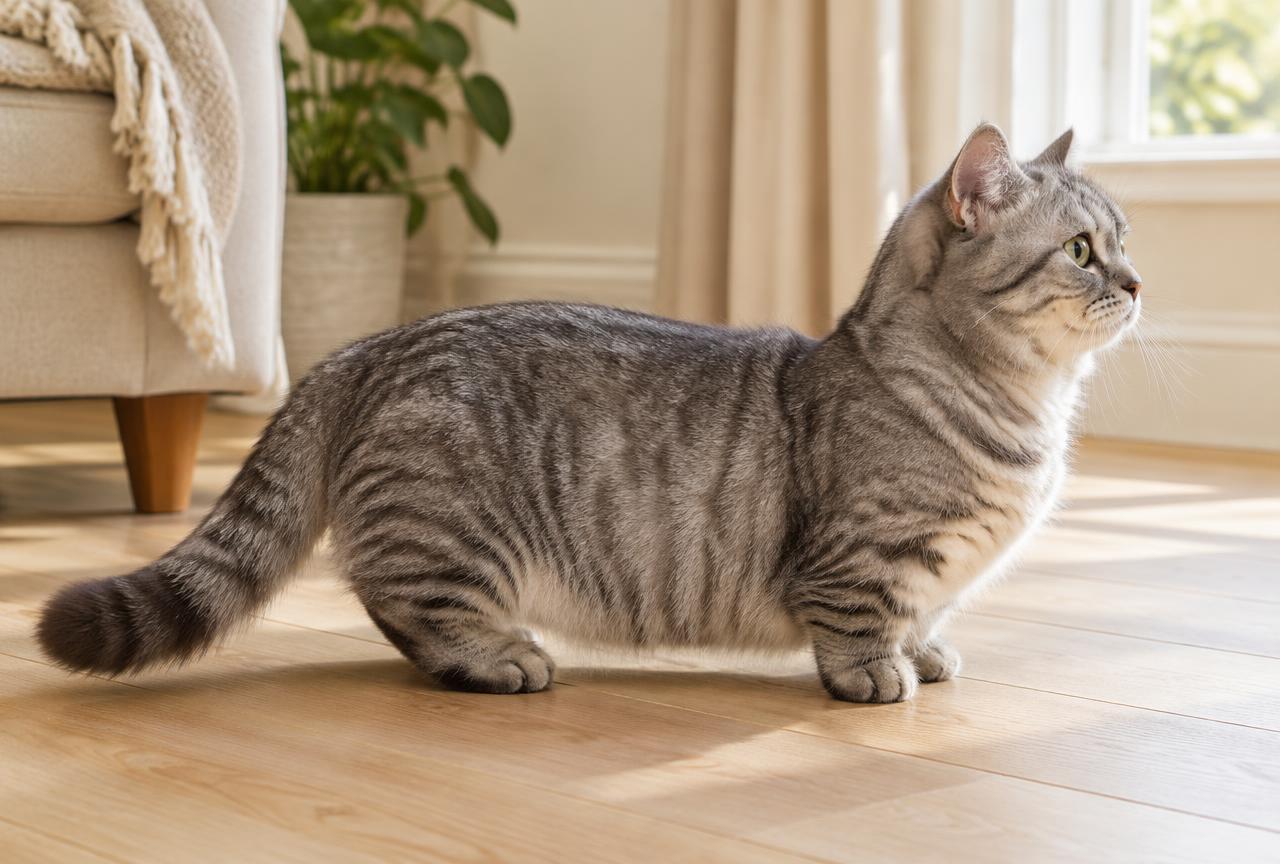
The Munchkin is the cat you cannot mistake for anything else. The legs are roughly half the length you expect, the body is a normal cat body, and the effect is somewhere between comic and endearing. That look is the reason the breed exists, and it is also the reason the breed is argued about. Before anything else, a prospective owner should understand where the legs come from.
The short legs are caused by a dominant mutation affecting cartilage growth, a form of what vets call pseudoachondroplasia. It shortens the long bones of the limbs while leaving the spine and skull largely alone. Because it is dominant, a cat needs only one copy to show it, and responsible breeders pair a short-legged cat with a standard-legged one. Pairing two short-legged cats is where trouble starts: the combination of two copies is not survivable. Some registries, including a number of European bodies, have declined to recognise the Munchkin at all, on the view that breeding deliberately for a skeletal mutation is not defensible. Others accept it and point to studies suggesting that healthy Munchkins live ordinary lifespans. Both positions are held sincerely, and an owner should know the argument rather than discover it later.
What is not in dispute is the temperament. Munchkins are cheerful, confident cats who want to be in the room with you. They are curious without being highly strung, they get on well with children and with dogs, and they often keep a kittenish enthusiasm for games well into adulthood. They are not lap ornaments. A Munchkin will chase a wand toy down a hallway at surprising speed, corner hard, and come back for more. The old description of them as low-energy cats is simply wrong, and it leads people to underestimate how much play they want.
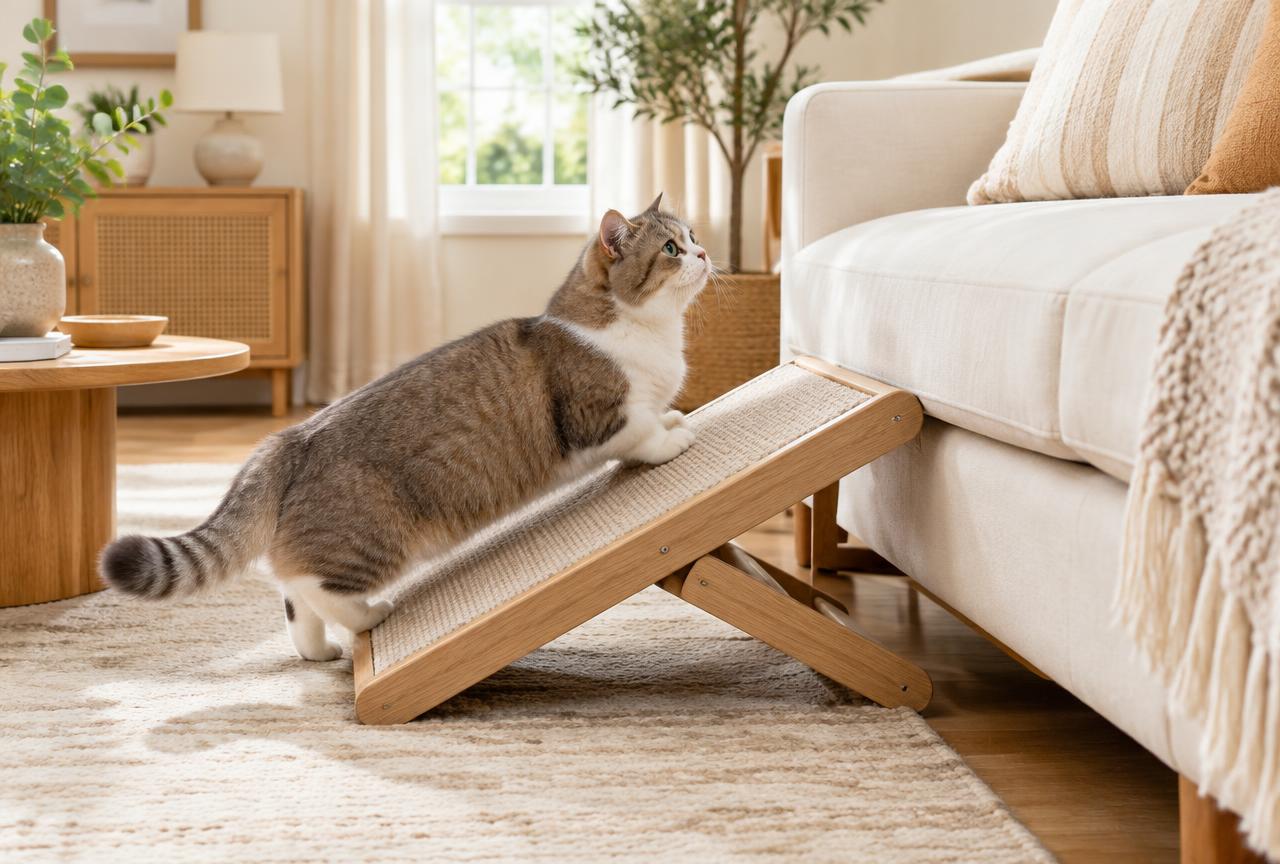
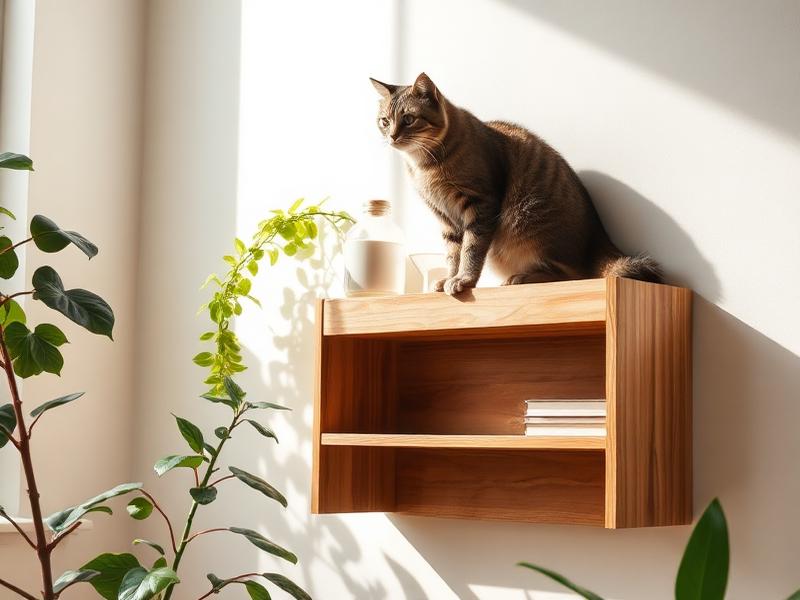
Movement is the practical difference. A Munchkin runs perfectly well, with a distinctive rolling gait. What changes is vertical work. They can jump, but not as high and not with the same confidence, and they are noticeably more reluctant to come back down from height. In a home built for a standard cat, that means a cat who cannot reach the window sill, the sofa back or the bed without help. The fix is simple and worth doing before the cat arrives: a low ramp to the sofa, a step stool by the bed, a cat tree built as a staircase rather than a tower. Give them approved routes upward and they will use them constantly.
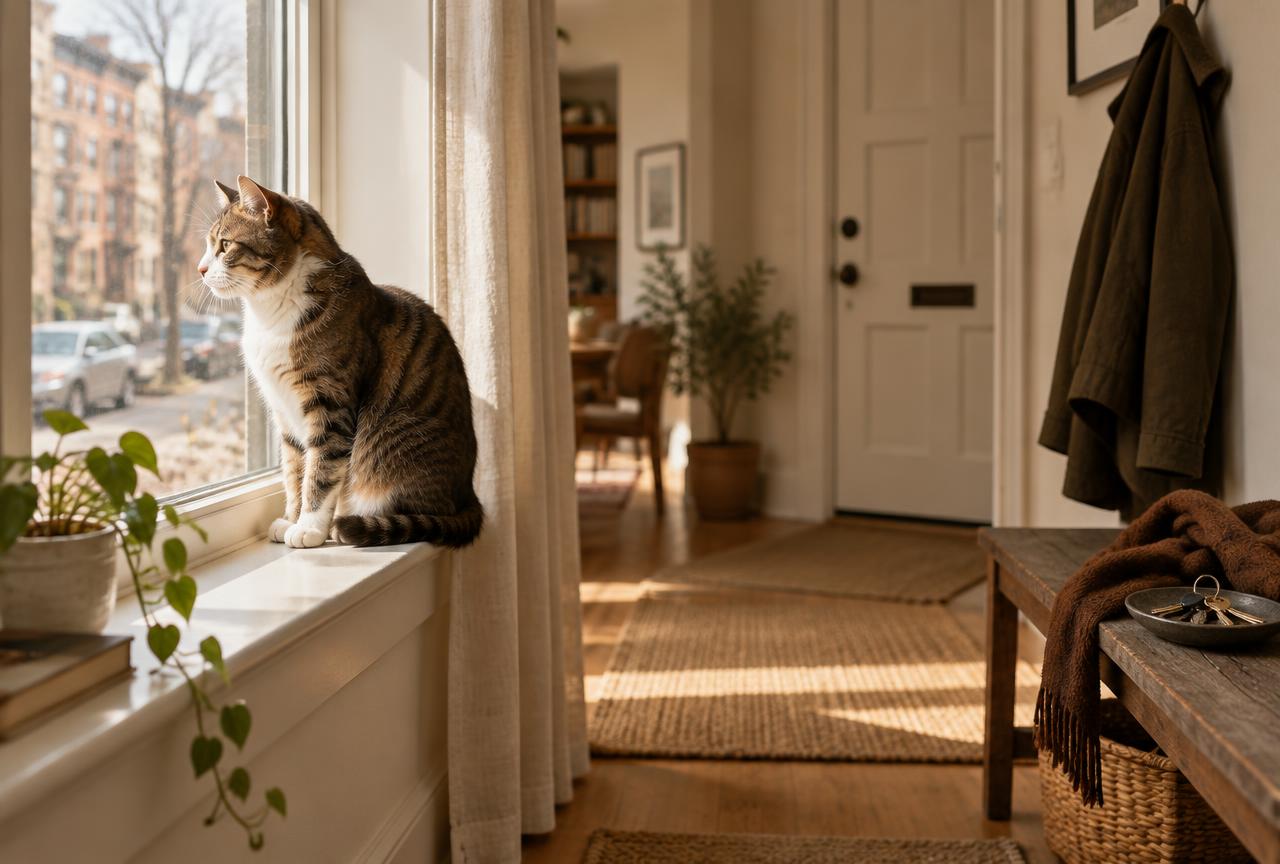
Outdoors is the one area where we would be firm. A cat that cannot climb quickly or scale a fence under pressure is badly placed to escape a dog, a car or another cat. Keep a Munchkin indoors, or give them a secure garden enclosure. They are sociable enough that indoor life suits them, provided the indoor life includes play.
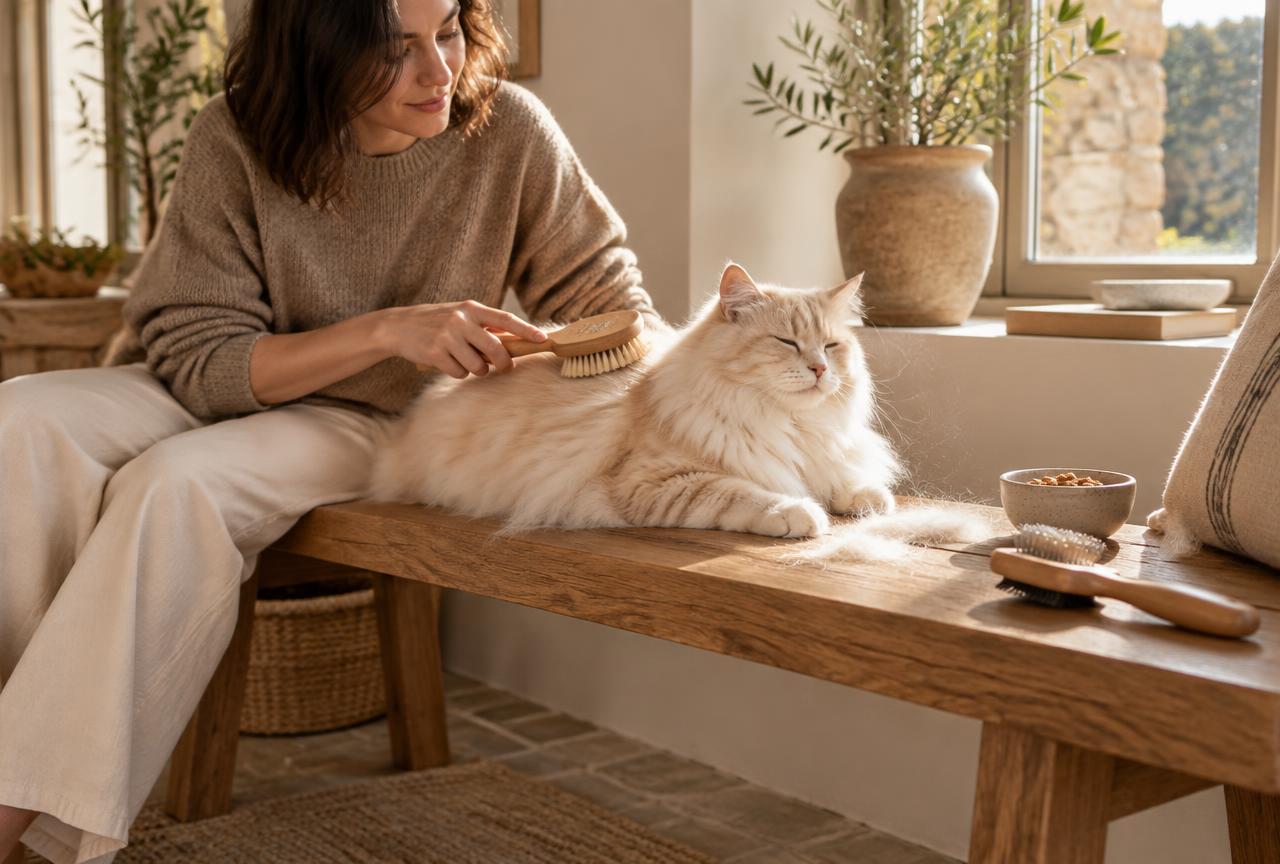
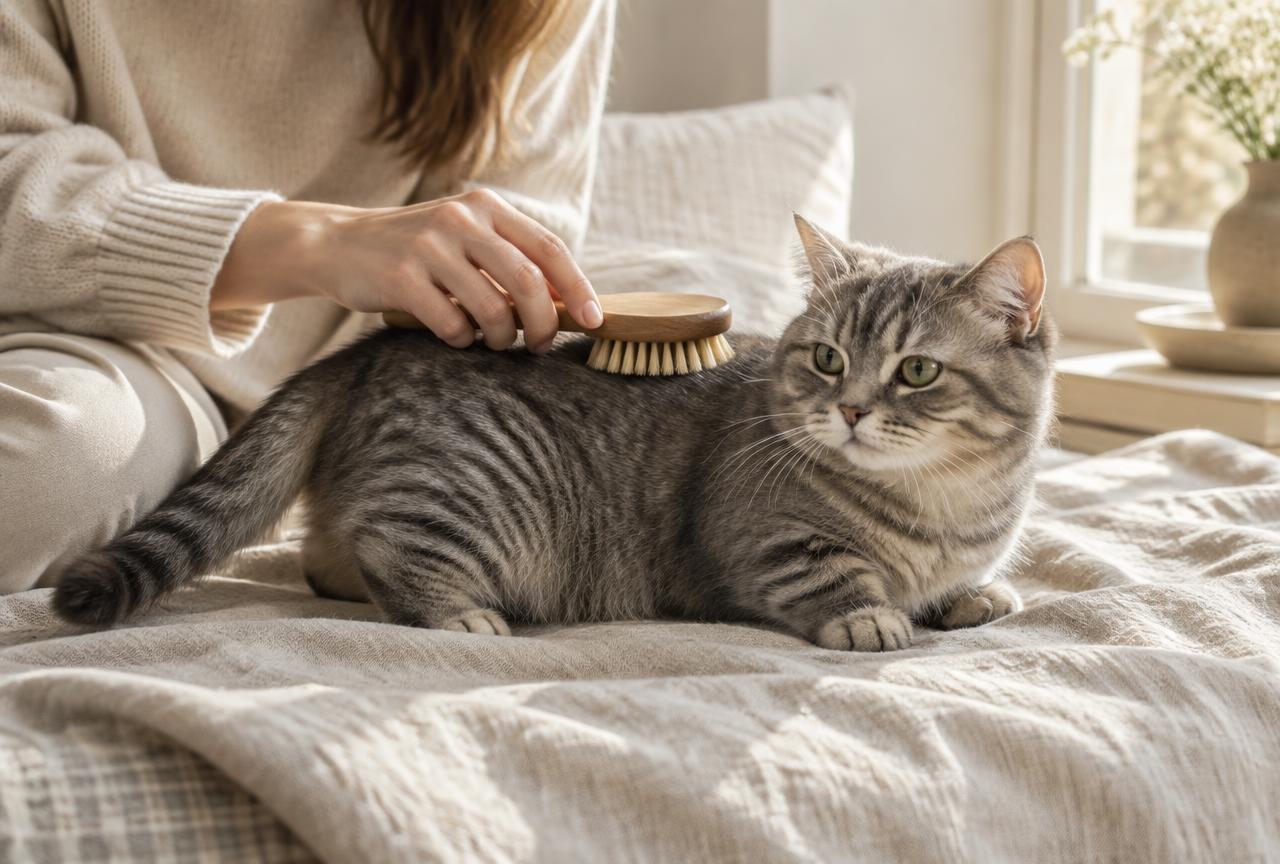
Grooming depends on coat length, since Munchkins come in both short and long coats. A shorthaired cat needs a weekly brush. A longhaired one needs a comb through two or three times a week, with extra attention behind the ears and under the arms. What matters more than coat, in both cases, is weight. Extra kilos on short limbs put load through joints that are already unusual, and a heavy Munchkin also struggles to reach and groom parts of their own body. Weigh monthly, keep the ribs easy to feel, and adjust food before the problem becomes visible.
Health monitoring should be practical rather than anxious. Lordosis, an excessive inward curve of the spine, and pectus excavatum, a sunken chest, have both been reported in the breed, usually appearing in kittens. Ask a breeder directly whether either has occurred in their lines and what they do about it. Watch for reluctance to jump that appears suddenly in an adult cat, changes in gait, or difficulty getting comfortable, and have those checked rather than attributed to the legs.
Our view, plainly: the Munchkin is a delightful cat to live with, and the welfare question around breeding for the mutation is a real one that will not be settled by how charming an individual cat is. If you want one, buy from a breeder who screens, who pairs responsibly, who talks openly about the debate rather than dismissing it, and who cares more about the kitten than the novelty. If that breeder is hard to find, that is information too.
Grooming, realistically
- 1Brush weekly for a short coat, or comb through two to three times a week for a long coat, working behind the ears and under the arms.
- 2Check that the cat can reach their own back end to groom; help with a damp cloth if not.
- 3Trim claws every three to four weeks, since less climbing means less natural wear.
- 4Clean ears fortnightly with a cat-safe wipe.
- 5Weigh monthly and adjust portions promptly. Weight control matters more here than in most breeds.
What you actually need
- Wide-tooth metal comb
- Soft bristle brush
- Blunt-nosed claw clippers
- Cat-safe ear wipes
- Kitchen or pet scales for monthly weights
Kitten to adult
| Age | Male | Female | What is happening |
|---|---|---|---|
| 8 weeks | 0.7-0.9 kg | 0.6-0.8 kg | Short legs already obvious. Watch the kitten move freely before choosing. |
| 3 months | 1.2-1.6 kg | 1.1-1.5 kg | Busy and playful. Introduce ramps now so they become habit. |
| 6 months | 2.0-2.6 kg | 1.8-2.4 kg | Gait settles into the characteristic roll. |
| 12 months | 2.8-3.6 kg | 2.4-3.2 kg | Close to adult size. Set feeding portions now. |
| 18 months | 3.0-4.0 kg | 2.5-3.6 kg | Final weight. Keep ribs easy to feel. |
Ranges are typical, not targets. Judge condition by ribs and waist, and check with the ideal weight checker.
What to ask a breeder
- Do you pair short-legged cats only with standard-legged cats?
- Have you had any cases of lordosis or pectus excavatum in your lines?
- Can I see the parents moving around freely?
- What veterinary checks do kittens have before leaving?
- What is your policy if a spinal or joint problem appears later?
Health watch-list
What to ask a breeder about, and what to watch for over a lifetime. This is orientation, not veterinary advice, anything you notice belongs in front of a vet.
Lordosis
UncommonAn excessive inward curve of the spine, usually seen in kittens. Ask breeders whether it has occurred in their lines.
Pectus excavatum
UncommonA sunken chest wall that can affect breathing. Mild cases often need no treatment; severe ones need surgery.
Osteoarthritis
Possible with ageShort limbs and any excess weight load joints. Keeping the cat lean is the single most useful thing you can do.
Obesity
Common riskLess climbing means fewer calories burned. Weigh monthly and adjust portions early.
Dental disease
Common in all catsTartar builds quietly. Daily brushing or dental chews reduce extractions later.
Hypertrophic cardiomyopathy
UncommonSeen across many breeds. Ask whether parents have been heart-screened by ultrasound.
What it costs to keep one
Realistic running cost
€78 / month
About €936 a year, or roughly €13,104 across a 14-year life, before purchase price, neutering and one-off vet events.
Before the cat arrives. Budget roughly €280–520 for trays, carrier, posts, bowls, bedding and grooming kit sized for this breed. Figures throughout are indicative and vary a good deal between countries.
Interactive · built for this breed
Is a Munchkin right for your home?
Short legs change how a cat moves through a room. Answer four questions and see whether this breed fits your household, and what the ethical questions are.
Verdict
A strong match
You have the right home, and you are asking the right questions of a breeder before you buy.
Keep the weight honest with the ideal weight tool, or compare the alternatives in the matchmaker.
The verdict, by household
Flat dwellers
Well suited
Small, sociable and content indoors, as long as you add low steps to the places they want to be.
Families with young children
Good, with supervision
Patient and playful, but the low body is easy to trip over and to grab.
First-time owners
Good
Easy-going and forgiving. The homework is about ethics and home layout, not daily care.
Multi-pet homes
Very good
Confident with dogs and other cats. Give them a low retreat of their own.
Allergy-conscious homes
Not recommended
No breed is hypoallergenic, and this one sheds normally.
When to call your vet
- A sudden reluctance to jump or use steps the cat used before
- Any change in gait, limping or dragging of a limb
- Laboured breathing or visible chest deformity in a kitten
- An arched or dipped back that looks new
- Struggling to groom the lower back or tail base
Nothing here is a diagnosis. Breathing difficulty, sudden hind-leg weakness and straining to urinate are emergencies, go the same day.
Munchkin vs the closest alternatives
| Breed | Weight | Energy | Grooming | € / month |
|---|---|---|---|---|
| Munchkin | 2.5–4 kg | 7/10 | 3/10 | €78 |
| Manx | 3.5–5.5 kg | 7/10 | 4/10 | €82 |
| Domestic Shorthair | 3.5–7 kg | 6/10 | 3/10 | €66 |
| Bombay | 2.5–5.5 kg | 7/10 | 3/10 | €78 |
Munchkin questions, answered
Are Munchkin cats in pain?
Most healthy Munchkins move comfortably and show no sign of pain, and studies of the breed report normal lifespans. The mutation shortens the limbs without shortening the spine, so the picture is different from dwarfism in dogs. That said, the mutation affects cartilage, extra weight loads the joints, and arthritis with age is a genuine risk worth managing from the start.
Can Munchkins jump?
Yes, though less confidently and not as high. They sprint well and climb reluctantly, and many are more hesitant coming down than going up. Adding ramps and stepped platforms to the sofa, bed and window sill removes most of the frustration.
Why is the breed banned or unrecognised in some places?
Several registries decline to recognise the Munchkin because it is defined by a skeletal mutation, and they take the view that breeding deliberately for that is not defensible. Other bodies accept the breed. Anyone buying one should know that the debate exists and is held in good faith on both sides.
How much does a Munchkin cost to keep?
Budget roughly 70 to 80 EUR a month for food, litter, insurance and basic grooming as an indicative range, plus 280 to 520 EUR of one-off setup costs for ramps, a low cat tree, trays, carrier and scratchers. Veterinary costs are ordinary unless a joint problem appears.
Are Munchkins good with children and dogs?
Generally yes. They are confident, sociable and slow to take offence, which suits family life and multi-pet homes. Teach children not to lift them and to watch their feet, since a low-slung cat is easy to trip over.
Do Munchkins need to stay indoors?
We would say yes, or in a secure enclosure. A cat who cannot scale a fence quickly or climb out of trouble is at a real disadvantage outdoors, and their sociable nature means indoor life with plenty of play suits them well.
What should I ask a Munchkin breeder?
Whether they pair short-legged cats only with standard-legged ones, whether lordosis or pectus excavatum has appeared in their lines, whether the parents are heart-screened, and what happens if a problem shows up later. Watch the adults move freely before you decide.