
Leaving your cat alone: boredom, loneliness and the signs
Cats have a reputation for indifference that their behaviour does not support. Most cope well with a working day alone; some genuinely struggle. How to tell which cat you have, and how to set up the hours you are away.
Helen Marsh
Feline behaviourist and ReMews. staff writer
Published 20 September 2026
Dr Tomas Reyes, DVM
The short version
- Cats form real attachment bonds; most cope with a working day alone, but some show genuine separation distress.
- Healthy adults generally manage eight to nine hours; kittens under four months should not be alone beyond two to four hours.
- True separation anxiety shows as distress at departure cues, soiling on your belongings, and destruction aimed at doors, not just a cat who sleeps a lot.
- Feeding one meal through a puzzle feeder is the single highest-value change for a home-alone cat.
- Keep departures and arrivals boring: emotional goodbyes teach the cat that leaving is an event.
- A second cat fixes loneliness only when the match is right; two kittens together or a kitten with an easygoing adult work best.
The old story says cats are solitary animals who barely notice whether you are home. The research says otherwise. Cats form genuine attachment bonds to their owners, studies using the same tests developed for human infants have shown most cats are securely attached, and a large minority show real distress when left alone. The accurate version is less tidy: cats are more independent than dogs, and considerably less indifferent than their reputation.
Whether your particular cat copes with your working day depends on its age, its history, its company and, more than anything, what the house offers it while you are gone. This article is about reading the signs honestly and setting up the hours alone so they are dull rather than distressing.
How long is too long
There is no single number, but there are reasonable working ranges. A healthy adult cat in a decent environment generally manages an ordinary working day, eight to nine hours, perfectly well, provided the day is not also every evening and weekend. Kittens under four months should not be alone for more than two to four hours: they eat frequently, learn constantly and get into trouble creatively. Senior cats and cats with medical needs sit somewhere in between, mostly because of medication schedules and litter-tray habits rather than loneliness itself.
Overnight is the line most behaviourists draw. An adult cat can technically be left overnight with enough food, water and trays, and some owners must occasionally. As a routine, though, twenty-four-hour stretches alone push past what the animal is adapted for, and a cat sitter, a friend, or a neighbourly arrangement is the kind answer. Boarding, for most cats, is worse than a sitter: territory matters more to a cat than company does, and a familiar house with a visitor beats an unfamiliar pen every time.
Separation anxiety is real, and it looks specific
Feline separation anxiety was doubted for years and is now well documented. It is also over-diagnosed by worried owners, because its true signs are quite specific and most bored cats do not show them. The distinction matters, because boredom and anxiety have different fixes.
- Signs that fit separation anxiety: distress vocalising as you prepare to leave (the departure cues, keys, bag, coat, set it off), house-soiling on your bed or your clothes specifically while you are away, destructive behaviour aimed at exit points like doors and window frames, over-grooming that started when your schedule changed, and frantic, prolonged greeting behaviour on return.
- Signs that fit plain boredom or under-stimulation instead: lethargy and oversleeping, pestering you relentlessly on your evenings at home, a sudden interest in shredding the sofa, weight creeping up from eating for entertainment.
- Signs that mean neither: sleeping most of the day (cats sleep 12 to 16 hours normally), watching from the window (enrichment, not pining), and ignoring you for the first ten minutes after you come home (also normal, and mildly insulting).
The question is not whether your cat notices you are gone. It almost certainly does. The question is whether the noticing tips into distress, and that you can only read from behaviour, not from guilt.
If several of the anxiety signs apply, especially soiling on your things and distress at departure cues, that is a conversation for your vet, who can rule out medical causes and refer to a behaviourist. Boredom, by contrast, you can largely fix yourself.
Setting up the day alone
The goal is a house that stays mildly interesting across nine hours, not a house that entertains constantly. Scatter the interest so it does not all happen in the first hour.
- 1Feed with effort. Put at least one daily meal into a puzzle feeder, a treat ball, or simply scatter-fed across a room. Hunting for calories is the activity a cat's day is built around; a bowl removes it in thirty seconds.
- 2Build vertical territory. A tall scratcher by a window, a cleared shelf, a radiator bed. Height is safety and entertainment at once, and it costs the cat nothing to use.
- 3Leave the world visible. A window with a view is cat television. A bird feeder hung outside it is the premium subscription.
- 4Rotate the toys. Leave three out, keep six in a cupboard, swap weekly. Toys left permanently on the floor become invisible within days.
- 5Keep departures and arrivals boring. Long emotional goodbyes teach the cat that leaving is an event. Walk out. When you return, greet the cat calmly after a few minutes, not at the door.
- 6Consider sound. A radio on low or a podcast provides the household noise the cat associates with normal life. Some cats visibly settle to it.
The planner below turns your working hours, your cat's age and whether it lives alone into a concrete assessment of how the day stacks up, plus the setup moves worth making first.
The two-cat question
The standard advice for a lonely cat is a second cat, and it is right often enough to be worth considering and wrong often enough to be worth thinking through. Cats are not pack animals, and a poorly matched pair is worse than a contented single. The combinations that most often work: two kittens taken together, an easygoing adult cat matched with a kitten, and two adults introduced slowly and properly over weeks. The combinations that most often fail: two unrelated adult cats of similar age and strong temperament, thrown together in a small flat.
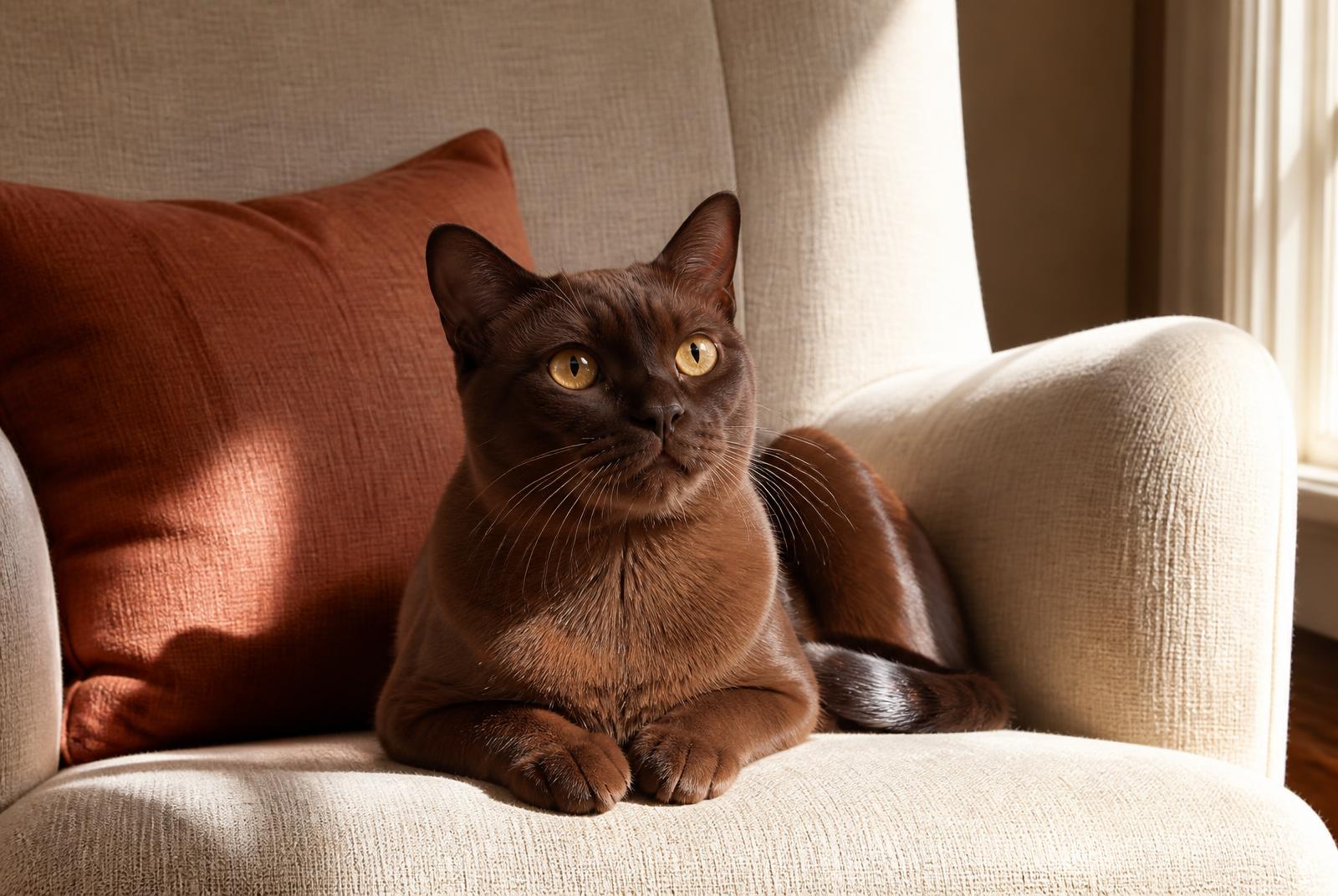
If you do go the two-cat route, our guide to introducing a second cat walks the process properly, and the breed matters less than the individual temperament, though sociable breeds like the Burmese and Ragdoll are famously poor candidates for long solitary days in the first place.
Verdict by household
- One adult cat, standard working day: almost certainly fine. Invest in the puzzle feeder and the window view, and stop worrying.
- A kitten and a full-time job: genuinely hard to do fairly. Kitten-proof one room, arrange a midday visitor for the first months, and seriously consider two kittens.
- The velcro cat that cries at the door: trial the boring-departure routine and enrichment for a month. If the soiling or yowling continues, vet first, behaviourist second.
- Regular long days plus evenings out: that is not a one-cat situation. A compatible second cat, a sitter, or a different arrangement is the honest fix.
When to get help
Separation distress that does not improve with a month of proper enrichment, any house-soiling on your belongings, destructive behaviour at doors and windows, or over-grooming that has thinned the coat all justify a vet visit: partly for the behaviour itself, partly because cystitis, pain and thyroid trouble can all masquerade as loneliness. Ask the practice about a referral to a qualified feline behaviourist if the physical checks come back clear. And if the real problem is that your life has outgrown your cat's tolerance for it, a good cattery sitter or a trusted neighbour is a practical kindness, not a failure.
Questions people actually ask
Do cats get lonely when left alone?
Some do. Cats form genuine attachment bonds to their owners, and a minority show real separation distress, typically crying at departure cues, soiling on the owner's belongings, or destroying things near doors. Most adult cats, though, cope well with a standard working day if the house offers food puzzles, window views and vertical space.
How long can you leave a cat alone?
A healthy adult cat in a well-set-up home generally manages an eight to nine hour working day comfortably. Kittens under four months should not be alone for more than two to four hours. Overnight absences are possible occasionally with enough food, water and trays, but as a routine, arrange a sitter rather than leaving a cat for 24 hours or more.
Do cats miss their owners?
Yes, in their way. Attachment studies show most cats are securely bonded to their owners and are measurably more relaxed with them present. That does not mean every absence is painful: a cat that sleeps, plays and eats normally while you are out is content, not pining. Behaviour, not guilt, is the reliable guide.
Is it better to have two cats so they keep each other company?
Sometimes. A well-matched pair genuinely reduces loneliness, especially two kittens together or a kitten joining an easygoing adult. But cats are not pack animals, and two mismatched adults in a small space can mean double the stress. Introduce slowly over weeks, and judge by individual temperament rather than assuming any second cat helps.
What are the signs of separation anxiety in cats?
The specific signs are distress vocalising as you prepare to leave, urinating on your bed or clothes while you are away, scratching at doors and window frames, over-grooming that began when your schedule changed, and frantic greetings on return. A cat that simply sleeps a lot or watches from the window is normal, not anxious.
Sources
- Cats and separation anxiety, International Cat Care (ISFM)
- Leaving your cat home alone, PDSA
- Feline social behaviour, Cornell Feline Health Center
Breeds mentioned


Put it into practice
Read next
Catnip: why some cats lose their minds, and others shrug
Catnip explained: the genetics behind the response, why a third of cats are immune, how much to give, and the practical jobs it does well.