United States
Ragdoll
The dog-like cat that goes limp in your arms, what living with the gentlest of the big breeds is actually like, coat, flops and all.
Dr Emma Carlisle, MRCVS
Goes limp in your arms, and means it
The short version
- A large, slow-maturing cat: males commonly reach 5.5–9 kg and the breed is not fully grown until about four years old.
- Bred to be handled, most Ragdolls actively seek laps and go loose when picked up, which makes them poor candidates for homes that want an independent cat.
- Indoor-only is the responsible default: Ragdolls are famously poor judges of danger and are frequently stolen or injured when allowed to roam.
- The silky coat is easier than a Persian''s but not maintenance-free, two ten-minute comb-throughs a week prevent the armpit and trouser mats.
- Ask any breeder for recent HCM heart-ultrasound results on both parents; it is the one screening that genuinely matters for this breed.
- Weight
- 4.5–9 kg
- Lifespan
- 12–17 yrs
- Coat
- Long
- Size
- Large
- Grown male
- 5.5–9 kg
- Grown female
- 3.6–6.8 kg
- Years to full size
- about 4
- One-off setup
- €500–900
Get one if…
- Someone home most of the day
- People who want a genuine lap cat
- Quiet flats and thin-walled buildings
- Households happy to keep cats indoors
Think again if…
- Homes empty ten hours a day
- Anyone wanting an outdoor free-roaming cat
- Owners who dislike any grooming
- People wanting an aloof, low-contact cat
Trait profile
Affection at 10 is not marketing: a Ragdoll will follow you room to room and sit on whatever you are doing. The low vocality score means a quiet house, they chirp rather than shout. Energy at 5 is a floor-level player: short bursts, then a long flop. Grooming at 6 is the honest number, silky, not cottony, so it resists mats better than a Persian but still knots behind the ears and under the legs.
Space & setup. Prefers mid-height perches and floor space over tall climbing; secure windows are essential.
Allergies. Moderate shedding with lighter dander than many longhairs, but still unsuitable for significant allergies.
The review
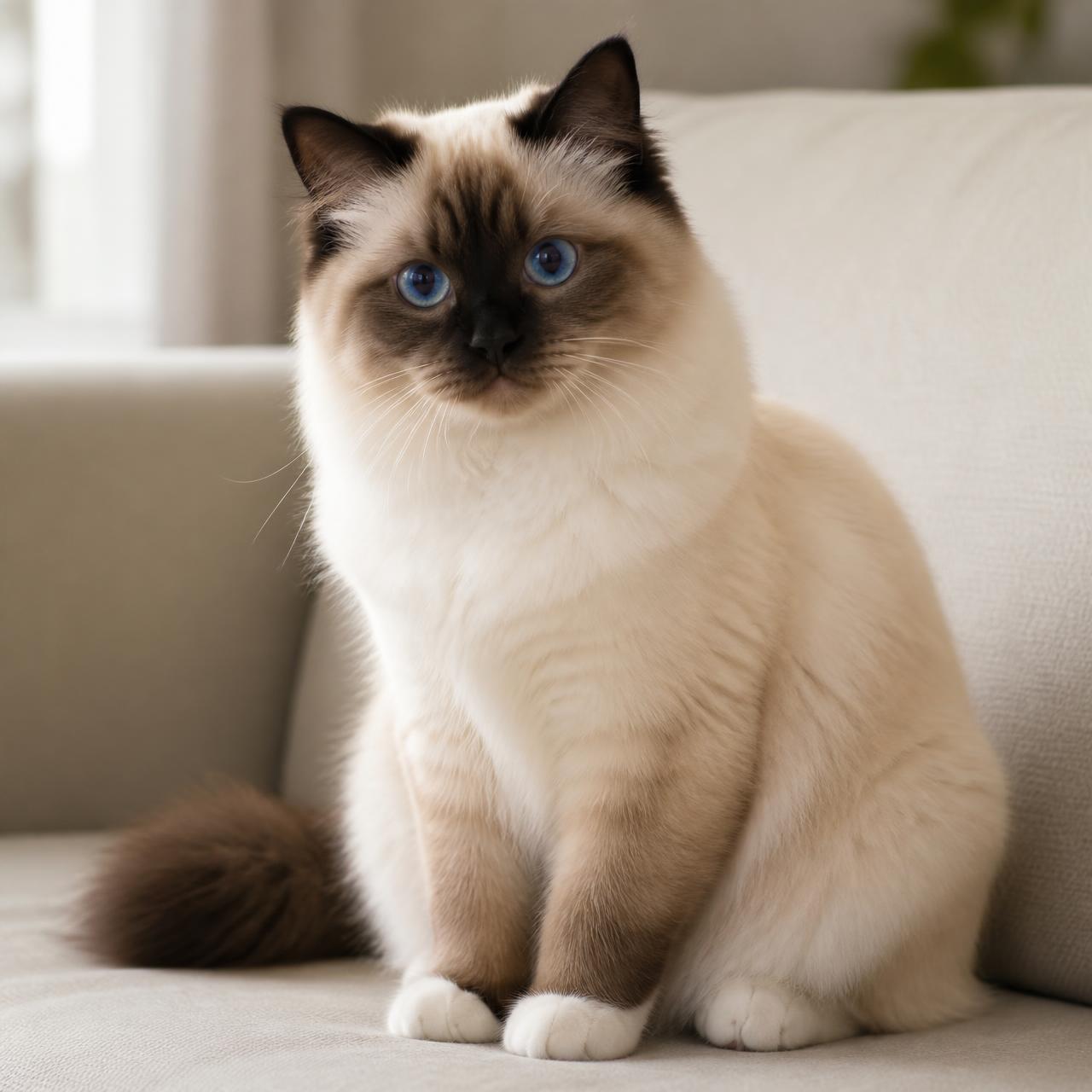
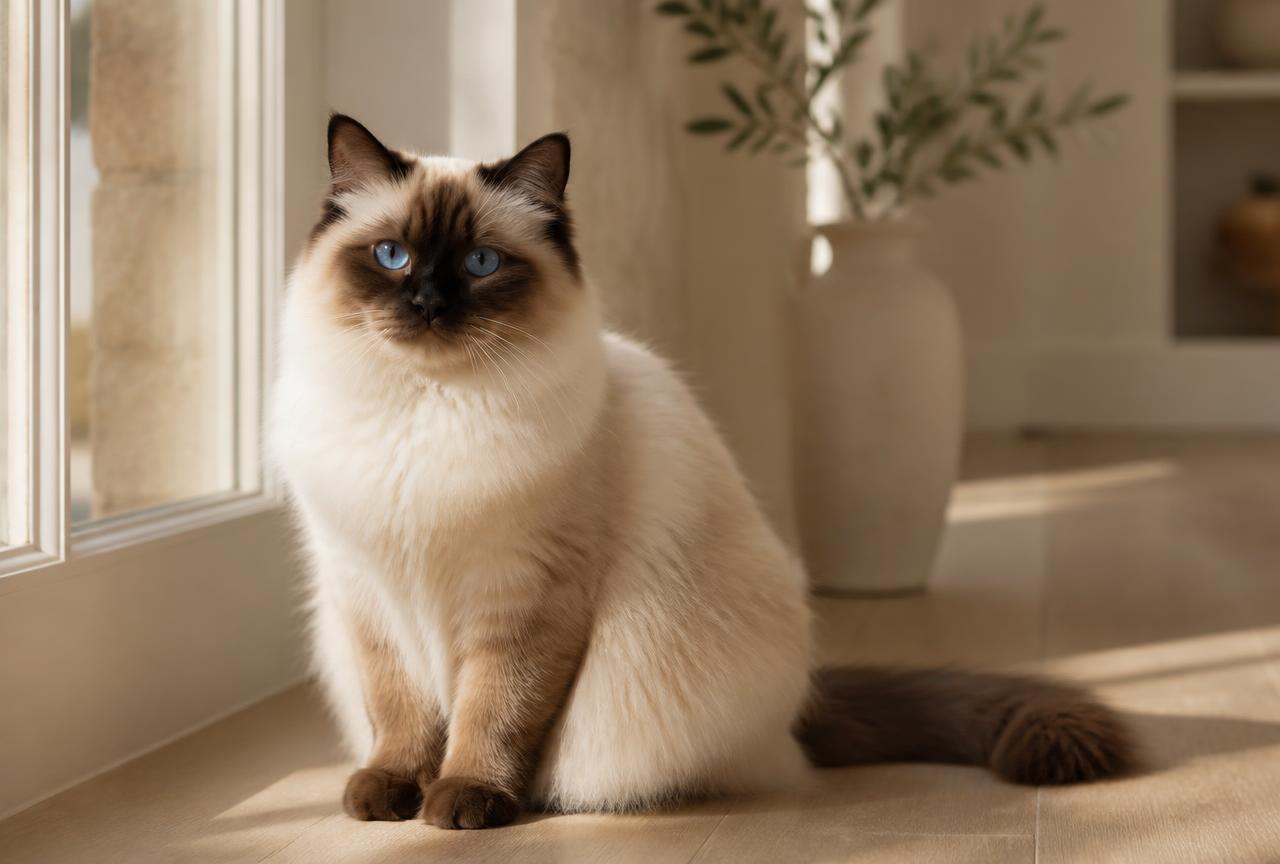
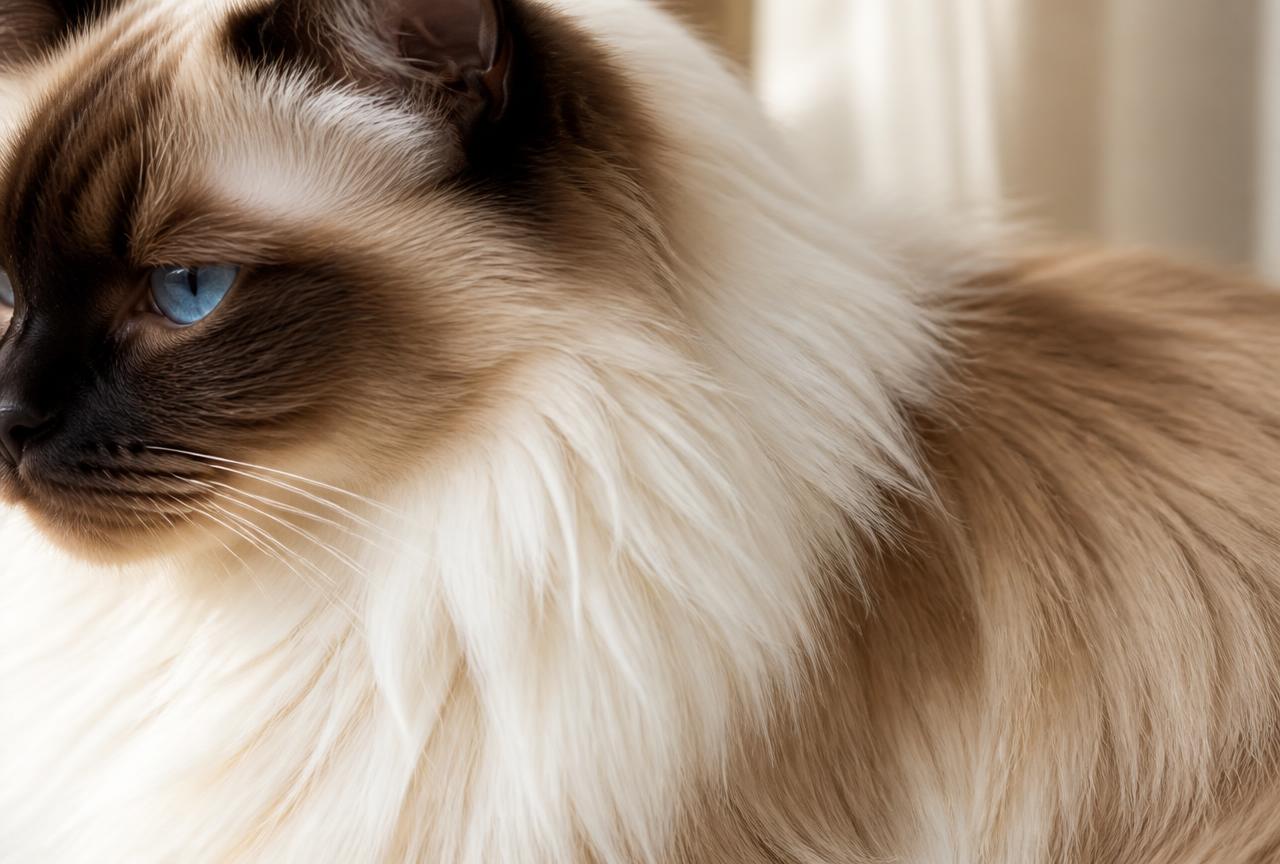
Named for their tendency to relax completely when picked up, Ragdolls are large semi-longhaired cats with blue eyes and pointed coats. They are people-oriented to a fault and often greet visitors at the door.
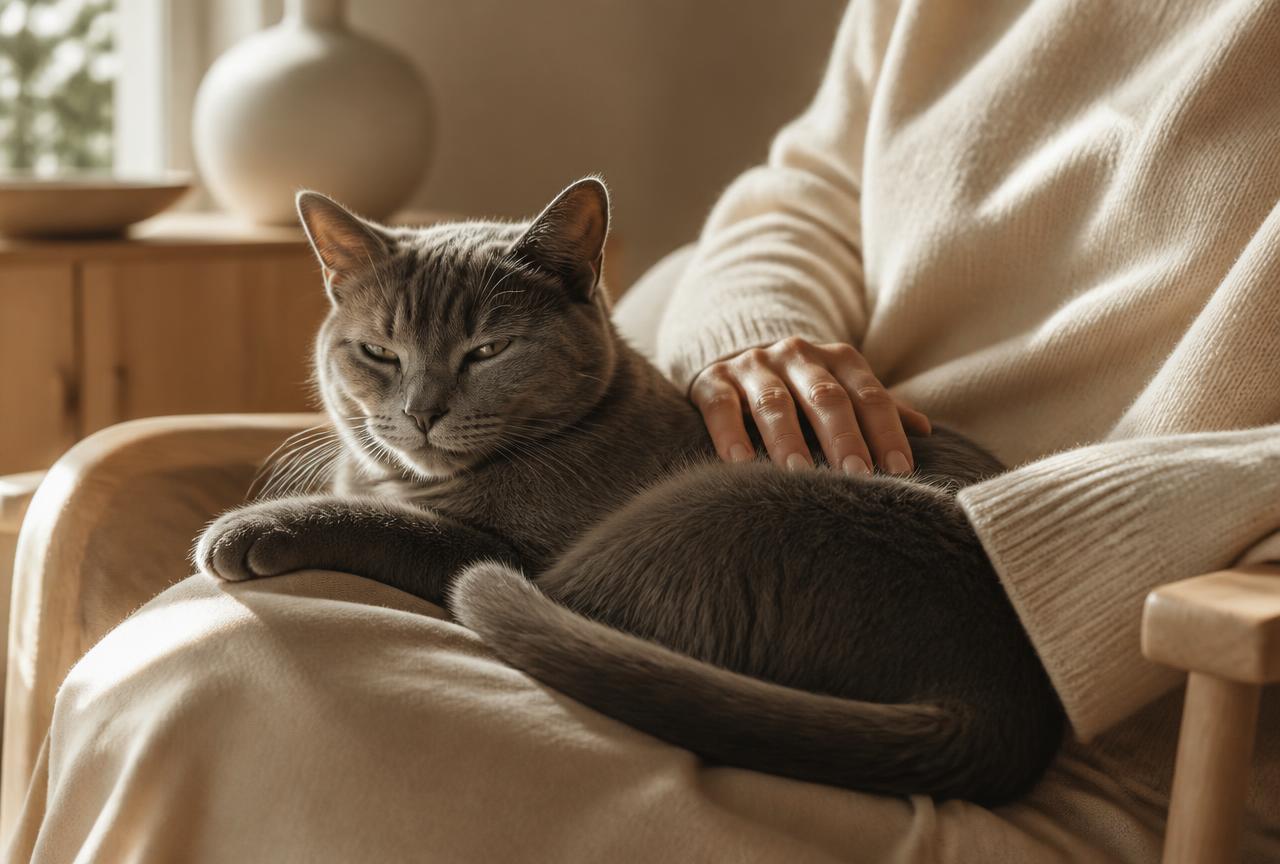
The first thing that happens when you pick up a Ragdoll is nothing. No stiffening, no paddling of paws, no polite tolerance while the cat waits for you to stop. The muscles simply switch off, the head lolls against your arm, and you are left holding five or six kilograms of warm, trusting liquid. It is the trait the breed was named for and it is entirely real, though it varies by individual, and a frightened or unwell Ragdoll will stiffen like any other cat, so limpness is a temperament marker, not a health one.
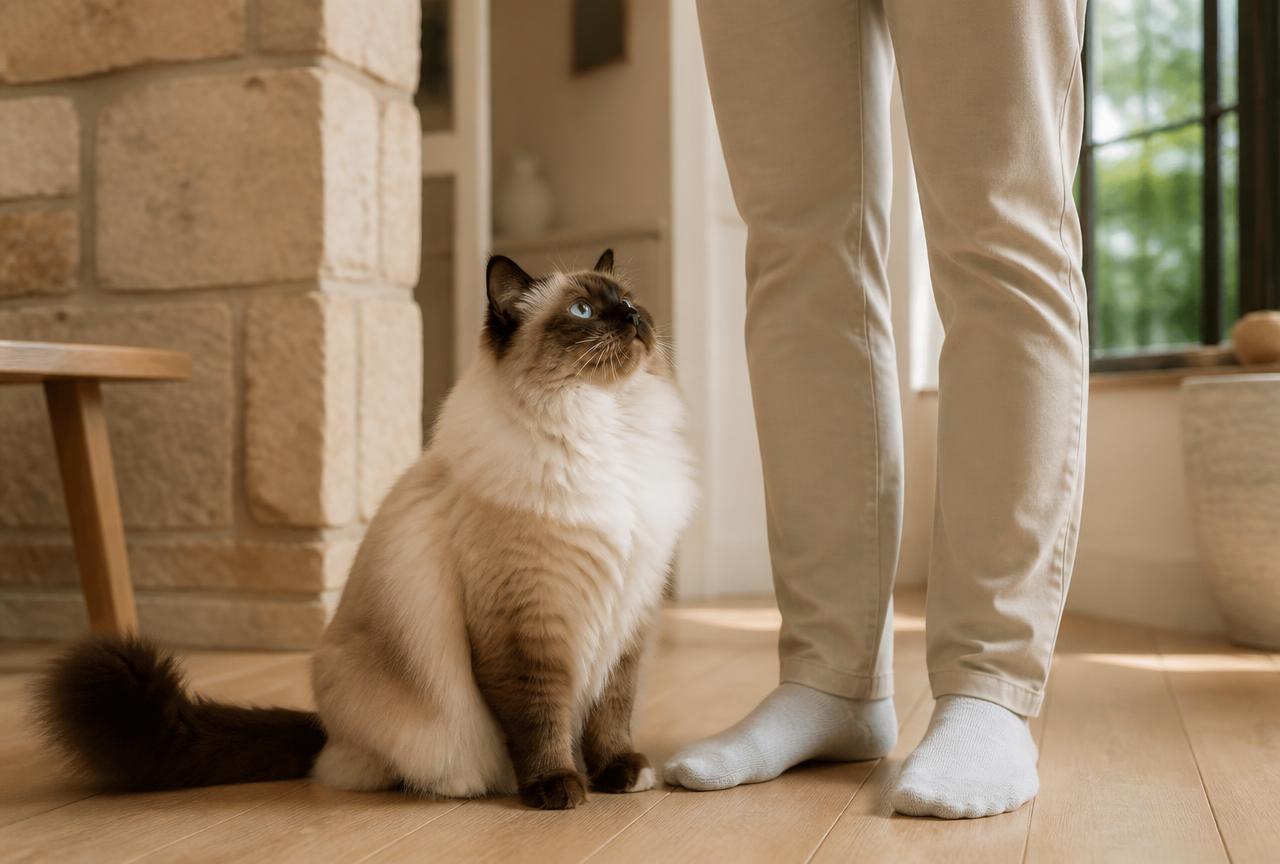
Living with one is closer to living with a small, quiet dog than with the average cat. Ragdolls greet you at the door, follow you to the kitchen, sit outside the bathroom, and position themselves in whichever room has the most people in it. They are not clingy in the anxious sense, they simply prefer company to solitude, and a house that is empty from nine to six is a genuinely poor fit for the breed. Owners who work long hours should plan on two cats, not one.
The size is worth taking seriously. This is one of the largest domestic breeds, and unlike the Maine Coon''s rangy, athletic build, a Ragdoll is a broad, heavy cat with a substantial bone structure. Grown males commonly run 5.5 to 9 kg. They mature slowly, filling out until around four years old, and the kitten you collect at twelve weeks bears little resemblance to the animal that will eventually occupy most of your sofa. Furniture, carriers and litter trays all need to be bought for the adult, not the kitten.
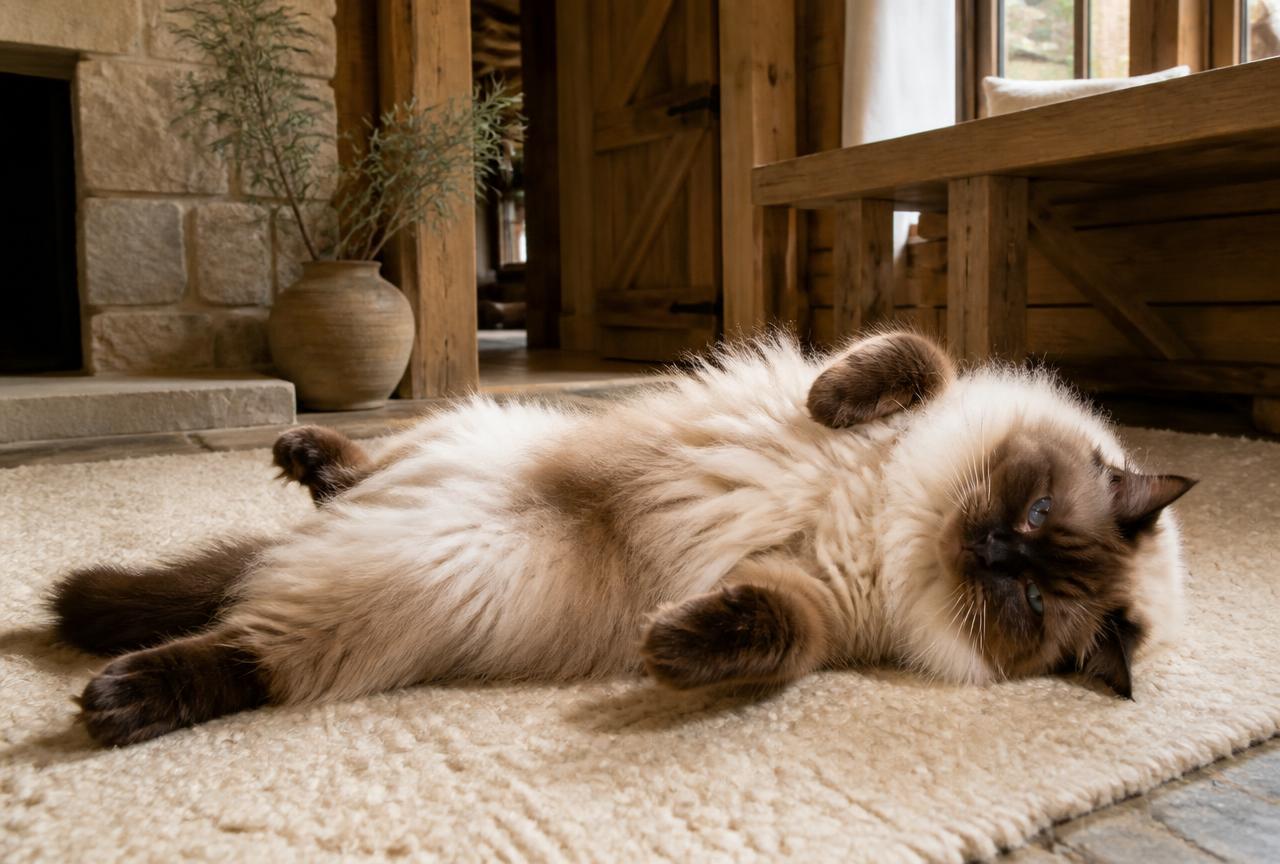
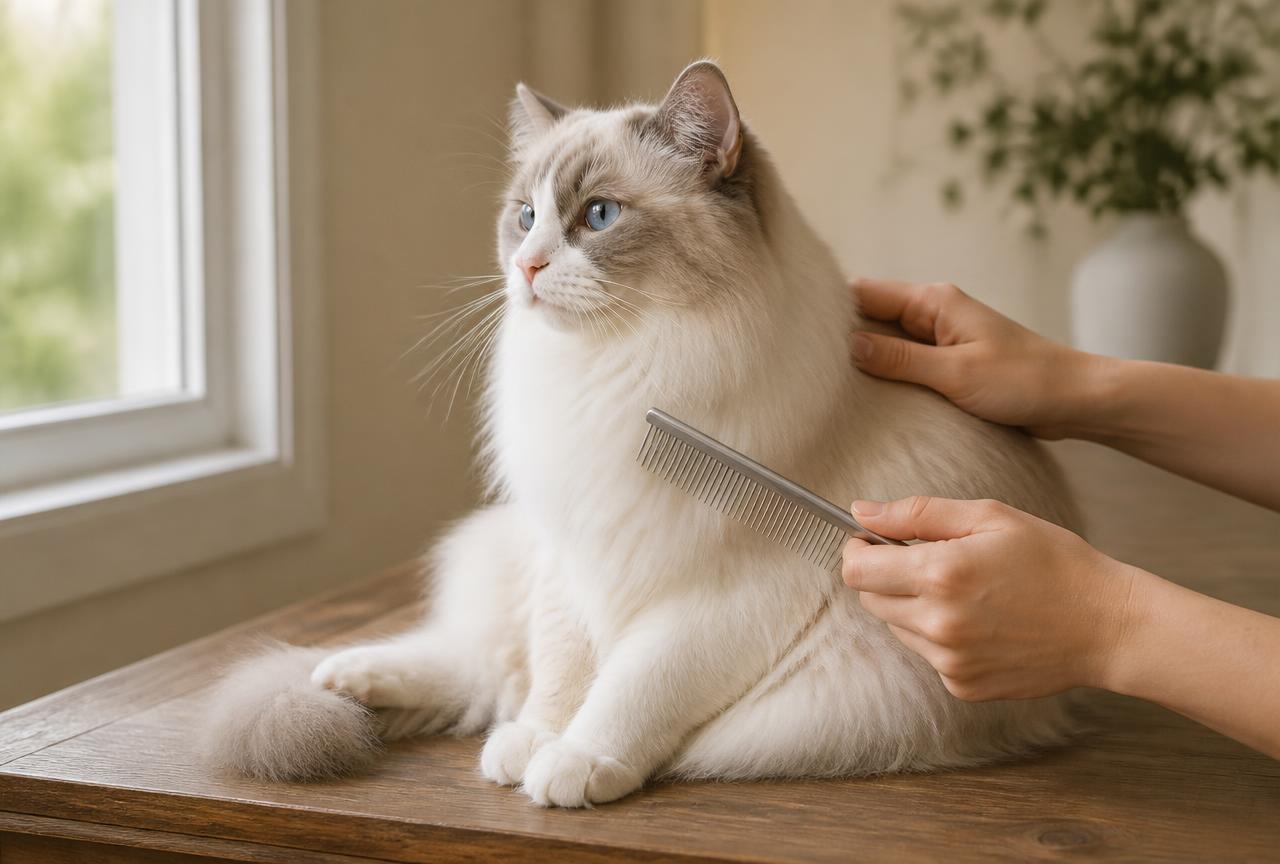
The coat is the pleasant surprise. It is semi-long, silky and, crucially, lacks the dense woolly undercoat that makes a Persian a daily obligation. It moves rather than felts. Two ten-minute comb-throughs a week keep it in show condition for most of the year, with extra attention in spring and autumn when the coat blows. The places that mat are the places the cat cannot reach: behind the ears, the armpits, and the fluffy trousers on the back legs. Ignore those and you will be paying a groomer to clip out felt.
The famous temperament needs one honest caveat. Ragdolls are gentle to the point of vulnerability. They do not fight back effectively, they rarely scratch in play, and their instinct on meeting a dog or a stranger is curiosity rather than caution. That is what makes them superb with children and other pets, and exactly what makes them unsuitable for a free-roaming outdoor life. This is a breed that will walk up to a busy road or into a stranger''s open car. Indoors, or an enclosed garden, is not a restriction for a Ragdoll; it is what the breed is for.
The voice deserves a mention mostly for its absence. Ragdolls chirp, trill and occasionally produce a soft, surprisingly high mew for such a large animal, but they do not hold conversations the way a Siamese does. The soundtrack of a Ragdoll household is purring, at a volume that seems physically improbable, usually delivered from directly on top of whatever you were trying to read.
What surprises most first-time Ragdoll owners is the play. Beneath the serenity is a cat that will fetch, chase a wand toy with real commitment, and learn its name within a fortnight. They are clever, food-motivated and trainable, several owners successfully teach them to walk on a harness, which neatly solves the outdoor question. The bursts are short, though. Ten minutes of hunting the feather, then the Ragdoll resumes its primary occupation: being a large, warm, decorative object in the best sunlit spot in the house.
Choose a Ragdoll if you want a cat that participates in the household rather than decorating it, you are home enough to be that participation, and you are prepared to keep it safely inside. Choose something else if you want an animal that asks little of you, a Ragdoll asks for company, and it asks every day.
The most consistently sweet-tempered breed we review. Strictly indoors, a Ragdoll has no instinct for self-preservation.
Grooming, realistically
- 1Twice a week: five minutes with a steel comb, working with the grain, chest ruff, flanks, then the belly while the cat is relaxed or sleepy.
- 2Every session: check behind the ears and in the armpits with your fingers; tease any knots apart with the comb''s wide end before they tighten.
- 3Weekly: comb the trousers on the back legs and the tail, the two places shed fur collects and felts first.
- 4Spring and autumn: add a third session during the coat blow, and a slicker or deshedding pass after the comb.
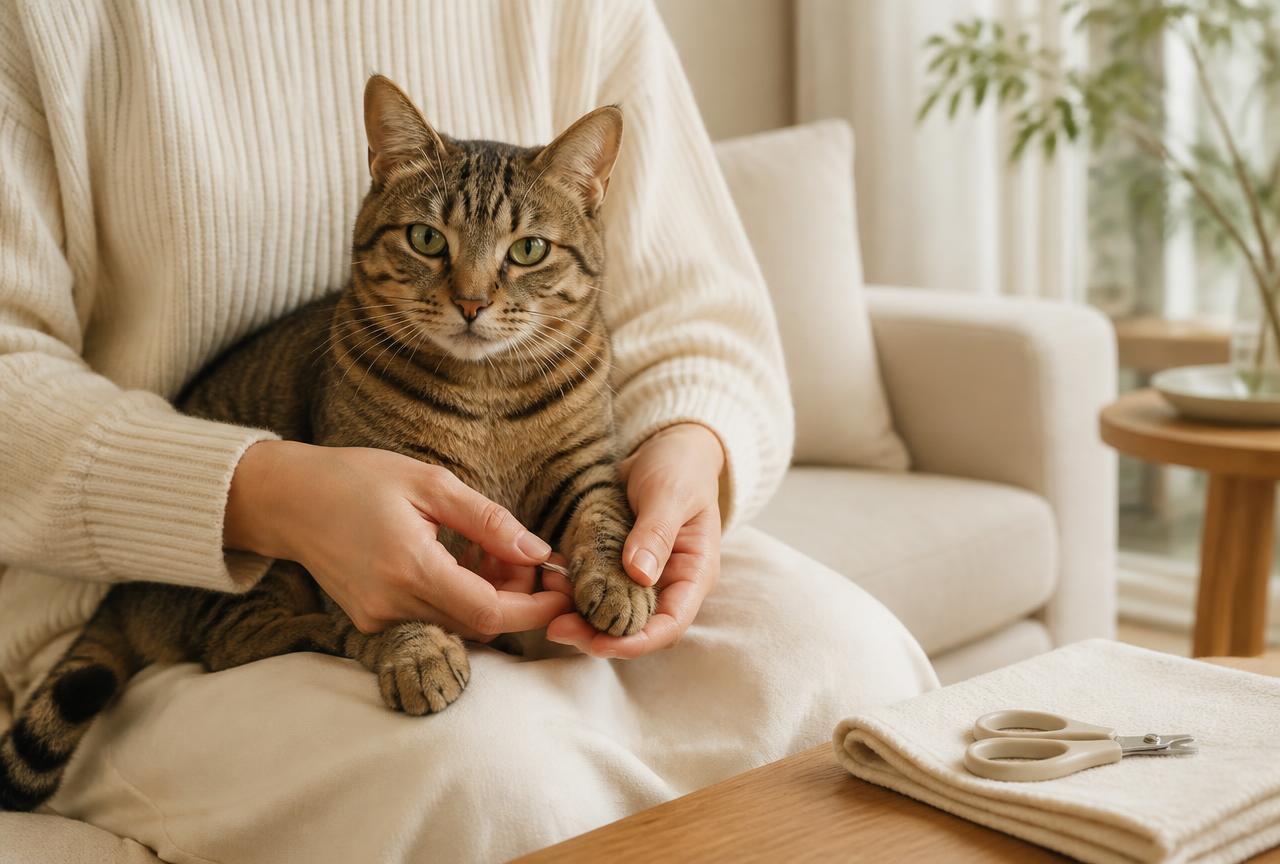
- 5Monthly: check claws and trim the tips; a cat this size should not be allowed to develop a scratching habit on furniture.
- 6As needed: a small sanitary trim around the rear keeps the long trousers clean, blunt-nosed scissors, cat relaxed, never rushed.
What you actually need
- Steel greyhound comb with wide and fine teeth
- Slicker brush for the seasonal coat blow
- Blunt-nosed scissors for sanitary trims
- Cat claw clippers
- A non-slip mat so grooming happens on a table, not your lap
Kitten to adult
| Age | Male | Female | What is happening |
|---|---|---|---|
| 8 weeks | 0.9–1.2 kg | 0.8–1.1 kg | Kittens are born white; points begin to show on ears and nose within the first fortnight. |
| 4 months | 2.2–2.8 kg | 1.8–2.4 kg | Lanky stage, all legs and ears. Coat colour still developing. |
| 8 months | 3.8–4.8 kg | 3.0–4.0 kg | Points now clearly defined; the body colour continues to deepen for years. |
| 12 months | 4.5–6.0 kg | 3.4–4.8 kg | Looks adult but is not, frame and muscle keep building. |
| 2 years | 5.0–7.5 kg | 3.6–5.8 kg | Full coat arrives around now; the ruff and trousers fill out. |
| 4 years | 5.5–9.0 kg | 3.6–6.8 kg | Fully mature. One of the slowest-developing pedigree breeds. |
Ranges are typical, not targets. Judge condition by ribs and waist, and check with the ideal weight checker.
What to ask a breeder
- Can I see recent echocardiogram results for both parents? HCM screening by ultrasound, repeated through the breeding cat''s life, is the single most important document.
- Are the parents DNA-tested for the known Ragdoll HCM mutations and for PKD? Ask for the lab certificates, not a verbal assurance.
- At what age do kittens leave? Twelve to fourteen weeks is the responsible minimum for this slow-maturing breed.
- Are the kittens raised underfoot in the house? A Ragdoll''s temperament is genetic, but confidence is built in the first twelve weeks.
- What does the contract say about indoor living and declawing? Good Ragdoll breeders commonly require both.
- Can I meet the mother, and how does she behave with strangers? You are buying her temperament as much as her pedigree.
Health watch-list
What to ask a breeder about, and what to watch for over a lifetime. This is orientation, not veterinary advice, anything you notice belongs in front of a vet.
Hypertrophic cardiomyopathy (HCM)
NotableThe breed's significant inherited risk, as in most large breeds. Responsible breeders screen breeding cats by echocardiogram repeatedly through life and DNA-test for the known Ragdoll mutations. Ask to see both. Mid-2020s insurance data still places HCM among the top claims for the breed.
Feline lower urinary tract disease
UncommonHeavy, sedentary males are over-represented in urinary blockage cases. Wet food, multiple water stations and weight control are the everyday prevention; straining unproductively in the tray is an emergency.
Obesity and joint load
CommonA big, calm, food-motivated cat that asks for little exercise will gain weight if portions are guessed. Weigh monthly; a heavy Ragdoll loads hips and knees years before an average cat would.
Dental disease
CommonAs in all cats, gum disease is the most common diagnosis past age three. Annual checks and early tooth brushing pay off disproportionately in a long-lived breed.
Polycystic kidney disease (PKD)
RarePersian ancestry in early lines means reputable breeders DNA-test for PKD. It is now rare in tested lines, which is exactly why you should ask for the certificate.
What it costs to keep one
Realistic running cost
€90 / month
About €1,080 a year, or roughly €16,200 across a 15-year life, before purchase price, neutering and one-off vet events.
Before the cat arrives. Budget roughly €500–900 for trays, carrier, posts, bowls, bedding and grooming kit sized for this breed. Figures throughout are indicative and vary a good deal between countries.
Interactive · built for this breed
Is a Ragdoll right for your home?
Five honest answers. The verdict updates as you go, and the notes tell you what to change before a kitten arrives.
Verdict
An excellent match
You have what this breed actually needs: company, gentle handling and a safe indoor life. Spend your effort on finding a breeder who screens for HCM.
What to sort out first
- The right rhythm. The silky coat mats less than a Persian's but the armpits and trousers still knot if ignored.
This weighs fit, not welfare or health. For portions once a big cat arrives, use the portion calculator, and compare temperaments with the breed matchmaker.
The verdict, by household
Flat dweller
Excellent
A quiet, floor-level, strictly indoor breed that wants company more than space. Provide one tall post and a window seat and a flat is genuinely enough.
Family with young children
Excellent
Among the most child-tolerant of all breeds, patient, slow to scratch, and too relaxed to be startled. Teach children to support the back end when carrying; a limp Ragdoll is dead weight.
First-time owner
Excellent
The combination of robust temperament, easy coat and low aggression makes this the friendliest possible learning curve, the main homework is finding a breeder who hearts-screens.
Multi-cat home
Good
Unconfrontational and usually welcomed by other cats. Feed separately, a big, slow Ragdoll loses arguments over bowls and can quietly end up under- or over-fed.
Allergy-conscious
Poor
No cat is hypoallergenic, and a large semi-long-haired one spreads a great deal of allergen around the house. Spend time with adult Ragdolls before committing.
When to call your vet
- A Ragdoll that stops greeting you or following the household, withdrawal is out of character and worth attention.
- Any laboured or rapid breathing at rest, or reluctance to lie flat, report it promptly; HCM is the breed''s significant inherited risk.
- Straining in the tray or blood in the urine, males of heavy breeds are prone to urinary blockage, which is an emergency.
- A sudden stiffening or yelp when picked up, in a cat that normally goes limp, pain changes this breed''s behaviour before it shows anywhere else.
- Gradual reluctance to jump onto furniture in a middle-aged cat, heavy frames load joints early, and weight control matters.
Nothing here is a diagnosis. Breathing difficulty, sudden hind-leg weakness and straining to urinate are emergencies, go the same day.
Ragdoll vs the closest alternatives
| Breed | Weight | Energy | Grooming | € / month |
|---|---|---|---|---|
| Ragdoll | 4.5–9 kg | 4/10 | 7/10 | €90 |
| Ragamuffin | 4.5–9 kg | 5/10 | 7/10 | €100 |
| Selkirk Rex | 3.5–7 kg | 5/10 | 7/10 | €96 |
| Birman | 3.5–6.5 kg | 4/10 | 5/10 | €82 |
Ragdoll questions, answered
Do Ragdolls really go limp when you pick them up?
Most do, most of the time. The breed was selected for a relaxed response to handling, and a confident, content Ragdoll will go noticeably loose in your arms. It varies by individual, and any cat will stiffen when frightened or in pain, so treat limpness as a temperament trait, not a guarantee.
Are Ragdolls good indoor cats?
They are the archetypal indoor breed: quiet, floor-level, uninterested in escape and famously poor at judging danger. A free-roaming Ragdoll is at real risk of traffic, dogs and theft. Indoors with a window seat, or an enclosed garden or balcony, is the responsible standard.
How big do Ragdolls get?
Grown males commonly weigh 5.5 to 9 kg, females 3.6 to 6.8 kg, with a broad frame and heavy bone. They are among the slowest-maturing breeds, filling out until around four years old. Buy the carrier, the litter tray and the cat tree for the adult size, not the kitten.
Do Ragdolls shed a lot?
Yes, seasonally, the semi-long coat blows in spring and autumn, and there is a lot of cat to shed from. The saving grace is the silky texture, which resists felting. Two comb-throughs a week, three during the coat blow, keep it manageable and the hair off your furniture.
Can a Ragdoll be left alone during the working day?
Not happily, and not as a permanent arrangement. Ragdolls bond hard and follow their people; one left alone ten hours a day commonly becomes withdrawn. If the house is empty all day, take two cats together or choose a more independent breed.
Are Ragdolls good with children and dogs?
Among the best of all breeds. They are patient, slow to scratch and too relaxed to startle, and they usually treat a calm dog as furniture that moves. The risk runs the other way, a Ragdoll will not defend itself, so boisterous animals and rough handling need supervising.
How long do Ragdolls live?
Twelve to fifteen years is typical for a well-bred, indoor cat kept at a healthy weight, and many reach their late teens. The variables that matter are the breeder's heart screening, indoor living, and keeping a naturally placid, food-motivated cat slim.
Sources
- Ragdoll breed profile, International Cat Care
- Hypertrophic cardiomyopathy in cats, Cornell Feline Health Center
- Feline lower urinary tract disease, Cornell Feline Health Center
- Ragdoll breed standard, The International Cat Association
- WSAVA Global Nutrition Guidelines, World Small Animal Veterinary Association