How to trim your cat's claws without a fight
Claw trimming fails for one reason: it is attempted as an event. Done as a two-second habit attached to something pleasant, most cats stop objecting within a fortnight.
Nadia Ferreira
Feline behaviour and welfare writer, ten years in rescue and clinic settings
Published 4 September 2026
Written against AAFP and ISFM handling and welfare guidance
The short version
- Cut only the clear hook. The pink quick, visible in pale claws, carries the blood supply and nerves, and you should stay two millimetres clear of it.
- Front claws only for most cats. Outdoor cats need their back claws for climbing and escape.
- Two or three claws at a time beats ten. The goal is a session the cat does not remember as unpleasant.
- Ten days of paw handling with food, before a clipper ever appears, does more than any restraint technique.
- Trimming does not replace scratching. It reduces damage and snagging; the post is still non-negotiable.
- Declawing is amputation of the last toe bone. It is banned or condemned across much of the world and is not a grooming option.
Almost everyone who says their cat cannot have its claws trimmed is describing the same sequence: catch the cat, sit it down, hold it firmly, attempt ten claws, get bitten, give up for four months, repeat. The cat is not the variable in that story.
Trimming is a two-second job repeated often, not a twenty-minute procedure repeated rarely. Cats accept small, predictable, well-paid interactions and object strongly to being held against their will. Restructure the task around that fact and most of the difficulty disappears.
Here is the anatomy, the kit, the ten-day plan and the honest limits.
What you are actually cutting
A cat claw is a curved sheath that grows from a bed within the last toe bone. Inside it sits the quick, a pink wedge of blood vessels and nerve, which stops well short of the tip.
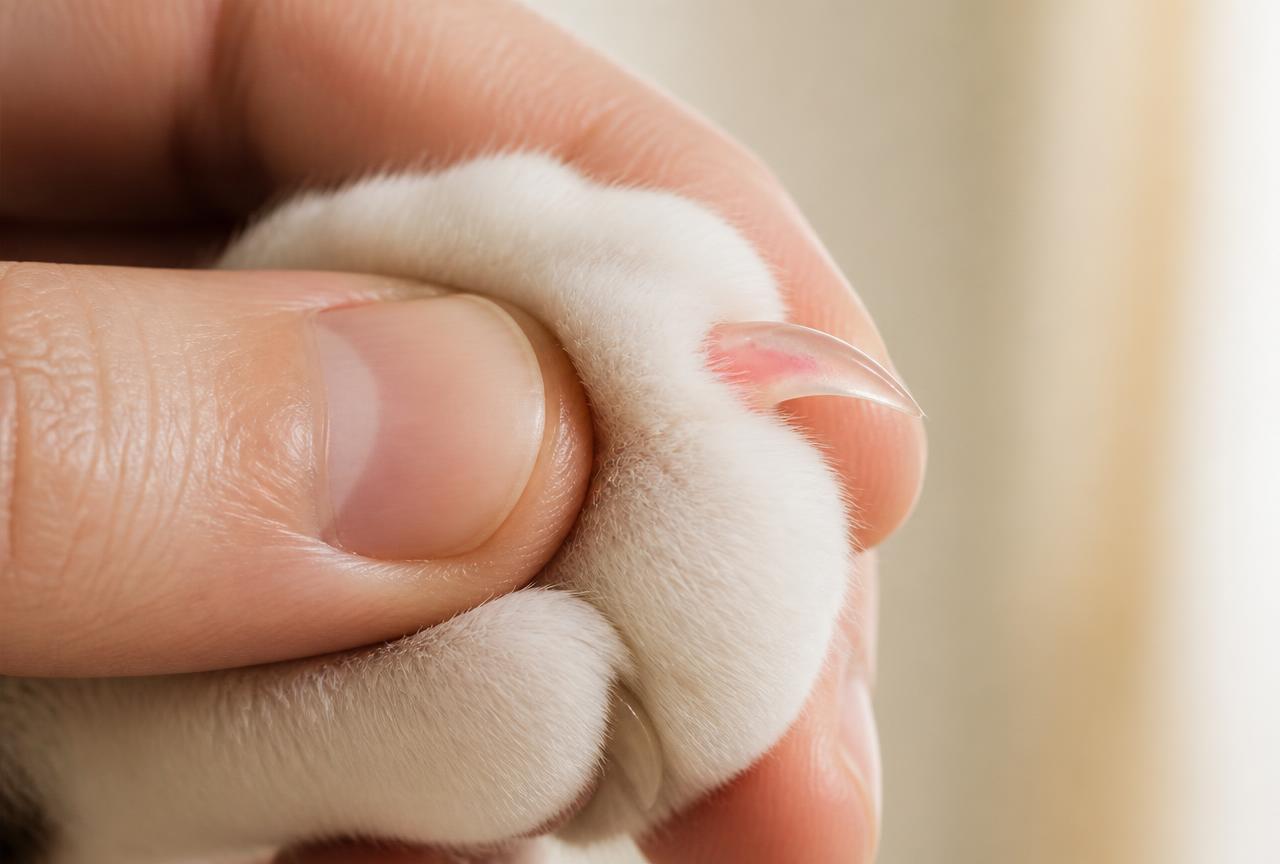
You are removing only the clear hook beyond that wedge, and leaving roughly two millimetres of margin. In pale claws this is easy to see. In dark claws, take a sliver at a time and stop when the cut surface changes from hard and glossy to chalky and slightly grey, which means you are approaching the quick.
Claws are also shed naturally. The husks you find beside a scratching post are the outer layer coming away, which is normal and not a sign anything is wrong.
The kit
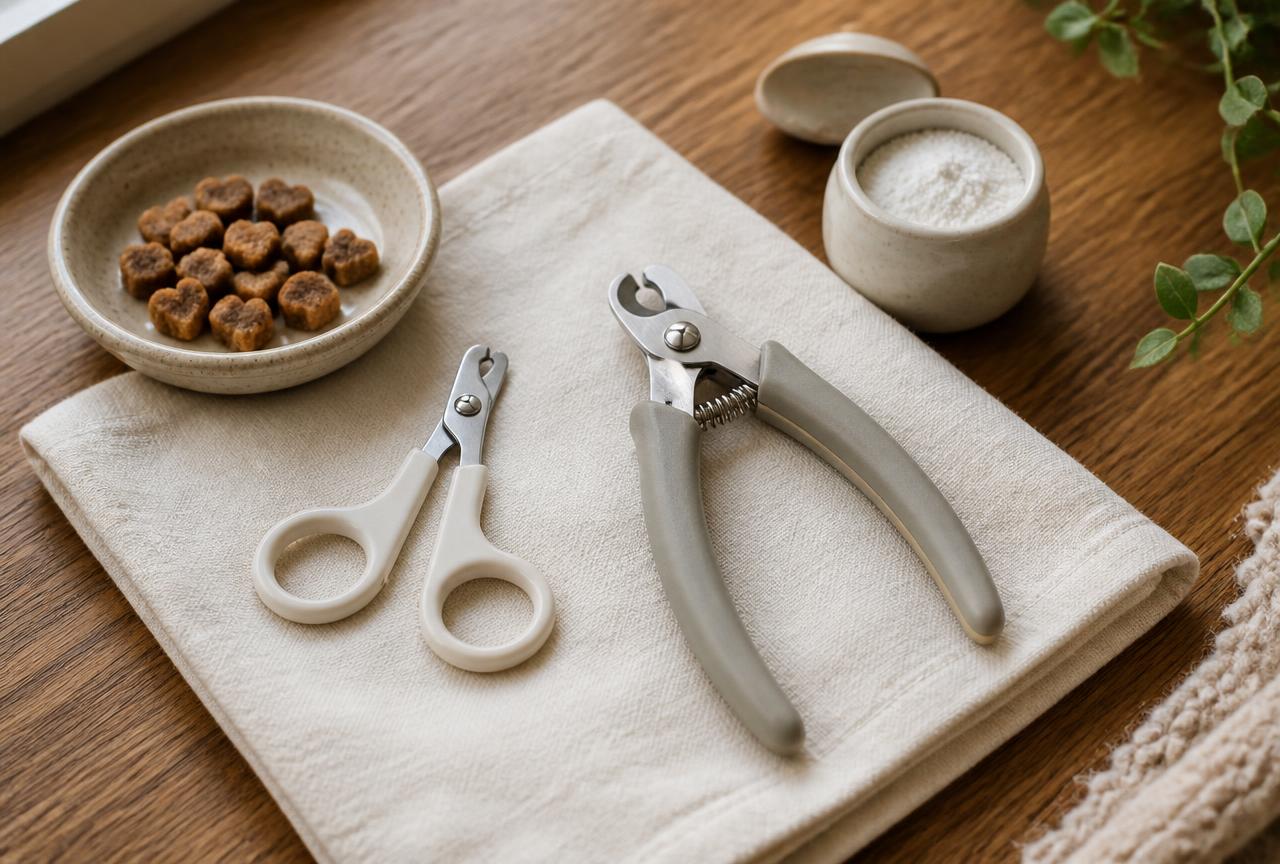
Two clipper types work, and the difference is mostly hand preference.
| Item | Why | Notes |
|---|---|---|
| --- | --- | --- |
| Scissor-style clippers | Precise on thin claws | Best for kittens and most adults |
| Plier-style clippers | Leverage on thick claws | Better for large or senior cats |
| Human nail clippers | Usable but flattens the claw | Splitting is common; not ideal |
| Styptic powder | Stops a nicked quick fast | Cornflour works at a push |
| High-value food | Pays for the interaction | Pastes and lickable treats are ideal |
Do not use a grinder unless your cat is already indifferent to noise and vibration. It is the fastest route to a cat who leaves the room when you open a drawer.
The ten-day plan
Days one to four are the whole trick, and there is no clipper in them.
- 1Days 1–2. Touch one paw, once, for a second. Give food immediately. Walk away. Three times a day.
- 2Days 3–4. Hold the paw for three seconds and press gently on the pad to extend one claw. Food. Walk away.
- 3Day 5. Bring the clippers out, let the cat sniff them, put them down. Food. No trimming.
- 4Day 6. Extend one claw, touch the clipper to it without cutting. Food. Stop.
- 5Day 7. Cut one claw. One. Food, praise, finished for the day.
- 6Days 8–10. Two or three claws per session, always ending before the cat asks to leave.
- 7From day 11. All front claws in one sitting if the cat is relaxed; otherwise keep it to a few claws spread across the week.
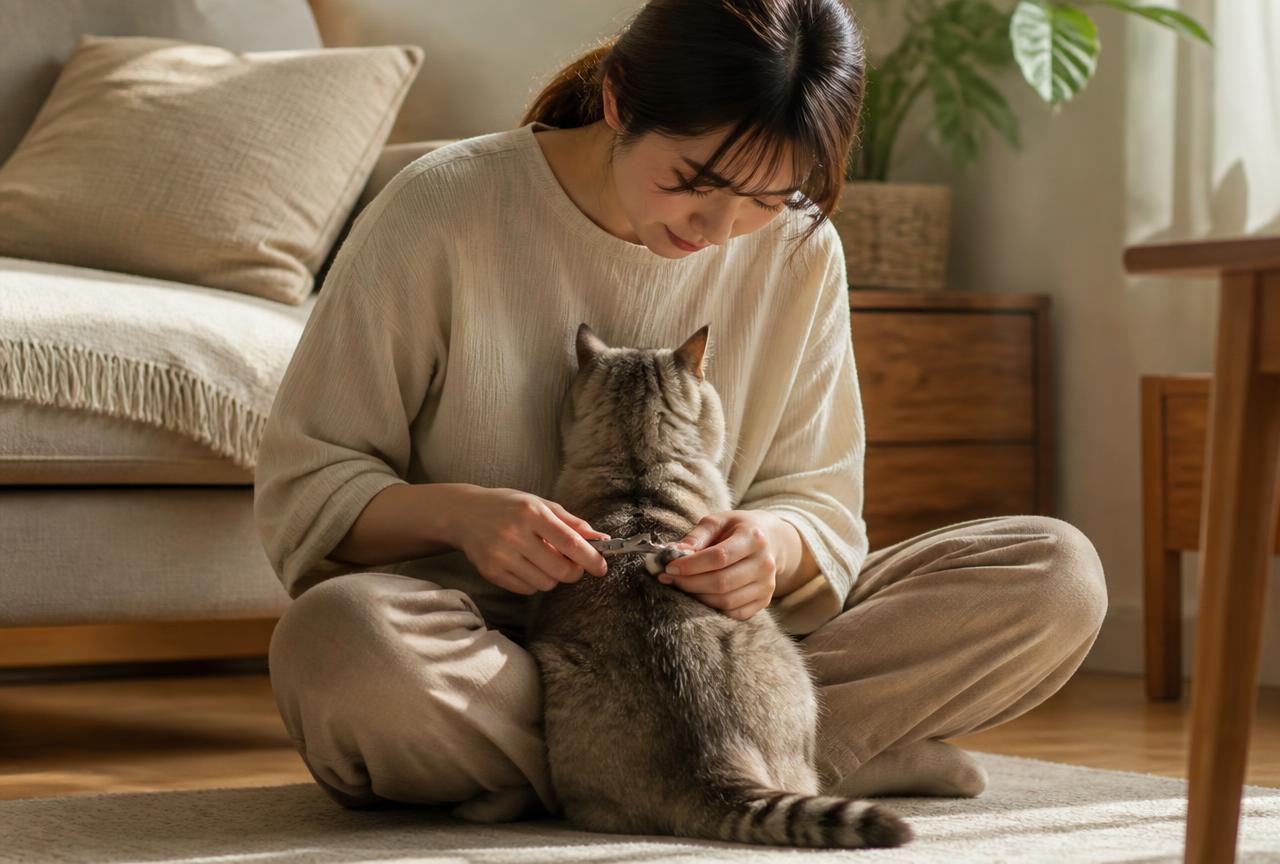
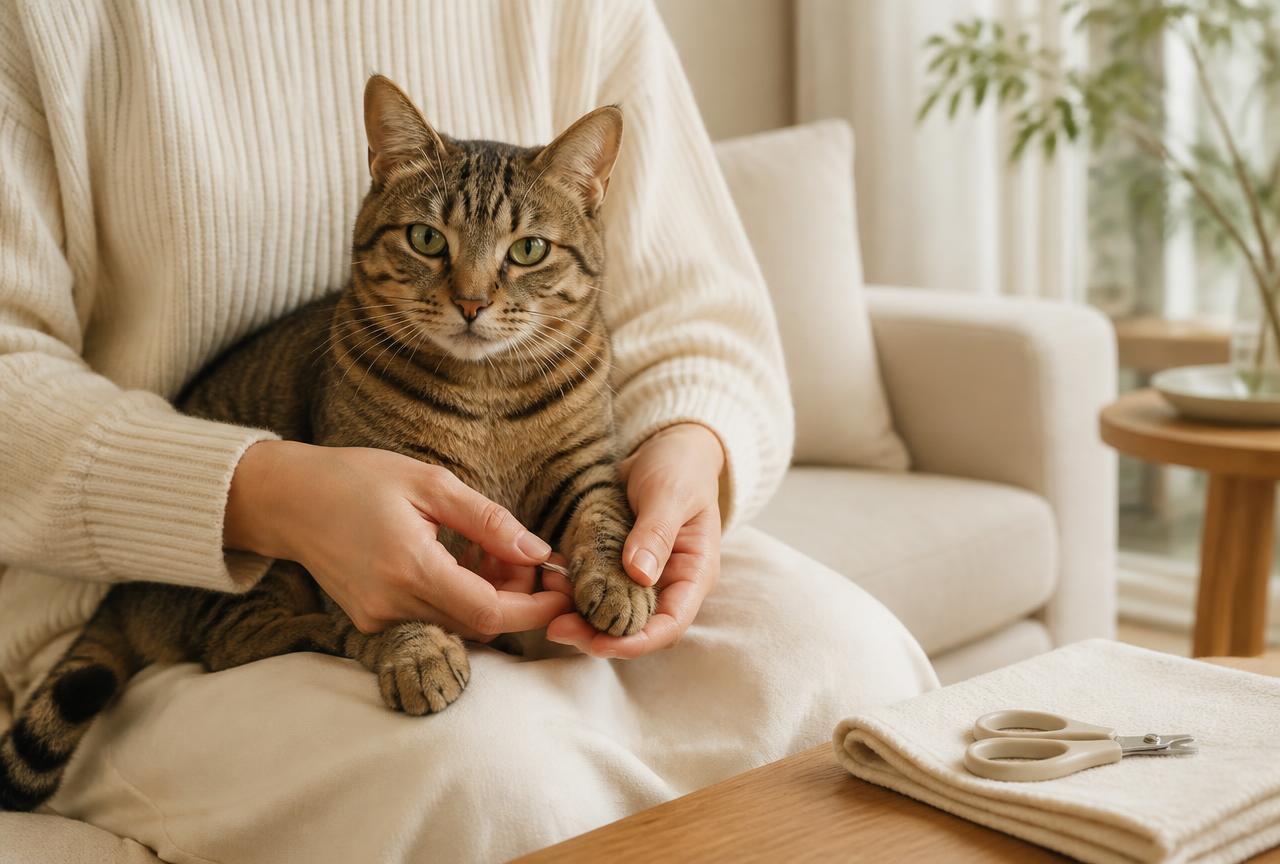
Position matters more than grip. A cat on your lap facing away, or on a raised surface with your body behind it, can leave at any moment. Cats that can leave usually do not.
The session ends when the cat is still content, not when the claws are finished. Ten calm claws over five days beat ten claws in one bad minute.
Use the schedule below to work out how often your cat actually needs this, and how much to attempt in one go.
Interactive · built for this article
Claw schedule
How often this particular cat needs a trim, and how much to attempt in one go.
Trim roughly every
21 days
Next one around 27 September.
Attempt per session
two or three claws per sitting, several sittings a week.
Back claws
Check the back claws monthly and trim only if they are catching.
Trimming replaces nothing: cats still need to scratch. Our scratching post review covers the height and stability that actually get used.
Special cases
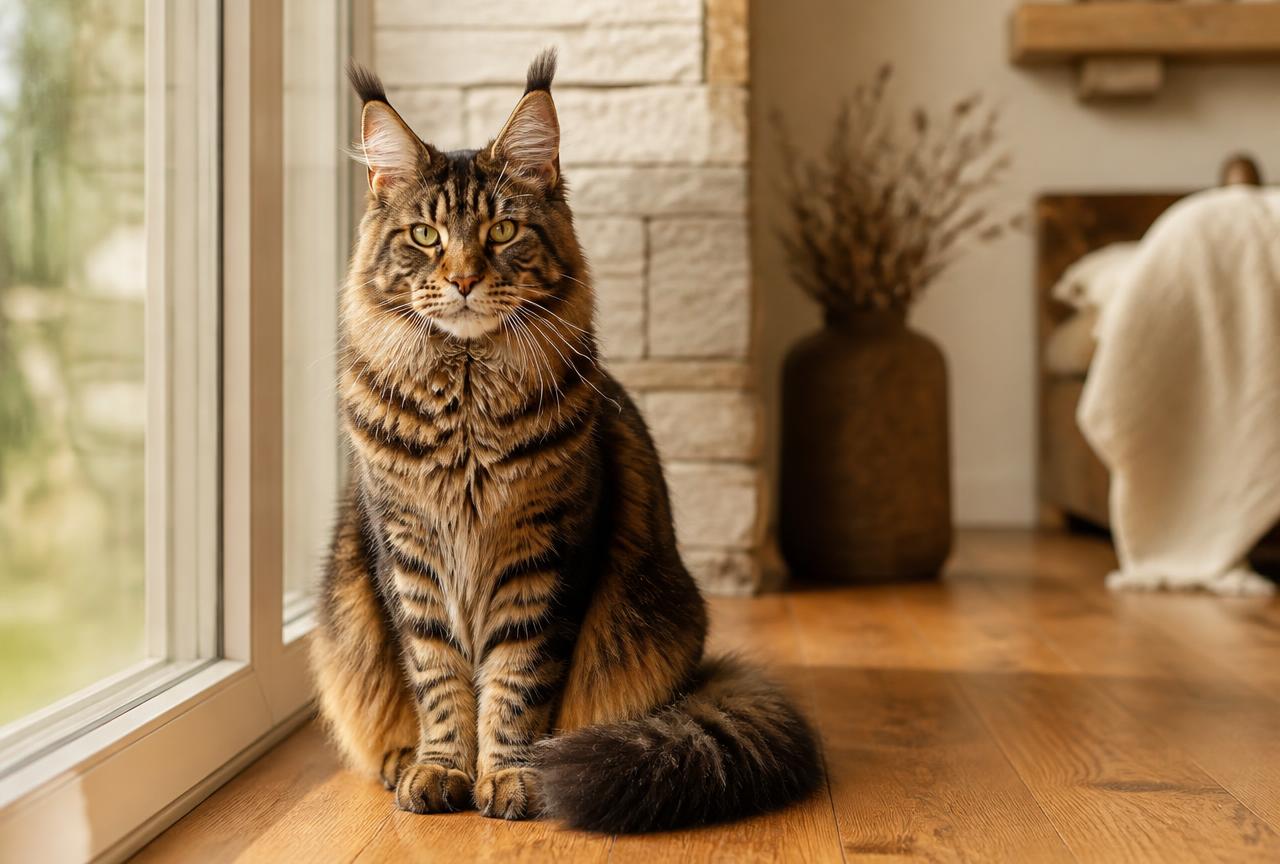
Longhaired breeds need the fur between the toes parted before you can see anything; a Persian or Maine Coon benefits from that fur being trimmed level with the pads at the same time. A Sphynx has no fur in the way but accumulates waxy debris around the claw folds, which should be wiped rather than dug out.
Senior cats are the group most often neglected. Claws thicken with age, scratching declines with stiffness, and a retracted claw can grow round into the pad.
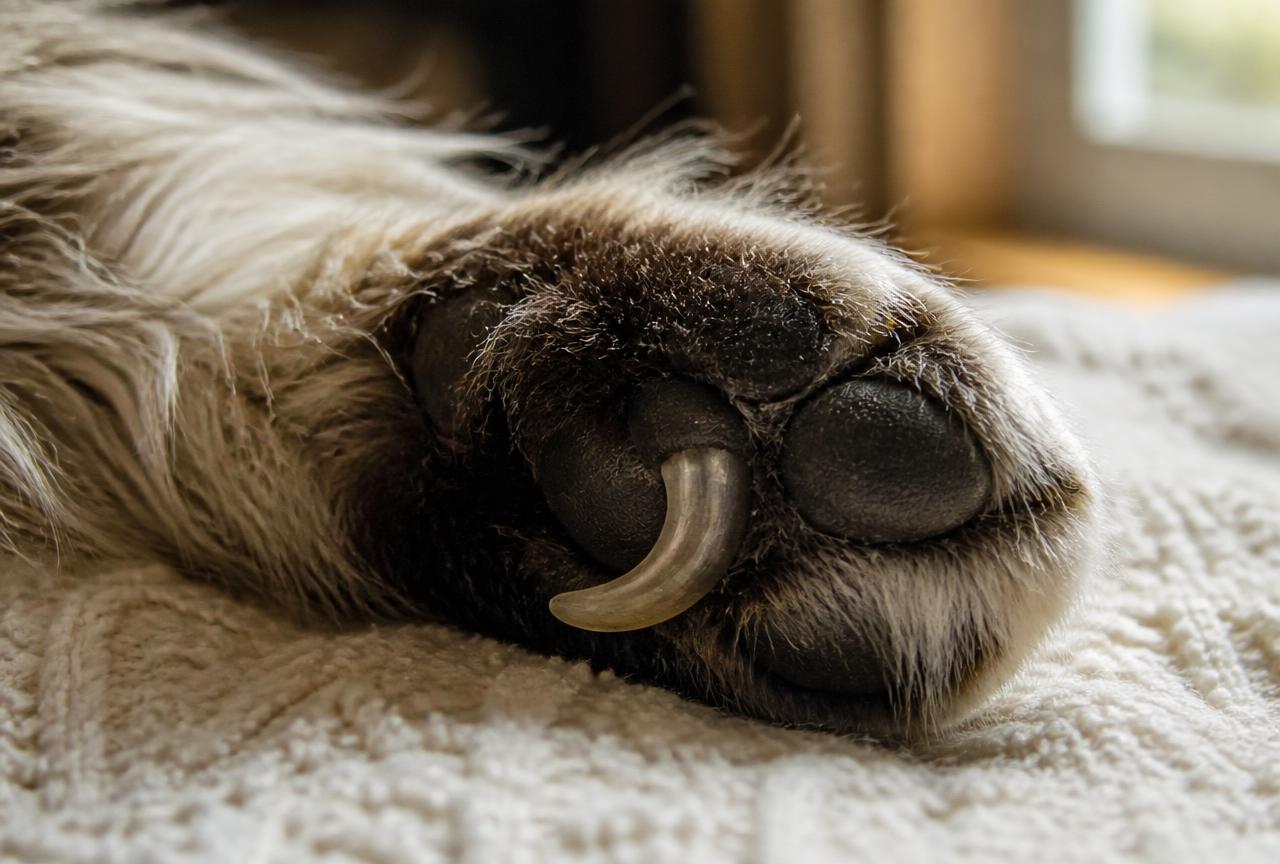
Check every claw on an older cat monthly, including the dewclaw on the inside of the front leg, which touches nothing and therefore never wears down. Our senior signals guide covers the other things that quietly change at that age.
The checklist
- Claws checked at least monthly, including dewclaws
- Only the clear tip removed, two millimetres clear of the quick
- Front claws routinely; back claws only when catching
- Styptic powder within reach before you start
- Food given during, not after the cat escapes
- Session ended while the cat is still calm
- A tall, stable scratching post available regardless of trimming
- Clippers sharp; blunt blades crush and split the claw
The verdict, by household
Indoor adult cat, calm. Every three weeks, front claws, one sitting, done in five minutes.
Kitten. Start in week one of ownership, before it matters. A cat handled as a kitten rarely objects as an adult.
Outdoor cat. Front claws only if they are snagging, and leave the back claws entirely. Grip and escape depend on them.
Senior or arthritic cat. Every two weeks, a few claws at a time, with the cat lying in its own bed rather than being lifted.
A cat that genuinely will not tolerate it. Two options, neither shameful: pay a veterinary nurse for a regular claw clinic, or work with a behaviourist on handling. Both cost less than a bite that goes septic.
A household with fragile skin or blood thinners. Trim more often, consider claw caps as a temporary measure, and give the cat more appropriate places to scratch rather than fewer.
When to call your vet
Book an appointment for a claw that has grown into the pad, for any swelling, discharge, heat or smell around a claw bed, for a claw that has split back to the base, or for repeated broken claws, which can indicate infection or, in older cats, something systemic.
Also call if your cat has suddenly become intolerant of having its paws touched when it previously did not mind. Pain elsewhere, particularly arthritic pain in the elbows and shoulders, shows up as objection to handling long before it shows up as limping.
Trim little, trim often, pay generously, and the whole thing becomes a footnote in the week rather than a fight.
Questions people actually ask
How often should I trim my cat's claws?
Every two to four weeks for most indoor adults, more often for kittens and seniors whose claws thicken and are worn down less. Outdoor cats need less frequent trimming and should usually keep their back claws intact. The schedule tool in this article sets an interval for your specific cat.
Where is the quick in a cat's claw?
It is the pink wedge running down the centre of the claw, easily visible in pale claws when the claw is extended against the light. It contains blood vessels and nerves. Cut only the clear hooked tip beyond it, leaving about two millimetres of margin. In dark claws, take very small amounts and stop when the cut surface looks chalky.
What if I cut the quick and it bleeds?
Stay calm and apply styptic powder, or press cornflour into the tip with firm pressure for a minute or two. Bleeding usually stops quickly. End the session immediately, offer food, and leave two or three days before trying again. It hurts, but a single nicked quick does no lasting damage.
My cat will not let me touch its paws. What now?
Stop trimming entirely for a week or two and pay for paw contact instead: one touch, one piece of food, then walk away. Build from a brush past the leg to holding the paw for two seconds. Most cats who hate trimming were rushed into it, and rebuilding the association takes days rather than months.
Should I trim the back claws too?
Only if they are catching or overgrown. Back claws wear down more and are essential for grip, climbing and getting away from trouble, so an outdoor cat should keep them. Indoor cats with sharp back claws that damage furniture or skin can have them tipped, front claws first.
Are claw caps a good alternative?
Soft vinyl caps glued over trimmed claws are not painful and can help in specific situations, such as a household member on blood thinners. They must be replaced as claws grow, they prevent normal scratching sensation, and some cats find them intolerable. Treat them as a short-term measure, not a routine.
Is declawing an option if trimming does not work?
No. Declawing removes the last bone of each toe, not just the claw, and is associated with lasting pain, altered gait and behavioural change. It is illegal in many countries and opposed by major veterinary bodies. The alternatives are trimming, appropriate scratching surfaces and, where needed, a behaviourist.
Sources
- Nail trimming and handling advice, International Cat Care
- Feline-friendly handling guidelines, AAFP and ISFM
- Declawing of domestic cats, position statement, AVMA
- Scratching behaviour and management, Cornell Feline Health Center
Breeds mentioned



Put it into practice
Read next
How to bathe a cat: when it is needed, and how to survive it
How to bathe a cat without bloodshed: when a bath is genuinely needed, the setup, the step-by-step, and when to call a groomer instead.