France, from cats of Burmese origin
Birman
Semi-long silk with no woolly undercoat, four white gloves and a temperament so even it barely registers as a personality trait. The long-haired cat for people who do not want a grooming project.
The ReMews. desk
Silk coat, white gloves, and the gentlest temperament in the long-haired class.
The short version
- The silky coat has no dense undercoat, so it mats far less than a Persian and needs two or three combing sessions a week rather than daily work.
- Temperament is the selling point: gentle, sociable, quiet, and unusually tolerant of children and other animals.
- A companion breed. It does not rage when left alone, but long empty days flatten it, consider two.
- Kittens are born pure white; points and the white gloves develop over the first weeks and months.
- Watch weight closely. Low energy plus a strong food interest makes this an easy breed to let get heavy.
- Health watch-list centres on heart muscle disease and kidney disease; ask a breeder about echocardiogram screening and the age the line reaches.
- Weight
- 3.5–6.5 kg
- Lifespan
- 13–16 yrs
- Coat
- Semi-long
- Size
- Medium
- Grown male
- 4.5–6.5 kg
- Grown female
- 3.5–5 kg
- Years to full size
- about 3
- One-off setup
- €260–560
Get one if…
- You want a gentle, sociable cat that follows the household around
- There are children or other pets
- You can comb two or three times a week
- You want a long coat without Persian-level maintenance
Think again if…
- The home is empty all day and this would be the only cat
- You want an athletic, high-energy cat
- You are unwilling to comb at all
- You need a genuinely low-allergen cat
Trait profile
Affection at nine and vocality at three describe the difference between this breed and its noisier relatives: a Birman wants to be with you and will not say so at volume. The middling grooming score is accurate, real work, but a fraction of a Persian''s. Low energy is the one to plan around, because it turns into weight faster than owners expect.
Space & setup. Content in a flat. Low to moderate energy, no great need for height, and happiest on the furniture with the household.
Allergies. Not hypoallergenic. Semi-long hair carries allergen around the home, though the absence of a dense undercoat means less flying fluff than a Persian or Maine Coon.
The review
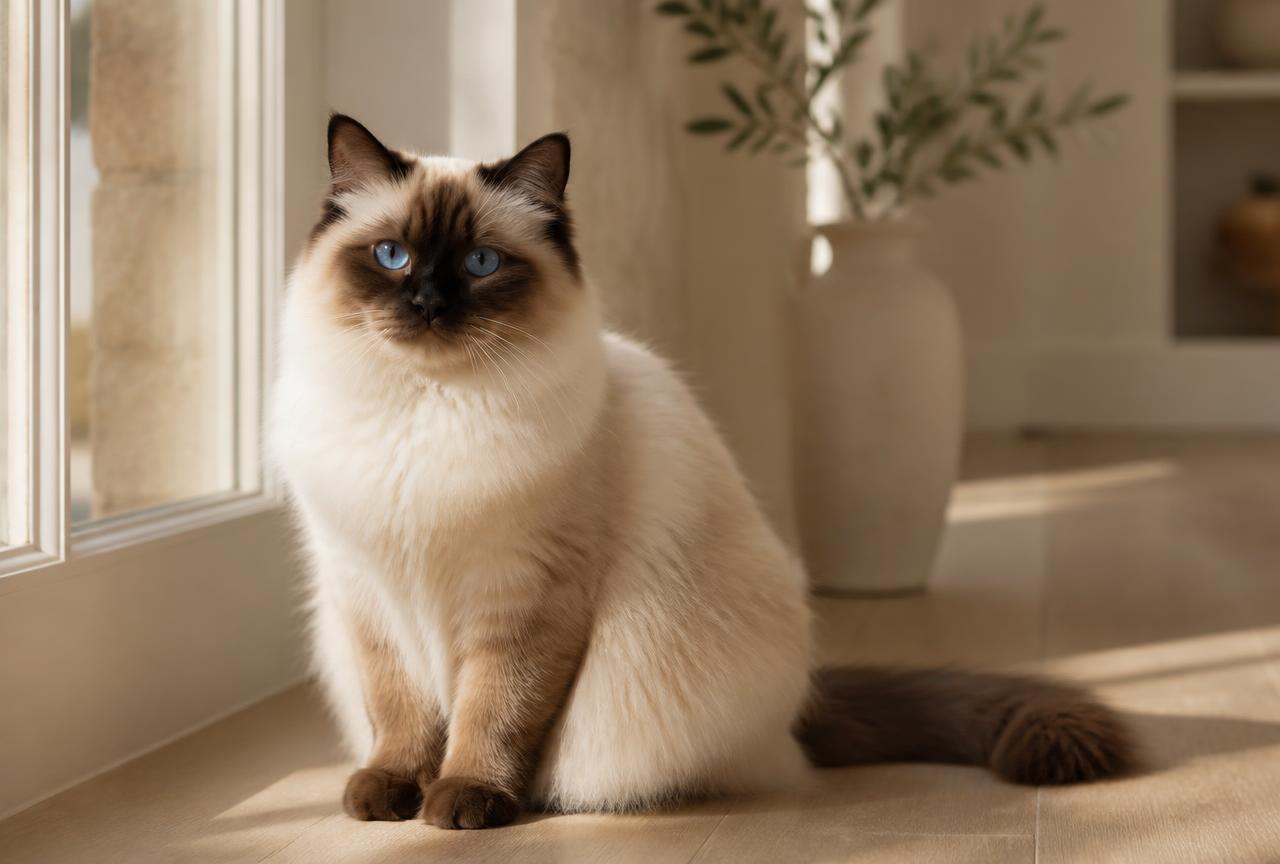
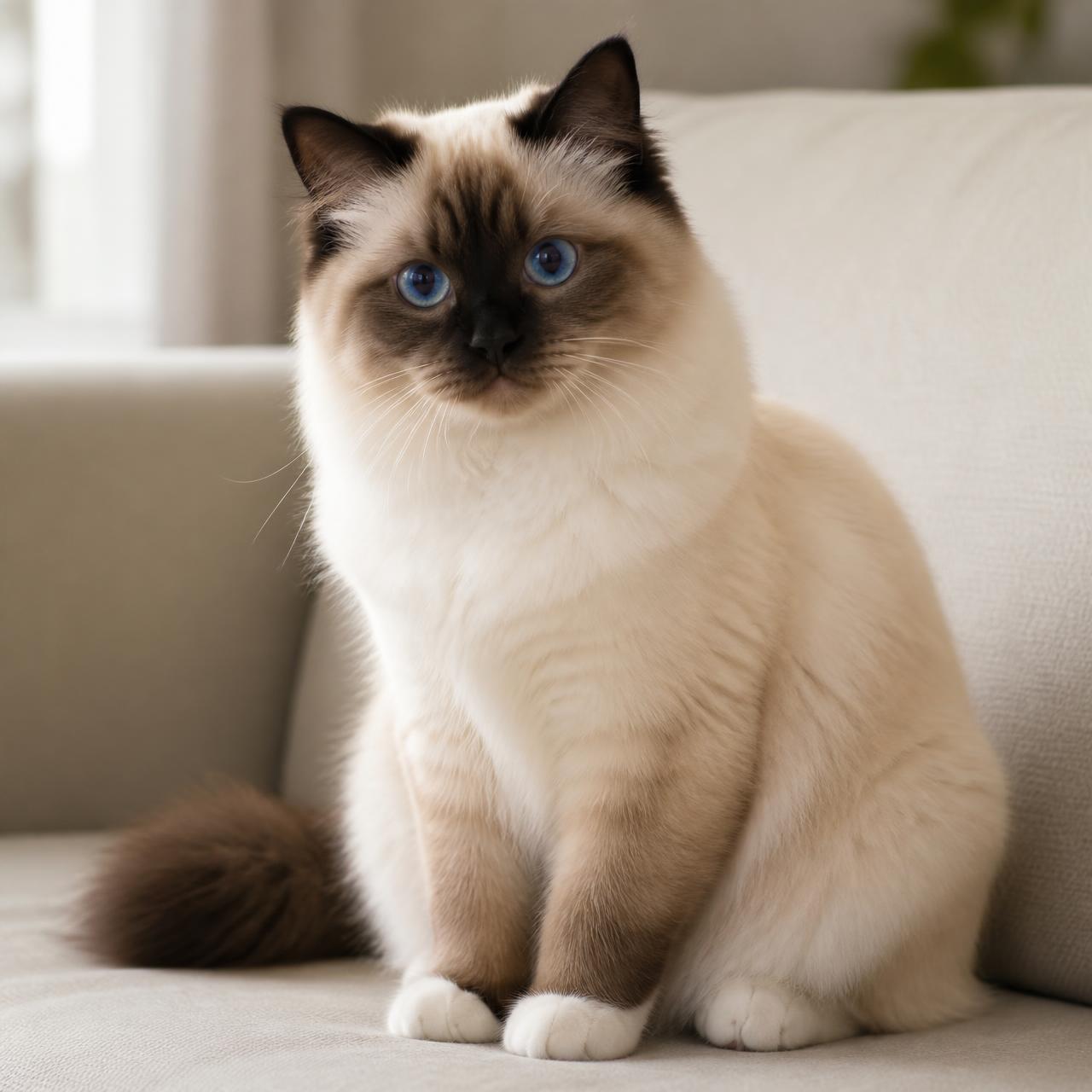
A semi-longhaired pointed cat with striking blue eyes and symmetrical white paws. Calm, sociable and undemanding, with a coat that carries no woolly undercoat and mats far less than a Persian.
If you want a long-haired cat and do not want the maintenance to become a hobby, the Birman is the answer, and it has been quietly the answer for decades. The coat is the reason. Unlike a Persian, which carries a dense woolly undercoat that felts against itself, or a Maine Coon, whose weatherproofing traps everything it walks past, the Birman has a single silky layer. It hangs rather than fluffs, it slides through a comb, and while it will still mat in the armpits and behind the ears if neglected for a month, two or three sessions a week keeps a cat in genuinely good order. That is a manageable commitment, and it buys you a spectacular-looking animal.
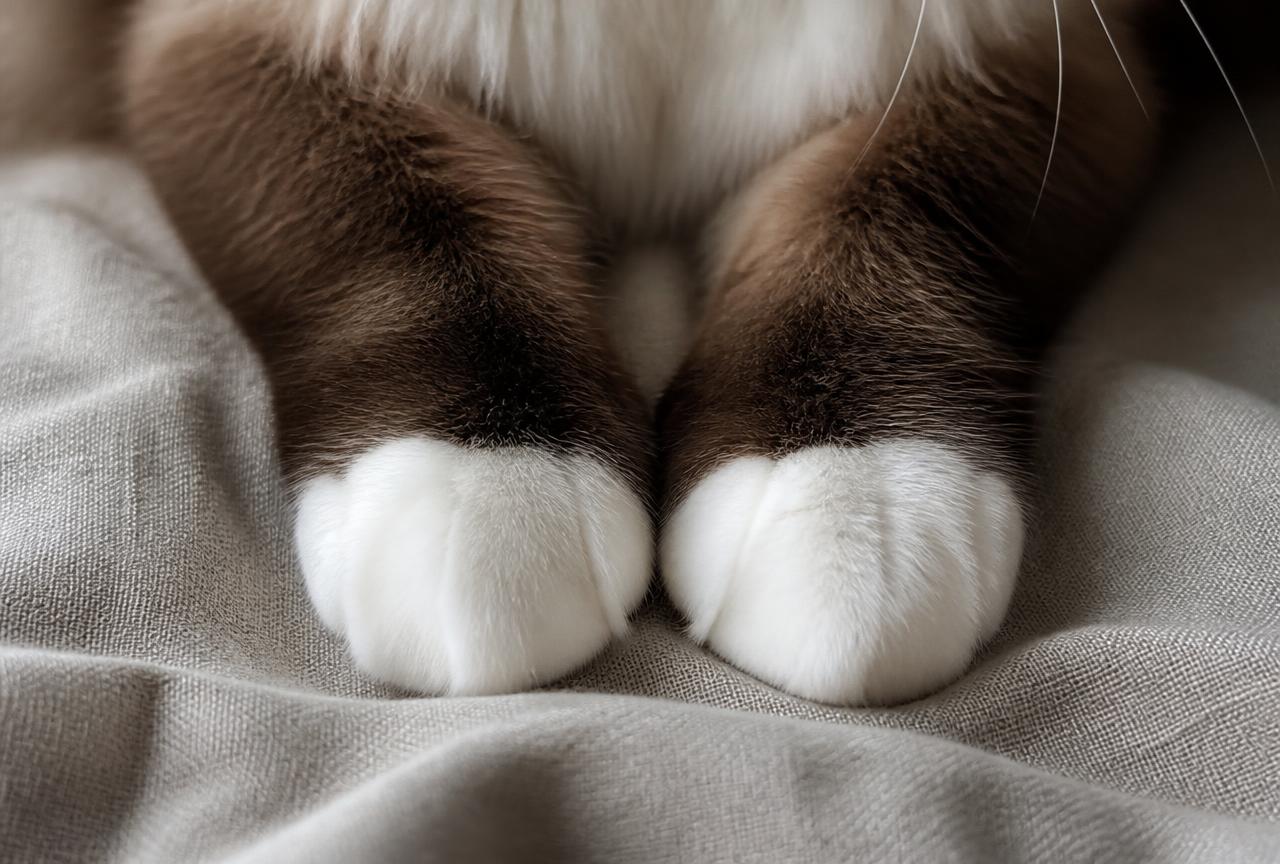
Then there are the gloves. Every Birman has four white paws, and in a good example they are symmetrical: neat white boots in front, and at the back, white that runs up the rear of the leg in a point known as the laces. This is a colour-restricted pattern, so the body is pale with darker points at the face, ears, legs and tail, in seal, blue, chocolate, lilac, red, cream and the tortie and tabby versions of each. Kittens arrive pure white. The points come in over the first weeks, and the pattern is not fully settled for a year or more, which is worth knowing before you judge a twelve-week-old kitten's markings.
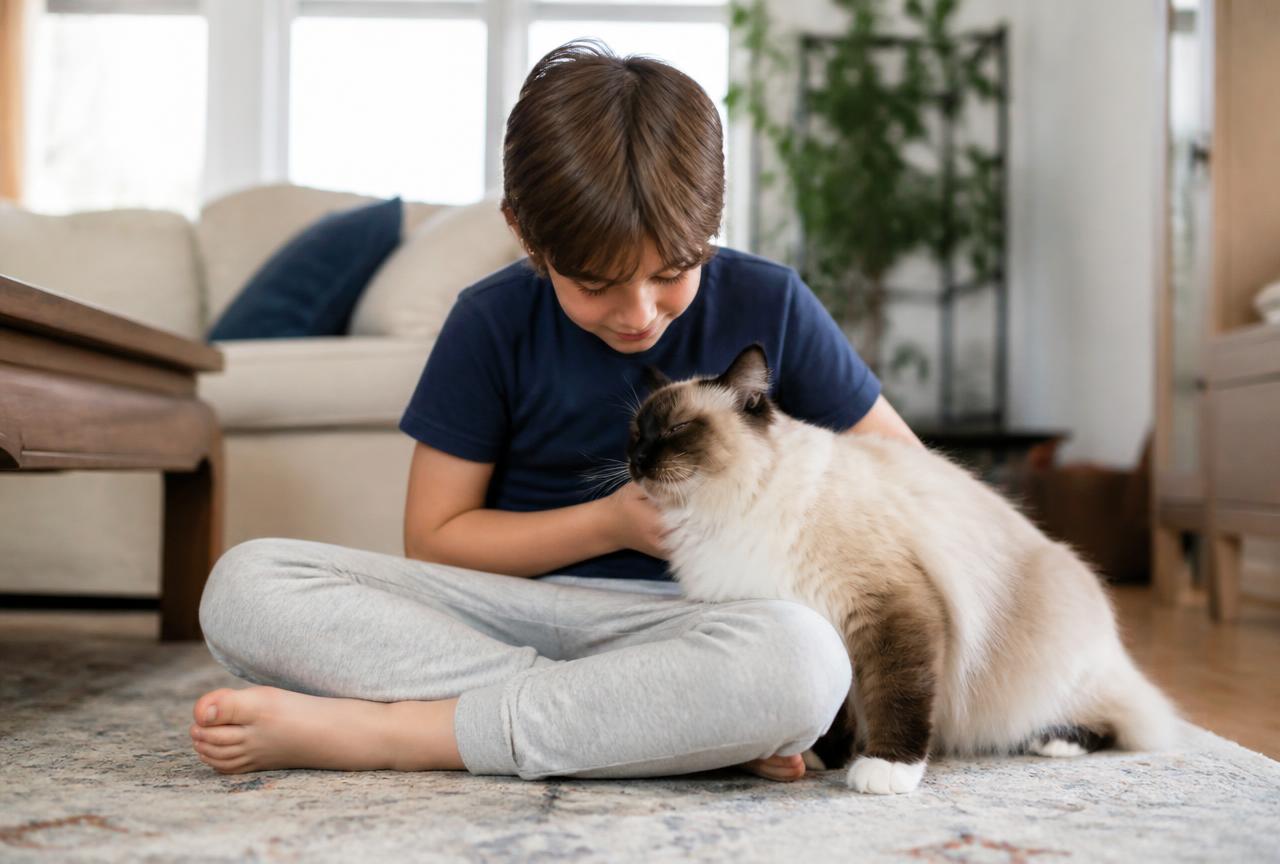
Temperament, though, is the real argument for this breed, and it is unusually consistent. The Birman is gentle in a way that is difficult to overstate. It moves calmly. It rarely escalates. It follows the household from room to room and settles wherever the people are, the lap if invited, the arm of the chair if not. Children who are old enough to be gentle get on with Birmans famously well, and multi-pet households usually find it slots in with far less negotiation than a territorial breed. Where a Siamese demands and an Oriental argues, a Birman simply arrives and stays.

It is not a silent cat, but the voice is small, soft and used sparingly, usually as a chirp of greeting or a mild reminder about dinner. Nor is it lazy: expect two short bursts of genuine play a day, an interest in anything that moves along the floor, and a moderate willingness to climb, though nothing like the vertical ambition of an Abyssinian. It is one of the few pedigree cats we would call restful.
The flip side of that calm is the thing most owners get wrong. A low-energy cat with a good appetite gains weight almost invisibly under a semi-long coat, and by the time the shape looks wrong the cat is carrying a couple of kilograms it should not. Weigh monthly, feel for ribs rather than looking for them, measure portions rather than free-feeding, and keep two short play sessions in the day even when the cat is clearly happy to skip them. Everything downstream, joints, diabetes risk, the ability to groom its own back, depends on getting this right.
On company, the Birman occupies a middle position that suits a lot of households. It is not a Siamese-grade attachment case that suffers acutely when the flat empties, but it is emphatically a companion animal that does less well on eight-hour solitary days. It waits rather than protests, and a cat that waits quietly for years is easy to under-serve. Where the household is out all day, we would take two, or arrange for someone to break the day up.
Health is reasonable for a pedigree breed, with two entries that matter. Hypertrophic cardiomyopathy appears here as in most pedigree populations, and breeding cats should be screened by echocardiogram; ask for the dates. Chronic kidney disease has been reported at higher rates in the breed than in cats generally, which makes annual blood and urine screening from middle age a sensible default rather than an optional extra. Beyond that, expect ordinary long-coat housekeeping, the occasional hairball, dental care that must not slip, and a check for mats behind the ears and under the front legs each week.
Where does it land? For a family, a first-time owner willing to comb, an older owner who wants company without demands, or a home that already has animals in it, the Birman is one of the easiest recommendations in this index. It asks for very little beyond your presence and a comb, and it gives back a strikingly beautiful, genuinely gentle cat that is content to be part of the household rather than the centre of it.
The calm middle ground between Ragdoll and Persian: silky rather than woolly, affectionate without being needy, and remarkably easy to live with.
Grooming, realistically
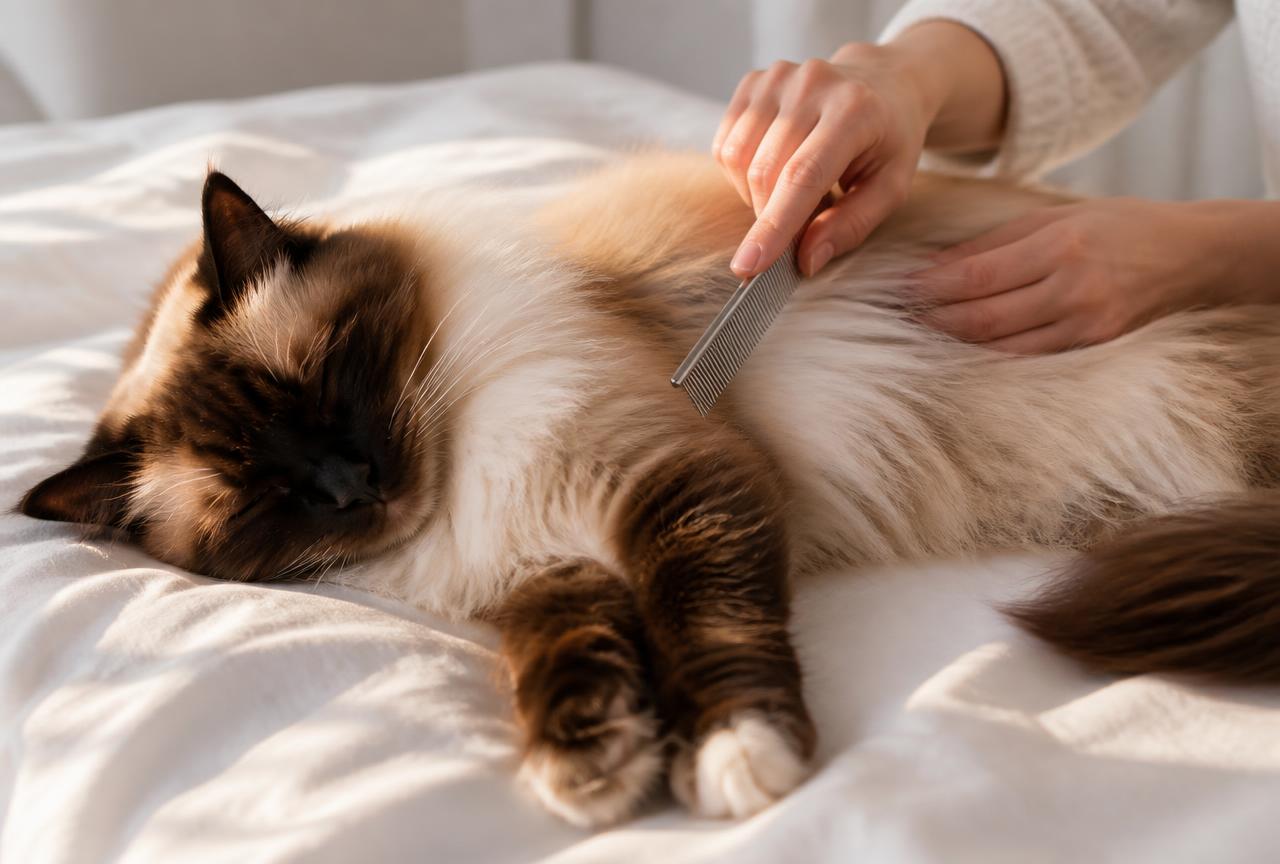
- 1Comb the whole coat with a fine metal comb two or three times a week, working down to the skin rather than skimming the surface.
- 2Check the four friction points every session, behind the ears, under the front legs, the ruff and the trousers, where mats start.
- 3Increase to daily during the spring and autumn moults, when the coat drops heavily for two to three weeks.
- 4Trim nails every two to three weeks and check the white gloves for staining and grit.
- 5Brush teeth several times a week; dental disease is common and easy to overlook in a calm cat that never complains.
- 6Weigh monthly and record it, under this coat, weight gain is invisible until it is substantial.
What you actually need
- Fine-toothed metal comb
- Wide-toothed comb for the ruff and trousers
- Mat splitter, for emergencies only
- Nail clippers
- Cat toothbrush and enzymatic paste
- Kitchen or pet scales
Kitten to adult
| Age | Male | Female | What is happening |
|---|---|---|---|
| Birth | Born pure white. Points and gloves have not appeared yet. | ||
| 8 weeks | Points visible on the ears and mask; gloves beginning to define. Coat is still short and fluffy. | ||
| 6 months | Adult coat starting to come through. Begin the combing routine now so the cat accepts it for life. | ||
| 12 months | Most of the frame is there; the coat and ruff are not. Switch to adult food and set a measured portion. | ||
| 2–3 years | Full coat and colour. Males considerably heavier than females; anything beyond the range is usually weight, not size. |
Ranges are typical, not targets. Judge condition by ribs and waist, and check with the ideal weight checker.
What to ask a breeder
- Have both parents been screened by echocardiogram for hypertrophic cardiomyopathy, and when?
- Has kidney disease appeared in your line, and at what age?
- How old are the oldest cats you have bred, and what did they die of?
- Are kittens raised underfoot in the house, and are they used to combing already?
- What does the coat look like on the parents at three years old?
- Which vaccinations, worming and health checks are done before the kitten leaves?
- Do you recommend homing two together for a household that is out all day?
Health watch-list
What to ask a breeder about, and what to watch for over a lifetime. This is orientation, not veterinary advice, anything you notice belongs in front of a vet.
Hypertrophic cardiomyopathy
UncommonThickening of the heart muscle, seen across most pedigree populations. Breeding cats should be screened by echocardiogram rather than by listening to the chest. Fast breathing at rest or sudden hind-leg weakness is an emergency.
Chronic kidney disease
Reported above averageKidney disease has been reported more frequently in Birmans than in the general cat population. Increased drinking and gradual weight loss are the early signs; annual blood and urine screening from middle age is the sensible default.
Weight gain
CommonA calm cat with a good appetite and a coat that hides the evidence. Measure portions, weigh monthly and keep two short play sessions in the day. This is the most preventable problem on the list.
Coat matting
OccasionalFar less than a Persian, but the armpits, behind the ears and the trousers still felt if combing lapses. Work down to the skin rather than over the surface, and never cut a mat out with scissors.
Hairballs
OccasionalA long-coated cat swallows hair, particularly during the moults. Regular combing is the main prevention. Repeated vomiting, especially with lethargy or a drop in appetite, is not a hairball problem and needs investigating.
Dental disease
CommonPeriodontal disease and tooth resorption are widespread in cats and quietly borne by a placid breed. Brush several times a week and ask for an oral check at every visit.
What it costs to keep one
Realistic running cost
€82 / month
About €984 a year, or roughly €14,760 across a 15-year life, before purchase price, neutering and one-off vet events.
Before the cat arrives. Budget roughly €260–560 for trays, carrier, posts, bowls, bedding and grooming kit sized for this breed. Figures throughout are indicative and vary a good deal between countries.
Interactive · built for this breed
Is a Birman right for your home?
Five questions covering the things that actually decide it: company, combing and what you want a cat to do all day.
Verdict
An unusually easy match
Company, a comb and a lap. That is essentially the whole specification, and you have all three. Few breeds settle into a home this smoothly.
Keep the weight honest with the ideal weight tool, or compare with the closest alternatives in the matchmaker.
The verdict, by household
Flat dweller
Excellent
Family with young children
Excellent
First-time owner
Very good
Multi-cat home
Excellent
Allergy-conscious
Poor
Older or quieter owner
Excellent
When to call your vet
- Faster or laboured breathing at rest, or open-mouthed breathing after mild activity
- Sudden hind-leg weakness or crying out, an emergency associated with heart disease
- Drinking noticeably more, or larger clumps in the tray
- Gradual weight loss in an older cat, or a sudden gain under the coat
- Mats forming faster than usual, or a cat that has stopped grooming its own back
- Repeated hairball vomiting, or any vomiting with lethargy or loss of appetite
- Bad breath, drooling, or eating on one side of the mouth
Nothing here is a diagnosis. Breathing difficulty, sudden hind-leg weakness and straining to urinate are emergencies, go the same day.
Birman vs the closest alternatives
| Breed | Weight | Energy | Grooming | € / month |
|---|---|---|---|---|
| Birman | 3.5–6.5 kg | 4/10 | 5/10 | €82 |
| Selkirk Rex | 3.5–7 kg | 5/10 | 7/10 | €96 |
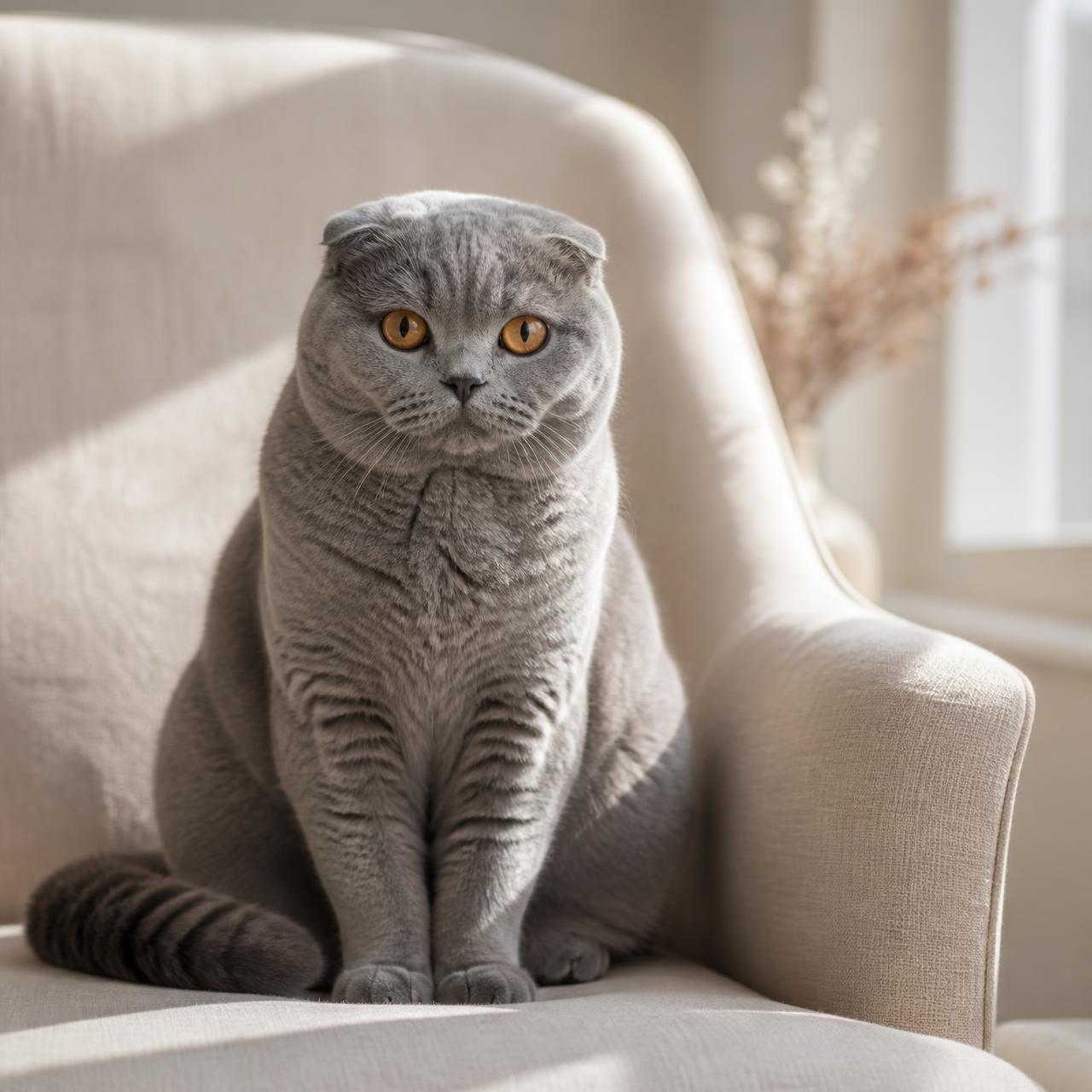
| Scottish Fold | 3–6 kg | 5/10 | 4/10 | €88 |
| Ragdoll | 4.5–9 kg | 4/10 | 7/10 | €90 |
Birman questions, answered
How is a Birman different from a Ragdoll?
Size and coat, mostly. A Ragdoll is bigger and heavier with a plusher coat; a Birman is medium-sized with a finer, silkier one and always has four white gloves. Temperaments are similar, both gentle and people-oriented, but the Birman tends to be slightly more active and less inclined to go limp when picked up.
Is a Birman easier to groom than a Persian?
Considerably. The Birman coat is a single silky layer with no dense woolly undercoat, so it slides through a comb instead of felting against itself. Two or three sessions a week keeps a Birman in good order, against the daily work a Persian genuinely requires.
Why are Birman kittens born white?
Because the pointed pattern is temperature-dependent. The enzyme that produces the darker pigment works only in the cooler extremities, and in the warmth of the womb nothing darkens. Points appear over the first weeks and continue developing for a year or more, so a young kitten's markings are not the final picture.
Are Birmans good with children and dogs?
Yes, unusually so. They are among the most tolerant breeds we cover and rarely escalate a situation. The caution is the same as for any placid cat: it will absorb rough handling rather than remove itself, so teach gentle hands and provide a quiet high retreat.
Can a Birman be left alone all day?
It copes better than a Siamese or Oriental, but it is still a companion breed and a long empty day is a waste of it. Because it waits quietly rather than protesting, the problem is easy to miss. If the house is empty eight hours a day, home two together.
Are Birmans hypoallergenic?
No. The semi-long coat carries and distributes allergen around the home, and Fel d 1 output is ordinary. There is slightly less airborne fluff than from a dense-undercoated breed, but nobody who reacts to cats should count on that difference.
What does a Birman cost to keep?
Monthly costs run a little above a shorthair, mainly food, litter, insurance and modest grooming supplies. Setting up a home runs roughly EUR 260–560. The variable worth budgeting for is veterinary screening from middle age, given the breed''s kidney and heart watch-items.