Why do cats purr, and when purring is not contentment
Purring is not a smile. It is a low-cost signal cats use for comfort, for asking, and for holding themselves together when things are going badly.
Nadia Ferreira
Feline behaviour and welfare writer, ten years in rescue and clinic settings
Published 4 September 2026
Written against ISFM and AAFP feline behaviour guidance
The short version
- Purring is produced by rapid neural signalling to the laryngeal muscles, and unlike a meow it runs on both the in-breath and the out-breath.
- Kittens purr from a few days old, before their eyes open, which tells you the original function was contact rather than pleasure.
- The solicitation purr carries a high-frequency cry inside it that humans find hard to ignore; owners rate it as urgent without knowing why.
- Cats also purr while frightened, injured or dying, so the purr is better read as self-regulation than as happiness.
- Context plus posture plus any second sound is what gives a purr meaning. On its own it tells you almost nothing.
- The healing-frequency claim is an interesting hypothesis about low-frequency vibration, not an established clinical fact.
Purring is the most misread sound in the house. It is treated as a smile, as proof that everything is fine, as the cat's way of saying thank you. It is none of those things reliably, and treating it that way has consequences, because the cat that purrs steadily in the carrier at the vet is not telling you it is relaxed.
The sound is unusual in mammals. It runs continuously on both the in-breath and the out-breath, which no vocal call does, and it starts within days of birth. That combination points to something older and more functional than pleasure.
What follows is what is actually known, what is plausible, and how to read a purr in your own kitchen without over-interpreting it.
How the sound is made
Purring is muscular. Signals from the brain drive the muscles of the larynx to open and close the glottis twenty to thirty times a second, and air passing through the gap is chopped into the low buzz we hear. Because it is generated by the airway rather than by a call, the cat can keep it running through the whole breathing cycle.
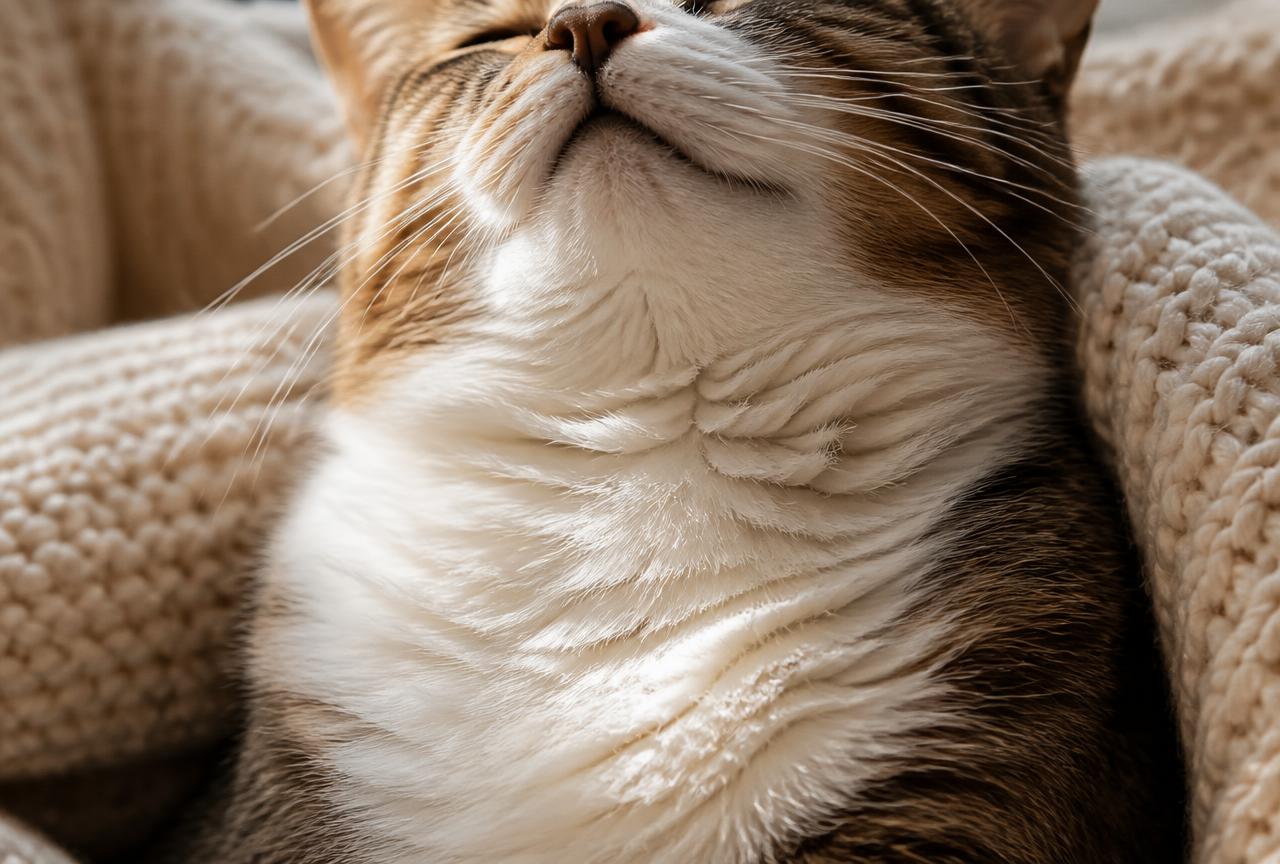
That mechanism costs very little energy, which matters. A cat can purr while exhausted, while injured, and while giving birth. A meow cannot be sustained that way.
Four things purring is for
Grouping the evidence, purring appears in four contexts, and they overlap.
| Context | What the purr is doing | Body language you would expect |
|---|---|---|
| --- | --- | --- |
| Kitten and queen contact | Location and reassurance signal | Nursing, close contact, kneading |
| Social greeting | Low-cost signal of non-threat | Upright tail, chirrups, rubbing |
| Solicitation | Asking, with an urgency component | Standing, staring, moving to the bowl |
| Self-soothing | Regulation under stress or pain | Crouched, still, hiding, wide pupils |
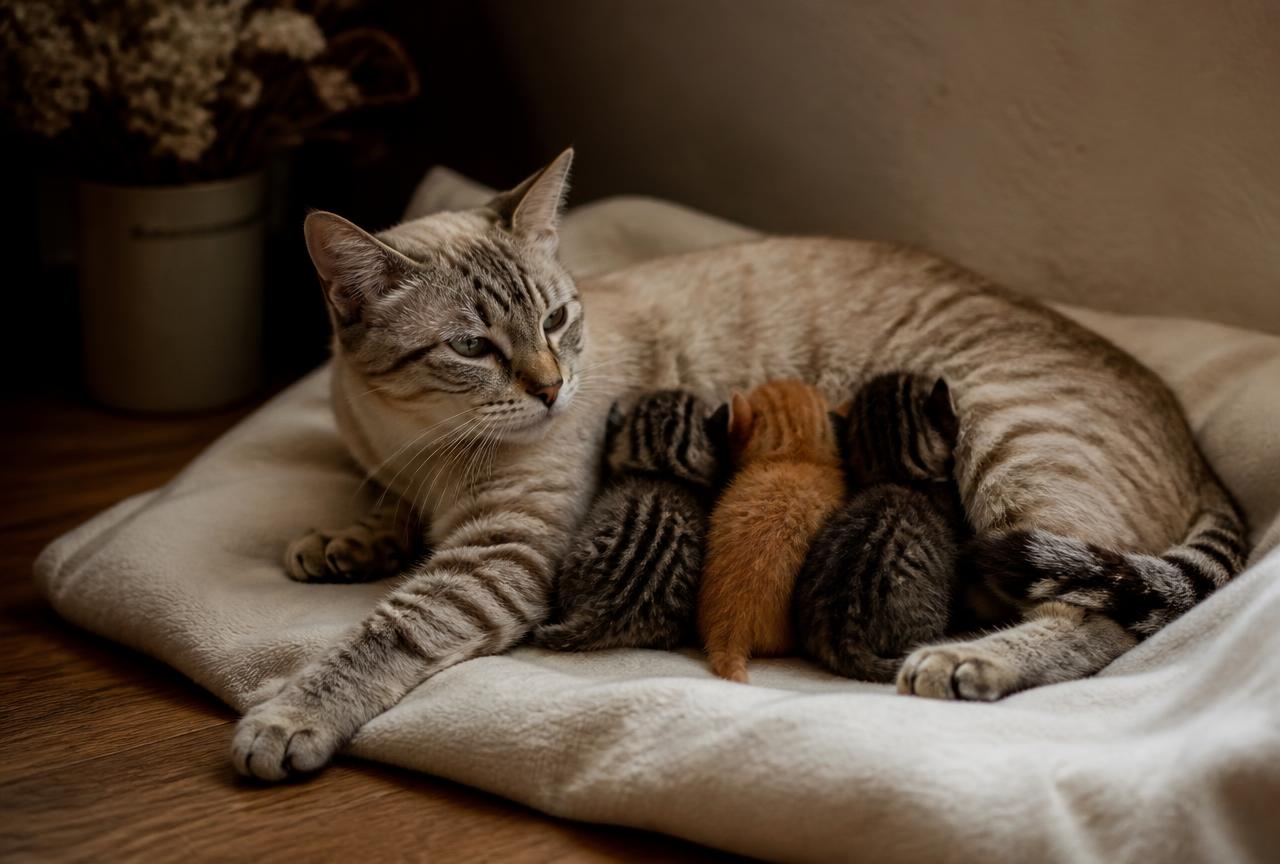
That first context is the origin story. A newborn kitten is blind, deaf for the first week, and needs to find a warm body. A continuous vibration is a good beacon, and it does not attract predators the way a call does.
The purr that has a cry inside it
The most interesting finding in this area concerns the purr cats use when they want something. Acoustic analysis showed a high-frequency peak embedded in the low purr, sitting in the same range as an infant cry. Human listeners rated these purrs as more urgent and less pleasant than ordinary ones, including listeners who had never lived with a cat.
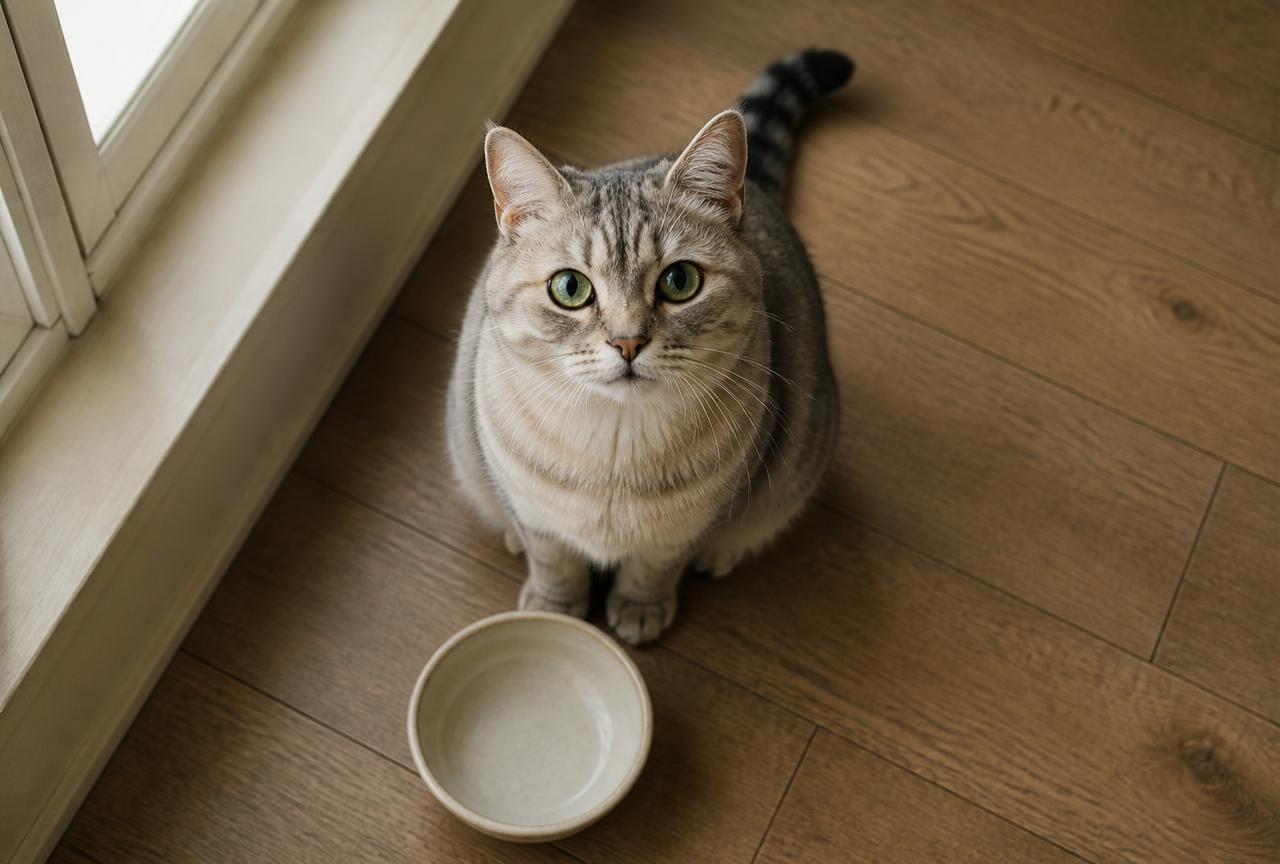
Cats did not evolve this at us. They found a frequency we were already built to respond to, and the ones who used it got fed.
It is most common in cats who live with a single person, which fits: the behaviour is shaped by whether it works. If your cat has one, you have trained it, gradually and without noticing, every time you got up.
When purring is not good news
This is the part worth carrying around. Cats purr when they are frightened, when they are injured, when they are being examined, and in some cases when they are dying. In those settings the purr looks like self-regulation, the feline equivalent of controlled breathing.
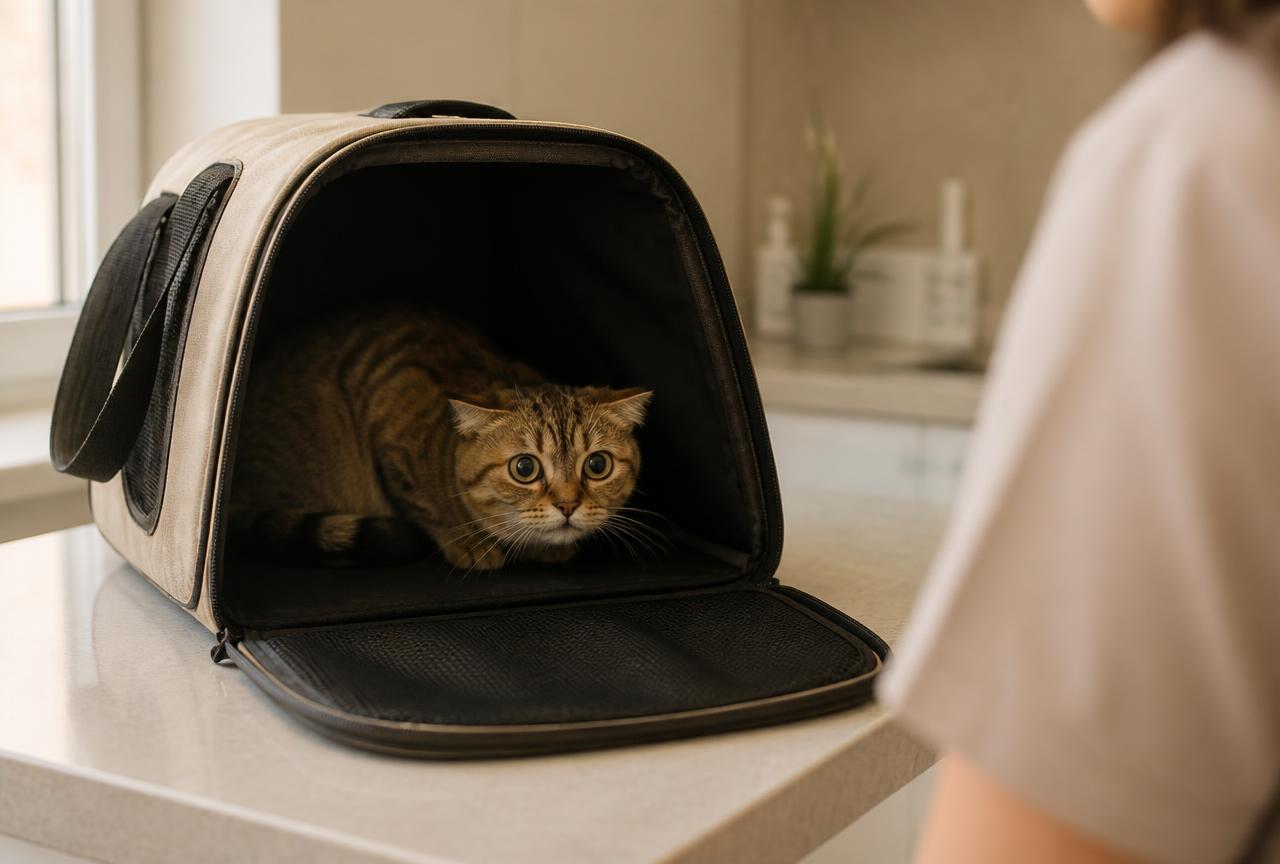
The practical rule is that a purr is only readable in combination with three other things: where it happens, what the body is doing, and what other sounds accompany it. A purr with a low growl underneath it is a warning. A purr with fast, open-mouthed breathing is an emergency. A purr that only appears when you touch one particular flank is a pain report.
Use the box below to put the three together for a purr you have actually heard.
Interactive · built for this article
Purr context reader
A purr means almost nothing on its own. Add where it happened, what the body was doing and what else you heard, and it starts to mean something.
Most likely reading
Contentment, most likely
In this setting, the classic contentment purr.
An interpretation aid, not a diagnosis. If your cat is also talking more than usual, the vocal decoder covers the rest of the repertoire.
Reading your own cat
Run through this list next time. It takes ten seconds and it settles most questions.
- Is the body loose and spread out, or compact and tucked?
- Are the pupils normal for the light in the room, or wide?
- Are the ears forward, or rotated back and low?
- Is the tail still and soft, or flicking at the tip?
- Did the purr start when you appeared, or when you touched a specific spot?
- Is there a second sound woven in: a chirrup, a meow, a growl?
- Is the breathing quiet and through the nose?
- Is the cat approaching you, or staying where it is?
Loose, quiet, approaching, nothing woven in: contentment. Compact, still, hiding, growl or fast breathing: something else entirely.
Breed and individual differences
Volume varies enormously and means nothing about mood. Some cats produce a purr you can hear from the next room, and others produce one you only ever feel through your hand.
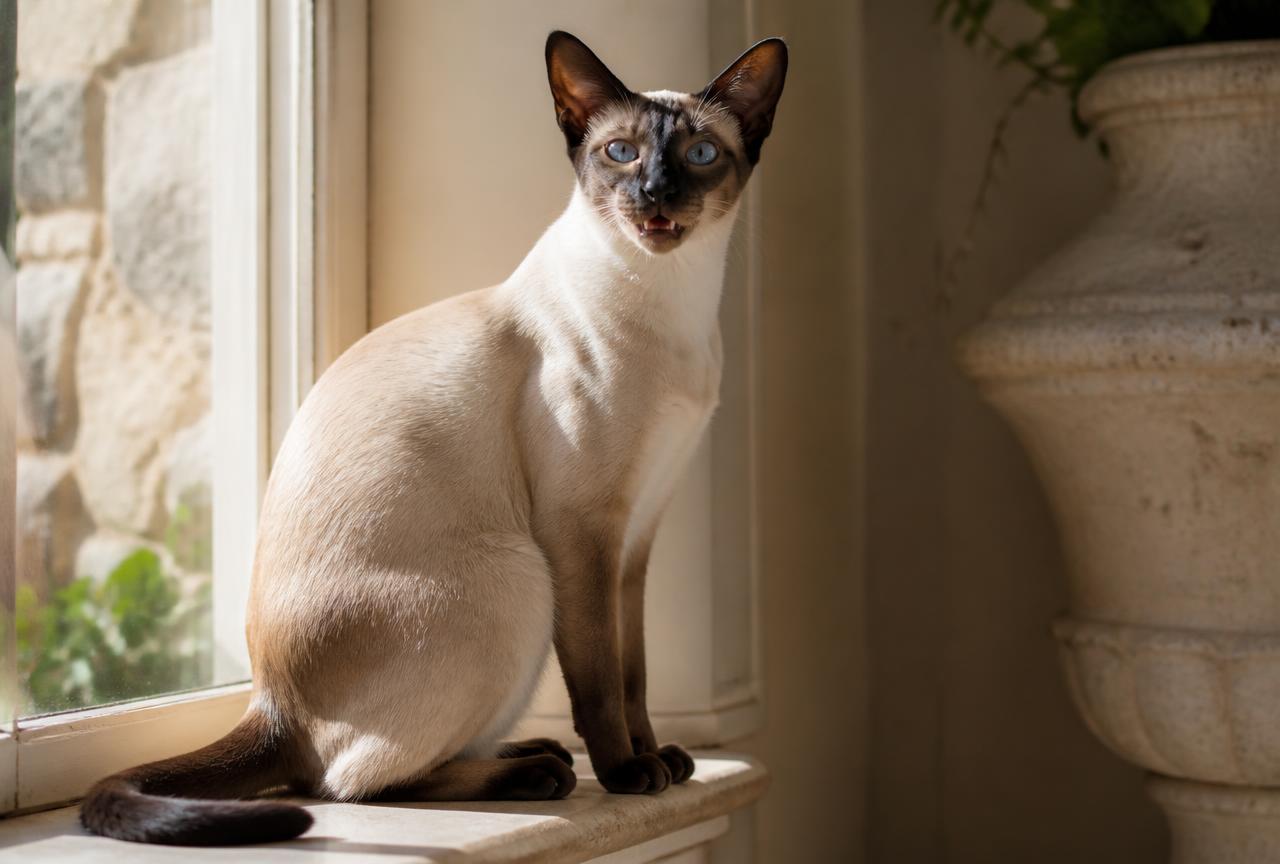
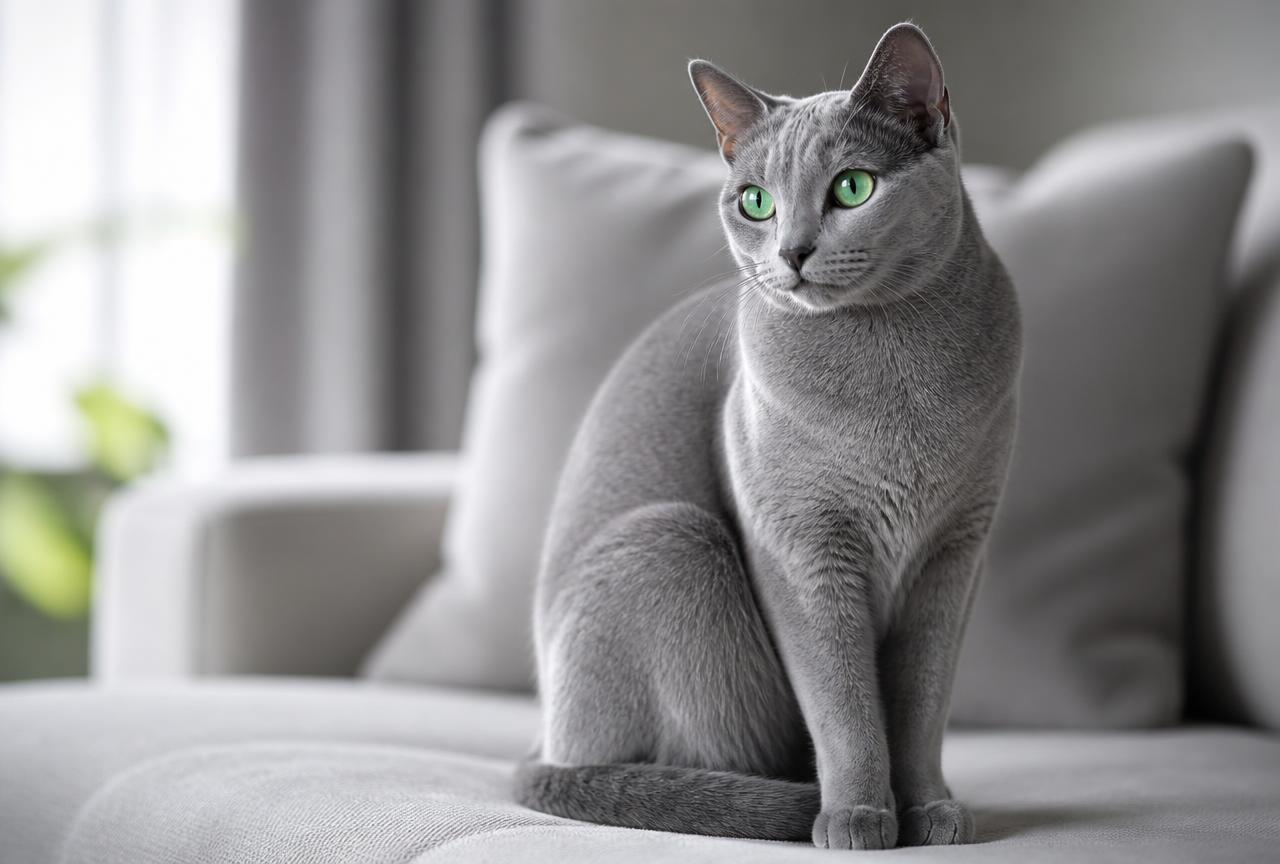
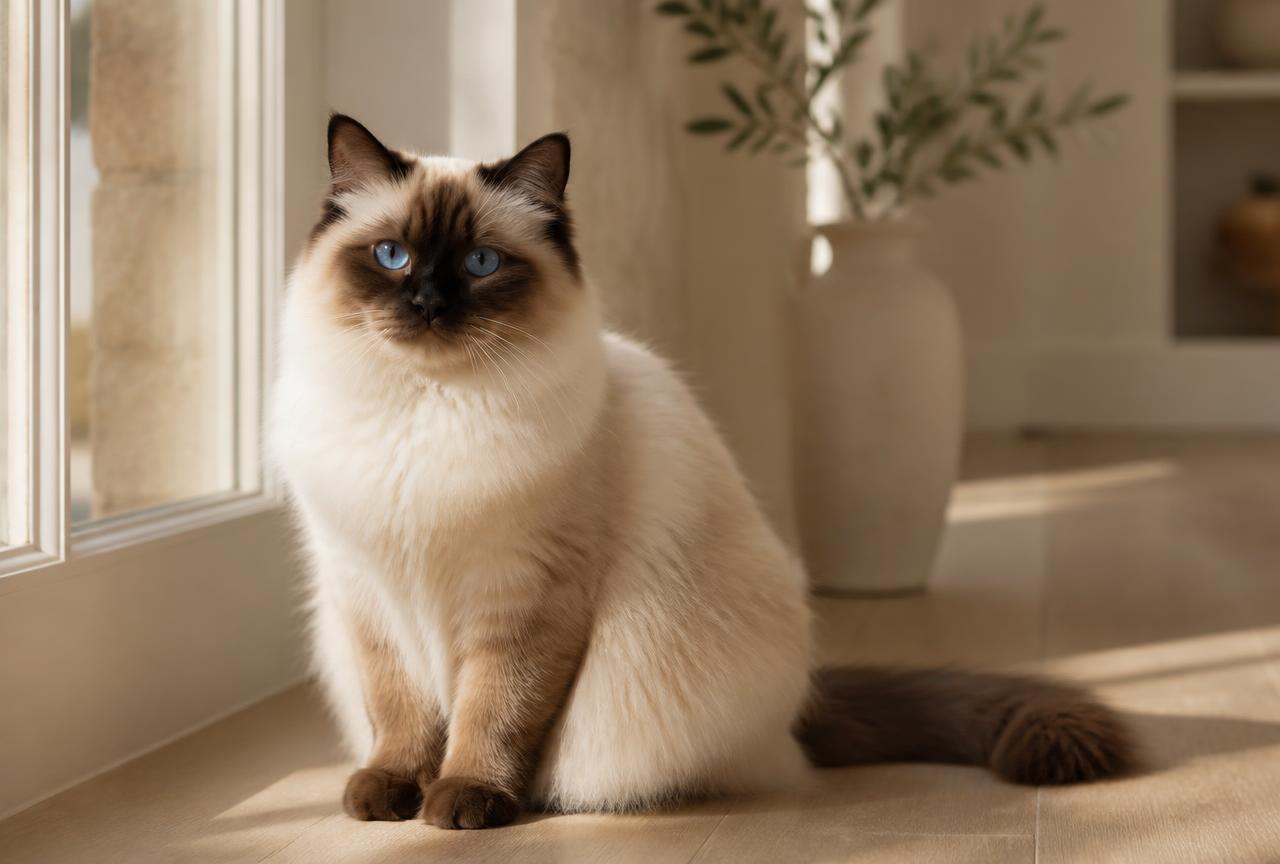
Siamese and other oriental types tend to combine purring with a large vocal repertoire, so the purr arrives with commentary; our guide to the Siamese voice covers the rest of what they are saying. Russian Blues are often quiet purrers who reserve it for a chosen person. Ragdolls purr readily on contact, which is part of the breed's reputation for tolerating handling. None of that changes the interpretation rules, only the volume.
The verdict, by household
A new cat still settling in. Expect the purr to appear late. It is a signal of security, and security takes a fortnight or more. Do not chase it.
A cat that purrs constantly at the vet. Tell the vet. Owners often present this as evidence the cat is fine, and a clinician will read it as the opposite.
A cat with a solicitation purr at five in the morning. The behaviour is being paid. Move the feeding to a fixed schedule, use a timed feeder for the early portion, and get the daily amount right with the portion calculator so hunger is not genuinely driving it.
An older cat that has started purring alone at night. Worth a check. In older cats, night vocalising and self-soothing can accompany high blood pressure, hyperthyroidism or cognitive change; the senior signals guide lists what else to look for.
A cat that never purrs. Perfectly normal for some individuals, provided everything else about the cat is unchanged. Assess the whole animal, not the soundtrack.
When to call your vet
Call the same day for purring with open-mouth or laboured breathing, purring alongside collapse, or purring with a low continuous growl and a defensive posture. Book within the week for a purr that appears reliably when a specific body part is handled, for a cat that has started purring while hiding, or for a purr that has newly changed in sound or disappeared entirely.
Purring is a signal, not a diagnosis. Read it with the body and the setting attached, and it becomes one of the more useful things your cat tells you.
Questions people actually ask
Why do cats purr?
Purring is generated by rapid, rhythmic signals to the muscles of the larynx, which interrupt airflow around twenty to thirty times a second. It appears in contact with kittens, in social greeting, when asking for something, and when a cat is under strain. The common thread is regulation and signalling, not pleasure specifically.
Do cats purr when they are happy?
Often, yes, but happiness is one of several causes and not the defining one. A relaxed body, slow blinking and loose posture alongside the purr is what marks contentment. The same sound from a crouched, wide-eyed cat in a carrier means the opposite.
Can a cat purr when in pain?
Yes, and this is the part most owners find surprising. Cats purr while injured, during difficult labour, at the vet, and sometimes in their final hours. Purring appears to be self-soothing. If a cat purrs only when a specific area is touched, treat that as a pain signal and have it examined.
What is a solicitation purr?
A purr with a high-frequency component embedded in it, acoustically close to an infant cry. Research found people rate it as more urgent and less pleasant than an ordinary purr, even when they cannot say why. Cats who live alone with one person use it most, because it works.
Why do cats knead while purring?
Kneading is a nursing behaviour retained into adulthood. The paw movement stimulated milk let-down as a kitten, and the purr accompanied feeding. Together they usually indicate a cat in a settled, dependent state. It is a compliment, if an occasionally painful one.
Is the purr healing frequency real?
The purr sits in a low frequency range that has been associated with bone and tissue effects in laboratory settings, which makes the hypothesis interesting. There is no clinical evidence that a purring cat heals itself, or you, in any measurable way. Treat it as an open question rather than a fact.
Why has my cat stopped purring?
Some cats simply purr rarely, and some purr so quietly you feel it rather than hear it. A cat that used to purr and no longer does, especially alongside hiding, appetite change or reduced grooming, is worth a check. Changes in the throat, mouth or breathing can also make purring uncomfortable.
Sources
- Cat communication and behaviour, International Cat Care
- Recognising feline pain, International Cat Care
- Feline behaviour guidelines, AAFP
- The cry embedded within the purr, Current Biology, McComb et al.
- Understanding cat behaviour, Cornell Feline Health Center
Breeds mentioned
Put it into practice
Read next
Why do cats sleep so much? Normal hours, odd habits and the red flags
Why do cats sleep so much? What 12–16 hours a day really means, the light doze vs deep sleep, and the changes that actually matter.