The vertical apartment: enrichment for cats who never go outside
An indoor cat is not a smaller cat. It is a predator with a nine-square-metre territory, and almost every behaviour problem in a flat traces back to that arithmetic.
Nadia Ferreira
Feline behaviour writer, ReMews. desk
Published 1 August 2026 · Updated 4 September 2026
Written against ISFM environmental needs guidance
The short version
- Cats measure territory in surfaces, not floor area. Adding height can double a flat without moving a wall.
- Two wand-toy sessions of ten to fifteen minutes, ending in food, prevent most of what people call boredom or aggression.
- Feed part of the daily ration from puzzles or scattered. A cat that hunts its breakfast is a calmer cat by lunchtime.
- One scratching post per cat over 80 cm tall, plus one horizontal pad, placed where the cat already scratches.
- Litter trays: one per cat plus one, uncovered, in separate rooms, never beside the food.
- Most of the highest-scoring fixes cost nothing: a cleared shelf, a cardboard box, a rotated toy box, a moved bed.
A cat with outdoor access patrols something between a few hundred and several thousand square metres. It hunts, it fails at hunting, it climbs, it watches, it marks the boundary, it comes home and sleeps for fourteen hours because it earned it.
An indoor cat in a two-bedroom flat has perhaps sixty square metres, most of it furniture. Nothing in it moves unpredictably. Food arrives twice a day, from a bowl, without being caught. And then we are surprised when the cat is awake at four in the morning or has decided that the sofa arm is a scratching post.
The fix is not more toys in a basket. It is treating the flat as a territory that needs designing: height, hunting, and enough separate resources that the cat is never forced to choose between eating and feeling safe.
Cats measure space in surfaces, not floor area
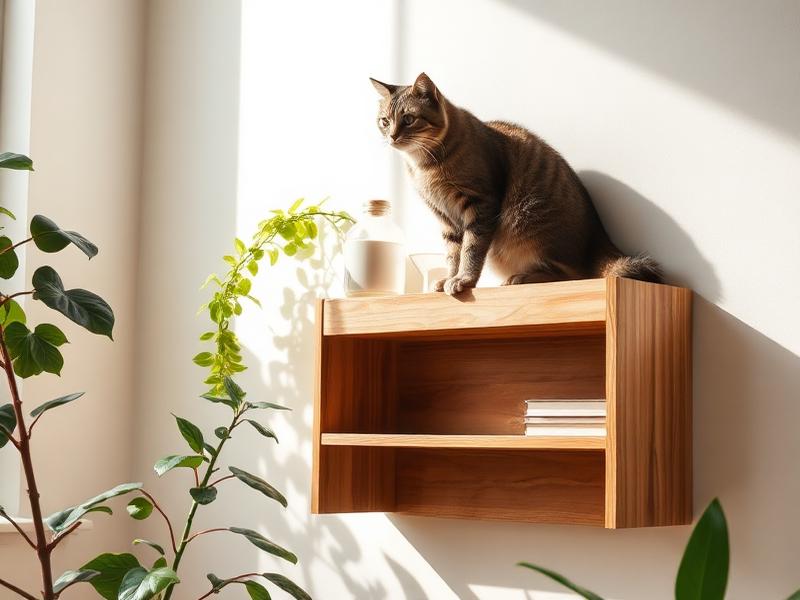
This is the single most useful idea in indoor cat keeping. A cat's usable territory is not the footprint of your flat, it is every surface it can reach and rest on. Two shelves and a cleared bookcase top add more territory than knocking a wall through.
Height also solves social problems. In a multi-cat home, vertical separation lets two cats share a room without sharing a plane. And a cat that has a legitimate high place is far less interested in the kitchen worktop, which is the same instinct expressed somewhere you do not want it.
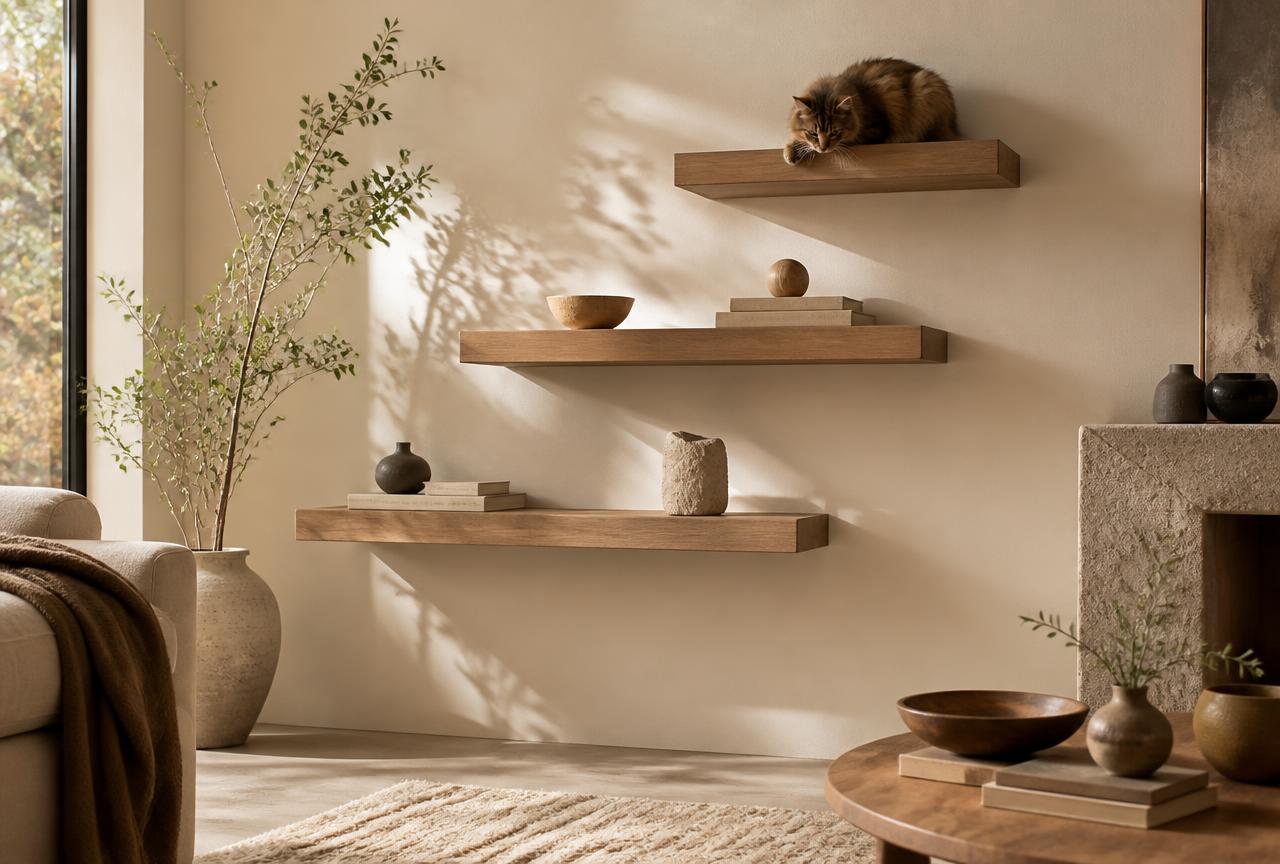
If the highest thing your cat can reach is the back of the sofa, your flat has one floor as far as the cat is concerned.
Start with what you already own. The top of a wardrobe, a cleared bookcase, a windowsill with a cushion on it. The only rules are that the surface should be reachable in stages rather than one heroic jump, and that nothing on it should slide.
The window is the television
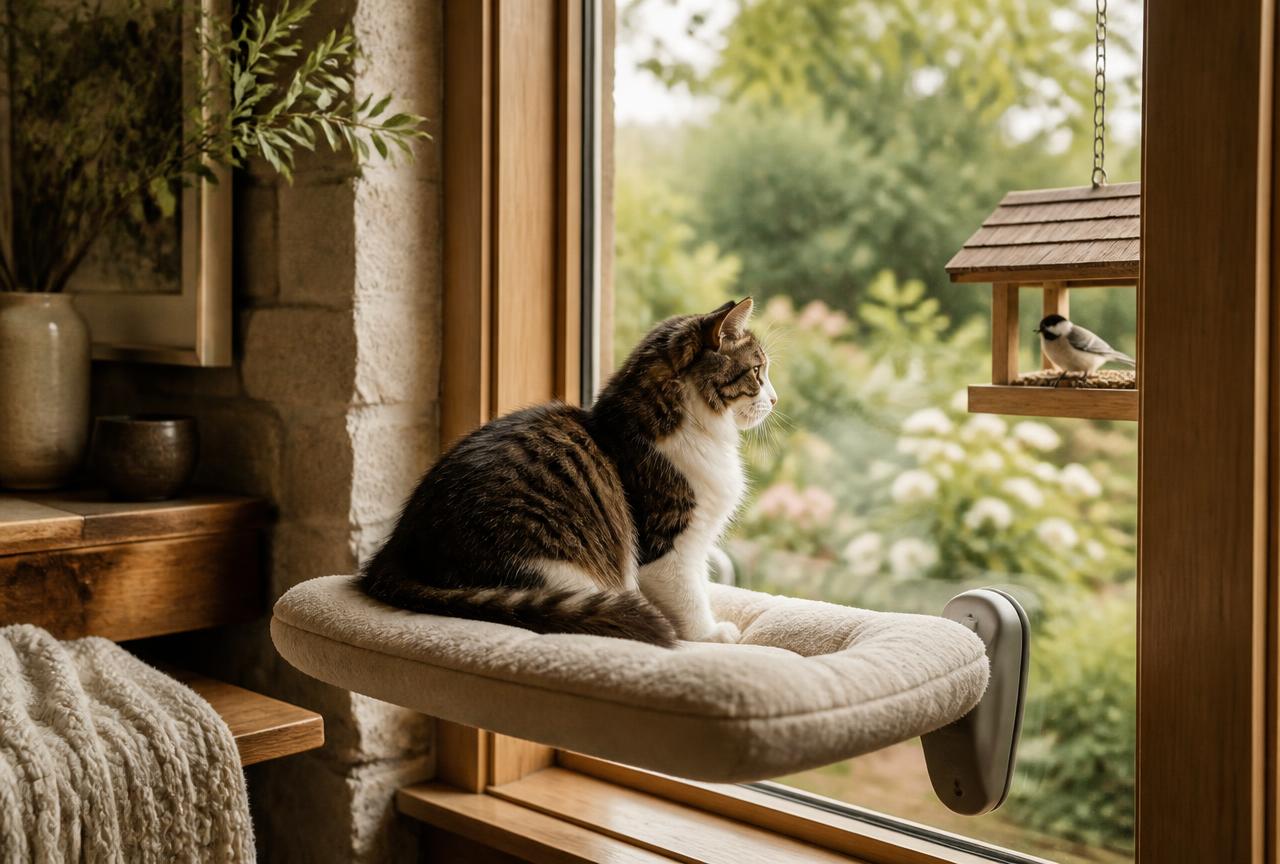
Movement is the point. A window with a view of a street, a garden, a bird feeder or even a washing line gives a cat something that changes, which no toy does. It is the cheapest enrichment available and the one most often blocked by a blind or a stack of laundry.
Put a cushion on the sill, or fit a padded perch. If the view is a brick wall, a feeder on the glass or a pot of cat grass on the sill does more than you would expect. Sunlight matters too: cats thermoregulate deliberately, and a warm afternoon spot is a resource in its own right.
Play: run the whole prey sequence
Cats hunt in a fixed order: stalk, chase, pounce, catch, kill, eat, groom, sleep. Interrupt it halfway and the cat is left holding unfinished business, which is how you get an ankle ambushed at midnight.
- 1Use a wand toy so your hands are never the target. Hands as prey is a lesson that takes months to unteach.
- 2Drag the toy away from the cat, never towards it. Prey that flees triggers the chase; prey that charges triggers defence.
- 3Let the cat catch it, several times. A hunt with no successes is a frustration, not a game.
- 4Wind down rather than stopping abruptly: slower movements, one last catch.
- 5Feed immediately afterwards. The meal closes the sequence and the grooming and sleep follow on their own.
- 6Twice a day, ten to fifteen minutes. Morning and dusk if the cat gives you a choice.
That is the whole prescription, and it is worth more than every automated laser on the market. Rotate three or four toys rather than leaving twelve out: a toy that has been away for a fortnight is a new toy.
Make the food the job
Cats in the wild make ten to twenty small kills a day, and fail at most attempts. Two bowls of food, eaten in ninety seconds, removes the single largest source of daily activity from the cat's life.
Feed part of the measured ration through work instead:
- A muffin tin with balls sitting over some of the cups
- Kibble scattered across a towel, then rolled loosely
- A cardboard egg box with food in two of the six cups
- Portions hidden in three separate places so the cat has to patrol
- A commercial puzzle feeder, once the homemade versions are solved easily
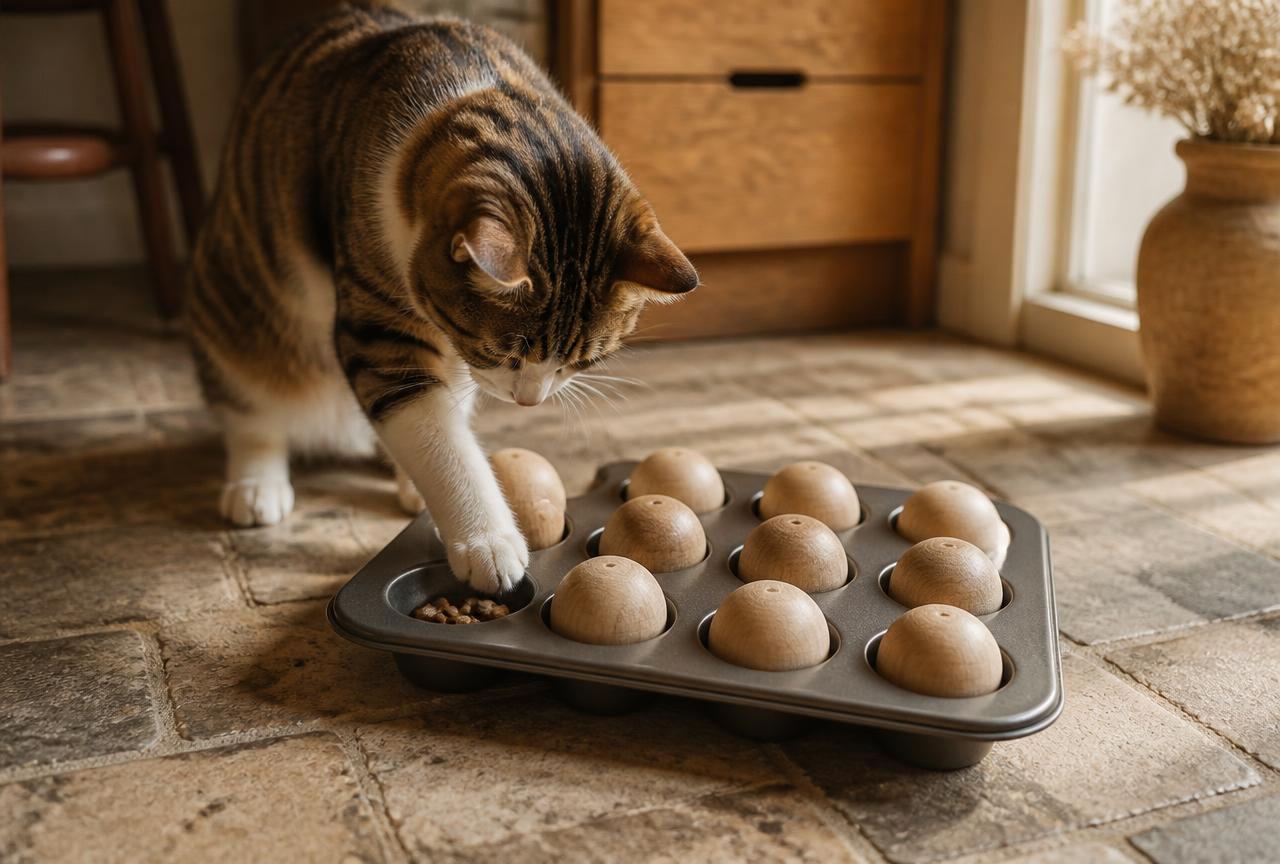
Two rules keep this honest. Take the puzzle food out of the daily ration rather than adding it, which our portion calculator makes straightforward, and never let a nervous or underweight cat rely on a puzzle for its main intake. If you are already weighing meals, our wet versus dry piece explains how to split the ration between the two without losing the moisture argument.
Territory: the arithmetic of resources
Most conflict in a multi-cat flat is a resource problem wearing a personality costume. The working numbers:
| Resource | For one cat | Rule |
|---|---|---|
| --- | --- | --- |
| Litter trays | 2 | One per cat plus one, uncovered, separate rooms |
| Scratching posts | 1 tall + 1 pad | Over 80 cm, sisal, stable; place where scratching already happens |
| Water sources | 2 | Wide, shallow, away from food |
| Feeding stations | 1 per cat | Out of sight of each other in multi-cat homes |
| High resting places | 2 | At least one above head height |
| Hiding places | 2 | Floor level, one entrance, cat-sized |
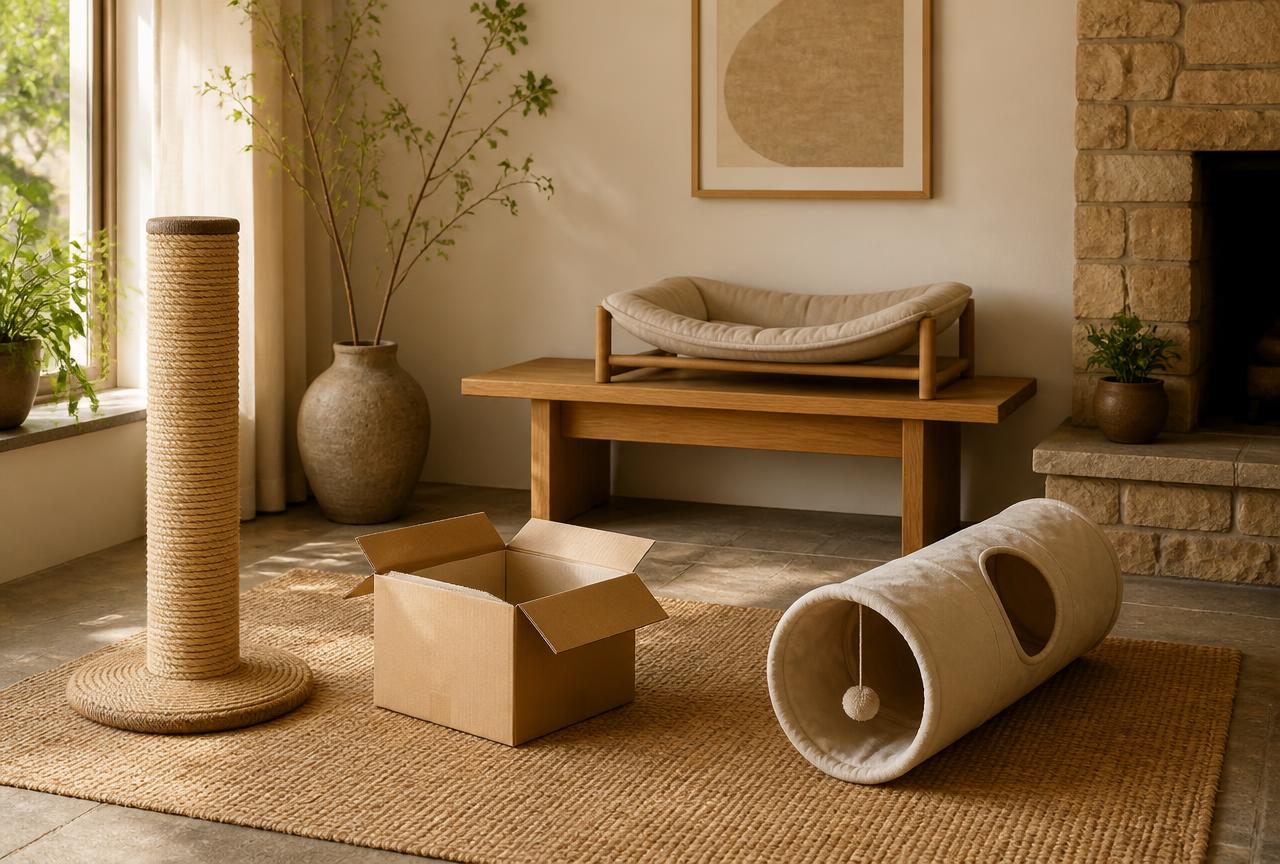
Note the spacing point, because it is the one people get wrong. Four resources clustered in the same corner function as a single contested zone. Distribute them: a tray upstairs and one down, water in the kitchen and the bedroom, a post beside each sleeping area.
Run the audit below to see where your home actually stands. It weights the four categories the way behaviourists do, and it will tell you which gap to close first, including the ones that cost nothing.
Interactive · built for this article
Enrichment audit
Tick what your home already has. It scores the four things that actually matter to an indoor cat and tells you the cheapest gap to close first.
Enrichment score
12/ 100
This is where the behaviour complaints come from
For 1 cat: at least 1 scratching post and 2 litter trays, in separate places.
Close these first
- Keep a wand toy beside the sofa and run it before meals€8
Fixes: two wand-toy sessions a day
- Two wall shelves or a stool staged below the existing high spot€20-60
Fixes: a climbable route up, not one big jump
- A cushion on the sill, or a suction perch€0-35
Fixes: a window seat with a view of movement
- A muffin tin with balls over some cups, or a rolled towelfree
Fixes: part of the ration fed from a puzzle or scattered
5 of your gaps cost nothing at all.
A scoring aid, not a welfare assessment: a cat showing signs of stress, over-grooming or house soiling needs a vet before it needs another shelf. Feeding part of the ration from puzzles? Work the portions out in the portion calculator.
The weekend list, in order of value
- 1Clear one high surface and put a folded blanket on it. Free, and often the biggest single change.
- 2Stage a route to it with a stool, a chair or a shelf. Older cats need this even more than young ones.
- 3Put a wand toy where you sit, so the two daily sessions actually happen.
- 4Move a bed into the afternoon sun and out of the draught.
- 5Add the extra litter tray you have been avoiding, uncovered and larger than looks necessary.
- 6Put a cardboard box on its side somewhere quiet. Cats consistently choose these over expensive beds.
- 7Box half the toys and diarise a Sunday swap.
By household
- Studio or one-bed flat: go vertical and use the window. Two shelves and a perch change the geometry more than any amount of floor-level kit.
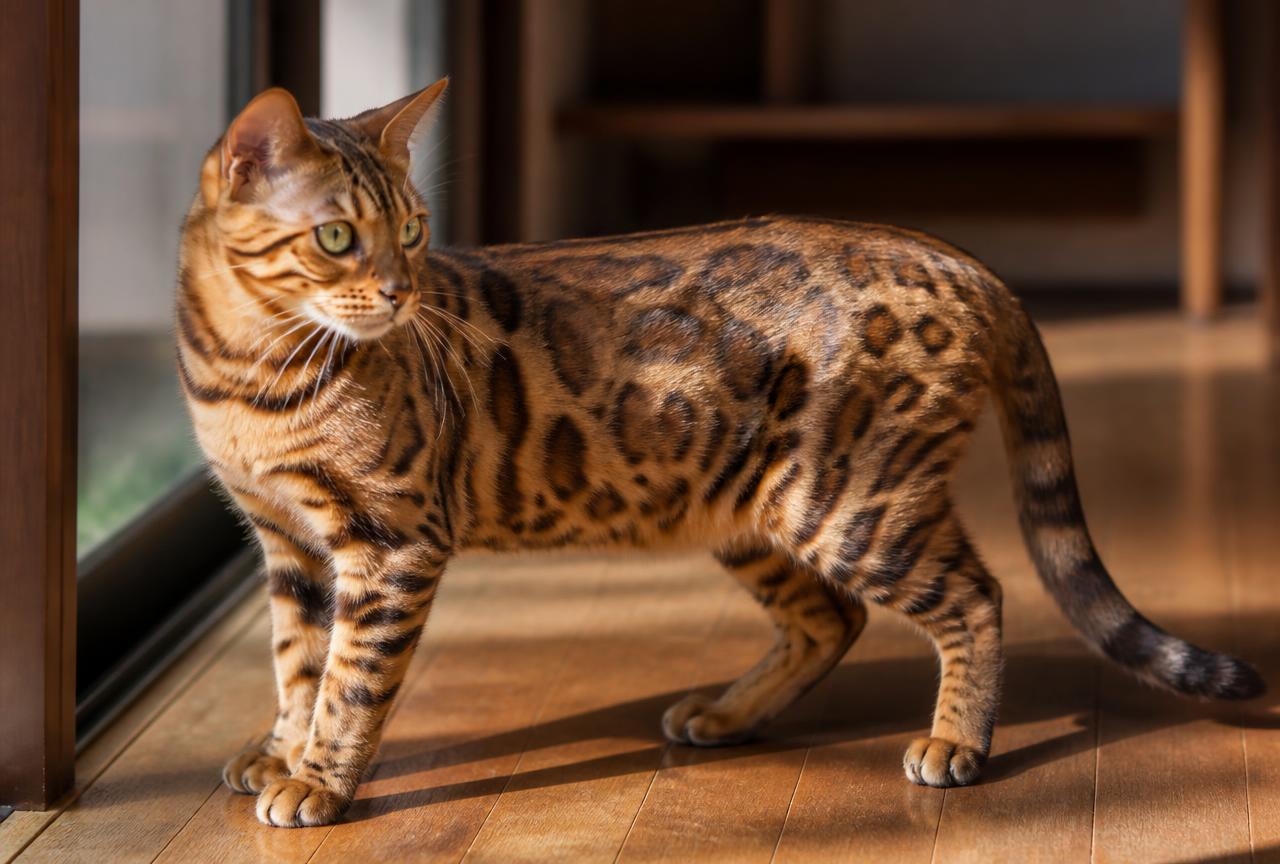
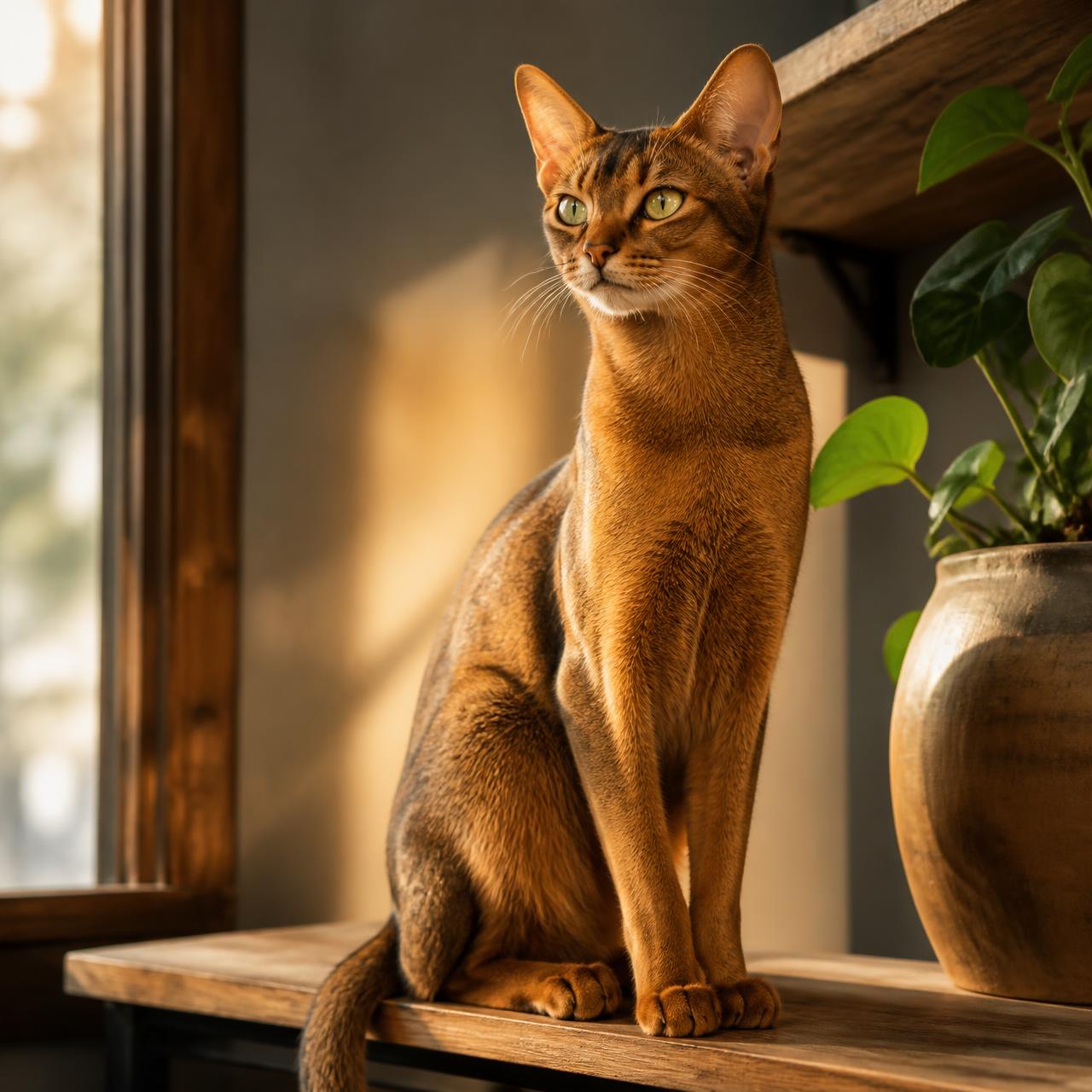
- High-energy breeds: a Bengal or an Abyssinian will out-play the schedule above. Add a third session, feed almost entirely from puzzles, and expect to keep inventing.
- Two cats, one small flat: duplicate everything and separate it. Vertical layering does more for feline diplomacy than any pheromone plug-in.
- Out all day: puzzle-feed the midday portion, leave the blinds up, and make the evening session non-negotiable. If you are choosing a cat around this life, our breed matchmaker filters on independence.
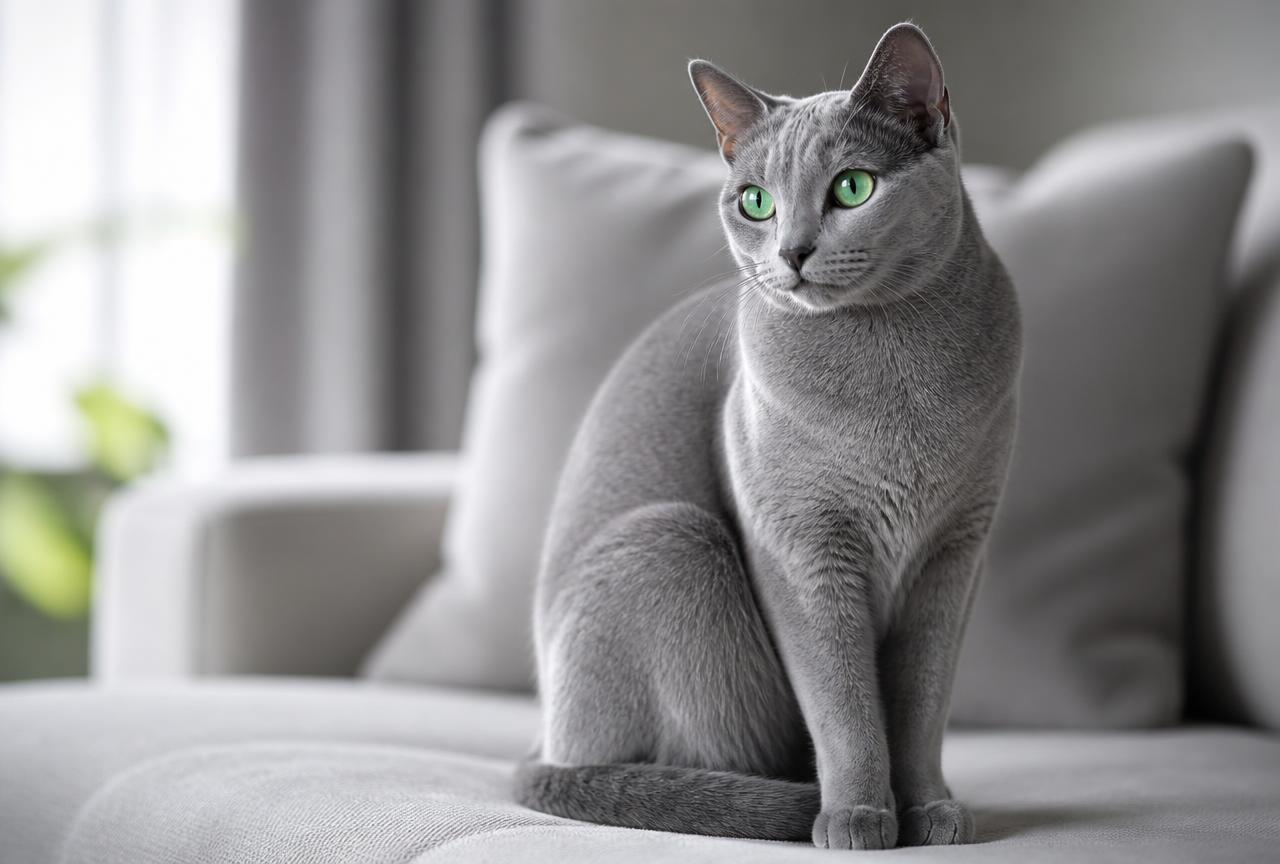
- Quiet, older cat: lower the ambition, not the enrichment. Steps instead of jumps, gentler play, and warmth. The Russian Blue review covers how reserved cats prefer their stimulation on their own terms.
When to call your vet
Enrichment is not a treatment for illness, and several classic "boredom" signs are medical. Book an appointment for over-grooming or bald patches, house soiling or straining in the tray, new night vocalising, sudden aggression, hiding that lasts more than a day, appetite or thirst changes, or weight gain that has crept past a kilo.
Pain in particular masquerades as behaviour. A cat that has stopped jumping to its favourite shelf has usually not lost interest in the shelf.
What good looks like
A well-arranged flat is quietly obvious. The cat has three or four places it rotates through during the day, at least one of them high. It hunts something twice a day and eats afterwards. It scratches the post rather than the sofa because the post is where it wants to scratch. It has somewhere to go that nobody follows it into.
None of that requires a cat wall or a four-figure tree. It requires height, a routine, and resources spread far enough apart that the cat never has to negotiate for them.
Questions people actually ask
How do I entertain an indoor cat?
Give it something to hunt and somewhere to climb, then repeat daily. Two wand-toy sessions of ten to fifteen minutes, part of the ration fed from a puzzle or scattered, and one climbable route to a high resting place cover most of what an indoor cat needs. Novelty helps, but routine matters more than variety.
How much vertical space does a cat need?
At least one resting place above human head height, reachable in stages rather than one large jump. Height is how cats get privacy and a vantage point in a small home; a cat with nowhere high to sit resorts to the worktop and the top of the fridge, which is the same instinct with worse consequences.
How many scratching posts should I have?
One tall post per cat, over 80 cm so an adult can stretch fully, plus at least one horizontal pad, because many cats prefer to scratch sideways. Place them where the cat already scratches and beside sleeping spots, not where they suit the decor. A wobbly post is worse than no post.
Are food puzzles good for cats?
Yes, in moderation and from part of the measured ration rather than as extra food. Foraging spreads eating across the day, slows fast eaters and gives a bored cat a job. Start easy: a muffin tin with a few cups covered, or kibble scattered on a towel. A cat that gives up hungry has been given a puzzle that is too hard.
Do indoor cats get depressed?
They do not get depressed in the human sense, but under-stimulated cats show it clearly: over-grooming, night-time yowling, attention-seeking aggression, obesity, and house soiling. Those signs deserve a vet visit first, because pain and illness produce the same picture, then an honest look at the environment.
Should an indoor cat have a companion?
Sometimes. Two cats that genuinely like each other are better than one bored cat, and considerably worse than one contented cat if they do not. Bonded pairs and littermates are the safe bet; introducing an unrelated adult to a settled resident is a slow project measured in weeks, not days.
Is it cruel to keep a cat indoors?
No, provided the home does the work the outdoors would. Indoor cats live longer on average, with fewer road injuries, fights and parasites. The trade is that you owe the cat height, hunting outlets, scratching surfaces, privacy and daily interaction. A bare flat with a bowl in it is the cruelty, not the front door.
Sources
- Environmental needs of the cat, International Cat Care (icatcare)
- AAFP and ISFM Feline Environmental Needs Guidelines, American Association of Feline Practitioners
- Feline behaviour and enrichment resources, Cornell Feline Health Center
- Indoor cats: keeping them happy and healthy, Blue Cross
- Nutritional Guidelines for Complete and Complementary Pet Food, FEDIAF
Breeds mentioned
Put it into practice
Read next
How to bathe a cat: when it is needed, and how to survive it
How to bathe a cat without bloodshed: when a bath is genuinely needed, the setup, the step-by-step, and when to call a groomer instead.