United States
Bombay
A compact black cat with copper eyes and a confident, affectionate nature. Best kept indoors with company and play.
Reviewed against International Cat Care and veterinary guidance
A mini panther with copper eyes and a people-focused heart
The short version
- Short, satin-black coat with copper or gold eyes; needs only weekly brushing.
- Affectionate and people-focused; often follows owners from room to room.
- Playful into adulthood and moderately vocal; needs daily interaction.
- Should live indoors to avoid heat stress, theft and traffic risks.
- Ask breeders about heart screening and avoid lines with craniofacial issues.
- Weight
- 2.5–5.5 kg
- Lifespan
- 12–16 yrs
- Coat
- Short
- Size
- Medium
- Grown male
- 3.5–5.5 kg
- Grown female
- 2.5–4.5 kg
- Years to full size
- about 2
- One-off setup
- €120–250
Get one if…
- People who want a lap cat
- Indoor-only households
- Owners happy with weekly grooming
- Those who enjoy playful cats
Think again if…
- Households away all day
- Anyone wanting an outdoor cat
- People who dislike vocal cats
- Very chaotic homes
Trait profile
High affection and moderate vocality are the constants. Read the low grooming score as 'easy coat', not 'no care at all'.
Space & setup. Compact and adaptable, but needs vertical space and interactive toys to stay stimulated indoors.
Allergies. Short coats shed, but the fine hair spreads easily. Not hypoallergenic; spend time with an adult cat before committing.
The review
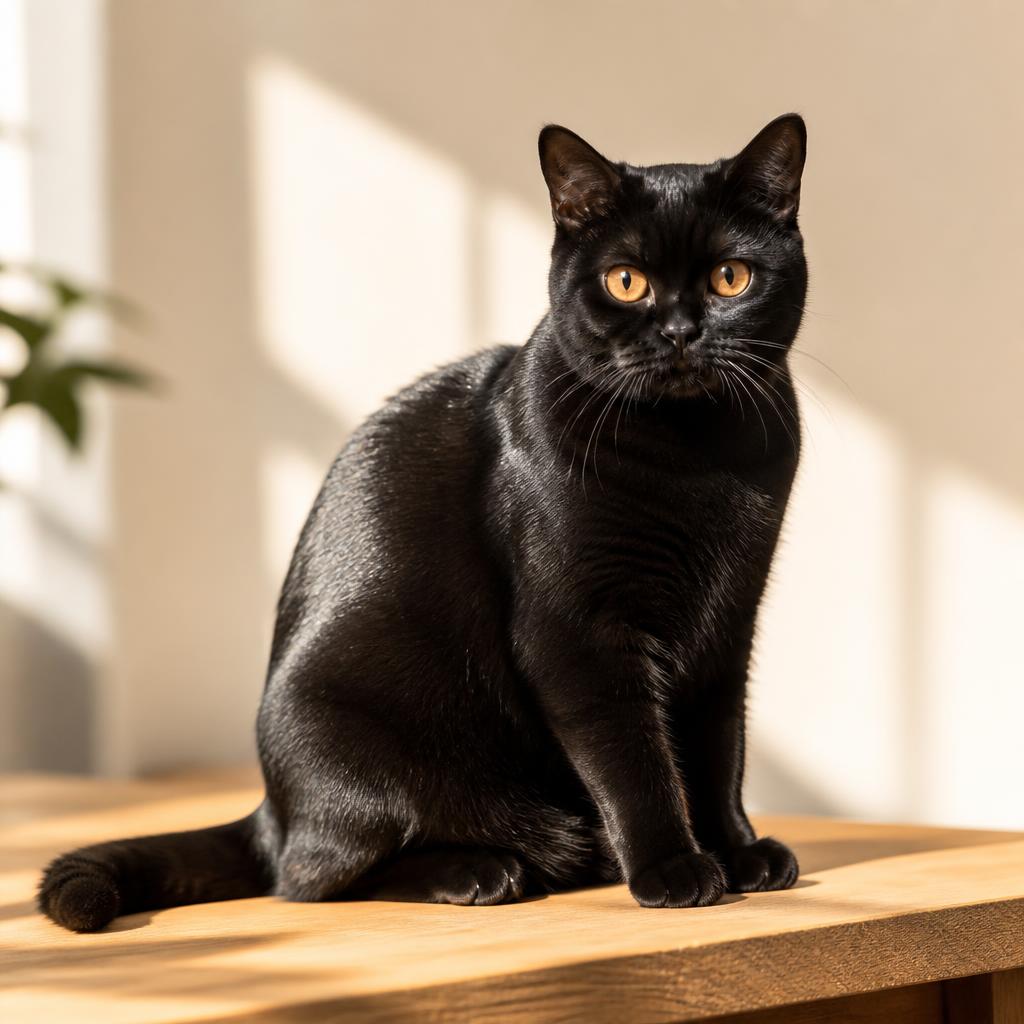
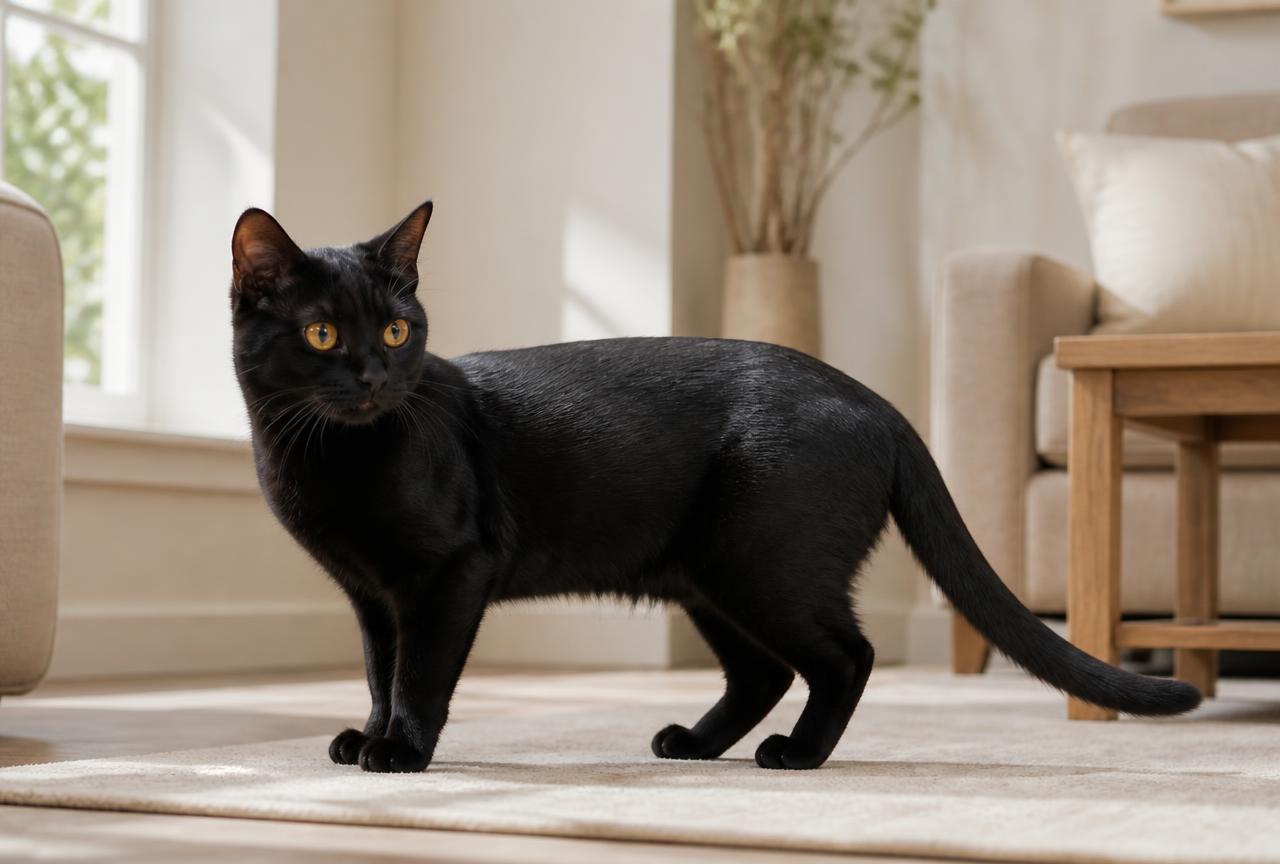
The Bombay was developed to look like a small black panther: compact, muscular, short-coated and entirely black from nose to tail, with large copper or gold eyes. Under the dramatic coat is an affectionate, confident cat that wants to be wherever its people are.
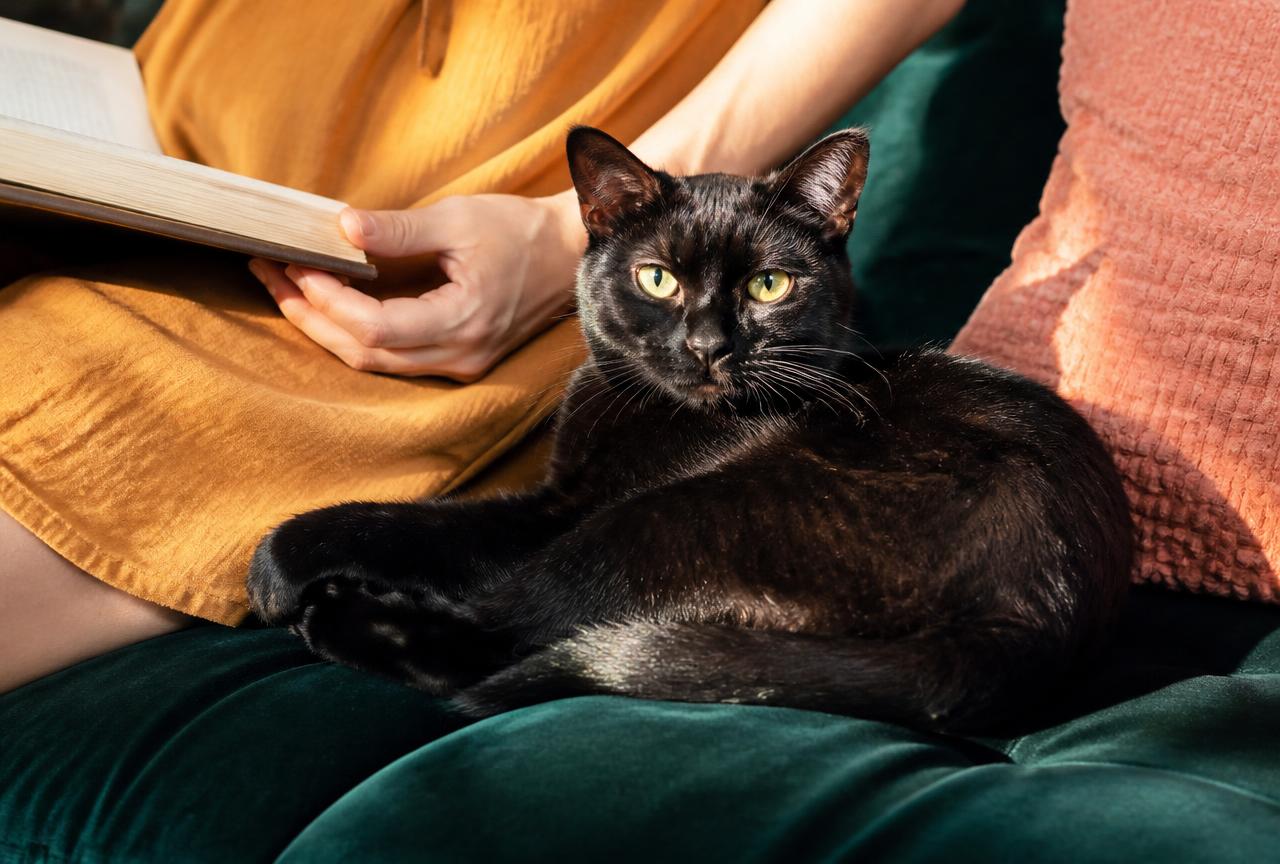
The Bombay is a breed built around a single visual idea: a domestic cat that looks like a miniature panther. The result is a compact, muscular cat with a short, satin-black coat, black paw pads and large copper or gold eyes. That look is what draws people in, but the personality is what keeps them. Bombays are often described as velcro cats, and the description is fair. They want to be on a lap, beside a keyboard, at the kitchen counter, or on the bed. They are not aloof observers; they are participants.
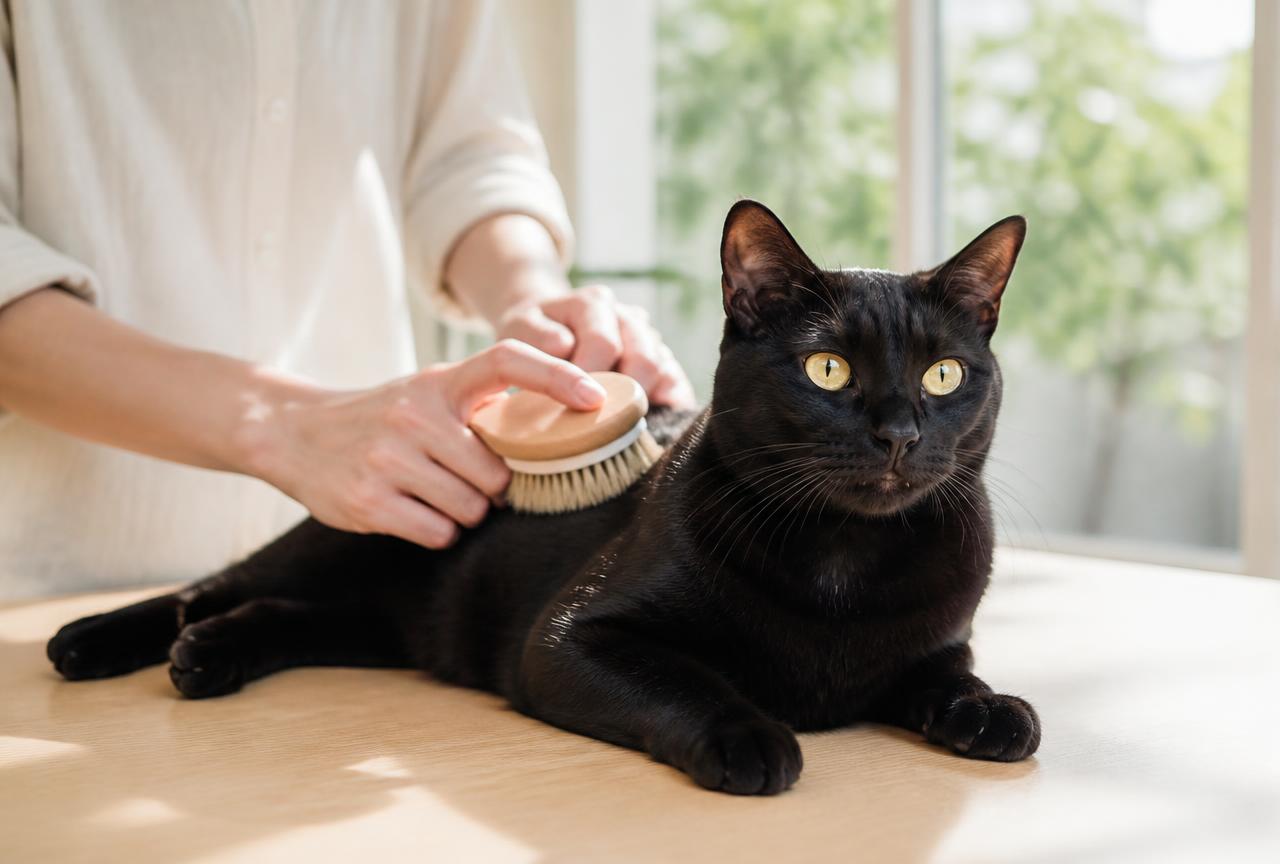
The body is surprisingly heavy for its size. Males usually finish between 3.5 and 5.5 kg, females between 2.5 and 4 kg, and the build is rounded and solid rather than long. The coat is short, fine and close-lying, which means it needs very little grooming but shows every speck of dust and shed hair. A weekly brush is enough for coat health; more frequent wiping with a soft cloth keeps the black coat glossy and reduces shedding on pale furniture.
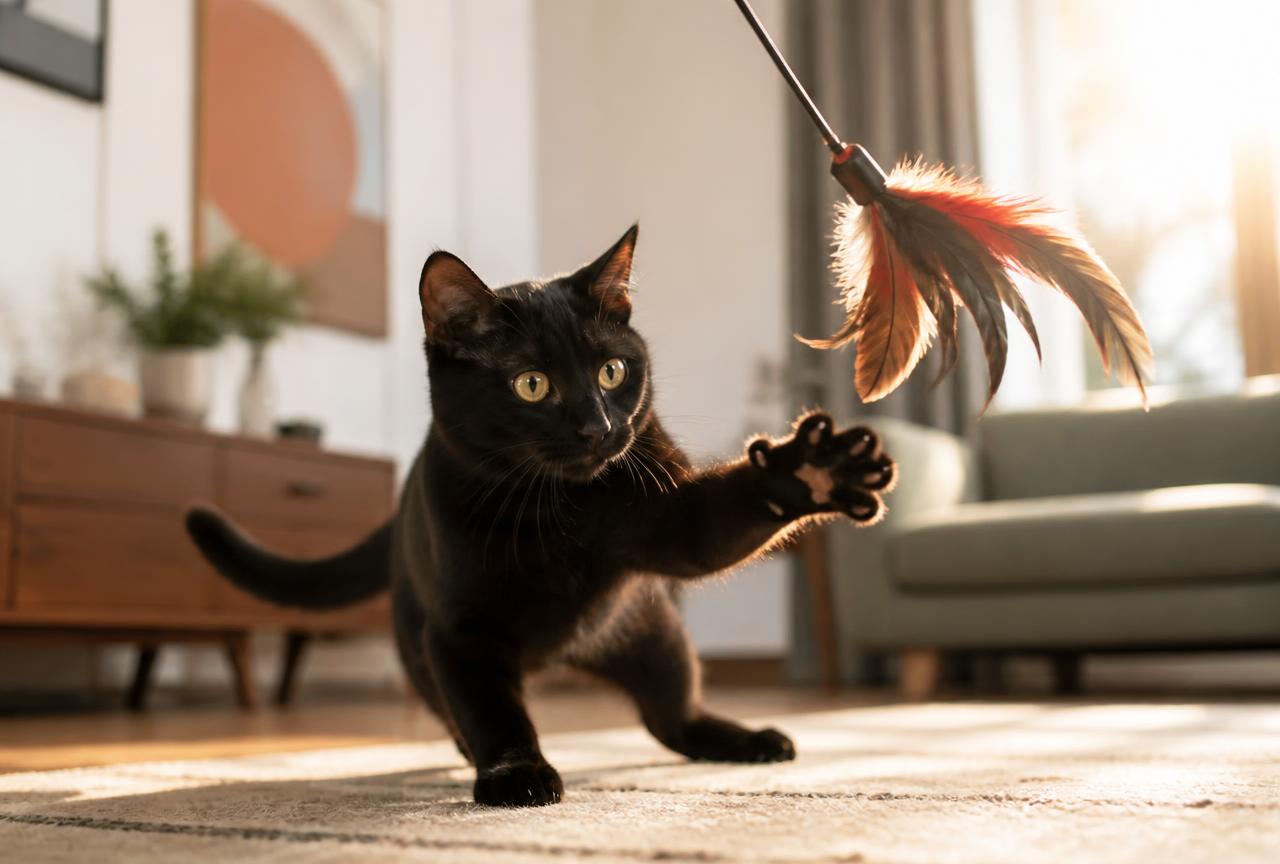
Temperament sits somewhere between playful and clingy. Bombays retain a kitten-like interest in toys well into adulthood, and they will initiate games of fetch, chase and ambush. They are also talkative, though not as relentlessly chatty as a Siamese. The voice is softer and more conversational, used to announce arrivals, mealtimes and the fact that you have been sitting still for too long. They do best in households where someone is around for much of the day.
Health is generally good, but there are two areas to discuss with a breeder. Some lines carry a risk of hypertrophic cardiomyopathy, and craniofacial defects have been reported in poorly bred Bombays, so choosing a responsible breeder matters. Obesity is the other common issue; the breed loves food and its compact frame hides weight gain. Measured portions and regular play keep the waistline in check.
A Bombay suits an indoor home with company, play and a lap available in the evening. It is not a good choice for households that want an independent outdoor cat or that are empty all day. Given attention and a safe indoor environment, it is one of the most affectionate and visually striking breeds in the home.
A glossy black cat with copper eyes and a lap-cat temperament. The Bombay looks dramatic but behaves like a devoted household companion.
Grooming, realistically
- 1Brush once a week with a soft bristle brush or rubber grooming mitt to remove loose hair and distribute skin oils.
- 2Wipe the coat with a damp microfibre cloth between brushes to keep the black colour glossy and dust-free.
- 3Check ears weekly for wax and trim claws every three to four weeks while the cat is relaxed.
- 4Brush teeth daily if possible, or use vet-approved dental treats; short faces are not an issue here, but dental disease is common.
- 5Weigh monthly and adjust food portions; Bombays gain weight quietly under that compact frame.
What you actually need
- Soft bristle brush or rubber grooming mitt
- Microfibre cloth for coat wiping
- Blunt-nosed claw clippers
- Cat-safe ear wipes
- Dental treats or a small cat toothbrush
Kitten to adult
| Age | Male | Female | What is happening |
|---|---|---|---|
| 8 weeks | 0.7–1.0 kg | 0.6–0.9 kg | Still with the breeder; should be handled and socialised daily |
| 3 months | 1.3–1.8 kg | 1.1–1.5 kg | Growth is steady; four small meals a day |
| 6 months | 2.0–2.8 kg | 1.7–2.4 kg | Muscles begin to fill out; neutering is usually discussed now |
| 12 months | 2.8–4.0 kg | 2.2–3.2 kg | Near adult height; males may continue to broaden |
| 2 years | 3.5–5.0 kg | 2.5–4.0 kg | Physically mature; coat at its glossiest |
| 3 years | 3.5–5.5 kg | 2.5–4.5 kg | Final weight. Beyond this is usually fat, not muscle |
Ranges are typical, not targets. Judge condition by ribs and waist, and check with the ideal weight checker.
What to ask a breeder
- Can you show me heart screening for both parents, ideally by echocardiogram?
- Have any kittens in your lines been born with craniofacial or breathing abnormalities?
- At what age do kittens leave, and what socialisation have they had?
- What are the typical adult weights in this line?
- Do you provide a written health guarantee and return policy?
Health watch-list
What to ask a breeder about, and what to watch for over a lifetime. This is orientation, not veterinary advice, anything you notice belongs in front of a vet.
Hypertrophic cardiomyopathy
ModerateHeart disease is the most serious concern in the breed. Ask for echocardiogram screening of both parents.
Craniofacial defects
Low in well-bred linesPoorly bred Bombays can have facial deformities. Choose a breeder who prioritises health over extreme looks.
Obesity
CommonThe breed loves food and its solid frame hides weight gain. Measure portions and weigh monthly.
Dental disease
Common with ageRoutine dental care, brushing or vet-approved chews help prevent periodontal disease.
Upper respiratory infections
Common in kittensAny kitten can develop sniffles after rehoming. Seek veterinary care if symptoms persist beyond a few days.
Heat stress
ModerateBlack coats absorb heat. Keep the cat indoors and cool in warm weather.
What it costs to keep one
Realistic running cost
€78 / month
About €936 a year, or roughly €13,104 across a 14-year life, before purchase price, neutering and one-off vet events.
Before the cat arrives. Budget roughly €120–250 for trays, carrier, posts, bowls, bedding and grooming kit sized for this breed. Figures throughout are indicative and vary a good deal between countries.
Interactive · built for this breed
Is a Bombay right for your home?
A compact black cat with copper eyes and a confident, affectionate nature. Bombays are often called 'velcro cats' because they want to be near their people. Five questions on handling, indoor life and household calm.
Verdict
An excellent match
You have the closeness, indoor setup and play routine this affectionate breed thrives on.
What to sort out first
- Bombays should stay indoors: their black coat absorbs heat and their friendly nature makes them poor at judging outdoor risks.
Keep the weight honest with the ideal weight tool, or compare the alternatives in the matchmaker.
The verdict, by household
Small flat, no outdoor access
Excellent fit
The Bombay was designed for indoor life. A few perches, a scratching post and a lap complete the setup.
Family with young children
Good fit
Tolerant and playful, but children should be taught to handle the cat gently and not disturb it when sleeping.
First-time owner
Good fit
Easy coat, outgoing nature and moderate size make the Bombay a forgiving first pedigree.
Multi-cat or dog household
Workable, with conditions
Usually sociable, but introductions should be slow and the Bombay may demand the most attention.
Allergy-conscious home
Think again
No cat is hypoallergenic. The short, fine coat sheds and spreads dander.
Away from home all day
Workable, with conditions
A second friendly cat helps. A Bombay left alone for long hours can become lonely and vocal.
When to call your vet
- Laboured breathing, snoring or noisy sleeping
- Lethargy, collapse or fainting episodes
- Sudden weight gain or loss despite unchanged feeding
- Persistent vomiting, diarrhoea or change in appetite
- Discharge from eyes or nose, or redness around the third eyelid
Nothing here is a diagnosis. Breathing difficulty, sudden hind-leg weakness and straining to urinate are emergencies, go the same day.
Bombay vs the closest alternatives
Bombay questions, answered
Are Bombay cats really hypoallergenic?
No. They have a short coat, but they still produce Fel d 1 allergen and shed. Allergy sufferers should meet an adult cat before committing.
Can a Bombay go outside?
It is not recommended. Their black coat absorbs heat, their friendly nature makes them vulnerable to theft, and they are at risk from traffic and predators.
How much grooming does a Bombay need?
A weekly brush is usually enough. Wiping with a damp cloth helps keep the black coat glossy and reduces loose hair.
Are Bombays good with children?
Generally yes, if children are taught to handle them gently. They are playful and tolerant but should have quiet retreats.
Do Bombay cats talk a lot?
They are moderately vocal, less than a Siamese, more than a British Shorthair. They use a soft voice to comment on daily events.
What health tests should I ask a breeder for?
Ask for echocardiogram heart screening and a clear history free from craniofacial defects. Genetic HCM testing is a bonus where available.
How long do Bombays live?
With good care, 12–16 years is typical. Indoor life, good diet and regular vet checks help reach the upper end.
Sources
- Grooming and coat care, International Cat Care
- Feline health topics, Cornell Feline Health Center
- WSAVA global nutrition guidelines, WSAVA
- Keeping your cat happy, International Cat Care