United States
Snowshoe
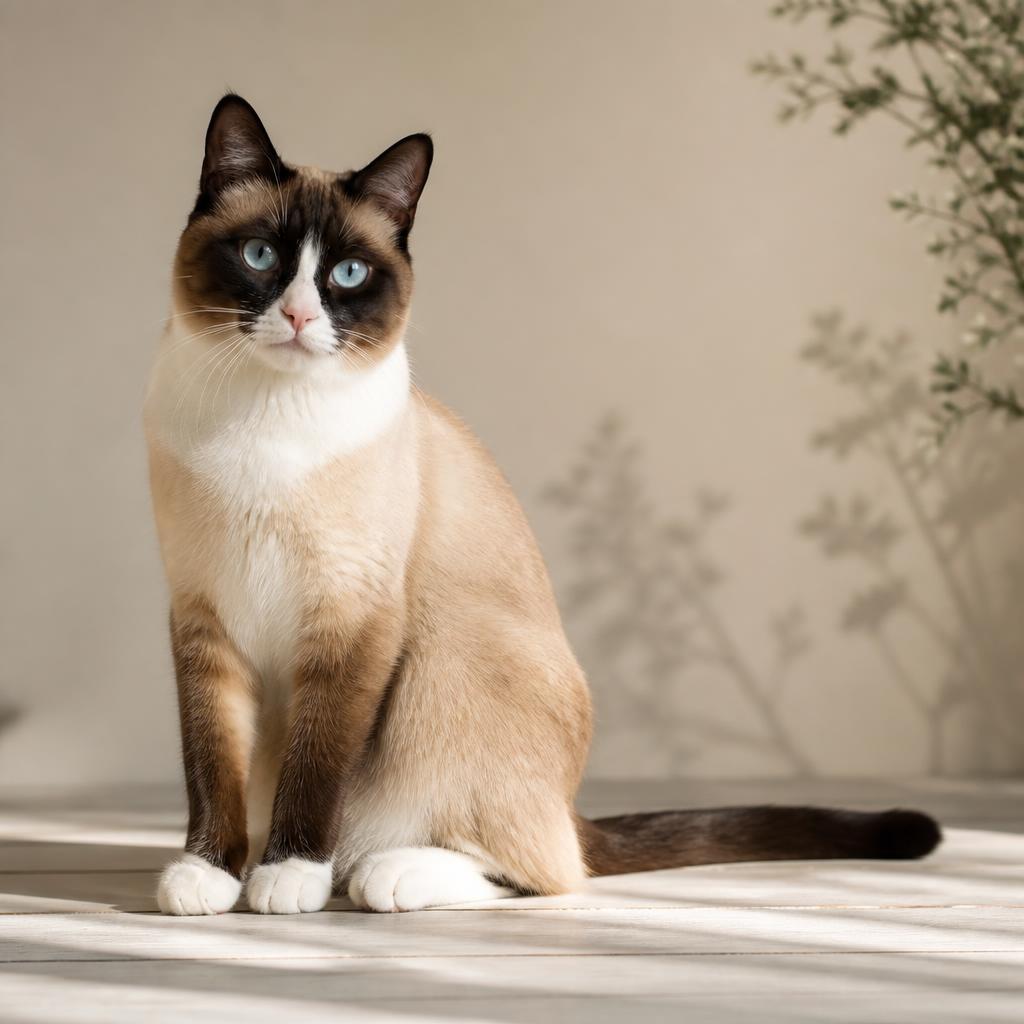
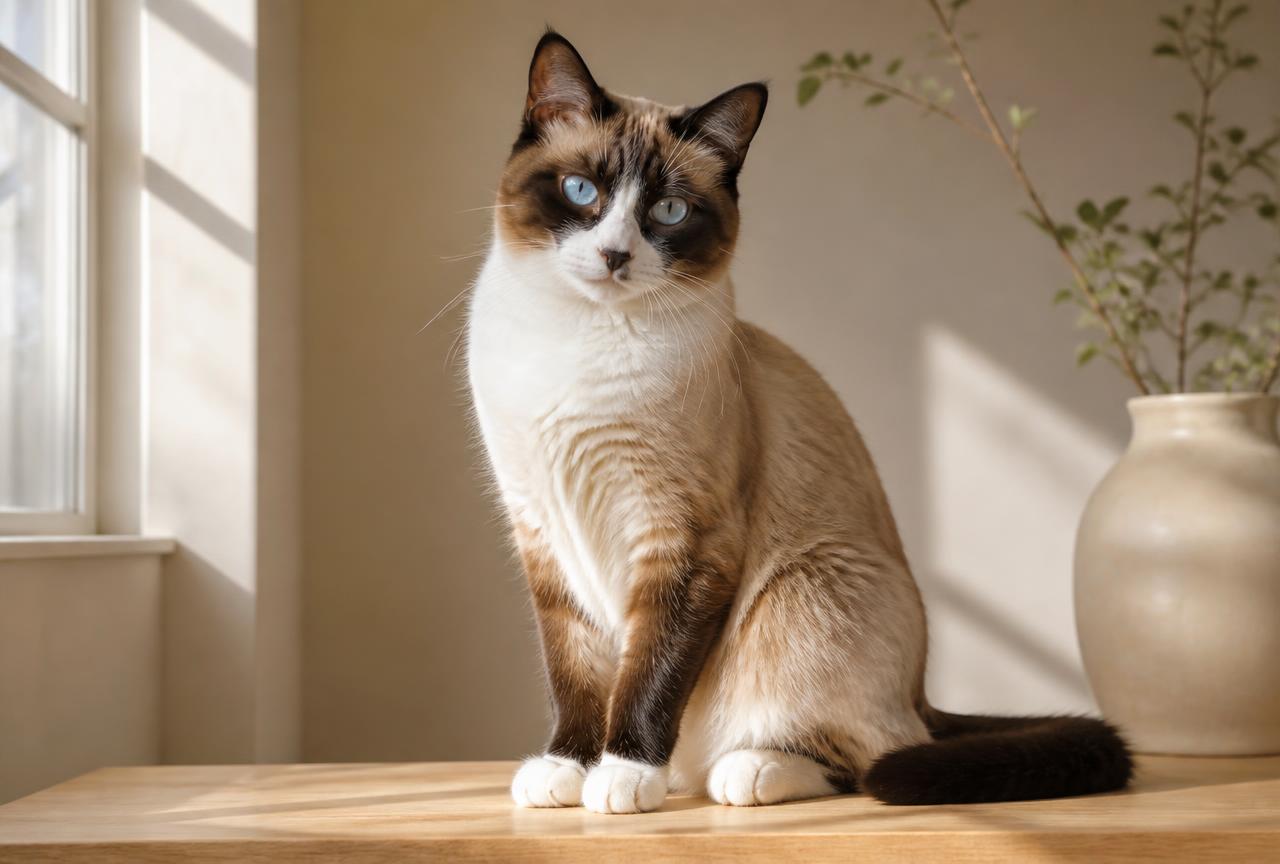
A pointed cat with white 'snowshoe' paws and a Siamese-like voice. Needs company, play and a household that enjoys conversation.
Reviewed against International Cat Care and veterinary guidance
A pointed cat with white boots and a chatty, affectionate nature
The short version
- Short coat with colour points and white paws, face and chest markings.
- Vocal, intelligent and people-focused; needs daily interaction.
- Low grooming needs but high mental stimulation requirements.
- Often happier with a companion cat if left alone for long hours.
- Ask breeders about eye and tail faults and any respiratory issues.
- Weight
- 2.5–5.5 kg
- Lifespan
- 12–16 yrs
- Coat
- Short
- Size
- Medium
- Grown male
- 3.5–5.5 kg
- Grown female
- 2.5–4.5 kg
- Years to full size
- about 2
- One-off setup
- €120–250
Get one if…
- People who enjoy chatty cats
- Households with time for play
- Homes with another friendly cat
- Owners who want an affectionate companion
Think again if…
- People who need a quiet cat
- Households away all day
- Sedate homes
- Anyone wanting an independent pet
Trait profile
The high vocality and affection scores are the defining traits. This is a cat that wants to be involved in everything.
Space & setup. Moderate size, but high energy. Vertical space, puzzle toys and regular play sessions are essential.
Allergies. Not hypoallergenic. Short coats shed, and the active nature spreads dander around the home.
The review
The Snowshoe combines Siamese colour points with white markings on the face, chest and paws. The result is a striking, people-oriented cat that is vocal, playful and deeply attached to its family.
The Snowshoe is what happens when a Siamese inherits white spotting. The body is cream or fawn, the face, ears and tail are darker, and the paws are white, giving the breed its name. The markings are variable and not every kitten in a litter will show them perfectly, which makes the pattern part of the charm rather than a guarantee.
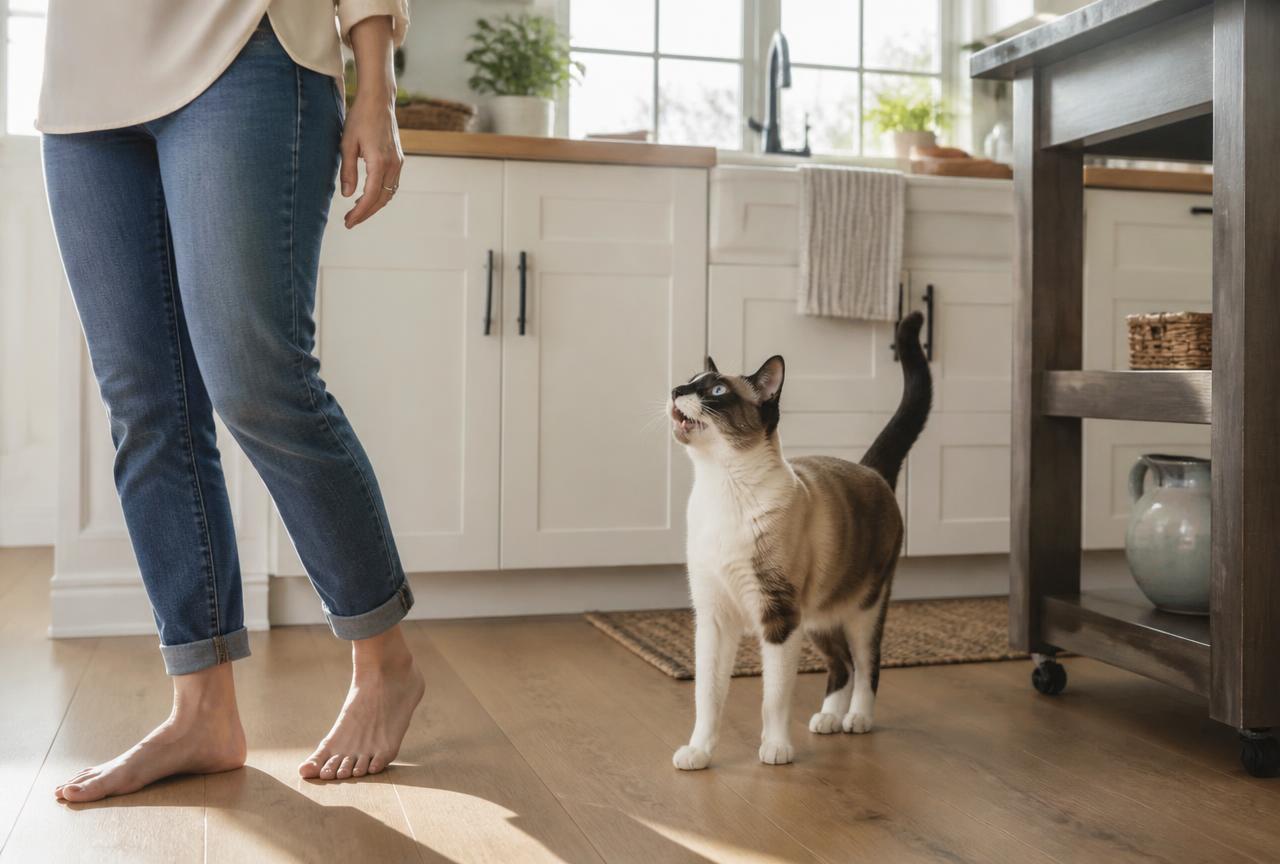
Personality is unmistakably Siamese-influenced. Snowshoes are talkative, intelligent, playful and people-focused. They will follow you, comment on your activities, retrieve toys, learn tricks and protest loudly if left out of the action. They are not a cat for someone who wants a quiet, independent pet. They are a cat for someone who wants a conversation.
The body is medium and muscular, with males usually finishing between 3.5 and 5.5 kg and females between 2.5 and 4.5 kg. The coat is short and close-lying, so grooming is minimal. A weekly brush is enough to remove loose hair and keep the coat glossy. The main maintenance is mental: these cats need play, puzzle feeders, training sessions and company.
Health is generally good, though the Siamese background brings a few considerations. Some lines may carry a risk of crossed eyes or kinked tails, neither of which affects health but both are considered faults in the show ring. Dental disease, obesity and asthma have been reported in Siamese-related breeds, so routine care and weight management matter.
A Snowshoe suits a household that wants an interactive, affectionate cat and can provide company for much of the day. They often do better with a companion cat if the owner is out at work. They are not suited to quiet, sedate homes or to people who dislike vocal cats. Given attention and engagement, they are entertaining, loving companions.
A pointed, white-gloved cat with Siamese talkativeness and a strong need for human company.
Grooming, realistically
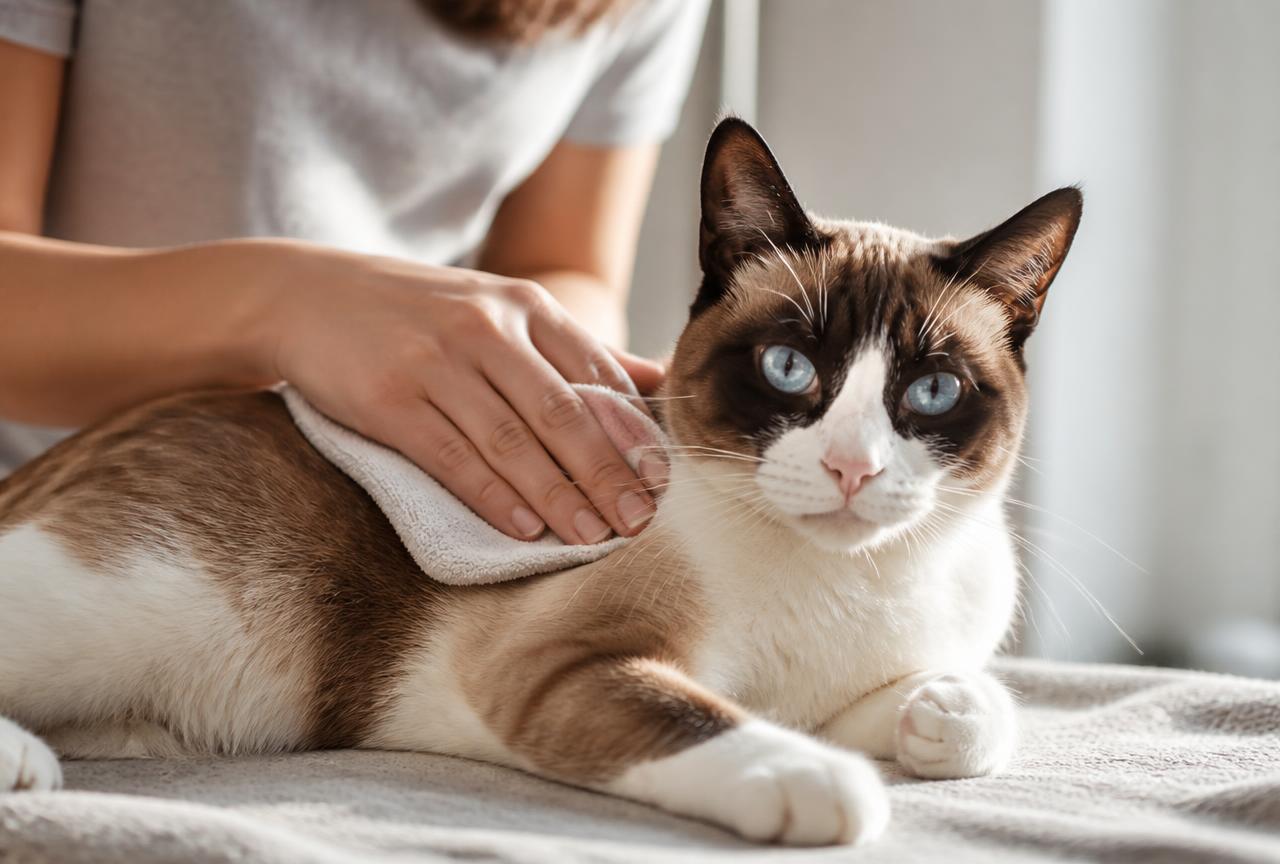
- 1Brush once a week with a soft bristle brush or rubber grooming mitt to remove loose hair and polish the short coat.
- 2Wipe the coat with a damp cloth if it looks dull or dusty between brushes.
- 3Check ears weekly and trim claws every three to four weeks.
- 4Brush teeth daily if possible, or use dental treats to reduce tartar.
- 5Weigh monthly and adjust food; Snowshoes are active but food-motivated.
What you actually need
- Soft bristle brush or rubber grooming mitt
- Microfibre cloth for coat wiping
- Blunt-nosed claw clippers
- Cat-safe ear wipes
- Dental treats or small toothbrush
Kitten to adult
| Age | Male | Female | What is happening |
|---|---|---|---|
| 8 weeks | 0.7–1.0 kg | 0.6–0.9 kg | Markings are developing; kittens should be handled and socialised daily |
| 3 months | 1.3–1.8 kg | 1.1–1.5 kg | Rapid growth; four meals a day |
| 6 months | 2.0–2.8 kg | 1.7–2.4 kg | Body lengthens and muscles develop |
| 12 months | 2.8–4.0 kg | 2.2–3.2 kg | Near adult size; markings continue to refine |
| 2 years | 3.5–5.0 kg | 2.5–4.0 kg | Physically mature; full colour contrast |
| 3 years | 3.5–5.5 kg | 2.5–4.5 kg | Final weight. Active cats stay lean; less active cats gain easily |
Ranges are typical, not targets. Judge condition by ribs and waist, and check with the ideal weight checker.
What to ask a breeder
- Can you show me the parents and explain how the white markings are inherited?
- Have any kittens had crossed eyes or kinked tails?
- What health screening do you do for heart, dental and respiratory issues?
- How do you socialise kittens to household noise and handling?
- Do you recommend keeping Snowshoes in pairs?
Health watch-list
What to ask a breeder about, and what to watch for over a lifetime. This is orientation, not veterinary advice, anything you notice belongs in front of a vet.
Crossed eyes or kinked tail
Low in well-bred linesSiamese-linked cosmetic faults. They do not affect health but are show faults.
Asthma and respiratory issues
ModerateSiamese-related breeds may be prone. Seek veterinary care for wheezing or coughing.
Dental disease
Common with ageRegular dental care helps prevent periodontal disease.
Obesity
CommonFood-motivated and sometimes less active indoors. Measure portions and play daily.
Hypertrophic cardiomyopathy
ModerateHeart disease can occur. Ask breeders about screening.
Chronic kidney disease
Common with ageA leading cause of illness in older cats. Regular screening helps catch it early.
What it costs to keep one
Realistic running cost
€78 / month
About €936 a year, or roughly €13,104 across a 14-year life, before purchase price, neutering and one-off vet events.
Before the cat arrives. Budget roughly €120–250 for trays, carrier, posts, bowls, bedding and grooming kit sized for this breed. Figures throughout are indicative and vary a good deal between countries.
Interactive · built for this breed
Is a Snowshoe right for your home?
A pointed cat with white 'boots', bright blue eyes and a Siamese-like voice. Snowshoes are people-oriented, vocal and need attention to be happy.
Verdict
An excellent match
You have the time, conversation tolerance and social home this breed loves.
Keep the weight honest with the ideal weight tool, or compare the alternatives in the matchmaker.
The verdict, by household
Small flat, no outdoor access
Good fit
Indoor life is fine if there is vertical space, toys and daily play.
Family with young children
Workable, with conditions
Playful and tolerant, but children must respect the cat's need for quiet retreat.
First-time owner
Workable, with conditions
Easy coat, but the vocal and demanding nature can surprise unprepared owners.
Multi-cat or dog household
Good fit
Usually sociable. A companion cat is often ideal if the owner works long hours.
Allergy-conscious home
Think again
No cat is hypoallergenic. Short coats still shed dander and spread Fel d 1.
Away from home all day
Workable, with conditions
A second friendly cat is strongly recommended. A lone Snowshoe can become lonely and destructive.
When to call your vet
- Laboured breathing, wheezing or persistent coughing
- Discharge from eyes or nose, or frequent sneezing
- Persistent vomiting, diarrhoea or loss of appetite
- Sudden weight gain or loss despite unchanged feeding
- Lethargy, hiding or a sudden drop in vocalisation
Nothing here is a diagnosis. Breathing difficulty, sudden hind-leg weakness and straining to urinate are emergencies, go the same day.
Snowshoe vs the closest alternatives
Snowshoe questions, answered
Is a Snowshoe just a Siamese with white paws?
Close. The Snowshoe was developed from Siamese and bicolour American Shorthairs. It has the pointed pattern plus white markings.
Do all Snowshoe kittens have white paws?
No. The white markings are variable, and some kittens may have more or less white than others.
Are Snowshoes hypoallergenic?
No. They have a short coat but still produce allergens and shed.
How much do Snowshoes talk?
A lot, by most standards. They use a soft but persistent voice to communicate.
Are Snowshoes good with other cats?
Usually yes. They are sociable and often benefit from a companion, especially if the owner is out.
Can a Snowshoe be left alone all day?
Not ideally. They are people-focused and can become lonely. A companion cat helps.
How long do Snowshoes live?
12–16 years is typical with good care, indoor life and regular vet checks.
Sources
- Grooming and coat care, International Cat Care
- Feline health topics, Cornell Feline Health Center
- WSAVA global nutrition guidelines, WSAVA
- Keeping your cat happy, International Cat Care