Cat body language: how to read ears, eyes and tail
Cats are not subtle. They are quiet. Almost everything a cat has to say is written in the ears, the eyes, the tail and the distance it keeps from you.
Nadia Ferreira
Feline health writer, ten years reporting on companion animal medicine
Published 4 September 2026
Checked against ISFM, AAFP and AVMA guidance on feline behaviour and handling
The short version
- Read the whole cat: ears, eyes, tail and posture together. A purring cat with flattened ears is not content.
- Ears move first. Rotated out to the sides is the last quiet warning before a swipe or a bite.
- Tail straight up with a loose tip is a genuine friendly greeting; thumping or bristled means give space now.
- A slow blink is an affiliative signal and cats blink back, a hard unblinking stare is a threat.
- An exposed belly is trust, not an invitation. Stroke the head end only and stop every ten seconds to check.
- A lasting change in posture or tolerance of touch is usually pain, and needs a vet rather than behaviour advice.
People say cats are hard to read, and then stroke one that has been thumping its tail for ten seconds. The difficulty is not that cats hide their feelings. It is that their signals are small, fast and mostly not vocal, and that we are a species built to read faces.
A cat says most of what it means with ears, pupils, tail and posture, at a scale of millimetres and in units of about half a second. Learn those four channels and the ordinary domestic mysteries, the bite that came from nowhere, the cat that hides from one visitor and climbs another, stop being mysterious.
Two rules first. Read the whole cat, never one part: a purring cat with flattened ears is not happy. And read the context, because the same tail flick means one thing over a bird at the window and another over your hand.
Ears: the fastest channel
A cat's ear rotates through nearly 180 degrees and moves before anything else does. Ears are the earliest reliable warning you get.
Forward and upright is a settled, interested cat. Swivelling independently is alert and tracking sound, normal, not upset. Rotated outwards to the sides, so you see more of the inner surface than usual, is the beginning of conflict: this is the moment to take your hand away. Flat back against the skull is defensive fear, and a cat in that state may bite if cornered.
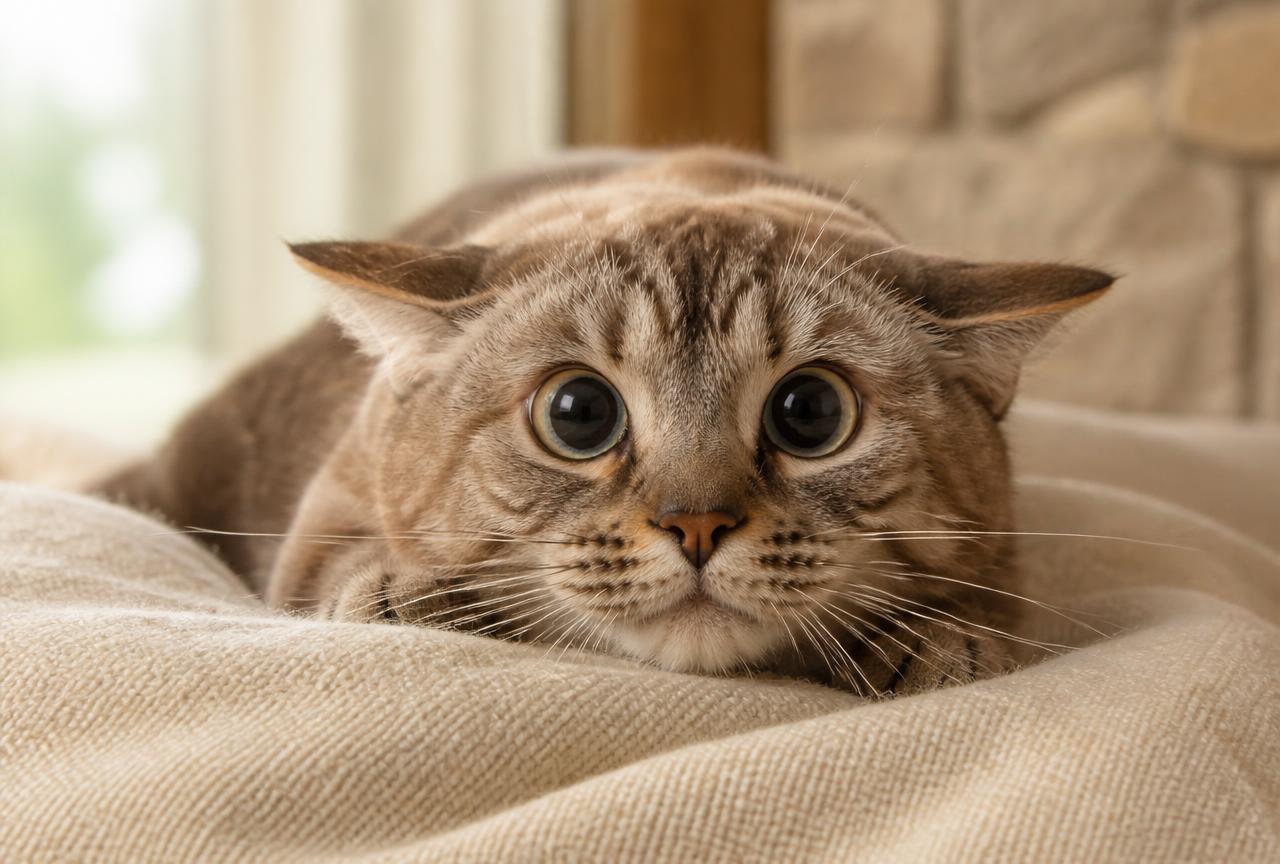
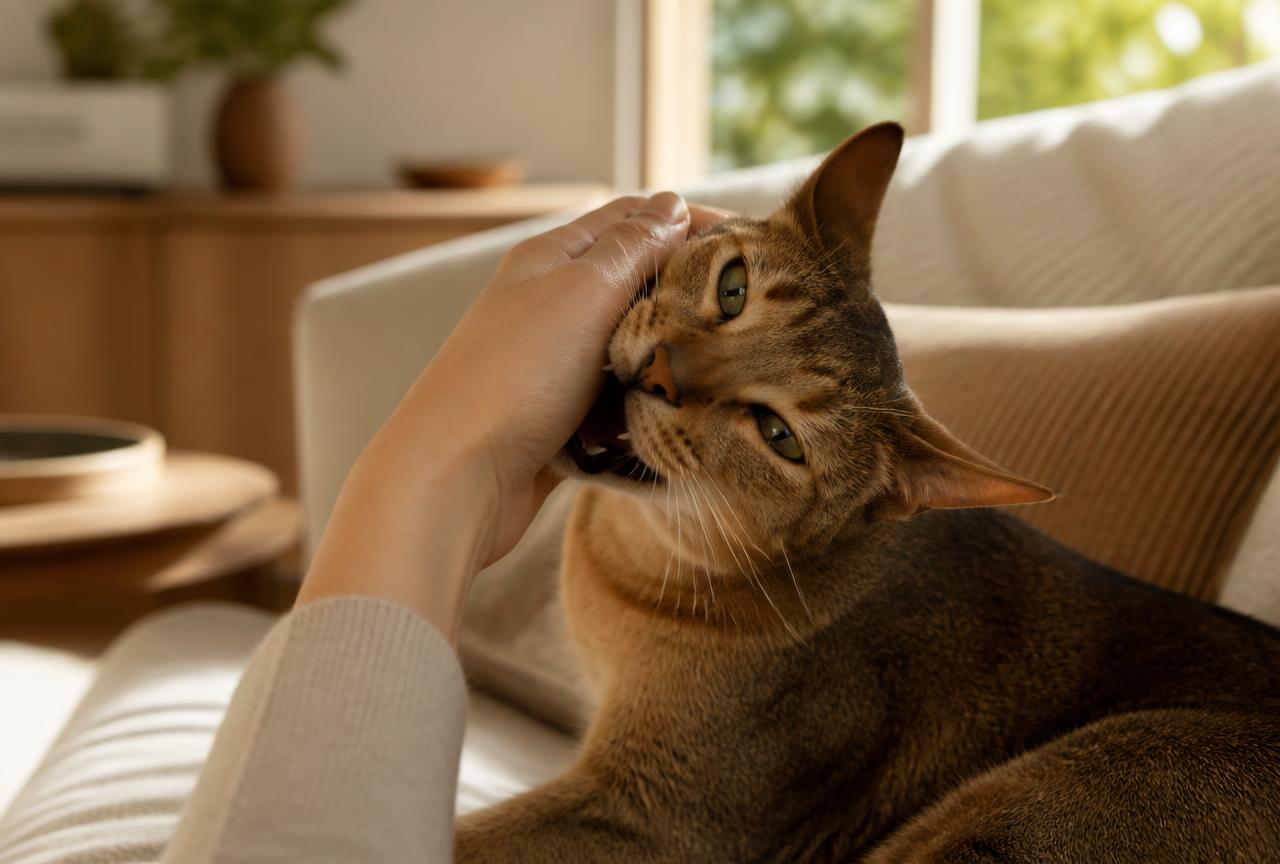
The useful habit is to watch the ears while you stroke, not the face. Most "unprovoked" bites were announced two seconds earlier by ears going sideways.
Eyes: pupils and the slow blink
Pupils respond to light first, so judge them against the room. Wide pupils in bright light mean arousal, fear, or the pre-pounce moment of play. Narrow slits in dim light can mean tension or, in a relaxed cat basking, nothing at all.
Then there is the slow blink. A cat looks at you, closes its eyes slowly, opens them again. Research on human-cat interaction has found cats blink back more when a person slow-blinks first, and are more likely to approach that person's outstretched hand. It is the closest thing we have to a shared friendly gesture, and it costs nothing to return.
A hard, unblinking stare is not affection. Between cats it is a threat, which is why the visitor who fixes your cat with adoring eye contact is the one it avoids.
Tail: volume and intent
The tail is the loudest thing on a cat.
| Tail | Meaning | What to do |
|---|---|---|
| --- | --- | --- |
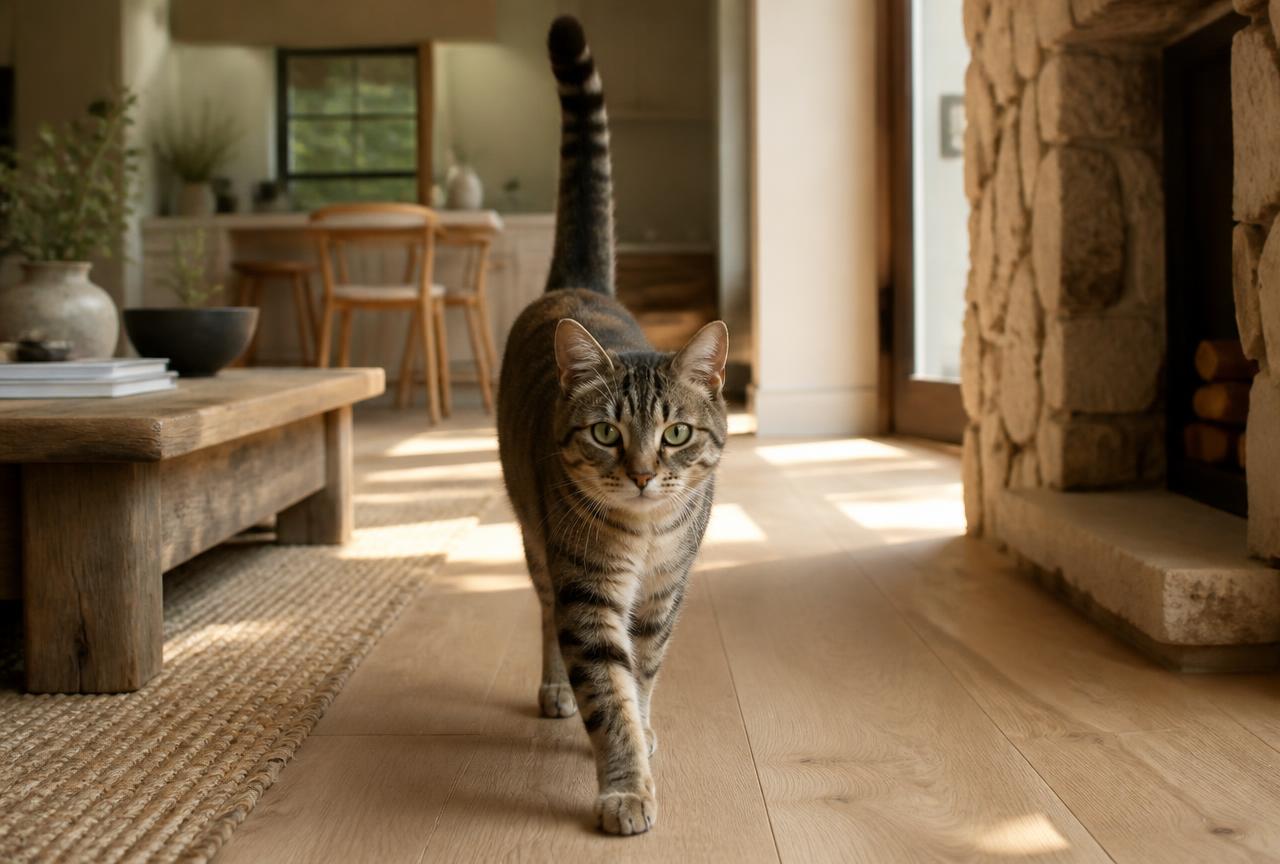
| Straight up, tip loose | Confident friendly greeting | Greet back, offer a hand at nose height |
| Question-mark curl | Playful, sociable | Good moment for a toy |
| Held low or level, moving smoothly | Neutral, going about business | Leave it |
| Tucked tight under the body | Fear or pain | Reduce noise, give an exit |
| Thrashing or thumping | Irritation, escalating | Stop touching immediately |
| Bristled like a bottle brush | Defensive threat | Do not reach in |
| Quivering upright while backed to a wall | Spraying about to happen | Check for outdoor cats, resource stress |
| Tip twitching while hunting | Concentration | Normal, let it play out |
Tail up is worth dwelling on. Free-living cats use it as a greeting between individuals who share space amicably, and kittens raise it to their mother. A cat that walks towards you with its tail up is choosing you.
Posture and distance: the whole animal
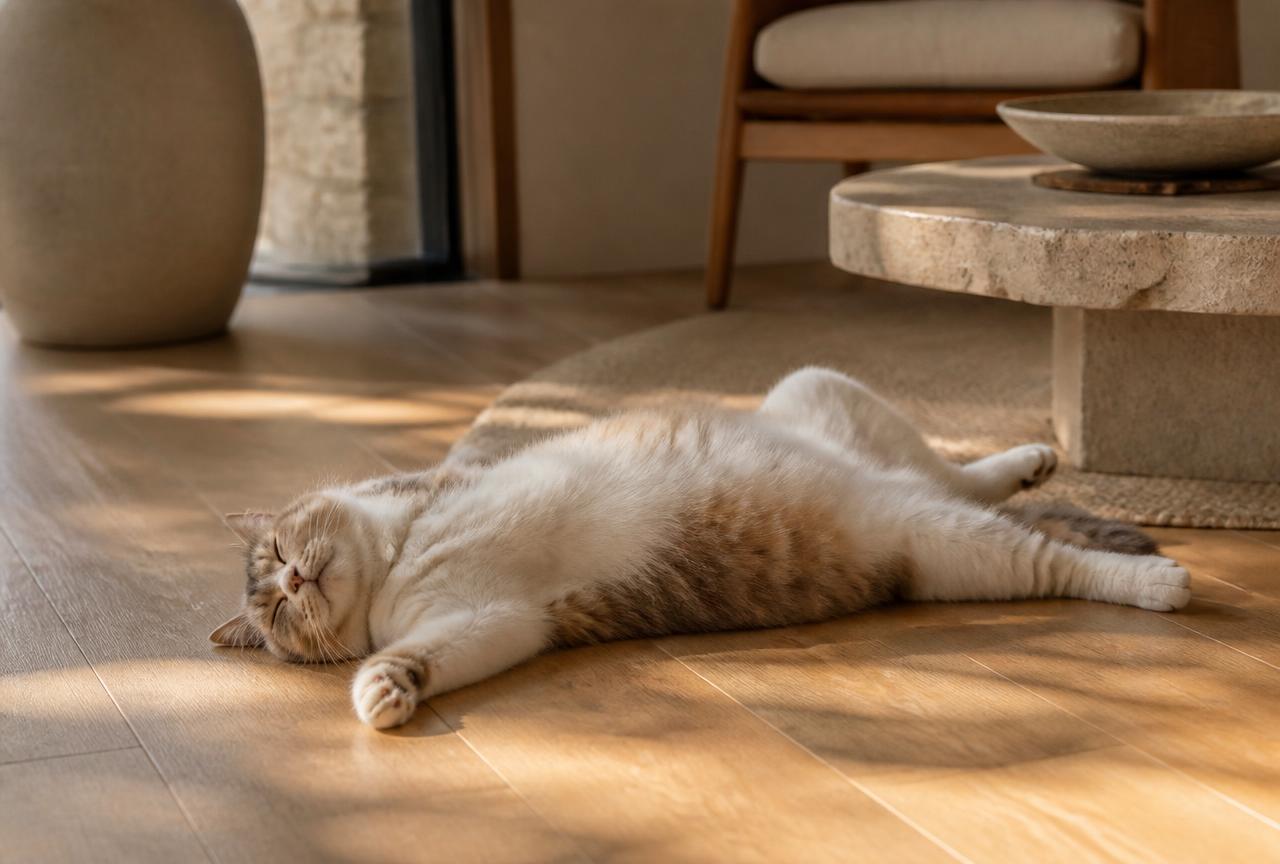
Loose and stretched out is a relaxed cat, and an exposed belly means it feels safe enough to leave its most vulnerable surface open. That is trust on display, which is exactly why grabbing the belly is a mistake so many people make. Admire, do not touch.
Crouched small, weight tucked, eyes wide, is fear or pain. Sideways with an arched back and bristled fur is a cat making itself look larger and asking for distance. A cat that sits with its weight forward and its face still is not calm; it is deciding.
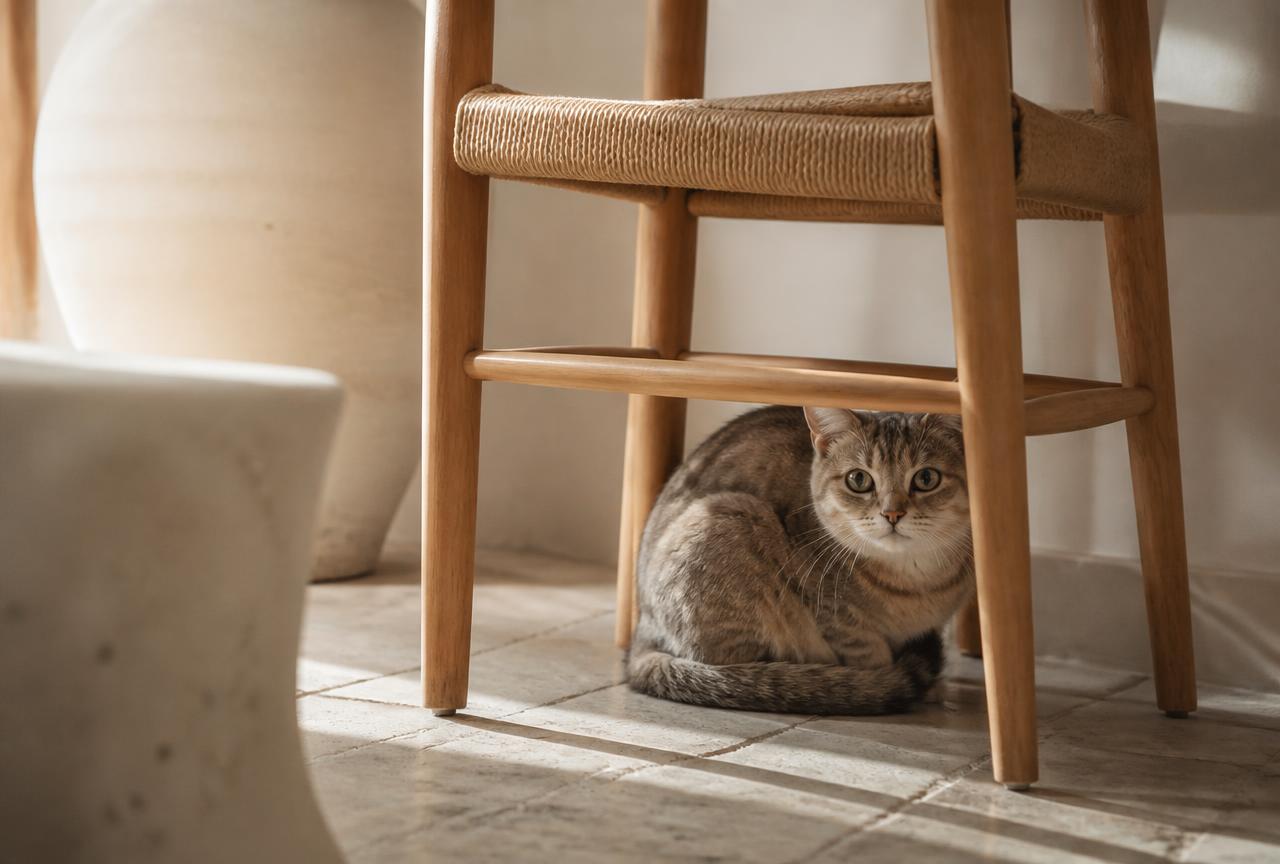
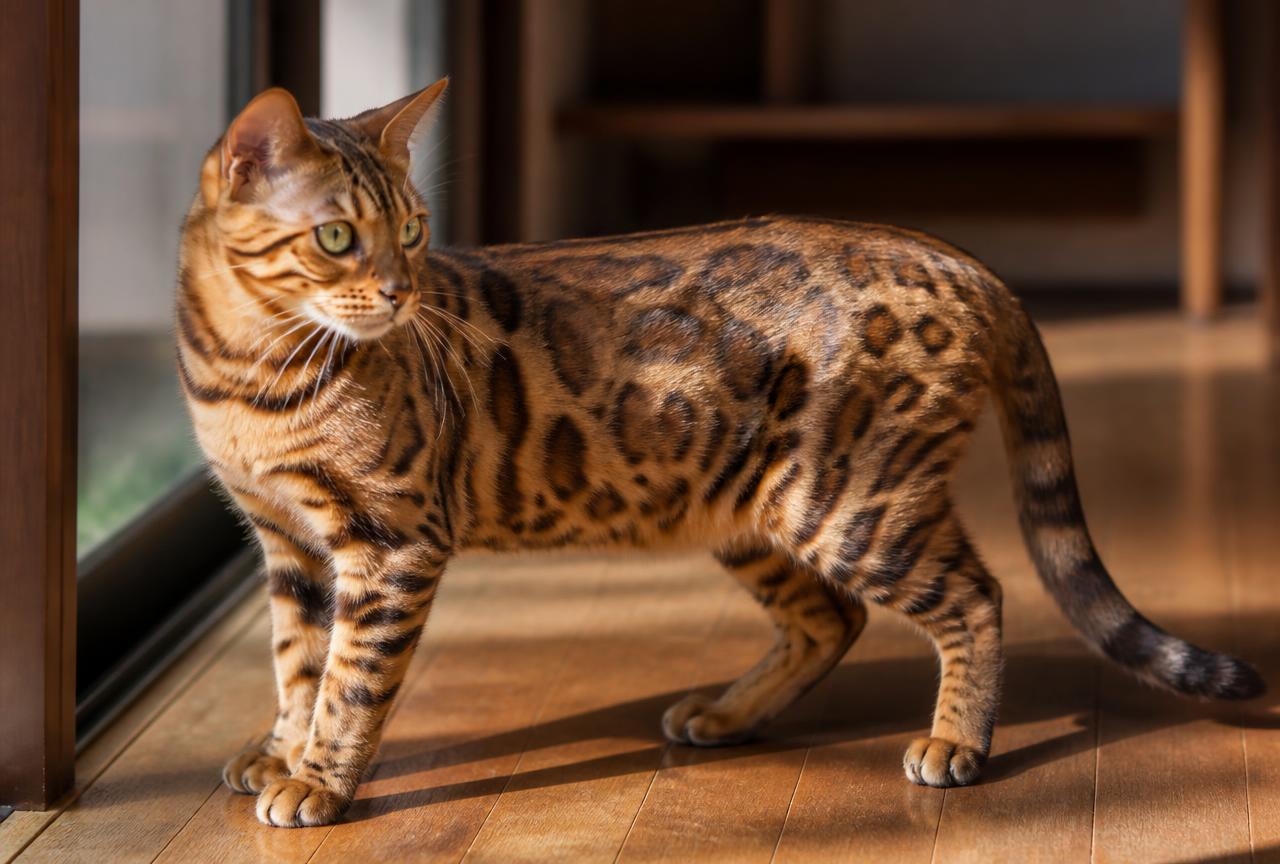
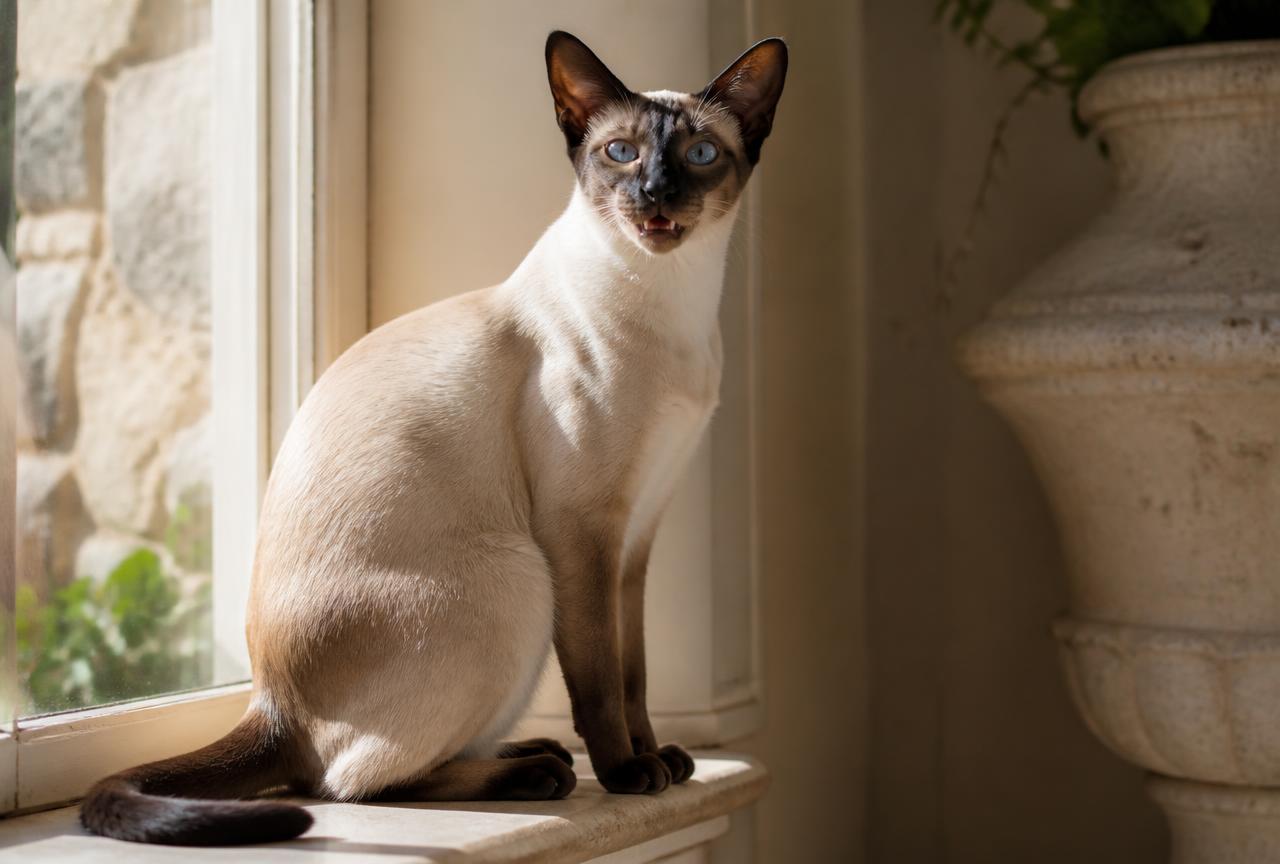
Distance is a signal in itself. A cat that stays two metres away and blinks is being polite; one that presses against your leg is asking for contact. The Ragdoll and other placid breeds tolerate handling that a Bengal or a Siamese would refuse, but the signals themselves are identical across breeds. Only the threshold differs.
Below, combine what you can see right now and get the likely mood.
Interactive · built for this article
Mood reader
Read the whole cat, not one part. Pick what you can see right now and get the likely mood plus what to do in the next thirty seconds.
Likely mood
Relaxed and sociable
Good moment for gentle contact on the cheeks and chin. Let the cat come to you.
What each signal adds
- Ears forward is the single best sign of a settled cat.
- A slow blink is an affiliative signal. Return it.
- Tail up is a greeting cats reserve for company they like.
Body language reads mood, not health. A cat that has become withdrawn or intolerant of handling over days is usually in pain, see the quiet signals of ageing.
Petting: the three-minute rule
Most petting-related aggression comes from the same sequence, and it is avoidable.
- 1Let the cat start it. Offer a still index finger at nose height. If the cat rubs it, you have consent. If it moves away, you do not.
- 2Stroke the head end. Cheeks, chin, base of the ears, along the jaw. Those are the scent-gland areas cats use to mark socially.
- 3Skip the belly and the base of the tail. Both are common trigger zones even in tolerant cats.
- 4Stop at ten seconds and see. Take your hand off. If the cat presses back in, continue. If it stays still, stop.
- 5Watch the ears, not the face, while you stroke. Sideways ears end the session.
- 6Keep it under a few minutes. Sustained stroking is over-stimulating for many cats; short frequent sessions are better tolerated.
- 7Never hold a cat in place. Restraint converts irritation into fear, and fear into a bite that the cat will remember next time.
Play, hunting and the pre-pounce look
Play uses the same body as hunting, which confuses people into thinking a wound-up cat is angry. In play you see forward ears, dilated pupils, a twitching tail tip, and a wiggle of the back feet before a pounce. Claws are usually sheathed and bites are inhibited.
Real aggression looks different: ears flat or sideways rather than forward, growling, hissing, a bristled coat, and no pauses. If the interaction has no pauses and no soft moments, it is not play.
The checklist for a good play session, if you want to end the day with a settled cat:
- A wand toy, never your hands
- Prey-like movement: away from the cat, hiding, short bursts
- Three or four sessions of five to ten minutes, ideally before meals
- An end that lets the cat "catch" something, then a small meal
- Toys rotated weekly so they stay interesting
- No laser pointer as the only game, it never allows a catch
Verdict by household
Nervous cat. Sit low, look away, blink slowly, let it approach. Never reach into a hiding place. Height and hiding spots do more for confidence than any amount of coaxing, see our indoor enrichment guide.
Children in the home. Teach one rule above all: touch the head end, hands off the belly, and stop when the tail moves. Never let a child carry a cat.
Vocal breeds. Sound carries much of the message. The Siamese voice piece decodes the calls that go with these postures.
Multi-cat home. Watch stares and blocked doorways rather than fights. Most feline conflict is silent and positional, and it shows up as tray problems before it shows up as noise.
New cat settling in. Expect tucked tails and crouching for a fortnight. The breed matchmaker is worth checking before adding another.
When to call your vet
Body language reads mood, not health, but a lasting change in how a cat holds itself is a medical signal. Book a check for a cat that has become intolerant of being touched where it used to enjoy it, that sits hunched with its head low for hours, that hides for more than a day, that flinches when lifted, or that has stopped grooming, jumping or using its usual routes.
Sudden aggression in a previously gentle adult cat, dilated pupils with disorientation, or a cat that cries when touched all need same-day attention. Pain is the commonest reason a cat's personality appears to change, and cats conceal it well: our cat age converter will tell you which life stage to be watchful in.
Questions people actually ask
What does it mean when a cat holds its tail straight up?
It is a friendly greeting. Free-living cats raise the tail when approaching individuals they share space with amicably, and kittens raise it to their mother. A cat that walks towards you tail-up, tip loose, is choosing to interact, a good moment to offer a still finger at nose height.
Why does my cat bite me when I stroke it?
Almost always over-stimulation, and almost always announced. Watch the ears rather than the face: rotating out to the sides, plus a tail that has started to move, is the warning. Stroke the cheeks and chin, avoid the belly and tail base, take your hand off every ten seconds, and keep sessions short.
What does a cat slow blink mean?
It is an affiliative, non-threatening signal. Studies of human-cat interaction found cats slow-blink back more often when a person blinks at them first, and are more likely to approach that person's hand. Returning the blink is the cheapest way to make yourself acceptable to a cautious cat.
What do flattened ears mean in a cat?
Ears pressed flat against the skull are defensive fear. The cat feels trapped and may bite or swipe if approached further. Stop reaching, sit still or move away, and make sure it has an obvious exit. Ears merely rotated sideways are earlier-stage irritation, a warning rather than panic.
Is my cat playing or fighting?
Play has forward ears, sheathed claws, inhibited bites, pauses and role swaps. Real aggression has flat or sideways ears, growling or hissing, a bristled coat, and no pauses. If two cats never break off and one is always the one trying to leave, it is not play.
Why does my cat show its belly but bite when I touch it?
An exposed belly signals that the cat feels safe, not that it wants that area handled. The belly and the base of the tail are trigger zones in many otherwise tolerant cats. Take it as a compliment and stroke the head end instead.
How can I tell if my cat is in pain?
Look for change rather than a single posture: hunched sitting with the head low, hiding, reluctance to jump, a tucked tail, new intolerance of being touched or lifted, reduced grooming, or a flattened facial expression with ears held slightly back. Any of these lasting more than a day or two warrants a vet visit.
Sources
- Feline environmental needs guidelines, American Association of Feline Practitioners / ISFM
- Understanding cat behaviour and communication, International Cat Care
- Cat behaviour and human-directed communication, Cornell Feline Health Center
- Recognising pain in cats, WSAVA Global Pain Council
Breeds mentioned

Put it into practice
Read next
Why do cats sleep so much? Normal hours, odd habits and the red flags
Why do cats sleep so much? What 12–16 hours a day really means, the light doze vs deep sleep, and the changes that actually matter.