United States and United Kingdom
Himalayan
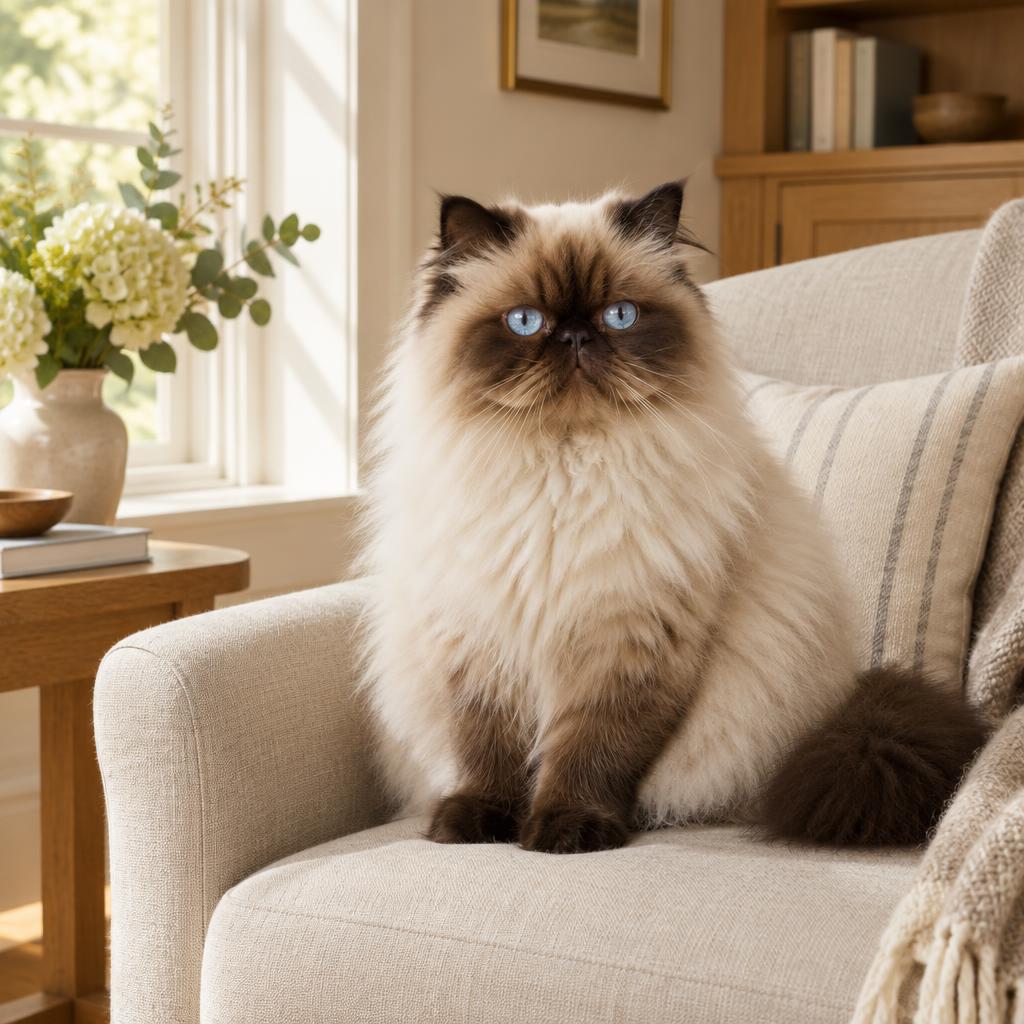
Persian body, Siamese colouring, blue eyes. Calm and affectionate, but the coat needs daily attention and the flat face needs watching.
Dr Amara Okonjo, DVM
The colourpoint Persian, and the daily care it asks for
The short version
- Daily combing is not optional. Skipped days turn into mats that need clipping out under sedation.
- The flat face means tear overflow, so plan on wiping around the eyes every day.
- Calm, quiet and affectionate. One of the least demanding breeds in terms of activity.
- Heat is handled poorly. Shortened airways and a dense coat are a bad combination in hot weather.
- Ask breeders about polycystic kidney disease testing, and consider a moderate muzzle over an extreme one.
- Weight
- 3.2–5.5 kg
- Lifespan
- 9–15 yrs
- Coat
- Long
- Size
- Medium
- Grown male
- 4–5.5 kg
- Grown female
- 3.2–4.5 kg
- Years to full size
- about 2
- One-off setup
- €320–600
Get one if…
- Calm, quiet households
- People who enjoy a daily grooming routine
- Flat dwellers and home workers
- Anyone wanting an affectionate, low-energy companion
Think again if…
- Very busy or noisy homes
- Households in hot climates without cooling
- Owners who cannot commit to daily combing and eye care
- People wanting an active, climbing cat
Trait profile
Very low energy, very high grooming. This is a cat who wants company on the sofa rather than a game across the room, and the coat is the single largest commitment.
Space & setup. Happy in a flat. They want a warm, settled spot rather than height and distance.
Allergies. Not hypoallergenic, and the long coat spreads dander widely. Allergy sufferers should meet an adult cat before committing.
The review
A longhaired colourpoint cat developed by crossing Persians with Siamese. Calm, gentle and home-loving, with high grooming needs and the health considerations that come with a flattened face.
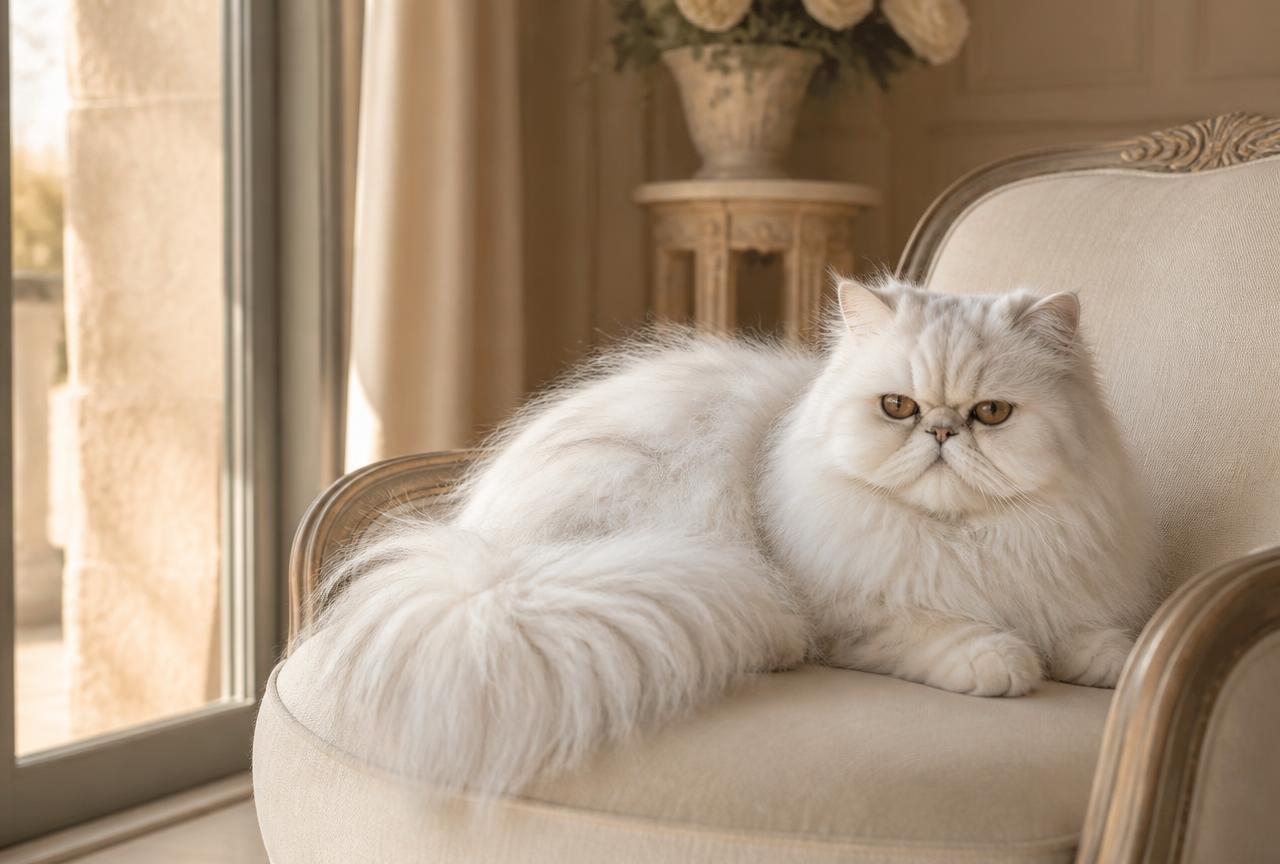
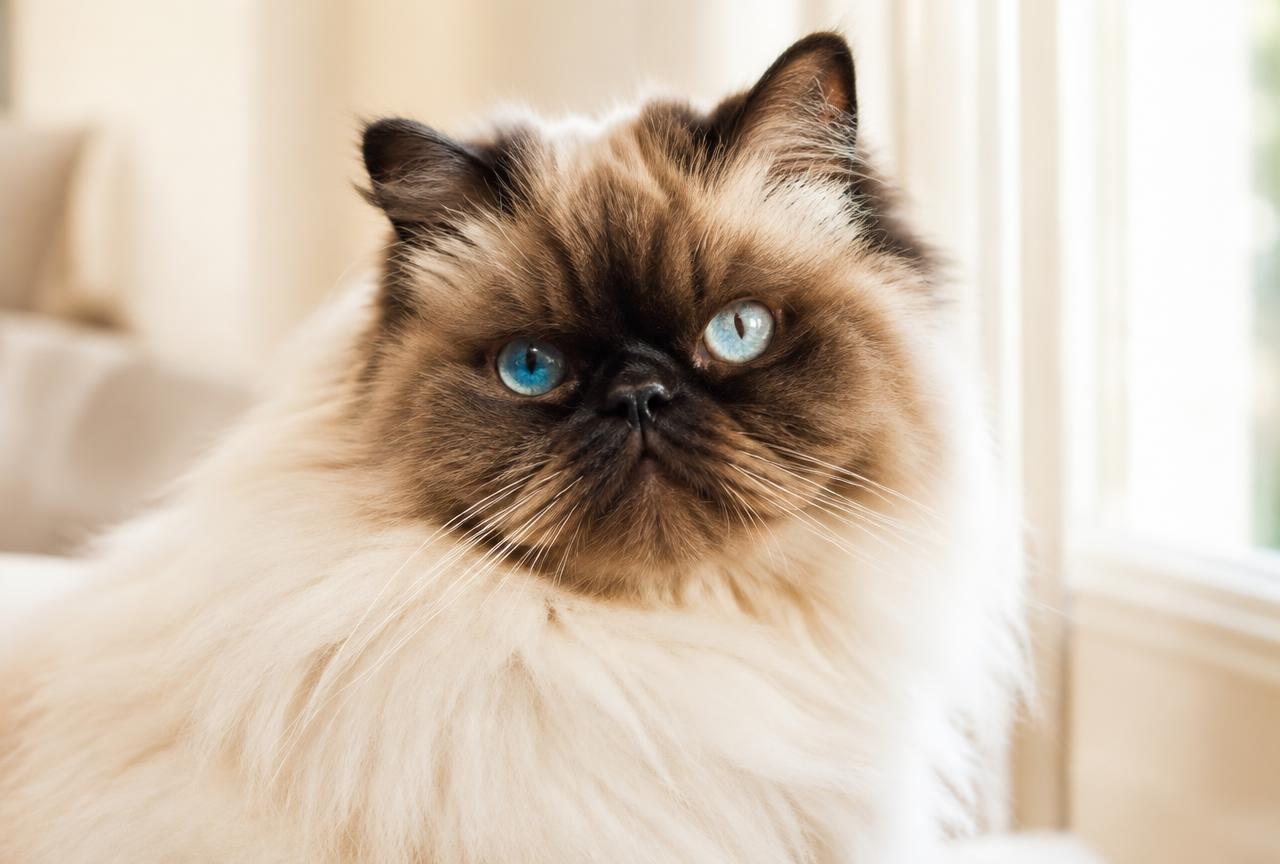
The Himalayan is what happens when you give a Persian the colouring of a Siamese: a dense, long, pale coat with darker points on the face, ears, legs and tail, and blue eyes that are part of the breed standard rather than a happy accident. Some registries treat it as a Persian variety rather than a separate breed, which tells you most of what you need to know about how it behaves. This is a Persian in temperament, with all that implies.
Living with one is quiet work. Himalayans are among the calmest cats we cover. They are affectionate without being clingy, they rarely make much noise, and they are content to spend the afternoon on a cushion in a patch of sun and the evening pressed against your leg. They play, but in short, gentle bursts, usually on the floor rather than at height. If you want a cat who patrols the top of the bookcase, look elsewhere. If you want a companion who is simply there, this is a good choice.
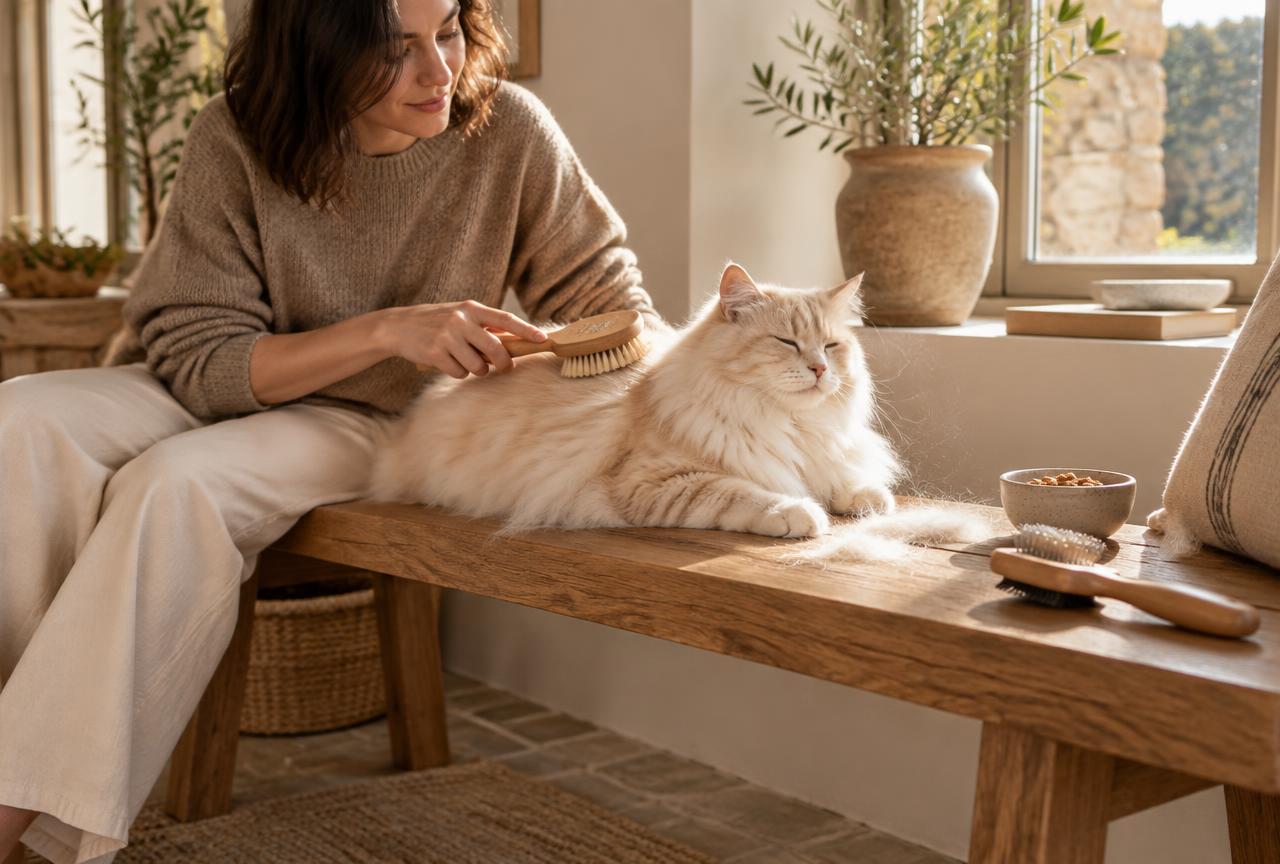
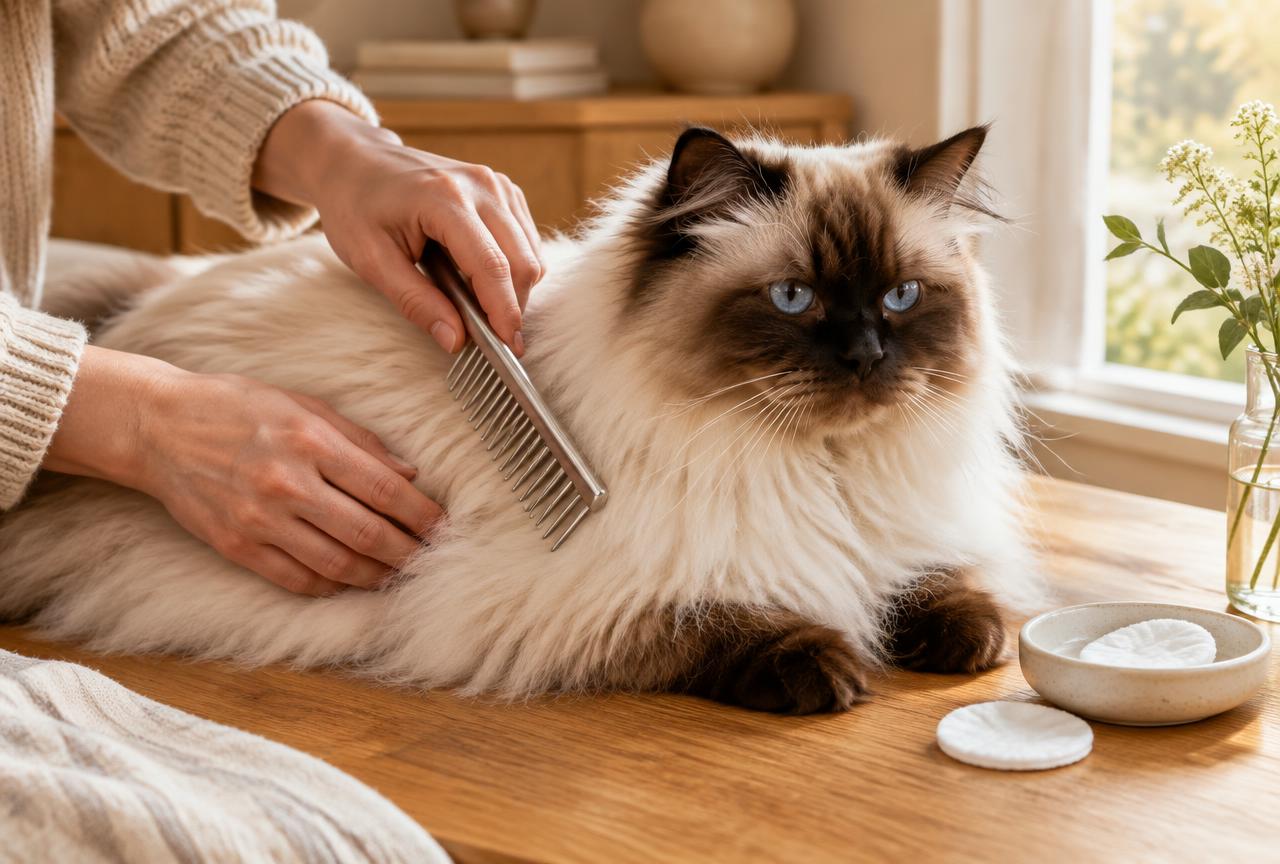
The coat is the commitment, and it should be stated plainly. A Himalayan coat is long, dense and soft, which is exactly the combination that mats. Ten minutes of combing every day keeps it in order. Three days off, particularly behind the ears, under the arms, along the belly and around the trousers of the hind legs, and you will find felted lumps that cannot be brushed out. Mats pull on the skin, cause sores, and generally end in a trip to a groomer or vet for clipping under sedation. The daily habit is much easier than the alternative, and most cats come to accept it if you start in kittenhood and keep sessions short.
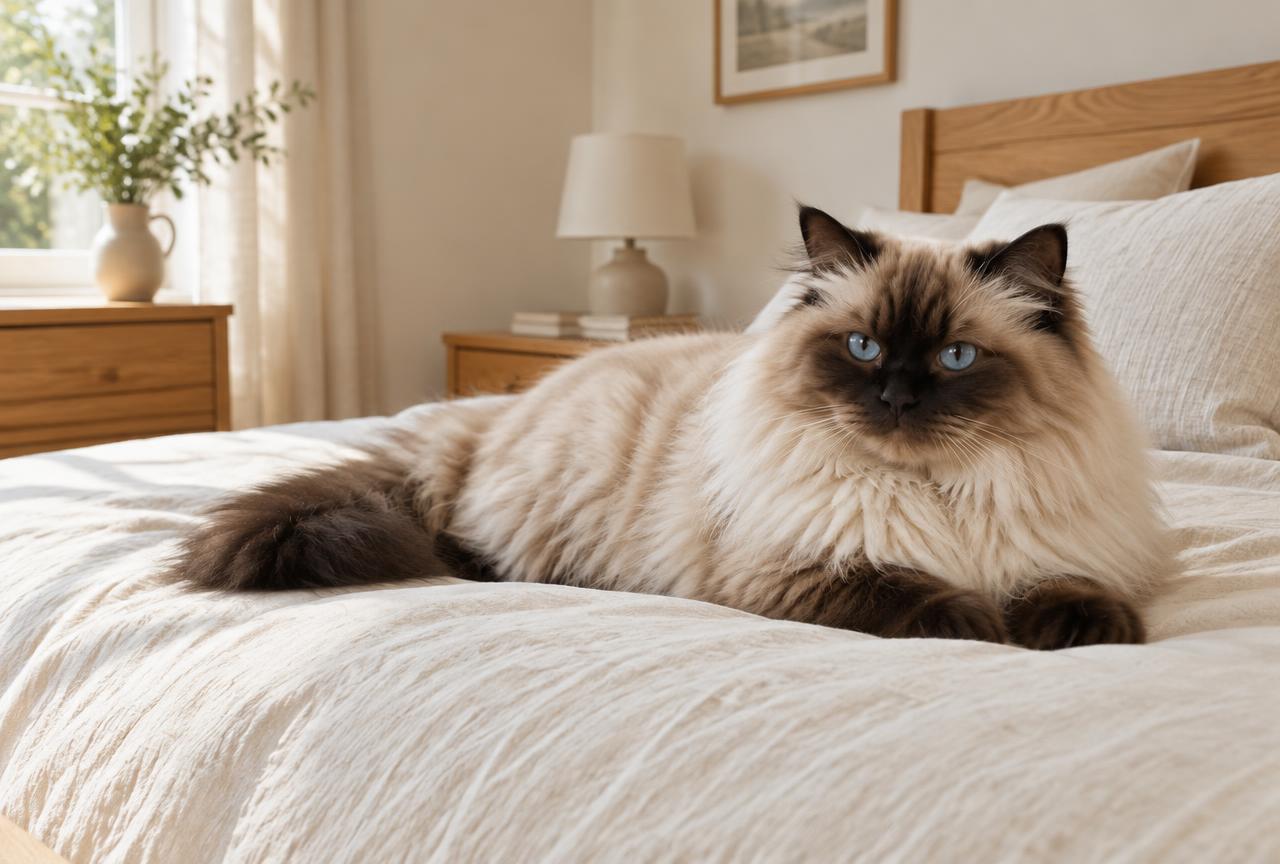
The face needs its own routine. A shortened muzzle changes the drainage of the tear ducts, so tears run down the face rather than away, staining the fur and irritating the skin in the folds below the eyes. A daily wipe with damp cotton, moving away from the eye, handles it. While you are there, notice whether the eyes are clear and the breathing is quiet. Snuffling, open-mouth breathing after mild activity, or noisy sleep are not charming quirks. They are signs that the airway is too compromised, and they are worth a conversation with a vet.
Heat is the other practical issue. A dense double coat plus a shortened airway means a cat who struggles to cool down. In a hot climate, plan for shade, good ventilation, cool floors to lie on and plenty of water. Never leave a Himalayan in a warm car or a conservatory, and be alert in summer to panting, which in cats is always worth taking seriously.
Health beyond that centres on two things. Polycystic kidney disease has historically been common in Persian lines, and a genetic test exists, so there is no excuse for a breeder who cannot show clear results for both parents. Hypertrophic cardiomyopathy is also seen, and a breeder who screens hearts by ultrasound is telling you something about their standards. Dental crowding is a third, less discussed consequence of the shortened jaw: teeth sit closer together, tartar accumulates faster, and dental disease arrives earlier than in a long-muzzled cat. Daily brushing, if you can establish it, pays for itself.
There is a choice worth making at the point of purchase. Himalayans are bred along a spectrum from a moderate, older-style face with a visible muzzle, to a very flat modern one. The moderate face breathes better, drains tears better and chews better. We would choose it every time, and we would be wary of any breeder who treats extreme flatness as the goal rather than a risk.
Who suits this cat? A calm household with a predictable rhythm, someone at home for part of the day, and a person who finds the grooming pleasant rather than a chore. Families with very young children are a poorer match, not because the cat is snappy, but because a Himalayan will usually withdraw rather than object, and a cat who withdraws from a busy home is not a happy cat. Given the right home, they are among the most rewarding companions there are: undemanding, affectionate and entirely uninterested in your shelves.
Grooming, realistically
- 1Comb the whole coat daily with a wide-tooth metal comb, working in sections and finishing behind the ears, under the arms and along the belly.
- 2Wipe around the eyes each day with damp cotton, moving away from the eye and using a fresh piece per side.
- 3Check the trousers and tail base for soiling and trim the fur short there if it becomes a problem.
- 4Bath every six to eight weeks if the coat becomes greasy, drying thoroughly to the skin.
- 5Brush teeth daily if you can. Crowded jaws build tartar faster than most.
What you actually need
- Wide-tooth metal comb
- Slicker brush for the ruff
- Cotton pads for daily eye care
- Cat-safe shampoo and a high-absorbency towel
- Cat toothbrush and enzymatic paste
Kitten to adult
| Age | Male | Female | What is happening |
|---|---|---|---|
| 8 weeks | 0.8-1.1 kg | 0.7-1.0 kg | Points still pale. Start handling for combing immediately. |
| 3 months | 1.4-1.9 kg | 1.3-1.7 kg | Coat thickens. Daily comb becomes essential. |
| 6 months | 2.5-3.2 kg | 2.2-2.9 kg | Point colour deepens. Watch for tear staining. |
| 12 months | 3.5-4.5 kg | 3.0-4.0 kg | Adult body, coat still filling in. |
| 2 years | 4.0-5.5 kg | 3.2-4.5 kg | Full coat and final weight. Keep it lean; this is a sedentary breed. |
Ranges are typical, not targets. Judge condition by ribs and waist, and check with the ideal weight checker.
What to ask a breeder
- Can you show me clear polycystic kidney disease test results for both parents?
- Have the parents been heart-screened by ultrasound?
- Do you breed for a moderate muzzle rather than an extreme flat face?
- How do the adults breathe after play? May I watch them?
- What grooming has the kitten already been handled for?
Health watch-list
What to ask a breeder about, and what to watch for over a lifetime. This is orientation, not veterinary advice, anything you notice belongs in front of a vet.
Polycystic kidney disease
Historically common in Persian linesA genetic test exists. Insist on clear results for both parents before buying.
Brachycephalic airway problems
Common in flat-faced linesNoisy breathing, snuffling and heat intolerance. Choose a moderate muzzle over an extreme one.
Excessive tearing and eye irritation
Very commonAltered tear drainage stains fur and irritates skin. Daily wiping prevents most of it.
Hypertrophic cardiomyopathy
UncommonScreened by ultrasound in responsible breeding programmes.
Dental crowding and periodontal disease
CommonA shortened jaw crowds teeth and accelerates tartar. Daily brushing helps considerably.
Coat matting and skin sores
Very common if grooming lapsesMats pull on the skin and hide infection. Clipping under sedation is the usual remedy.
What it costs to keep one
Realistic running cost
€96 / month
About €1,152 a year, or roughly €13,824 across a 12-year life, before purchase price, neutering and one-off vet events.
Before the cat arrives. Budget roughly €320–600 for trays, carrier, posts, bowls, bedding and grooming kit sized for this breed. Figures throughout are indicative and vary a good deal between countries.
Interactive · built for this breed
Is a Himalayan right for your home?
A flat-faced longhair asks for daily grooming and eye care. Four questions to see whether that suits your week.
Verdict
A strong match
Calm home, steady grooming habit. This is the household a Himalayan wants.
Keep the weight honest with the ideal weight tool, or compare the alternatives in the matchmaker.
The verdict, by household
Flat dwellers
Excellent
Low energy, no interest in roaming. A warm sunny spot is the main requirement.
Families with young children
Fair
Gentle, but they retreat rather than protest. Best with calm, older children.
First-time owners
Good, if you like grooming
Easy in temperament, demanding in coat care. Be honest about the ten minutes a day.
Multi-pet homes
Good
Tolerant of quiet cats and calm dogs. They will not compete for space.
Hot climates
Poor without cooling
Dense coat plus a shortened airway handles heat badly.
When to call your vet
- Noisy or open-mouth breathing, or panting after mild activity
- Persistent eye discharge, squinting or a cloudy eye
- Increased thirst or urination, which can point to kidney disease
- Mats forming close to the skin, or sore patches beneath them
- Reduced appetite or pawing at the mouth, which often means dental pain
Nothing here is a diagnosis. Breathing difficulty, sudden hind-leg weakness and straining to urinate are emergencies, go the same day.
Himalayan vs the closest alternatives
| Breed | Weight | Energy | Grooming | € / month |
|---|---|---|---|---|
| Himalayan | 3.2–5.5 kg | 3/10 | 9/10 | €96 |
| Persian | 3–6.5 kg | 3/10 | 10/10 | €99 |
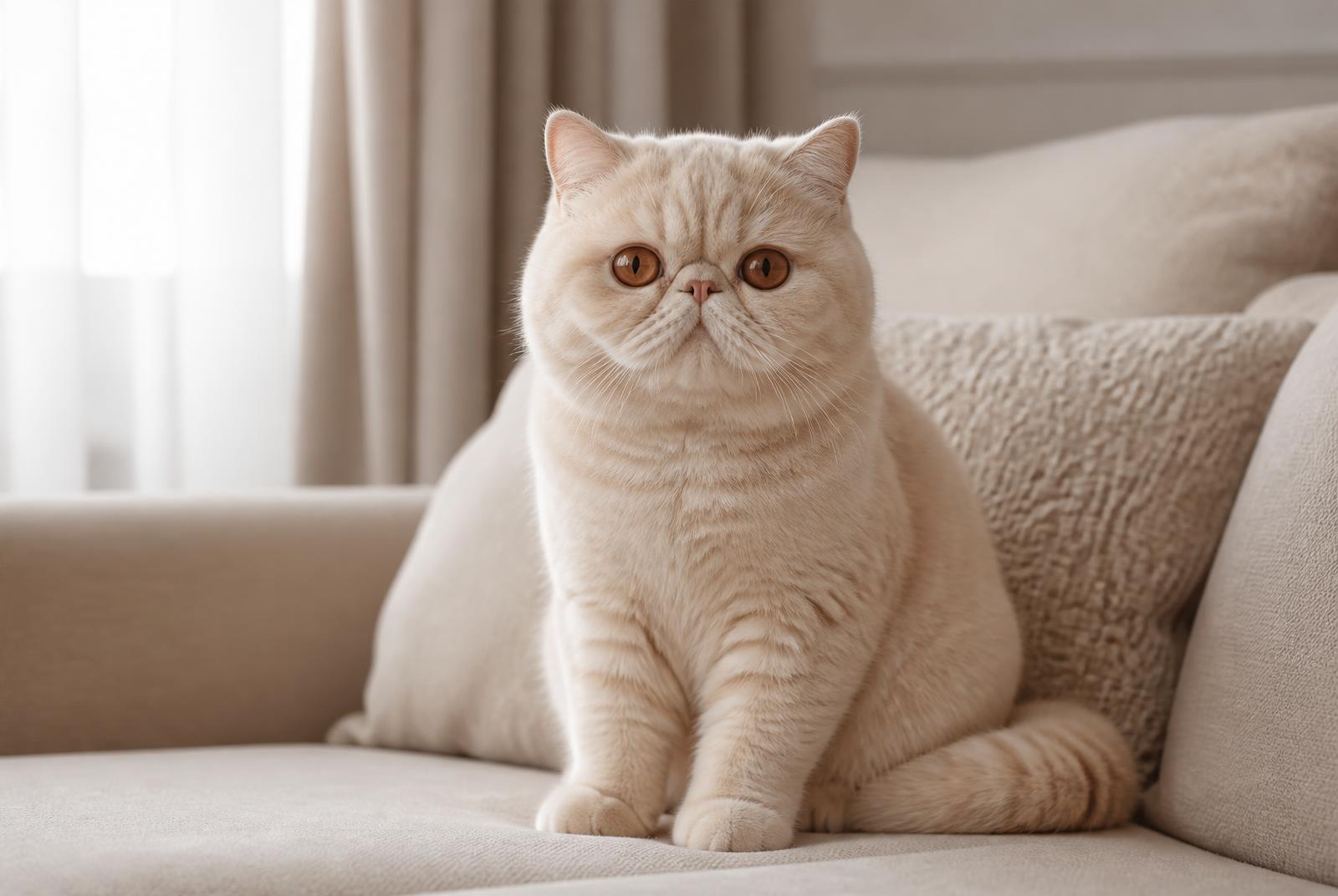
| Exotic Shorthair | 3–6.5 kg | 3/10 | 4/10 | €84 |
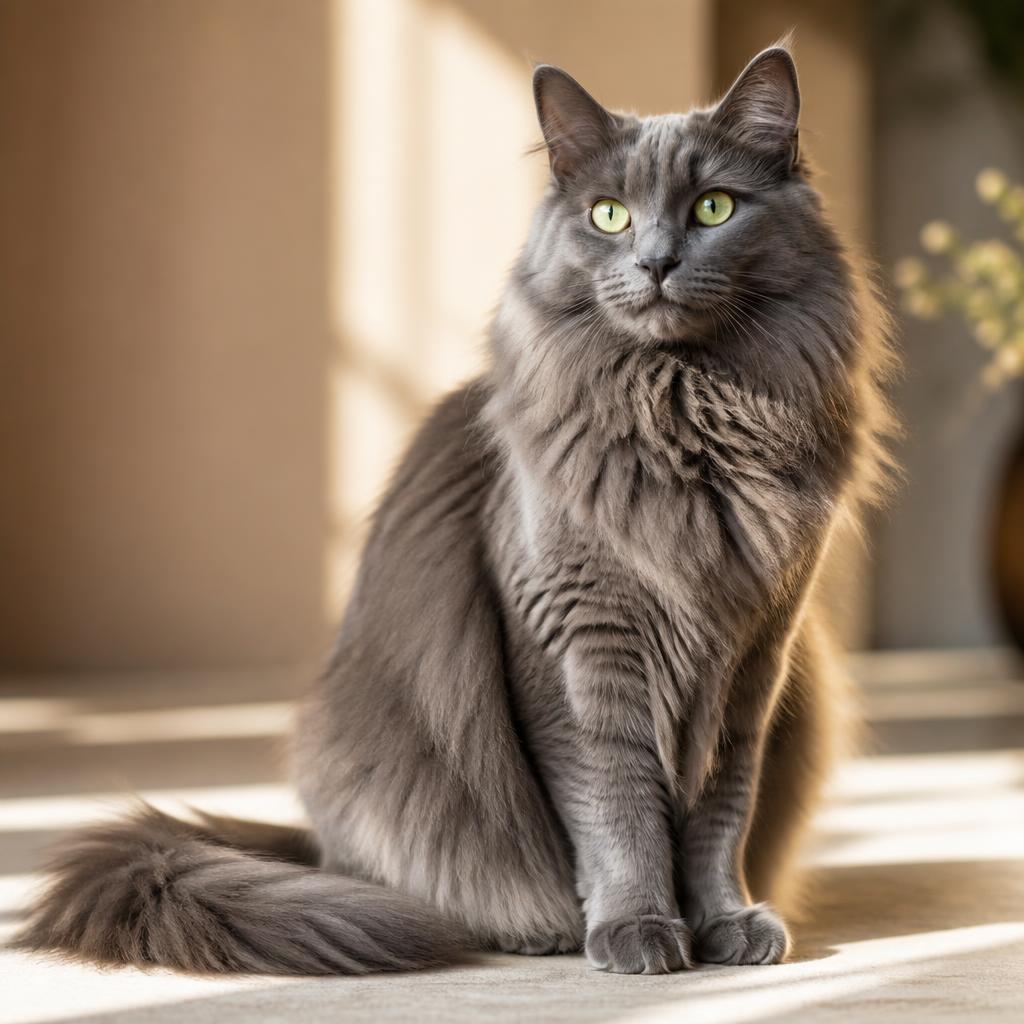
| Nebelung | 2.5–5.5 kg | 5/10 | 8/10 | €83 |
Himalayan questions, answered
What is the difference between a Himalayan and a Persian?
A Himalayan is a Persian with colourpoint markings and blue eyes, the result of historic crosses with Siamese. Body type, coat and temperament are Persian. Some registries treat it as a Persian colour variety rather than a separate breed.
How much grooming does a Himalayan really need?
About ten minutes of combing every day. The coat is long and dense, which is the combination most prone to matting, and mats form fastest behind the ears, under the arms, on the belly and around the hind legs. Missing several days in a row usually means clipping rather than brushing.
Why do their eyes water so much?
The shortened muzzle changes the path of the tear ducts, so tears spill onto the face instead of draining away. A daily wipe with damp cotton, moving away from the eye, keeps the fur and skin healthy. Sudden heavy discharge, squinting or cloudiness is a different matter and needs a vet.
Are Himalayans healthy?
They can be, with careful breeding. The two tests that matter most are the genetic test for polycystic kidney disease and heart screening by ultrasound. Breathing and dental problems track closely with how flat the face is, so a moderate muzzle is worth seeking out.
Do Himalayans cope with hot weather?
Poorly. A dense double coat and a shortened airway make cooling hard. In warm climates provide shade, ventilation, cool surfaces and fresh water, and treat panting as a reason to act rather than a curiosity.
Are they good with children?
They are gentle and unlikely to lash out, but they retreat from noise and handling rather than objecting. Calm, older children who let the cat come to them make a far better match than a busy toddler household.
How much does a Himalayan cost to keep?
Roughly 95 to 105 EUR a month as an indicative range for food, litter, insurance and grooming supplies, with occasional professional grooming on top. One-off setup costs run around 320 to 600 EUR. Budget for dental care earlier than you would for a long-muzzled breed.