United States, from Persian and American Shorthair crosses in the 1960s
Exotic Shorthair
Often sold as the lazy person's Persian, and on grooming that is fair. On facial structure it is exactly the same conversation, which makes choosing the breeder more important than choosing the colour.
The ReMews. desk
The Persian temperament, in a coat you can actually manage, with the face still to consider.
The short version
- A Persian temperament and outline under a short plush coat: two or three brushings a week rather than daily work.
- Brachycephalic. Insist on a moderate face with open nostrils, breathing, tear drainage and dental crowding all worsen as the face flattens.
- Budget one minute a day for wiping the eye area and nose folds. This is not optional for the breed.
- Ask for DNA testing for polycystic kidney disease and echocardiogram screening for heart disease.
- Low energy plus a good appetite: measured meals, monthly weigh-ins and two short play sessions a day.
- Weight
- 3–6.5 kg
- Lifespan
- 12–16 yrs
- Coat
- Short
- Size
- Medium
- Grown male
- 4–6.5 kg
- Grown female
- 3–5 kg
- Years to full size
- about 2
- One-off setup
- €250–540
Get one if…
- You want a calm, quiet, affectionate cat
- You live in a flat or on one level
- You will wipe the eyes daily and brush twice a week
- You are willing to choose a moderate face over an extreme one
- You want a cat that is happy at ground level
Think again if…
- You want an athletic or highly playful cat
- You would rather not do daily face care
- You are set on the flattest possible face
- You free-feed and would rather not weigh a cat
Trait profile
Lowest energy and lowest vocality in this index, with grooming far below the Persian. The score that does not appear here is facial structure, and it matters more than any of the others.
Space & setup. Ideal for a flat. Low energy, little interest in height, and content on one level, which also means the litter tray, water and food should be easy to reach without jumping.
Allergies. Not hypoallergenic. The coat is short but dense, and Fel d 1 spreads through the home on shed hair and dander as with any cat.
The review
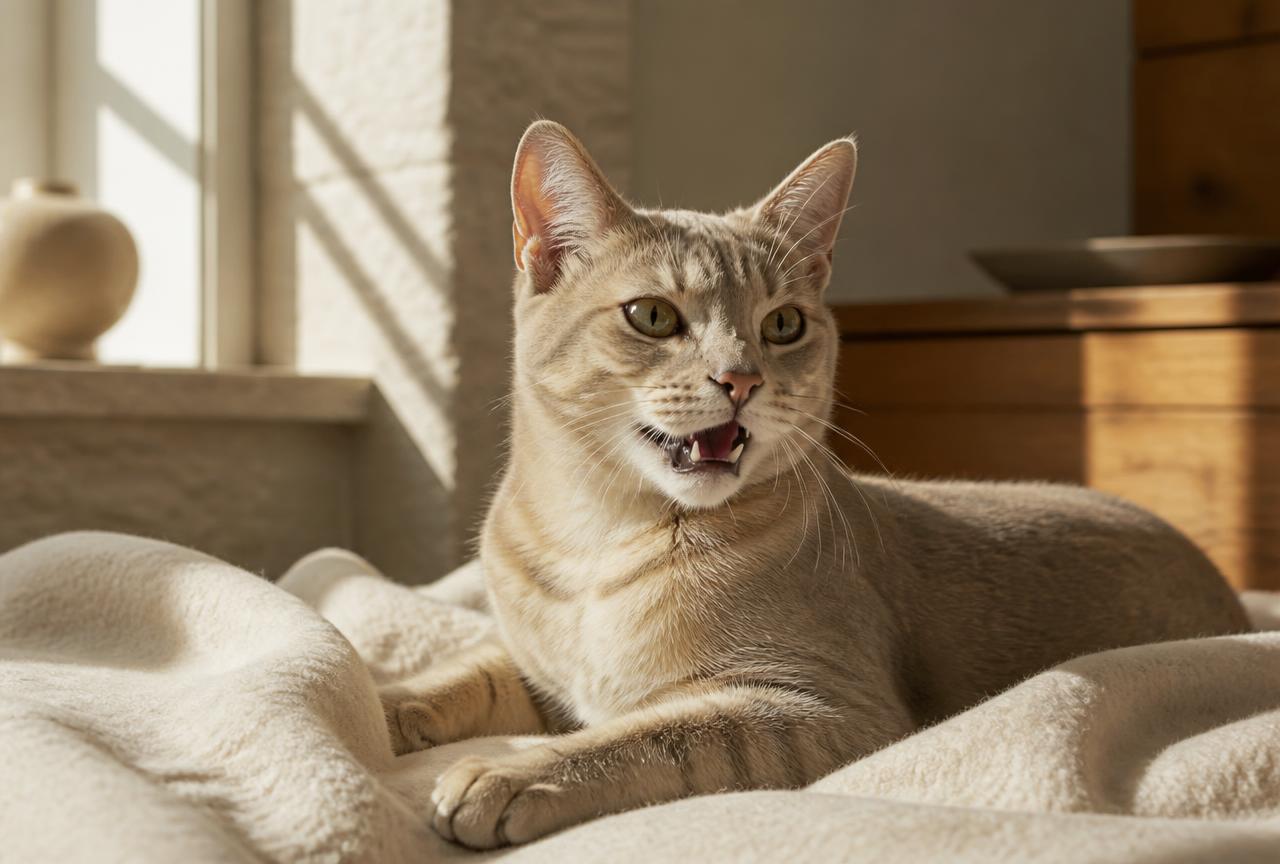
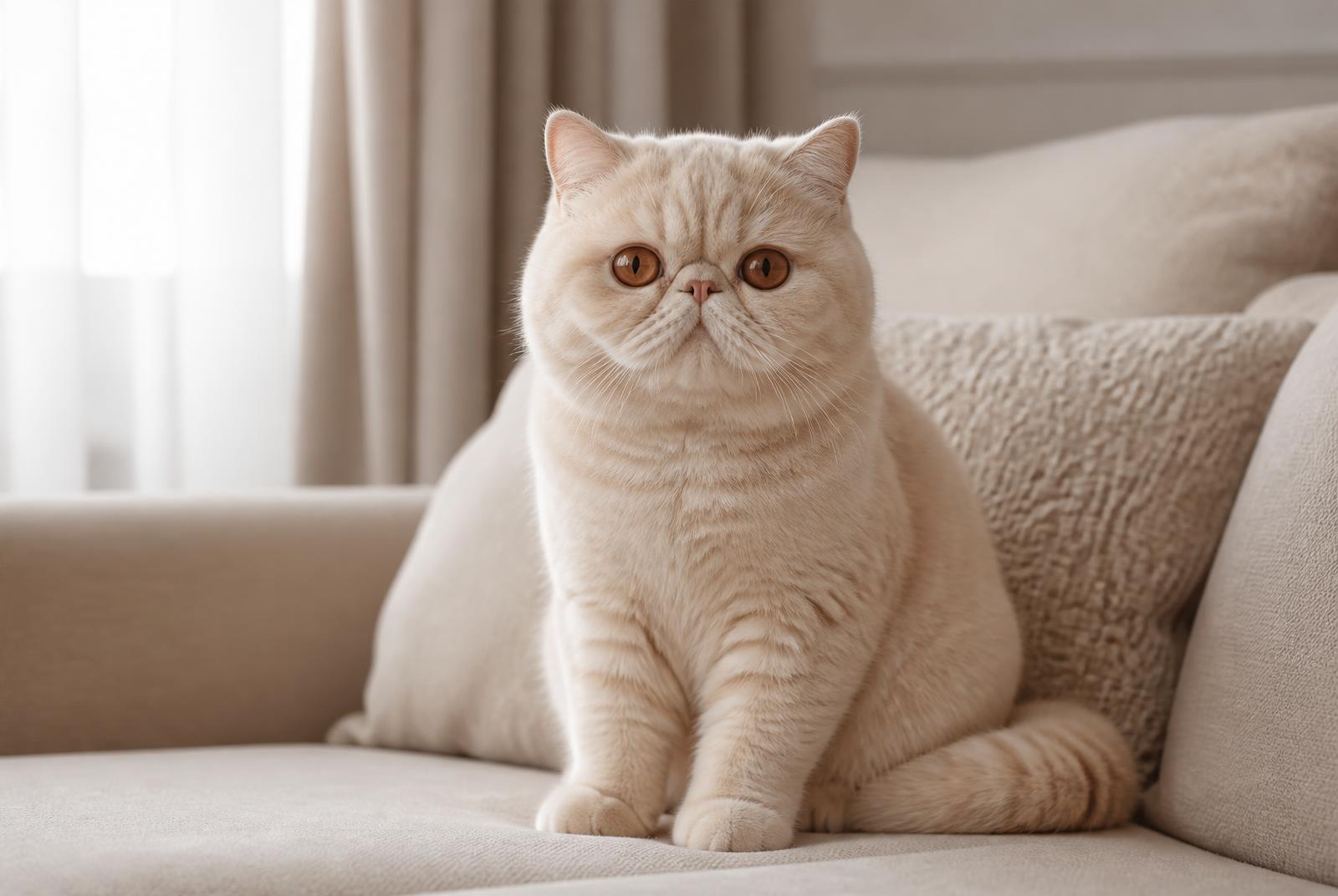
A Persian in short coat: the same round head, stocky body and placid nature, with a dense plush coat that needs a fraction of the grooming. The flattened face brings the same health commitments as its long-haired parent breed.
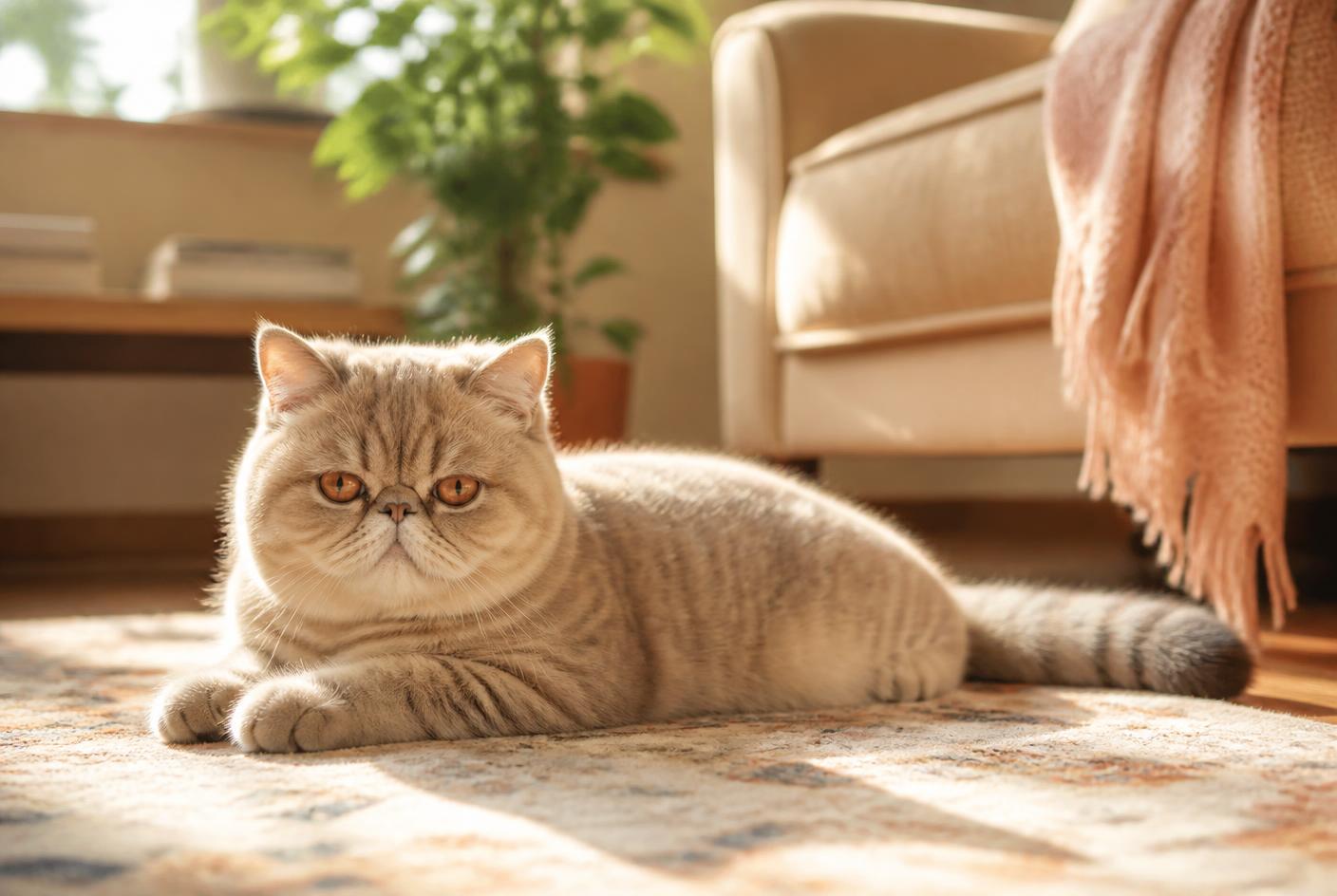
The Exotic Shorthair exists because somebody wanted a Persian they could brush in five minutes. Crossing Persians with American Shorthairs in the 1960s produced exactly that: the round head, the stocky cobby body, the short legs, the enormous eyes and the famously unhurried temperament, all under a dense plush coat about the length of a British Shorthair's. Kittens with long coats still appear in Exotic litters and are usually registered as Persians, which tells you how thin the line between the two breeds really is.
As a cat to live with, this is one of the most restful animals in this index. An Exotic is quiet, a soft, infrequent voice, and undemanding in a way that suits small homes, older owners and anyone who works from home and does not want a cat on the keyboard. It is affectionate without being clingy: it will lie near you, follow you between rooms at a walk, and accept being picked up with more grace than most breeds. Energy is genuinely low. Expect short bursts of play, a decided preference for ground level over height, and long stretches of contented sleep. The American Shorthair inheritance shows through occasionally as a flash of interest in a toy mouse, which owners find endearing precisely because it is unexpected.
Grooming is where the breed delivers on its promise. The coat is dense, so it needs a comb or brush two or three times a week to prevent felting behind the legs and around the ruff, but the daily half-hour that a Persian demands simply does not apply. Fifteen minutes a week, honestly done, keeps an Exotic in good order.
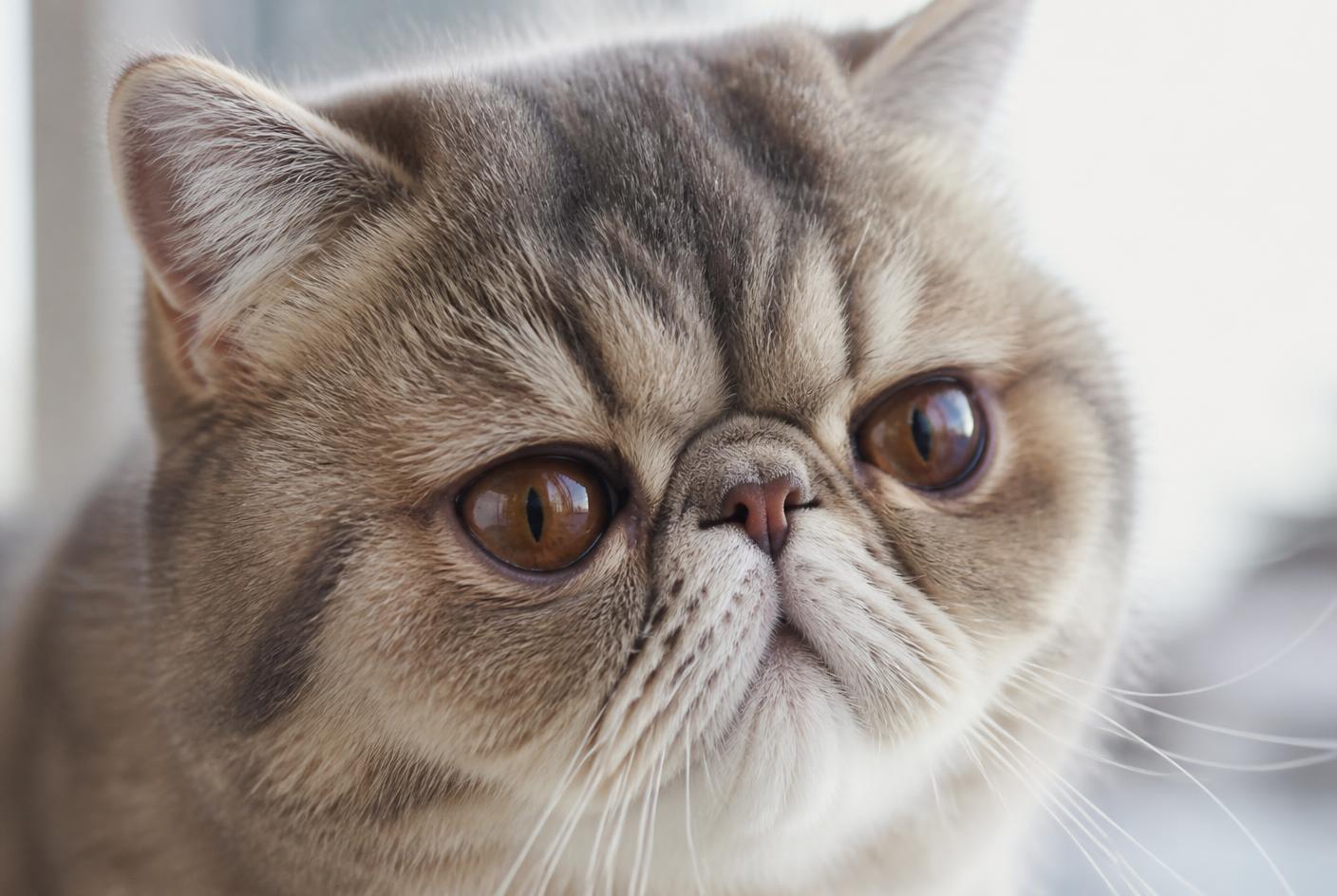
The face is the part that requires an adult conversation. Like the Persian, the Exotic is brachycephalic, the skull is foreshortened, and the consequences scale directly with how extreme the face is. A moderate Exotic with a visible nose and open nostrils can live a completely ordinary life. A very flat, so-called peke-faced example may breathe noisily at rest, tire quickly in warm weather, have tear ducts that cannot drain so that fluid runs down the face and irritates the skin, and carry teeth crowded into a jaw too short for them. None of this is inevitable in the breed; all of it is more likely the flatter the face.
So choose accordingly. Ask to watch a kitten after five minutes of play and listen to its breathing. Ask to see it asleep. Look at the nostrils, they should be open, not slitted. Look for tear staining on the parents. A breeder who is deliberately breeding towards a more open face will tell you so proudly and will show you the evidence; one who dismisses the question is telling you something too.
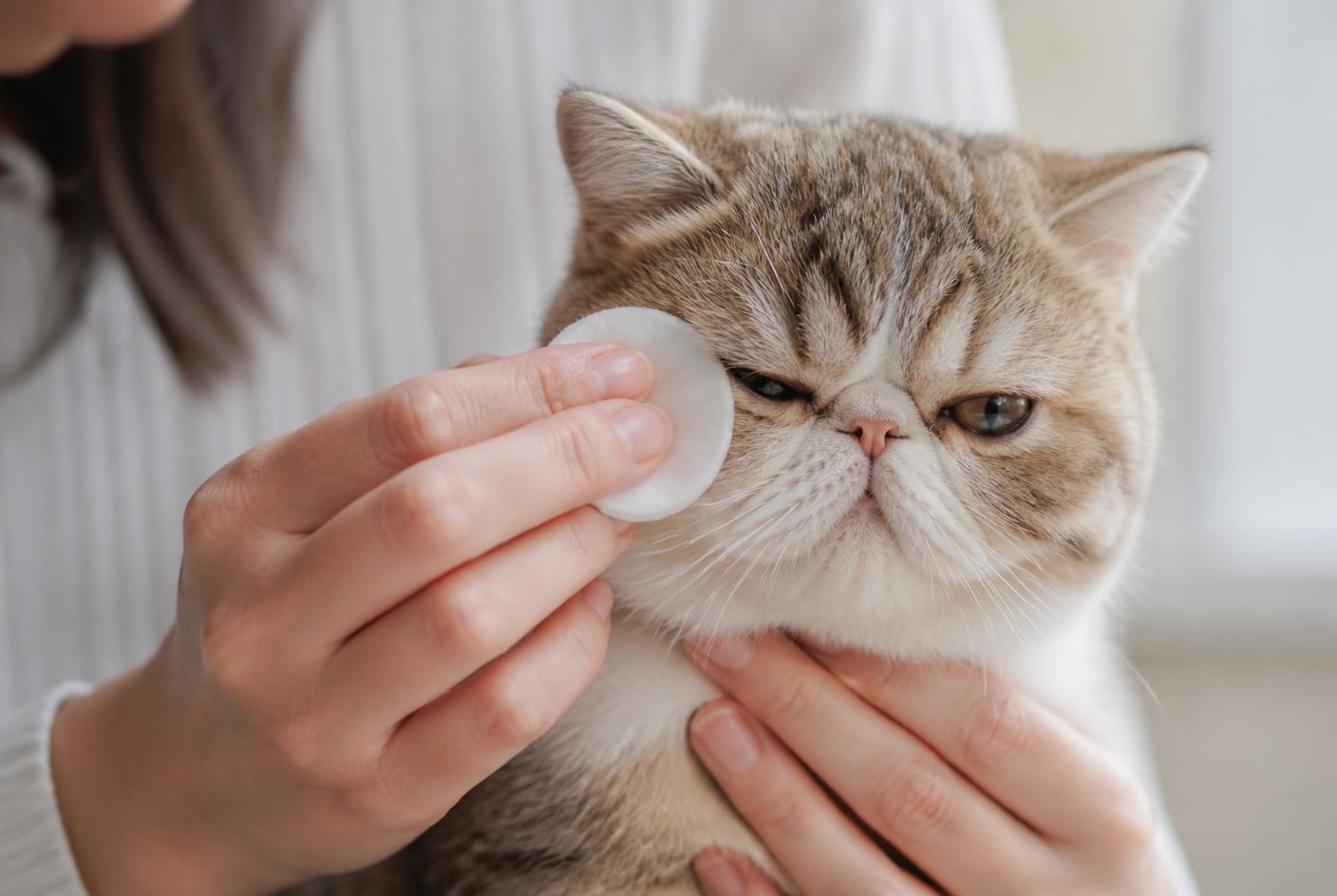
Assume daily eye care regardless. Wiping the eye area with a clean damp pad each day takes a minute and prevents the cycle of overflow, staining and inflamed skin folds that makes so many flat-faced cats uncomfortable. Skin folds around the nose need the same attention. Teeth need brushing several times a week, and dental crowding makes that more important here than in a longer-muzzled cat, not less.
Two further health items belong on the list. Polycystic kidney disease has a well-characterised mutation in the Persian family, and DNA testing is straightforward and inexpensive, never buy a kitten from an untested line. Hypertrophic cardiomyopathy occurs here too and should be screened by echocardiogram in breeding cats. Both questions are entirely reasonable to ask, and the answers should be documented.
The last thing to manage is weight. A placid cat with a hearty appetite and no interest in climbing gains weight quietly, and on a short-legged frame that has consequences for joints and for the cat's ability to groom its own back end. Measure portions, weigh monthly, and run two ten-minute play sessions a day even when the cat would clearly rather not. Do those things, insist on a moderate face, and the Exotic is precisely the easy, affectionate, low-drama companion it is sold as.
A genuinely calm, low-effort companion, provided you insist on a moderate face and commit to daily eye care.
Grooming, realistically
- 1Brush or comb the whole coat two or three times a week, paying attention behind the legs and around the ruff where the dense coat felts.
- 2Wipe the eye area and any nose folds daily with a clean damp pad, using a fresh section for each eye.
- 3Brush teeth several times a week; crowded jaws make dental disease more likely, not less.
- 4Trim nails every two to three weeks, a low-activity cat wears them down less.
- 5Weigh monthly and record it, and feel for ribs each week.
- 6Keep two ten-minute play sessions a day in the routine even if the cat looks uninterested.
What you actually need
- Soft slicker brush
- Fine-toothed metal comb
- Plain damp cotton pads for eye care
- Nail clippers
- Cat toothbrush and enzymatic paste
- Low-sided litter tray, easy to step into
- Kitchen or pet scales
Kitten to adult
| Age | Male | Female | What is happening |
|---|---|---|---|
| Birth | Round-headed from the start. Coat length is not always obvious in the first weeks. | ||
| 8 weeks | Begin daily eye wiping now so the routine is unremarkable for life. | ||
| 6 months | Body broadens before it lengthens. Set measured portions before free-feeding becomes a habit. | ||
| 12 months | Close to adult weight. Watch the waist, this is where quiet gain begins. | ||
| 2 years | Fully filled out. Ribs should be findable with flat fingers, not hunted for. |
Ranges are typical, not targets. Judge condition by ribs and waist, and check with the ideal weight checker.
What to ask a breeder
- Are your cats DNA-tested for polycystic kidney disease? May I see the certificates?
- Have the parents been screened by echocardiogram for hypertrophic cardiomyopathy, and when?
- Are you breeding towards a more open face, and can you show me the nostrils on the parents?
- May I listen to a kitten breathing after play, and watch one asleep?
- Do the parents show tear staining, and how much daily eye care do they need?
- What dental condition are your adults in at five years old?
- Which vaccinations, worming and health checks are done before the kitten leaves?
Health watch-list
What to ask a breeder about, and what to watch for over a lifetime. This is orientation, not veterinary advice, anything you notice belongs in front of a vet.
Brachycephalic airway problems
CommonA foreshortened skull can restrict airflow. Severity tracks how flat the face is, a moderate face with open nostrils changes everything.
Tear duct overflow and skin fold irritation
CommonBlocked drainage means fluid runs onto the face, staining then inflaming the skin. Daily wiping is the standard of care.
Polycystic kidney disease
UncommonA well-characterised mutation runs in the Persian family. DNA testing is cheap and definitive, never buy from an untested line.
Hypertrophic cardiomyopathy
UncommonOccurs in the breed and should be screened by echocardiogram in breeding cats.
Dental crowding and periodontal disease
CommonA shortened jaw crowds a full set of teeth. Brushing several times a week matters more here, not less.
Weight gain and joint strain
CommonLow energy plus a good appetite on a short-legged frame. Measured meals and monthly weigh-ins are essential.
What it costs to keep one
Realistic running cost
€84 / month
About €1,008 a year, or roughly €14,112 across a 14-year life, before purchase price, neutering and one-off vet events.
Before the cat arrives. Budget roughly €250–540 for trays, carrier, posts, bowls, bedding and grooming kit sized for this breed. Figures throughout are indicative and vary a good deal between countries.
Interactive · built for this breed
Is an Exotic Shorthair right for your home?
The Persian temperament in a coat you can manage, but the face brings its own commitments. Five honest questions before you commit.
Verdict
A strong match
A moderate face, daily eye care and a calm home is exactly the combination this breed needs.
What to sort out first
- This is the version to buy. Ask to see the kitten breathing after play and sleeping without noise.
Keep the weight honest with the ideal weight tool, or compare the alternatives in the matchmaker.
The verdict, by household
Flat dweller
Excellent
Family with young children
Good
First-time owner
Good
Multi-cat home
Good
Out all day
Good
Older or quieter owner
Excellent
When to call your vet
- Noisy or open-mouth breathing at rest, or after only mild activity
- Persistent tear overflow, redness or sore skin below the eyes
- Reluctance to eat, pawing at the mouth or bad breath
- Increased thirst and urination
- Weight gain of more than about five per cent, or difficulty grooming the back end
- Reduced exercise tolerance or breathlessness
Nothing here is a diagnosis. Breathing difficulty, sudden hind-leg weakness and straining to urinate are emergencies, go the same day.
Exotic Shorthair vs the closest alternatives
| Breed | Weight | Energy | Grooming | € / month |
|---|---|---|---|---|
| Exotic Shorthair | 3–6.5 kg | 3/10 | 4/10 | €84 |
| British Shorthair | 4–8 kg | 4/10 | 4/10 | €76 |
| Chartreux | 3–7 kg | 4/10 | 4/10 | €79 |
| Scottish Fold | 3–6 kg | 5/10 | 4/10 | €88 |
Exotic Shorthair questions, answered
What is the difference between an Exotic Shorthair and a Persian?
Coat length, essentially. The Exotic has the Persian's head, body, temperament and health considerations under a short dense coat that needs brushing two or three times a week instead of daily. Long-coated kittens still appear in Exotic litters and are usually registered as Persians.
Do Exotic Shorthairs have breathing problems?
It depends entirely on how flat the face is. A moderate Exotic with a visible nose and open nostrils usually breathes normally. Very flat, so-called peke-faced examples are more likely to breathe noisily at rest, tire in warm weather and suffer tear overflow and dental crowding. Choose the breeder on facial structure, not on colour.
How much daily care does the face need?
About a minute. Wipe the eye area and any nose folds with a clean damp pad each day, using a fresh section for each eye. This prevents the cycle of overflow, staining and sore skin folds that makes many flat-faced cats uncomfortable.
Exotic Shorthair or British Shorthair?
Both are calm, plush and undemanding. The British Shorthair has a normal muzzle and therefore none of the face care or breathing concerns, which makes it the easier choice for most households. Pick the Exotic if you specifically want the Persian look and expression.
Are Exotic Shorthairs playful?
In short bursts. Energy is genuinely low and they prefer ground level to height, but the American Shorthair in their background shows through as occasional enthusiasm for a toy mouse. Keep two ten-minute sessions a day in the routine to protect the cat's weight.
What health tests should the breeder have done?
DNA testing for polycystic kidney disease is essential and inexpensive. Echocardiogram screening for hypertrophic cardiomyopathy should also be documented. Ask to watch a kitten breathing after play, and to look at the parents' nostrils and tear staining.
Is an Exotic Shorthair suitable for a flat?
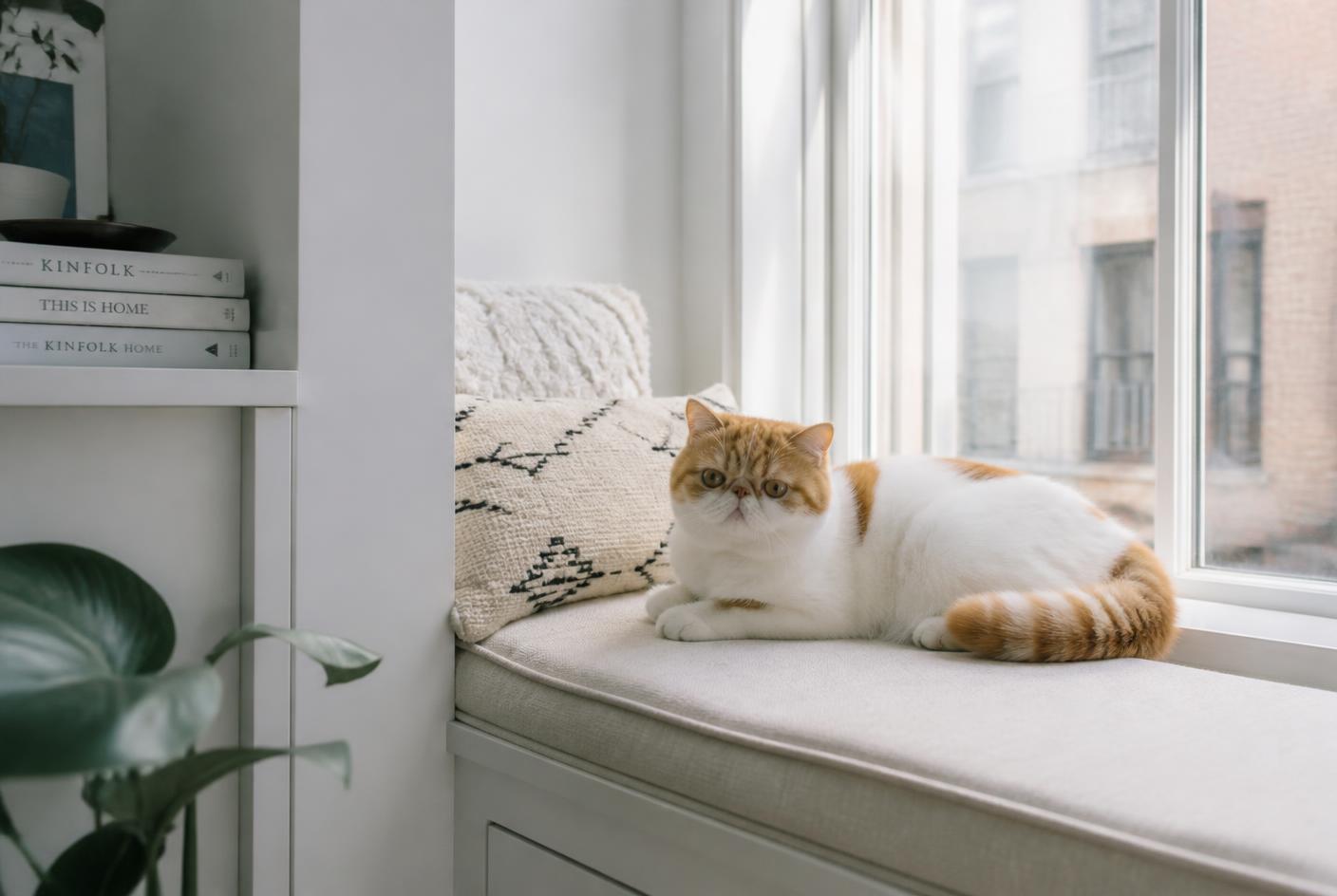
Very. Low energy, quiet voice and no interest in climbing make it one of the best small-home breeds here. Keep the litter tray low-sided and put food, water and the tray where the cat does not need to jump.