United States
Nebelung
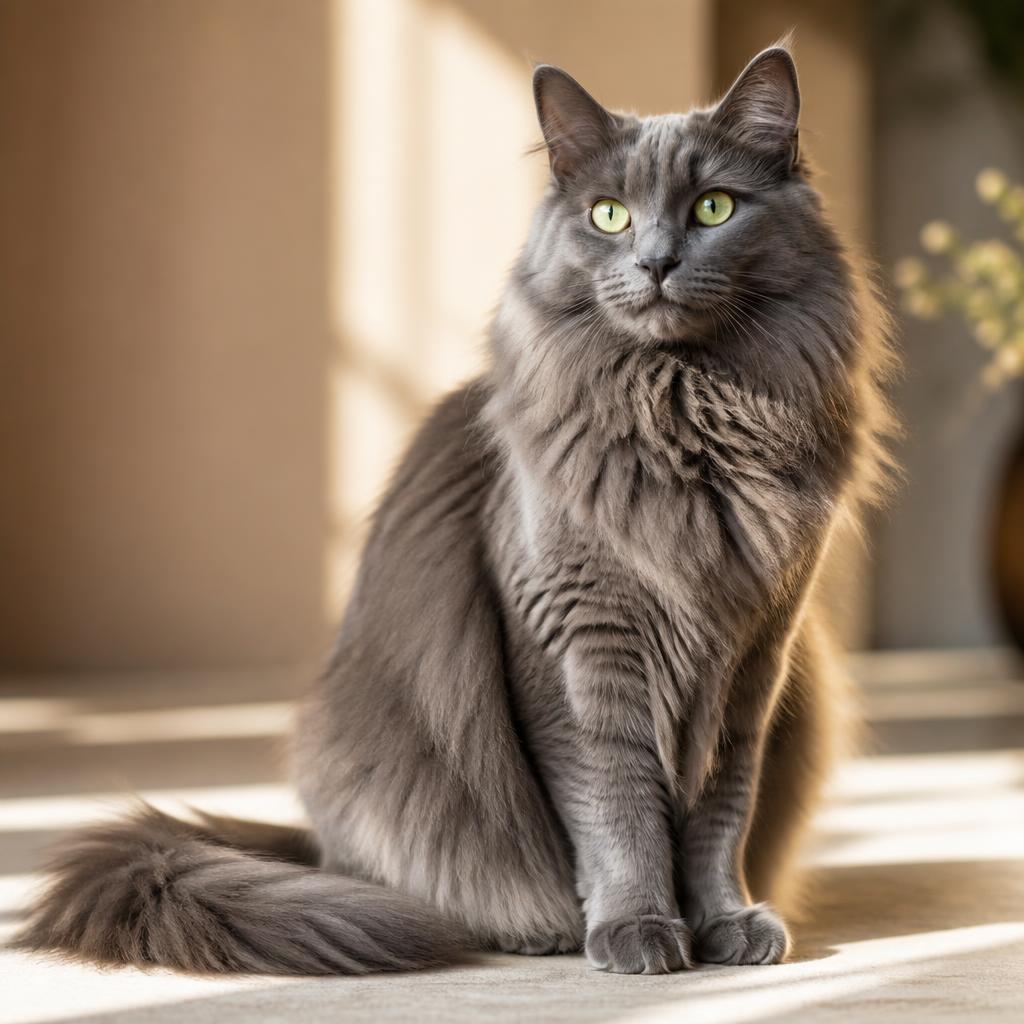
A longhaired blue-grey cat with green eyes. Reserved at first, deeply loyal once trust is earned. Needs a calm home and regular grooming.
Reviewed against International Cat Care and veterinary guidance
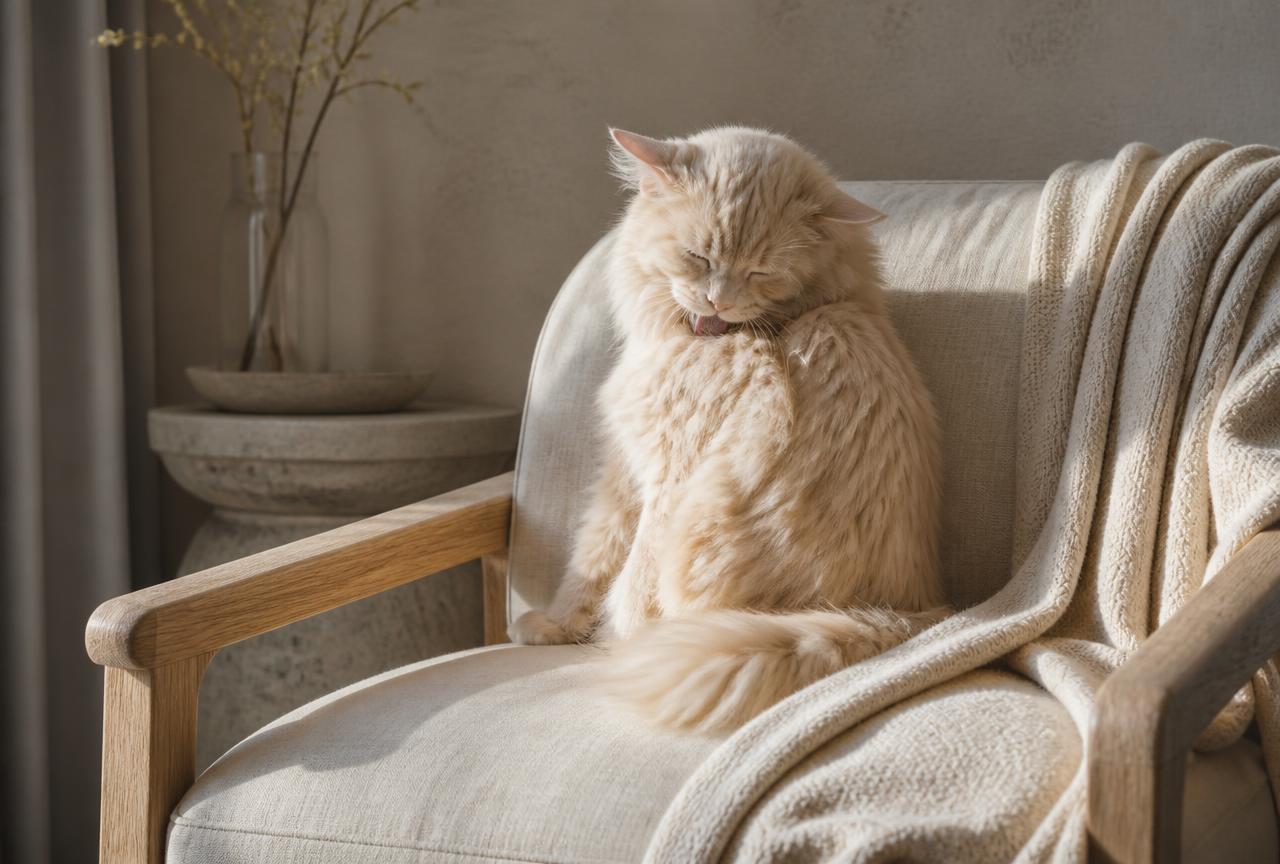
A longhaired blue cat with green eyes and a quiet, devoted nature
The short version
- Long, silky blue coat needs twice-weekly combing, daily during seasonal shedding.
- Reserved with strangers but affectionate and loyal with trusted people.
- Quiet, gentle and moderately active; not suited to chaotic households.
- Takes time to settle; patience and predictable routines are essential.
- Ask breeders about heart screening and dental health in their lines.
- Weight
- 2.5–5.5 kg
- Lifespan
- 11–18 yrs
- Coat
- Long
- Size
- Medium
- Grown male
- 3.5–5.5 kg
- Grown female
- 2.5–4.5 kg
- Years to full size
- about 2
- One-off setup
- €130–260
Get one if…
- Quiet adult households
- Patient owners who enjoy earning trust
- People happy to comb a long coat
- Those who want a calm, loyal companion
Think again if…
- Noisy or chaotic homes
- Families with very young children
- People who want an instant lap cat
- Anyone unwilling to groom daily during coat drops
Trait profile
Read the high grooming and moderate shedding scores as the main commitment. The affection score is real, but it is reserved for trusted people.
Space & setup. Moderate size and quiet nature suit flats, but vertical space and hiding places help a shy cat feel secure.
Allergies. Not hypoallergenic. The long coat traps and spreads dander, and allergy sufferers should consider another breed.
The review
The Nebelung is a longhaired variant of the Russian Blue, with a shimmering blue coat, luminous green eyes and a reserved, gentle personality. They bond closely with a small circle of people and prefer calm, predictable homes.
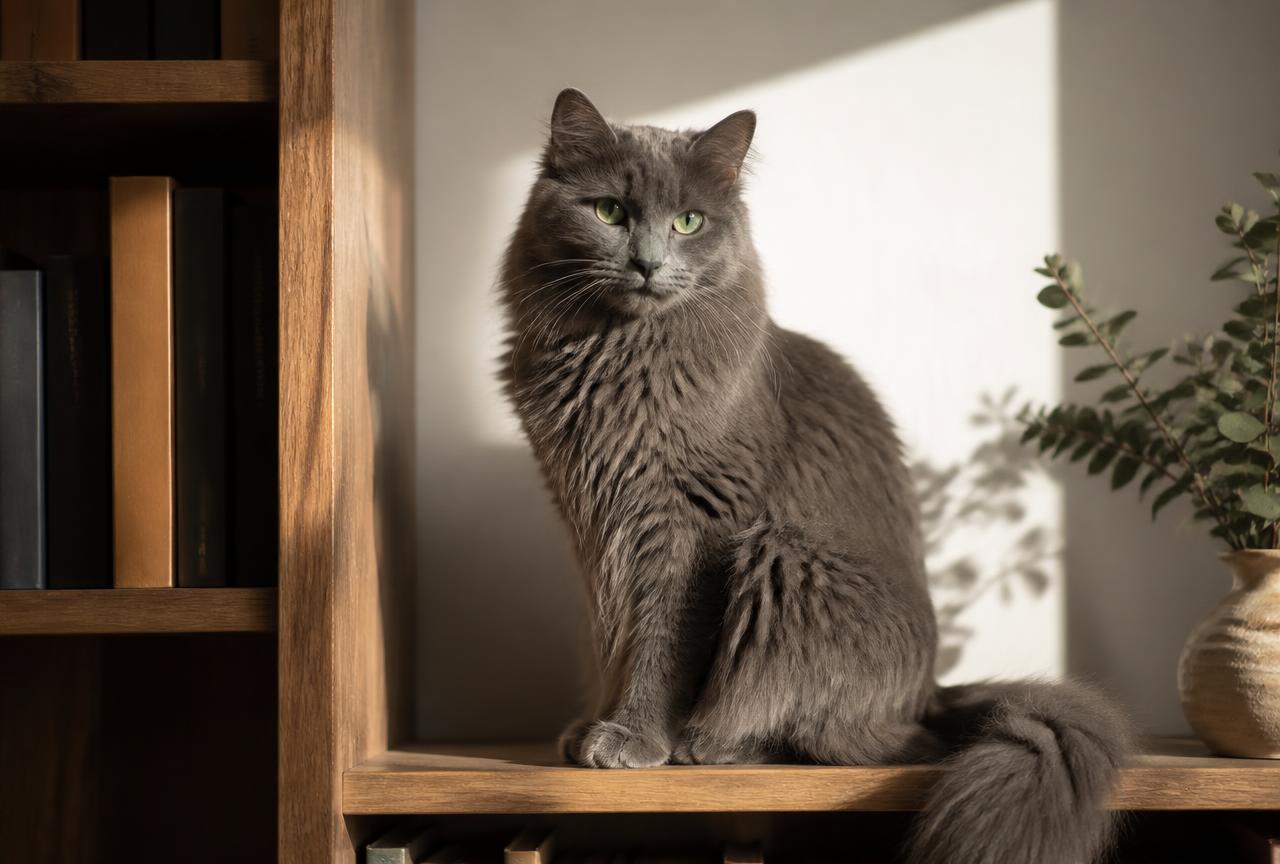
The Nebelung looks like a Russian Blue that has been given a long, flowing coat. The colour is a soft, shimmering blue-grey, the eyes are green, and the tail is long and plumed. The overall effect is elegant and slightly mysterious, which suits the temperament. This is not a cat that performs for strangers.
Nebelungs bond intensely with one or two people and remain politely reserved with everyone else. They are not fearful; they are simply selective. A visitor may not see the cat at all on a first meeting, while the owner knows a playful, affectionate companion that follows them from room to room and sleeps nearby at night. Trust is earned slowly, and once given, it is deep.
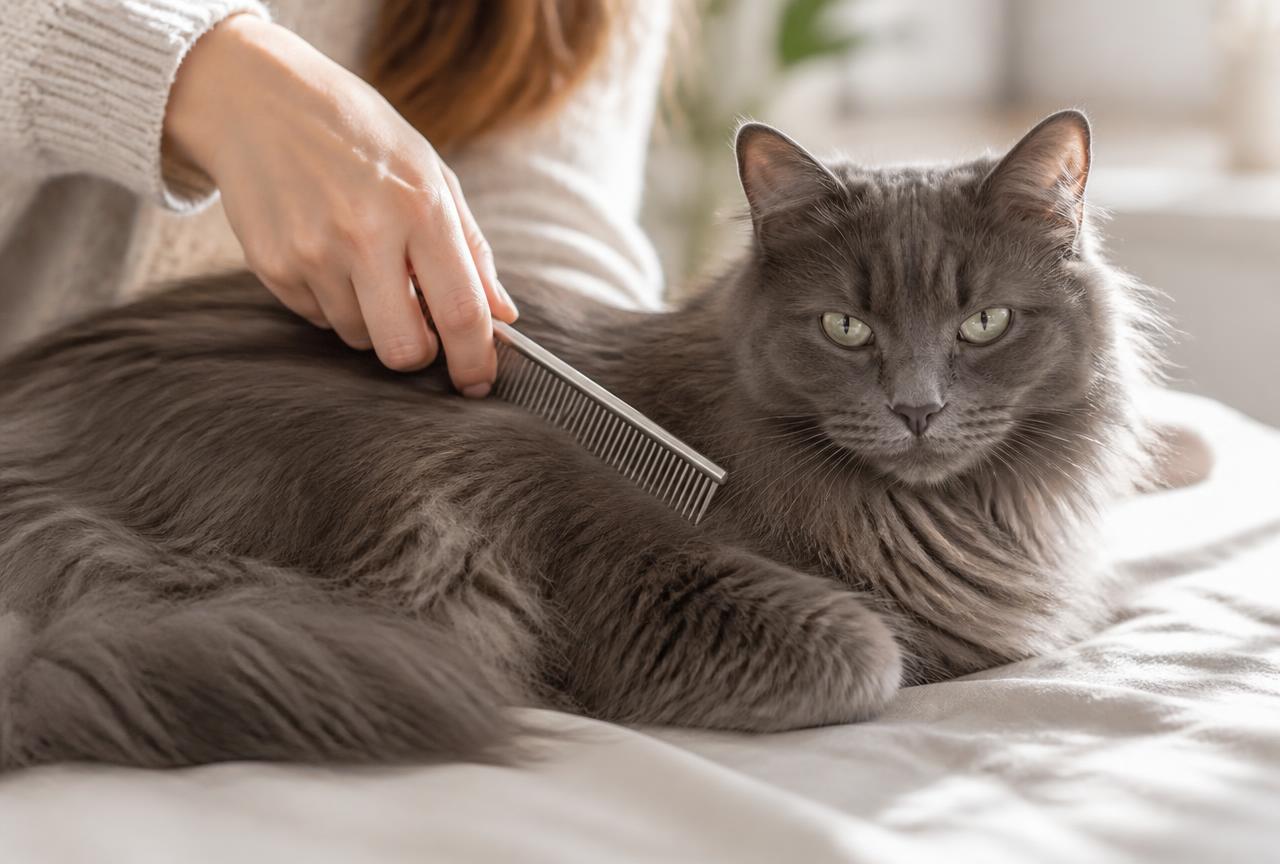
The coat is the practical commitment. It is long, fine and silky, with a dense undercoat that can mat quickly in the friction zones: behind the ears, under the front legs, the britches and the belly. Twice-weekly combing is the minimum, and daily combing during the spring and autumn coat drops is better. The good news is that the Nebelung usually tolerates gentle grooming well, especially if it is introduced early.
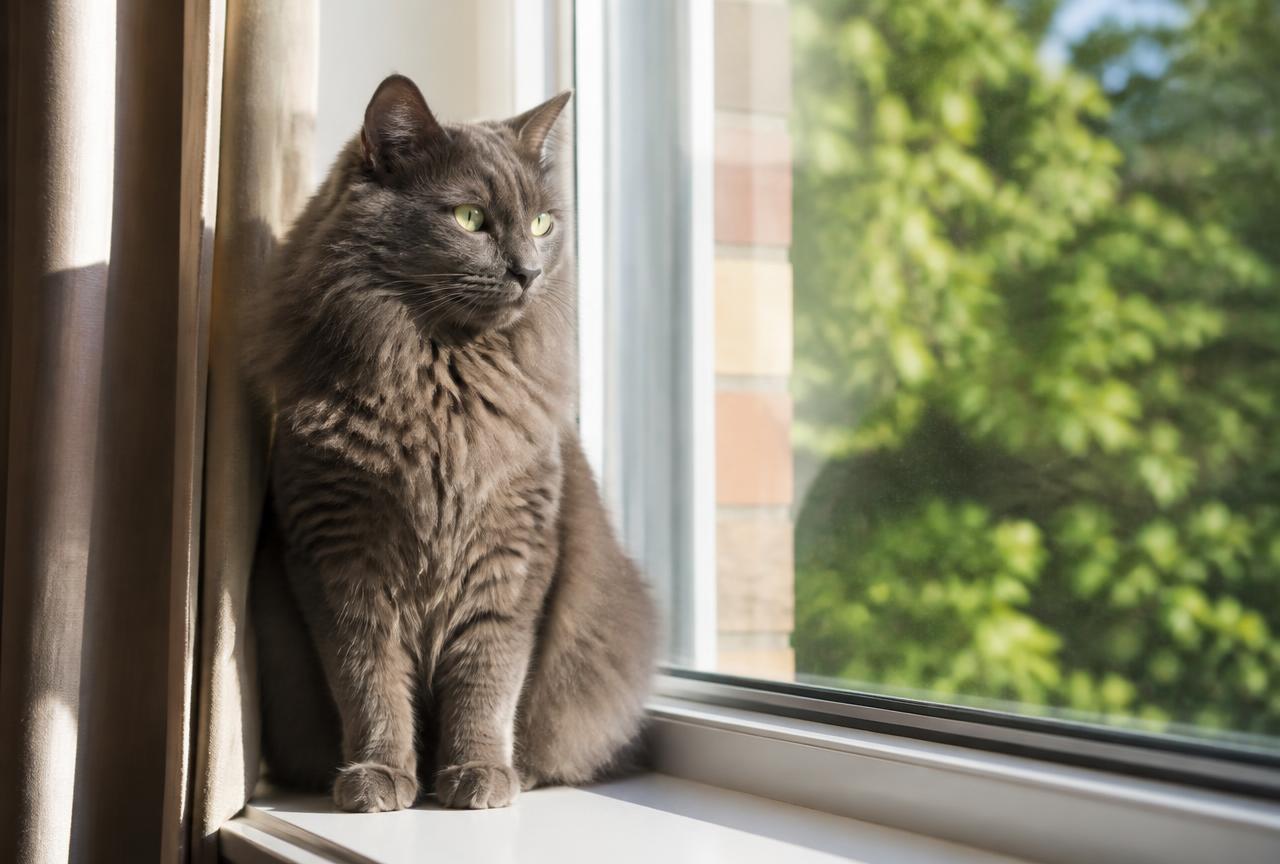
Energy is moderate. They enjoy interactive play and climbing, but they are not as relentlessly active as an Abyssinian or Bengal. A tall cat tree, a few window perches and a regular play session are enough. They are quiet cats, communicating with soft chirps and body language rather than loud demands.
Health is generally good, with the same robust background as the Russian Blue. The main concerns are the usual ones: dental disease, obesity, hairballs from the long coat, and chronic kidney disease in old age. Some lines may carry a risk of hypertrophic cardiomyopathy, so heart screening is worth asking about.
A Nebelung suits a quiet adult household or a family with older, respectful children. It is not the right choice for a noisy, chaotic home, for people who want instant affection from every guest, or for anyone unwilling to maintain a long coat. Given patience, calm and a comb, the Nebelung is a deeply rewarding, beautiful companion.
A shy, silky longhair for quiet homes. The Nebelung rewards patience with deep loyalty and a beautiful blue coat.
Grooming, realistically
- 1Comb twice a week with a wide-tooth metal comb, working from the shoulders down in short strokes.
- 2Pay extra attention to mat zones: behind the ears, under the front legs, the britches and the belly.
- 3Increase to daily combing during spring and autumn coat changes to remove shed undercoat.
- 4Use a damp cloth to wipe the face and remove any tear staining around the eyes.
- 5Trim claws every three to four weeks and check for mats with your fingers, not the comb.
What you actually need
- Wide-tooth metal comb
- Fine-tooth comb for the ruff and tail
- Blunt-nosed scissors for mats, used flat against the skin
- Soft cloth for face wiping
- Blunt-nosed claw clippers
Kitten to adult
| Age | Male | Female | What is happening |
|---|---|---|---|
| 8 weeks | 0.7–1.0 kg | 0.6–0.9 kg | Kittens are shy; gentle daily handling builds confidence |
| 3 months | 1.3–1.8 kg | 1.1–1.5 kg | Coat begins to lengthen; four meals a day |
| 6 months | 2.0–2.8 kg | 1.7–2.4 kg | Body lengthens; eye colour continues to develop |
| 12 months | 2.8–4.0 kg | 2.2–3.2 kg | Near adult size; coat still developing density |
| 2 years | 3.5–5.0 kg | 2.5–4.0 kg | Physically mature; full coat and tail plume |
| 3 years | 3.5–5.5 kg | 2.5–4.5 kg | Final weight. Monitor condition, especially around the waist |
Ranges are typical, not targets. Judge condition by ribs and waist, and check with the ideal weight checker.
What to ask a breeder
- Can you show me heart screening for both parents?
- How do you socialise kittens to help them become confident adults?
- Have the parents had any dental or gum disease?
- What age do the kittens leave, and what have they been exposed to?
- Can you explain the difference between a Nebelung and a longhaired Russian Blue?
Health watch-list
What to ask a breeder about, and what to watch for over a lifetime. This is orientation, not veterinary advice, anything you notice belongs in front of a vet.
Hairballs and mat-related issues
Very likelyLong coats are swallowed during grooming and can form hairballs. Regular combing is preventive care.
Hypertrophic cardiomyopathy
ModerateHeart disease can occur. Ask breeders about echocardiogram screening.
Dental disease
Common with agePlaque and gum disease affect most cats over time. Brushing and annual checks help.
Obesity
CommonMeasure food and score body condition monthly to keep the breed at a healthy weight.
Chronic kidney disease
Common with ageA leading cause of illness in older cats. Regular screening from middle age helps.
Stress-related illness
ModerateShy cats can develop stress-related cystitis or over-grooming in chaotic homes.
What it costs to keep one
Realistic running cost
€83 / month
About €996 a year, or roughly €14,940 across a 15-year life, before purchase price, neutering and one-off vet events.
Before the cat arrives. Budget roughly €130–260 for trays, carrier, posts, bowls, bedding and grooming kit sized for this breed. Figures throughout are indicative and vary a good deal between countries.
Interactive · built for this breed
Is a Nebelung right for your home?
A longhaired, blue-grey cat with luminous green eyes and a reserved, quiet temperament. Nebelungs bond deeply with a small circle and take time to trust strangers.
Verdict
An excellent match
You have the patience, calm and grooming routine this reserved beauty needs.
What to sort out first
- The silky coat tangles behind the ears and under the legs without regular care.
Keep the weight honest with the ideal weight tool, or compare the alternatives in the matchmaker.
The verdict, by household
Small flat, no outdoor access
Good fit
A calm indoor home is ideal. Provide hiding places, vertical space and a predictable routine.
Family with young children
Think again
Young children are usually too noisy and unpredictable. Older, respectful children may work with supervision.
First-time owner
Workable, with conditions
The coat and shyness require commitment. A first-time owner must be patient and consistent.
Multi-cat or dog household
Workable, with conditions
A calm companion cat can help, but introductions must be very slow. Boisterous pets are stressful.
Allergy-conscious home
Think again
Long coats spread dander. This is not a good choice for most allergy sufferers.
Away from home all day
Workable, with conditions
A quiet companion cat helps. Long absences alone are hard for a breed that bonds deeply.
When to call your vet
- Mats that pull at the skin, especially under the legs or around the tail base
- Persistent vomiting of hairballs or constipation
- Weight loss, increased thirst or changes in litter-box habits
- Bad breath, drooling or difficulty eating
- Lethargy, hiding more than usual or reluctance to be touched
Nothing here is a diagnosis. Breathing difficulty, sudden hind-leg weakness and straining to urinate are emergencies, go the same day.
Nebelung vs the closest alternatives
| Breed | Weight | Energy | Grooming | € / month |
|---|---|---|---|---|
| Nebelung | 2.5–5.5 kg | 5/10 | 8/10 | €83 |
| Domestic Longhair | 3–6 kg | 5/10 | 8/10 | €75 |
| Siberian | 4.5–9 kg | 6/10 | 6/10 | €94 |
| Chartreux | 3–7 kg | 4/10 | 4/10 | €79 |
Nebelung questions, answered
Is a Nebelung just a longhaired Russian Blue?
Essentially yes. The Nebelung was developed from longhaired variants of the Russian Blue and shares the same colour, eye colour and reserved temperament.
Are Nebelungs shy?
They are reserved with strangers but affectionate with trusted people. Early socialisation helps, but they will always be selective.
How often should I groom a Nebelung?
Twice a week as a minimum, daily during seasonal shedding. Focus on mat-prone areas behind the ears, under the legs and the britches.
Are Nebelungs good with children?
Usually not with young children. They do better in quiet homes or with older, respectful children who understand boundaries.
Do Nebelungs go outside?
Indoor life or a secure catio is safest. Their long coat picks up debris and parasites, and their shy nature makes them poor at outdoor survival.
How long do Nebelungs live?
11–18 years is typical with good care, regular vet checks and a stress-free indoor environment.
Are Nebelungs hypoallergenic?
No. Long coats shed and spread dander. They are not recommended for most allergy sufferers.
Sources
- Grooming and coat care, International Cat Care
- Feline health topics, Cornell Feline Health Center
- WSAVA global nutrition guidelines, WSAVA
- Keeping your cat happy, International Cat Care