Mixed / worldwide
Domestic Longhair
A long-coated mixed-breed cat whose personality is a surprise, but whose grooming needs are not.
Reviewed against International Cat Care and veterinary guidance
The longhaired moggy: individual, unpredictable and worth the coat work
The short version
- Not a breed: temperament, size and health depend on the individual's background.
- Long coat needs daily or every-other-day combing to prevent painful mats.
- Unknown genetics make a vet fund and preventive care important.
- Adoption from a shelter often gives the best sense of adult personality.
- Best suited to owners who value character over pedigree and can commit to the coat.
- Weight
- 3–6 kg
- Lifespan
- 12–18 yrs
- Coat
- Long
- Size
- Medium
- Grown male
- 3.5–6 kg
- Grown female
- 3–5 kg
- Years to full size
- about 2
- One-off setup
- €140–300
Get one if…
- People happy to groom regularly
- Owners open to individual personality
- Those with a vet fund
- Calm to moderately active homes
Think again if…
- Anyone unwilling to brush long hair
- Households with no grooming budget
- Very chaotic homes
- People wanting predictable breed traits
Trait profile
Read the bars as averages, not promises. A domestic longhair can be anything from aloof to clingy, lazy to athletic. The only reliable numbers are the high grooming and shedding scores: the coat is the one guarantee.
Space & setup. Needs regular grooming space and a calm area; size varies, but long coats need room to move without matting.
Allergies. Long coats shed heavily and trap dander; not a good choice for allergy sufferers.
The review
Domestic longhairs are mixed-breed cats with long coats. Temperament, size and health vary with individual background, but the one constant is a coat that needs regular attention and a home willing to accept the unknown.
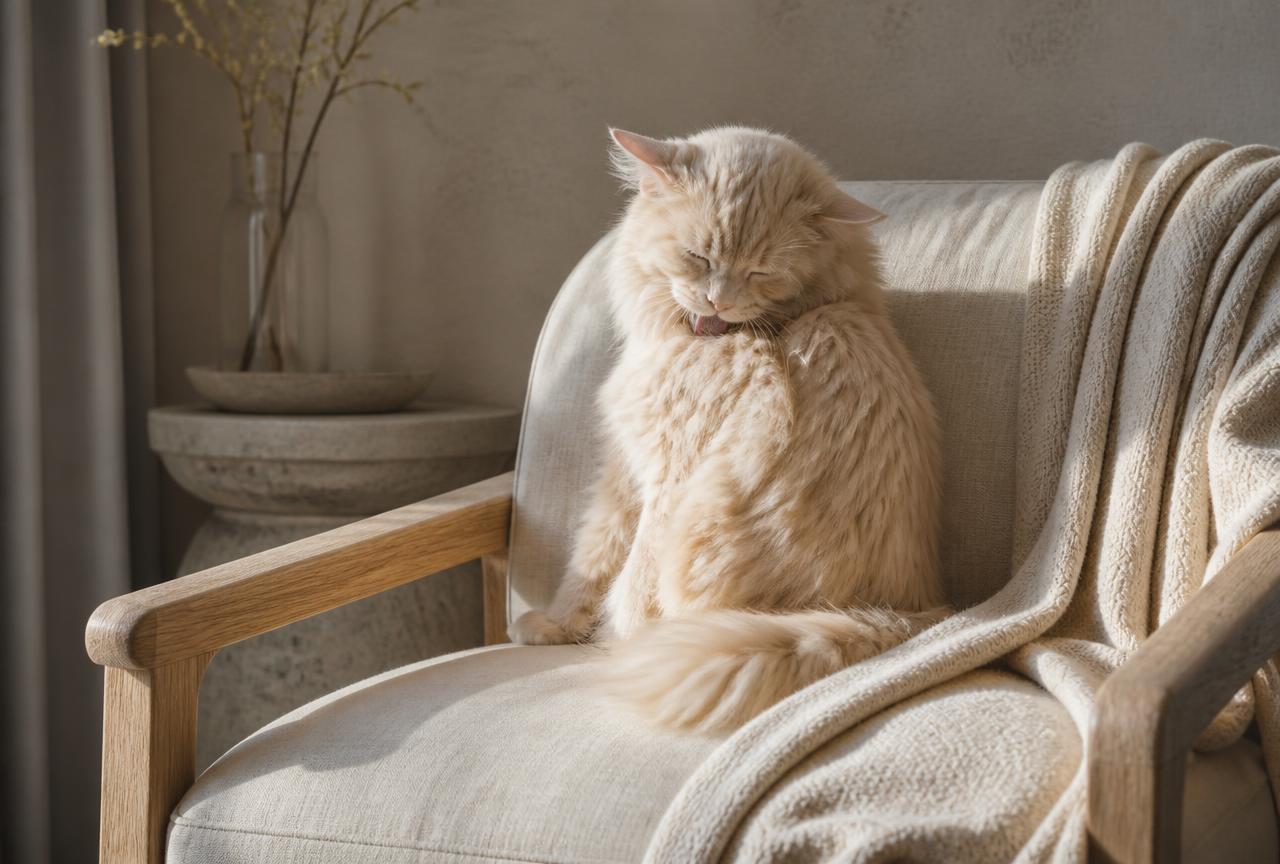
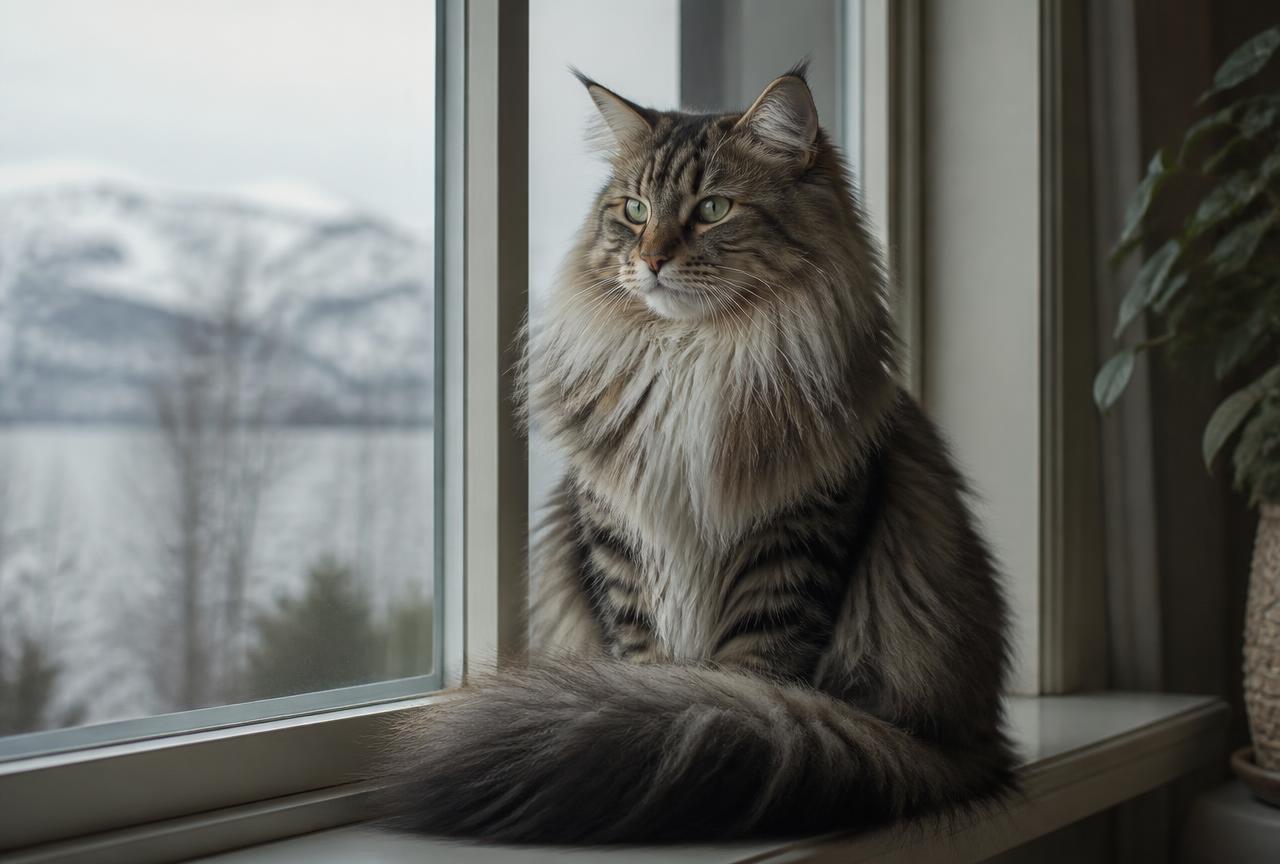
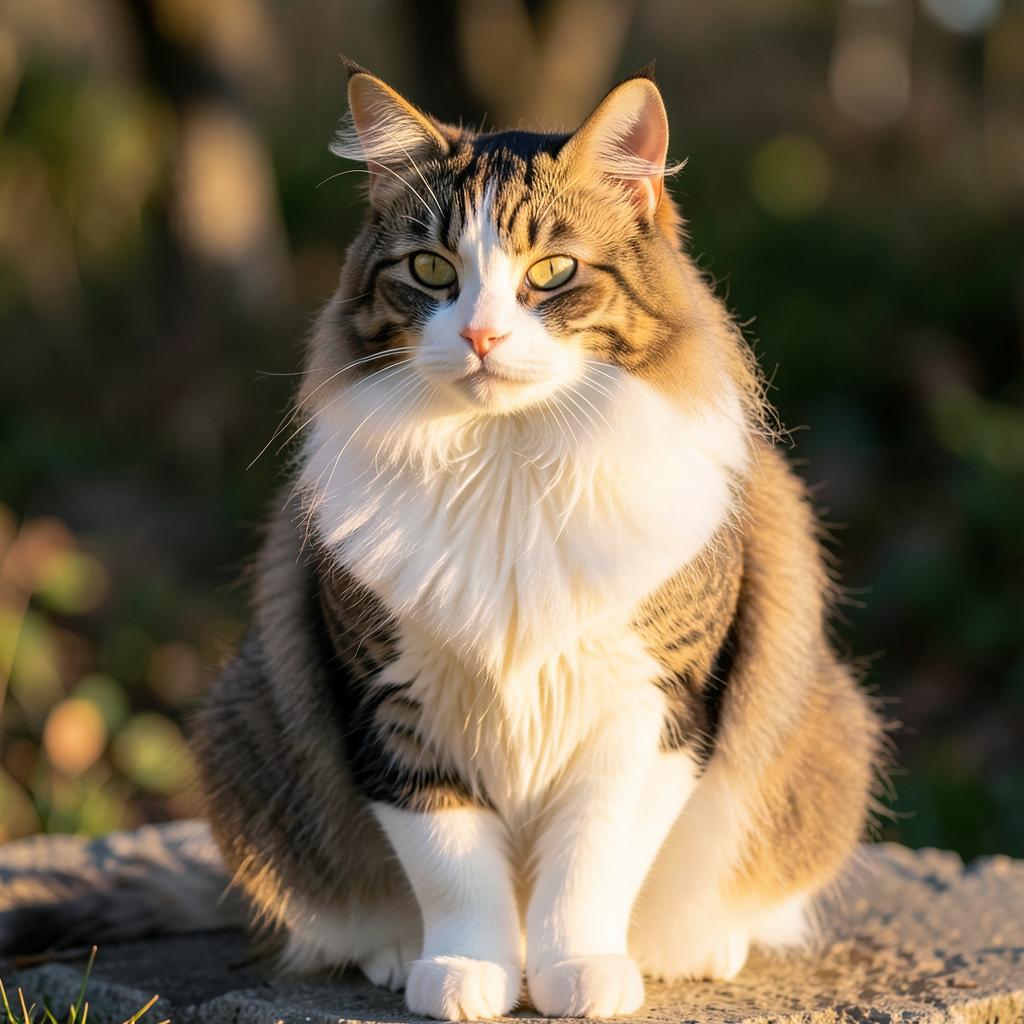
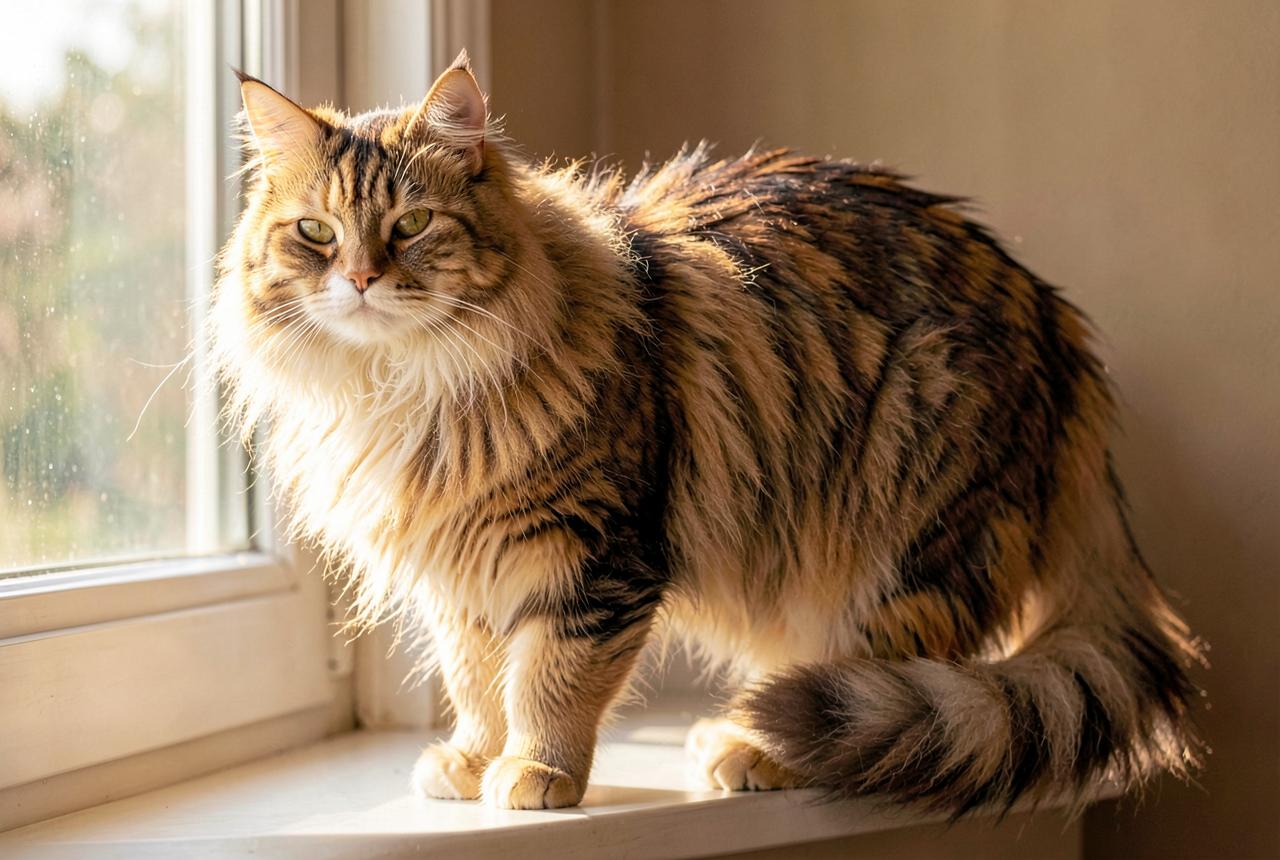
A domestic longhair is not a breed. It is a description: any mixed-breed cat with a long coat. That means the personality, the size, the health and the preferences are all individual. You cannot predict them from a breed standard. What you can predict, with complete confidence, is the coat. It will be long, it will shed, and it will mat if it is not combed. Everything else is a conversation with the specific cat in front of you.
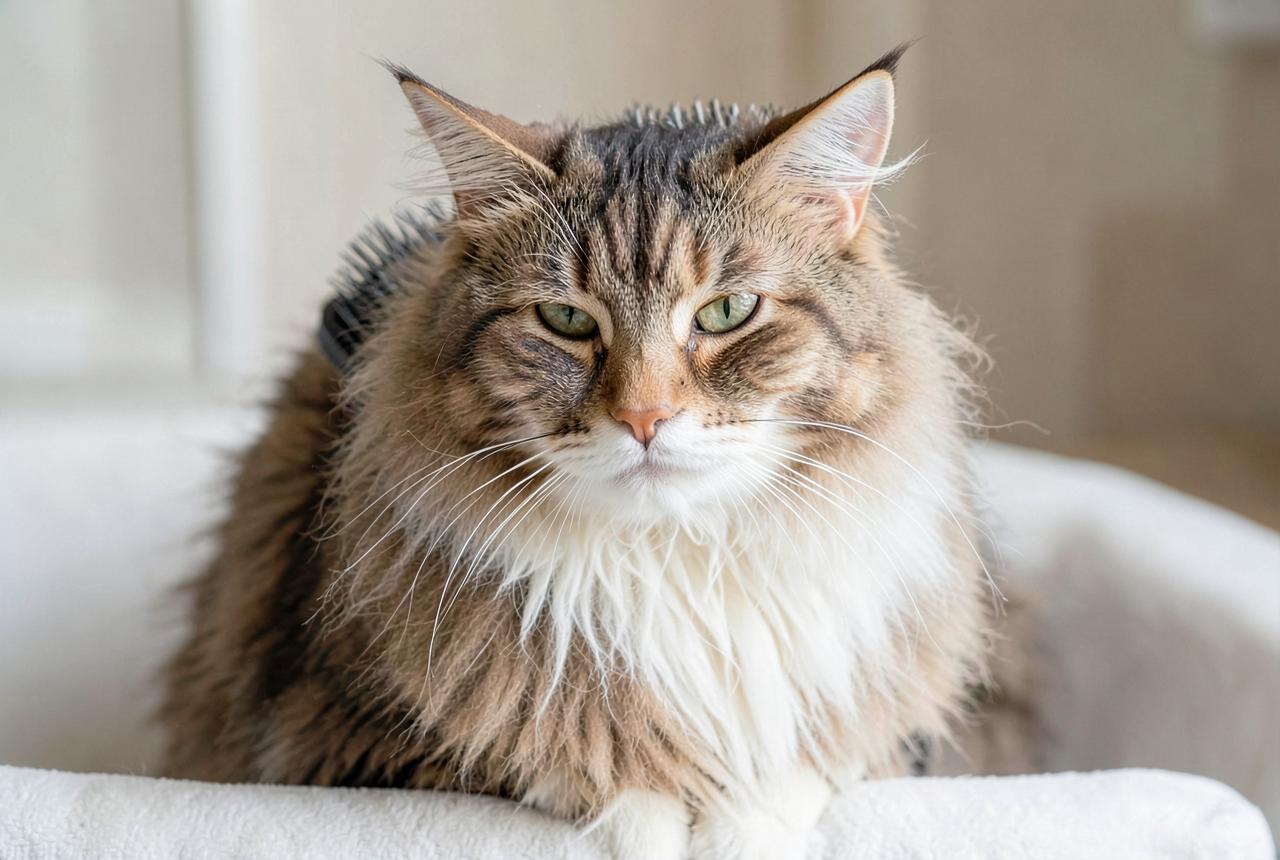
The coat is therefore the place to start. Long hair tangles fastest where there is friction and movement: behind the ears, under the collar line, the armpits, the britches and the belly. A daily or every-other-day combing routine prevents the small knots that become large, painful mats. During the spring and autumn coat drops, the volume of loose hair can be startling. This is not a low-shedding option, and it is not a good choice for allergy sufferers. The hair carries dander, and the length traps it until it is brushed or washed out.
Because the background is mixed, health is harder to generalise. Some domestic longhairs live into their late teens with minimal intervention. Others develop issues that reflect their unknown parentage or early life. Dental disease, obesity, parasites and chronic kidney disease are common across all cats, and they are the risks to budget for. A vet fund is more important than a breed guarantee, because there is no breeder to ask and no predictable genetic profile.
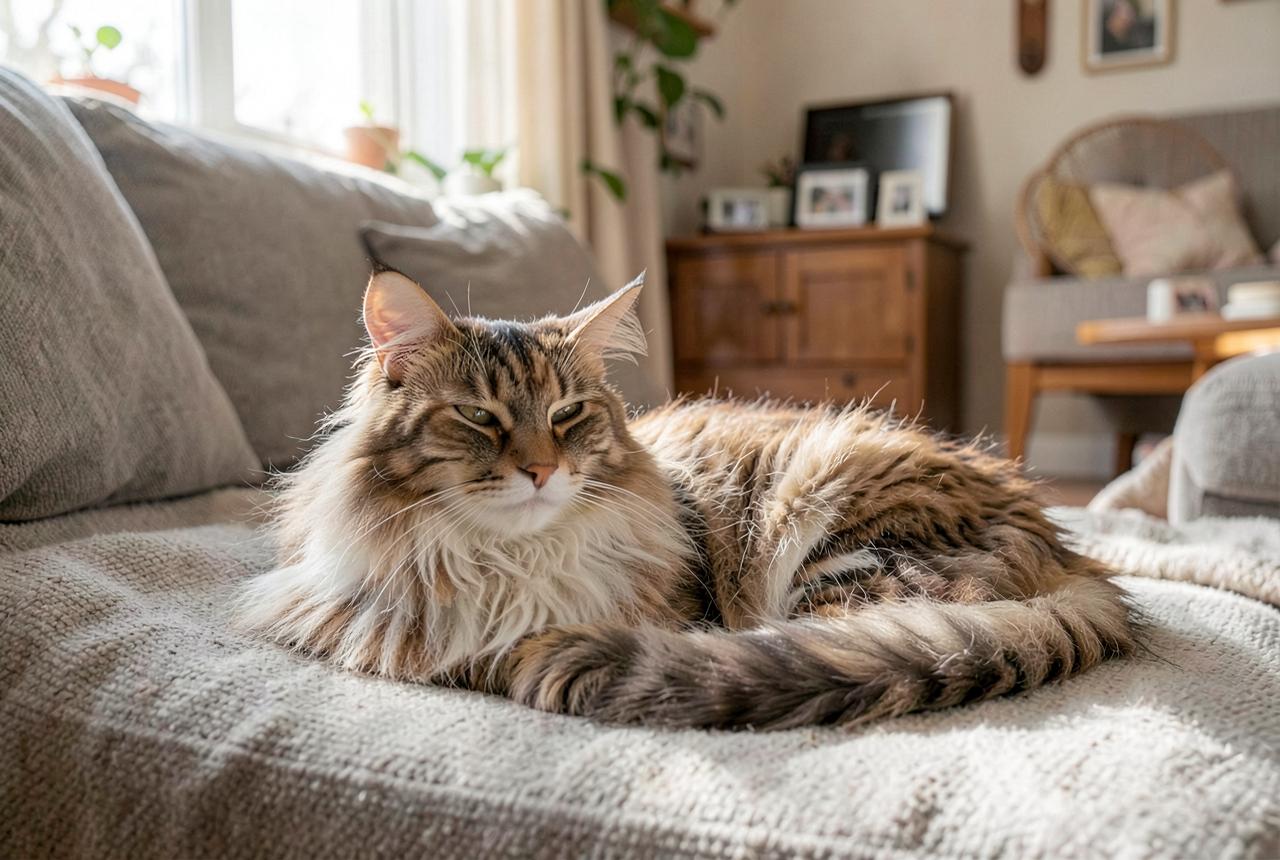
Temperament is equally variable. A longhaired moggy from a quiet foster home may be shy; one raised in a busy household may be bombproof. Shelters and rescues often have adult domestic longhairs whose personalities are already visible, which is one of the best arguments for adopting an adult rather than a kitten. What you see in a confident two-year-old is close to what you will live with.
Costs are moderate but real. Food, litter, parasite prevention, annual vaccinations and dental care are the baseline. Grooming supplies or occasional professional clipping add to it. Setup costs include a sturdy comb, a long litter tray, a scratching post and a carrier. The real financial variable is the unexpected vet bill, which is why a reserve fund matters more than a premium brand of anything.
A domestic longhair suits an owner who values character over pedigree, who is willing to commit to the coat, and who can accept some uncertainty. It is not the right choice for someone who wants predictable breed traits, who dislikes grooming, or who has no buffer for surprise vet costs. Given patience and a comb, it can be one of the most individual and rewarding cats to share a home with.
A domestic longhair is a lottery ticket wrapped in fur: the cat may be perfect, but the coat commitment is guaranteed.
Grooming, realistically
- 1Comb daily or every other day, starting at the head and working toward the tail in the direction of growth.
- 2Pay special attention to the armpits, britches, belly and behind the ears, where mats form first.
- 3Use a wide-tooth comb to lift the undercoat, then a finer comb for the top coat.
- 4During seasonal shedding, increase to daily sessions and consider a de-shedding tool used gently.
- 5Separate small tangles with your fingers; for larger mats, use blunt-nosed scissors flat to the skin or see a groomer.
- 6Trim claws every three to four weeks and check for parasites, especially if the cat goes outdoors.
What you actually need
- Wide-tooth metal comb for lifting the undercoat
- Fine-tooth comb for finishing
- Blunt-nosed scissors for safe mat removal
- Claw clippers
- A long, open litter tray and a large, sturdy carrier
Kitten to adult
| Age | Male | Female | What is happening |
|---|---|---|---|
| 8 weeks | 0.7–1.1 kg | 0.6–1.0 kg | Mixed background means size varies; handle daily and litter-train |
| 3 months | 1.4–2.1 kg | 1.2–1.8 kg | Growth depends on parentage; feed to body condition |
| 6 months | 2.2–3.3 kg | 1.9–2.8 kg | Neutering usually discussed; start grooming routine now |
| 12 months | 3.0–4.5 kg | 2.5–4.0 kg | Near adult frame; long coat may still be filling in |
| 18 months | 3.3–5.2 kg | 2.8–4.5 kg | Adult condition emerging; individual size becoming clear |
| 2 years | 3.5–6.0 kg | 3.0–5.0 kg | Final adult size varies widely; maintain lean condition |
Ranges are typical, not targets. Judge condition by ribs and waist, and check with the ideal weight checker.
What to ask a breeder
- If adopting a kitten, what is known about the mother and father's size and temperament?
- Has the kitten been handled daily and exposed to normal household noises?
- What vaccinations and parasite treatments has the kitten already received?
- Is there any history of illness in the litter or the mother?
- Does the rescue or shelter offer post-adoption support if behavioural or health issues arise?
Health watch-list
What to ask a breeder about, and what to watch for over a lifetime. This is orientation, not veterinary advice, anything you notice belongs in front of a vet.
Dental disease
Common with agePlaque and gum disease affect most cats over time. Brushing and annual checks are the best defence.
Obesity
CommonMixed-breed cats vary in metabolism. Measure food and score body condition monthly.
Hairballs and mat-related issues
Very likelyLong coats are swallowed during grooming and can form hairballs or blockages. Regular combing is preventive care.
Parasites
CommonFleas, ticks and worms are a risk for any cat with outdoor access. Keep prevention up to date.
Unknown hereditary conditions
NotableWithout a known pedigree, genetic risks are unknown. A vet fund and preventive care matter more than usual.
Chronic kidney disease
Common with ageA leading cause of illness in older cats. Regular blood and urine screening from middle age helps catch it early.
What it costs to keep one
Realistic running cost
€75 / month
About €900 a year, or roughly €13,500 across a 15-year life, before purchase price, neutering and one-off vet events.
Before the cat arrives. Budget roughly €140–300 for trays, carrier, posts, bowls, bedding and grooming kit sized for this breed. Figures throughout are indicative and vary a good deal between countries.
Interactive · built for this breed
Is a domestic longhair right for your home?
Not a breed, but a long-coated mixed-breed cat with individual temperament and unknown history. The coat is the one predictable commitment.
Verdict
An excellent match
You are prepared for the coat, the unknowns and the individual personality of a longhaired moggy.
What to sort out first
- The realistic minimum for a tangle-free long coat, especially around the trousers and belly.
Keep the weight honest with the ideal weight tool, or compare the alternatives in the matchmaker.
The verdict, by household
Small flat, no outdoor access
Good fit
Indoor life protects the long coat from burrs and parasites. Build vertical space and commit to daily combing.
Family with young children
Workable, with conditions
Depends on the individual cat. A confident adult from a foster home is often a better bet than an unknown kitten.
First-time owner
Workable, with conditions
The coat is a serious commitment. Budget for grooming tools, time and occasional professional help.
Multi-cat or dog household
Workable, with conditions
Individual temperament varies. Slow introductions are essential, and the coat needs protection from over-grooming by other cats.
Allergy-conscious home
Think again
Long coats trap and spread dander. This is one of the harder choices for allergy sufferers.
Away from home all day
Workable, with conditions
A confident adult may cope, but a second friendly cat helps. The coat still needs daily attention when you return.
When to call your vet
- Mats that pull at the skin, especially under the legs or around the tail base
- Persistent vomiting of hairballs or constipation
- Weight loss, increased thirst or a change in litter-box habits
- Bad breath, drooling or difficulty eating
- Lameness, wounds or signs of parasites if the cat goes outdoors
Nothing here is a diagnosis. Breathing difficulty, sudden hind-leg weakness and straining to urinate are emergencies, go the same day.
Domestic Longhair vs the closest alternatives
| Breed | Weight | Energy | Grooming | € / month |
|---|---|---|---|---|
| Domestic Longhair | 3–6 kg | 5/10 | 8/10 | €75 |
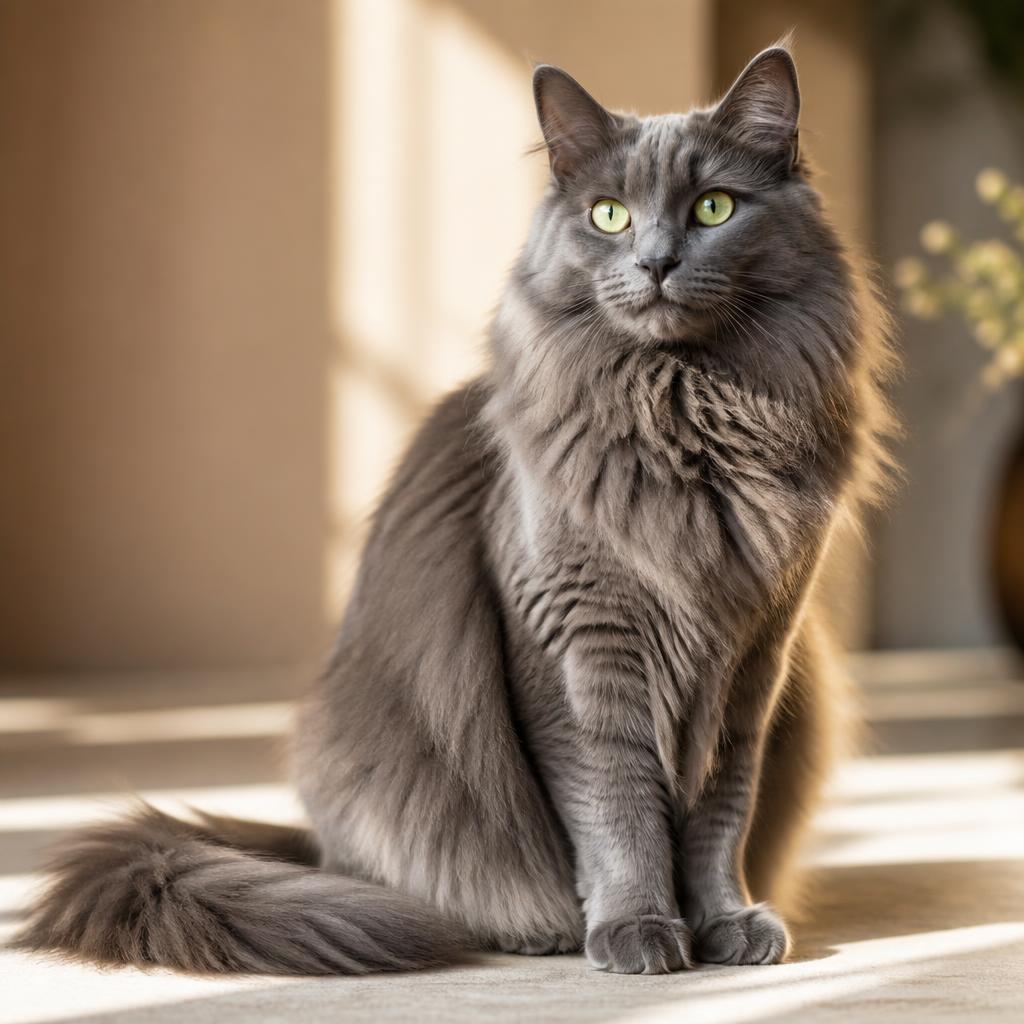
| Nebelung | 2.5–5.5 kg | 5/10 | 8/10 | €83 |
| Chartreux | 3–7 kg | 4/10 | 4/10 | €79 |
| Norwegian Forest Cat | 4.5–9 kg | 6/10 | 7/10 | €104 |
Domestic Longhair questions, answered
Is a domestic longhair a breed?
No. It is a description for any mixed-breed cat with a long coat. Personality, size and health vary with the individual.
How often should I groom a domestic longhair?
Daily or every other day is the realistic minimum. Mats form quickly behind the ears, under the legs and on the belly.
Are domestic longhairs hypoallergenic?
No. Long coats shed and trap dander, making them a poor choice for most allergy sufferers.
How long do domestic longhairs live?
Many live 12–18 years with good care, though individual health depends on background and lifestyle.
Should I adopt a kitten or an adult?
An adult is often a better choice because temperament and size are already visible. Kittens are a lottery.
What health issues are common?
Dental disease, obesity, hairballs, parasites and, in older cats, chronic kidney disease. Preventive care catches most early.
Can a domestic longhair go outside?
It can, but the coat picks up burrs, mats and parasites. Indoor life or a secure catio is easier on the coat and safer for the cat.
Sources
- Grooming and coat care, International Cat Care
- Feline health topics, Cornell Feline Health Center
- WSAVA global nutrition guidelines, WSAVA
- Keeping your cat happy, International Cat Care