Turkey
Turkish Van
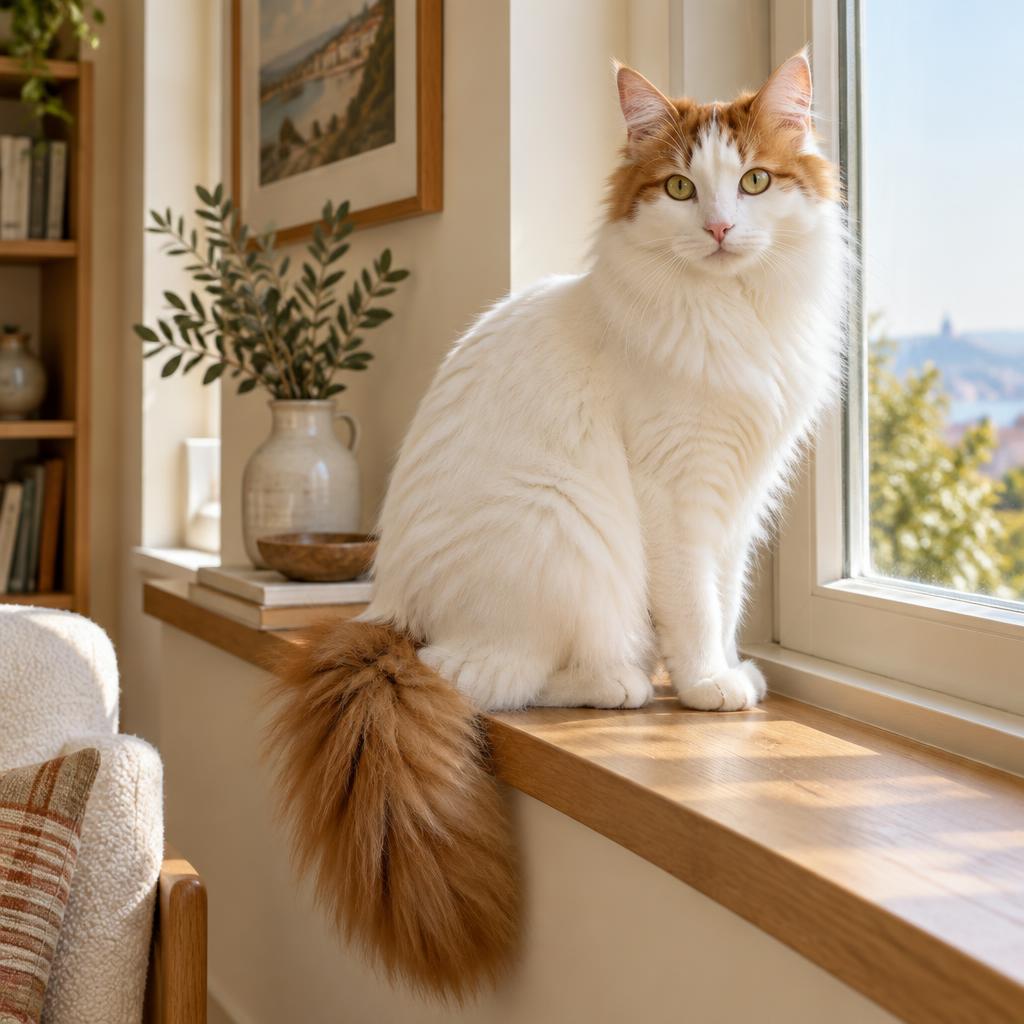
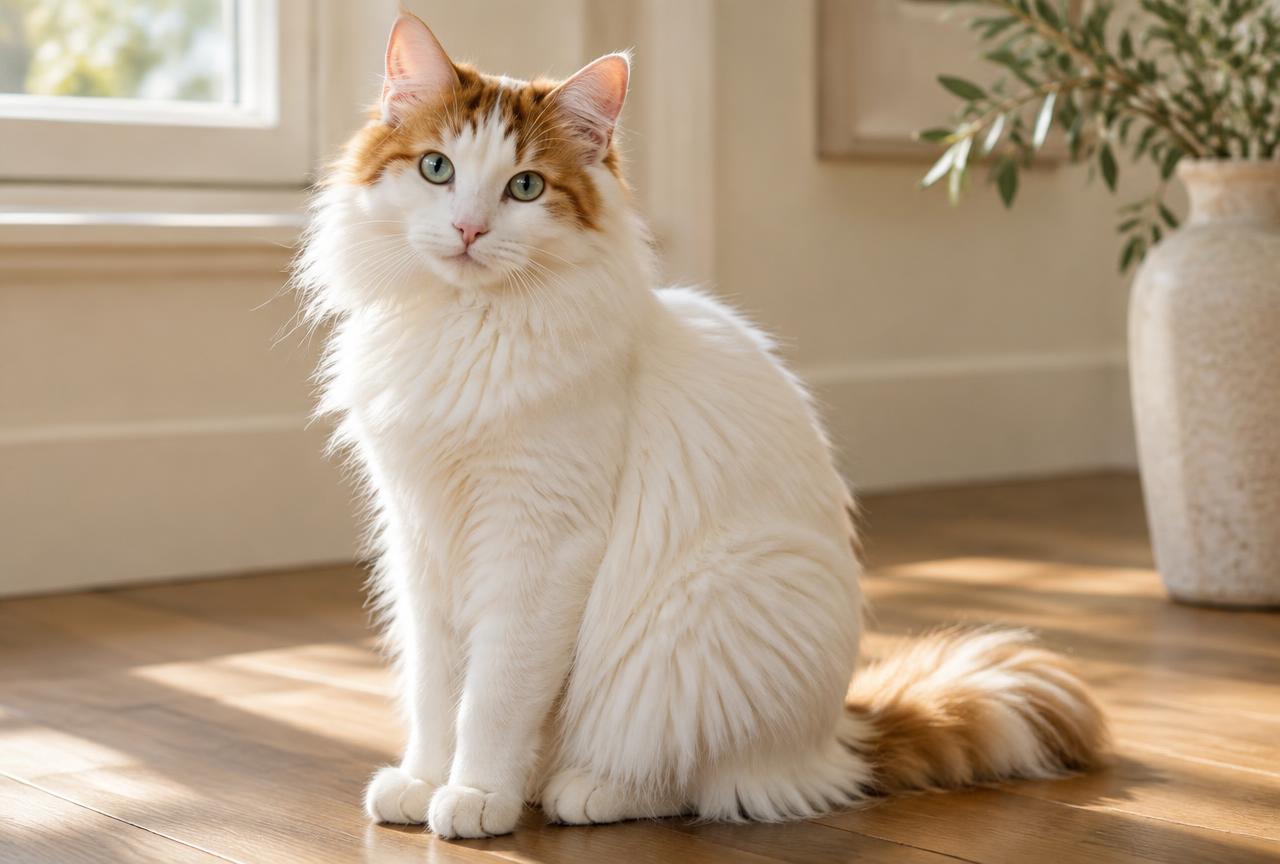
Powerful, white with coloured markings on the head and tail, and unusually interested in water. Affectionate, but rarely a lap cat.
Helen Marsh
The swimming cat, on its own terms
The short version
- Genuinely interested in water. Many paddle in sinks, baths and bowls rather than simply tolerating a wet paw.
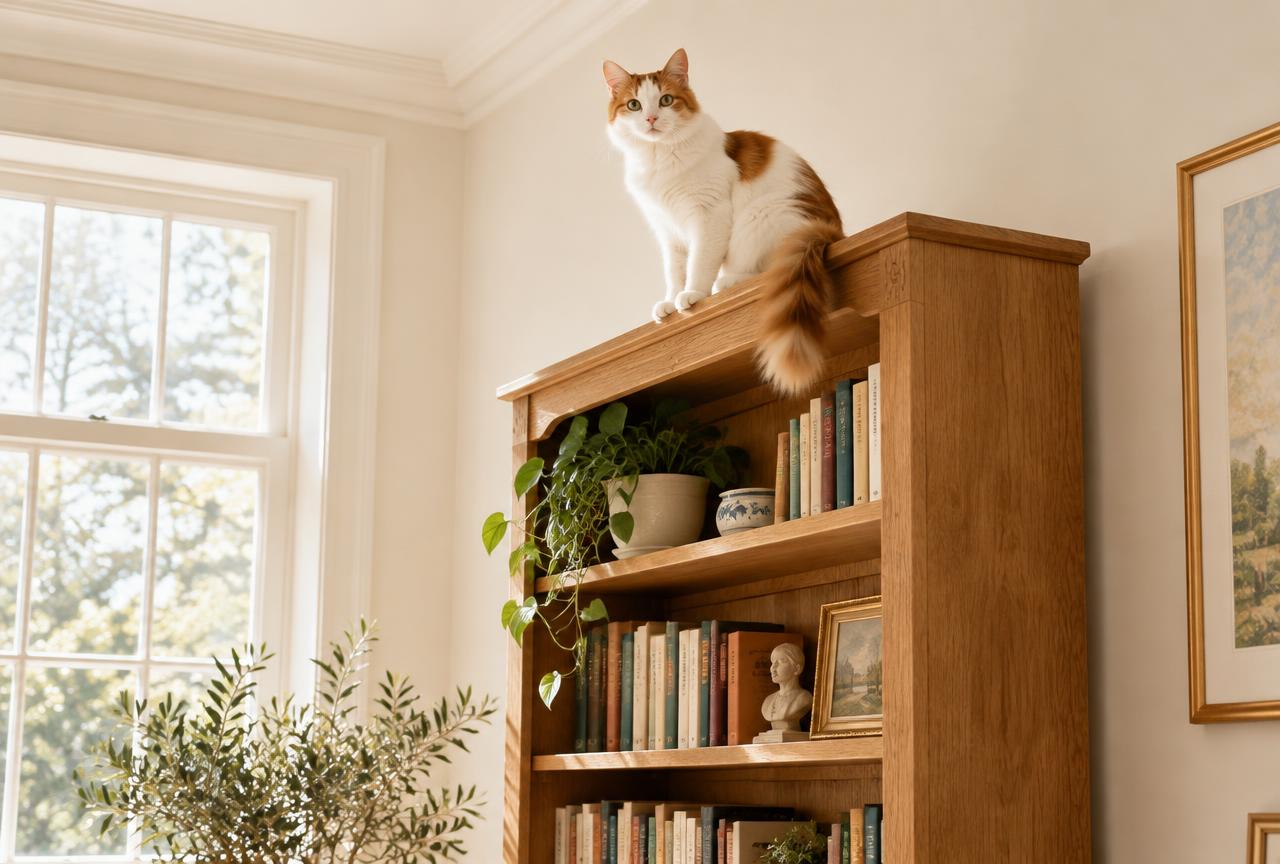
- Very athletic and drawn to height. They will find the top of the wardrobe with or without your permission.
- Affectionate but rarely happy being carried or held.
- The single coat is low-matting and needs only weekly combing, with a heavy spring moult.
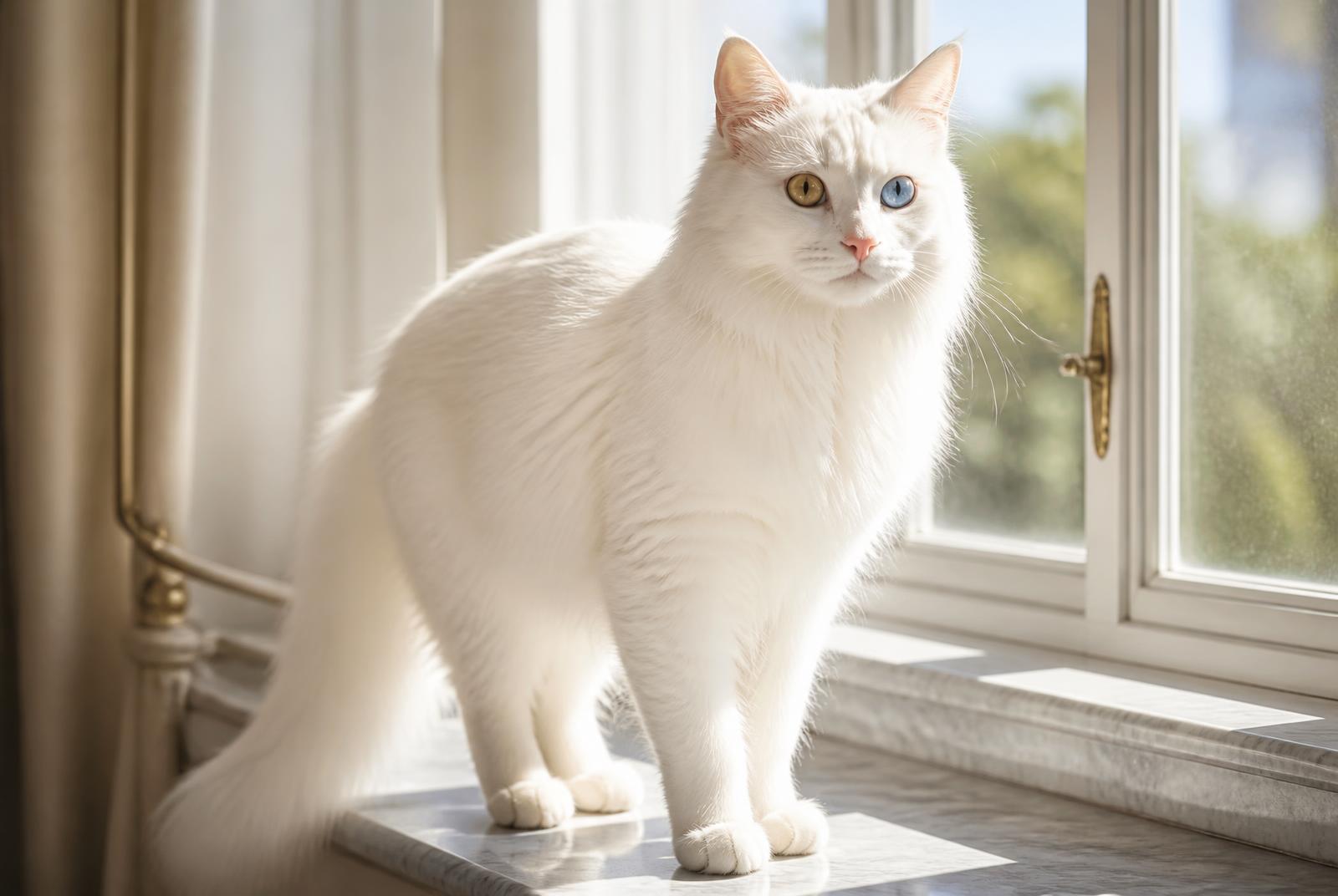
- White cats with blue eyes carry a higher chance of deafness; ask about hearing and keep a deaf cat indoors.
- Weight
- 3.5–9 kg
- Lifespan
- 13–17 yrs
- Coat
- Semi-long
- Size
- Large
- Grown male
- 6–9 kg
- Grown female
- 3.5–5.5 kg
- Years to full size
- about 3
- One-off setup
- €400–800
Get one if…
- Homes with height and space to run
- Owners who like a confident, independent cat
- Families with older children
- People amused rather than annoyed by a water-loving cat
Think again if…
- Small flats with nothing to climb
- Anyone wanting a cat to carry and cuddle
- Very quiet households
- Homes with fragile ornaments on open shelves
Trait profile
High energy and low patience for restraint. They are affectionate with their own people and physically confident to an unusual degree, which shapes everything about living with one.
Space & setup. Needs height and distance. A large flat with tall climbing can work; a small one will not.
Allergies. Not hypoallergenic. The single coat sheds heavily in spring.
The review
A large, athletic semi-longhaired breed from the Lake Van region of eastern Turkey, with a chalk-white body, coloured head and tail markings, and a famous curiosity about water.
The Turkish Van is an old breed from the area around Lake Van in eastern Turkey, and it looks like a cat built by a landscape rather than a committee. The body is long, broad-chested and heavily muscled, particularly in males, which can reach the weight of a small Maine Coon. The coat is chalk white with colour restricted to the head and the tail, a pattern so characteristic that cat people simply call it van pattern regardless of breed. There is no woolly undercoat, which gives the fur a texture people describe as cashmere and, usefully, means it mats very little.
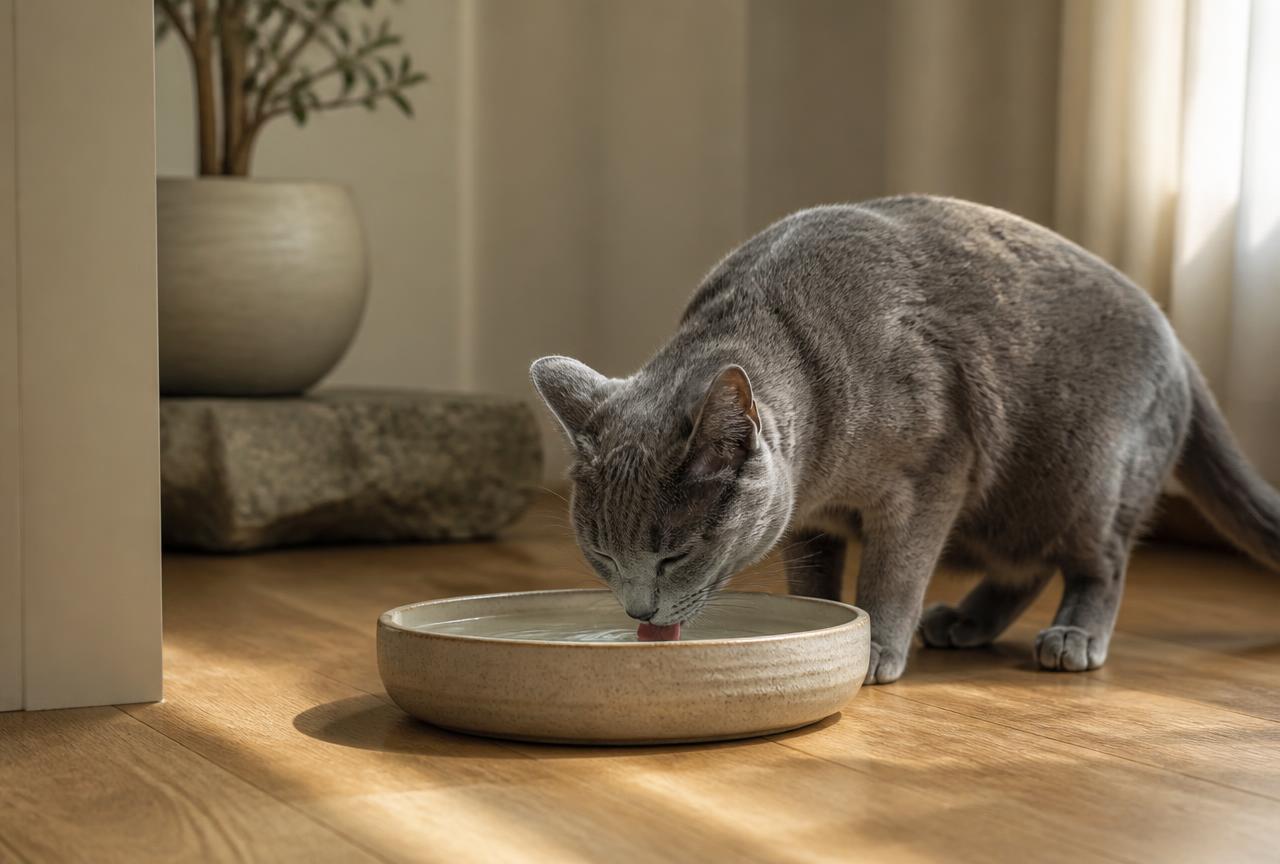
The water business is real, not folklore. A great many Turkish Vans will paw at a running tap, stand in a shower tray after use, dip a foot in a water bowl to test it, and investigate a filling bath with genuine intent. Some will swim. A single coat that carries less water helps. What this means practically is that you should close the bathroom door if wet paw prints on the hall floor would irritate you, and that you should never leave a full bath or an uncovered water butt unattended around a young one.
Temperament is where expectations most often go wrong. Turkish Vans are affectionate, loyal and closely bonded to their household. They are not compliant. They generally dislike being picked up, they will leave a lap when they have decided the visit is over, and they are quite capable of holding an opinion about being moved off the worktop. If your image of cat ownership involves carrying a cat around, this is the wrong breed. If you enjoy a confident animal who chooses to sit beside you and follows you between rooms, it is a very good one.
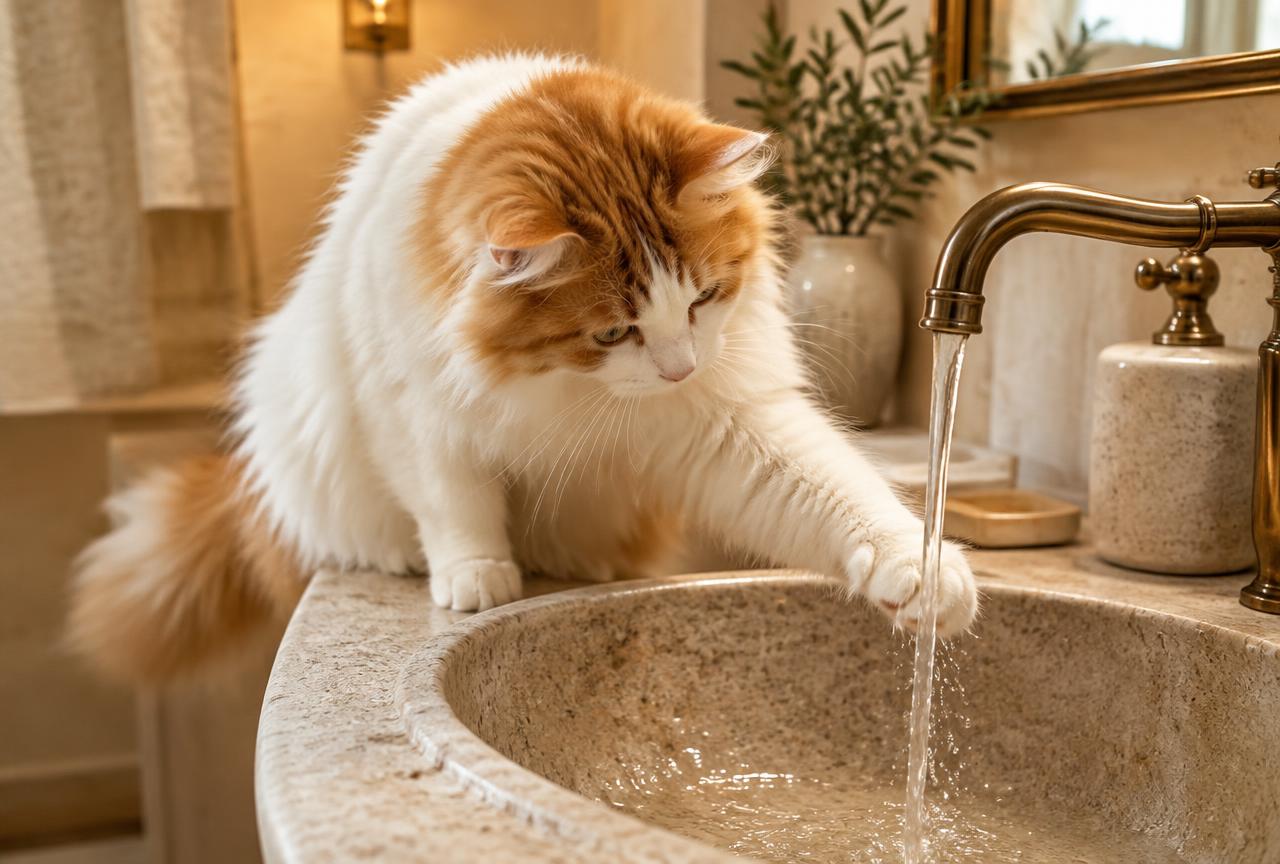
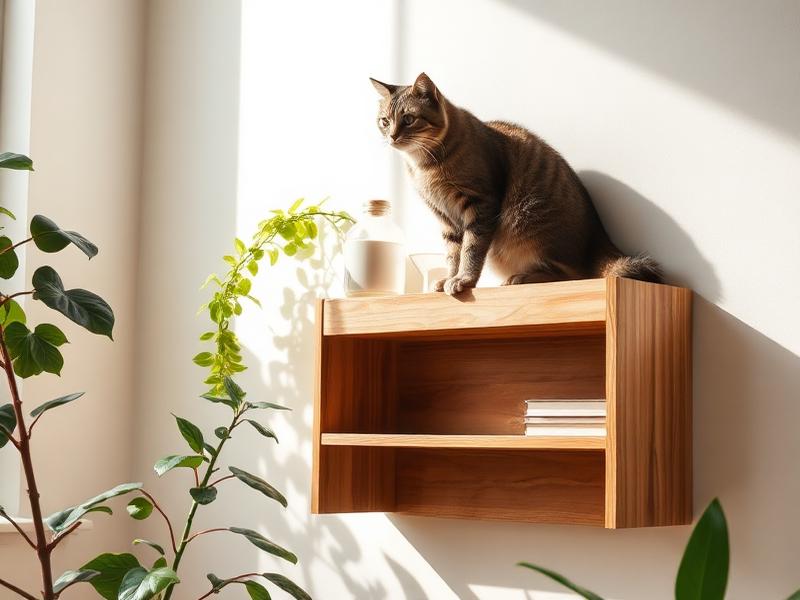
Energy is high and lasts into middle age. A Turkish Van wants to run, jump and carry things around, and an under-exercised one becomes a nuisance rather than a lump. Give them tall, sturdy climbing structures, clear floor runs, and daily wand play. Because they are strong and inventive, breakables and lightweight shelves should be considered temporary. Many enjoy fetch, and most take to clicker training readily, which is a good way to spend their attention productively.
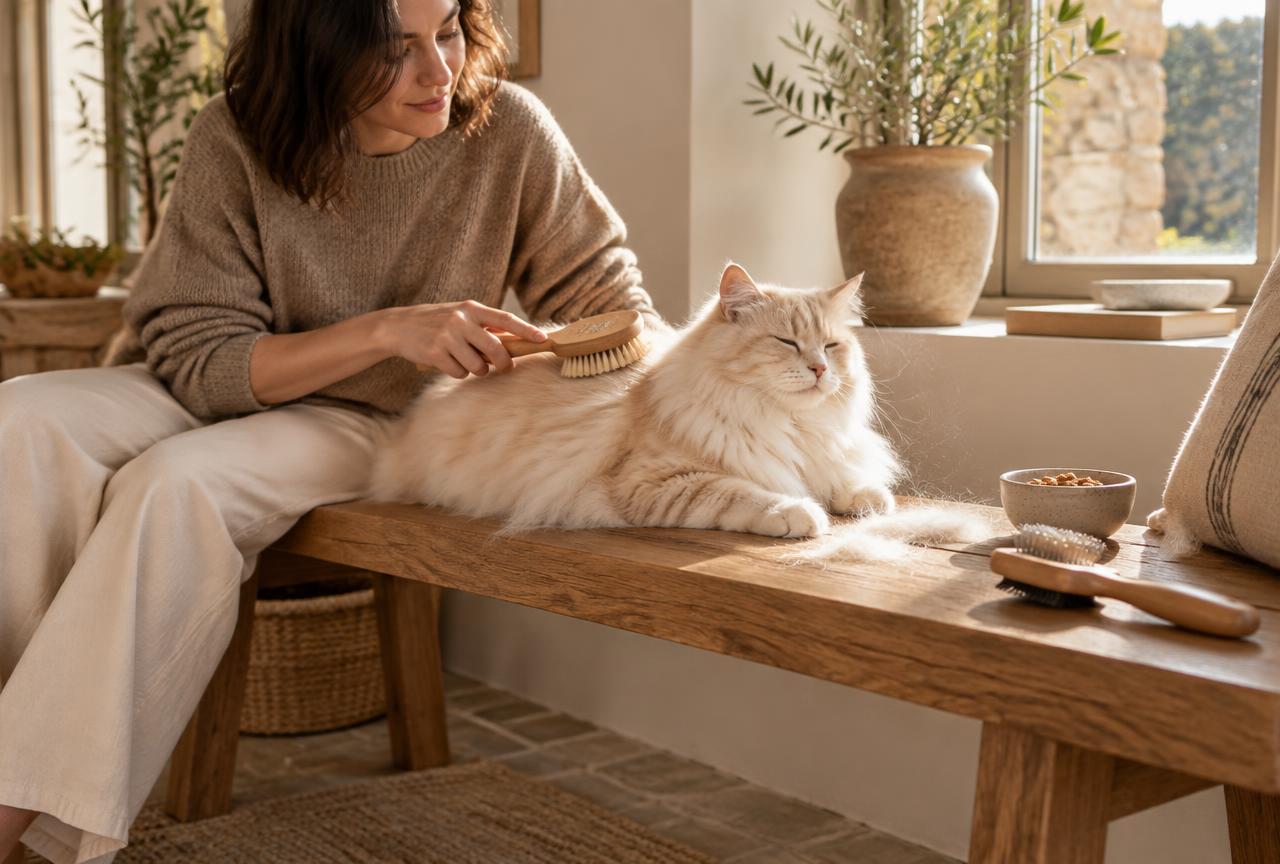
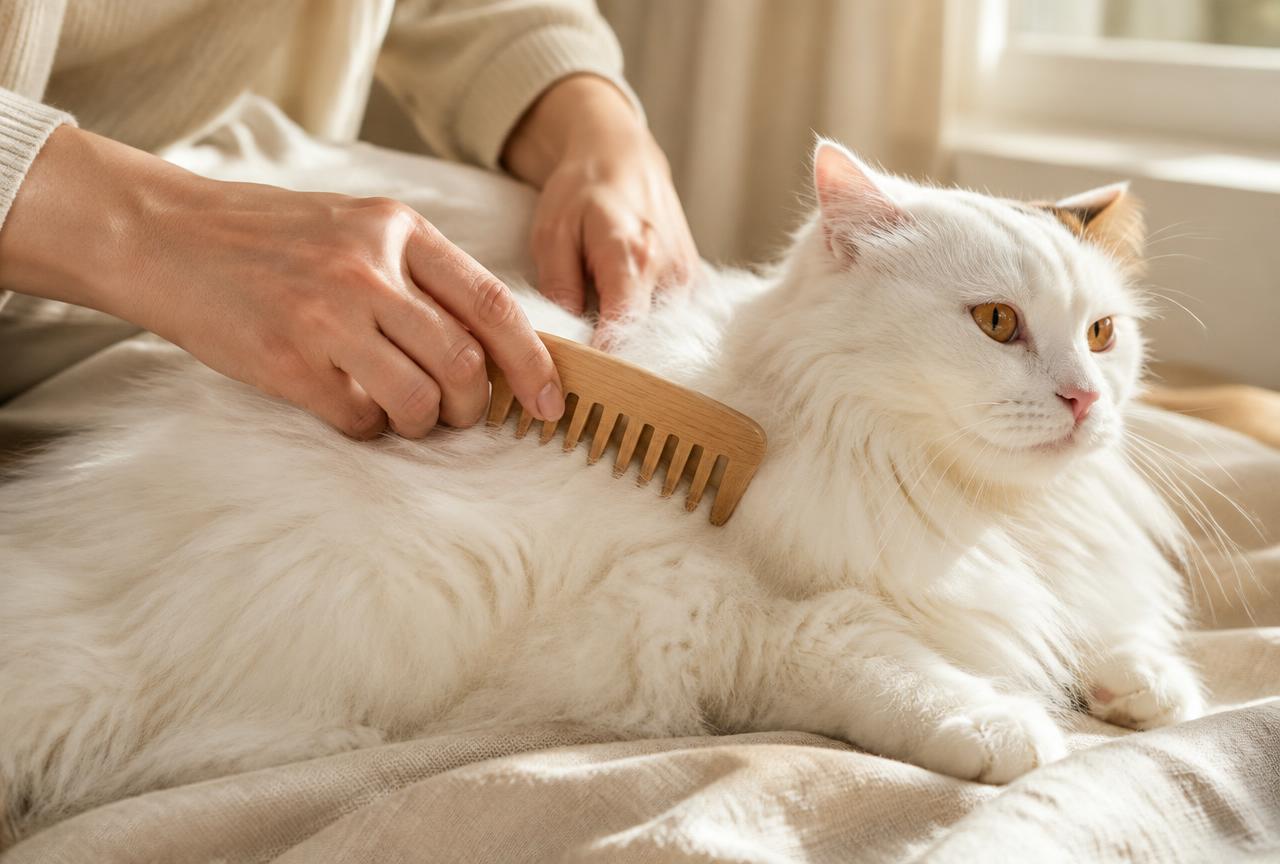
Grooming is easier than the coat length suggests. A comb through once or twice a week keeps the fur in order, with more attention in spring, when the moult is substantial and sudden. A white coat shows dirt, so an occasional wipe with a damp cloth is useful, and cats who spend time outdoors may need the tail plume combed out. Ears should be checked fortnightly and claws trimmed monthly, though active cats wear them down considerably.
Health is generally robust. The breed benefits from a natural origin and a reasonably diverse gene pool, and lifespans into the mid and late teens are common. Two matters deserve attention. Hypertrophic cardiomyopathy occurs in the breed and should be screened by ultrasound in breeding cats. The second is hearing: the white coat and blue eyes combination is associated with congenital deafness, and while many Turkish Vans have amber or odd eyes and hear perfectly, a blue-eyed cat should have hearing assessed. A deaf cat lives a full life indoors, but must not be given free outdoor access.
Who is this cat for? Someone with space, a tolerance for a cat who does exactly as they please, and an appreciation for physical confidence. Families with older children do well, since the cat will simply leave when it wants to. Homes wanting a placid longhair should look at a Ragdoll or a Birman instead. Handled with that understanding, a Turkish Van is one of the most rewarding breeds there is: long-lived, healthy, funny and entirely unwilling to be dull.
Grooming, realistically
- 1Comb the coat once or twice a week with a wide-tooth comb, increasing to daily during the spring moult.
- 2Work the tail plume and the ruff carefully, since these hold the most fur.
- 3Wipe the white coat with a damp cloth when it looks dull.
- 4Check ears fortnightly and trim claws monthly.
- 5Brush teeth daily or use dental chews, and weigh monthly given the size range.
What you actually need
- Wide-tooth metal comb
- Soft slicker brush for the ruff and tail
- Damp microfibre cloth
- Blunt-nosed claw clippers
- Tall sturdy climbing frame or wall shelves
Kitten to adult
| Age | Male | Female | What is happening |
|---|---|---|---|
| 8 weeks | 1.0-1.4 kg | 0.9-1.2 kg | Head and tail colour already clear. Test hearing informally with the breeder. |
| 3 months | 1.8-2.4 kg | 1.5-2.1 kg | Climbing begins in earnest. Fix shelving securely. |
| 6 months | 3.2-4.2 kg | 2.6-3.4 kg | Long body, still narrow chest. |
| 12 months | 4.5-6.0 kg | 3.2-4.2 kg | Athletic and fast, coat still developing. |
| 2 years | 6.0-8.0 kg | 3.5-5.0 kg | Chest broadens, males noticeably heavier. |
| 3 years | 6.0-9.0 kg | 3.5-5.5 kg | Final size and full coat texture. |
Ranges are typical, not targets. Judge condition by ribs and waist, and check with the ideal weight checker.
What to ask a breeder
- Have both parents been heart-screened by ultrasound?
- Has this kitten had hearing assessed, particularly if blue-eyed?
- How large do the males in your lines grow?
- What climbing and enrichment have kittens had before leaving?
- How are kittens introduced to handling, water and grooming?
Health watch-list
What to ask a breeder about, and what to watch for over a lifetime. This is orientation, not veterinary advice, anything you notice belongs in front of a vet.
Hypertrophic cardiomyopathy
UncommonOccurs in the breed. Ask for ultrasound screening of both parents.
Congenital deafness
Raised risk in blue-eyed catsLinked to the dominant white gene. Ask for hearing assessment and keep a deaf cat indoors.
Seasonal heavy moulting and matting
Common in springThe single coat sheds suddenly. Daily combing for a few weeks prevents felting.
Obesity
PossibleA large frame makes gain easy to miss. Weigh monthly.
Dental disease
Common in all catsDaily brushing or dental chews reduce later extractions.
Injury from falls or escapes
PossibleVery athletic cats take risks. Secure high windows and balconies.
What it costs to keep one
Realistic running cost
€96 / month
About €1,152 a year, or roughly €17,280 across a 15-year life, before purchase price, neutering and one-off vet events.
Before the cat arrives. Budget roughly €400–800 for trays, carrier, posts, bowls, bedding and grooming kit sized for this breed. Figures throughout are indicative and vary a good deal between countries.
Interactive · built for this breed
Is a Turkish Van right for your home?
Athletic, water-curious and strong-willed. Four questions to see whether this suits your household.
Verdict
A strong match
Height, tolerance for water and respect for an independent cat. That is the brief.
Keep the weight honest with the ideal weight tool, or compare the alternatives in the matchmaker.
The verdict, by household
Flat dwellers
Only if large
They need running distance and tall climbing. A studio will not do.
Families with young children
Fair
Tolerant but unwilling to be held. Better with children old enough to let the cat set terms.
First-time owners
Good, with realistic expectations
Care is easy. The independence is the part people are unprepared for.
Multi-pet homes
Good
Confident with cats and dogs, and unlikely to be bullied.
Quiet, sedate homes
Poor
This is an energetic breed that stays energetic for years.
When to call your vet
- Breathlessness, sudden lethargy or collapse, which can indicate heart disease
- No response to sounds behind them, suggesting deafness
- Limping or reluctance to jump in a normally athletic cat
- Heavy, sudden matting during the spring moult with sore skin beneath
- Unexplained weight loss in an older cat
Nothing here is a diagnosis. Breathing difficulty, sudden hind-leg weakness and straining to urinate are emergencies, go the same day.
Turkish Van vs the closest alternatives
| Breed | Weight | Energy | Grooming | € / month |
|---|---|---|---|---|
| Turkish Van | 3.5–9 kg | 9/10 | 4/10 | €96 |
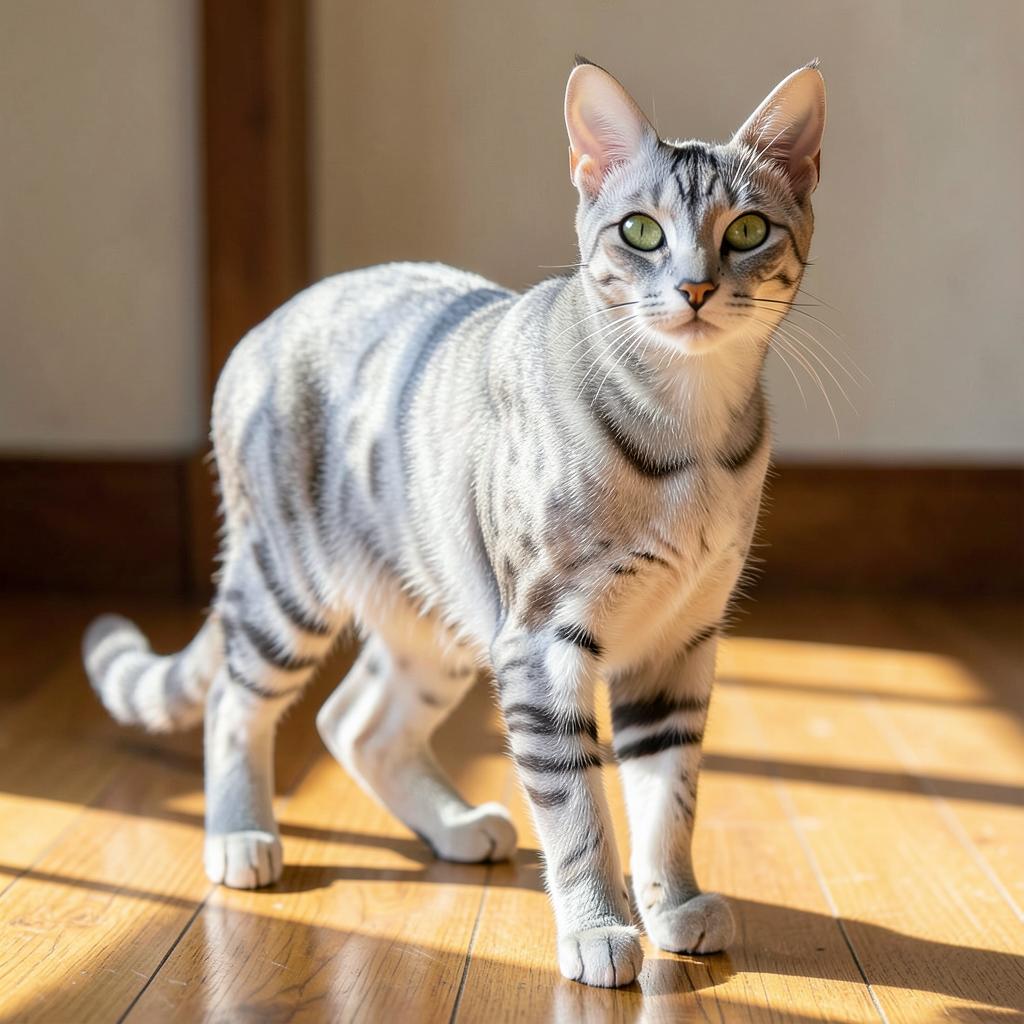
| Egyptian Mau | 3–5 kg | 9/10 | 3/10 | €80 |
| Toyger | 3–6.5 kg | 9/10 | 3/10 | €88 |
| Turkish Angora | 2.5–5 kg | 9/10 | 5/10 | €86 |
Turkish Van questions, answered
Do Turkish Vans really swim?
Many will. The more usual behaviour is paddling and pawing at water, standing in wet shower trays and investigating a filling bath, and some do swim given the chance. The single coat carries less water than a double coat, which helps.
Are Turkish Vans cuddly?
Affectionate, yes. Cuddly on your terms, no. They bond strongly with their household and will sit beside you and follow you between rooms, but most dislike being picked up or held and will leave when they have had enough.
How big do they get?
Males commonly reach 6 to 9 kg and take around three years to finish filling out, with females much lighter at 3.5 to 5.5 kg. They are long and broad-chested rather than simply heavy.
Is the coat hard work?
Less than it looks. There is no woolly undercoat, so matting is uncommon and a weekly comb is usually enough. The exception is the spring moult, which is heavy and sudden, and deserves daily combing for a few weeks.
Are white Turkish Vans deaf?
Some are. The dominant white gene is associated with congenital deafness, and the risk is higher in blue-eyed cats. Many Turkish Vans have amber or odd eyes and hear normally. Ask the breeder about hearing, and keep a deaf cat indoors or in a secure enclosure.
Do they need a garden?
They need space and height, which a large home can provide indoors. If you do allow outdoor access it must be a secure enclosure, because an athletic cat clears ordinary fencing without effort.
How much does a Turkish Van cost to keep?
Around 95 to 100 EUR a month as an indicative range for food, litter, insurance and grooming supplies, with 400 to 800 EUR of one-off setup for tall climbing structures, trays, carrier and scratchers.