United States
Toyger
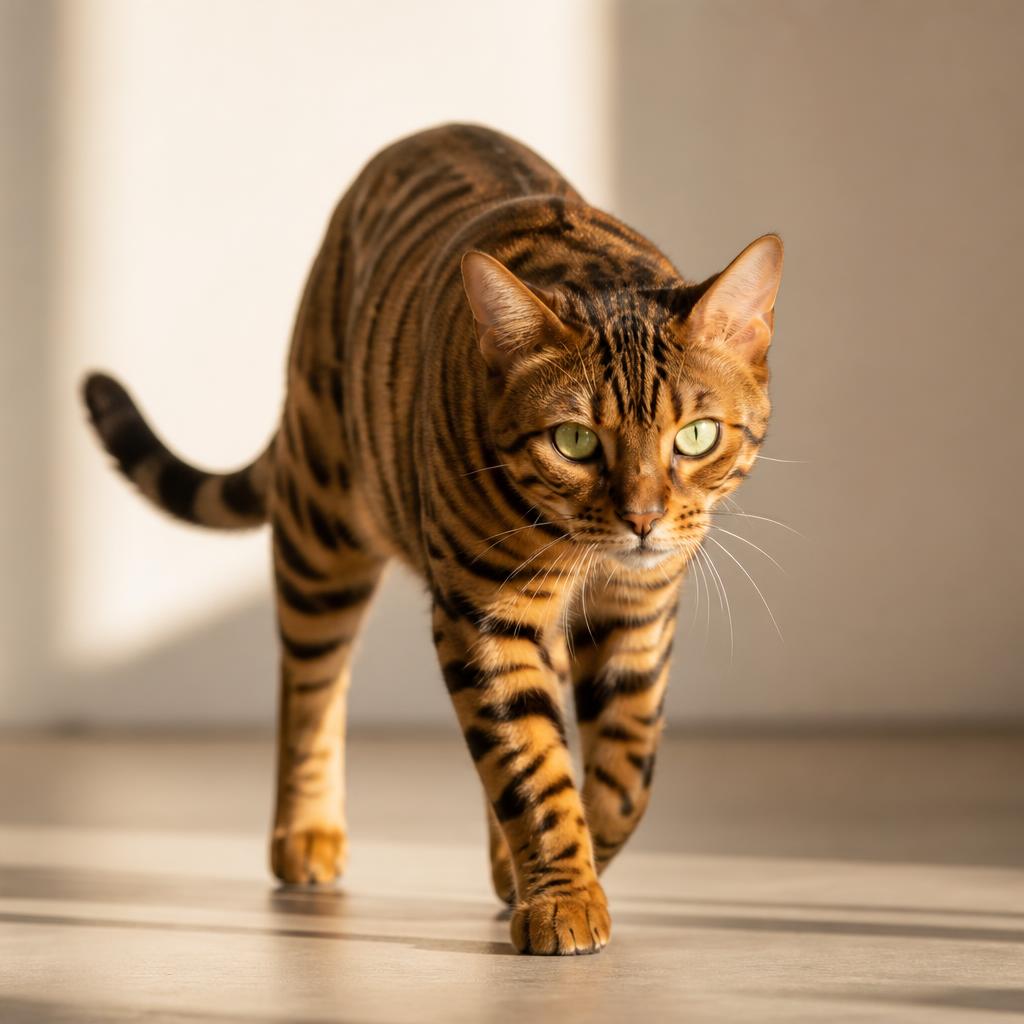
A rare, athletic breed with tiger-like stripes. Needs space, daily enrichment and a breeder who health-tests first.
Reviewed against International Cat Care and veterinary guidance
A designer breed with bold tiger-like stripes and high energy
The short version
- Bold vertical stripes and muscular build give a miniature tiger appearance.
- High energy and intelligence; needs daily play, climbing and mental stimulation.
- Short coat is easy to groom, but the breed is rare and requires careful breeder selection.
- Prioritise health screening over extreme markings when choosing a kitten.
- Not suited to small, sedate homes without enrichment.
- Weight
- 3–6.5 kg
- Lifespan
- 12–15 yrs
- Coat
- Short
- Size
- Medium to large
- Grown male
- 4.5–6.5 kg
- Grown female
- 3–5 kg
- Years to full size
- about 3
- One-off setup
- €140–280
Get one if…
- Experienced cat owners
- Homes with space and vertical territory
- People who enjoy training and interactive play
- Owners committed to ethical breeding
Think again if…
- Small flats with no climbing space
- Sedate or very quiet homes
- First-time owners who want a low-maintenance cat
- Buyers who choose on looks alone
Trait profile
The high energy score is the defining trait. The coat is easy; the activity requirement is not.
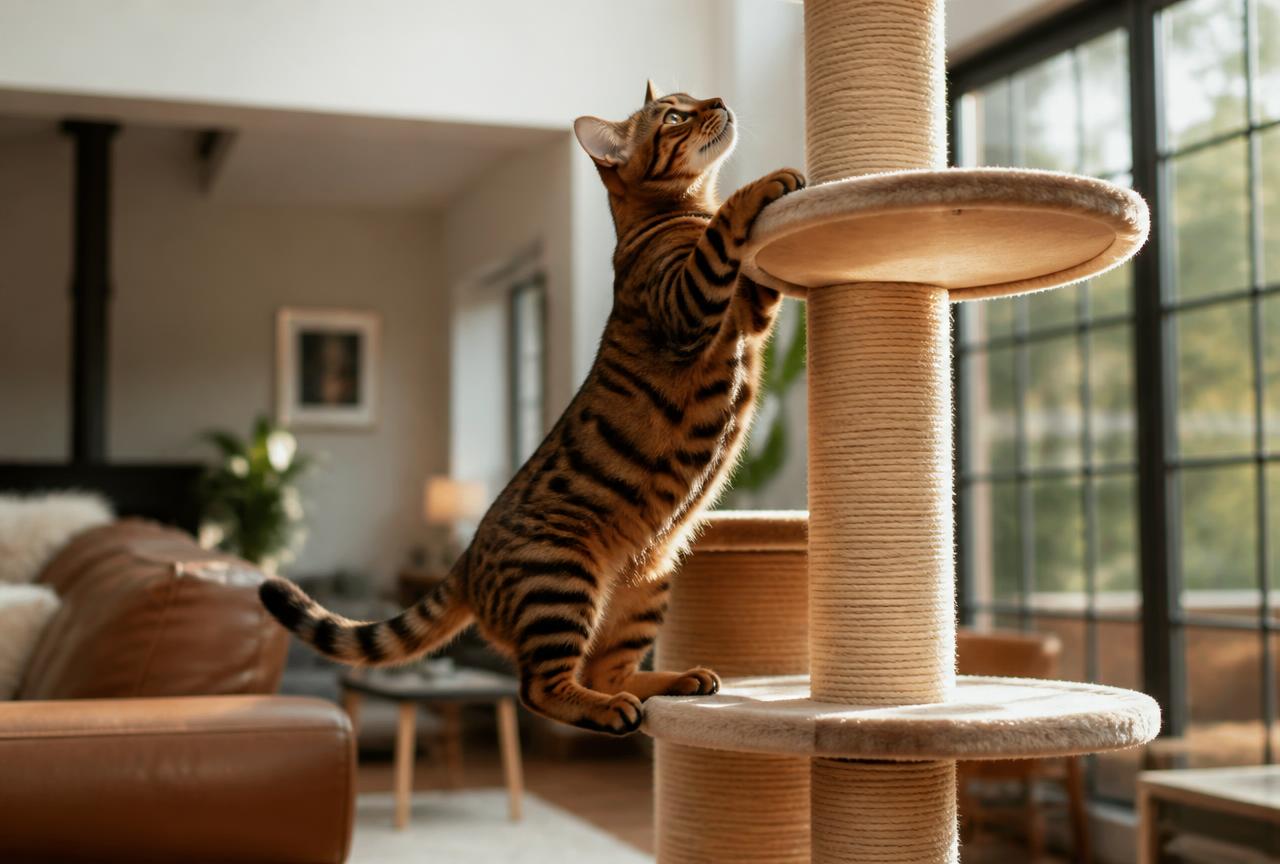
Space & setup. Needs room to run, climb and explore. A tall, sturdy cat tree and safe vertical routes are essential.
Allergies. Not hypoallergenic. Short coats still shed and spread dander; allergy sufferers should meet the cat first.
The review
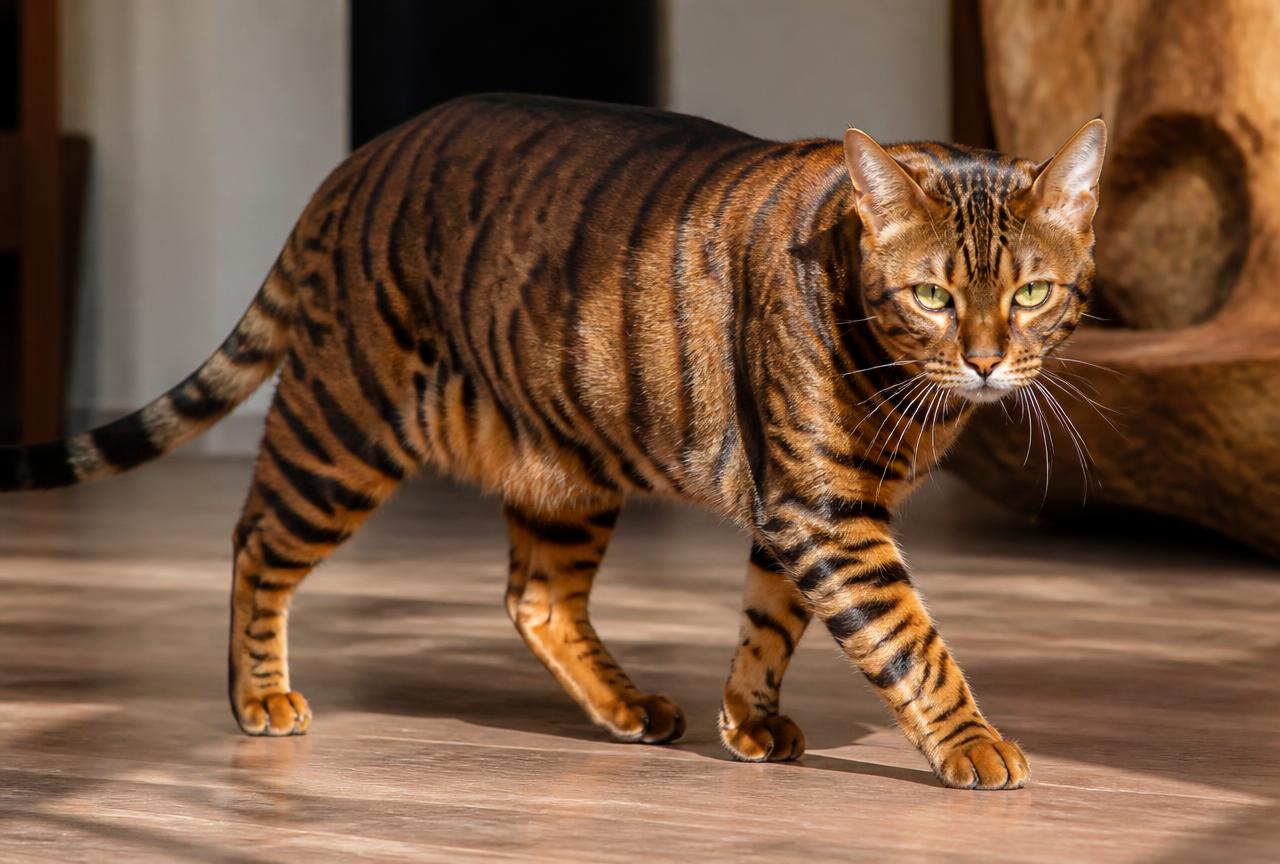
The Toyger is a relatively new breed developed to resemble a small tiger, with dark vertical stripes on a warm orange-brown coat. They are active, intelligent and striking, but buyers must prioritise health and ethics over appearance.
The Toyger is a breed built on appearance. It was developed in the United States from domestic shorthairs and Bengals to create a cat with the vertical striping, muscular body and circular head markings of a small tiger. When it works, the result is genuinely striking. But the rarity of the breed and the emphasis on looks mean that buyers need to be more careful than usual.
The first question with any Toyger should be health, not pattern. Because the breed is rare and relatively new, the gene pool is small, and some breeders prioritise extreme markings over welfare. Ask for heart screening, kidney screening and evidence that the cats are bred for temperament as well as stripes. Avoid any breeder who cannot answer those questions or who pressures you based on appearance alone.
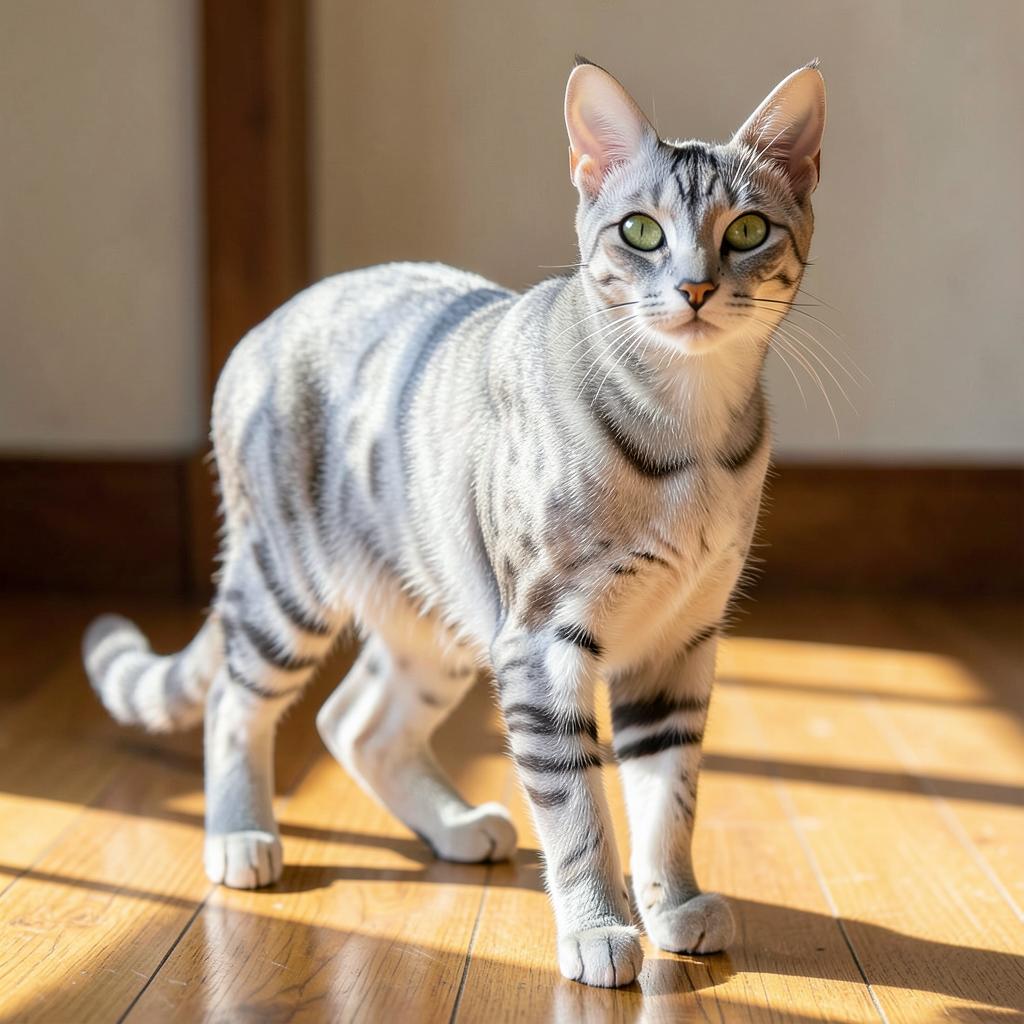
Physically, the Toyger is a medium to large, muscular cat. Males usually finish between 4.5 and 6.5 kg, females between 3 and 5 kg. The coat is short and soft, with bold vertical stripes on a warm background. Grooming is easy: a weekly brush is enough to remove loose hair. The real maintenance is activity. This is a high-energy, intelligent cat that needs climbing space, puzzle toys, fetch, training and interactive play every day.
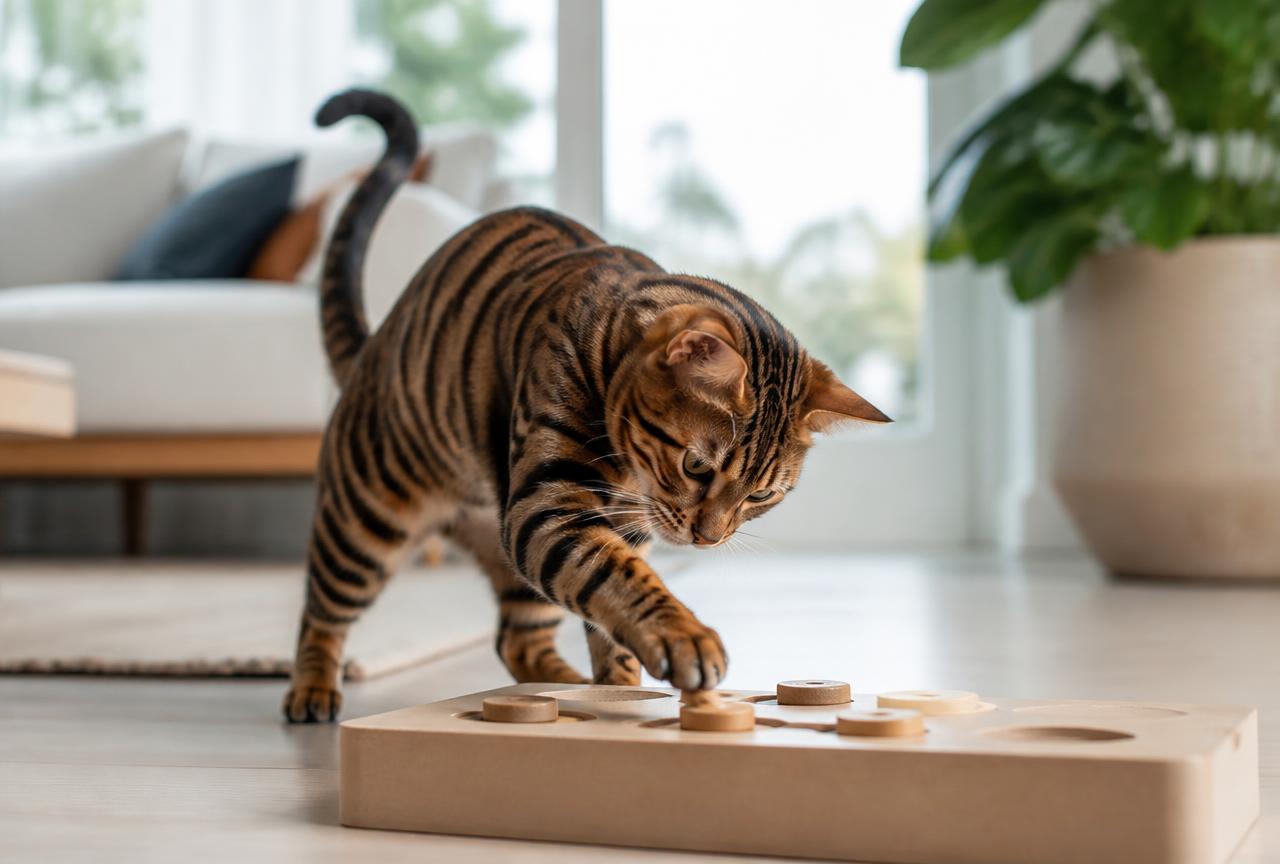
Temperament varies with lines, but most Toygers are confident, playful and people-oriented. They are not as clingy as a Bombay or as vocal as a Siamese, but they do want to be involved. They can learn tricks, walk on a harness and enjoy water play. Without stimulation, they can become bored, destructive or overweight.
Health concerns include those seen in related breeds: hypertrophic cardiomyopathy, progressive retinal atrophy in some lines, and kidney issues. The breed is too rare for large population studies, so individual breeder health testing is crucial. Obesity is a common preventable problem.
A Toyger suits an experienced owner with space, time and a commitment to ethical sourcing. It is not a good choice for a sedate home, a small flat without climbing opportunities, or anyone who chooses a breeder based on photos alone. Given the right home, it is a beautiful, engaging companion.
A rare, athletic breed that looks like a pocket tiger. Needs space, enrichment and a careful choice of breeder.
Grooming, realistically
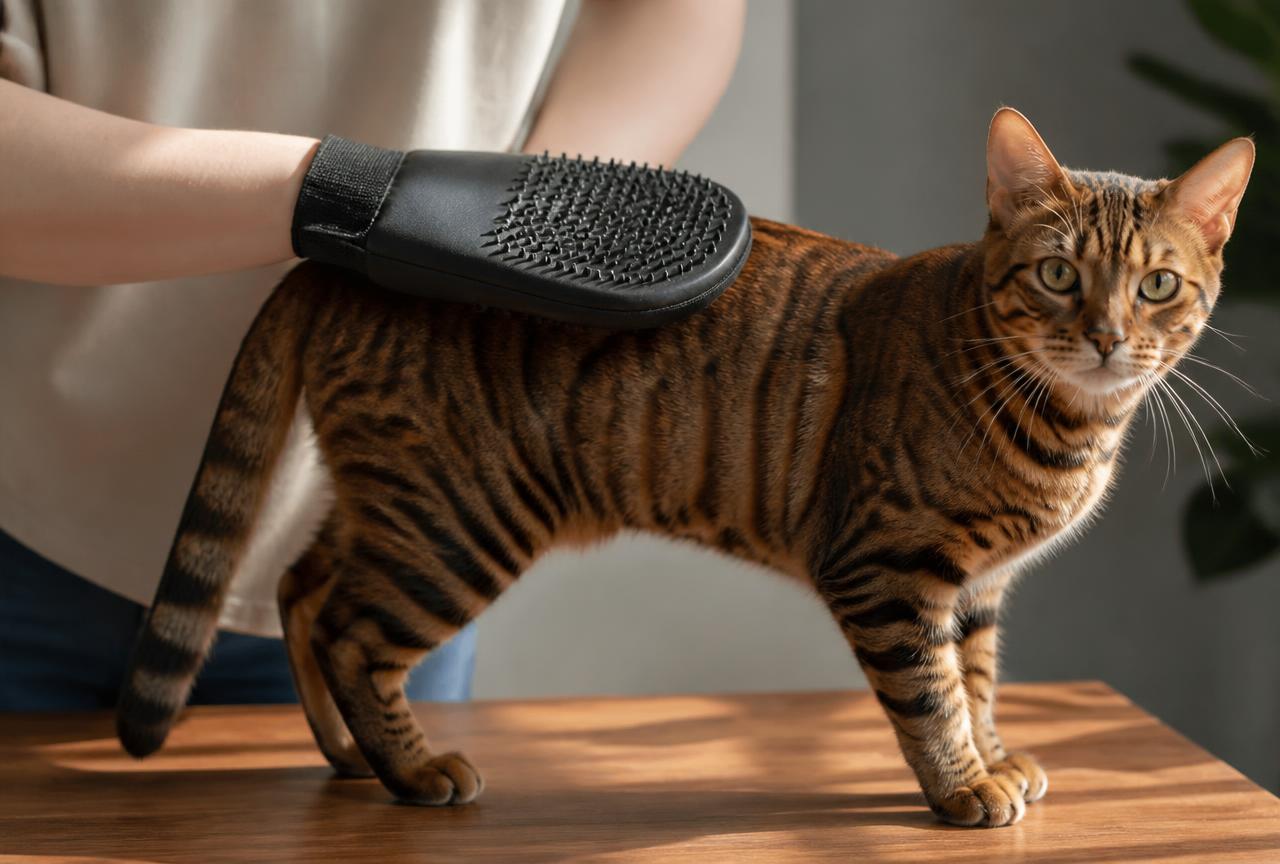
- 1Brush once a week with a soft bristle brush or rubber grooming mitt to remove loose hair and polish the short coat.
- 2Wipe the coat with a damp cloth if it looks dusty between brushes.
- 3Check ears weekly and trim claws every three to four weeks.
- 4Brush teeth daily if possible, or use dental treats to reduce tartar.
- 5Weigh monthly and adjust food; Toygers are muscular but can become overweight without enough activity.
What you actually need
- Soft bristle brush or rubber grooming mitt
- Microfibre cloth for coat wiping
- Blunt-nosed claw clippers
- Cat-safe ear wipes
- Dental treats or small toothbrush
Kitten to adult
| Age | Male | Female | What is happening |
|---|---|---|---|
| 8 weeks | 0.8–1.1 kg | 0.7–1.0 kg | Markings visible; choose a breeder who socialises early |
| 3 months | 1.5–2.0 kg | 1.3–1.7 kg | Rapid growth; four meals a day |
| 6 months | 2.4–3.2 kg | 2.0–2.8 kg | Muscles develop; energy level is high |
| 12 months | 3.5–4.5 kg | 2.8–3.8 kg | Near adult size; striping continues to darken and sharpen |
| 2 years | 4.5–6.0 kg | 3.0–4.5 kg | Physically mature; full muscle and pattern definition |
| 3 years | 4.5–6.5 kg | 3.0–5.0 kg | Final weight. Active cats stay lean; under-stimulated cats gain easily |
Ranges are typical, not targets. Judge condition by ribs and waist, and check with the ideal weight checker.
What to ask a breeder
- Can you show me heart and kidney screening results for both parents?
- Have the parents been tested for progressive retinal atrophy or other genetic issues?
- How do you balance appearance with temperament and health in your breeding programme?
- What socialisation do kittens receive before leaving?
- Can I meet the mother and, if possible, the father?
Health watch-list
What to ask a breeder about, and what to watch for over a lifetime. This is orientation, not veterinary advice, anything you notice belongs in front of a vet.
Hypertrophic cardiomyopathy
ModerateHeart disease is a concern in many breeds. Ask for echocardiogram screening of both parents.
Progressive retinal atrophy
Low to moderateSome lines may carry this inherited eye disease. Ask about genetic testing.
Kidney disease
ModerateKidney issues can occur. Screening and good hydration help reduce risk.
Obesity
CommonHigh energy does not prevent weight gain if food is unlimited. Measure portions and play daily.
Dental disease
Common with ageRoutine dental care helps prevent periodontal disease.
Respiratory issues
ModerateSome Toyger lines may be prone to asthma. Seek veterinary care for wheezing.
What it costs to keep one
Realistic running cost
€88 / month
About €1,056 a year, or roughly €14,784 across a 14-year life, before purchase price, neutering and one-off vet events.
Before the cat arrives. Budget roughly €140–280 for trays, carrier, posts, bowls, bedding and grooming kit sized for this breed. Figures throughout are indicative and vary a good deal between countries.
Interactive · built for this breed
Is a Toyger right for your home?
A designer breed bred to resemble a small tiger. Toygers are active, intelligent and striking, but the breed is rare and buyers must prioritise health over pattern.
Verdict
An excellent match
You have the space, ethics focus and energy for this rare, athletic breed.
What to sort out first
- The right breeder screens for heart and kidney issues and does not chase extreme markings at the cost of welfare.
Keep the weight honest with the ideal weight tool, or compare the alternatives in the matchmaker.
The verdict, by household
Small flat, no outdoor access
Workable, with conditions
Possible only if there is generous vertical space, a sturdy cat tree and daily energetic play.
Family with young children
Workable, with conditions
Playful and confident, but children must understand this is not a toy and should not be handled roughly.
First-time owner
Think again
The energy, space needs and rarity make this a better choice for experienced owners.
Multi-cat or dog household
Workable, with conditions
Can get along with other active pets, but introductions must be slow and supervised.
Allergy-conscious home
Think again
No cat is hypoallergenic. The active nature spreads dander widely.
Away from home all day
Think again
High-energy, intelligent cats need stimulation. A second active cat and enrichment are essential.
When to call your vet
- Laboured breathing or episodes of wheezing
- Changes in vision, bumping into objects or dilated pupils
- Lethargy, collapse or fainting
- Persistent vomiting, diarrhoea or loss of appetite
- Sudden weight gain or reluctance to move
Nothing here is a diagnosis. Breathing difficulty, sudden hind-leg weakness and straining to urinate are emergencies, go the same day.
Toyger vs the closest alternatives
| Breed | Weight | Energy | Grooming | € / month |
|---|---|---|---|---|
| Toyger | 3–6.5 kg | 9/10 | 3/10 | €88 |
| Egyptian Mau | 3–5 kg | 9/10 | 3/10 | €80 |
| Singapura | 1.5–3.5 kg | 9/10 | 2/10 | €58 |
| Turkish Angora | 2.5–5 kg | 9/10 | 5/10 | €86 |
Toyger questions, answered
Is a Toyger a wild cat?
No. It is a fully domestic breed developed from domestic shorthairs and Bengals. It has no wild blood.
How much does a Toyger cost?
Prices vary widely because the breed is rare. Expect to pay a premium, but prioritise health testing over price or markings.
Are Toygers good pets?
They can be excellent pets for active, experienced owners with space and time for enrichment. They are not low-maintenance.
Do Toygers need a lot of exercise?
Yes. They need daily interactive play, climbing opportunities and mental stimulation.
Are Toygers hypoallergenic?
No. They have a short coat but still shed and produce allergens.
What health issues do Toygers have?
Potential concerns include heart disease, kidney issues, progressive retinal atrophy and obesity. Ethical breeders screen for these.
How long do Toygers live?
12–15 years is typical with good care, though the breed is too new for large longevity studies.
Sources
- Grooming and coat care, International Cat Care
- Feline health topics, Cornell Feline Health Center
- WSAVA global nutrition guidelines, WSAVA
- Keeping your cat happy, International Cat Care