Egypt
Egyptian Mau
Fast, spotted and famously loyal to one household, a breed whose beauty is the least interesting thing about it.
ReMews. veterinary review board
The only naturally spotted domestic cat
The short version
- The only domestic breed with naturally occurring spots, no wild ancestry required
- The fastest domestic cat: a skin flap from flank to knee lengthens the stride
- Devoted to its own household, genuinely shy with strangers
- Very high prey drive, incompatible with loose small pets
- Eyes reach their final gooseberry green at around eighteen months
- Weight
- 3–5 kg
- Lifespan
- 12–15 yrs
- Coat
- Short
- Size
- Medium
- Grown male
- 4–5 kg
- Grown female
- 3–4 kg
- Years to full size
- about 2
- One-off setup
- €900–1700
Get one if…
- Homes with vertical space and climbing routes
- People who want one cat that bonds intensely with them
- Owners happy with a secure garden, catio or harness walks
- Quiet, routine-driven households
Think again if…
- Busy homes with constant visitors
- Households with loose birds or rodents
- Owners who want a cat that greets everyone
- Homes with no climbing height at all
Trait profile
Very high energy paired with strong affection for its own people and real wariness of strangers. Grooming needs are minimal.
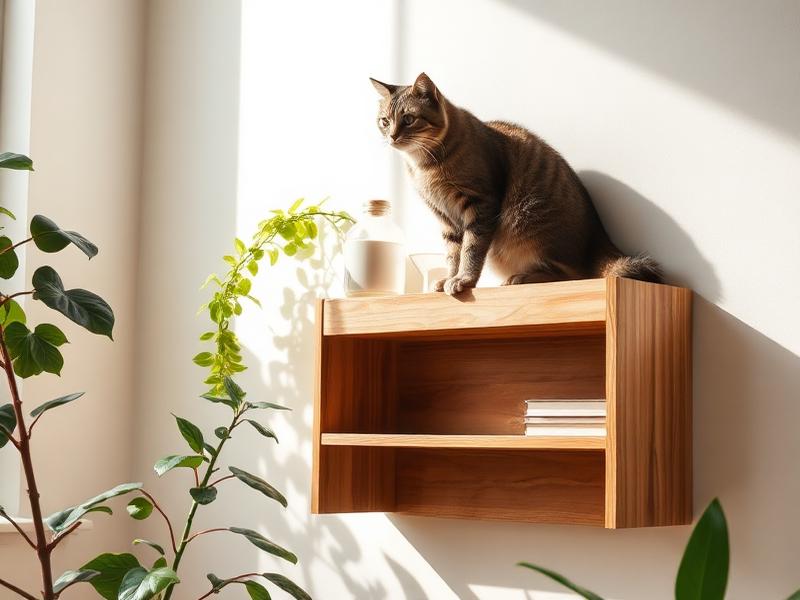
Space & setup. Height matters more than floor area. Shelving, a full-height cat tree and a window perch turn a small flat into an acceptable home; a bare room does not.
Allergies. No cat is hypoallergenic. The Mau has a short, fine coat and sheds modestly, but it produces the same allergens as any other cat.
The review
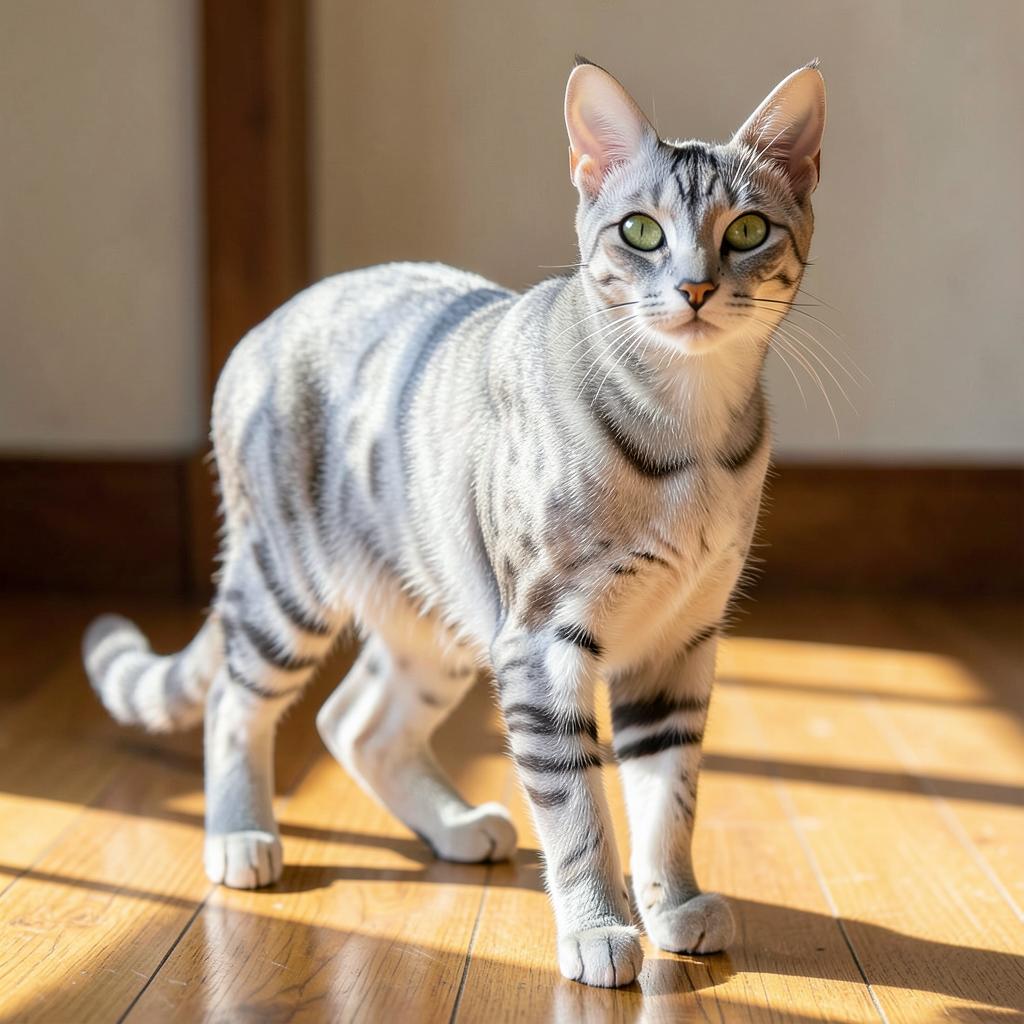
The Egyptian Mau is the only domestic cat breed with naturally occurring spots on the coat rather than spots bred in from a wild ancestor. It is athletic, quick, deeply bonded to its own people and noticeably reserved with everyone else.
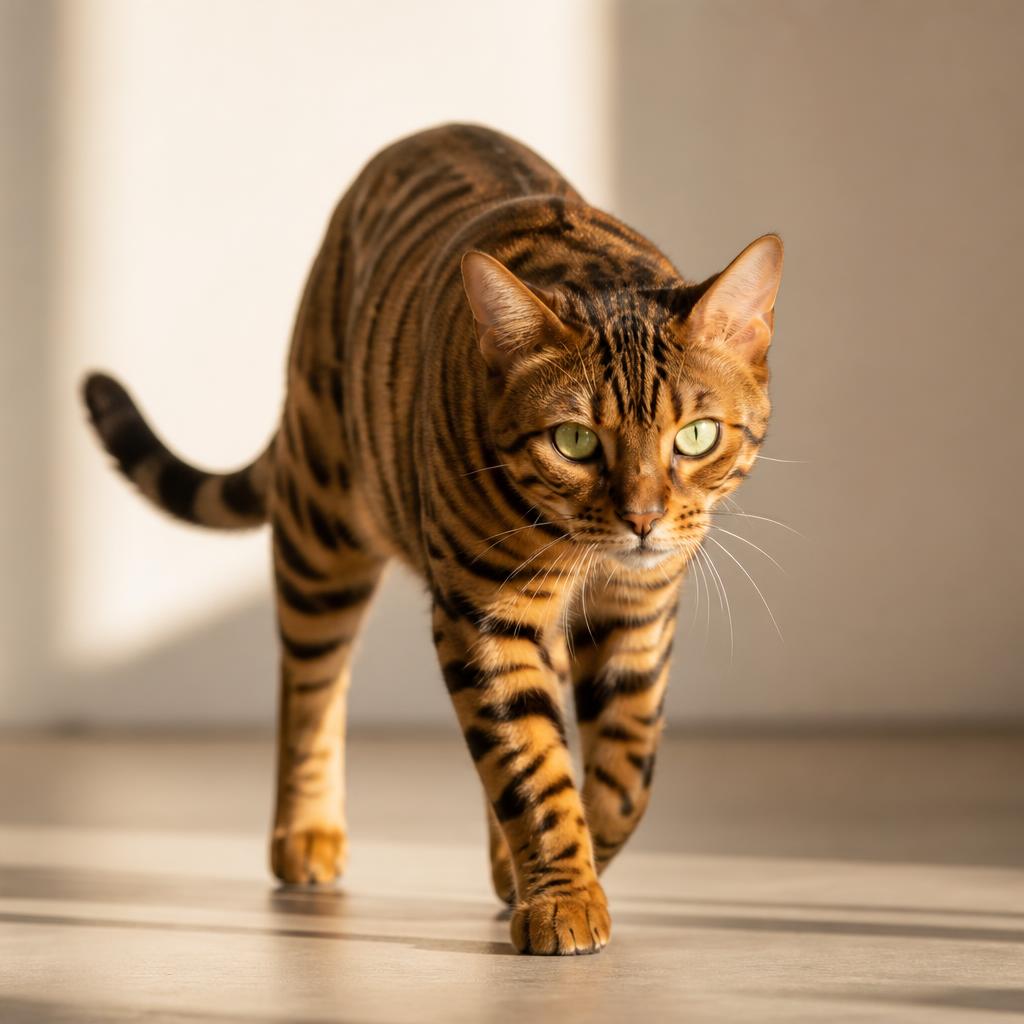
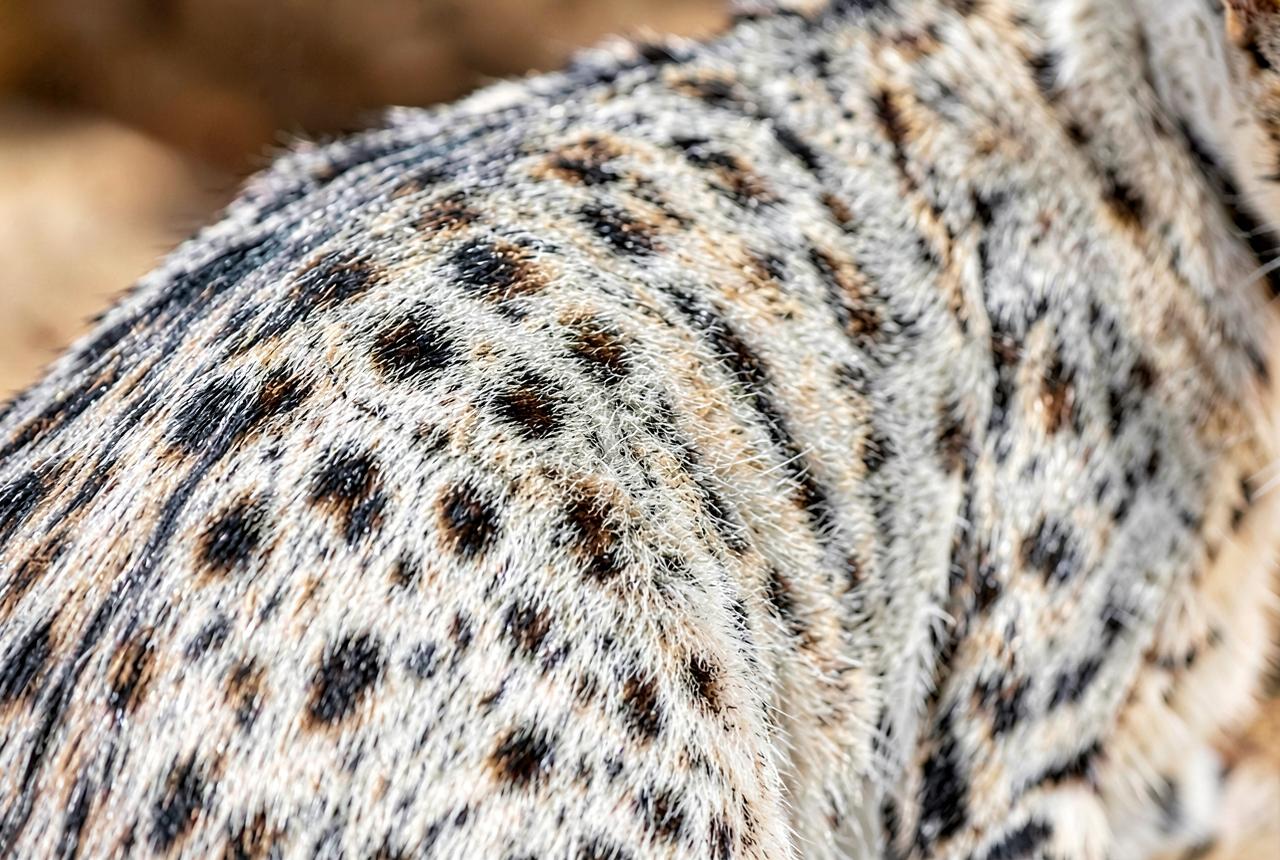
Most spotted cats got their spots from a wild ancestor somewhere in the pedigree. The Egyptian Mau did not. Its spotting arose naturally in domestic cats, which is why the pattern looks different once you know what to look for: the spots sit on the hair shaft rather than the skin, they are random rather than laid out in rosettes, and no two Maus are marked alike. The same cat also carries a dorsal stripe, banded legs and the dark "mascara" lines running from the outer corner of each eye across the cheek.
The face is the second giveaway. Mau eyes are a particular shade, a pale green the breed clubs call gooseberry, and they do not settle into it until the cat is around eighteen months old. Kittens start amber and change slowly, which is one of the small pleasures of raising one.
Then there is the build. A Mau is a medium cat with a long, muscular body and hind legs longer than the front, standing slightly on tiptoe. There is a loose flap of skin from the flank to the hind knee, the same feature you see in cheetahs, which lengthens the stride. The result is genuine speed: Maus are regularly cited as the fastest domestic cat, capable of sprinting at well over 45 km/h in a straight line. In a house, that translates into a cat that goes from asleep to the top of a bookcase in about a second.
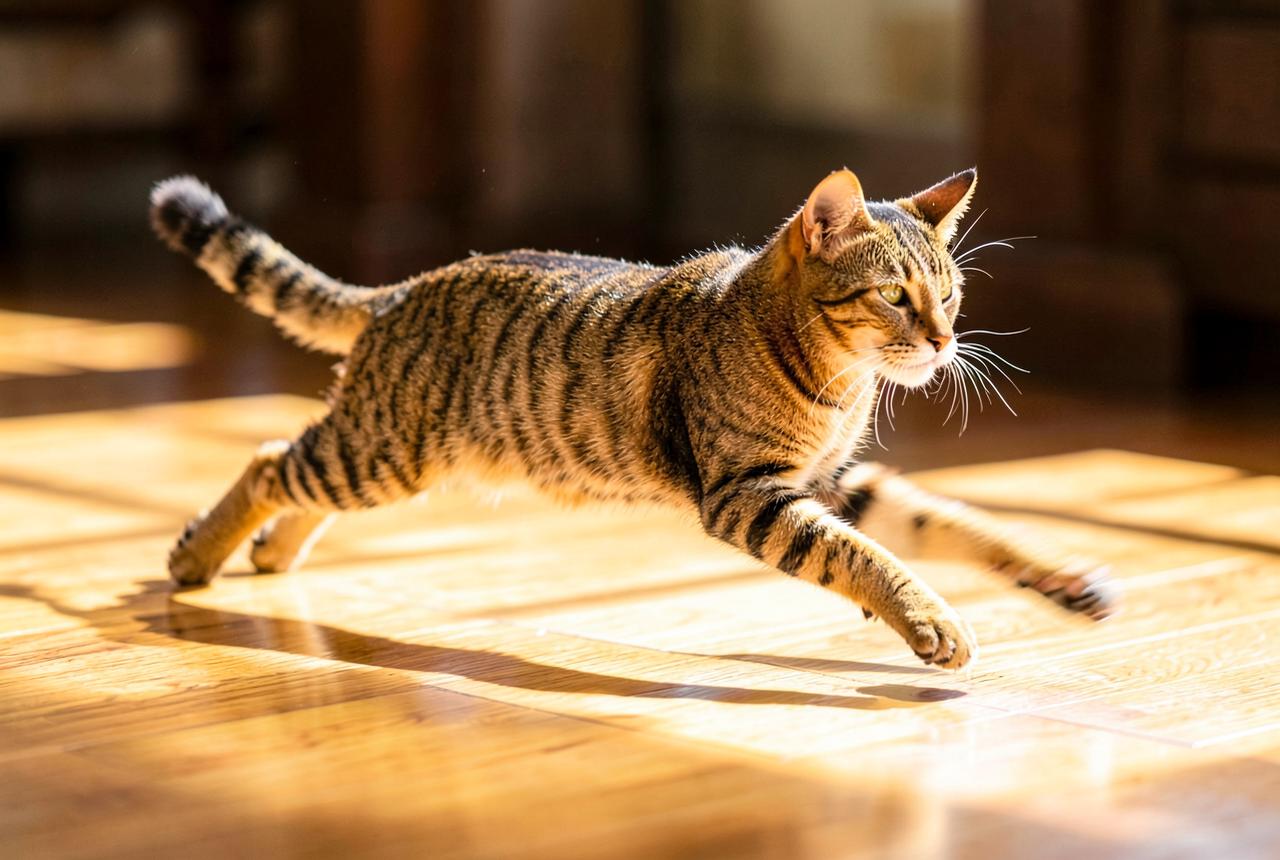
Temperament is where prospective owners most often misjudge the breed. A Mau is not a Burmese. It bonds intensely, usually with one or two people, and it is affectionate, chatty and physically demonstrative with them. With strangers it is cautious to the point of vanishing. Visitors to a Mau household frequently leave having never seen the cat, and no amount of coaxing changes that. Early, generous socialisation helps; it does not turn a Mau into an extrovert.
The same sensitivity runs through daily life. Maus dislike sudden change: new furniture, a new schedule, a house full of noise. They respond well to routine and badly to chaos. They also hold onto stress physically, and stress in this breed tends to show up as a change in appetite or in litter tray behaviour before it shows up as anything else.
The voice is worth mentioning because it is unusual. Maus chirrup, chortle and trill rather than meow, and when they are pleased they do a curious hind-foot shuffle with the tail vibrating. It is one of the most endearing things any cat does, and it is completely characteristic.
Prey drive is high and it does not switch off. This is a working hunter's body attached to a hunter's brain. Birds, hamsters and fish in an open tank are not compatible with an unsupervised Mau. If you have small pets, they need a separate room with a closed door, not a mesh lid.
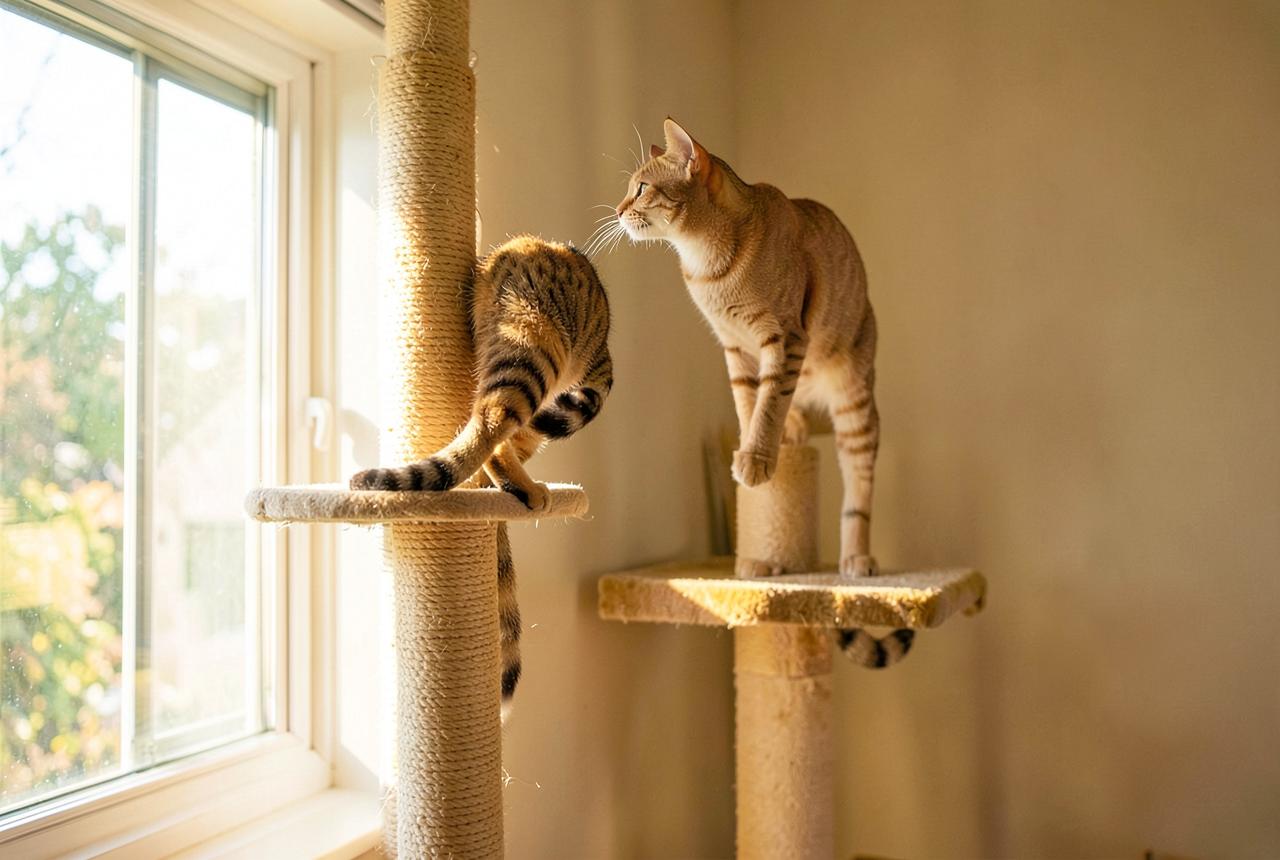
The flip side is that Maus are easy to entertain if you supply the right things. Height above all: shelving, a full-height cat tree, a route around the room that never touches the floor. Then puzzle feeders, a wand toy twice a day, and something to chase that moves unpredictably. Many Maus take enthusiastically to a harness and a lead, and a secure garden or catio suits them better than almost any other breed. What does not suit them is free roaming: a fast, distinctively marked, valuable cat outdoors unsupervised is an invitation to both traffic and theft.
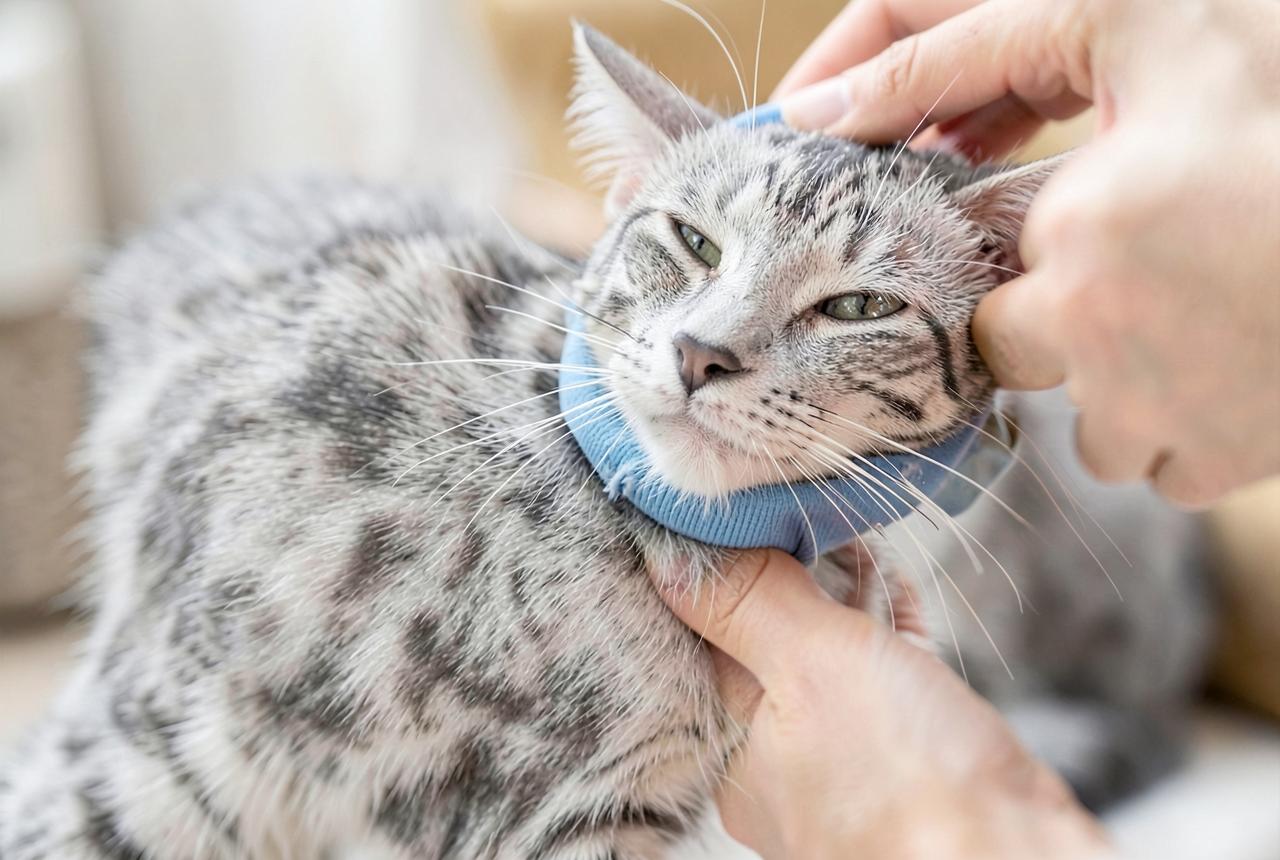
Grooming is close to nothing. The coat is short, dense and fine, with a silky texture, and a weekly pass with a rubber mitt keeps shedding under control. The one thing to watch is the skin: Maus are among the breeds most often reported with sensitivity to routine grooming products, so keep shampoos plain and infrequent.
Health is generally good. The breed has a small gene pool, so buy from a breeder who talks about outcrossing and genetic diversity rather than one who breeds only within a closed line. Hypertrophic cardiomyopathy screening in the parents is the single most useful question to ask, and asthma is reported more often in Maus than in most breeds, worth knowing if anyone in the household smokes or burns incense.
Live with one properly and it is a remarkable animal: quick, funny, devoted, and entirely uninterested in performing for anyone outside its own household. If you want a cat that greets your guests, look elsewhere. If you want a cat that considers you its person, this is one of the best there is.
A stunning, fast, one-family cat. Give it height, patience and containment and it is exceptional; rush it and it hides.
Grooming, realistically
- 1Run a rubber grooming mitt over the coat once a week
- 2Increase to twice weekly during seasonal sheds
- 3Check ears fortnightly and clean only if visibly dirty
- 4Trim claws every two to three weeks
- 5Avoid frequent bathing, the skin is often sensitive
What you actually need
- Rubber grooming mitt
- Fine-tooth comb for the ruff
- Nail clippers
- Plain, unscented pet shampoo for occasional use
- Harness and lead if you plan outdoor walks
Kitten to adult
| Age | Male | Female | What is happening |
|---|---|---|---|
| 3 months | |||
| 6 months | |||
| 9 months | |||
| 12 months | |||
| Full size |
Ranges are typical, not targets. Judge condition by ribs and waist, and check with the ideal weight checker.
What to ask a breeder
- Have both parents been scanned for hypertrophic cardiomyopathy?
- How do you manage genetic diversity in a small gene pool?
- How are the kittens socialised with visitors and noise?
- Is there any history of asthma in your lines?
- At what age do the kittens' eyes start turning green?
Health watch-list
What to ask a breeder about, and what to watch for over a lifetime. This is orientation, not veterinary advice, anything you notice belongs in front of a vet.
Hypertrophic cardiomyopathy
UncommonThe commonest feline heart disease. Ask whether both parents have been scanned by a cardiologist rather than simply listened to.
Asthma
UncommonReported more often in Maus than in most breeds. Coughing, wheezing or a crouched posture with the neck extended warrants investigation.
Pyruvate kinase deficiency
RareAn inherited cause of anaemia with a straightforward DNA test. A breeder should be able to show clear results for both parents.
Urolithiasis (bladder stones)
UncommonStraining or frequent small urinations should never be left. Encouraging water intake is the best day-to-day prevention.
Skin sensitivity
UncommonReactions to shampoos, spot-on products and some insecticides are reported. Introduce anything new cautiously and plainly.
Reduced genetic diversity
UncommonA small founding population means limited diversity. Buy from breeders who actively outcross and can explain how.
What it costs to keep one
Realistic running cost
€80 / month
About €960 a year, or roughly €13,440 across a 14-year life, before purchase price, neutering and one-off vet events.
Before the cat arrives. Budget roughly €900–1700 for trays, carrier, posts, bowls, bedding and grooming kit sized for this breed. Figures throughout are indicative and vary a good deal between countries.
Interactive · built for this breed
Is an Egyptian Mau right for your home?
The fastest domestic cat, naturally spotted and genuinely reserved with strangers. Five questions on space, pace, patience and other animals.
Verdict
An excellent match
Space, patience and containment, you have the three things this breed actually needs.
Keep the weight honest with the ideal weight tool, or compare the alternatives in the matchmaker.
The verdict, by household
Good with older, calm children who let the cat come to them. Not a breed for a loud, unpredictable house.
Workable only with serious vertical space and daily play. Floor area alone is not enough.
The shyness and the energy both catch people out. Better as a second or third cat.
Fine with confident cats and calm dogs. Never with loose birds or rodents.
When to call your vet
- Coughing, wheezing or a crouched posture with the neck extended
- Sudden reluctance to jump or climb
- Hiding for more than a day in a normally settled cat
- Rapid or laboured breathing at rest
- Appetite loss lasting more than 24 hours
- Skin irritation after a new shampoo or spot-on product
Nothing here is a diagnosis. Breathing difficulty, sudden hind-leg weakness and straining to urinate are emergencies, go the same day.
Egyptian Mau vs the closest alternatives
| Breed | Weight | Energy | Grooming | € / month |
|---|---|---|---|---|
| Egyptian Mau | 3–5 kg | 9/10 | 3/10 | €80 |
| Toyger | 3–6.5 kg | 9/10 | 3/10 | €88 |
| Singapura | 1.5–3.5 kg | 9/10 | 2/10 | €58 |
| Turkish Angora | 2.5–5 kg | 9/10 | 5/10 | €86 |
Egyptian Mau questions, answered
Are Egyptian Maus part wild cat?
No. Unlike the Bengal or the Savannah, the Mau has no recent wild ancestry. Its spots arose naturally within domestic cat populations, which is what makes the breed unusual, the pattern is fully domestic in origin.
How fast is an Egyptian Mau really?
Fast enough that it is routinely described as the quickest domestic cat, with sprint speeds cited above 45 km/h. The long hind legs and the flap of skin between flank and knee both lengthen the stride, the same anatomy that makes cheetahs efficient runners.
Why does my Mau hide when guests arrive?
Because that is the breed. Maus bond hard with their own household and treat outsiders with genuine suspicion. Early socialisation reduces the reaction but rarely removes it. Give the cat a high retreat and let visitors ignore it entirely.
When do the eyes turn green?
Kittens are born with amber eyes and shift gradually to the pale gooseberry green the breed is known for, usually completing the change somewhere between twelve and eighteen months. A young cat with amber eyes is not a fault.
Can an Egyptian Mau live with small pets?
Not safely. The prey drive is one of the strongest in any domestic breed. Birds, rodents and open fish tanks need to be in a separate room behind a closed door, not simply covered.
Do Maus need to go outside?
They need stimulation, not freedom. A secure garden, a catio or harness walks all suit the breed well. Free roaming is a poor idea for a fast, valuable, visually distinctive cat.
Is a Mau a good first cat?
It can be, but two traits catch people out: the energy is relentless and the shyness is real. If you want a cat that greets visitors and tolerates a chaotic house, a Burmese or Tonkinese will make you happier.