
Fleas, ticks and worms: a plan that fits your cat
Blanket monthly treatment for every cat is falling out of favour. What replaces it is a schedule built from how your cat actually lives.
Nadia Ferreira
Feline health writer, ten years reporting on companion animal medicine
Published 4 September 2026

Checked against WSAVA, ESCCAP and ISFM guidance on companion animal parasite control
The short version
- Blanket monthly treatment is giving way to a risk-based plan built from lifestyle, other pets and who else is in the home.
- Never use a dog flea product on a cat: permethrin at canine strength causes seizures and death.
- Most of a flea population is eggs and pupae in bedding and carpet, so treat every pet plus the house, for at least twelve weeks.
- Comb over a damp white cloth: dark specks that smear reddish-brown are flea dirt, and that is your diagnosis.
- Worming frequency follows behaviour, not age, hunting, raw meat and fleas are the routes that matter.
- Remove ticks with a hook or fine tweezers in one movement. Never burn, squeeze or smother them.
Parasite control used to be simple advice: treat every cat every month, for everything, forever. That is now being reconsidered, partly because of resistance, partly because of environmental concerns about veterinary medicines reaching waterways, and partly because a cat that never leaves a third-floor flat does not carry the same risk as one that hunts across a field.
What replaces blanket dosing is a risk-based plan. It asks how your cat lives, what else lives with it, who else is in the household, and what parasites are active where you are. Then it treats accordingly, thoroughly, and with products that are actually licensed for cats.
Two things do not change. Prescription-strength products from a vet outperform most supermarket ones, and dog products can kill cats, permethrin at canine concentrations causes seizures and death in cats. Never share.
Fleas: the arithmetic that explains everything
The flea you see is a small minority of the flea problem. Most of the population in a home is eggs, larvae and pupae, in carpet, bedding and floor cracks. That is why treating the cat and nothing else fails, and why the problem seems to come back a fortnight later.
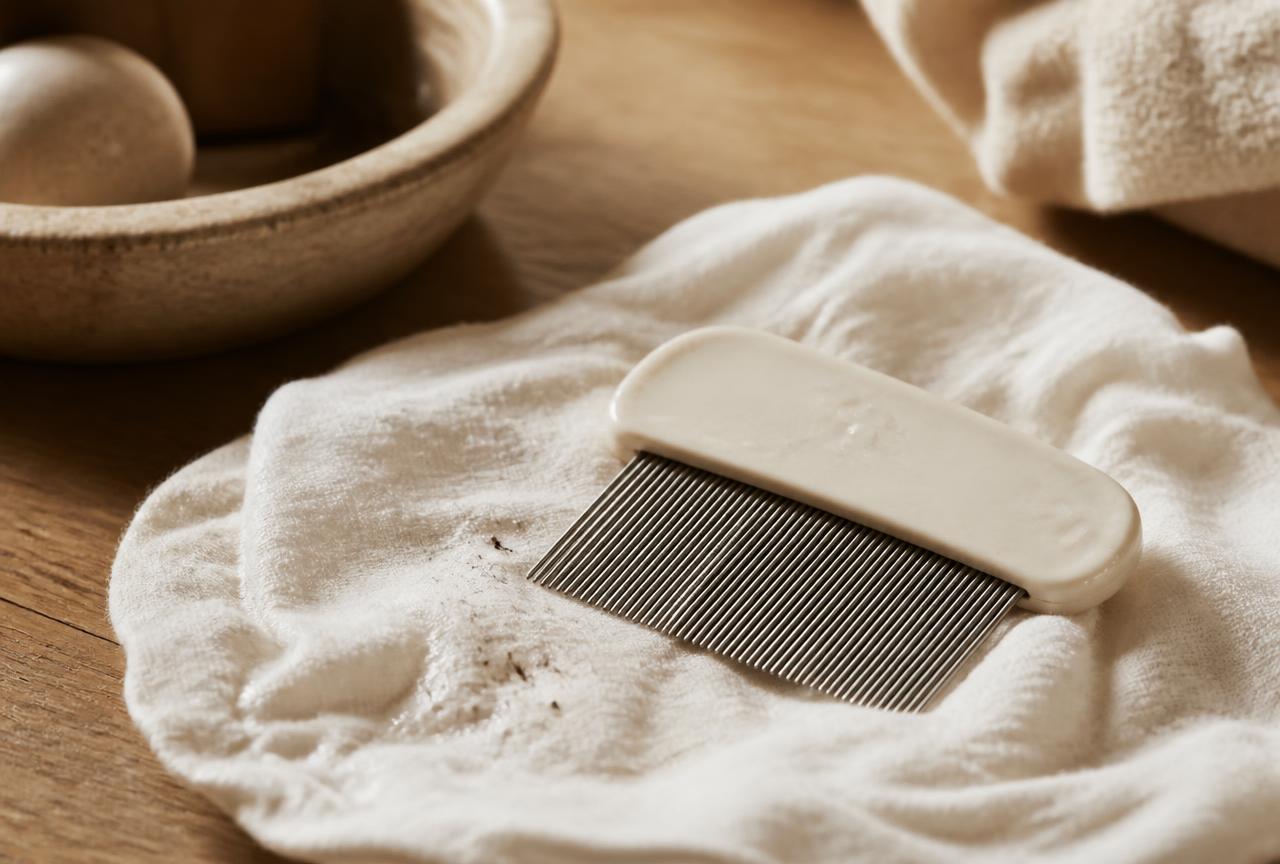
The check is free and takes two minutes. Comb along the back and the base of the tail with a fine flea comb over a damp white cloth. Fleas move fast, but flea dirt does not: black specks that smear reddish-brown when wetted are digested blood. No dirt, probably no fleas.
Fleas matter beyond itching. They transmit tapeworm, cause flea allergy dermatitis, and in kittens a heavy burden causes genuine anaemia. Some cats are also allergic to flea saliva and will chew themselves raw from a handful of bites.
Treating a household, not a cat
An infestation needs all of these, in the same week.
- 1Treat every pet in the home with a vet-recommended product, on the same day, and keep it up for at least three months.
- 2Wash all bedding at 60 degrees, the cat's, the dog's, and yours if the cat sleeps on it.
- 3Vacuum daily for a fortnight, floors, skirtings, under furniture, and empty the cylinder or bin the bag outside.
- 4Use a household spray with an insect growth regulator if the burden is heavy, following the label and keeping pets out until dry.
- 5Do not stop at three weeks. Pupae can survive months and hatch in response to warmth and vibration. Twelve weeks is the honest minimum.
- 6Worm at the same time, because a flea infestation almost always means tapeworm.
- 7Re-comb weekly to check your progress rather than guessing.

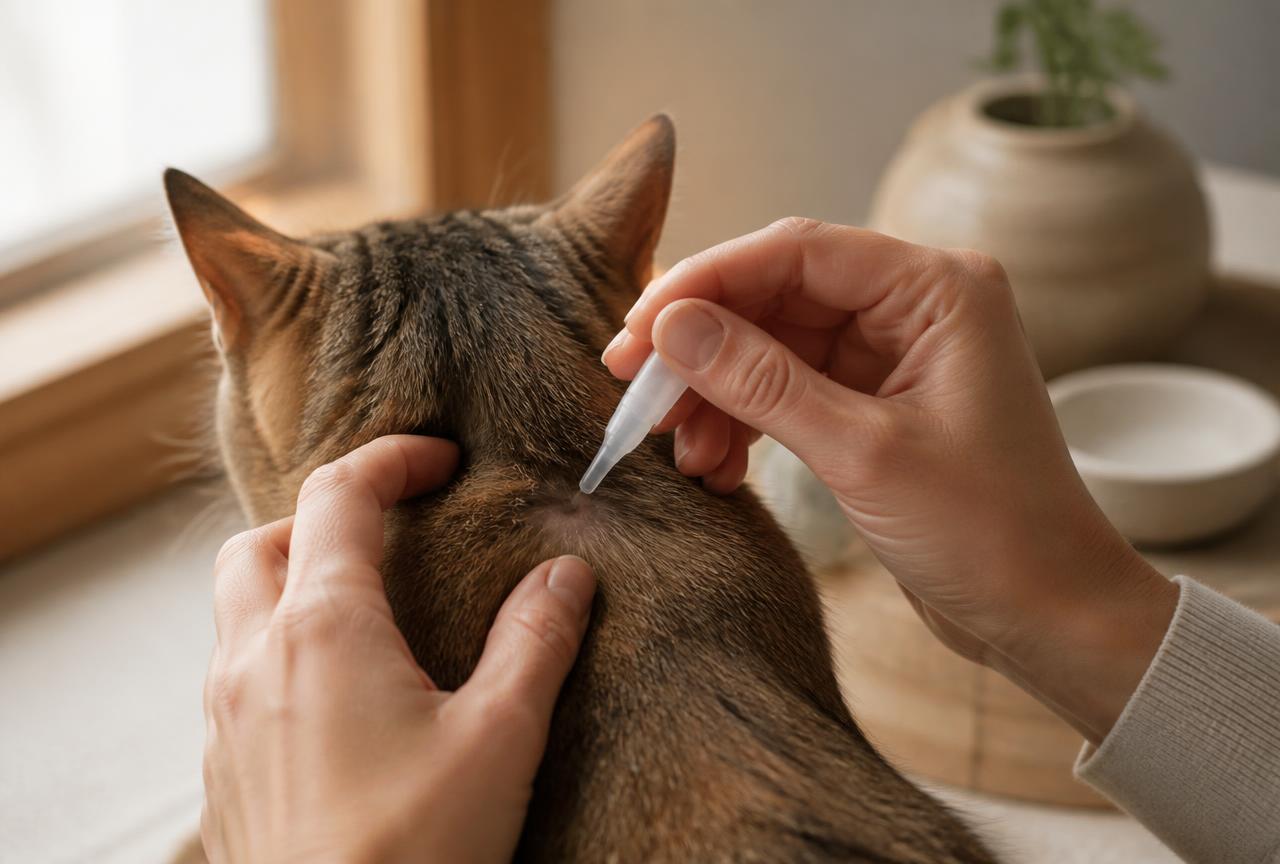
Spot-on products need to reach skin, not fur. Part the coat at the back of the neck, apply directly to the skin where the cat cannot lick, and do not bathe for a couple of days.
A flea problem that keeps returning is almost never a product failure. It is an untreated housemate, or a course stopped at week three.
Ticks
Ticks matter where they are endemic, and cats with outdoor access pick them up in long grass and undergrowth. They can transmit disease, and a partially removed tick causes local infection.

Remove one properly. Use a tick hook or fine tick tweezers, get as close to the skin as possible, and twist or lever the whole tick out in one movement. Do not squeeze the body, do not burn it, and do not smother it in oil or alcohol, all of those make the tick regurgitate into the wound. Afterwards, clean the site and watch it for a week.
Worms: which ones, and why the source matters
| Parasite | How cats get it | Signs | Human risk |
|---|---|---|---|
| --- | --- | --- | --- |
| Roundworm | Mother's milk, soil, prey | Pot belly in kittens, poor coat, occasional vomiting | Yes, especially children |
| Tapeworm | Swallowed fleas, or prey | Rice-grain segments near the tail | Low, but possible via fleas |
| Hookworm | Soil, prey | Anaemia, weight loss, diarrhoea | Possible skin larvae |
| Lungworm | Slugs, snails, prey | Coughing, wheezing, exercise intolerance | No |
| Toxoplasma | Raw meat, prey | Usually none | Yes, matters in pregnancy |
The pattern is obvious once listed: nearly every route runs through hunting, raw meat or fleas. That is why the answer to "how often should I worm" depends far more on behaviour than on age.
Which is what the box below works out.
Interactive · built for this article
Parasite schedule
A risk-based interval for fleas, worms and ticks, based on how your cat actually lives.
Suggested intervals
- Fleas: every 12 months, heaviest in the warm months
- Worms: every 6 months
- Ticks: cover not usually needed
Why, and what to watch
- Indoor cats still get fleas: eggs arrive on shoes and trouser hems, and a dog brings them in wholesale.
- Central heating lets flea eggs hatch indoors in winter, so do not stop entirely, reduce, do not abandon.
Indicative only. Product availability, licensing and local parasite risk vary by country, so confirm the choice and the interval with your own vet, and never use a dog product on a cat.
Indoor cats are not exempt
The commonest mistake is assuming an indoor cat needs nothing. Flea eggs travel on shoes and trouser hems, and a dog that walks outdoors is a delivery service. Central heating means eggs hatch indoors year round in climates where outdoor fleas would die off in winter.
Indoor cats do need less. A sensible baseline for a cat that never goes out, with no dog in the home, is worming twice a year and flea treatment when there is evidence or a new pet arrives. That is a real reduction, not an abandonment.
Any cat that hunts, eats raw meat, or shares a home with an outdoor dog moves to the frequent end regardless of breed. A Bengal or an Abyssinian with garden access will collect more than a sedentary British Shorthair in a flat, because behaviour drives exposure. Coat length changes only how easily you spot the problem, long-coated cats like the Maine Coon hide flea dirt well, which is another reason to comb rather than look.
Safety: the things that hurt cats
- Never use a dog product on a cat. Permethrin-based dog spot-ons cause seizures and death in cats. If it happens, that is an emergency.
- Treated dogs are a hazard for a day or two. Keep the cat from grooming the dog's application site.
- Essential oils are not a flea treatment. Tea tree, eucalyptus and citrus oils are toxic to cats.
- Garlic and brewer's yeast do not work, and garlic is toxic in quantity.
- Weigh the cat before dosing. Products are banded by weight and underdosing breeds failure. Our ideal weight checker is a useful sanity check.
- Ultrasonic collars and repellent devices have no good evidence behind them.
- Kittens need age-appropriate products. Many are not licensed below eight weeks or a minimum weight, see our first 90 days guide.
Verdict by household
Indoor-only cat, no dog. Worm twice a year, flea treat on evidence or when a new animal arrives. Comb monthly to check.
Indoor cat with a dog that walks outdoors. Flea treat both, monthly, all year. Worm the cat quarterly.
Garden cat that does not hunt. Monthly flea and tick cover in the active season, worming every three months.
Hunter. Monthly flea and tick cover, monthly worming with a tapeworm-effective product. There is no lighter version of this.
Raw-fed cat. Monthly worming, and freeze meat before feeding to reduce tapeworm risk. Discuss Toxoplasma with your vet if anyone in the home is pregnant or immune-compromised.
Multi-cat home. Everyone is on the same schedule on the same day, or nobody is treated. Household compliance is the whole game.
When to call your vet
Same day: a cat that has been treated with a dog flea product, any cat with tremors, twitching or seizures after any treatment, a kitten with pale gums and lethargy, or a cat that is collapsed or breathing hard.
Within the week: fleas you cannot clear after four weeks of proper household treatment, visible worm segments, persistent coughing, diarrhoea lasting more than two days, weight loss, hair loss from chewing, or a tick you could not remove cleanly. Bring the product packaging with you, knowing the active ingredient and the last date given saves guesswork, and it is the first thing you will be asked. If your cat is also vomiting, our guide to why cats vomit explains what to record before the appointment.
Questions people actually ask
How often should I treat my cat for fleas?
It depends on exposure. A free-roaming cat, or any cat sharing a home with a dog that goes outdoors, generally needs monthly cover year round. A cat that never leaves the house, with no other outdoor pets, can often be treated on evidence rather than on a calendar. Confirm the interval with your vet.
How do I know if my cat has fleas?
Comb along the back and the base of the tail with a fine flea comb, over a damp white cloth. Live fleas move too fast to spot reliably, but flea dirt does not: black specks that smear reddish-brown when wetted are digested blood. No dirt over several combings means fleas are unlikely.
Why do the fleas keep coming back?
Almost always because an untreated pet in the home keeps the population going, or because treatment stopped after three weeks. Most of an infestation is eggs, larvae and pupae in bedding and flooring, and pupae can survive for months. Treat every animal and the house for at least twelve weeks.
Can I use dog flea treatment on my cat?
No, and this is the single most dangerous mistake in parasite control. Permethrin-based dog spot-ons at canine concentrations cause tremors, seizures and death in cats. If a cat has been treated with one, or has groomed a freshly treated dog, that is an emergency.
How do I remove a tick from a cat?
Use a tick hook or fine tick tweezers, get as close to the skin as you can, and lever or twist the whole tick out in one movement. Do not squeeze the body, burn it, or cover it in oil or alcohol, all of those make it regurgitate into the wound. Clean the site and watch it for a week.
How often should I worm my cat?
Behaviour decides it. A cat that hunts or eats raw meat needs monthly worming with a product effective against tapeworm. A cat with garden access but no hunting is usually every three months. A strictly indoor cat may need only twice a year. Young children in the home push the interval to at least quarterly.
Do indoor cats need flea and worm treatment?
Less, but not none. Flea eggs arrive on shoes and trouser hems, dogs bring them in wholesale, and central heating lets them hatch indoors through winter. A reasonable baseline for a strictly indoor cat with no other pets is worming twice a year and flea treatment on evidence.
Sources
- ESCCAP guidelines on control of ectoparasites and endoparasites, ESCCAP
- Fleas, ticks and worms in cats, International Cat Care
- WSAVA global guidelines, WSAVA
- Parasitic diseases of cats, Cornell Feline Health Center
Breeds mentioned




Put it into practice
Read next
Cat sneezing: colds, dust and the signs that need a vet
Cat sneezing a lot? Dust, viruses, dental roots and foreign bodies, how to sort the harmless from the signs that need a vet.