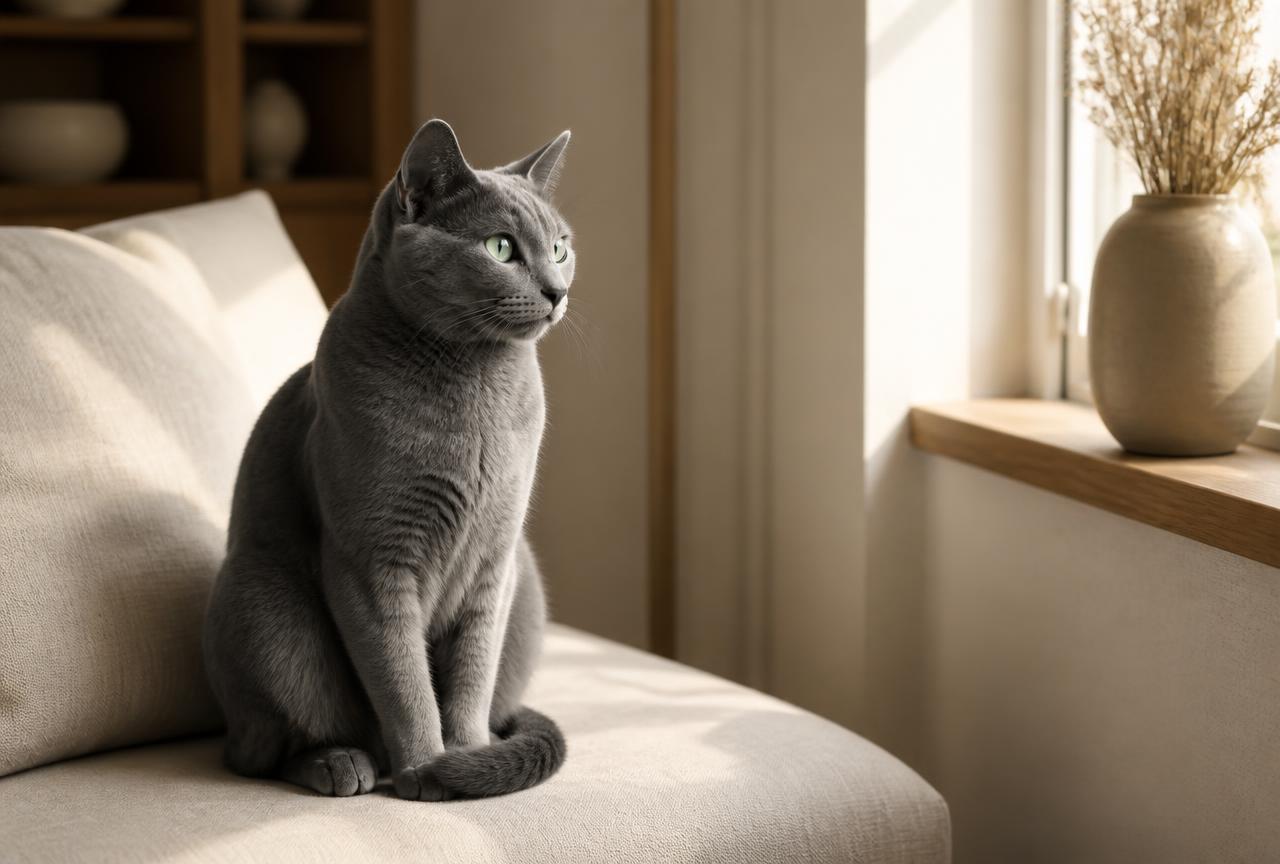
Russia, a natural landrace formalised in the late twentieth century
Siberian
The breed people find while searching for a hypoallergenic cat, and then keep for the temperament. Big, agile, weatherproofed, and genuinely easy to live with, provided you own a comb and accept two serious moults a year.
The ReMews. desk
A forest cat built for weather, with a temperament far softer than the frame suggests.
The short version
- A genuine triple coat: manageable at two combings a week for most of the year, but two heavy moults a year demand daily work.
- Not a hypoallergenic breed. Some individuals produce less Fel d 1, but this varies cat by cat and cannot be guaranteed.
- Large and slow to mature, around three years to full size, with males markedly heavier than females.
- Sociable, quiet and dog-like: greets people, follows the household, plays fetch more often than most breeds.
- Athletic despite the bulk. Provide height and a daily play session or the cat will improvise both.
- Weight
- 4.5–9 kg
- Lifespan
- 12–17 yrs
- Coat
- Semi-long
- Size
- Large
- Grown male
- 6–9 kg
- Grown female
- 4.5–7 kg
- Years to full size
- about 3
- One-off setup
- €300–640
Get one if…
- You want a large, sociable cat with real presence
- You will comb twice a week and daily during the moults
- There are children or other pets in the home
- You can provide height and a daily play session
- You want a quiet cat that still engages with you
Think again if…
- You need a guaranteed low-allergen cat
- You want a tidy, low-shedding home
- You are unwilling to comb at all
- You want a small cat for a very small space
Trait profile
Scores read high on affection and agility, moderate on grooming and shedding. The number to watch is shedding: it is a seasonal spike, not a constant.
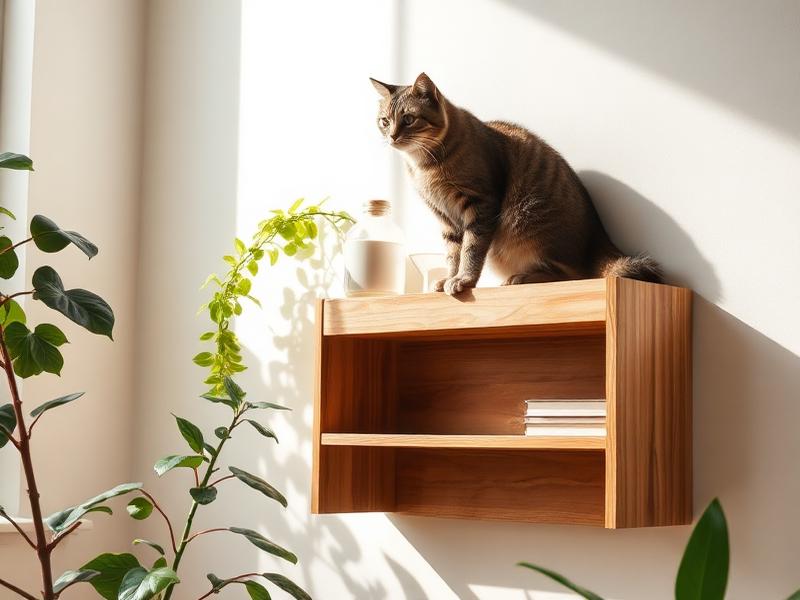
Space & setup. Workable in a flat if you build upwards: one tall tree, wide window shelves and a tray at least 55–60 cm long. Floor area matters less than climbing height.
Allergies. Not hypoallergenic. Some Siberians produce less Fel d 1 than average and some allergic owners tolerate them, but this varies between individual cats and no breeder can promise it. Test in person, repeatedly, before you commit.
The review
A large, powerfully built semi-longhaired cat from Russia, with a dense triple coat, a rounded outline and an easy, dog-like sociability. Athletic without being restless.
The Siberian is the cat most people meet twice. The first meeting is online, while searching whether any cat is safe for an allergic partner. The second is in person, where the coat and the allergy question stop mattering quite so much and the temperament takes over. That order of events explains a lot about how this breed is bought, and how often it is bought for the wrong reason.
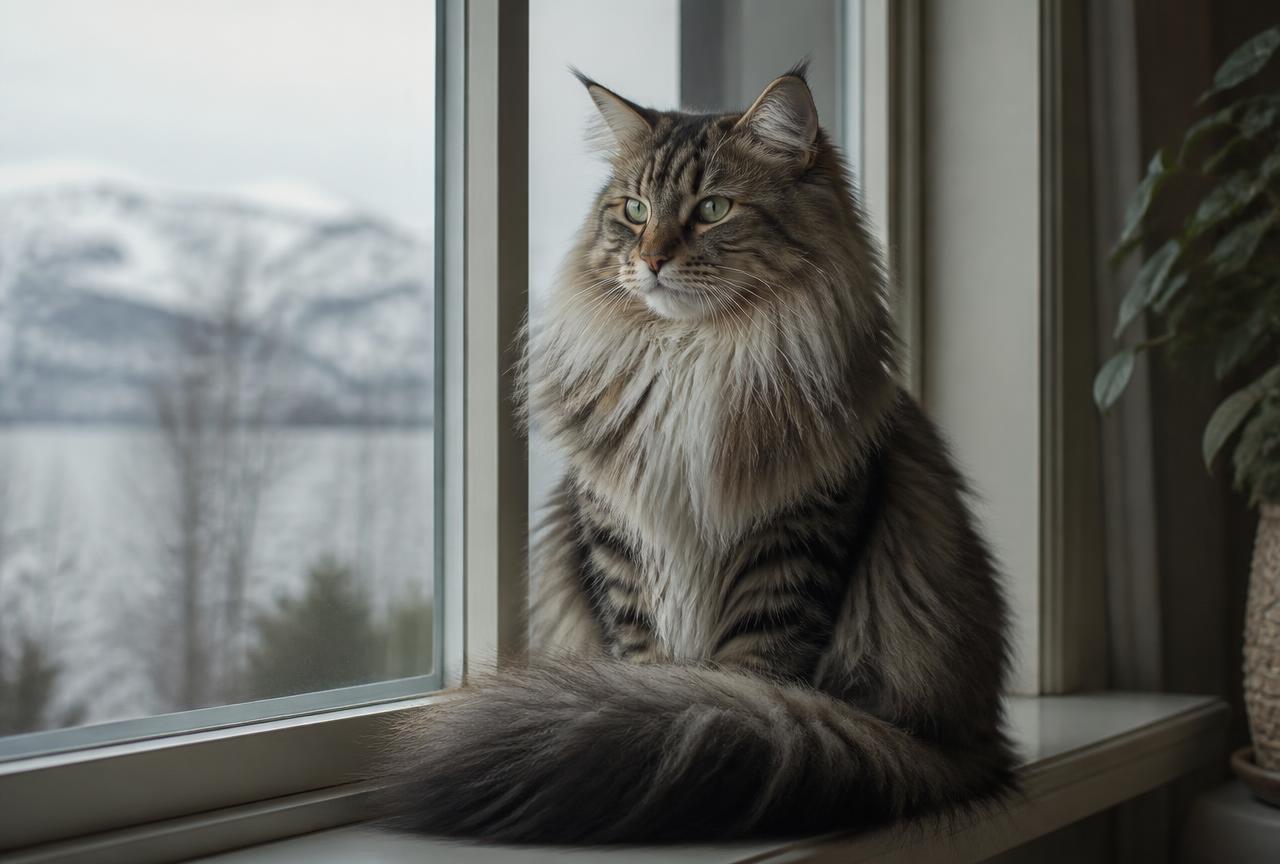
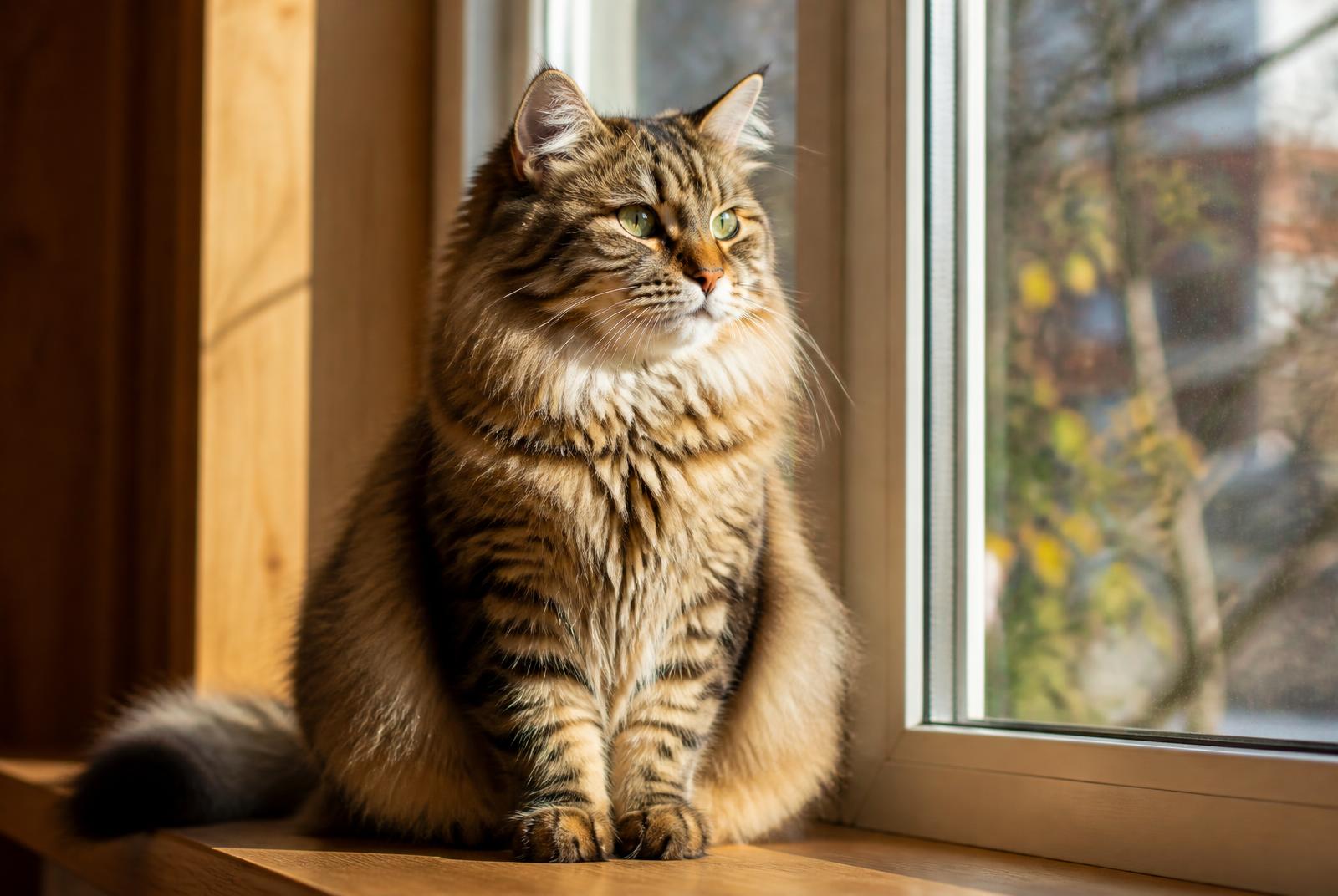
Start with the animal itself. This is a natural landrace from a cold country, and every part of it reads that way. The coat is a genuine triple layer: a coarse water-resistant outer coat, a middle layer of awn hairs, and a dense insulating undercoat that thickens dramatically in winter. The outline is rounded rather than angular, a broad chest, a slightly arched back, powerful hind legs and a thick plumed tail the cat wraps around itself when it sleeps. Males are substantially heavier than females, and the whole frame takes about three years to finish, so a fifteen-month-old cat is still visibly a work in progress.
What surprises people is the agility. A Siberian is heavy but not lumbering. It jumps well, lands quietly, and shows an interest in height that a Maine Coon does not always share. It also has an unusual habit of pushing objects off surfaces with real deliberation, and a well-documented interest in running water. None of this is hyperactivity, expect two or three sustained bursts of play in a day and long, contented gaps between them, but it does mean a bare flat with nothing to climb will produce a cat that finds its own routes up.
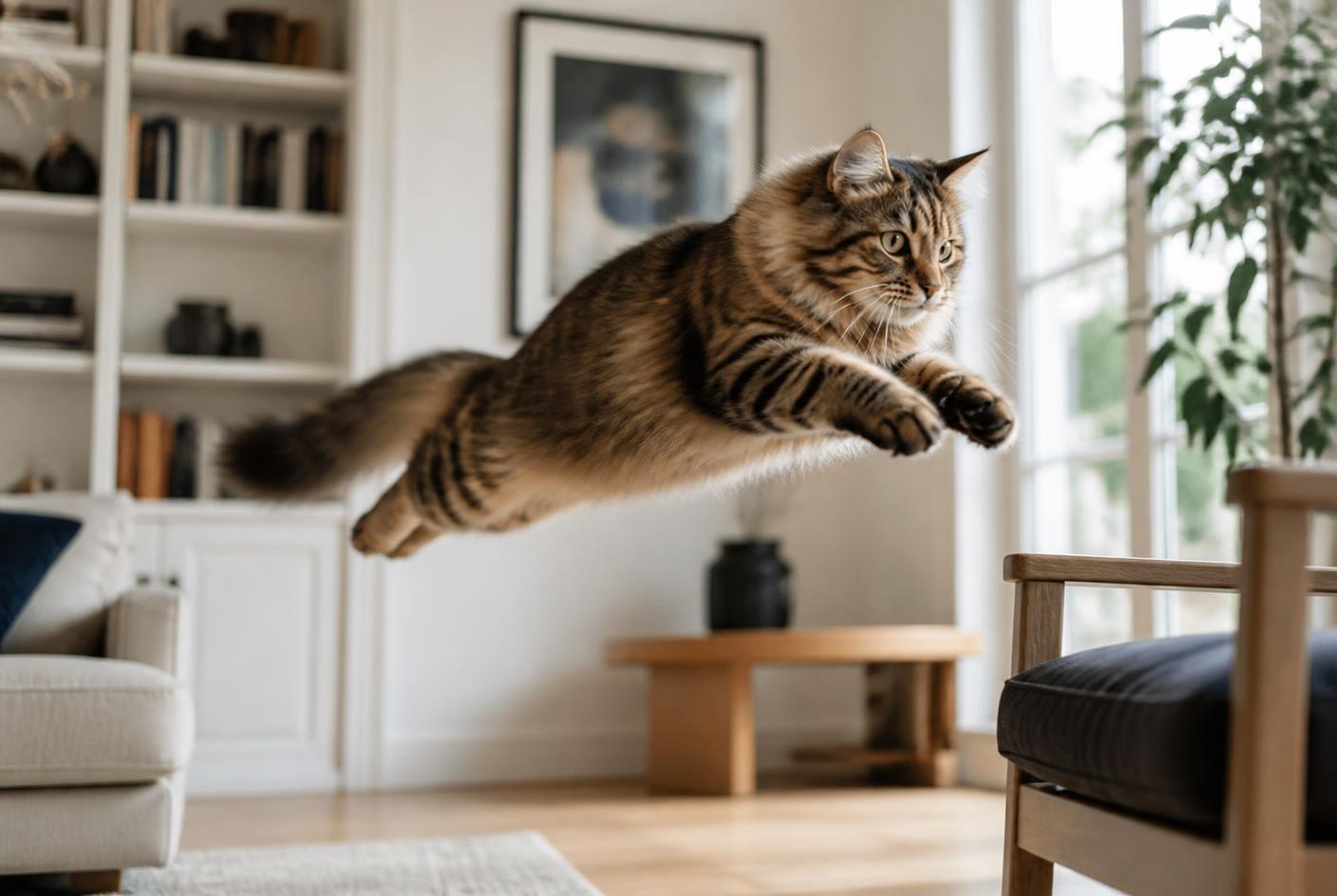
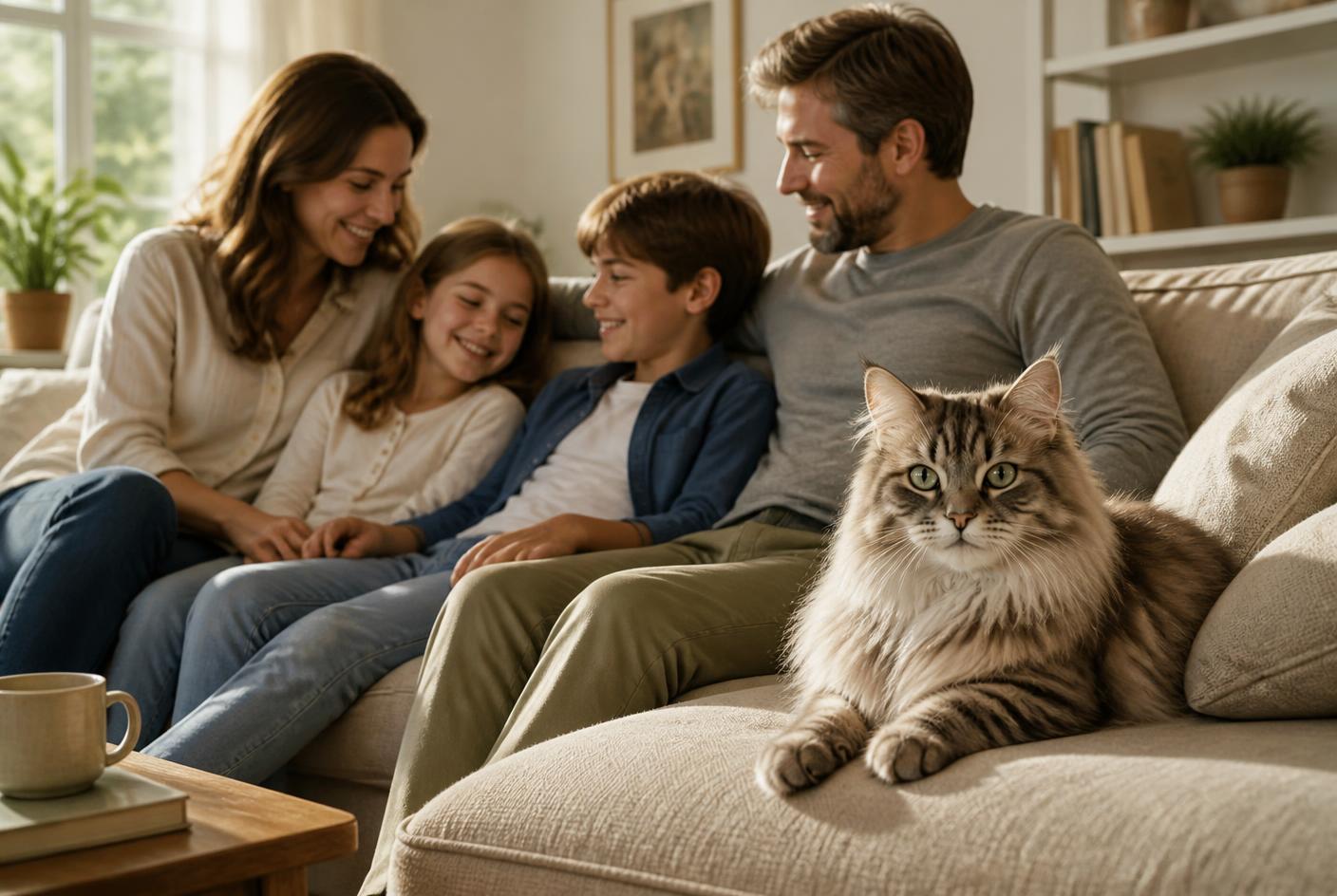
The temperament is the reason to buy the breed. Siberians are sociable in a straightforward, low-drama way: they greet people at the door, follow the household around, tolerate handling, and settle beside you rather than demanding to be on you. They are quiet, using a soft chirping voice sparingly. They are generally excellent with children who have been taught to be gentle, and they slot into multi-pet homes with less negotiation than most pedigree breeds. Owners consistently describe them as dog-like, and for once the cliché is doing real work: this is a cat that comes when called, plays fetch surprisingly often, and takes an active interest in what you are doing.
Now the allergy question, honestly. Siberians produce Fel d 1, the protein responsible for most cat allergy, exactly as other cats do. Some individual Siberians appear to produce less of it than average, and a proportion of allergic people find they tolerate a particular cat well. But the variation is between individuals, not reliably between breeds, and no ethical breeder will guarantee an outcome. If allergy is the reason you are here, the only sensible route is to spend an extended period with the actual parent cats before committing, ideally more than once, and to accept that the answer may be no.
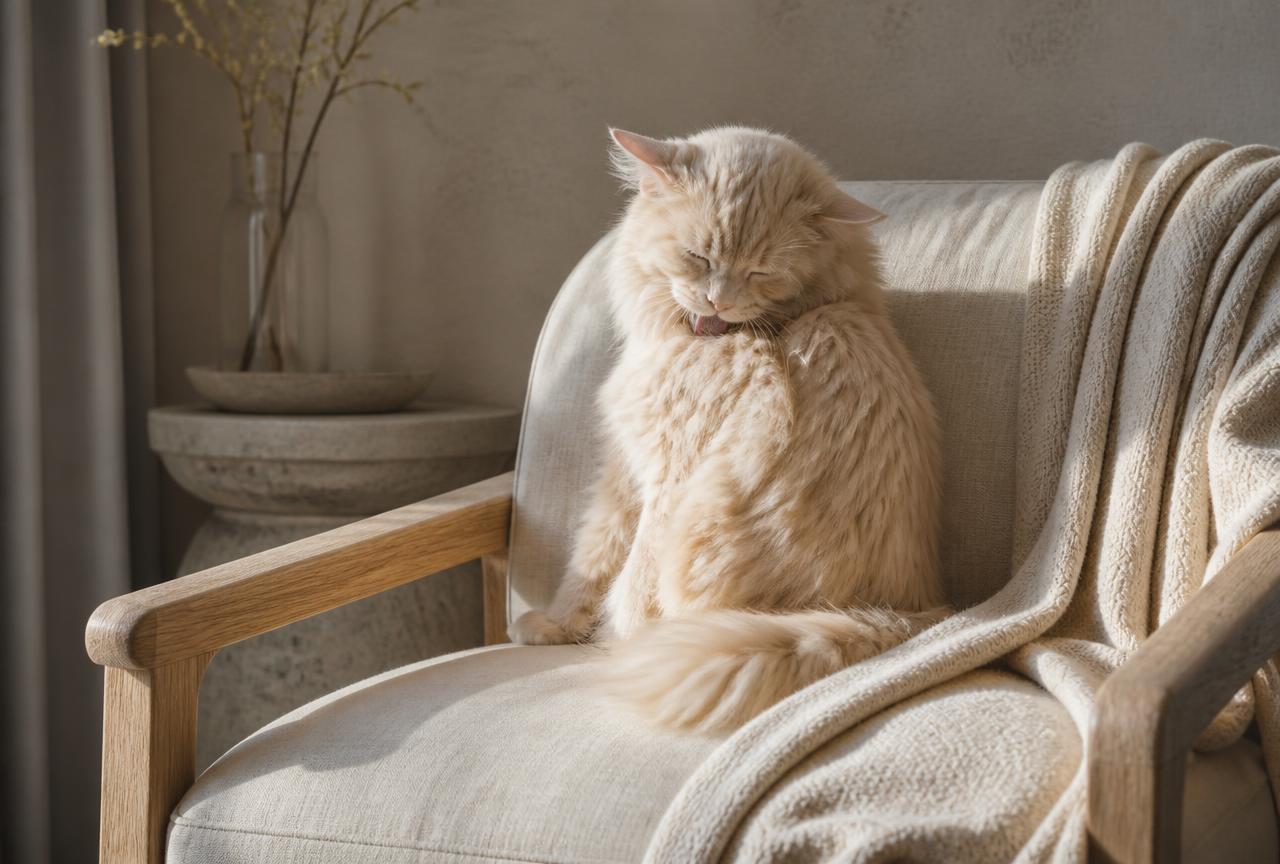
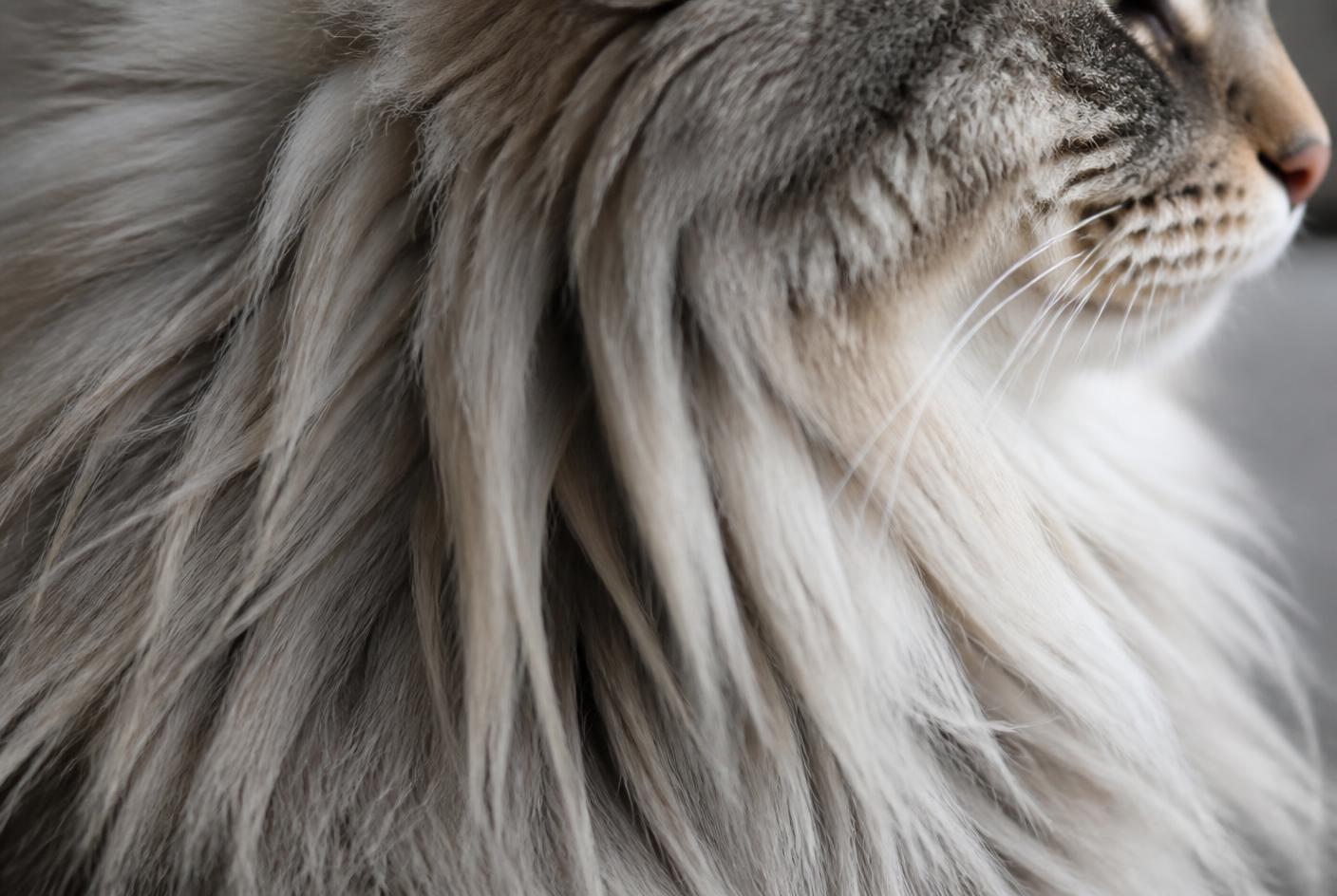
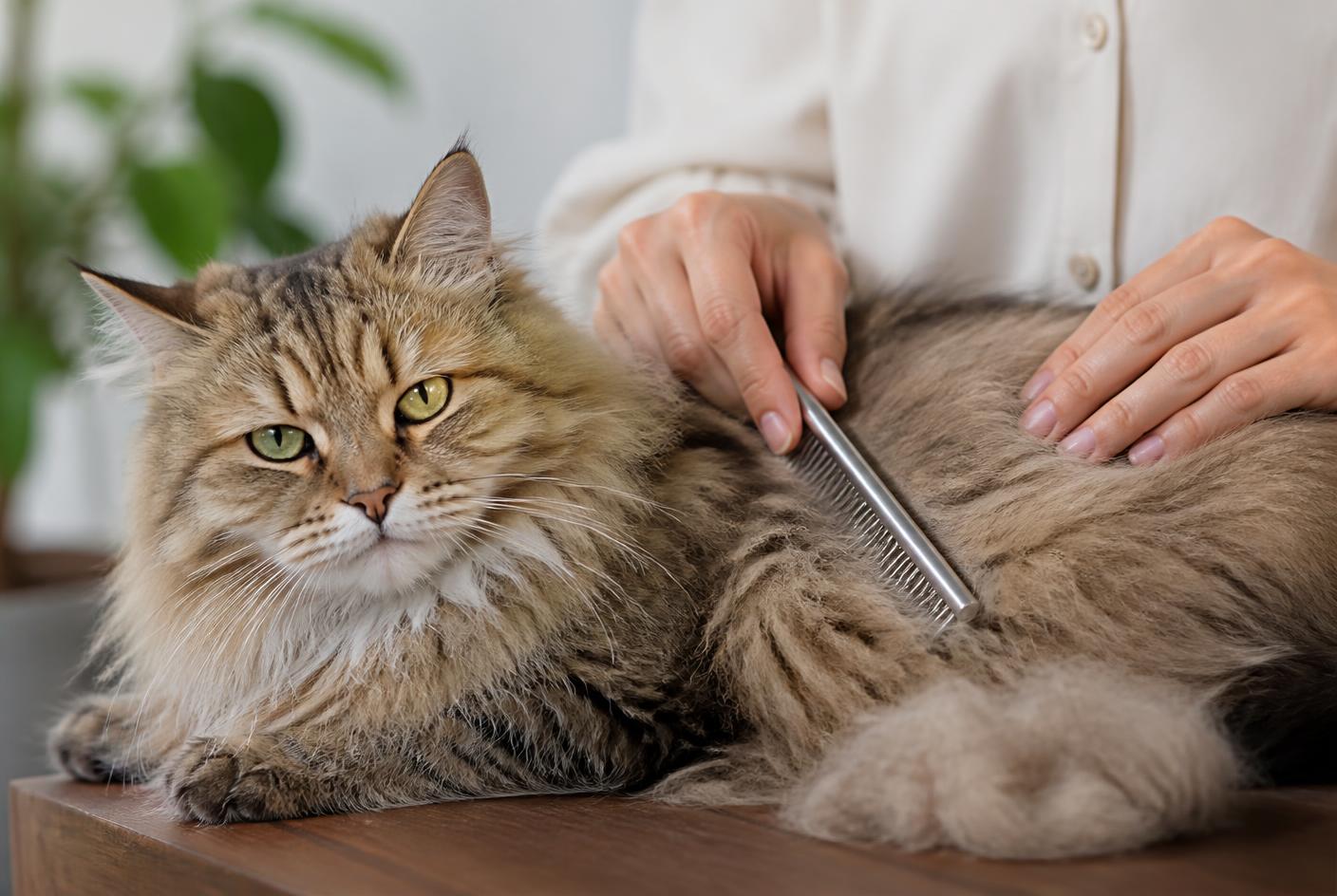
Grooming is more manageable than the coat's bulk suggests, because the texture is slicker than a Persian's and less prone to felting. For most of the year, two combing sessions a week down to the skin, with attention to the ruff, the trousers, the armpits and behind the ears, keeps a cat in good order. Twice a year, in spring and autumn, that changes completely: the undercoat comes out in sheets for two to three weeks, and daily work is the only thing that prevents mats and reduces the volume of hair in the house. Anyone who wants a tidy home should know this before, not after.
Health is reasonable, with one item that matters. Hypertrophic cardiomyopathy occurs in the breed as in most pedigree populations, and breeding cats should be screened by echocardiogram, ask when, and by whom. Beyond that, expect the usual large-cat considerations: honest weight control on a cat whose coat hides everything, dental care that must not slip, and a litter tray large enough for an adult of this size, which in practice means longer than most shop-bought trays.
Cost is worth planning for. A large cat eats more, and a coat like this needs a proper metal comb rather than a supermarket brush. Beyond that, the breed is not expensive to run. Where it becomes expensive is when the moult is ignored for a season and a groomer has to clip mats out, an avoidable cost, entirely within your control.
The forest cat for people who want size and substance without a Maine Coon's grooming bill, as long as nobody in the household is expecting an allergy miracle.
Grooming, realistically
- 1Comb the whole coat down to the skin twice a week with a fine metal comb, working in sections rather than skimming the top.
- 2Check four friction points every session: behind the ears, under the front legs, the ruff and the trousers.
- 3During the spring and autumn moults, comb daily for two to three weeks and expect large volumes of undercoat.
- 4Trim nails every two to three weeks and check the toe tufts for grit and matting.
- 5Brush teeth several times a week; a quiet cat will not tell you its mouth hurts.
- 6Weigh monthly and record it, this coat conceals weight gain completely.
What you actually need
- Fine-toothed metal comb
- Wide-toothed comb for ruff and trousers
- Undercoat rake for moult season
- Mat splitter for emergencies
- Nail clippers
- Cat toothbrush and enzymatic paste
- Large litter tray, 55–60 cm minimum
- Kitchen or pet scales
Kitten to adult
| Age | Male | Female | What is happening |
|---|---|---|---|
| Birth | Born with a soft kitten coat; the adult triple coat is years away. | ||
| 8 weeks | Fluffy and round. Start handling the paws and combing now so it is normal for life. | ||
| 6 months | Legs and frame lengthen ahead of the coat. Begin the twice-weekly comb in earnest. | ||
| 12 months | Most of the skeleton is there, none of the finished coat. Switch to adult food on measured portions. | ||
| 3 years | Full coat, ruff and body. Anything above the range on an adult is usually weight, not size. |
Ranges are typical, not targets. Judge condition by ribs and waist, and check with the ideal weight checker.
What to ask a breeder
- Have both parents been screened by echocardiogram for hypertrophic cardiomyopathy, and on what date?
- If allergy is my reason for choosing the breed, may I spend an hour with the parent cats more than once?
- How large do the adults in your line finish, and at what age?
- Are kittens raised in the house, handled daily and already used to combing?
- What does the coat of the parents look like mid-moult, not just in show condition?
- Which vaccinations, worming and health checks are done before the kitten leaves?
- What do you feed, and what portion do you recommend at six and twelve months?
Health watch-list
What to ask a breeder about, and what to watch for over a lifetime. This is orientation, not veterinary advice, anything you notice belongs in front of a vet.
Hypertrophic cardiomyopathy
UncommonThickening of the heart muscle, seen across pedigree breeds. Breeding cats should be screened by echocardiogram; ask for the dates.
Matting and coat neglect
CommonNot a disease but the most frequent welfare problem in the breed. Two heavy moults a year turn a skipped fortnight into mats against the skin.
Weight gain
CommonA big coat hides everything. Weigh monthly and feel for ribs rather than judging by outline.
Hairballs
UncommonA predictable consequence of a triple coat during moult season. Regular combing reduces the amount swallowed.
Dental disease
CommonAs in most cats. Brushing several times a week from kittenhood is the only reliable prevention.
Polycystic kidney disease
RareReported occasionally in the breed and DNA-testable. Worth asking about, particularly in outcrossed lines.
What it costs to keep one
Realistic running cost
€94 / month
About €1,128 a year, or roughly €16,920 across a 15-year life, before purchase price, neutering and one-off vet events.
Before the cat arrives. Budget roughly €300–640 for trays, carrier, posts, bowls, bedding and grooming kit sized for this breed. Figures throughout are indicative and vary a good deal between countries.
Interactive · built for this breed
Is a Siberian right for your home?
Five questions on the things that decide it: the coat, the moult, the space to move and the allergy question everyone asks first.
Verdict
An excellent match
You want the temperament, you will do the combing and you have the space. This is the breed working as intended.
Keep the weight honest with the ideal weight tool, or compare the alternatives in the matchmaker.
The verdict, by household
Family with young children
Excellent
Flat dweller
Good
First-time owner
Very good
Multi-cat home
Excellent
Allergy-conscious
Mixed
Older or quieter owner
Good
When to call your vet
- Breathlessness, open-mouth breathing or sudden hind-leg weakness
- Mats forming close to the skin, or bald patches under them
- Weight loss or gain of more than about five per cent
- Increased thirst and urination
- Reduced appetite lasting more than a day or two
- Repeated retching without producing a hairball
Nothing here is a diagnosis. Breathing difficulty, sudden hind-leg weakness and straining to urinate are emergencies, go the same day.
Siberian vs the closest alternatives
| Breed | Weight | Energy | Grooming | € / month |
|---|---|---|---|---|
| Siberian | 4.5–9 kg | 6/10 | 6/10 | €94 |
| Norwegian Forest Cat | 4.5–9 kg | 6/10 | 7/10 | €104 |
| American Curl | 2.5–5.5 kg | 6/10 | 5/10 | €80 |
| Selkirk Rex | 3.5–7 kg | 5/10 | 7/10 | €96 |
Siberian questions, answered
Are Siberian cats hypoallergenic?
No. Siberians produce Fel d 1, the main cat allergen, like every other cat. Some individuals appear to produce less of it, and some allergic people tolerate a particular Siberian well, but the variation is between individual cats rather than reliably across the breed. No responsible breeder will guarantee it. If allergy is your reason for choosing the breed, spend an hour with the actual parent cats on more than one visit before committing.
How much do Siberians shed?
Steadily for most of the year, and dramatically twice a year. The spring and autumn moults last two to three weeks each and produce large volumes of undercoat. Daily combing during those windows makes a substantial difference to both matting and the amount of hair in your home.
Siberian or Maine Coon?
Both are large, sociable semi-longhaired cats. The Siberian is rounder in outline, slightly more agile and a little smaller, with a slicker coat that mats less readily. The Maine Coon is longer, heavier and generally more laid back. If grooming time is your constraint, the Siberian is the easier of the two.
How big do Siberians get?
Males typically reach 6–9 kg and females 4.5–7 kg, with full size taking around three years. Anything well above that on an adult is usually weight rather than frame.
Are Siberians good with children and dogs?
Generally yes, and it is one of the breed's strengths. They are tolerant, slow to escalate and confident around other animals. Teach children to sit beside the cat rather than lift a heavy adult, and always leave a high retreat.
Can a Siberian live in a flat?
Yes, if you build upwards. One tall cat tree, wide window shelves, a daily play session and a litter tray 55–60 cm long is a comfortable set-up. Bare rooms with nothing to climb are where this breed becomes a nuisance.
What does a Siberian cost to keep?
A large cat eats more than average, budget roughly 40 EUR a month for food, with litter, insurance and grooming kit on top. The main avoidable cost is professional de-matting after a neglected moult, which is entirely within your control.