Norway
Norwegian Forest Cat
A cat built for Scandinavian winters that turned out to be built for living rooms too.
Reviewed against TICA and International Cat Care breed profiles
Built by Scandinavian winters
The short version
- Big, slow-maturing and calm: a Norwegian Forest reaches full size at four to five years and keeps a kitten’s playfulness most of the way there.
- The double coat is easier than it looks, weekly combing for most of the year, then a serious commitment during the spring moult.
- This is a climbing breed in a large body: give it height and a tree that lets it descend head-first.
- Affectionate but self-possessed, devoted company from the adjacent cushion rather than a permanent lap cat.
- Ask breeders for hip scores and HCM screening; both matter in large, slow-maturing cats.
- Weight
- 4.5–9 kg
- Lifespan
- 14–16 yrs
- Coat
- Long
- Size
- Large
- Grown male
- 5–8 kg
- Grown female
- 3.5–5.5 kg
- Years to full size
- about 4.5
- One-off setup
- €250–600
Get one if…
- Homes with a garden or secure outdoor access
- Owners out during the working day
- People who can provide real climbing height
- Anyone wanting a hardy, independent cat
Think again if…
- Small flats with no vertical space
- Owners wanting a constant lap cat
- Anyone who cannot cope with a heavy spring moult
Trait profile
The profile reads like a gentler Maine Coon because that is roughly what it is: the same large, slow-maturing template with a quieter voice and a more independent cast of mind. Energy scores moderate, real bursts, long rests, and the lower vocality is honest: this is one of the least demanding large breeds to actually live with.
Space & setup. Wants tall, sturdy climbing and ideally a catio or safe garden; bookcases will be used as stairs.
Allergies. Dense double coat and heavy seasonal moult make this a poor choice with allergies.
The review
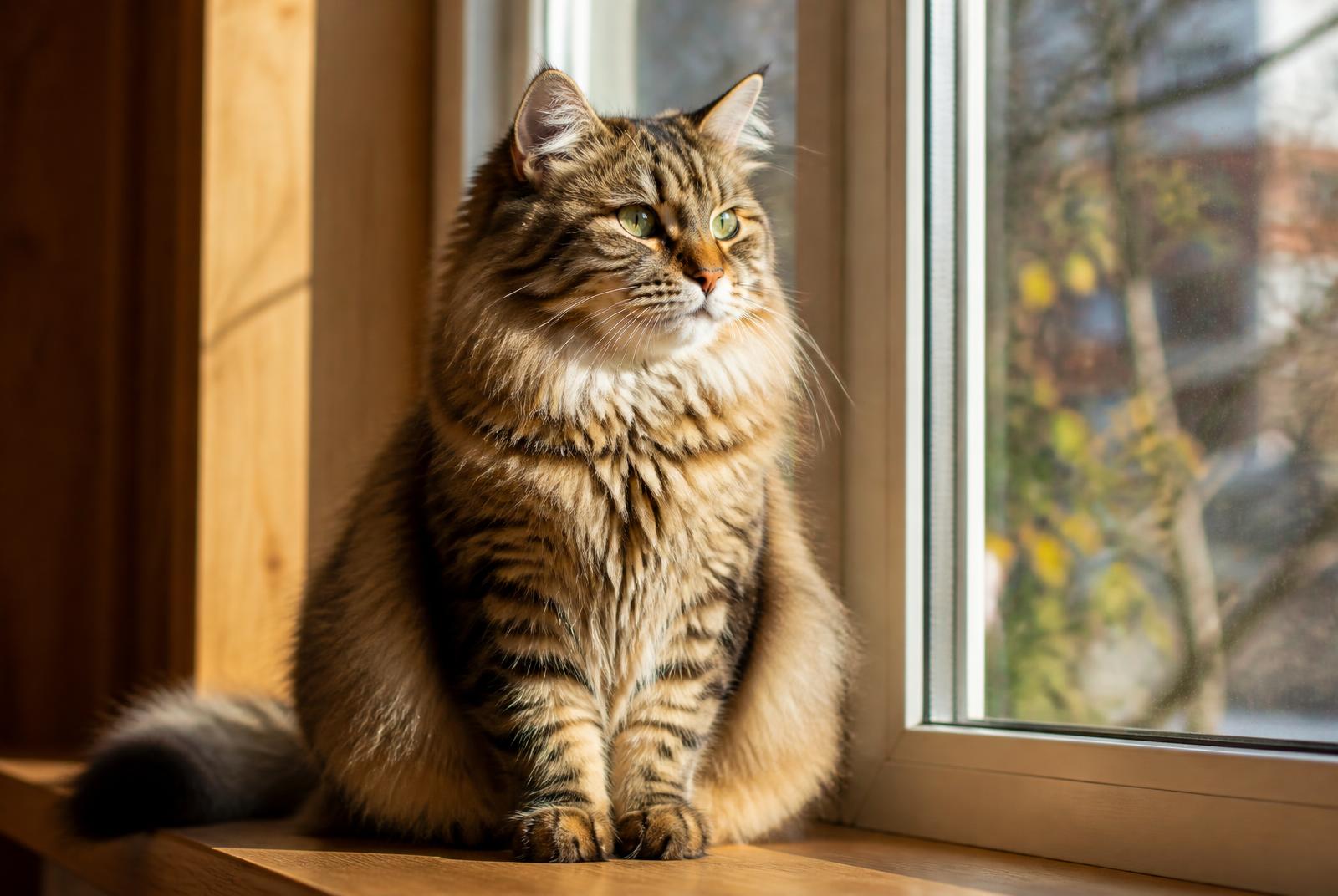
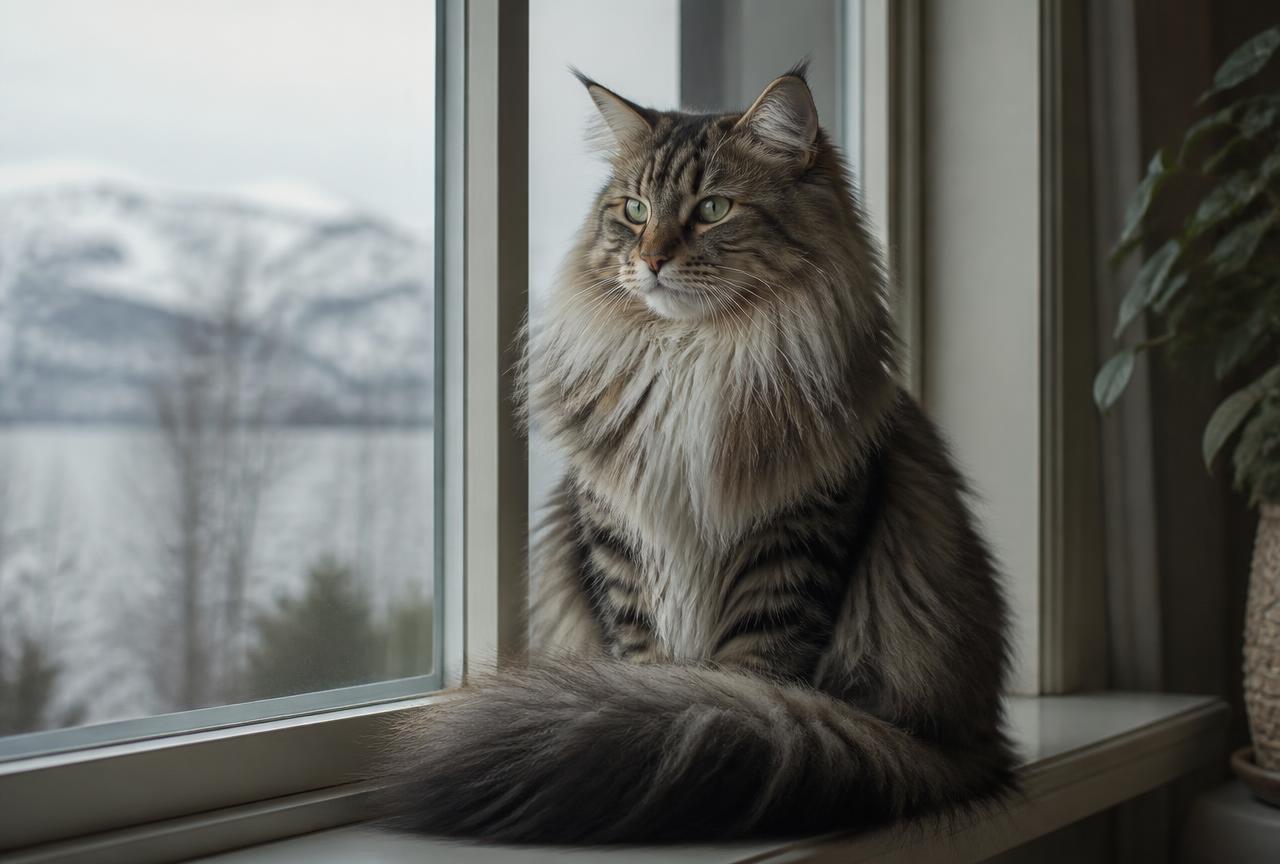
A sturdy, double-coated climber with tufted paws and a triangular face. Norwegian Forest Cats are calm and self-possessed, happiest with high perches and a cold window to sit at.
The Norwegian Forest Cat, Wegie to its friends, is what happens when a cat spends a few thousand years working out how to survive a Scandinavian winter and then, fairly recently, agrees to move indoors. Everything about the animal still tells the first story: the water-shedding double coat, the tufted ears, the huge plumed tail that wraps round like a scarf, the claws that let it climb down trees head-first, one of the few cats that can. What the brochures emphasise less is how well the second story turned out, because underneath the wilderness styling this is one of the most easy-going large breeds you can live with.
Size first, since it shapes everything else. A grown male runs five to eight kilos, occasionally more, but the number undersells the presence: the mane, the coat and the tail make the cat look a third bigger again. More importantly, none of it arrives quickly. Wegies mature over four to five years, which means an extended kittenhood in a body that is large while still being clumsy. This is mostly delightful, a two-year-old Wegie plays like a kitten and looks like a lynx, but it is worth knowing that the calm, statuesque adult you were promised is on a four-year delivery schedule.
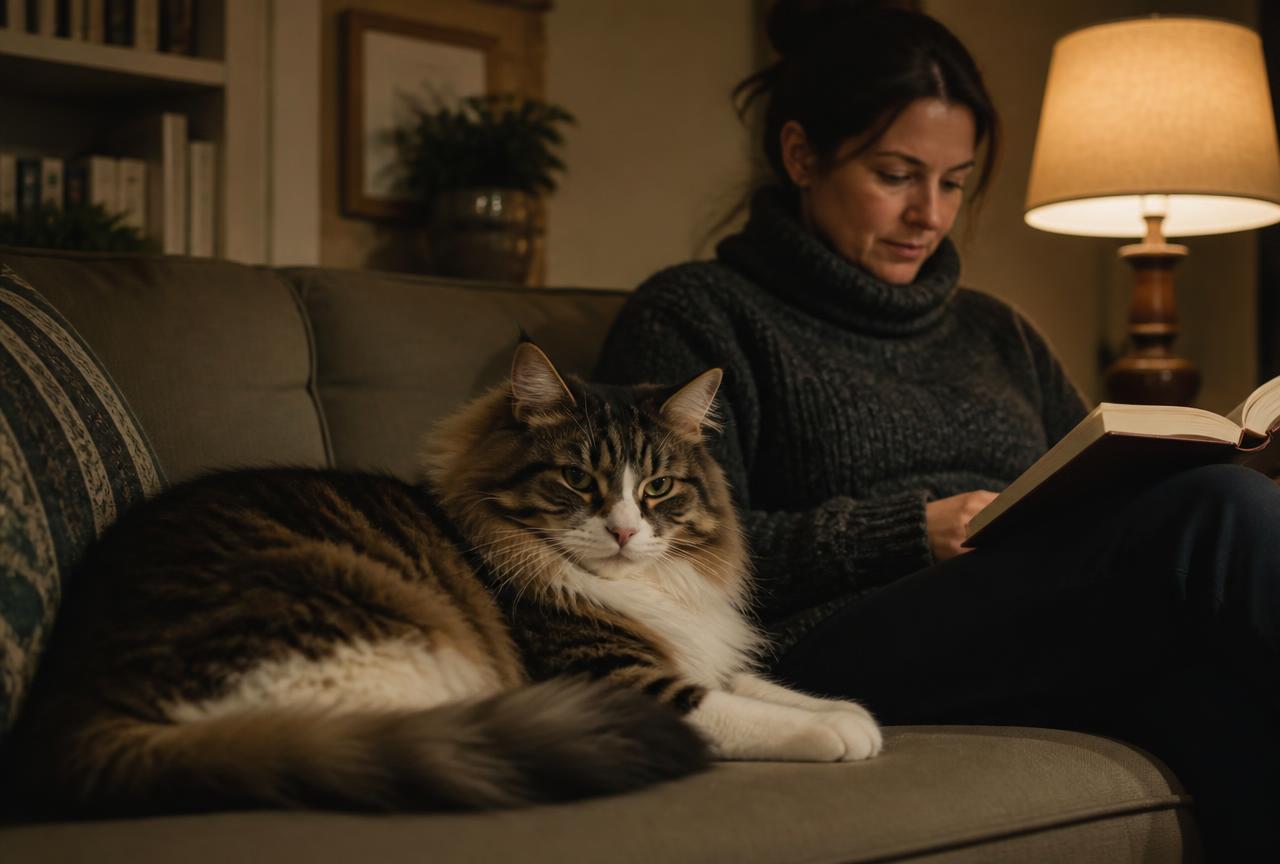
The temperament is the breed’s best feature and the thing owners stay for. Wegies are friendly without being demanding, confident without being pushy, and devoted in a way that respects the household’s other commitments. The classic Wegie position is beside you rather than on you: same room, same sofa, adjacent cushion. They follow their people from room to room and supervise the household with a mild, attentive interest, but they are not velcro cats and they do not sulk when you stop being interesting. With children and other animals they are famously tolerant, patient with clumsy handling, unruffled by dogs, and generous with other cats. If there is a feline temperament designed for a busy family house, this is close to it.
The voice matches the temperament: quiet. Wegies chirp and trill, a pleasant, conversational burble, but they are not yowlers, and a shouting match with a Norwegian Forest is not a thing that happens. People moving from a Siamese or a Bengal experience the silence as a luxury. People moving the other way should be warned.
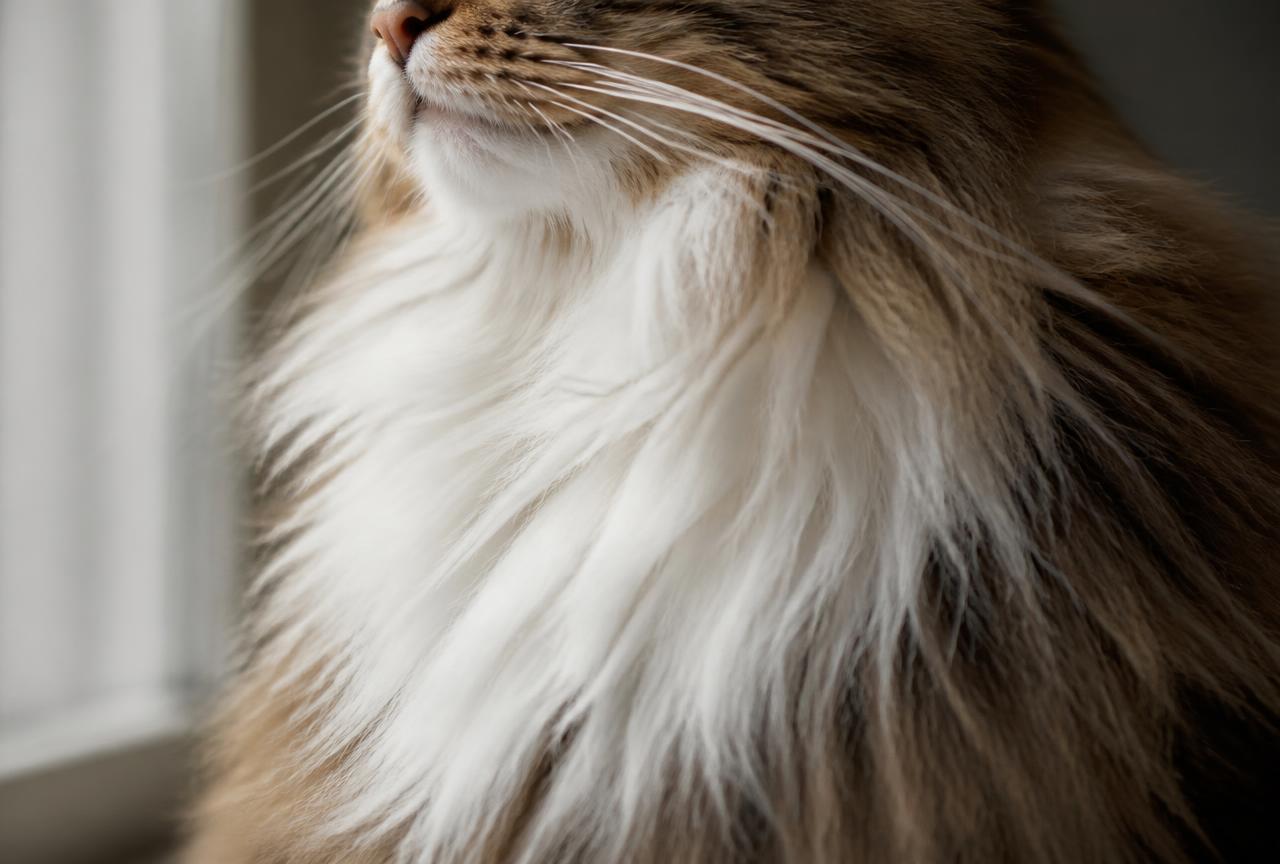
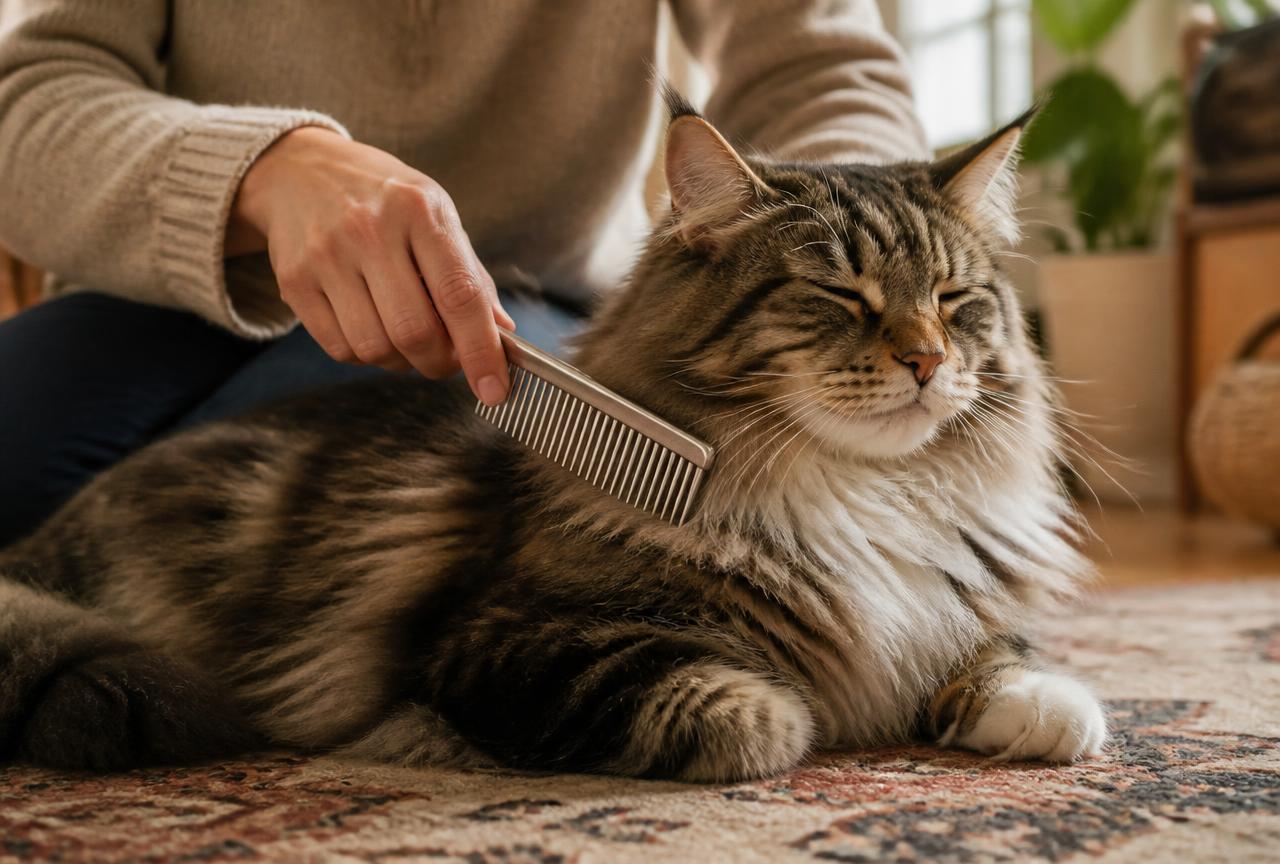
The coat is the main recurring task and it comes with a pleasant surprise: it is much less work than it appears. The outer guard hairs are glossy and somewhat oily, which means the coat resists matting for most of the year, a weekly comb-through handles it. The exception is the spring moult, when the woolly undercoat comes out in handfuls over a few weeks and needs near-daily combing to avoid felting and to keep the house from filling with tumbleweeds. Owners describe the moult the way parents describe teething: finite, survivable, and not to be undertaken unprepared.
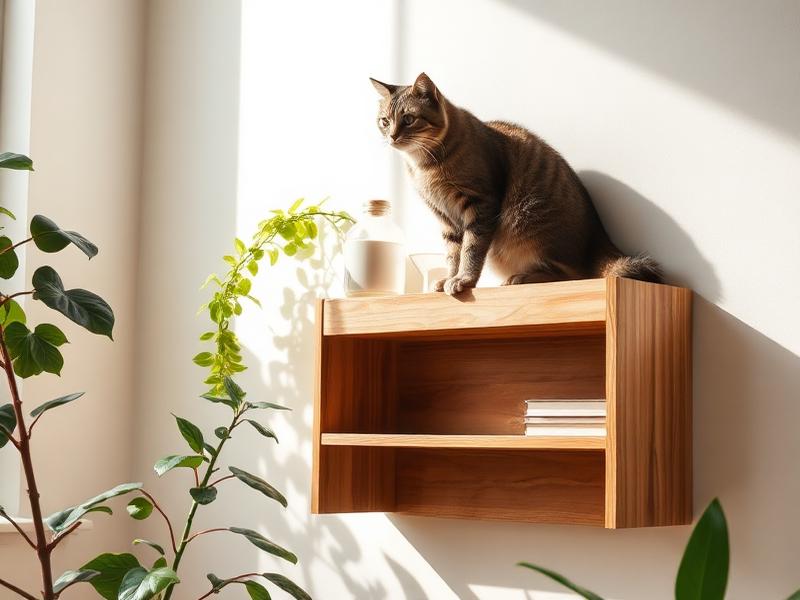
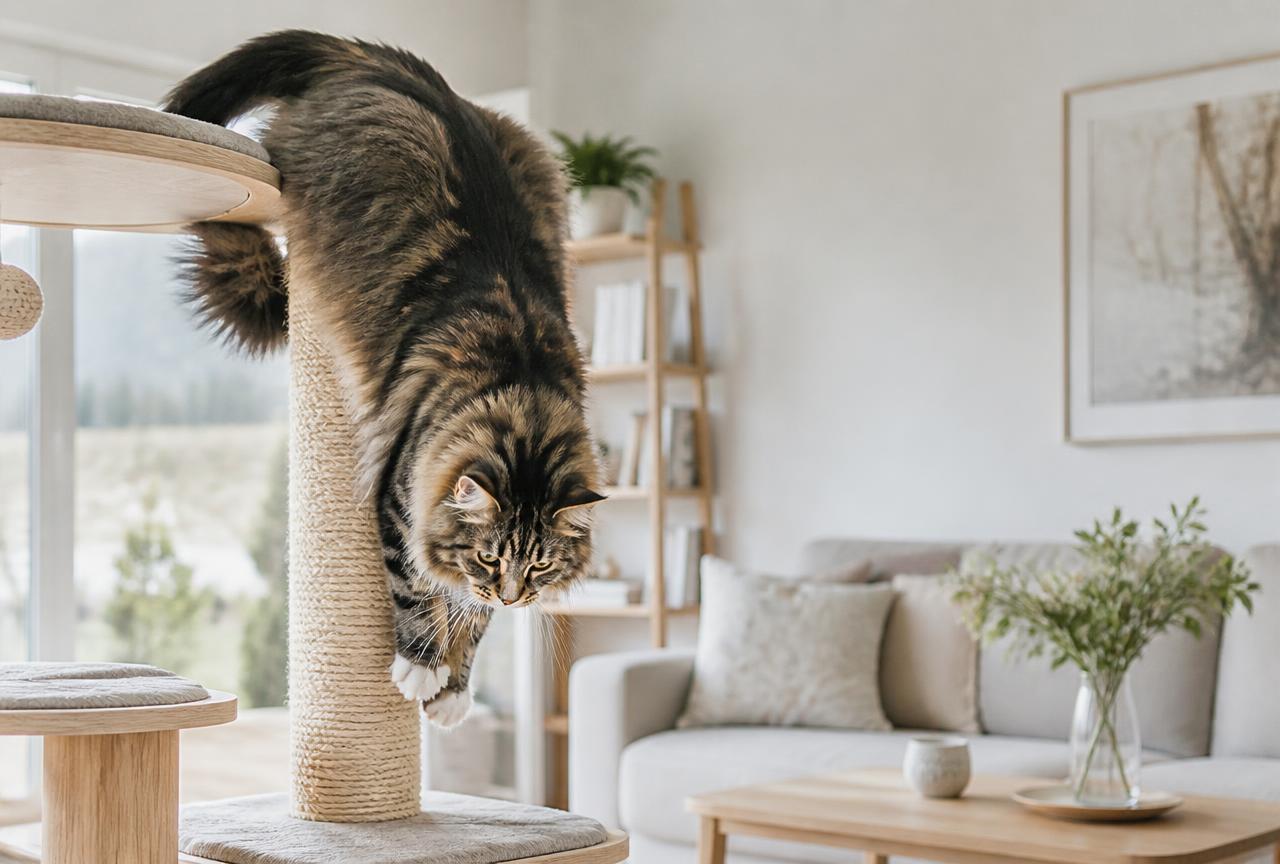
The climbing deserves its own paragraph because it shapes the house. A Wegie does not merely tolerate height; it needs it. Tall, sturdy cat trees, and they must be sturdy, this is a seven-kilo cat landing at speed, shelves, and high perches are requirements rather than enrichment. The signature party trick is descending head-first, which most cats cannot do and which a Wegie does with the casualness of an animal that evolved on cliffs. Watching it for the first time is genuinely impressive; the second thought is usually about whether the bookshelf is load-bearing.
Health-wise the breed is robust, with two watch-items that good breeders screen for: hypertrophic cardiomyopathy, the common feline heart disease, and hip dysplasia, which appears in large, heavy-muscled lines. Both are manageable when caught early and both are visible in a responsible breeder’s paperwork. There is also a breed-specific glycogen storage disease, GSD IV, which is DNA-testable and effectively eliminated from tested lines, one more reason the breeder question list matters.
Who is this cat for? Families who want a large, gentle, unflappable animal; people who like the Maine Coon idea but want a quieter voice and a little more independence; households that can offer height and a weekly comb. Who should look elsewhere: anyone who wants a constant lap cat (that is a Ragdoll), anyone who wants conversation (Siamese), and anyone unwilling to take the spring moult seriously. For everyone else, the Wegie makes a persuasive case that the best big cat is the one that never raises its voice.
A quieter alternative to the Maine Coon with the same architecture. The undercoat sheds seasonally in impressive quantity.
Grooming, realistically
- 1Weekly: a full comb-through with a wide-toothed metal comb, mane, trousers, tail and behind the ears. Fifteen minutes, and the coat genuinely cooperates.
- 2Spring moult (a few weeks): comb daily, working down to the undercoat. This is the season that decides whether a Wegie household stays tidy.
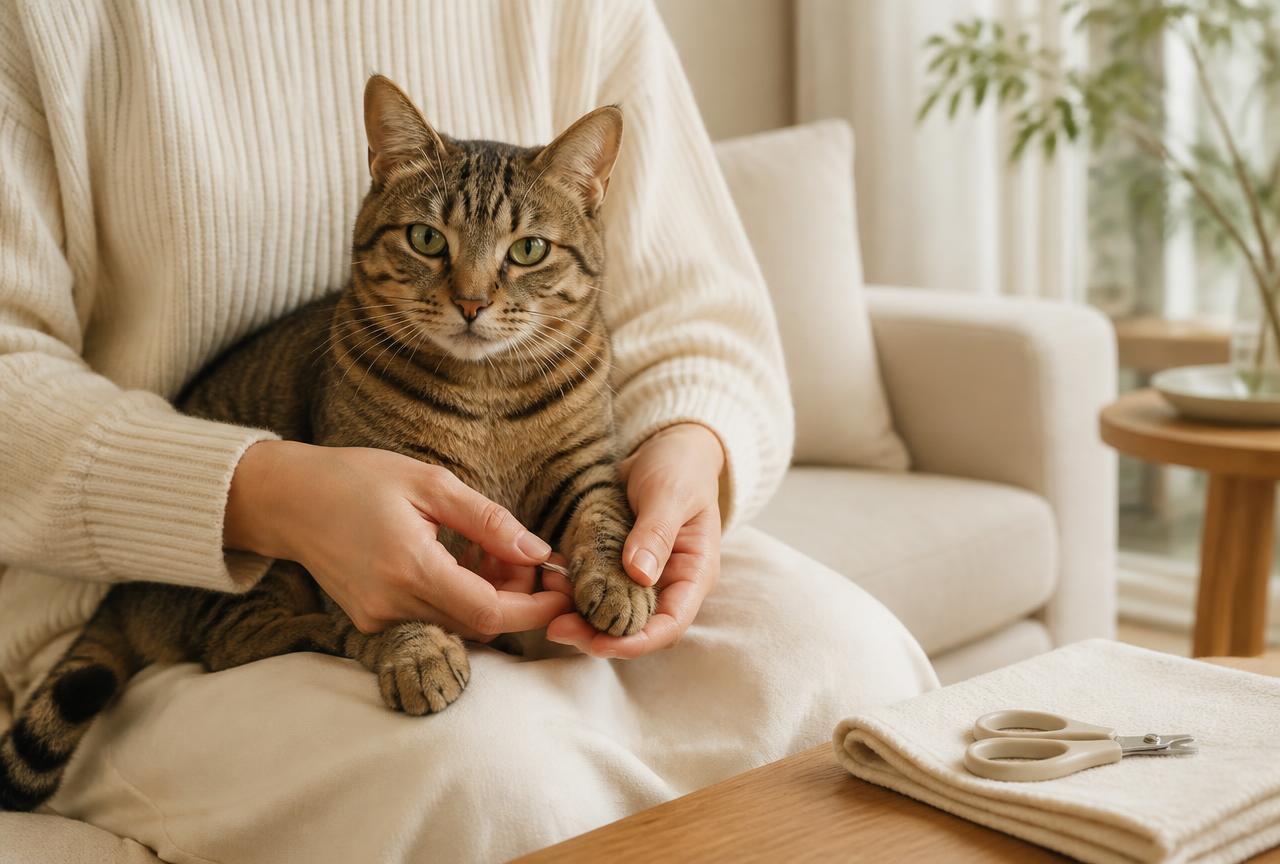
- 3Weekly: ears and claws. The claws are large and strong, keep them trimmed if the cat is not wearing them on a post.
- 4Monthly: check the trousers and belly for the small felts that form where fur rubs, and catch them before they set.
- 5Never: routine baths. The coat is water-resistant and self-managing; bathing is for accidents, not maintenance.
What you actually need
- Wide-toothed metal comb
- Slicker brush for the spring undercoat
- Large-gauge claw clippers
- Detangling spray for the seasonal trousers
Kitten to adult
| Age | Male | Female | What is happening |
|---|---|---|---|
| 12 weeks | Leaves the breeder later than most breeds. The mane is a promise, not a fact, for the first two years. | ||
| 6 months | Already substantial, still a kitten. Growth plates are open, discourage repeated big jumps down from height. | ||
| 1 year | Looks adult, is not. Expect adolescent energy bursts between long, dignified naps. | ||
| 2 years | The coat arrives properly now, mane, knickerbockers, tail plume. The cat is still filling out through the chest and shoulders. | ||
| 4–5 years | Full size at last, males at the top of the range. The calm, statuesque adult the brochures promised has been delivered. |
Ranges are typical, not targets. Judge condition by ribs and waist, and check with the ideal weight checker.
What to ask a breeder
- Are the parents screened for HCM by echocardiogram, and may I see the reports? Repeat screening matters, a single clear scan at two years old is not lifetime cover.
- What are the parents’ hip scores? Hip dysplasia appears in large, heavy lines and ethical breeders score their cats.
- Are the cats DNA-tested for glycogen storage disease type IV? It is a fatal kitten disease that tested lines have effectively eliminated.
- At what age do kittens leave? Twelve to fourteen weeks is the norm for a slow-maturing breed; earlier is a red flag.
- How are kittens raised? You want underfoot in a household, hearing hoovers and doorbells, the breed’s famous calm is partly good nerves, and good nerves are made early.
Health watch-list
What to ask a breeder about, and what to watch for over a lifetime. This is orientation, not veterinary advice, anything you notice belongs in front of a vet.
Hypertrophic cardiomyopathy (HCM)
Watch-itemThe common feline heart disease appears in the breed. Responsible breeders screen by echocardiogram and repeat the screening; ask for dated reports and keep an annual listen on the vet schedule.
Hip dysplasia
Watch-itemSeen in large, heavy-muscled lines. Ethical breeders hip-score their cats. In daily life the sign is a cat that stops wanting to climb, worth investigating in a breed that lives in the air.
Glycogen storage disease type IV
Screened outA fatal inherited disease of kittens, identifiable by DNA test. Tested lines are effectively free of it; an untested litter in this breed is a red flag by itself.
Weight gain in middle age
Common reportA big-framed, calm, food-appreciative cat drifts upward in weight after neutering. Because the coat hides it, weigh quarterly rather than judging by eye.
Hairballs in the moult
SeasonalThe spring undercoat shed means more swallowed fur. Daily combing in the season is the real prevention; see our hairball guide for the rest.
What it costs to keep one
Realistic running cost
€104 / month
About €1,248 a year, or roughly €18,720 across a 15-year life, before purchase price, neutering and one-off vet events.
Before the cat arrives. Budget roughly €250–600 for trays, carrier, posts, bowls, bedding and grooming kit sized for this breed. Figures throughout are indicative and vary a good deal between countries.
Interactive · built for this breed
Is a Norwegian Forest Cat right for your home?
Five honest answers. The verdict updates as you go, and the notes tell you what to change before a kitten arrives.
Verdict
An excellent match
Room to climb, a weekly comb, and a preference for company over cling, this is the household the breed was informally designed for.
What to sort out first
- Exactly right. The double coat is easier than it looks, it resists mats for most of the year, then sheds its undercoat in spring and needs you properly for a few weeks.
- Workable, Wegies are calm indoors, but this is a large climbing cat. One floor-to-ceiling tree is the minimum; they famously descend head-first and need a structure that allows it.
- The breed in a sentence. A Wegie loves you from the adjacent cushion, follows you room to room, and regards the lap as an occasional concession rather than a residence.
Weighing this against its big-cousin rival? Read the Maine Coon review and run the breed matchmaker.
The verdict, by household
Flat dweller
Good, with height
Family with young children
Excellent match
First-time owner
Excellent match
Multi-cat home
Good match
Allergy-conscious
Think hard
When to call your vet
- Reluctance to jump or climb in a breed that lives in the air, treat it as a joint or hip question, not a mood.
- Rapid or laboured breathing at rest, or a sudden dip in stamina, the heart watch-item is worth an annual listen from kittenhood.
- A swaying or stiff hind-end gait, or bunny-hopping on the stairs, the hip signature in large lines.
- Mats setting in despite the routine, or a cat that stops grooming, coat neglect in a self-maintaining breed is information.
- Gradual weight loss in a big cat is easy to miss under the coat: weigh quarterly and trust the scales over the eye.
Nothing here is a diagnosis. Breathing difficulty, sudden hind-leg weakness and straining to urinate are emergencies, go the same day.
Norwegian Forest Cat vs the closest alternatives
| Breed | Weight | Energy | Grooming | € / month |
|---|---|---|---|---|
| Norwegian Forest Cat | 4.5–9 kg | 6/10 | 7/10 | €104 |
| Siberian | 4.5–9 kg | 6/10 | 6/10 | €94 |
| Selkirk Rex | 3.5–7 kg | 5/10 | 7/10 | €96 |
| British Shorthair | 4–8 kg | 4/10 | 4/10 | €76 |
Norwegian Forest Cat questions, answered
How big do Norwegian Forest Cats get?
Males typically reach five to eight kilos and females three and a half to five and a half, with the mane, coat and tail making the cat look larger still. The more important number is the timeline: full size arrives at four to five years, so the lanky adolescent stage lasts far longer than in most breeds. Judge kittens by the parents, not the paws.
Do Norwegian Forest Cats shed a lot?
Seasonally, and impressively. For most of the year the coat sheds modestly and a weekly comb handles it. In spring the woolly undercoat comes out over a few weeks in quantities that surprise first-time owners, daily combing in the moult is the difference between a tidy house and a furry one. Autumn brings a smaller shed as the winter coat arrives.
Are Norwegian Forest Cats lap cats?
Adjacent, not on. The breed is deeply devoted and follows its people from room to room, but the classic position is beside you on the sofa rather than in your lap, partly temperament, partly the physics of a seven-kilo double-coated cat. Owners come to love the arrangement; anyone set on a permanent lap resident should look at the Ragdoll instead.
Norwegian Forest Cat or Maine Coon, what is the difference?
Both are large, slow-maturing, gentle climbers, and the honest differences are at the margins. The Wegie has a straighter profile, a more triangular head, a quieter voice and a slightly more independent cast of mind; the Maine Coon is more dog-like in its attentiveness and more vocal. Coats differ too, the Wegie’s is water-resistant with a woolly undercoat. Temperament-wise, most households would be happy with either.
Can a Norwegian Forest Cat live in a flat?
Yes, better than most large breeds, the temperament is calm and quiet indoors. The condition is vertical territory: at least one tall, genuinely sturdy tree and ideally shelf routes. What a Wegie cannot do is live in a small space with no height, because climbing is a need, not a hobby. Floor area matters less than the third dimension.
Are Norwegian Forest Cats good with dogs and children?
Famously good with both. The breed’s defining domestic trait is an unflappable patience, children who are still learning gentleness and dogs who mean well are both absorbed without drama. The usual rules apply: introductions done slowly, the cat given high escape routes, and small children taught that a cat this size is not a carry-on item.
Do Norwegian Forest Cats need to go outside?
No, they adapt to indoor life well, which is part of the breed’s modern success. That said, their heritage shows in an unusual enthusiasm for weather: many will happily sit out in rain that sends other cats home. A secure garden or harness walks are a bonus rather than a requirement. Indoors, a tall tree and a window with a view cover most of the territory needs.