Why do cats knead, and what the paws are really saying
Making biscuits, making bread, treading: one behaviour with at least four separate jobs. Where and when your cat does it tells you which one is in play.
Elena Marchetti
Feline behaviour and welfare writer, ISFM-trained
Published 4 September 2026
Reviewed against ISFM and AAFP behaviour guidance
The short version
- Kneading is the nursing motor pattern from kittenhood, kept into adult life like purring and play.
- The same movement does at least four jobs: nursing comfort, nest building, scent marking and social bonding.
- Where and when a cat kneads identifies which job is in play far better than the movement itself.
- Scent glands between the toes mean every press leaves a mark, so hard-surface kneading is usually marking.
- Claws are the real complaint, and a trim plus a designated blanket solves it without discouraging the behaviour.
- Kneading without purring, in restless bursts, is worth reading alongside the rest of the body language.
Every cat owner has watched it and almost nobody has been told what it is. The front paws push down alternately, slow and rhythmic, into a blanket, a cushion or your thigh. Sometimes the claws come out. Sometimes there is drooling. It looks like a cat doing something deeply important, and it is never explained on the tin.
Kneading is not one behaviour with one cause. It is a single motor pattern that gets used for at least four different jobs, and which job is in play depends almost entirely on where the cat is doing it, when, and what else is happening at the same time.
The kittenhood origin
Newborn kittens knead. They have to. Pressing alternately with the forepaws around a nipple stimulates milk flow, and a litter of kittens at the belly is a mass of pushing paws. The pattern is present within hours of birth, before eyes open, before walking.
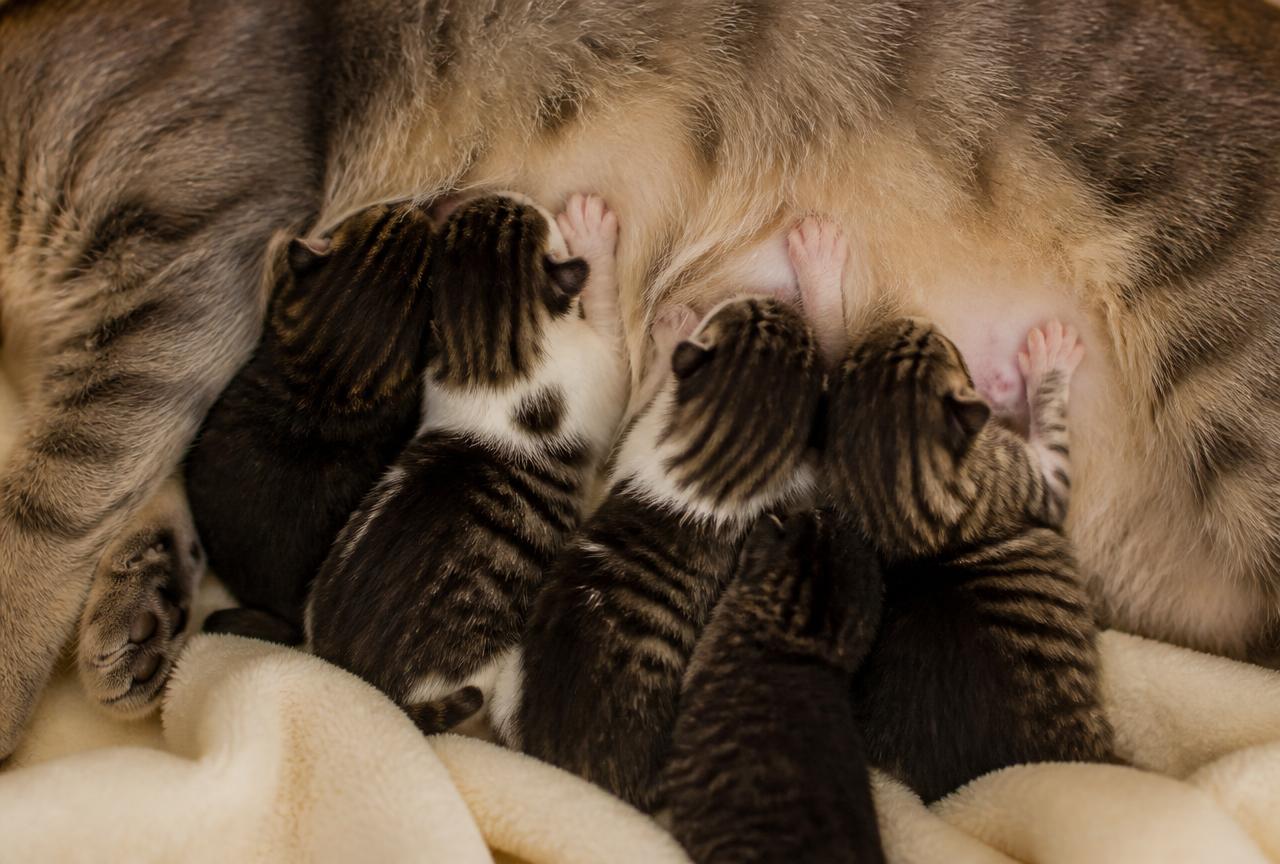
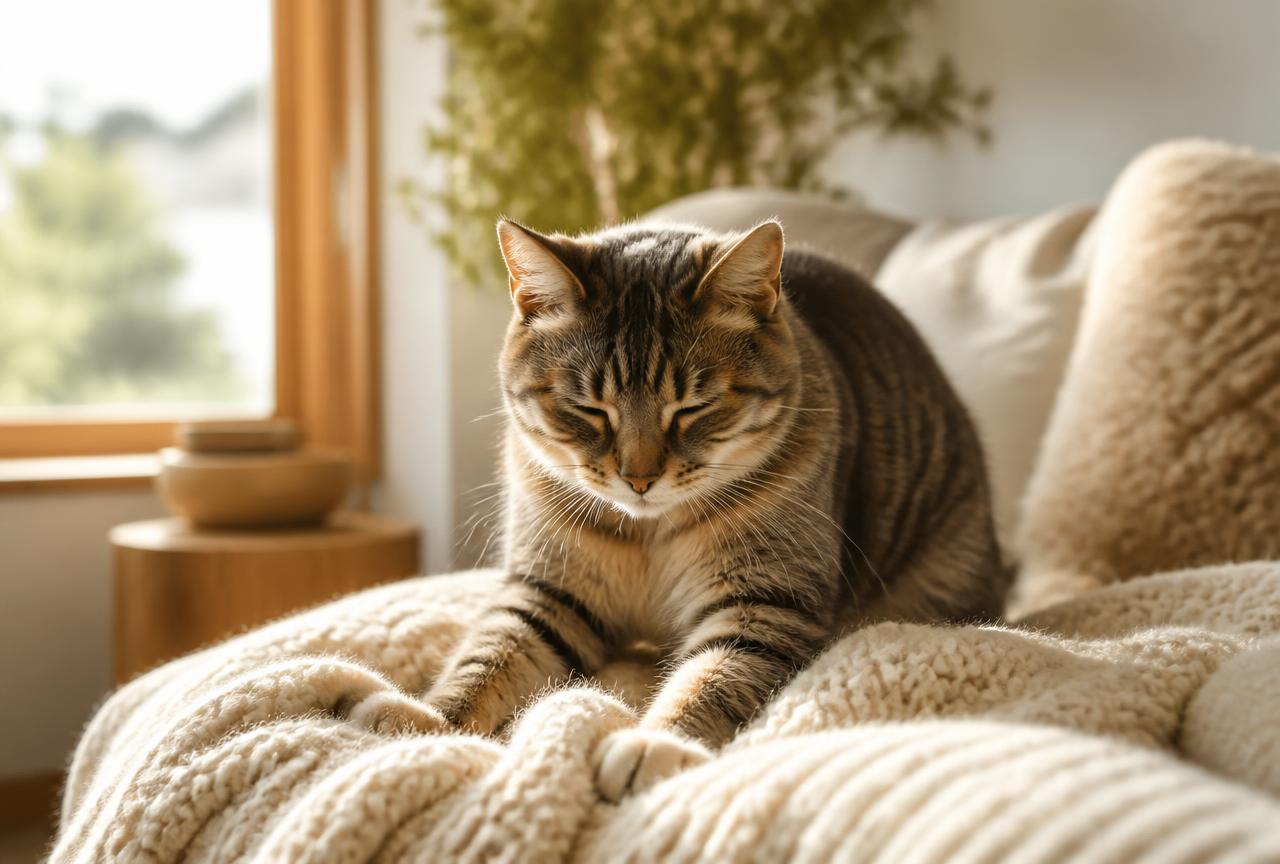
That is where the adult behaviour comes from, and it explains the odd extras. A cat who kneads a fleece blanket while purring hard, half-closing its eyes and drooling slightly is running a nursing program. Some cats add actual suckling on the fabric. It is more common in cats weaned early or hand-reared, and it is harmless in itself.
What it is not is a sign of immaturity or a problem to fix. Domestic cats keep juvenile behaviours into adulthood across the board, purring, play, kneading, and the whole soft-voiced repertoire of a cat asking a human for something. Living with people for ten thousand years rewarded the cats who never entirely stopped being kittens.
The scent marking job
Cats have glands between the toes and in the pads of the feet. Pressing the paws into a surface presses scent into it. This is the same equipment doing the same job when a cat scratches a post, which is why scratching is about marking as much as claw maintenance.
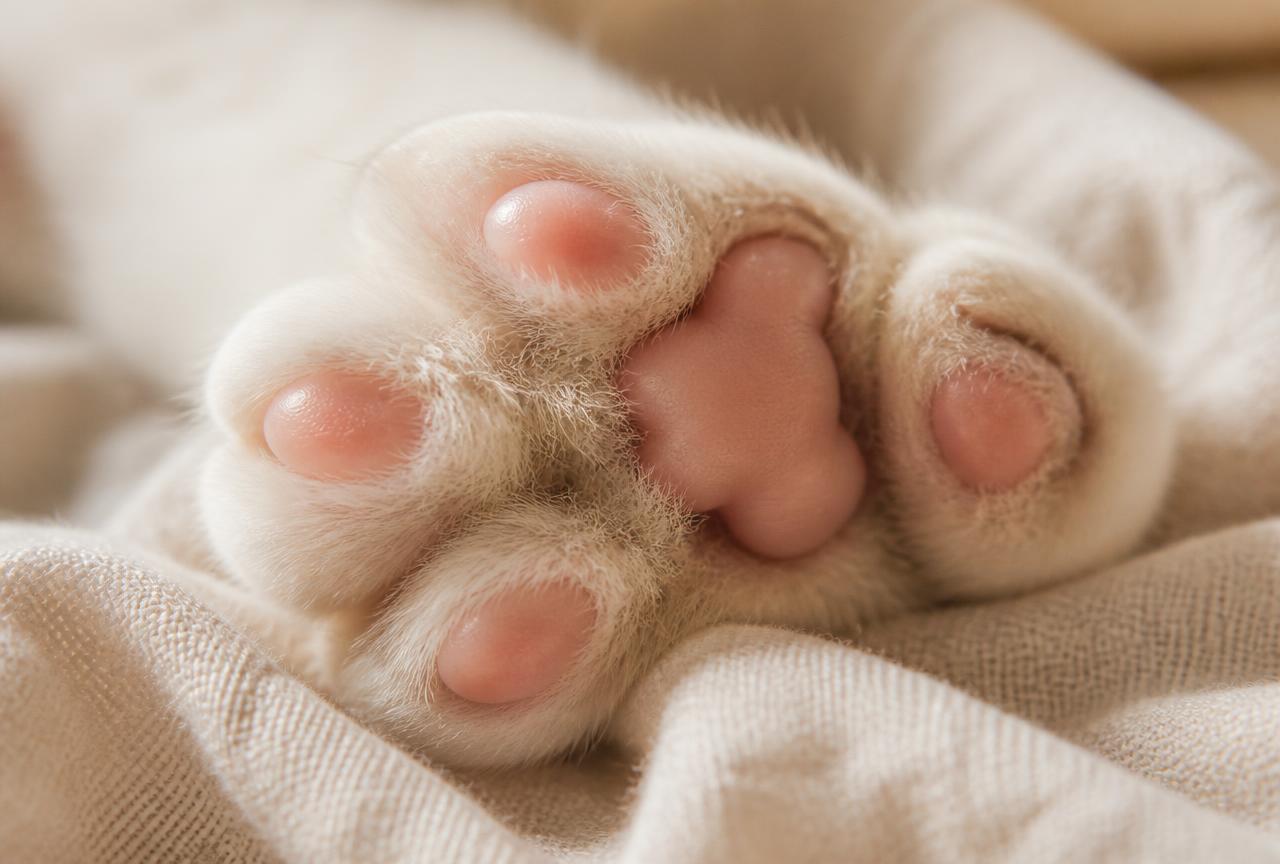
A cat kneading a hard floor, the arm of a sofa, or a spot no reasonable animal would call comfortable is usually marking rather than nesting. Same with kneading you: your lap becomes a scent-shared object, which from a cat''s point of view is the highest compliment available.
The nest building job
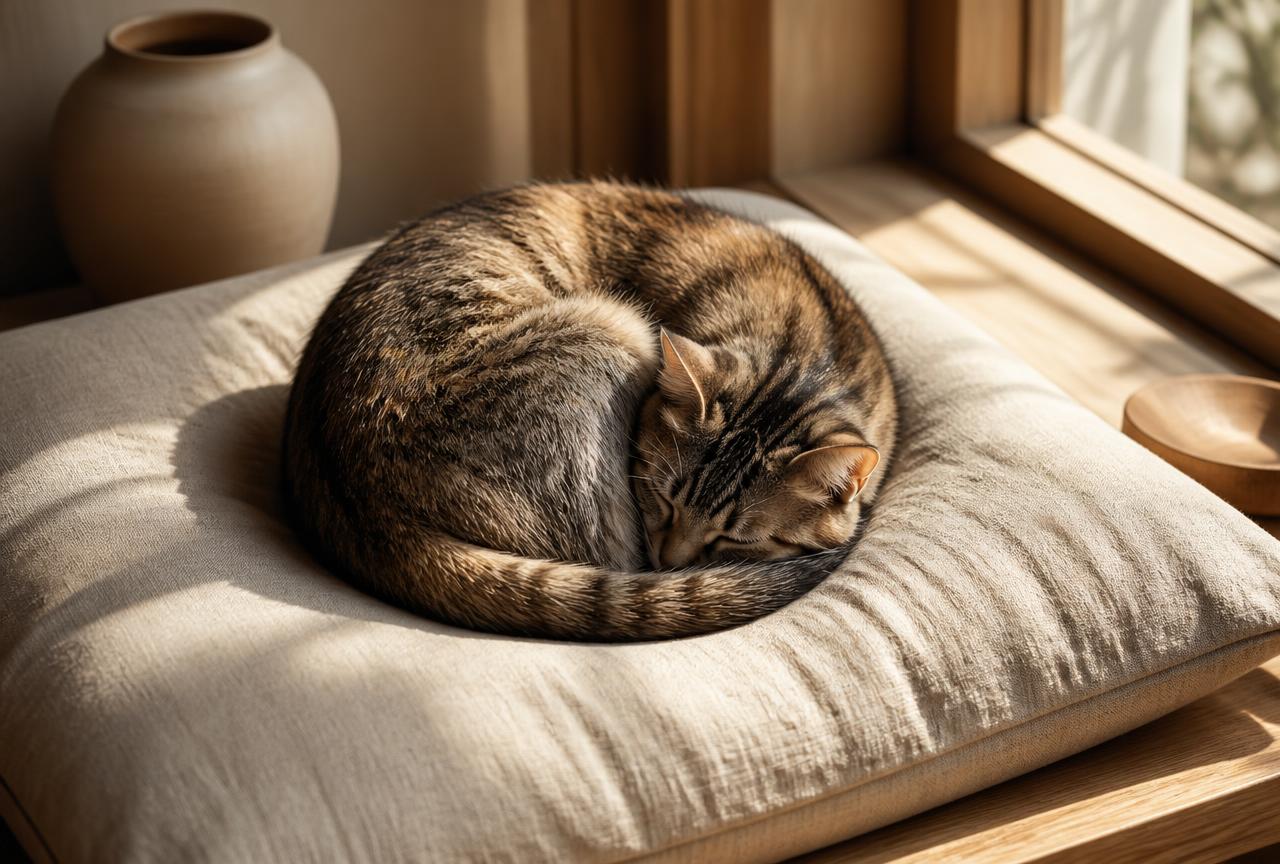
Watch a cat approach a bed it intends to use for the next four hours. It circles, it presses, it turns, it presses again, and only then does it drop. Flattening a surface, checking it for lumps and for anything living underneath, is what wild felids do before lying down, and what a pregnant queen does more intensely before giving birth.
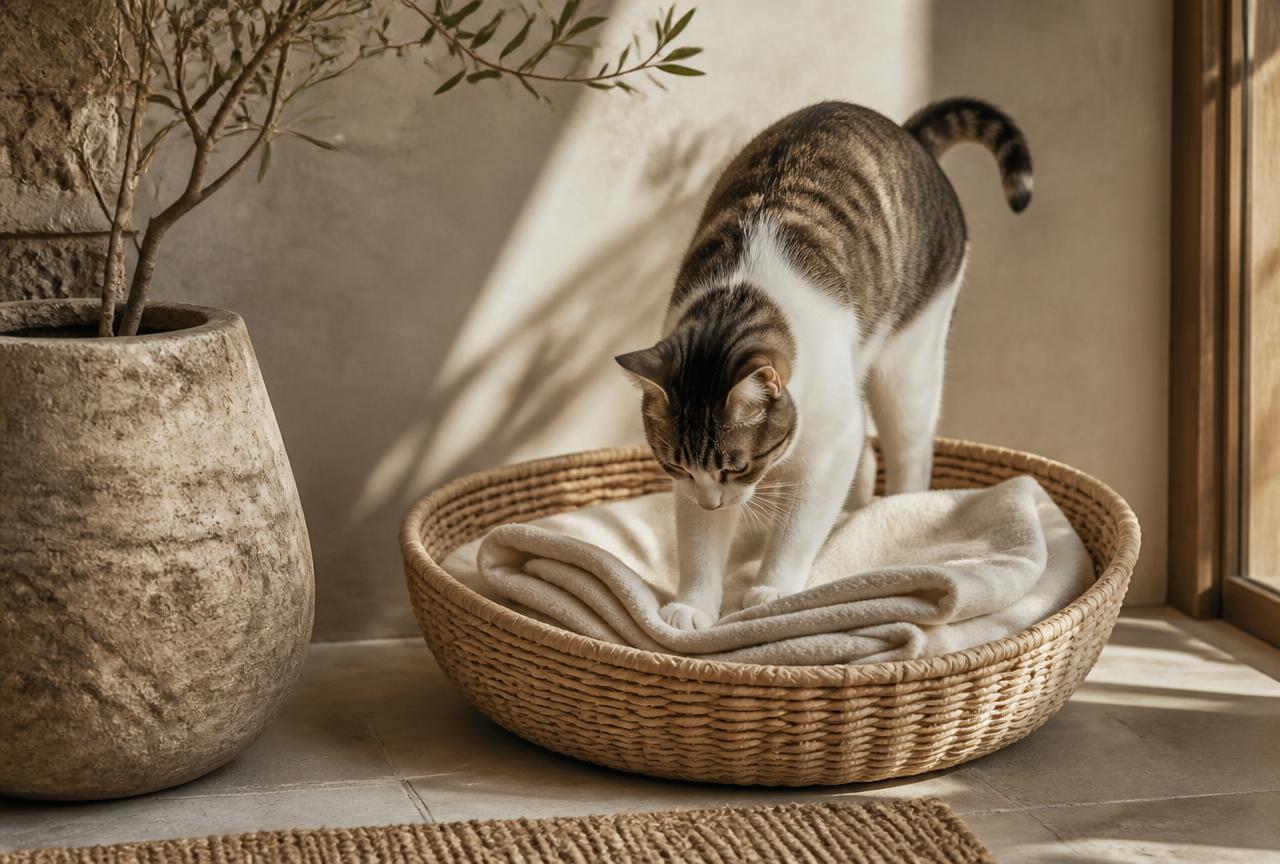
Nest kneading is short, purposeful and ends in sleep. Comfort kneading carries on well past any structural need and often does not end in sleep at all.
The social job
Kneading directed at a person, or at another cat, sits in the same category as head bumping, cheek rubbing and sleeping in contact. Cats do it to the individuals they treat as safe. A cat who kneads your chest and then falls asleep on it has made a statement about risk assessment.
Between cats, it appears almost exclusively in pairs who genuinely get along, the ones who groom each other and sleep touching. If your two cats merely tolerate each other, you will not see it, and that difference is one of the better tests of how the introduction actually went.
A cat that kneads on you is not being affectionate in the way a dog is being affectionate. It is treating you as furniture it trusts, which in cat terms is considerably more flattering.
Read your own cat
Interactive
Kneading context reader
Where, when and how a cat kneads changes what it means. Set the four and read it back.
Most likely meaning
Social bonding. Lap kneading is the kittenhood nursing pattern kept into adulthood, aimed at the person your cat treats as safe.
What to do
- Nothing to change. This is a cat telling you it feels safe, and the only sensible response is to sit still.
When it is not contentment
Kneading is overwhelmingly a comfort behaviour, but context can flip it. A cat kneading in short repeated bursts, without purring, while restless, pacing or unable to settle is not relaxed. Look at the rest of the animal: what the ears, tail and pupils are doing tells you far more than the paws.
Two patterns deserve attention rather than reassurance:
- Fabric suckling that becomes fabric eating. Wool sucking is a recognised compulsive behaviour, most often reported in oriental breeds. Sucking is fine. Swallowing wool, thread or fleece is not, because it can obstruct a gut.
- Kneading and treading at a specific body site, especially with licking of the same spot, which is more likely to be about discomfort in that area than about mood.
Which meaning fits which picture
| Where and when | Most likely job | Extras you will see | What to do |
|---|---|---|---|
| --- | --- | --- | --- |
| Soft bed, just before sleep | Nest building | Circling, turning, then settling | Nothing |
| Your lap or chest, during stroking | Social bonding, nursing pattern | Loud purring, half-closed eyes, drool | Sit still |
| Hard floor, sofa arm, doorway | Scent marking | Brief, businesslike, no purring | Nothing |
| Another cat, while grooming | Affiliative bond | Mutual grooming, sleeping in contact | Nothing |
| Anywhere, in bursts, no purring | Possible stress | Restlessness, pacing, hiding | Look at the whole cat |
| Blanket, with suckling | Strong early-weaning pattern | Drooling, chewing at fabric | Swap for a blanket it cannot swallow |
Living with claws
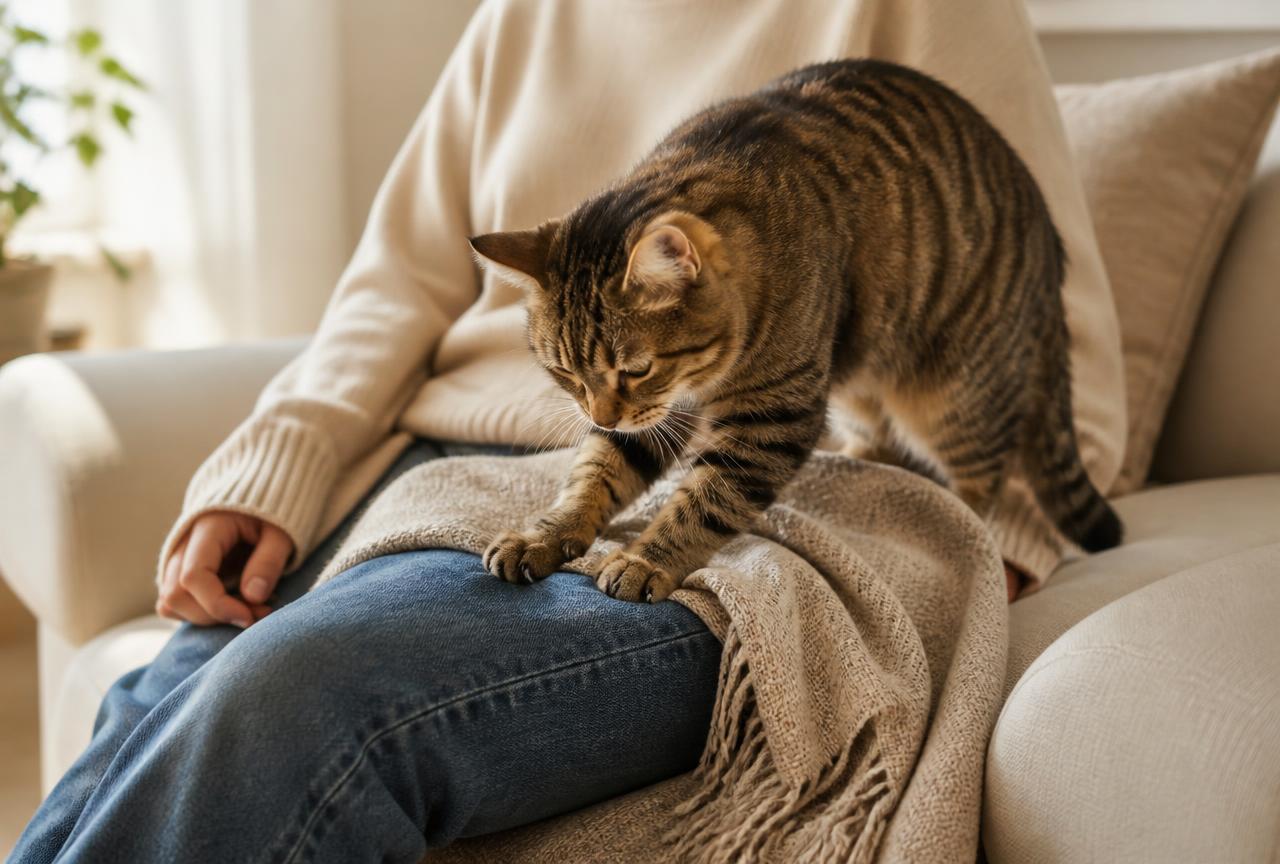
The complaint is almost never the kneading. It is what the claws do to bare legs, wool jumpers and loose-weave throws. Three fixes, in order of how well they work:
- 1Keep the front claws short. A trim every two to three weeks removes the sharp hook without touching the behaviour. Our claw trimming guide covers the ladder for a cat who objects.
- 2Put a barrier in the way. Keep a folded throw on the arm of the sofa or across your knees, and slide it under the paws when the kneading starts. Cats accept the swap readily because the target was never the point.
- 3Give it an address. One designated kneading blanket, tight-woven so claws do not hook, kept where the cat likes to sit. Fleece and short-pile microfibre work far better than open knits.
- 4Do not punish or push the cat off. All that teaches is that your lap is unpredictable, which costs you the behaviour you actually wanted.
Which approach suits which household
Cats who knead laps and owners who mind. A throw across the knees plus trimmed claws solves it in a week. Nothing else is needed.
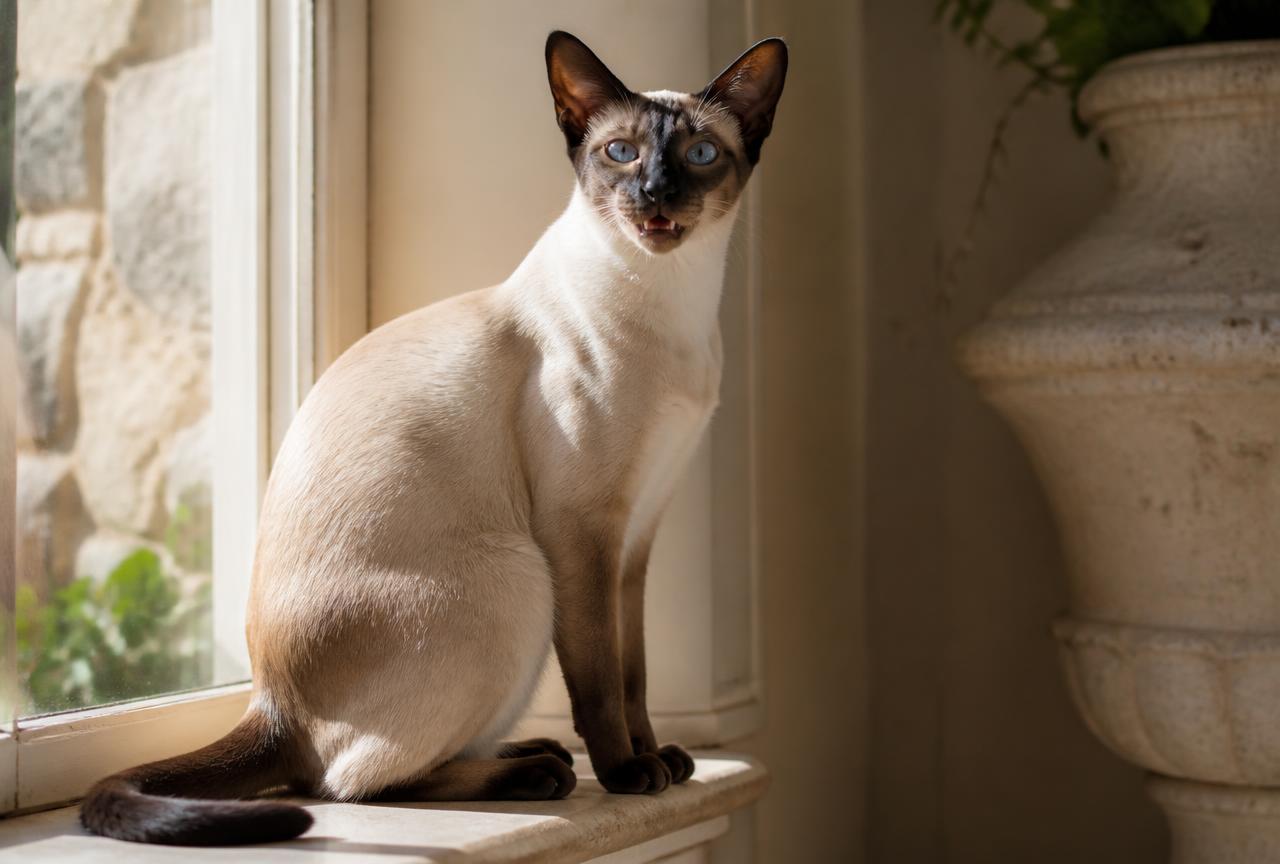
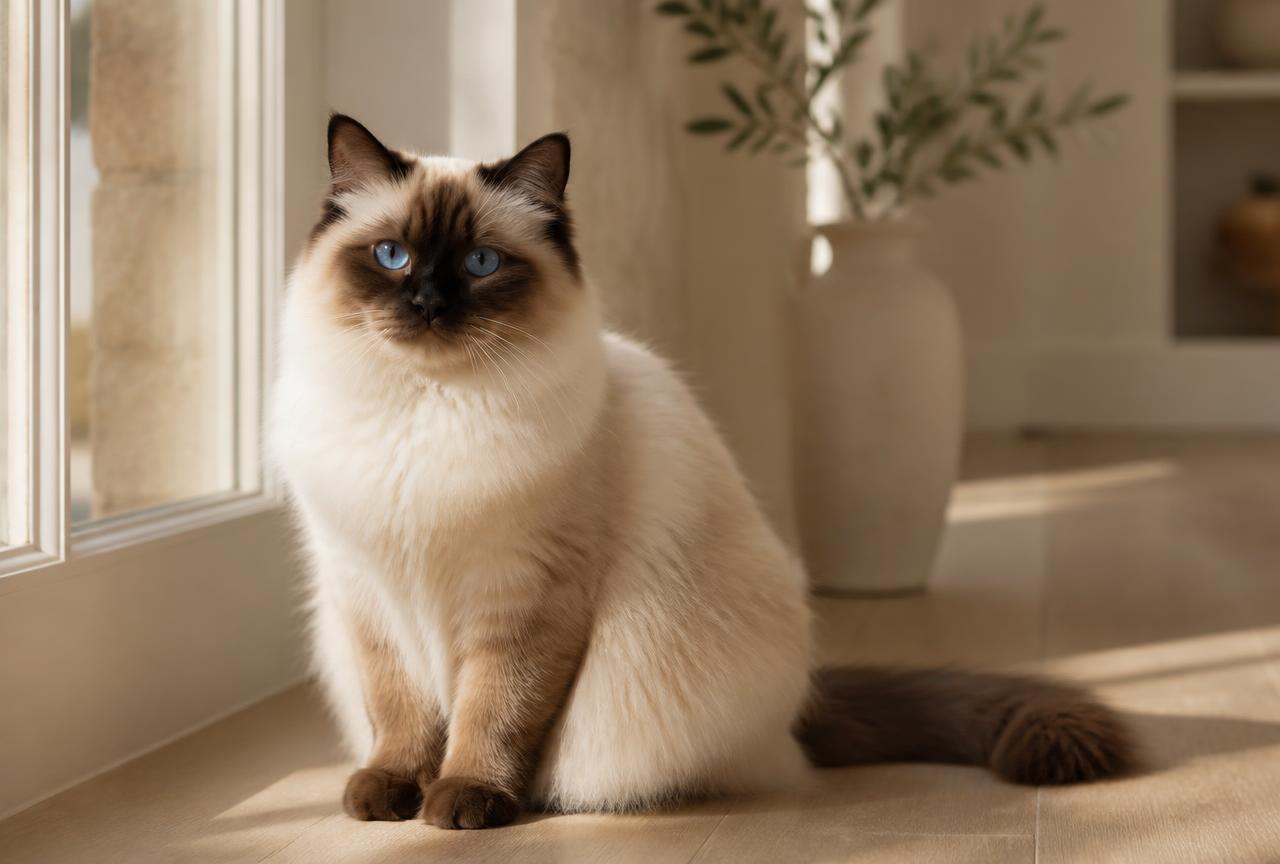
Vocal oriental breeds. Siamese and related cats knead intensely, often with suckling, and often with the full running commentary described in our vocal piece. Provide a sacrificial blanket and check it is not being eaten.
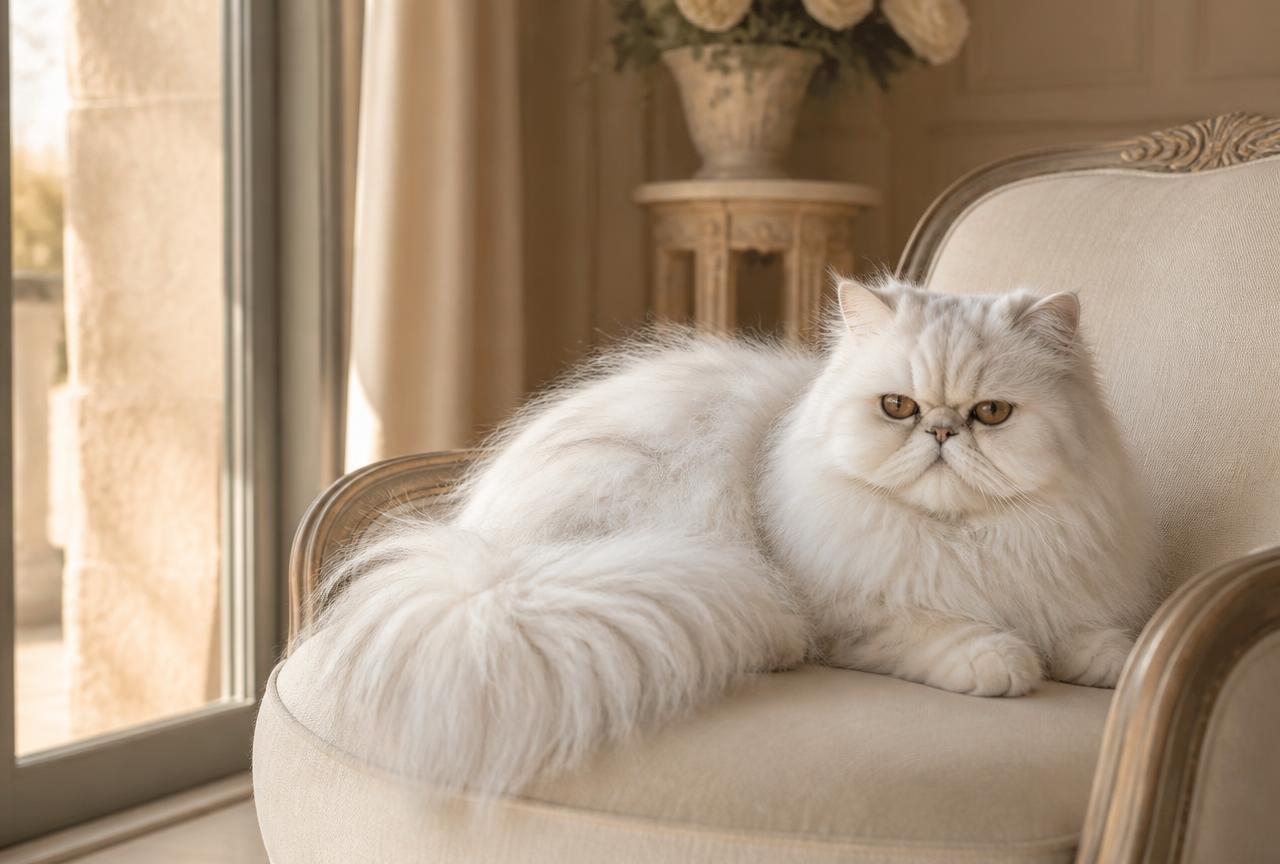
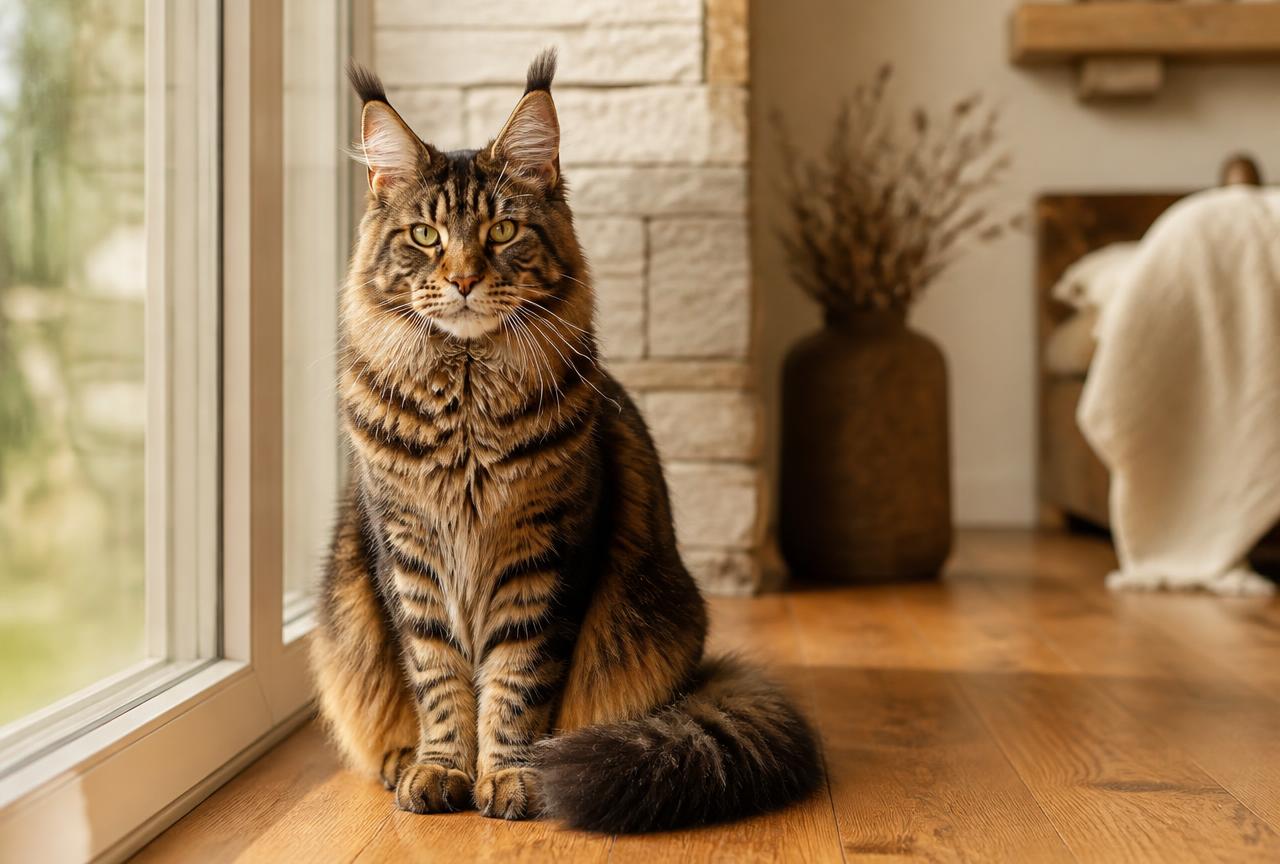
Long-haired breeds. Persians and Maine Coons hook loose weaves badly because the fur catches too. Tight-woven fleece and a shorter trim interval.
Households with a new kitten. Expect heavy kneading, suckling and drooling in the first months. It fades. Do not discourage it.
Cats who never knead at all. Perfectly normal. It is not a measure of affection, and some cats simply do not use this pattern.
When to call your vet
Kneading itself is never a reason to ring anyone. Ring a vet if your cat is swallowing fabric rather than just suckling it, if kneading is paired with licking or chewing at one body area repeatedly, if a previously relaxed kneader becomes restless and cannot settle, or if the behaviour appears alongside sudden clinginess, hiding, appetite change or over-grooming. In all of those cases the paws are the least interesting part of what you are seeing.
Questions people actually ask
Why do cats knead blankets?
Two reasons overlap. Pressing a soft surface flattens and tests it before sleep, which is nest building, and the movement itself is the nursing pattern from kittenhood, which is comforting in its own right. A cat that kneads a blanket then immediately settles is nest building; one that kneads for several minutes while purring loudly is running the comfort program.
Why does my cat knead me and not anyone else?
Kneading directed at a person is social behaviour aimed at an individual the cat treats as safe. It also transfers scent from the glands in the paw pads, which makes you a scent-shared object. Cats are selective about who they do this to, and being the only one is a compliment.
Why does my cat drool while kneading?
Drooling and half-closed eyes alongside kneading come from the nursing pattern, and are more common in cats weaned early. It is harmless. If drooling happens without kneading, especially with bad breath or pawing at the mouth, that is a dental question instead.
How do I stop my cat kneading with claws out?
Do not stop the kneading, change the surface. Keep the front claws trimmed every two to three weeks, keep a folded throw handy to slide under the paws, and give your cat one tight-woven blanket to knead where it likes to sit. Pushing the cat off only teaches it that laps are unreliable.
Is kneading a sign my cat is in pain?
Almost never on its own. What matters is context: kneading in short restless bursts without purring, or repeated treading and licking at one part of the body, can point to discomfort. Read the ears, tail, pupils and posture at the same time, and look for appetite or grooming changes.
My cat sucks on the blanket while kneading. Should I worry?
Suckling fabric is common and harmless. Swallowing it is not. Wool sucking that turns into eating wool, thread or fleece can obstruct the gut and needs a vet conversation, so swap the blanket for something with no loose fibres and watch what happens.
Do all cats knead?
No, and it means nothing about how affectionate a cat is. Some cats use the pattern constantly, some only before sleep, and some never appear to knead at all. Breed, early weaning and individual character all play a part.
Sources
Breeds mentioned
Put it into practice
Read next
Why do cats sleep so much? Normal hours, odd habits and the red flags
Why do cats sleep so much? What 12–16 hours a day really means, the light doze vs deep sleep, and the changes that actually matter.