A cat that stops eating: how many hours matter, and what to do
A dog can skip a day and shrug it off. A cat cannot. Here is the timeline that decides whether you are watching, phoning or driving.
Marta Fenwick
Feline nutrition writer, ISFM-trained
Published 4 September 2026
Reviewed by Dr Anneke Rautenbach BVSc
The short version
- Twenty-four hours with no food is the point to phone a vet, not the point to try another flavour.
- Overweight cats are at higher risk than thin ones: more fat means more strain on the liver when intake stops.
- A cat that licks gravy or takes treats but refuses meals is usually in mouth pain or nauseous, not fussy.
- Warming food to body temperature, a wide shallow bowl and a quiet location fix a surprising share of cases.
- Never withhold food to break a habit, and never force-feed a cat that has not been examined.
- Appetite loss with vomiting, no drinking, hiding or straining in the tray bypasses the clock entirely.
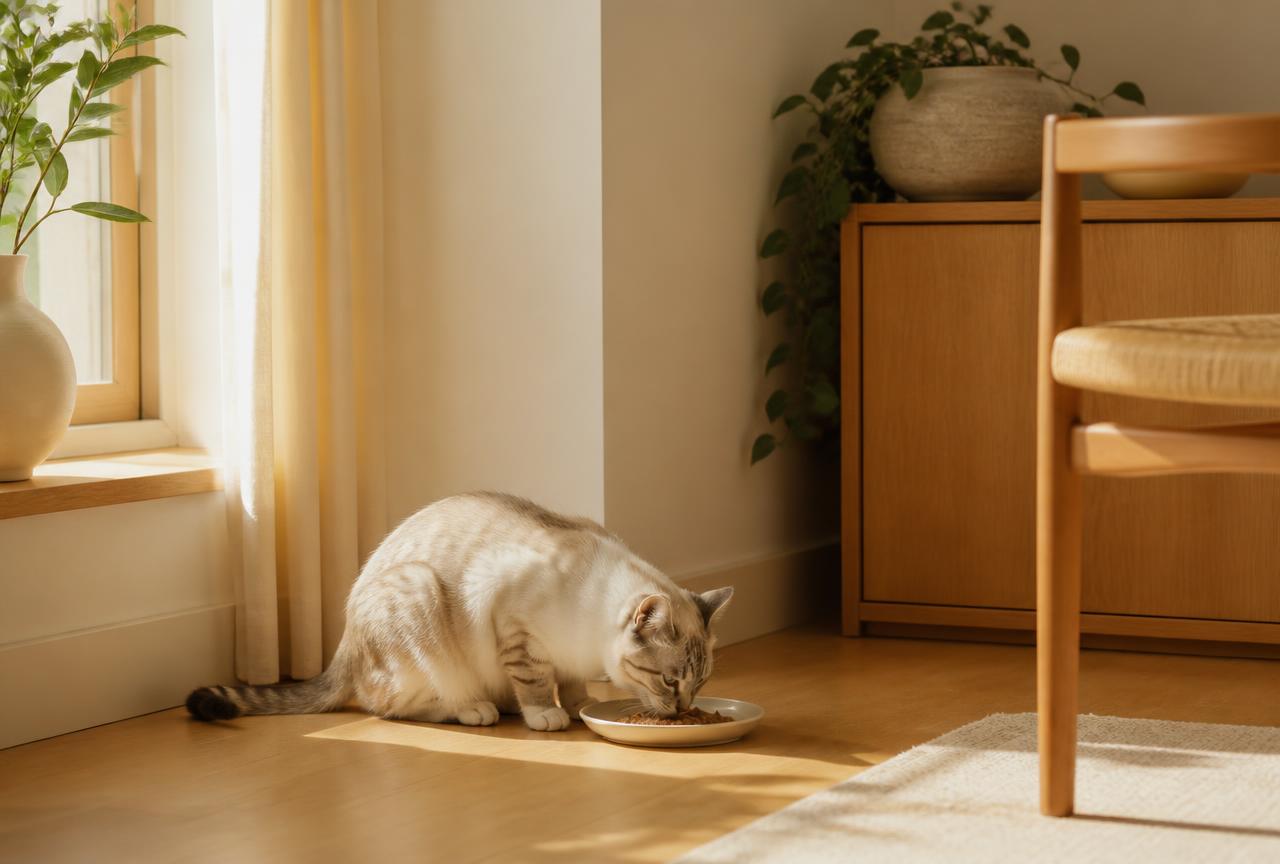
Most owners discover their cat has stopped eating by reading the bowl rather than watching the cat. The food from last night is still there, pushed to one side, and the cat is sitting somewhere it does not normally sit. The instinct at that point is to open a different tin. That instinct is not wrong, but it is second in order. First comes the clock.
Cats are obligate carnivores with a metabolism that expects a steady trickle of protein. When intake stops, the body mobilises fat into a liver that is poorly equipped to process it in bulk, and fat begins to accumulate in the liver cells themselves. The condition is called hepatic lipidosis, and it is the reason a cat that has not eaten for two days is a different kind of problem from a dog that has not eaten for two days. Counter-intuitively, a well-padded cat is at greater risk than a lean one, because there is more fat to mobilise.
The timeline that actually matters
Vets think about appetite loss in three words: hyporexia, meaning eating less than usual; anorexia, meaning eating nothing at all; and duration. Duration is what turns a mild problem into an urgent one.
| Time without a proper meal | What it usually means | What to do |
|---|---|---|
| --- | --- | --- |
| Under 12 hours | One skipped meal, common and often nothing | Keep the routine normal, offer the usual food warmed slightly |
| 12 to 24 hours | Worth taking seriously, especially with any other sign | Try the home measures below, count the hours from the last real meal |
| 24 to 48 hours | A veterinary appointment, not a new flavour | Phone the practice the same day |
| Over 48 hours | Urgent, whatever the cat looks like | Same-day examination, likely bloods and fluids |
| Any duration with vomiting, no drinking, hiding or laboured breathing | Bypass the clock | Same-day, urgently |
The reason the table is blunt is that cats hide illness well and the outward signs arrive late. A cat with early kidney disease, dental pain, pancreatitis or a urinary obstruction can look almost normal from the sofa while feeling profoundly unwell.
A cat that takes treats but refuses meals is rarely being fussy. It is usually telling you that chewing hurts, or that food smells wrong because it feels sick.
Interactive
Appetite clock
With cats, the number of hours matters more than the reason. Fill this in and take the summary to the phone call.
Where this sits
Vet appointment today
A full day without food is the point at which a cat should be seen, not the point at which to try another flavour. Cats do not tolerate fasting the way dogs do.
What to tell the vet
- Hours since the last proper meal: about 24
- Body condition: ideal
- Intake since then: a few mouthfuls
- Still drinking
Notes
- Keep the food and water in their usual places, and keep everything else about the day boring and predictable.
Guidance, not a diagnosis. Never force-feed or syringe-feed a cat that has not been examined, and never withhold food to "reset" a fussy eater.
Why cats stop eating
Appetite loss is a symptom with a long list of causes, and the list divides usefully into three groups.
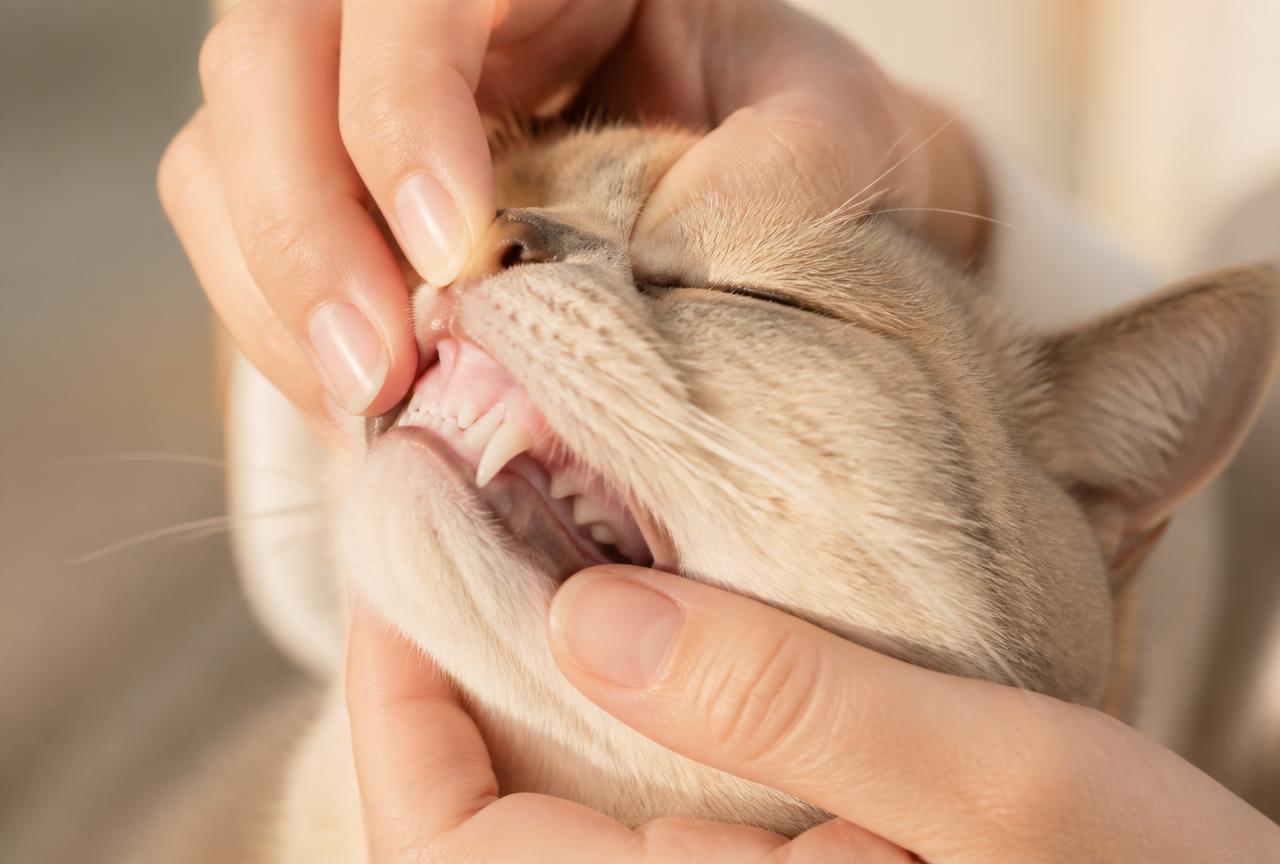
Something hurts. Dental disease is the quiet leader here, and it is close to universal in middle-aged cats. Resorptive lesions and severe gingivitis make chewing dry food genuinely painful, which is why so many cats in this group will lick gravy and refuse kibble. Mouth ulcers, a fractured tooth and jaw pain all present the same way. Our dental care feature covers what to look for and how to look.
Something feels wrong internally. Nausea suppresses appetite completely, and nausea in cats comes from kidney disease, hyperthyroidism, pancreatitis, inflammatory bowel disease, hairball obstruction, constipation, urinary problems and a swallowed foreign body, among others. If appetite loss arrives with vomiting, read it alongside our guide to what cat vomiting means.
Something changed. Cats are neophobic about food and conservative about environment. A new flavour, a different bowl, a bowl moved next to a washing machine, a new cat in the household, building work, a house guest, hot weather, or a course of medication can all suppress appetite for a day or two. This group is real and common, but it is the group you can only diagnose in hindsight, once a cat has started eating again. It is not a reason to wait past 24 hours.
What to check at home in ten minutes
Do these before you phone, because the answers change what the vet says.
- Look along the gum line on both sides. Bright red margins, a visible hole in a tooth, a strong smell, or a cat that flinches when you touch the jaw.
- Press gently on the belly. Tension, flinching, or a hard bladder low down in the abdomen. A cat straining without producing urine is an emergency in its own right.
- Pinch the skin between the shoulder blades and let go. Skin that stays tented indicates dehydration.
- Count the breaths at rest over thirty seconds and double it. Above about 35 a minute at rest, or open-mouth breathing, means now rather than later.
- Check the litter tray. Nothing passed in 48 hours, or straining, or blood.
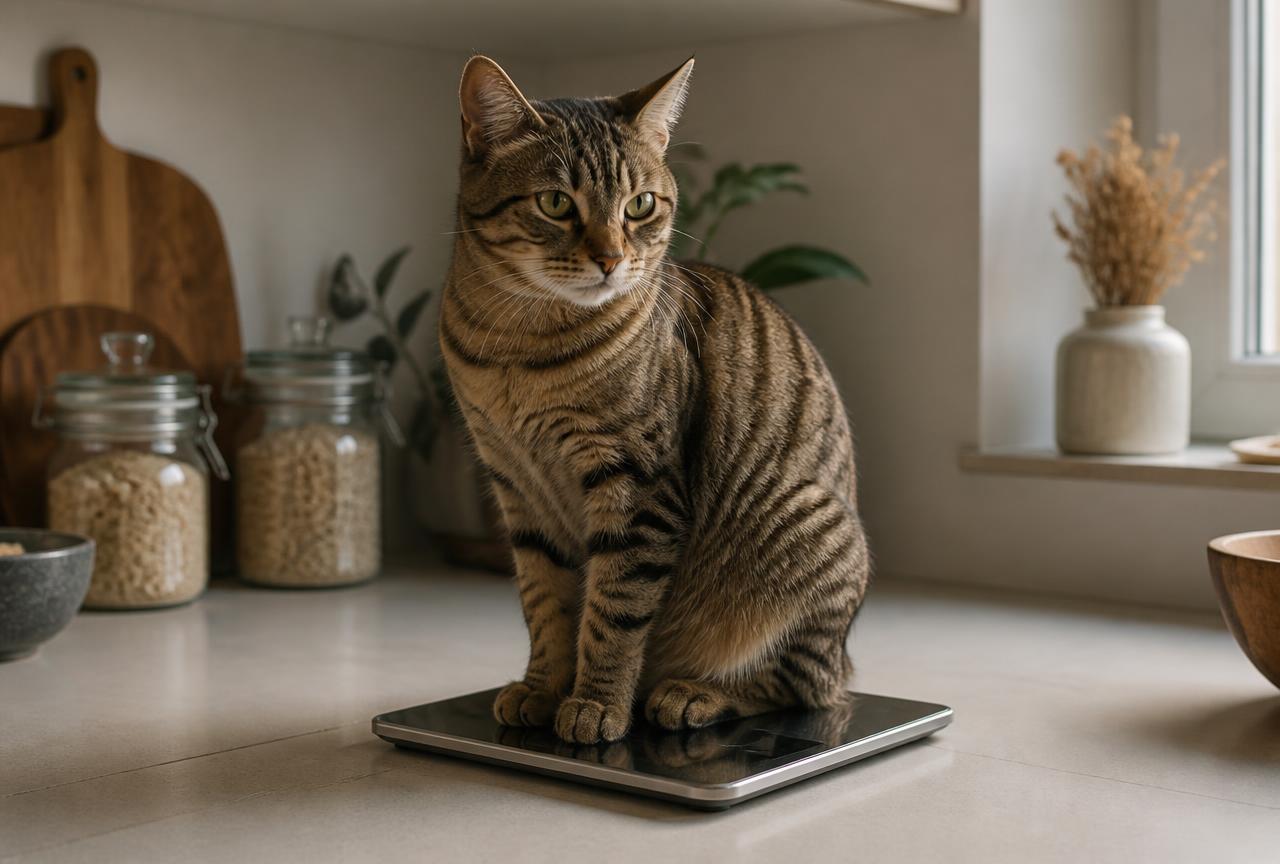
- Weigh the cat on a flat kitchen scale. Compare with the last number you have.
The four things worth trying inside the first day
If the cat is bright, drinking, and under the 24-hour mark, these are the measures that genuinely help. None of them should be used to buy time past a day.
- 1Warm the food to body temperature. Cats eat by smell far more than by taste, and aroma rises with temperature. Thirty seconds of warm water under a sealed pouch, or a spoon of warm water stirred through wet food, is often the whole fix.
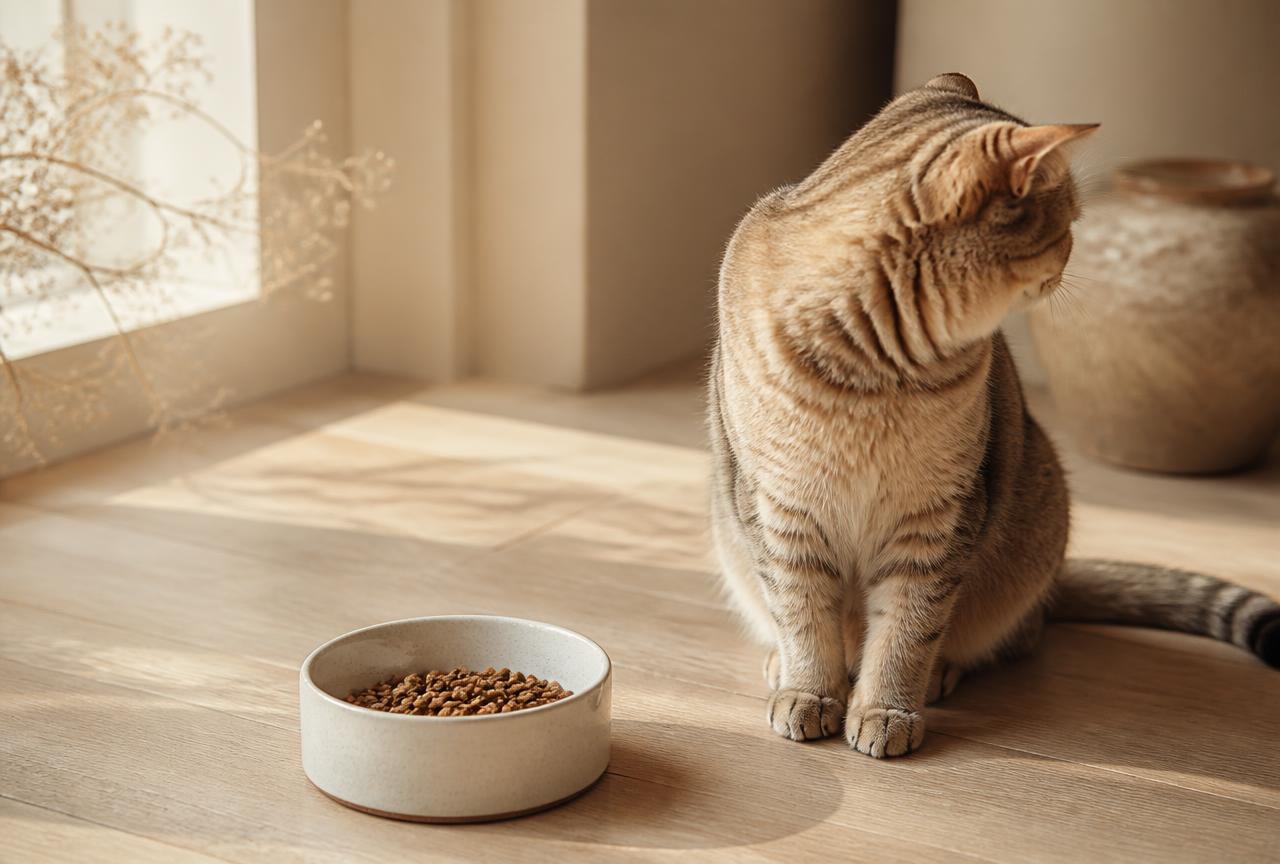
- 2Change the shape, not the flavour. Move from a deep bowl to a wide shallow saucer so the whiskers stay clear of the sides. Switch from a plastic bowl to ceramic or glass, which hold less residual smell.
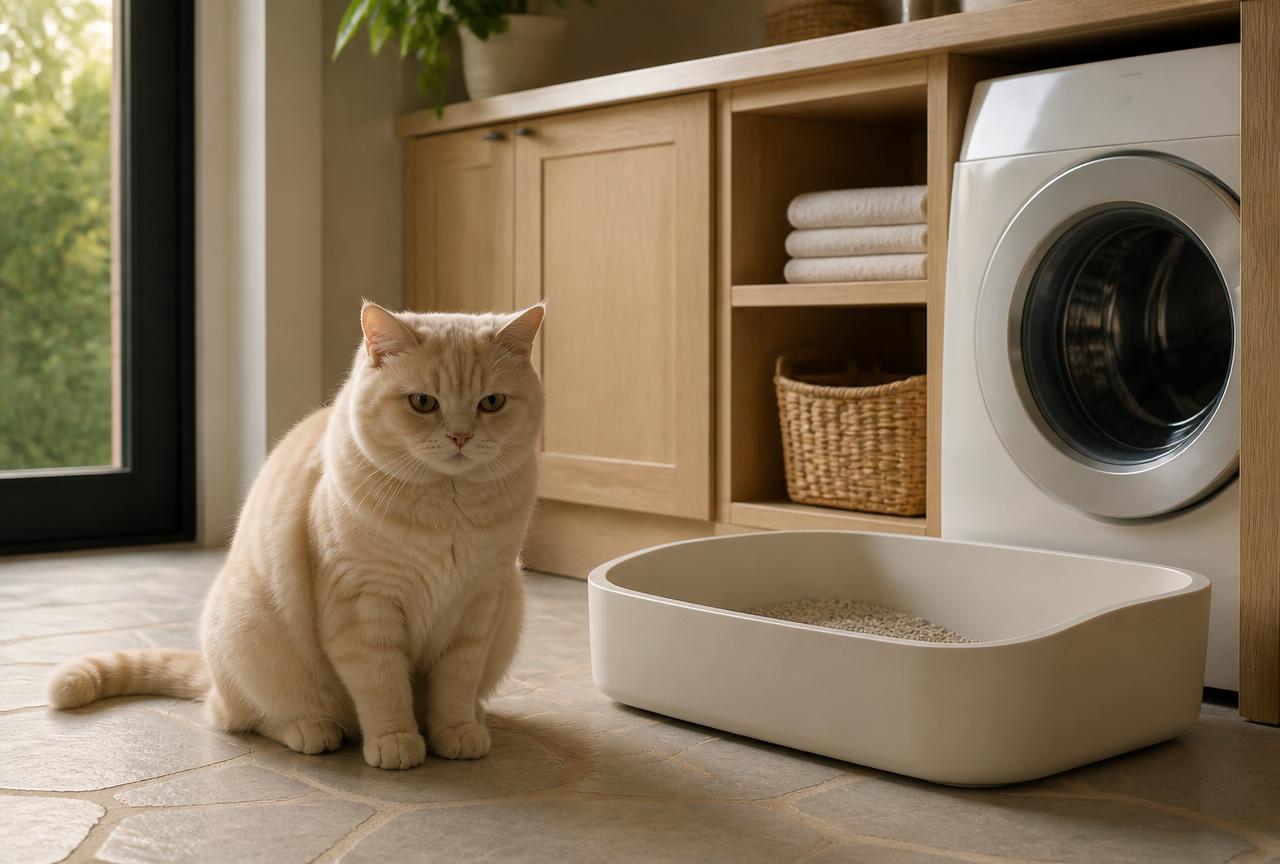
- 3Move the bowl. Away from the litter tray, away from the washing machine, away from the corridor everyone walks through, and away from another cat's bowl. Cats do not share feeding stations comfortably.
- 4Offer small amounts more often. A teaspoon every two hours works better than a full bowl left down, which goes stale and starts to smell wrong within an hour.

What not to do
- Do not withhold food to break a fussy habit. This works in dogs and is dangerous in cats.
- Do not force-feed or syringe food into a cat that has not been examined. Aspiration pneumonia is a real risk, and a nauseous cat that is force-fed develops food aversion that lasts weeks.
- Do not give human painkillers. Paracetamol is lethal to cats and ibuprofen is not far behind.
- Do not switch to tuna or other single human foods for more than a meal. They are not balanced, and they teach a cat to hold out for them.
- Do not assume old age. Senior cats stop eating because something is wrong, not because they are old. Our senior signals guide sets out what to track.
Verdict by household
One healthy adult cat, otherwise bright. Count from the last real meal. Warm the food, move the bowl, offer small amounts. If nothing has been eaten by the 24-hour mark, phone.
An overweight cat. Shorten every window. The extra fat is the risk factor, not a buffer. Phone at 24 hours without waiting to see how the evening goes.
A kitten under six months. Kittens have almost no reserve and drop their blood sugar quickly. Twelve hours without eating warrants a call.
A senior cat, or one with known kidney or thyroid disease. Treat appetite loss as a change in the underlying disease and phone the same day. Our water intake guide explains why drinking often shifts before eating does.
A multi-cat household. Confirm which cat is not eating before anything else. Feed separately in different rooms for two days; owners are frequently wrong about who is emptying which bowl.
When to call your vet
Phone the same day if your cat has eaten nothing for 24 hours, or noticeably less for three days. Go urgently, including out of hours, if appetite loss comes with any of the following: repeated vomiting, no drinking, straining in the tray without producing urine, laboured or open-mouth breathing, yellowing of the gums or the whites of the eyes, collapse, or a known toxin. Male cats straining unproductively are an emergency measured in hours.
Bring the numbers with you: hours since the last meal, current weight against the last one, what has been offered and refused, and anything else that changed in the house that week. Use the portion calculator to work out what the cat should be eating once appetite returns, and the ideal weight tool to judge whether the recovery is on track.
Questions people actually ask
How long can a cat go without eating?
A cat can survive for some days without food, but harm starts far earlier than that. Twenty-four hours with no food at all is the point at which a cat should be assessed by a vet, and beyond 48 hours the risk of fat accumulating in the liver becomes significant.
My cat is not eating but is drinking water. Is that better?
It is better than refusing both, because dehydration is not developing on top of the problem. It is not reassuring on its own: increased drinking alongside appetite loss can itself point to kidney disease or hyperthyroidism.
Why is my cat eating treats but not food?
Usually because treats are small, strongly flavoured and need little chewing. That pattern most often means dental pain or nausea rather than fussiness, so check the gums and mention the pattern to your vet.
Should I force-feed my cat?
No, not without veterinary instruction. Syringe-feeding a cat that has not been examined risks food going into the airway, and a nauseous cat that is force-fed often develops a lasting aversion to that food.
Is it normal for an old cat to eat less?
Reduced appetite in a senior cat is a symptom, not a stage of life. Kidney disease, dental disease, hyperthyroidism and arthritis all reduce eating, and all are manageable when found early.
Can stress alone stop a cat eating?
Yes. A new cat, building work, a house move, a guest or a moved bowl can suppress appetite for a day or two. It is still not a reason to wait past 24 hours, because you can only confirm stress as the cause once the cat is eating again.
What can I feed a cat that will not eat?
Its usual wet food, warmed to body temperature, in a wide shallow dish, offered in small amounts every couple of hours in a quiet place. Avoid switching to tuna or other single human foods for more than one meal, as they are not balanced.
Sources
Breeds mentioned
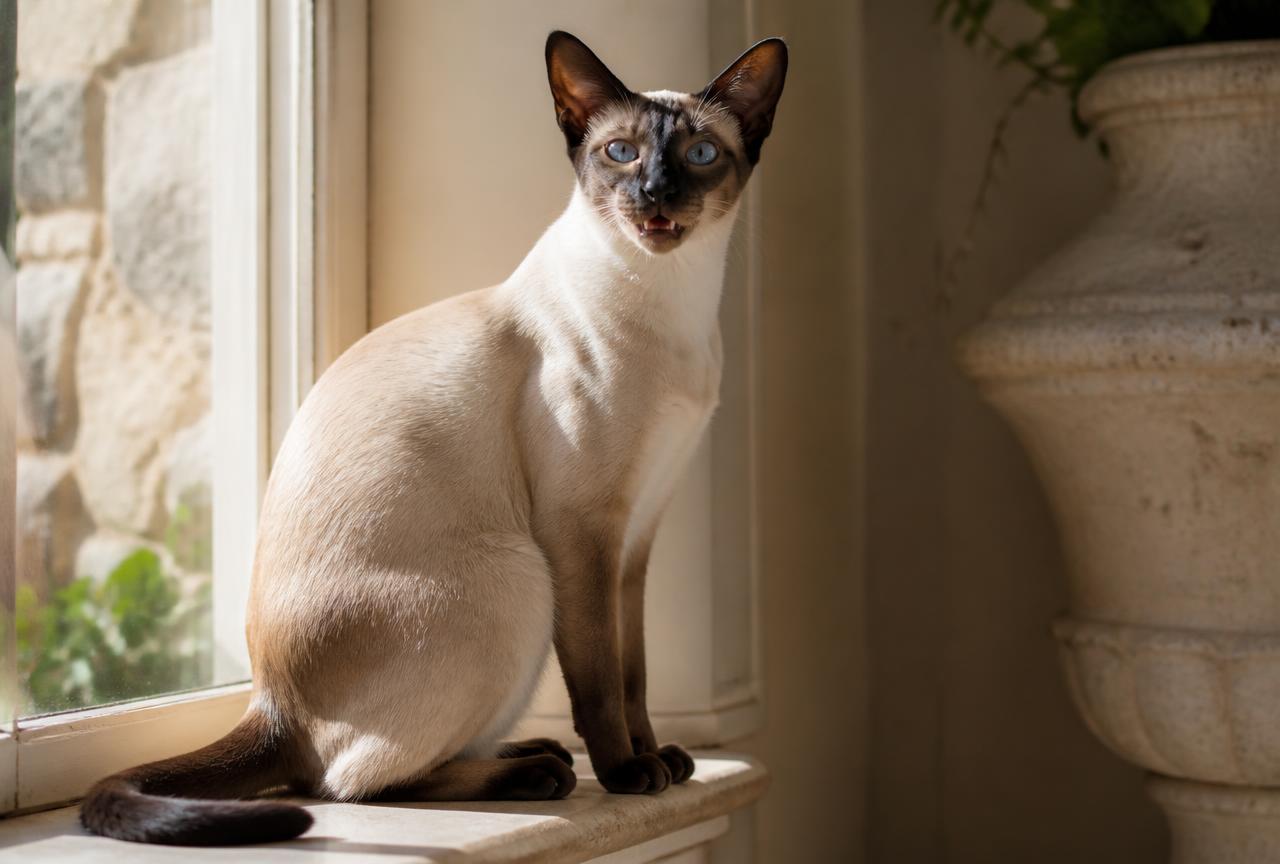
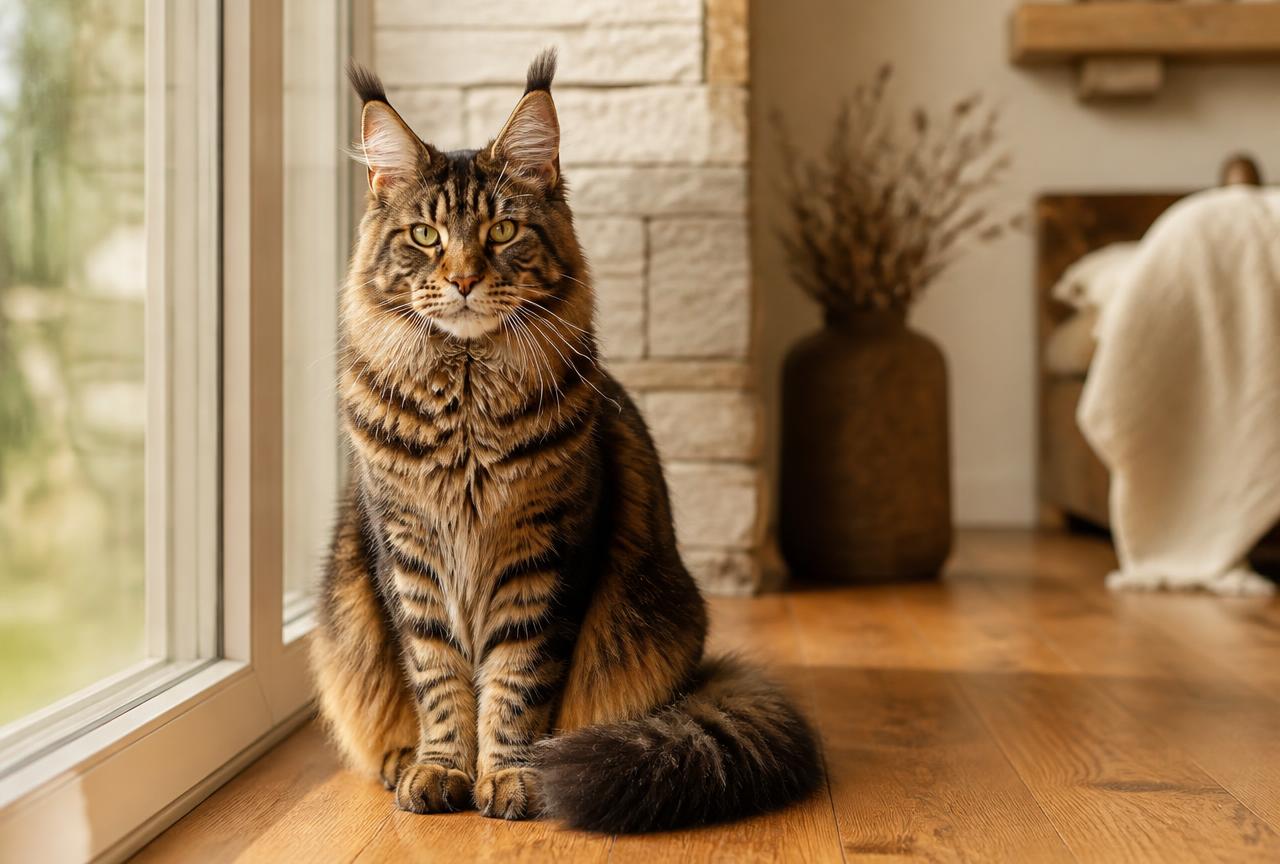
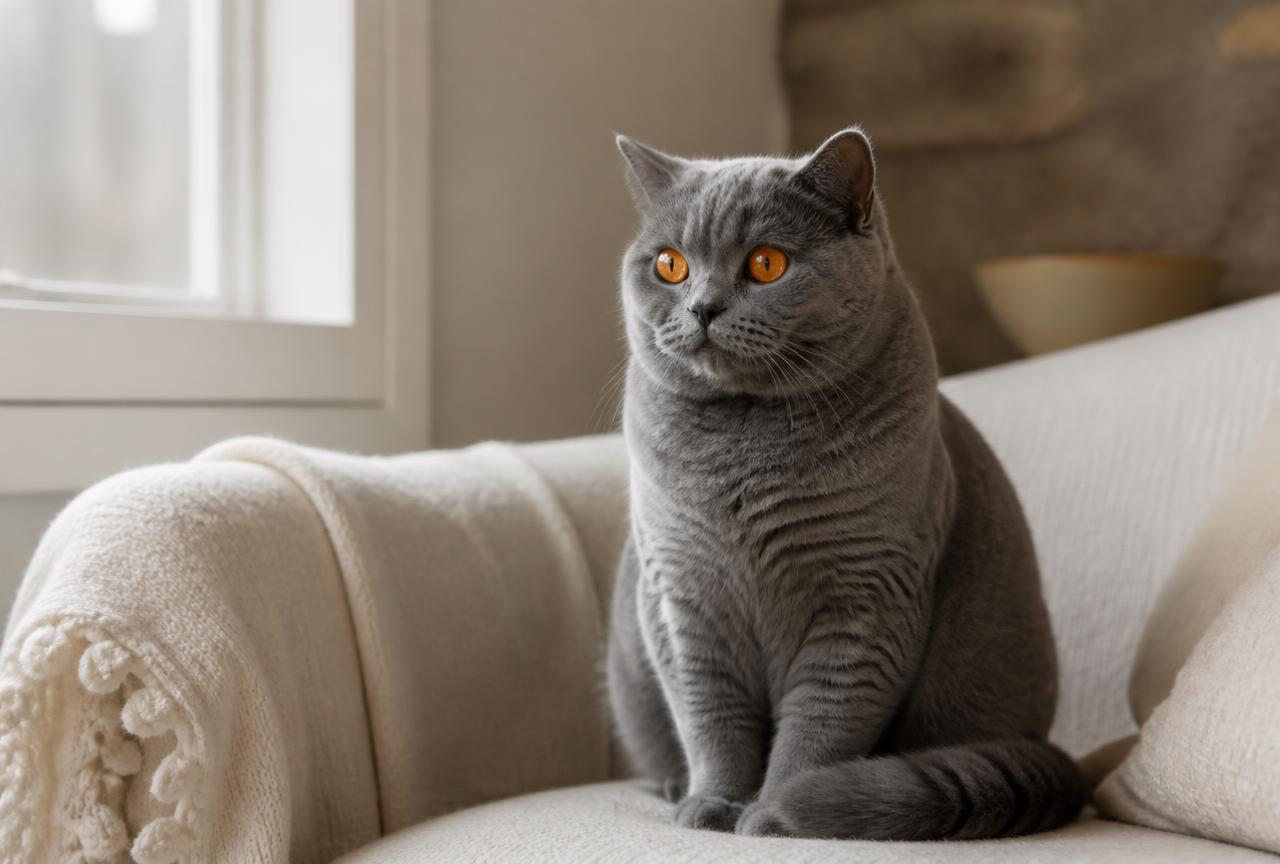
Put it into practice
Read next
Cat sneezing: colds, dust and the signs that need a vet
Cat sneezing a lot? Dust, viruses, dental roots and foreign bodies, how to sort the harmless from the signs that need a vet.