Cats and plants: what is toxic, what is safe, and why cat grass helps
Most houseplants only sting a cat's mouth. A short list can kill one. Here is how to tell them apart, what to do after a nibble, and how to give a chewing cat something better.
Elena Marchetti
Feline behaviour and welfare writer, ISFM-trained
Published 4 September 2026
Reviewed against ISFM and ASPCA toxic plant guidance
The short version
- True lilies are the biggest danger in any home with a cat: pollen, petals, leaves and vase water can all cause acute kidney failure.
- Treatment for lily exposure works best inside six hours, so ring a vet on contact rather than waiting for symptoms.
- Most popular houseplants, including monstera, pothos and peace lily, only sting the mouth and settle on their own.
- A peace lily is not a lily; a day lily is. Anything called a lily should be treated as the dangerous kind until identified.
- Plant chewing is normal behaviour, not a nutritional gap, and it responds to substitution rather than prohibition.
- Two trays of cereal cat grass on rotation is the cheapest reliable way to keep a chewer off your shelves.
Cats chew plants. Not because they are hungry, and not because something is missing from their food, but because leaves are interesting: they move, they shred, they taste of something other than dinner. For the overwhelming majority of houseplants, the worst that happens is a stinging mouth and a puddle of drool on the floor.
Then there is the short list. Lilies can destroy a cat''s kidneys from a single mouthful of pollen. Sago palm can wreck a liver. Those plants are not "keep out of reach" plants; they are "not in the house" plants, because reach is a concept cats have never respected.
This piece separates the two groups, tells you what to do in the first hour after a suspected nibble, and sets out the boring but genuinely effective fix for a determined chewer.
The plants that are true emergencies
Five groups do damage out of proportion to the amount eaten.
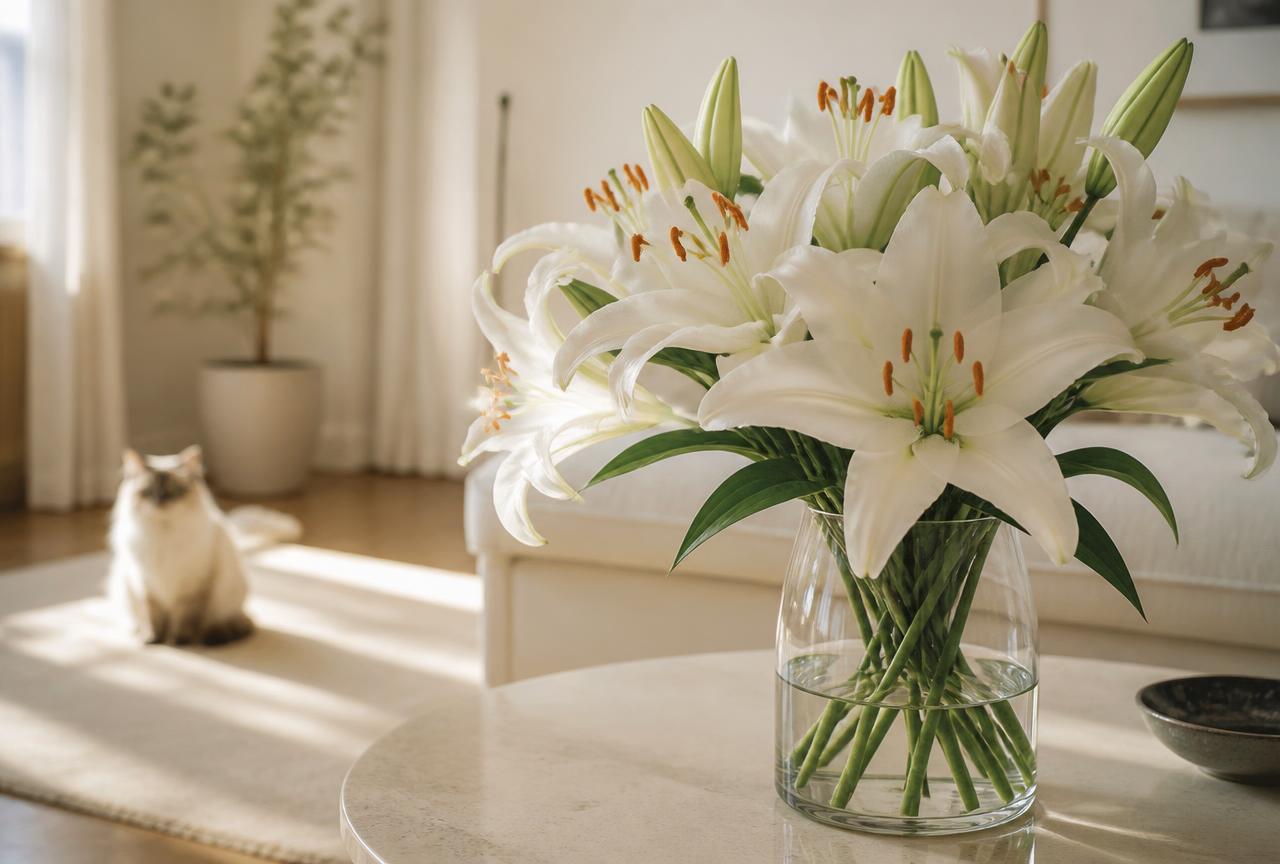
True lilies, *Lilium* and *Hemerocallis*, meaning Easter, tiger, stargazer, Asiatic, Oriental and day lilies, are the single most dangerous common plant in a home with a cat. Every part is toxic, including pollen and the water in the vase. A cat who brushes past an open flower and grooms the pollen off its coat has taken a dose. The damage is to the kidney tubules, and it becomes irreversible fast: treatment started within about six hours has a good outlook, and treatment started after 24 hours often does not.
Sago palm (*Cycas revoluta*, not a true palm) causes acute liver failure. The seeds are the worst part and a single seed can be fatal.
Oleander and lily of the valley contain cardiac glycosides that disturb heart rhythm directly.
Azalea and rhododendron contain grayanotoxins, affecting both heart and nervous system.
Autumn crocus is slow and deceptive: the gut signs come first, organ damage follows over days.
If any of those five are in your home and you have a cat, the correct action is not to move the plant higher. It is to remove it.
With lilies, the clock starts at contact, not at the first symptom. A cat who looks perfectly fine four hours after grooming pollen off its coat is still a cat who needs a vet today.
The much longer list that only irritates
Most of what sits on people''s shelves belongs here. Monstera, philodendron, pothos, peace lily, dumb cane and their relatives all contain insoluble calcium oxalate crystals. Bite a leaf and the crystals embed in the lining of the mouth. It hurts immediately, which is exactly why these plants rarely cause serious poisoning: cats stop after one mouthful.
Expect drooling, pawing at the face, a few hours of refusing food, sometimes one vomit. Expect it to resolve on its own. What turns it into a vet visit is swelling that affects swallowing or breathing, or drooling that carries on past six hours.
Note the name trap. A peace lily is not a lily. Neither is a calla lily or a Peruvian lily, botanically speaking, but a "day lily" is, and it is one of the deadly ones. When in doubt about anything called a lily, treat it as the dangerous kind.
What to check, plant by plant
Interactive
Plant safety checker
Pick a plant to see what it does to a cat, what to watch for and how fast to act.
Risk
Emergency
Every part, including pollen and vase water, can cause acute kidney failure in cats.
Signs to watch for
Drooling, vomiting, going off food, then reduced urine output within 24-72 hours.
What to do
Treat any suspected contact as urgent. Ring a vet now, even if your cat looks completely well, and say which plant and roughly when. With lilies, treatment inside six hours changes the outcome.
A short list cannot cover every species, and plant names vary between countries. If your plant is not here, treat it as unknown and ring a vet or a poison line before waiting to see what happens.
Why your cat chews leaves at all
Grass eating is normal, widespread and not a sign of illness. The best evidence, from a large survey of owner observations, is that most cats who eat plants do so while apparently healthy, and only a minority vomit afterwards. The leading theory is that fibrous plant matter helps move indigestible material, fur, in practice, through the gut, which fits with what we know about hairballs.
What plant chewing is *not* is a nutritional deficiency. A cat on a complete food is not searching for vitamins in your ficus. It is doing something with its mouth because the leaf is there.
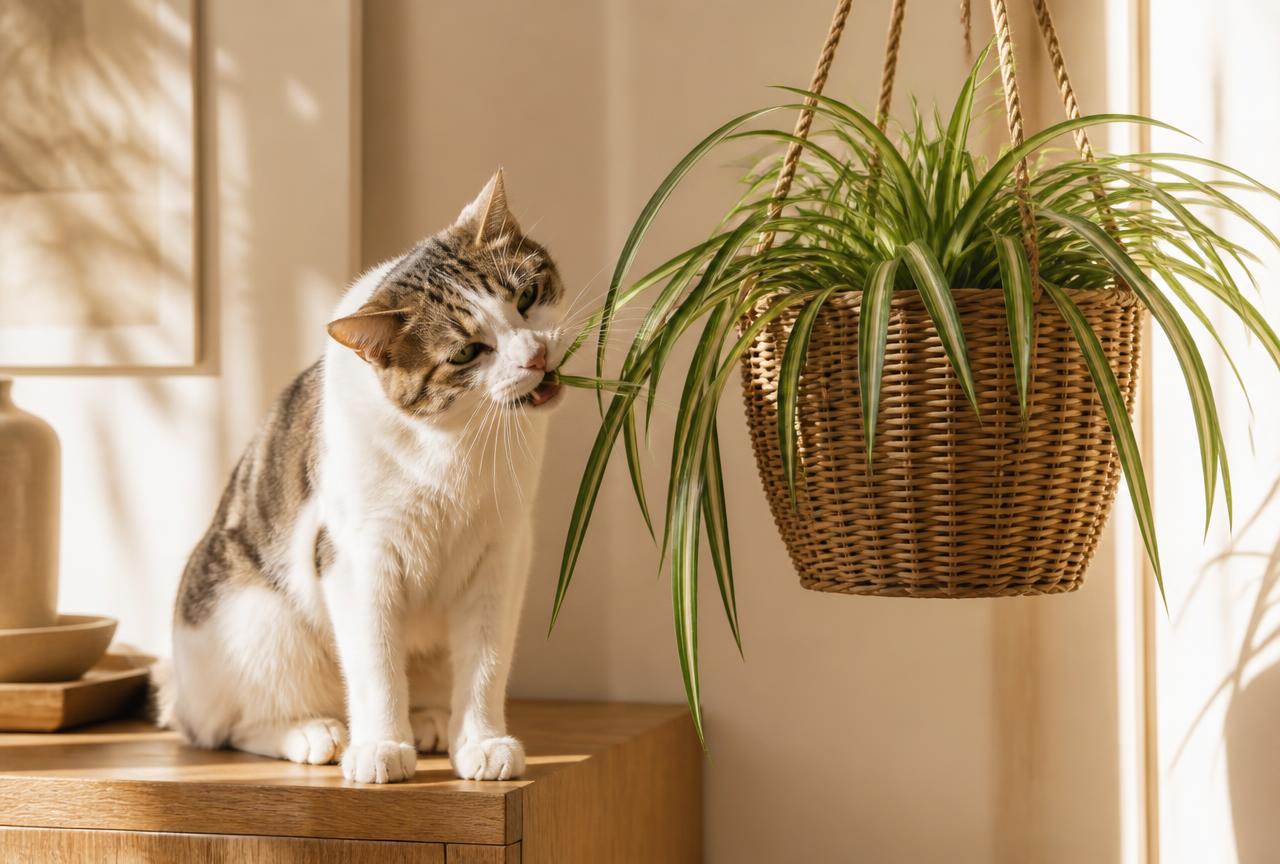
Give the chewing an address: cat grass
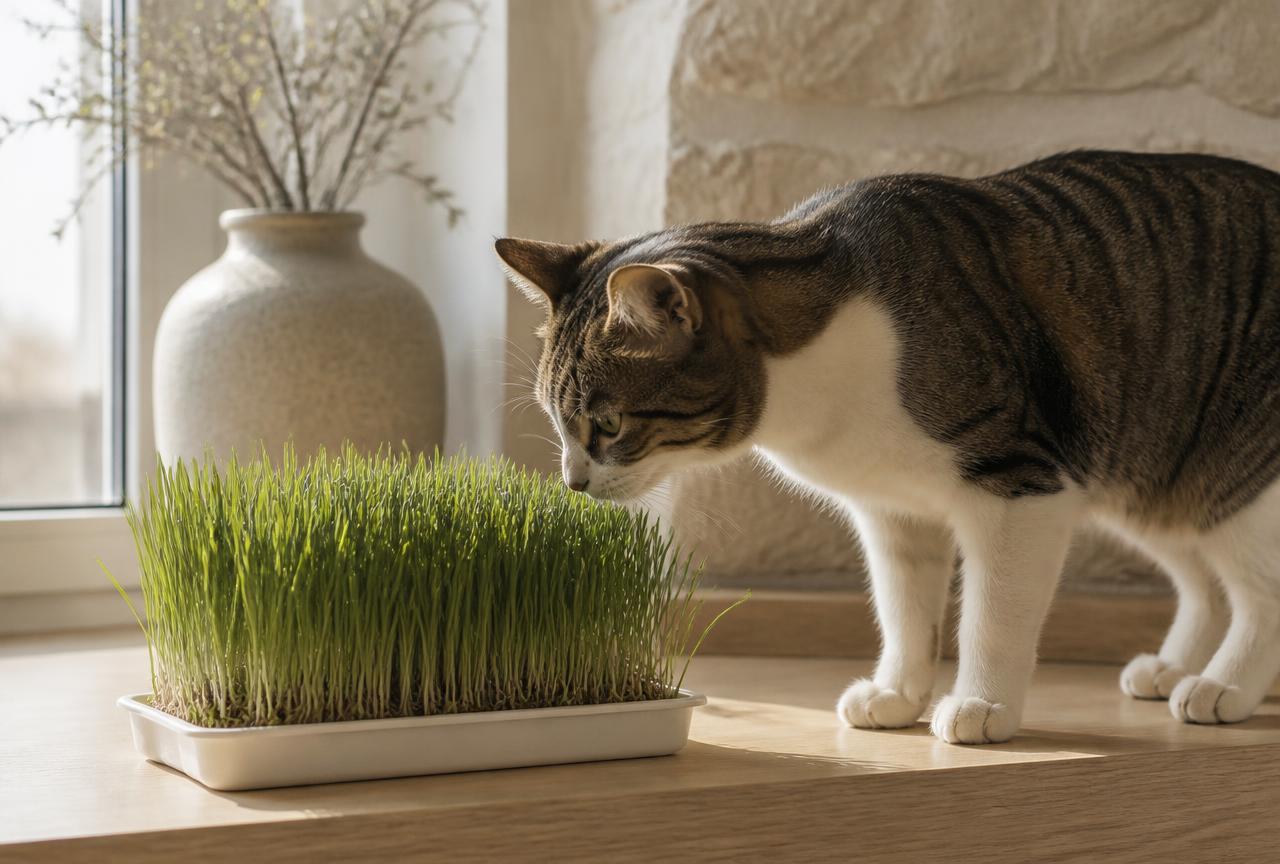
The fix that works is substitution rather than prohibition. A tray of cereal grass, oat, wheat, barley or rye, gives a cat the texture it wants, costs almost nothing, and takes about a week to grow from seed on a windowsill.
Sow thickly in shallow compost, keep it damp, and start a second tray the day the first one is tall enough to use. Grass gets tired after two or three weeks of chewing; a rotation of two trays means there is always a fresh one. Put the tray where the cat already tries to chew, not where it looks tidiest.
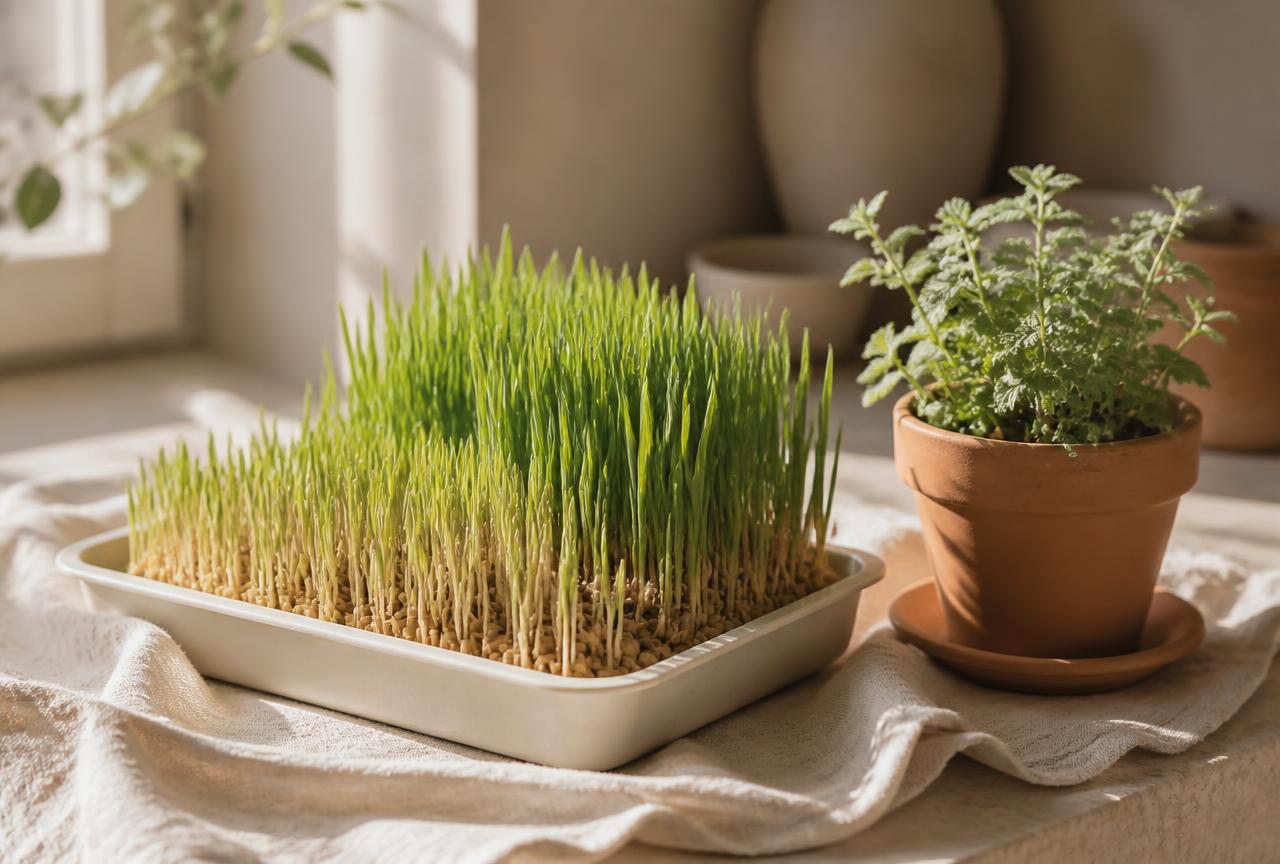
Catnip, cat thyme, valerian and silver vine belong in the same bed of the garden. They are safe, they are chewable, and they give a cat something to do that is not your monstera.
How the risk bands compare
| Group | Examples | What happens | How fast to act |
|---|---|---|---|
| --- | --- | --- | --- |
| Emergency | Lily, sago palm, oleander, azalea, autumn crocus | Organ failure or heart rhythm disturbance | Vet immediately, before symptoms |
| Seriously toxic | Tulip and hyacinth bulbs, daffodil, cyclamen, chrysanthemum, aloe | Heavy gut signs, sometimes more | Vet same day |
| Irritant | Monstera, philodendron, pothos, peace lily, dumb cane, snake plant | Mouth pain, drool, occasional vomit | Watch four to six hours |
| Safe | Cat grass, catnip, Boston fern, calathea, areca palm, African violet | Nothing | No action |
Costs, if you end up at a clinic: an out-of-hours consultation and a few hours on fluids typically runs somewhere in the region of EUR 150-500, and a multi-day stay for lily poisoning considerably more. That is indicative and varies enormously by country.
The first hour after a suspected nibble
- 1Take the plant away from the cat, and take a photograph of the whole plant including the label if there is one.
- 2Look in the mouth if your cat will let you, for redness, swelling or bits of leaf.
- 3Rinse the mouth with a small amount of water from a syringe or a wet cloth, for oxalate plants only. Do not flood it.
- 4Do not make your cat vomit. Salt, hydrogen peroxide and every other home remedy do more damage than the plant did.
- 5Ring a vet with three facts ready: the plant, roughly how much, and roughly when. For anything on the emergency list, ring first and ask questions second.
- 6Bag the evidence, a leaf, some vomit, the pollen-stained fur you clipped, and take it with you.
Making a home plant-safe without stripping it
- Remove every true lily, sago palm, oleander, azalea and autumn crocus permanently.
- Refuse cut-flower bouquets with lilies, or strip and bin the lily stems at the door.
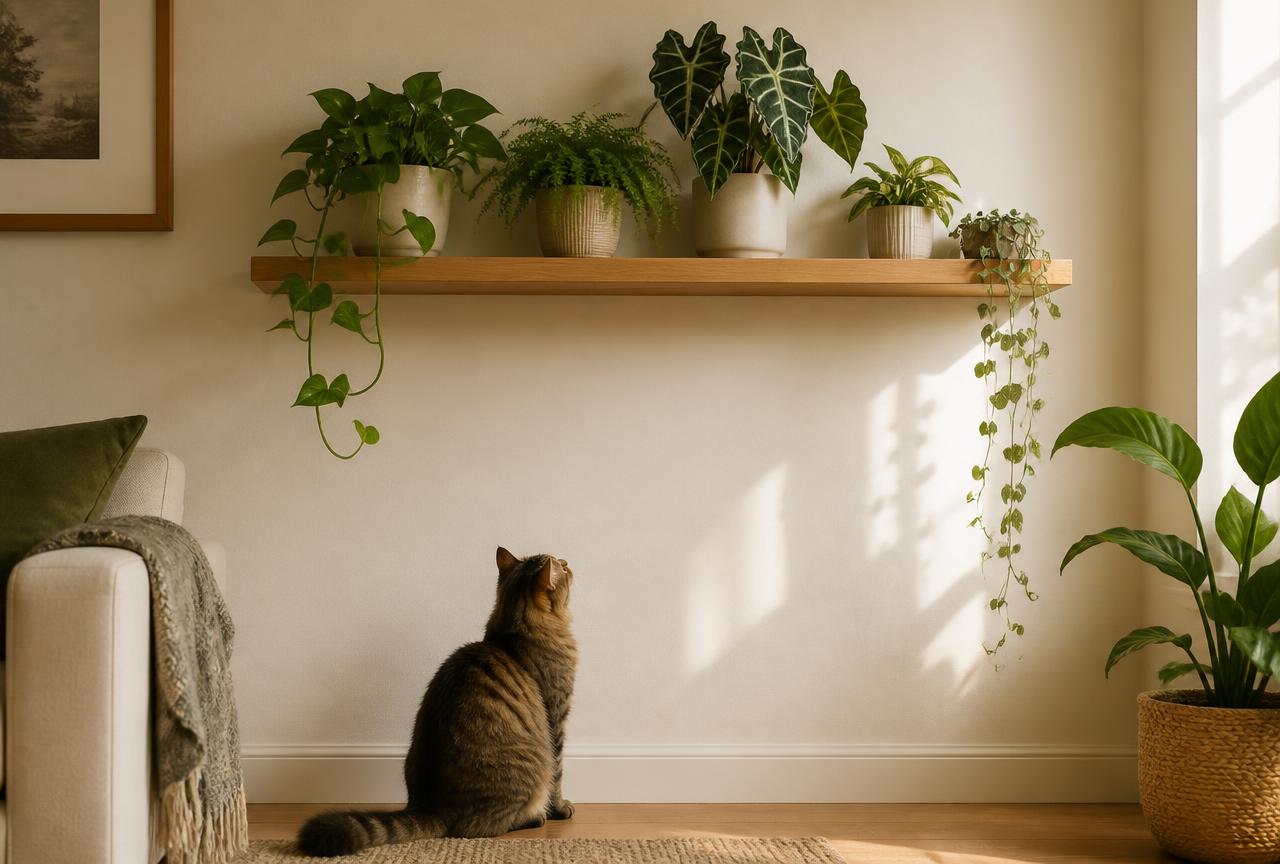
- Move oxalate plants to a shelf with no launch pad within a metre, cats jump up, not across from nothing.
- Put pebbles or a coconut-fibre mat over exposed soil, which stops digging and litter-tray confusion.
- Keep bulbs out of reach while planting, in autumn especially, and sweep up fragments.
- Check hanging baskets for trailing ends: a pothos vine at cat height is not out of reach.
- Keep two cat grass trays in rotation, positioned where the chewing already happens.
- Save a poison line number in your phone before you need it.
Which approach suits which household
Committed plant collectors. Keep the collection, lose the lilies and the aroids. Calathea, ferns, peperomia, spider plants and prayer plants give the same green-jungle look with nothing worse than an occasional chewed tip.
Homes that get given flowers. Make it a rule at the door: bouquets come apart in the kitchen and any lily goes in the outside bin. This is where most serious cases start.
Kittens and adolescents. Assume everything reachable will be tested with teeth. Cat grass from week one, plants above head height, soil covered.
Cats with outdoor access. Garden risks matter more than indoor ones: bulbs in spring, azaleas, and lilies in beds. Also worth knowing that lilies in cut flowers cause more cases than garden ones, because pollen lands on fur indoors.
Multi-cat homes. One chewer sets the standard for the house. Provide more than one grass tray so the confident cat does not monopolise it, the same logic as resource spreading with trays.
When to call your vet
Call immediately, without waiting for symptoms, if your cat has had any contact with a lily, sago palm, oleander, azalea, autumn crocus or lily of the valley, including grooming pollen off fur or drinking vase water.
Call the same day for bulbs, daffodils, cyclamen, chrysanthemum or aloe, or if you do not know what the plant was.
Call urgently, whatever the plant, if you see swelling of the face, lips or tongue, difficulty swallowing or breathing, repeated vomiting, wobbliness, tremors or seizures, a change in how much urine is being produced, or a cat who has gone quiet and stopped eating. Appetite loss after a plant nibble is never something to sit on for a day.
Questions people actually ask
Are all lilies dangerous to cats?
The genuinely dangerous ones are true lilies, meaning Lilium and Hemerocallis: Easter, tiger, stargazer, Asiatic, Oriental and day lilies. Peace lilies, calla lilies and Peruvian lilies are different plants and cause mouth irritation rather than kidney failure. Because the names overlap so badly, treat anything called a lily as the dangerous kind until you have identified it.
My cat only licked the pollen. Is that really a problem?
Yes. Pollen carries the toxin, and a cat who gets it on its coat will groom it off and swallow it. That is one of the most common routes to lily poisoning. Wipe or clip the fur, do not let the cat groom, and ring a vet the same hour.
Why does my cat eat plants if the food is complete?
Plant eating is normal behaviour rather than a deficiency. Surveys of owners find most plant-eating cats are healthy and only a minority vomit afterwards. The leading explanation is that fibre helps shift swallowed fur through the gut. Giving a cat grass tray redirects it without any fuss.
Is cat grass the same as catnip?
No. Cat grass is sprouted cereal grain, usually oat, wheat, barley or rye, grown to be chewed. Catnip is a mint relative that produces a short behavioural response when sniffed. Both are safe, and many cats enjoy having both.
How do I stop my cat digging in the plant pots?
Cover the soil surface with large pebbles or a cut coconut-fibre mat, so there is nothing loose to scratch. If the cat is using pots as a toilet, that is a tray problem rather than a plant problem, and the tray count, location and cleaning routine need looking at.
Should I make my cat vomit after it eats a toxic plant?
No. Home emetics such as salt or hydrogen peroxide damage the stomach and oesophagus and can make a cat inhale vomit. Only a vet should induce vomiting, and for oxalate plants it is not appropriate at all. Ring for advice instead.
Which houseplants are actually safe with cats?
Cat grass, catnip and cat thyme, Boston and most other true ferns, calathea and prayer plants, peperomia, spider plants, African violets, areca and parlour palms. They give the same look as the aroid plants without the mouth pain.
Sources
- International Cat Care, Poisonous plants and cats
- ASPCA Animal Poison Control, Toxic and non-toxic plants
- Cornell Feline Health Center, Household hazards
- Hart B. et al., Journal of the American Veterinary Medical Association, Plant eating in cats and dogs
- American Veterinary Medical Association, Household hazards for pets
Breeds mentioned
Put it into practice
Read next
Cat sneezing: colds, dust and the signs that need a vet
Cat sneezing a lot? Dust, viruses, dental roots and foreign bodies, how to sort the harmless from the signs that need a vet.