Litter box problems: why cats stop using the tray
A cat weeing on the rug is not making a point. It is reporting a problem, medical, or in the setup. Both have short lists, and the tests are cheap.
Nadia Ferreira
Feline health writer, ten years reporting on companion animal medicine
Published 4 September 2026
Checked against ISFM, AAFP and Cornell Feline Health Center guidance
The short version
- Always rule out illness first: cystitis, stones, kidney disease, diabetes and arthritis all look like a behaviour problem from the doorway.
- A male cat straining and producing little is an emergency, a blocked urethra kills within a day or two.
- One tray per cat plus one spare, at least 1.5 times the cat's body length, 4 to 7 cm of fine unscented clumping litter, scooped twice a day.
- Take the hood off. Hoods trap odour and halve the exits, which matters most in multi-cat homes.
- Spraying on vertical surfaces is a security signal and needs different handling from squatting on the floor.
- Never punish. Clean with enzymatic cleaner, never ammonia, and retrain by agreeing with the location before you move the tray back.
House soiling is the commonest behavioural complaint in cats and one of the commonest reasons cats are given up. That is a tragedy of interpretation. Cats do not urinate on beds out of spite, resentment or revenge, those are human motives applied to an animal that does not hold grudges in that grammar. What a cat outside the tray is telling you is that either something hurts, or the tray has stopped being acceptable.
The good news is that both lists are short. Illness comes first, always, because a cystitis or a blocked bladder can kill and looks identical to a preference problem from the doorway. After that, the setup: the number of trays, their size, the litter, the depth, the cleaning and where they stand. Cats have been asked about all of these in preference studies, and their answers are remarkably consistent.
This piece runs through the medical rule-outs, the setup maths, an audit box that scores your own arrangement, and a retraining plan for the cat that has already established a habit somewhere else.
Rule out illness before you change anything
Any cat that has suddenly stopped using the tray needs a vet before it needs new litter. The usual suspects are cystitis and feline lower urinary tract disease, bladder stones, urinary crystals, kidney disease, diabetes, hyperthyroidism, arthritis and constipation. Several of them produce exactly the picture people describe as behavioural: frequent small puddles, squatting in odd places, choosing cool smooth surfaces like a bath or a tiled floor.
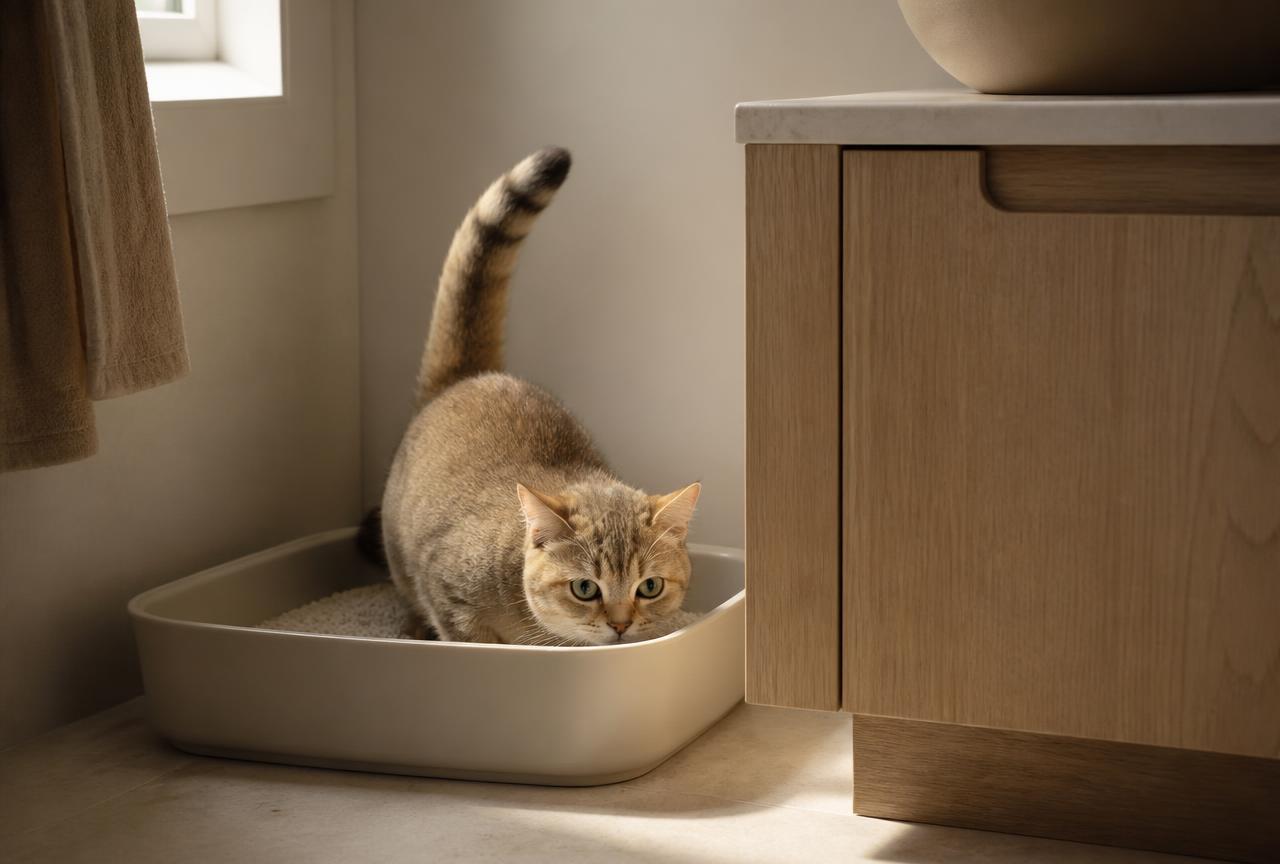
One pattern is a genuine emergency. A male cat straining repeatedly, producing little or nothing, vocalising or licking at himself may have a blocked urethra. That is fatal within a day or two and needs to be seen immediately, at night if necessary.
Arthritis deserves a special mention because it is so often missed. An older cat that has begun missing the edge, or that has abandoned a tray it must climb into or up to, may simply be unable to make the step comfortably. Cut a low entrance into one side of the tray and see what changes.
Two things are worth a urine sample: any sudden change, and any cat over eleven. Behaviour advice given to a sick cat is wasted advice.
Marking is not the same as soiling
Once illness is excluded, separate two behaviours that need different answers.
Spraying is a communication signal. The cat stands, treads with the back feet, quivers the tail and fires a small volume of urine at a vertical surface at about tail height. It is normal cat behaviour in the wrong context, and its usual trigger is social insecurity: a new cat outside the window, a new baby, building work, a resident cat competing for space.
Latrine soiling is elimination. The cat squats, produces a normal volume horizontally, and does not target vertical surfaces. This one points at the tray or at the body.
The distinction matters because spraying is treated with security, more vertical space, blocked sightlines to intruders, resource separation, sometimes medication, while soiling is treated with the tray and a vet.
The numbers cats actually accept
There is a defensible set of numbers, and they are dull.
| Item | What cats accept | Common mistake |
|---|---|---|
| --- | --- | --- |
| Number of trays | One per cat, plus one | One tray for two or three cats |
| Size | At least 1.5x the cat's body length, nose to tail base | Standard shop trays, too small for most adults |
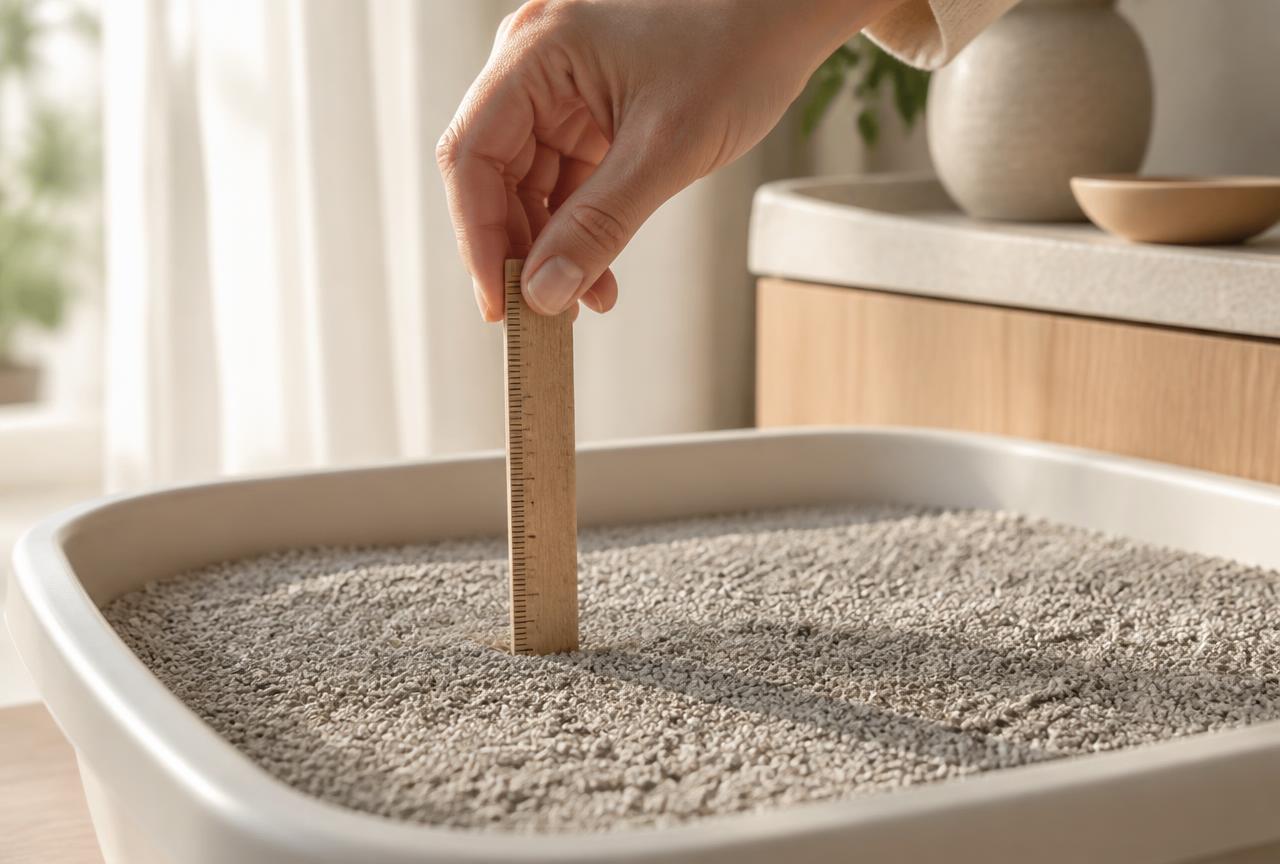
| Litter depth | 4 to 7 cm | A thin covering that will not hold a hole |
| Litter type | Fine, sand-like, unscented, clumping | Scented, dusty, or coarse pellets |
| Scooping | Twice a day | Every few days, topped up |
| Full change | Weekly to fortnightly, unscented cleaner | Bleach or strong disinfectant |
| Placement | Quiet, two escape routes, spread apart | All trays in one corner, or beside the washing machine |
| Hood | None, and no flap | Hooded tray to contain smell for the human |
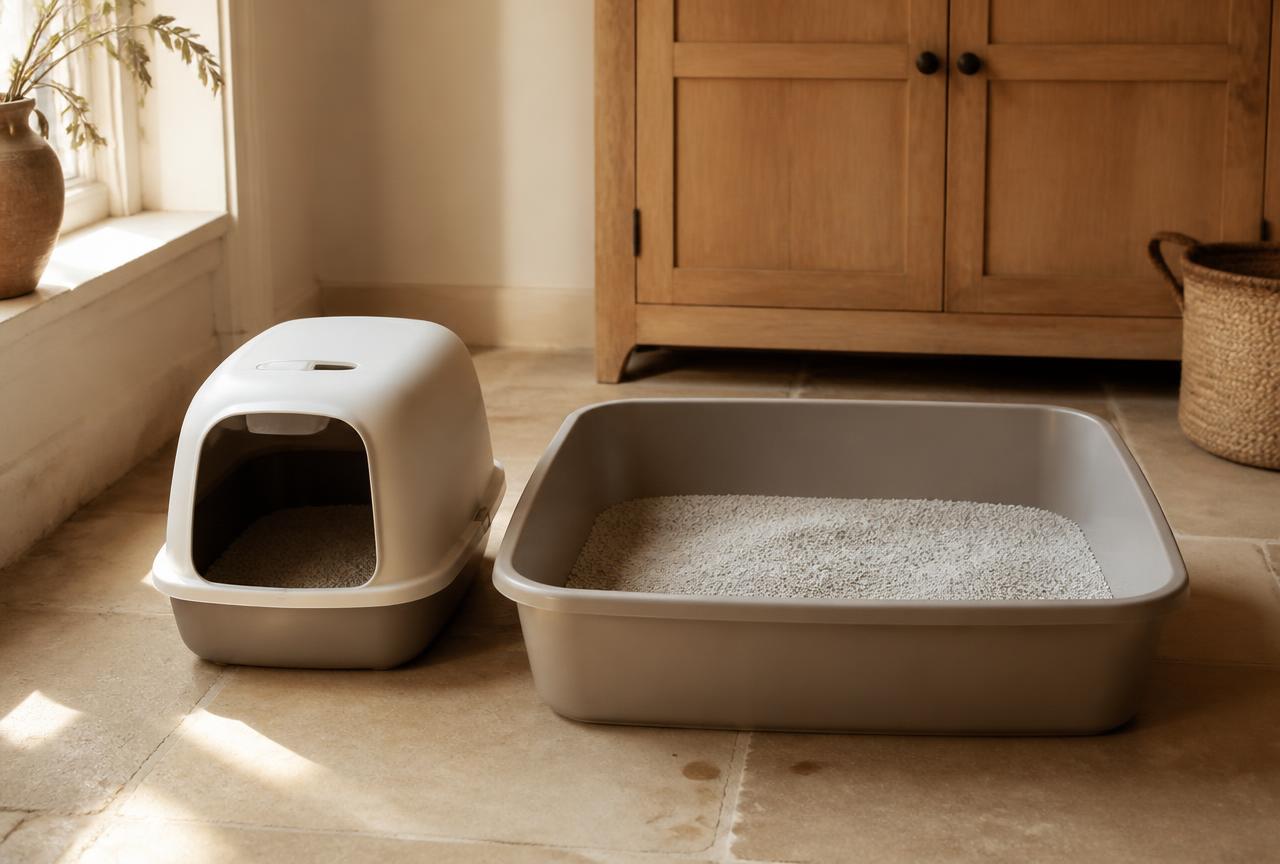
Two of these get argued about, so here is the reasoning. Hoods are for our noses, not the cat's: they concentrate odour inside, they halve the number of exits, and in multi-cat homes they let one cat ambush another at the only doorway. And "one per cat plus one" is not superstition, two trays in the same corner are, from the cat's point of view, one resource in one place. Spread them.
Location is a security question
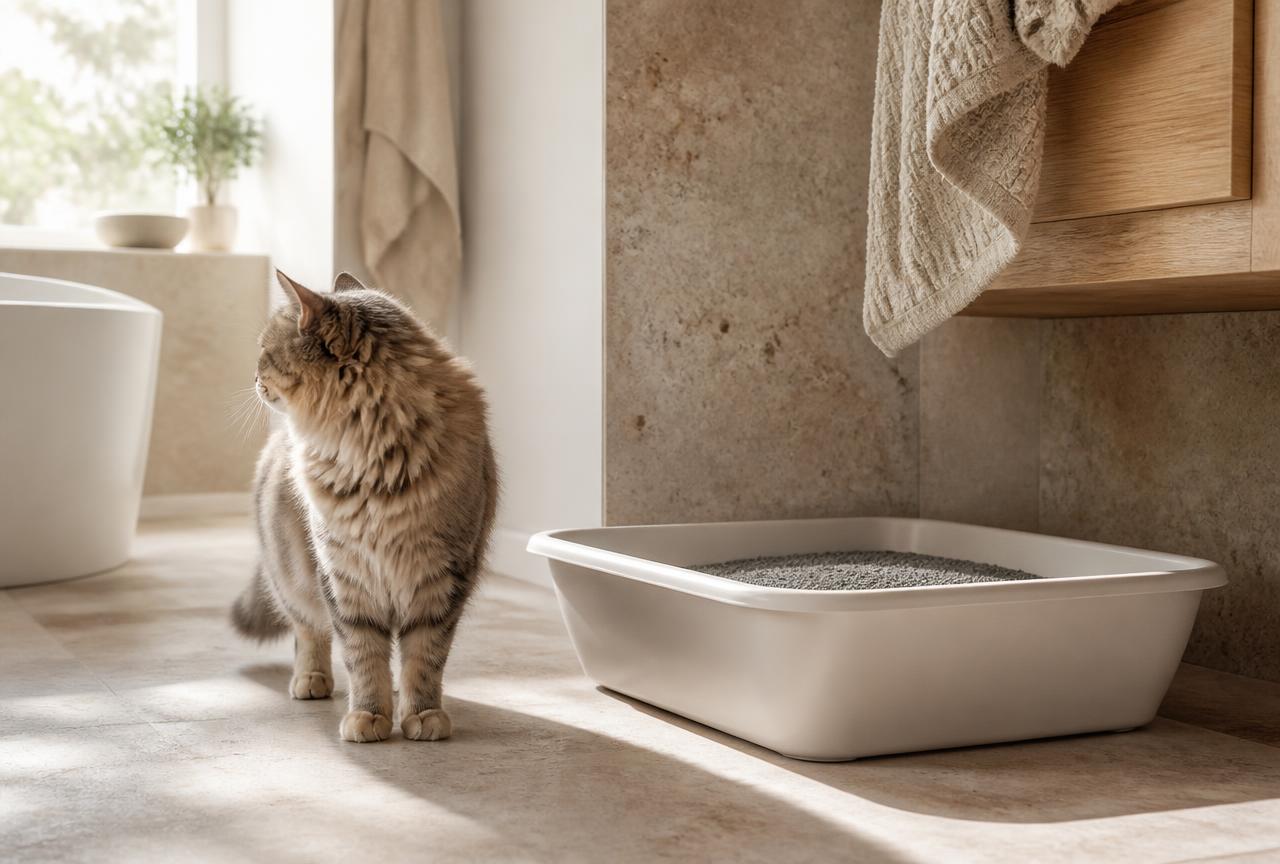
Cats eliminate in a vulnerable posture, and they will not do it in a spot they cannot leave. The tray needs two exits, no dead end, no noisy appliance, and no through-traffic. It should not sit next to food and water, and in a multi-storey home there should be one on every floor the cat uses.
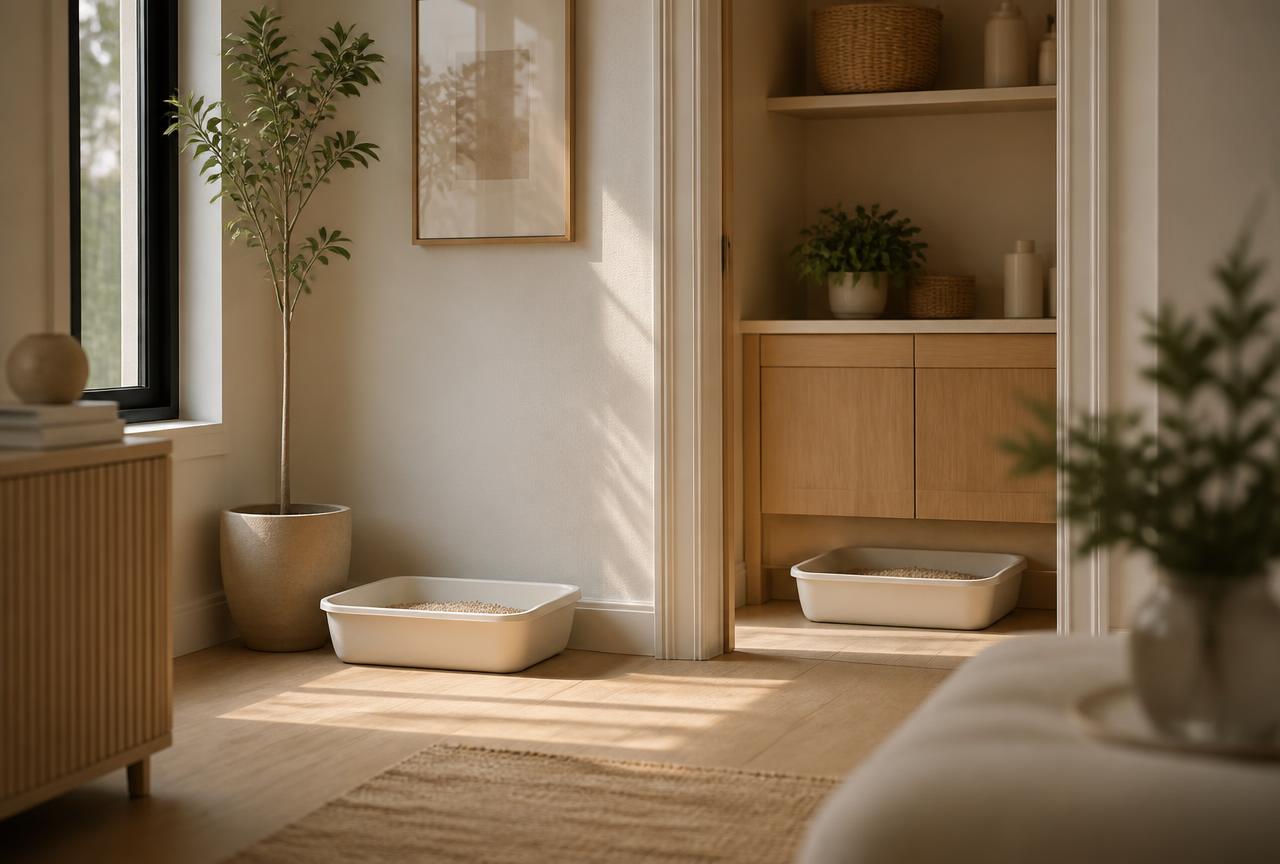
For a nervous cat, or one bullied by a housemate, placement does more work than litter type. Watch which routes the cat uses at night, then put a tray somewhere on one of them.
Below, score your own setup and see which item is dragging it down.
Interactive · built for this article
Tray audit
Score your current setup against what cats actually choose in preference studies, and find the one item to change first.
Setup score
51/100
Several fixable faults
Weakest item: Placement. Separate the trays: two trays in the same corner count as one resource. Quiet, with two exits, never beside a noisy appliance.
Item by item
- Number of trays7/20
- Tray size6/12
- Litter type14/14
- Scooping8/14
- Placement2/12
- Hood4/10
- Litter depth6/10
A perfect score does not rule out illness: any cat that has suddenly stopped using the tray needs a urine test first. Litter choice is covered in our nine-litter comparison.
The retraining plan
Once the vet has cleared your cat and the setup is right, a habit still needs unpicking. This sequence takes about three weeks.
- 1Clean the soiled spots properly. Enzymatic cleaner, not ammonia-based products and not bleach, ammonia smells like urine to a cat and invites a repeat. Blot, soak, leave, repeat.
- 2Add a tray at the scene. Where your cat has been going, put a tray. Yes, on the rug. You are agreeing with the location and negotiating the substrate.
- 3Offer a choice. Two trays side by side, different litters, same size. Fine unscented clumping in one, the current litter in the other. Watch which gets used for a week.
- 4Reduce the territory. Close doors to rooms with soiled history for a fortnight, or cover those spots with something unwelcoming: foil, a plastic mat, a bowl of dry food.
- 5Scoop twice daily, without exception. For three weeks, this is not optional. Cleanliness is the single item cats rank highest.
- 6Move the tray back, slowly. Once two weeks pass with no accidents, move the accepted tray towards its final position at no more than 30 cm a day.
- 7Add security if spraying persists. Vertical space, hiding places, blocked window sightlines to outdoor cats, and a separate feeding station per cat.
Never punish. Shouting, spraying water or carrying a cat to the tray reliably makes things worse, because it adds stress to the exact context you are trying to make safe.
Multi-cat homes: it is nearly always resources
In homes with three or more cats, house soiling is usually an arithmetic problem. Count trays, water points, feeding stations, beds and high perches, then divide by cats. Anything approaching parity is a bottleneck, and the cat lowest in the order pays for it.
A Bengal or another high-activity breed in a small flat, or a nervous British Shorthair living with a pushy housemate, will show the strain here before anywhere else. If you are not sure who is responsible, a vet can add a harmless fluorescent marker to one cat's food, or you can separate cats overnight for a few nights and find out by elimination. Our breed matchmaker is worth a look before adding another cat to a home that is already tight.
Cats introduced badly also soil. If a newcomer arrived in the last few months, work through the introduction sequence properly before treating this as a tray problem.
Verdict by household
One adult cat, sudden onset. Vet first, urine sample in hand. Assume medical until proven otherwise.
One cat, gradual drift away from the tray. Almost always cleanliness, litter type or hood. Take the lid off, switch to fine unscented clumping, scoop twice a day.
Two or more cats. Count trays. You want one per cat plus one, in separate places on separate floors. Then look at feeding stations and high perches.
Older cat. Low-sided tray, litter no deeper than 5 cm, one on every floor, and a pain assessment. Arthritis is under-diagnosed in cats and easy to treat. Our cat age converter puts the life stage in context.
Spraying on vertical surfaces. Treat as insecurity, not hygiene. Block sightlines to outdoor cats, add height and hiding places, separate resources, and ask your vet about short-term medication if it has become entrenched.
When to call your vet
Call the same day for any male cat straining or producing nothing, for blood in the urine, for repeated trips to the tray with little result, for crying while eliminating, or for a cat that has stopped eating alongside the soiling. Those are urinary emergencies, not habits.
Book within the week for any sudden change of toileting in an adult cat, for a cat over eleven, for soiling with weight loss or increased thirst, and for any cat where two weeks of a corrected setup has changed nothing. Bring a urine sample if you can collect one on non-absorbent litter, it saves a visit and answers most of the question in ten minutes.
Questions people actually ask
Why has my cat suddenly started peeing outside the litter box?
Sudden onset points at the body first. Cystitis, bladder stones, kidney disease, diabetes and arthritis all cause it, and all look behavioural from a distance. Get a urine sample tested before you change litter, trays or anything else, and treat a straining male cat as an emergency.
How many litter boxes do I need for two cats?
Three, placed in separate parts of the home. The rule is one per cat plus one spare, and separation matters as much as the count: two trays in the same corner function as a single resource, so a cat guarding that corner blocks both.
Should a litter box have a lid?
Preferably not. Hoods and flaps contain odour for humans but concentrate it for the cat, they reduce the tray to a single exit, and in multi-cat homes they create an ambush point at the doorway. If you have a covered tray and a soiling problem, removing the lid is the cheapest thing to try.
What litter do cats prefer?
Preference studies point consistently at fine, sand-like, unscented clumping litter at a depth of four to seven centimetres. Scent is added for owners and often deters cats. If you are unsure, offer two trays side by side with different litters and let your cat vote over a week.
How do I stop my cat spraying indoors?
Spraying is a security signal, not a hygiene failure: the cat stands, quivers its tail and marks a vertical surface. Treat the insecurity, block sightlines to outdoor cats, add height and hiding places, separate feeding and resting resources per cat, and ask your vet about short-term medication if it is entrenched.
What should I clean cat urine with?
An enzymatic cleaner designed for animal urine. Avoid ammonia-based products, which smell like urine to a cat and invite a repeat, and avoid bleach on soft surfaces. Blot, soak the area generously, leave it to work rather than scrubbing, and repeat once more than you think necessary.
Can arthritis cause litter box problems in older cats?
Yes, and it is regularly missed. A cat with painful hips or elbows may stop climbing into a high-sided tray, stop using a tray up or down stairs, or perch on the edge and miss. Provide a low-entry tray on every floor and ask your vet for a pain assessment: treatment often resolves the soiling.
Sources
- Feline house soiling: AAFP and ISFM guidelines, American Association of Feline Practitioners
- Litter box problems and preferences, International Cat Care
- Feline lower urinary tract disease, Cornell Feline Health Center
- WSAVA global guidelines, WSAVA
Breeds mentioned




Put it into practice
Read next
Why do cats sleep so much? Normal hours, odd habits and the red flags
Why do cats sleep so much? What 12–16 hours a day really means, the light doze vs deep sleep, and the changes that actually matter.