Cat litter: what nine types actually do
Clay, silica, wood, paper, corn, tofu, walnut. The differences are real, but the tray, the depth and the scooping matter more than the bag.
Nadia Ferreira
Feline behaviour and welfare writer, ten years in rescue and clinic settings
Published 4 September 2026
Written against ISFM and AAFP litter box guidance
The short version
- Most cats, given a free choice, pick fine-grained clumping litter with no added scent. That is the safest default to start from.
- Depth matters more than brand: aim for around 5 cm of litter, deeper than most people use.
- Tray size beats litter type. A tray should be about one and a half times your cat's body length, nose to tail base.
- Switch by offering the new litter in a second tray beside the old one, never by swapping the tray overnight.
- Scented litter and covered trays are sold to humans. Cats generally prefer neither.
- Sudden refusal of a familiar litter is a medical sign until proven otherwise, especially in male cats.
Litter is the one cat purchase people change most often and think about least carefully. The aisle is organised around human complaints: smell, dust on the skirting boards, the weight of the bag. The cat is evaluating something else entirely, which is what the substrate feels like under four bare paws.
Preference work points in a consistent direction. Given a genuine free choice, most cats pick a fine, sand-like, unscented material in a large open tray with a decent depth of it. That is the whole finding, and it explains most of the tray problems people write in about.
Below is what each of the nine common types actually does, and the three setup decisions that matter more than any of them.
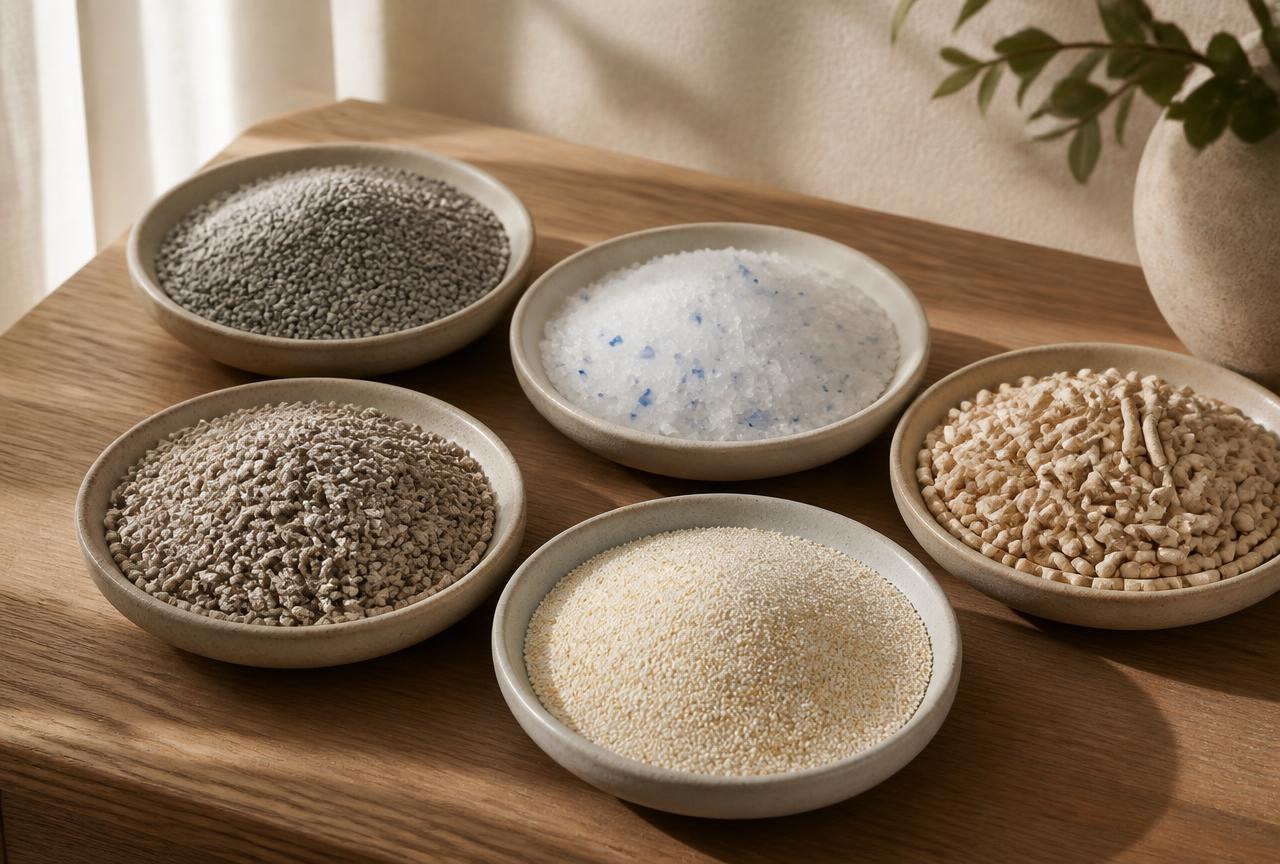
The nine types, honestly compared
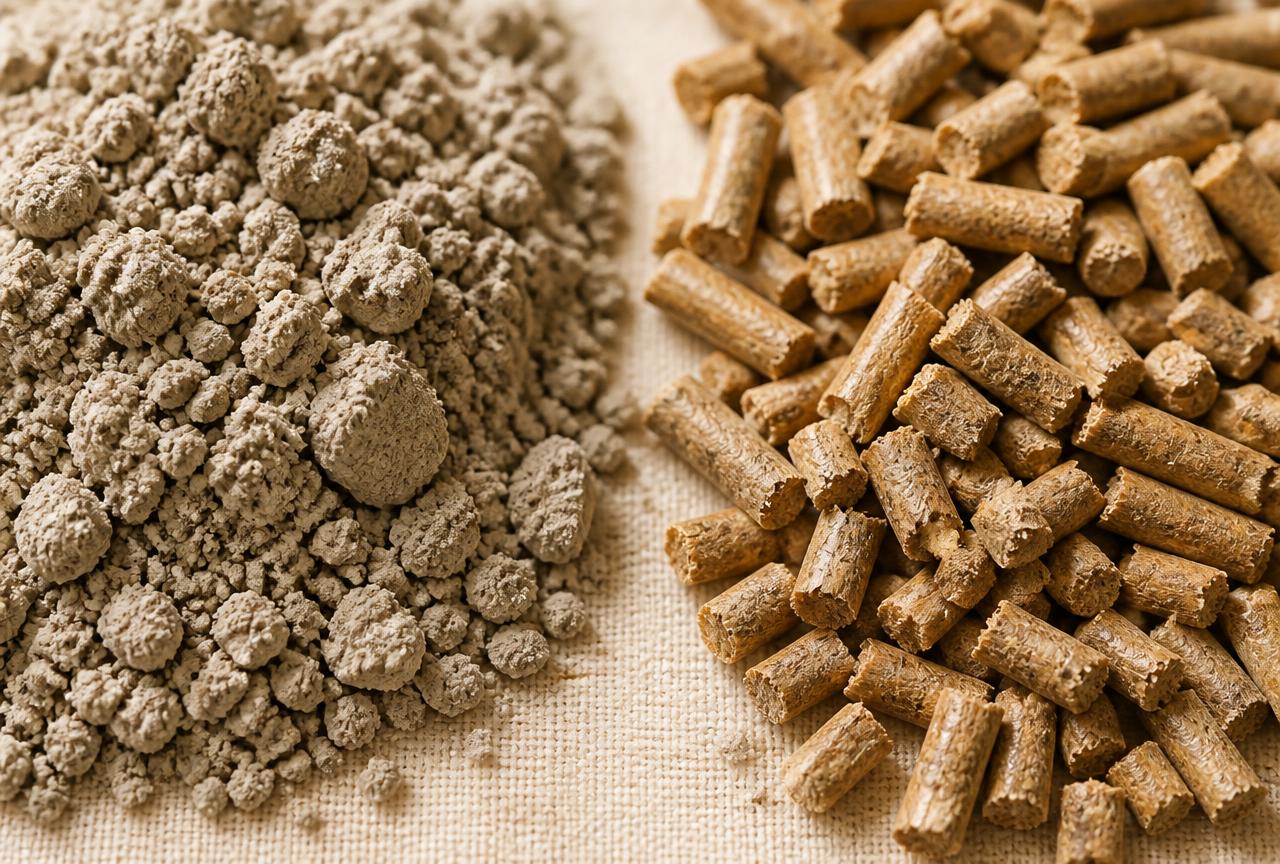
| Type | Odour control | Dust | Tracking | Notes |
|---|---|---|---|---|
| --- | --- | --- | --- | --- |
| Clumping bentonite clay | Very good | Moderate | High | The cat''s usual first choice; heavy to carry |
| Non-clumping clay | Poor to fair | High | Moderate | Cheap per bag, expensive in full changes |
| Silica crystals | Very good | Low | Moderate | Light and dry, but hard underfoot |
| Wood pellets | Good | Very low | Low | Breaks to sawdust when wet; coarse |
| Fine wood granules | Good | Low | Moderate | A softer compromise on pellets |
| Recycled paper pellets | Fair | Very low | Low | The post-surgery standard, soft on paws |
| Corn or starch clumping | Good | Low | Moderate | Clay-like feel from a plant base |
| Tofu or pea fibre | Good | Very low | Very low | Light, pricier, sometimes flushable |
| Crushed walnut shell | Very good | Moderate | Moderate | Dark colour hides blood in urine |
That last column is not a detail. If your vet has asked you to watch urination, or your cat has a urinary history, dark litter is the wrong choice, because blood in urine is one of the earliest things you would otherwise notice.
Depth is the setting everyone gets wrong
Most trays in most homes hold a thin scatter of litter. Cats dig a hollow before eliminating and cover afterwards, and both behaviours need material to work with.
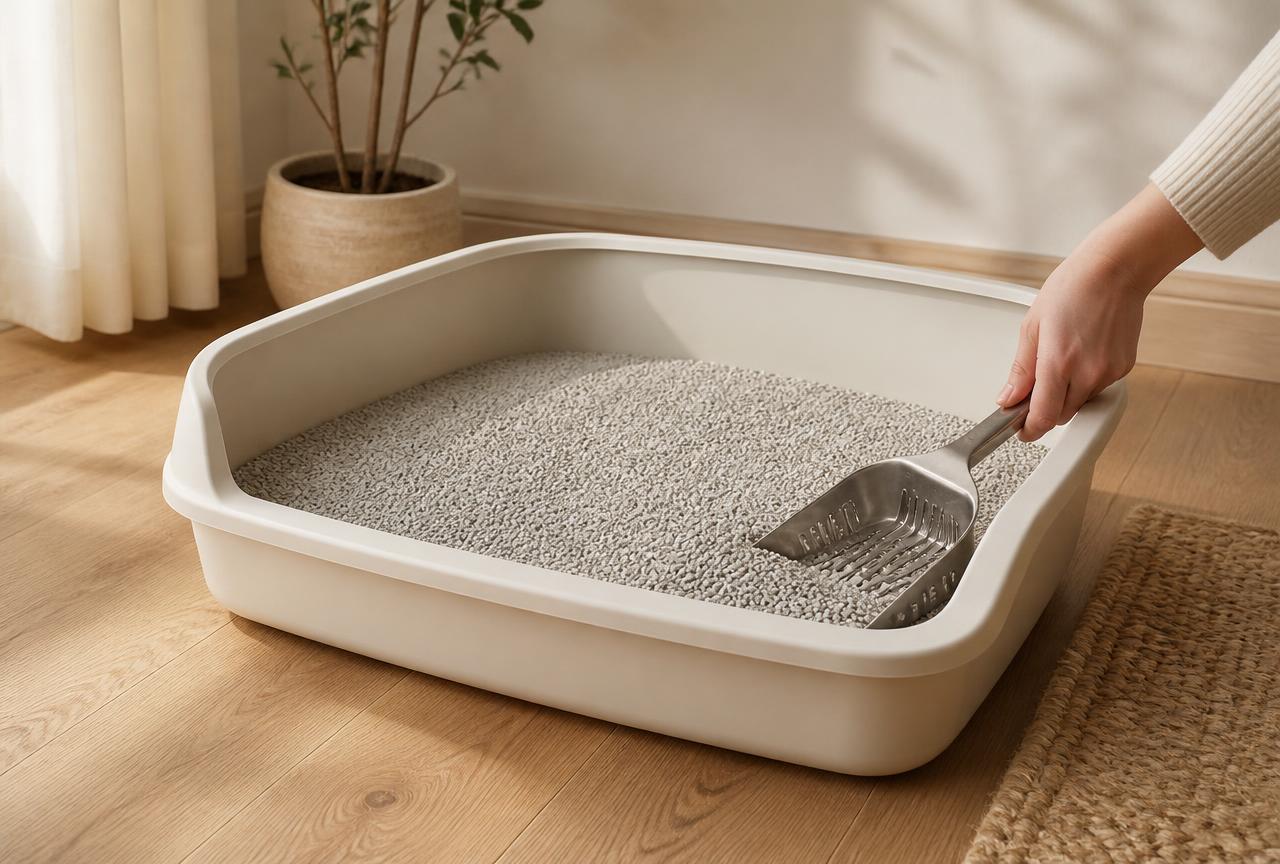
Aim for roughly five centimetres of clumping litter, kept level rather than heaped. Wood and paper pellets are the exception, because they are designed to sit in a shallower layer over a sifting base.
Tray size and shape beat litter type
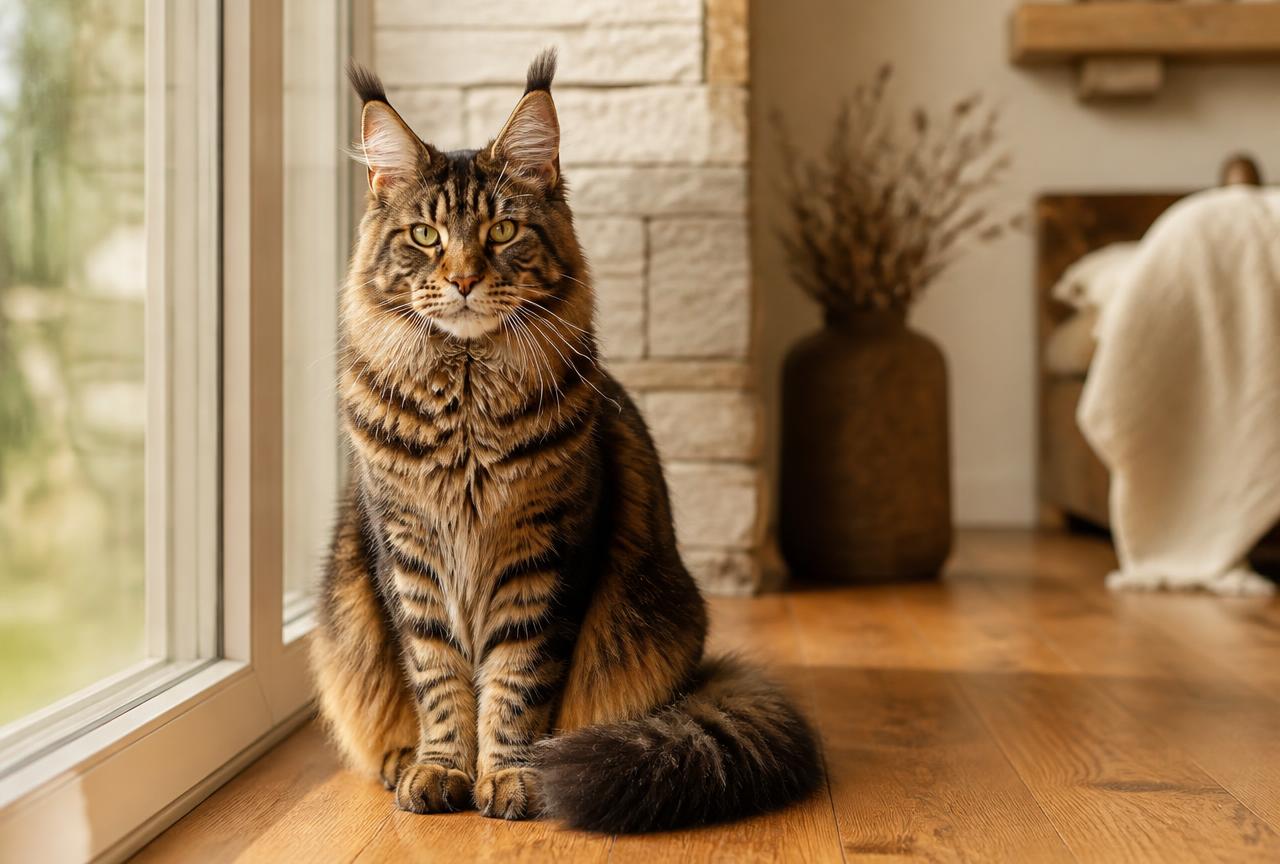
A tray should be about one and a half times your cat''s body length measured from nose to the base of the tail. Almost nothing sold as a cat litter tray meets that for a large cat, which is why a plain storage box is such a common upgrade for a Maine Coon household.
If your cat hangs its back end over the edge, perches on the rim, or sprints out mid-cover, the tray is too small. No litter fixes that.
Skip the hood unless your cat has demonstrably chosen one. Covers concentrate odour inside, restrict the escape routes a cat wants when another cat is around, and mostly serve the human eye.
Dust, tracking and the floor around the tray
Dust matters most for cats with asthma or chronic upper airway disease, and for the person doing the scooping. Low-dust options are wood, paper and tofu; the dustiest are cheap non-clumping clay and some heavily processed clumping clays.
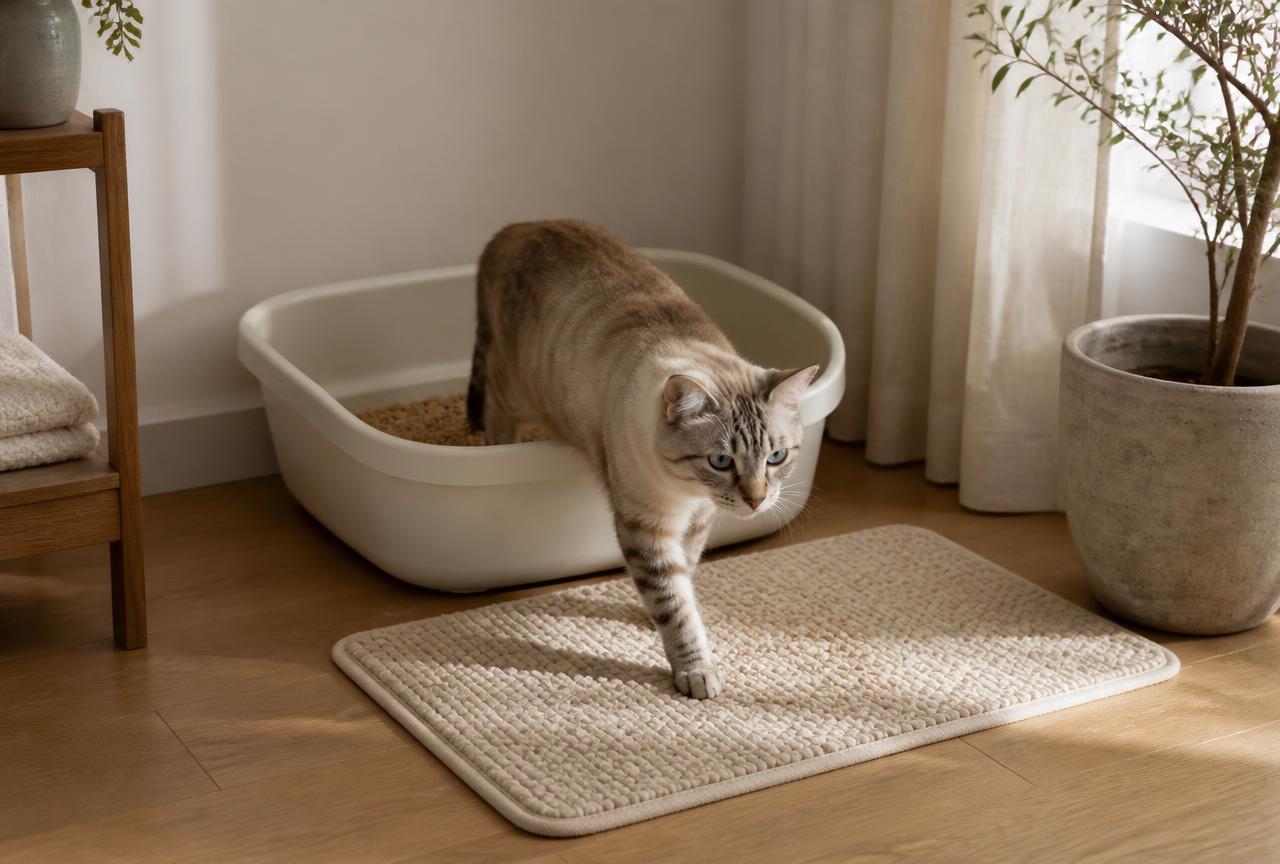
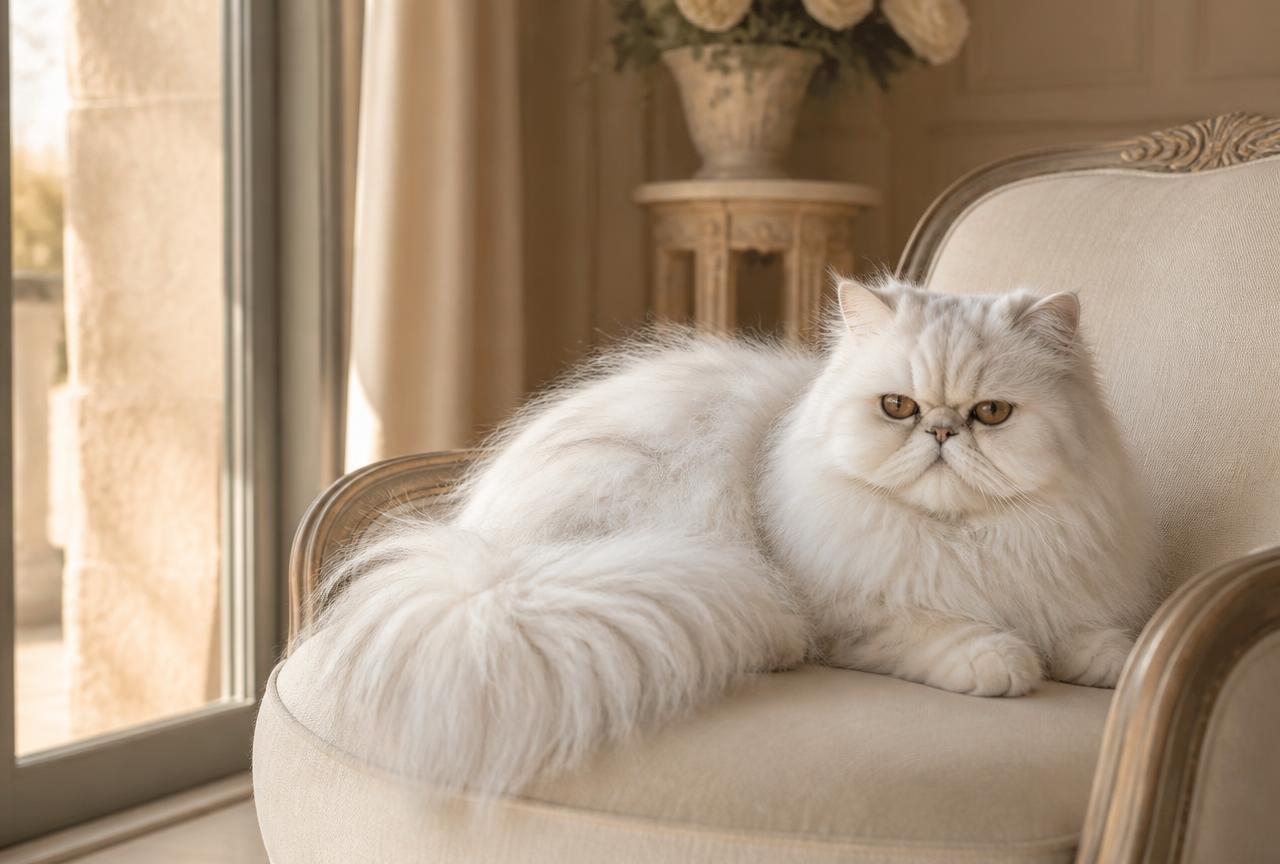
Tracking is mostly a function of grain size and paw fur. A coarse mat outside the tray, a top-entry design, or trimming the fur between the toes of a longhaired Persian does more than switching material.
The switching plan
Litter changes fail when they are imposed. This sequence takes two weeks and almost never backfires.
- 1Buy a small bag of the new litter, not the value sack.
- 2Add a second tray next to the existing one, same size and type, at least a body length apart.
- 3Fill the new tray with the new litter to the same depth.
- 4Leave both untouched for three days, scooping each once daily.
- 5Watch which tray is used, and for what. Many cats urinate in one and defecate in the other while deciding.
- 6If the new tray is being used for both by day seven, remove the old one.
- 7If it is being ignored by day ten, the answer is no. Try a different type, not a firmer approach.
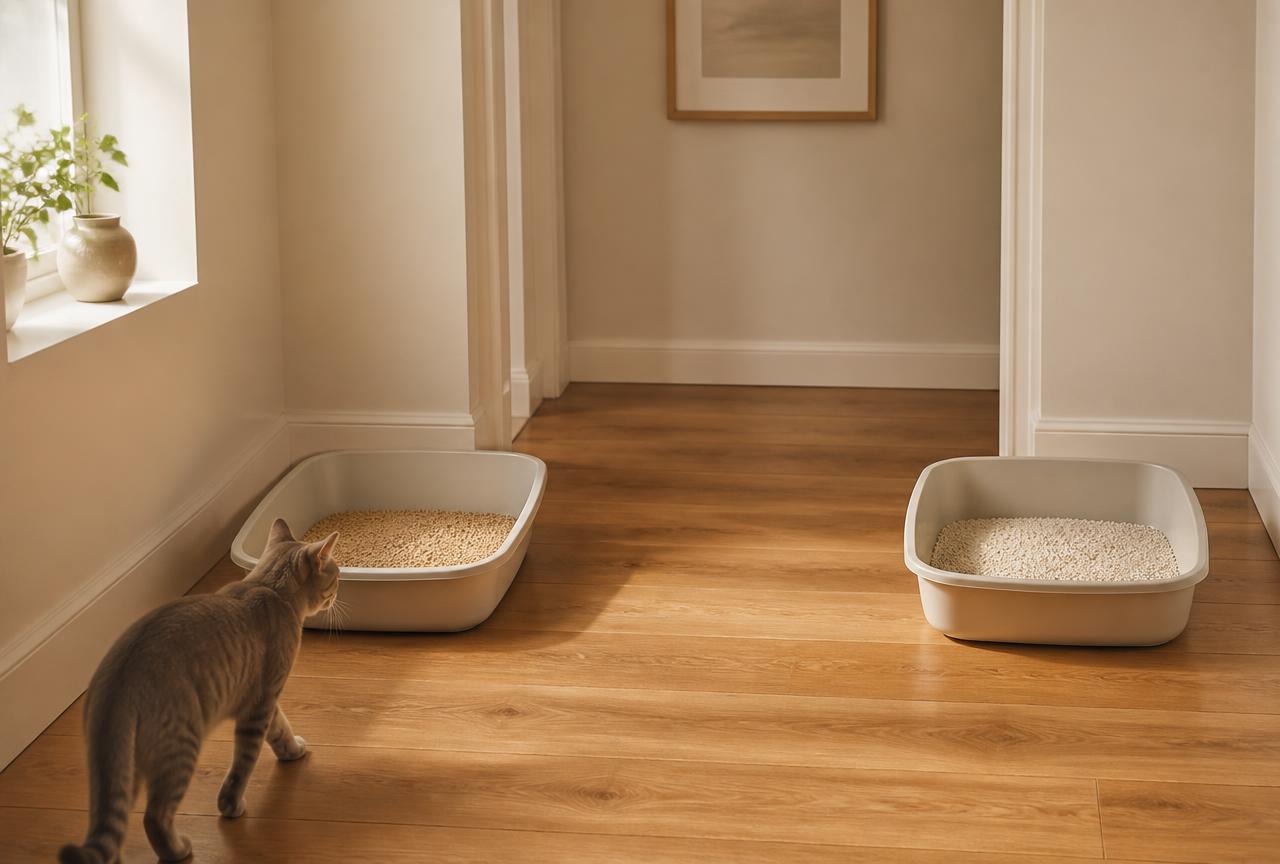
Use the matcher below to shortlist what to put in that second tray.
Interactive · built for this article
Litter matcher
Nine litter types, ranked against your cat and the thing that actually annoys you about the current one.
Best match
Clumping bentonite clay
Fine grain, tight clumps, the default most cats accept.
Crushed walnut shell
Strong odour control, dark colour hides blood in urine.
Silica crystals
Very low odour and low weight, but a texture many cats dislike.
Whatever you pick, offer it in a second tray beside the current one rather than swapping overnight. If litter refusal is new, rule out a medical cause first, the senior signals guide covers the tray changes that matter.
The checklist for a tray that works
- One tray per cat plus one spare, in separate locations, not in a row
- Large, open, uncovered, with low sides for kittens and seniors
- About five centimetres of unscented litter, kept level
- Scooped at least once a day, twice in a multi-cat home
- Washed with unscented detergent, not disinfectant with a strong smell
- Sited away from food bowls, the washing machine and busy doorways
- No dark litter if urine needs to be monitored
- Nothing perfumed, ever
The verdict, by household
One healthy adult cat, standard flat. Unscented fine clumping clay or a corn-based clumping litter. Simple, well tolerated, easy to monitor.
Multi-cat home. Clumping, scooped twice daily, with more trays than you think you need. Litter type is rarely the constraint here; tray count and location are.
A cat recovering from surgery, or a young kitten. Paper pellets. Soft, dust-free and safe if a mouthful is investigated.
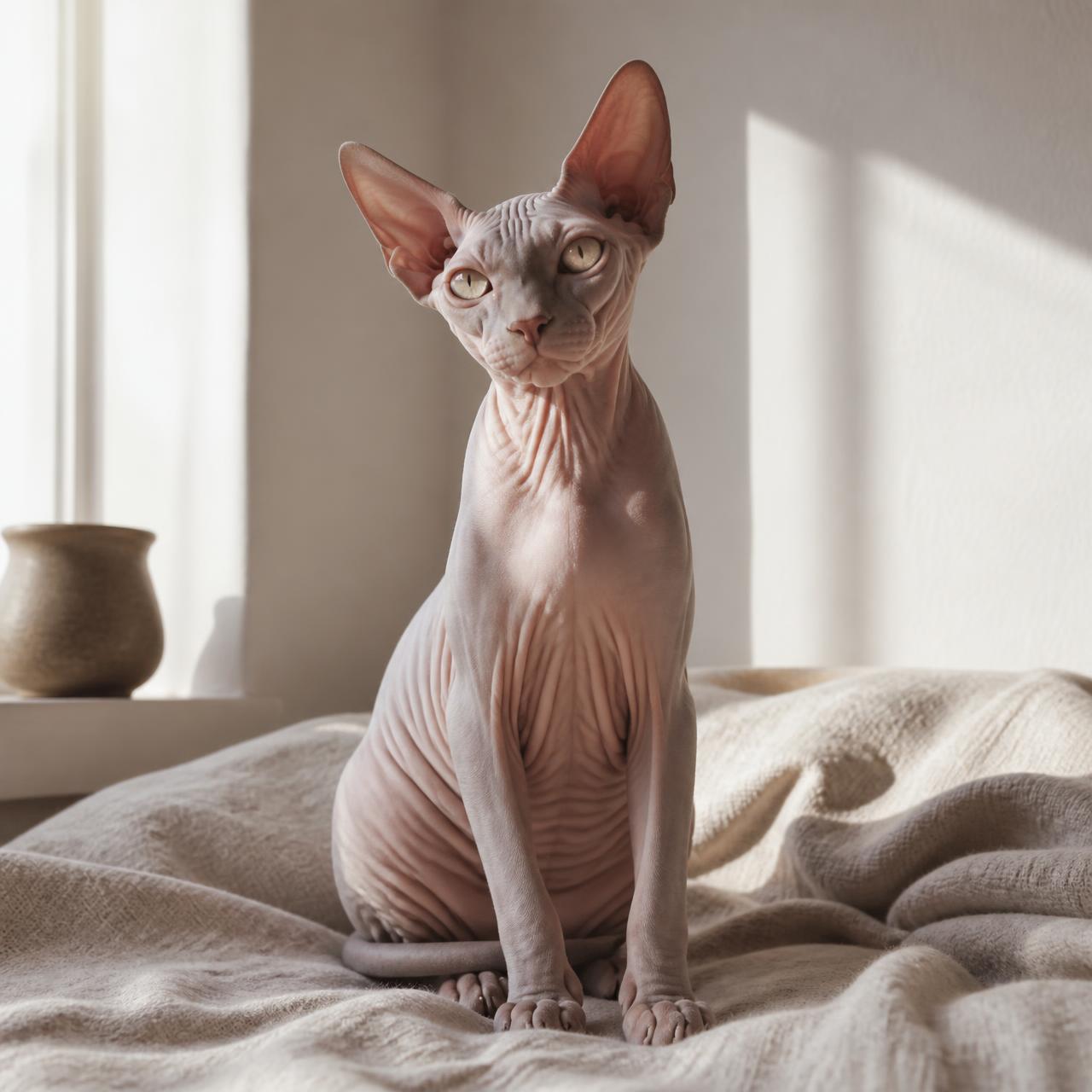
Hairless or fine-coated cats. A Sphynx picks up litter dust on bare skin, so choose low-dust wood or tofu granules and keep a mat at the exit.
Allergy or asthma in the household. Wood, paper or tofu, with the tray in a ventilated space and a mask worn for full changes.
Cost-driven. Bulk unscented clumping clay, a deeper layer, and rigorous daily scooping. Deeper litter plus daily scooping extends the life of a bag more than any economy product does.
When the tray becomes a health question
Litter choice stops being a preference question the moment behaviour changes. Call your vet the same day if a cat, especially a male, is straining, visiting the tray repeatedly, producing little or nothing, crying in the tray, or urinating just outside it. Urethral obstruction is a genuine emergency and hours matter.
Book a routine appointment for a cat that has quietly started avoiding a tray it has used for years, for any blood in the litter, or for a marked change in the volume or number of clumps. Drinking and urinating more is a classic early sign in older cats, and our senior signals guide sets out what usually accompanies it.
Get the tray, the depth and the scooping right, and litter becomes what it should be: a dull line in the shopping, and nothing you think about again.
Questions people actually ask
What is the best cat litter?
For the average healthy adult cat, unscented fine-grained clumping litter, whether clay or plant-based, is the best starting point. Preference studies consistently find cats choose fine, sand-like substrates over coarse ones. Everything after that is a trade-off between odour control, dust, tracking, weight and cost, which is what the matcher in this article ranks.
Is clumping or non-clumping litter better?
Clumping, in almost every case. It lets you remove urine as well as faeces, so the tray stays cleaner between full changes and you can see how much your cat is producing. Non-clumping litter is cheaper per bag but needs complete replacement more often, which usually erases the saving.
How deep should cat litter be?
Around five centimetres, and level rather than heaped in the middle. Most owners use half that. Cats dig before and after eliminating, and a shallow tray means they hit plastic, which is a common reason for scratching at the wall instead of covering.
How do I change my cat's litter type?
Do not swap the tray. Set a second tray beside the existing one, fill it with the new litter, and let your cat choose over a week or two. If the new tray is being used consistently, retire the old one. A forced overnight switch is one of the more reliable ways to create a house-soiling problem.
Is scented litter bad for cats?
It is not toxic, but it works against you. A cat's sense of smell is far more sensitive than yours, and added fragrance is a common reason for tray avoidance. If the tray smells, the answer is more scooping, more litter depth or a bigger tray, not perfume.
Is silica or crystal litter safe?
Silica gel litter is non-toxic and absorbs urine efficiently with very little odour. The reservation is texture: the crystals are hard underfoot and a proportion of cats simply will not use them. Kittens and cats with sore paws should not be given crystals.
What about wood, paper and tofu litters?
All three are low-dust and renewable. Paper pellets are the standard recommendation after surgery because they are soft and non-abrasive. Wood pellets control odour well but are coarse, so fussy cats often refuse them. Tofu and pea-fibre granules are light and track less, at a higher price per use.
Sources
- Litter box and toileting guidance, International Cat Care
- Feline environmental needs guidelines, AAFP and ISFM
- Feline house-soiling, Cornell Feline Health Center
- Feline lower urinary tract disease, AVMA
Breeds mentioned
Put it into practice
Read next
Scratching posts: we measured nine, and most are too short
Scratching post buying guide: the height your cat actually needs, why sisal beats carpet, base stability, placement, and how to stop sofa scratching for good.