Cat diarrhoea: how long to wait, what to feed, and when to phone the vet
Most loose motions in a bright adult cat clear within a day with water, plain food and a clean tray. The skill is knowing which combinations, blood, kittens, a flat cat, never get that grace period.
Dr Amara Osei
Feline medicine writer; former veterinary nurse, ten years in small-animal practice
Published 4 September 2026
Dr Tomas Reyes, DVM
The short version
- One soft motion in a bright adult cat earns 24 hours of water, small plain meals and monitoring
- Do not starve an adult cat, little and often is the current guidance
- Blood, black tarry stool, vomiting alongside, or a flat hiding cat means a same-day vet visit
- Kittens and seniors dehydrate fast, halve any grace period you would give an adult
- Abrupt food changes cause more loose trays than any pathogen; transitions take seven days
- Never give human anti-diarrhoeal medication, several common ones are dangerous to cats
Every cat produces a soft motion now and then, and most of the time it is the digestive equivalent of a shrug, something rich, something new, something stolen. But diarrhoea is also one of the ways serious illness first shows itself, and the difference between the two is rarely the mess itself. It is the company it keeps.
This is the piece to read with a scooper in one hand: what is actually going on, what to do for the first 24 hours, and the specific combinations that mean the watching phase is over.
The short version
- One soft motion in a bright, eating adult cat: watch, water, plain food, 24 hours.
- Diarrhoea lasting past 24 to 48 hours earns a phone call to the vet, whatever the cat's mood.
- Blood, black tarry stool, vomiting alongside it, or a flat, hiding cat: same-day appointment.
- Kittens and seniors dehydrate fast, their grace period is hours, not days.
- Abrupt food changes are the most common cause of all; transitions should take a week.
- A stool diary and a fresh sample are the two gifts you can give your vet.
What diarrhoea actually is
A formed stool is the gut finishing its work: water reabsorbed in the colon, waste packaged. Diarrhoea is that process rushed or inflamed, material moving too fast, or the gut wall secreting fluid instead of absorbing it. Small-intestinal causes tend to produce large volumes, sometimes with weight loss over time; large-intestinal (colon) causes produce frequent small squirts, sometimes with mucus or fresh blood and visible straining.
You do not need to memorise the distinction, but your vet will ask about volume, frequency and appearance, because it points them at the right end of the plumbing.
The usual suspects, in rough order of likelihood
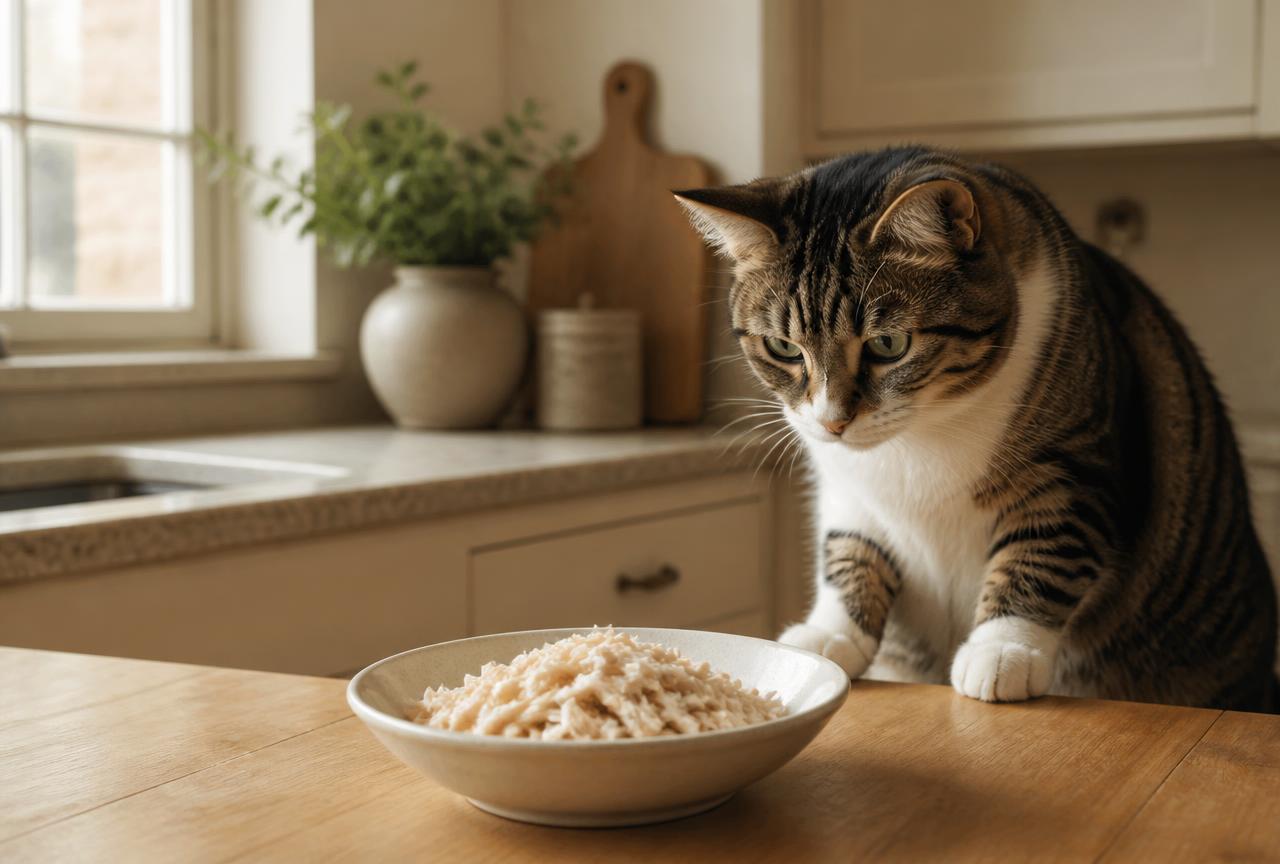
Dietary mischief tops every list: a new food introduced overnight, a rich treat, a stolen scrap, milk from a well-meaning saucer. (On that last one, most adult cats are lactose intolerant, as our piece on cats and milk explains.) The gut objects, things speed up, and it resolves within a day once the insult stops.
Stress is second and chronically underrated. A house move, a new pet, building work, even a rearranged living room can produce a loose tray within days, because feline guts and feline nerves are on speaking terms. If the diarrhoea started the week the decorator did, you may already have your answer.
Parasites, roundworm, giardia, coccidia, are the classic cause in kittens and in cats who hunt or share trays. They often produce intermittent rather than constant looseness, sometimes with a bloated belly. Our parasite guide covers prevention schedules.
Infections and inflammation: bacterial overgrowth, viral causes, and the slower burn of inflammatory bowel disease or food intolerance, which produce recurring rather than one-off episodes.
The not-to-miss list: swallowed objects or string (often vomiting too), toxins, thyroid disease in older cats, and organ disease. These are rarer, and are exactly why the red flags below exist.
The 24-hour home plan
For a bright, eating, drinking adult cat with a single episode or a soft day, this is the standard of care at home:
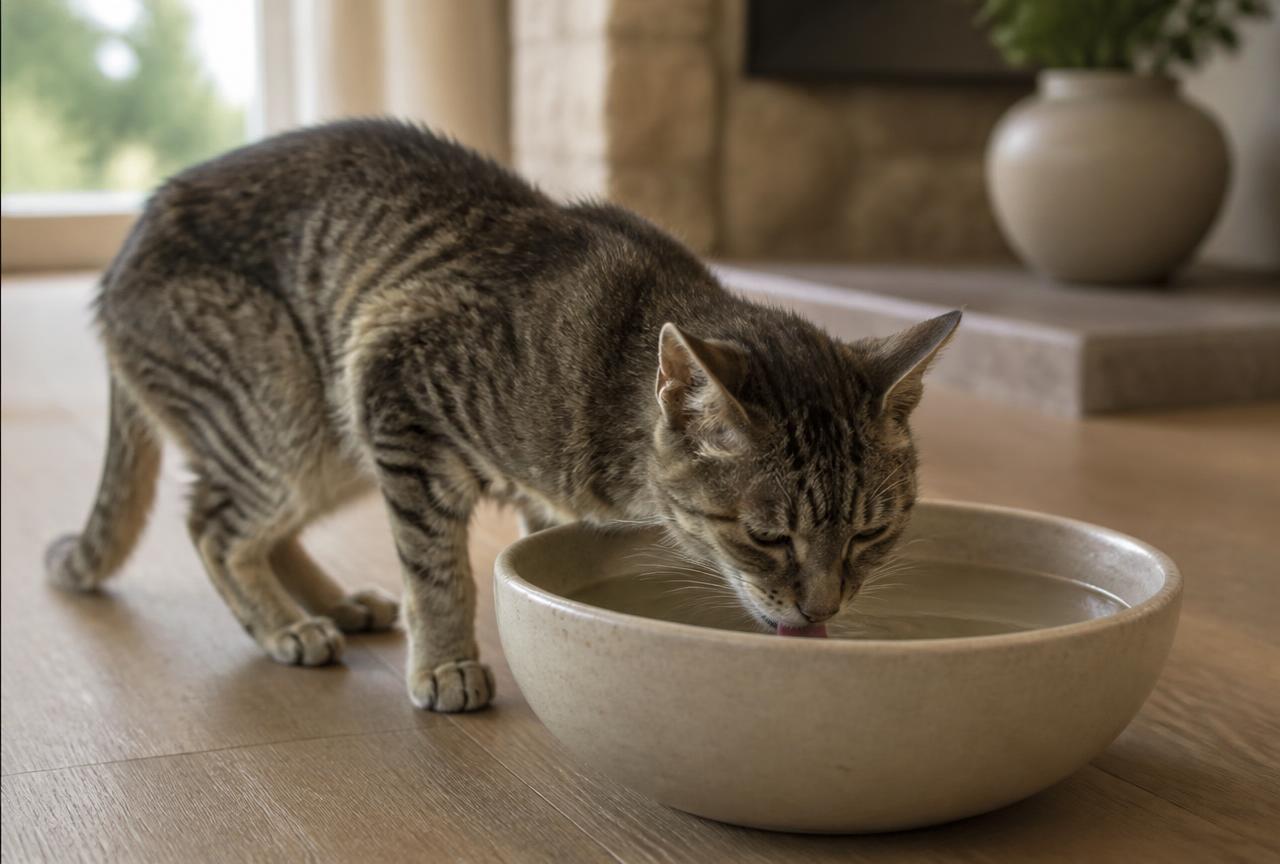
- 1Water, everywhere. Diarrhoea loses fluid; put out extra bowls and consider a fountain if your cat prefers moving water. Refresh them morning and evening.
- 2Small, plain meals. Do not starve an adult cat, current guidance favours keeping food going. Offer little portions of their normal food, or plain cooked chicken or white fish, four to six times a day rather than two big meals.
- 3No treats, no milk, no experiments. The gut needs boring, and boring is a kindness.
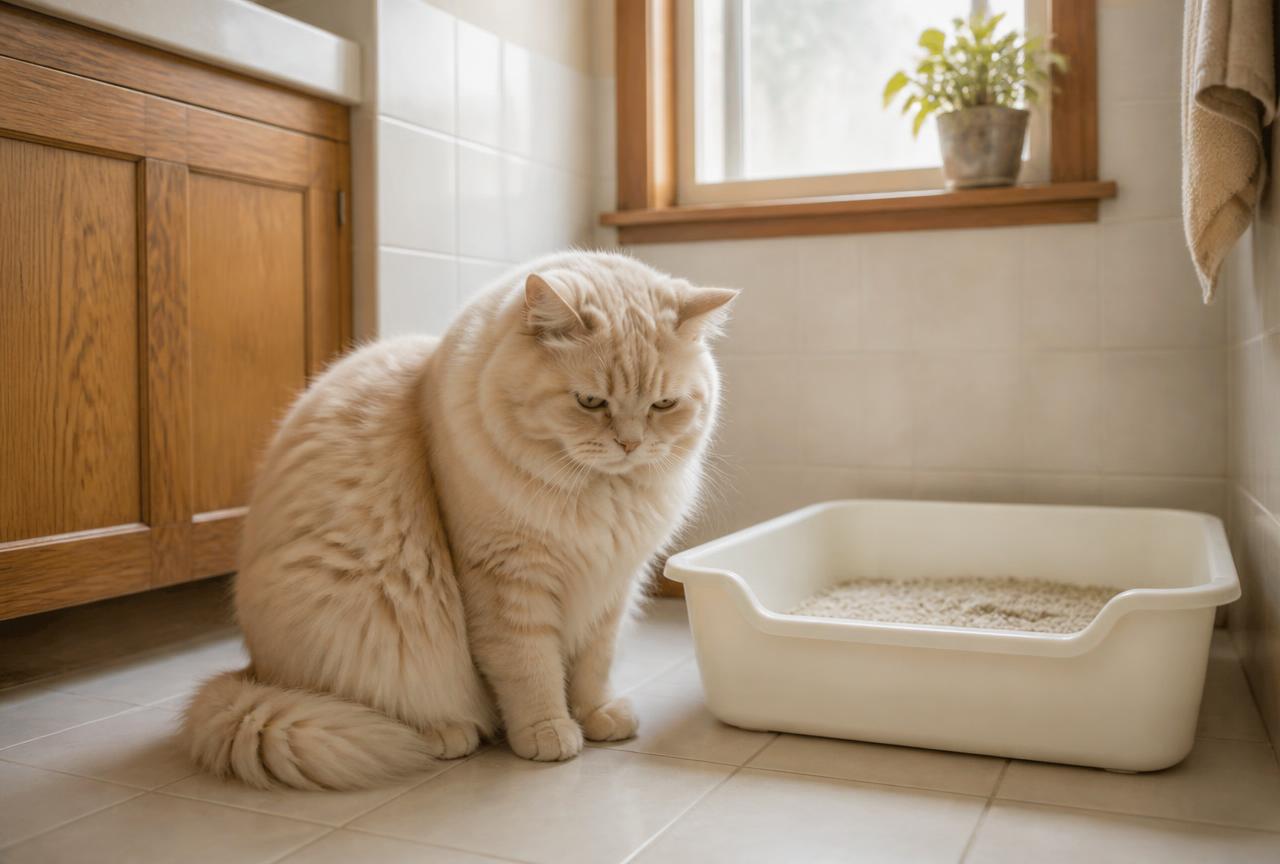
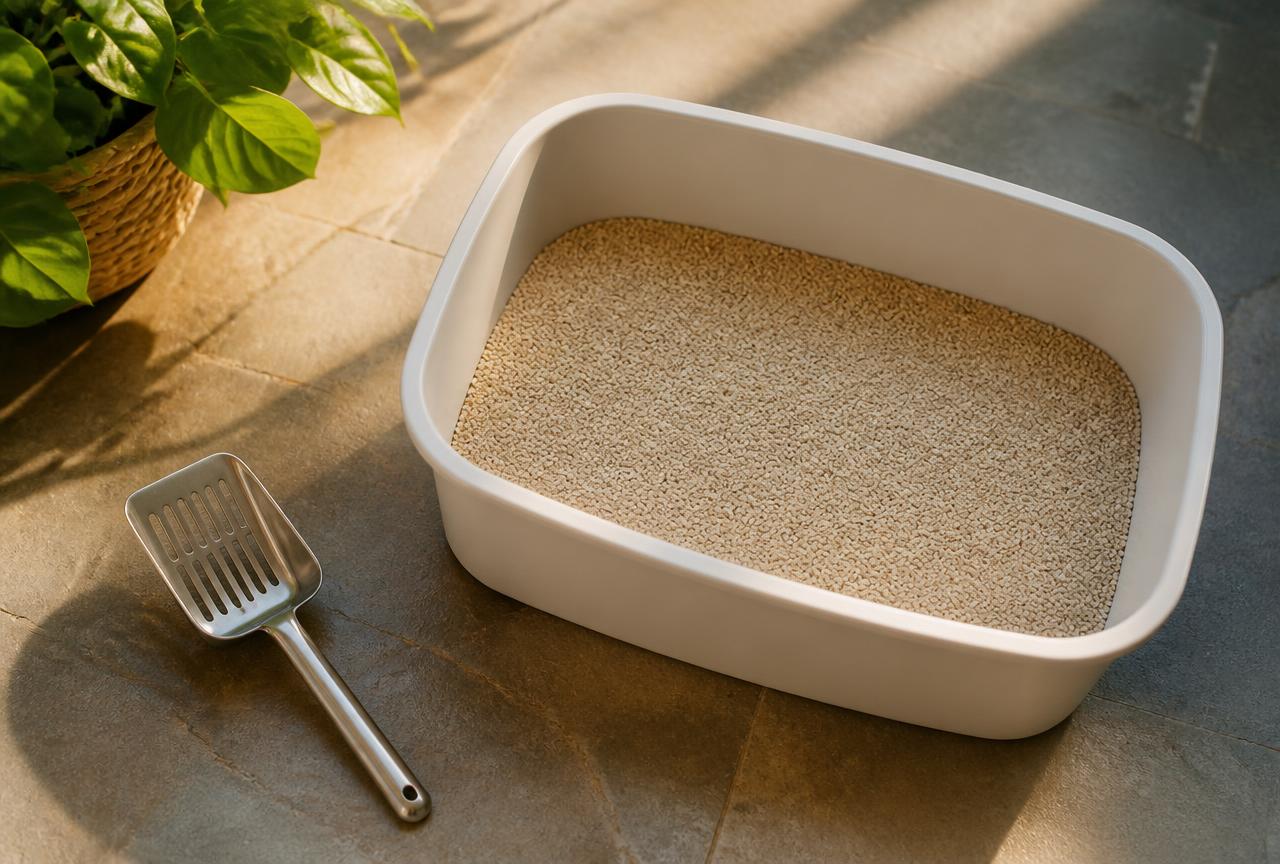
- 4Clean the tray and keep it that way. A fresh tray lets you monitor accurately, and a cat with an irritated gut should not have to wade into yesterday's.
- 5Start the diary. Time, appearance, frequency, plus what the cat ate in the last 48 hours and any household changes. This is precisely what the vet will ask.
- 6Re-check in the morning. Improving: continue another day. The same or worse: phone the vet.
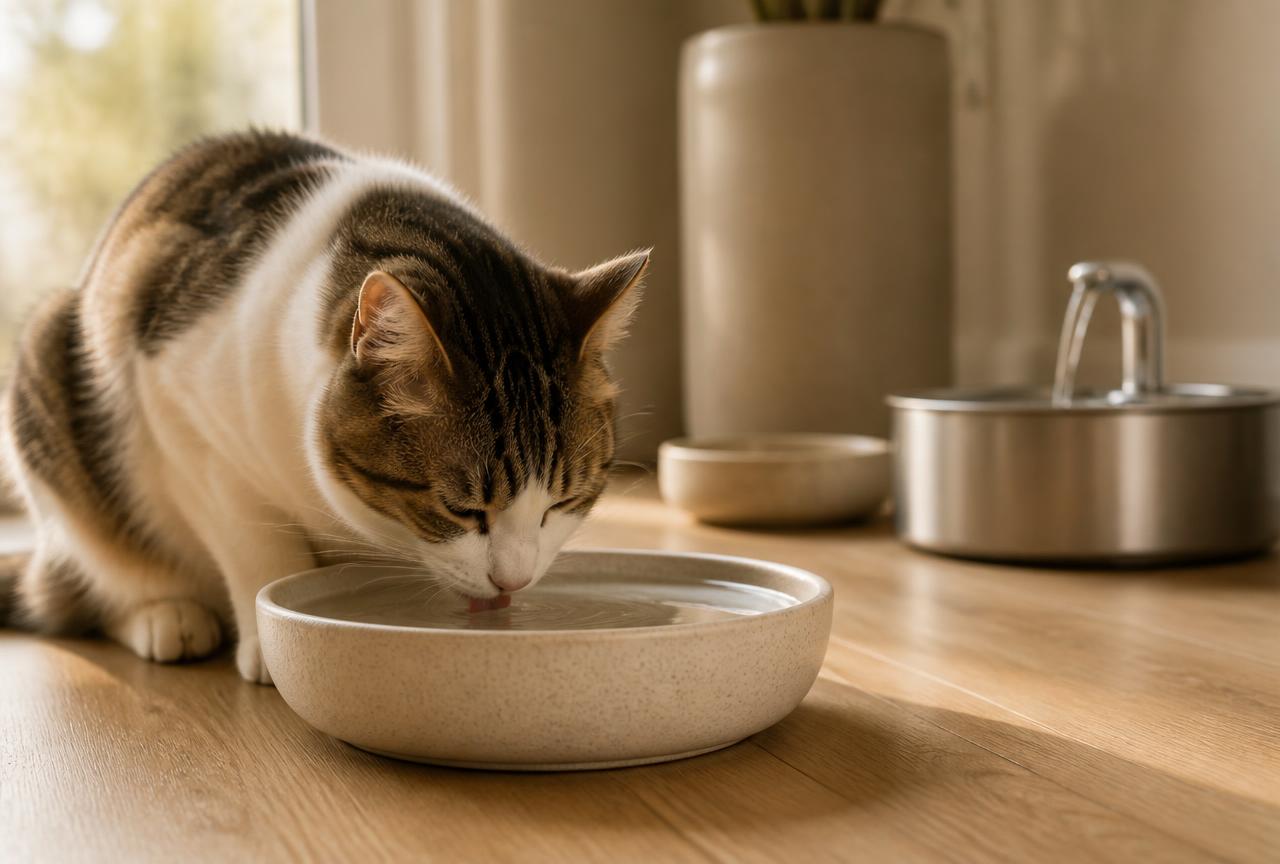
The question is never really what the tray looks like. It is what the cat looks like.
How to check hydration, the two-minute test
Dehydration is the real danger of diarrhoea, especially in small bodies. Two home checks:
The scruff test. Gently lift the skin between the shoulder blades and let go. Hydrated skin springs back instantly. Skin that settles slowly, like a tent folding, suggests dehydration.
The gum test. Lift the lip and touch a gum with a clean finger. It should feel moist and slippery; tacky or dry gums are a warning. Gums should also be pink, pale, white or yellow-tinged gums are an immediate vet call, diarrhoea or not.
The red flags: when watching becomes phoning
This is the table worth screenshotting:
| Sign | What it suggests | Action |
|---|---|---|
| --- | --- | --- |
| Blood in the stool (red) | Colon inflammation, parasites, worse | Phone the vet today |
| Black, tarry stool | Digested blood, bleeding higher up | Same-day appointment |
| Vomiting plus diarrhoea | More than diet, obstruction, toxin, infection | Same-day appointment |
| Flat, hiding, refusing food | The cat is unwell, not just loose | Same-day appointment |
| Kitten or senior, any duration past a few motions | Dehydration risk is high | Phone the vet today |
| Past 48 hours without improvement | Needs investigation, not more waiting | Phone the vet |
| Pale or yellow gums | Anaemia or liver involvement | Emergency |
A note on probiotic pastes and over-the-counter remedies: plain feline probiotic pastes are widely considered safe and can shorten a mild episode, but never give a cat human anti-diarrhoeal medication, several are genuinely dangerous to cats. If you are reaching for a remedy, that is already the moment to phone instead.
The kittens and seniors rule
A healthy adult cat has reserves. Kittens and old cats do not. A kitten can go from bouncy to dangerously dehydrated in a day, and parasite burdens that an adult shrugs off can flatten one. In seniors, recurring loose stool is one of the classic early flags of hyperthyroidism, kidney disease and inflammatory bowel conditions, the kind of thing caught by bloods and a sample, not by waiting. Our guide to senior cat signals covers the wider pattern.
The rule of thumb: whatever grace period you would give an adult, halve it for a kitten or a senior, and halve it again if they go off their food.
If it keeps coming back
Diarrhoea that resolves and returns, or never quite resolves, is a different problem from the one-day upset. The vet's usual ladder looks like this:
- Stool sample, checked for parasites and giardia; often three samples over a week, because shedding is intermittent.
- Diet trial, a strict novel-protein or hydrolysed diet for six to eight weeks, no treats, to test for food intolerance. It is boring and it works surprisingly often.
- Bloods, thyroid and organ function, especially in cats over seven.
- Ultrasound or biopsies, for the stubborn remainder, looking for inflammatory bowel disease and its relatives.
Costs vary widely by country and practice, but as an indicative range: a consultation plus stool test typically runs 60–150 EUR, diet trials the cost of the food itself, and the full investigation several hundred. Catching the pattern early almost always costs less than catching it late.
Prevention: the quiet wins
Most diarrhoea is preventable with dull, effective habits:
- Change foods slowly, a seven-day transition, mixing old and new. Our wet vs dry guide includes a transition plan that works for any switch.
- Keep treats boring and under ten per cent of intake; rich variety is for humans.
- Worm on schedule, especially hunters and kittens.
- Bin security. The compost caddy and the Sunday roast tray are behind more mystery episodes than any pathogen.
- One change at a time. If you change food and litter and move house in the same fortnight, you will never know which one the gut objected to.
The bottom line
Cat diarrhoea is common, usually benign, and occasionally the first sentence of a bigger story. Watch the cat, not just the tray: bright and eating earns a day of water, plain food and monitoring; blood, vomiting, flatness, kittens, seniors, or anything past 48 hours earns the phone. And keep that diary, the owner who can say exactly when it started and what changed is the owner whose cat gets diagnosed fastest.
Interactive
The gut clock
Duration, appearance, the cat and the risk level, the four answers that decide between watching at home and phoning the vet.
Reading
Home care window
A single soft motion in an otherwise bright, eating, playful adult cat is usually dietary mischief, a stolen treat, a new food, a rich scrap. The home plan is simple: plenty of fresh water, small plain meals, a clean tray so you can monitor, and 24 hours of watching. If it is not clearly improving by tomorrow, it graduates to the phone-call column.
Also worth knowing
- One-off soft motions are common after diet changes. If you switched foods recently, transition back and re-introduce over seven days, abrupt switches are the most frequent cause of all.
- A bright cat with a messy tray is a monitoring problem, not an emergency. Note the time, what the cat ate in the last 48 hours, and any changes at home, that list is gold for the vet if it continues.
A triage guide, not a diagnosis. When in doubt, phone the practice, describing symptoms costs nothing and vets would always rather be asked early.
Questions people actually ask
Sources
Breeds mentioned
Put it into practice
Read next
Cat sneezing: colds, dust and the signs that need a vet
Cat sneezing a lot? Dust, viruses, dental roots and foreign bodies, how to sort the harmless from the signs that need a vet.