Can cats drink milk? What the saucer myth gets wrong
Kittens live on milk and most adults cannot digest it. What happens in between explains almost everything about the saucer on the kitchen floor.
Marta Keller
Feline nutrition writer; WSAVA Global Nutrition Guidelines contributor
Published 5 September 2026
Dr Leonie Brandt, DVM, CertAVP
The short version
- Most adult cats are lactose intolerant: a saucer of cow's milk commonly causes gas and loose stools within 8 to 12 hours.
- Lactose-free milk and pet-shop 'cat milk' are tolerated in small amounts but add calories and no needed nutrient.
- Goat's milk is not meaningfully safer than cow's milk; plant milks bring sugar and additives instead of lactose.
- A daily saucer of whole milk can be over half a cat's required daily calories, displacing balanced food.
- Unweaned kittens must never have cow's milk; only kitten milk replacer is safe for them.
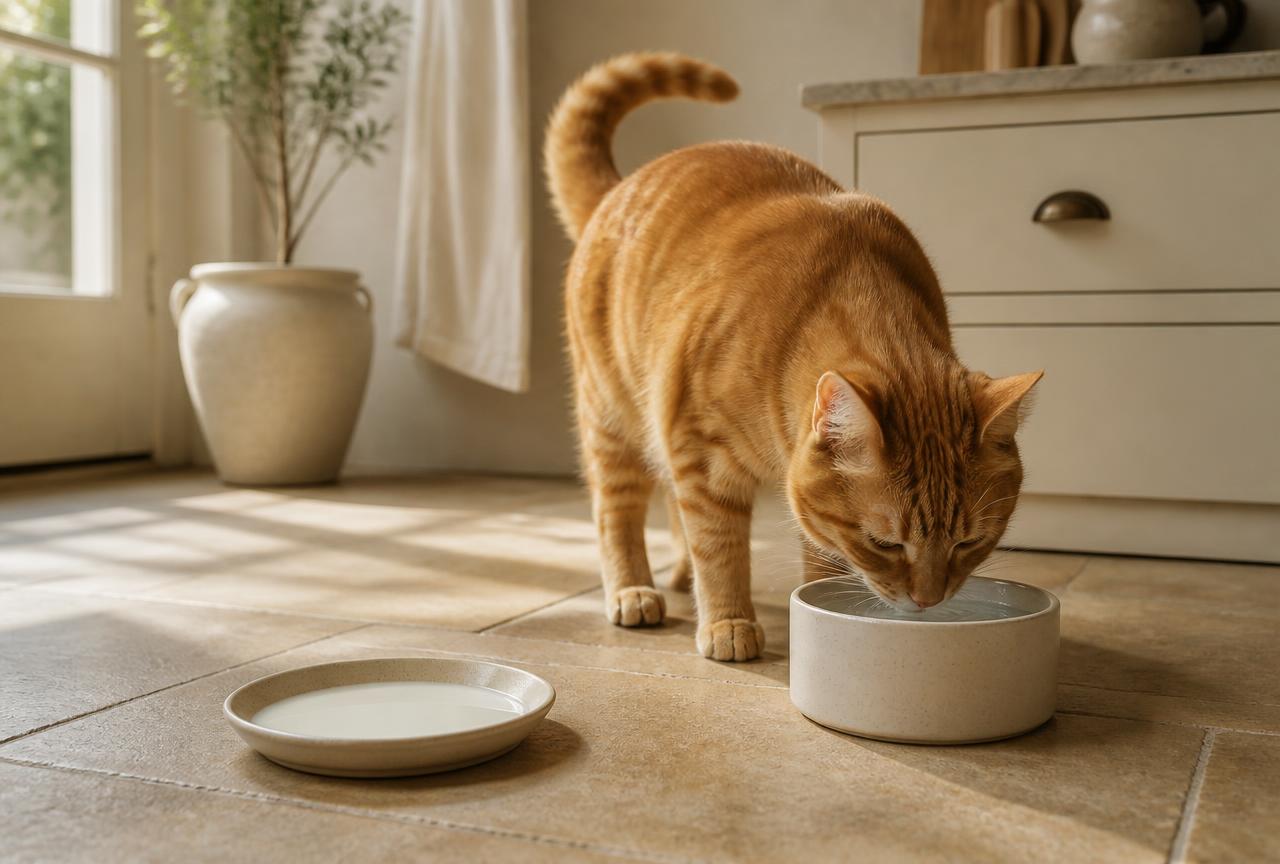
- Water is the only drink an adult cat needs, and plenty of cats choose it when offered alongside milk.
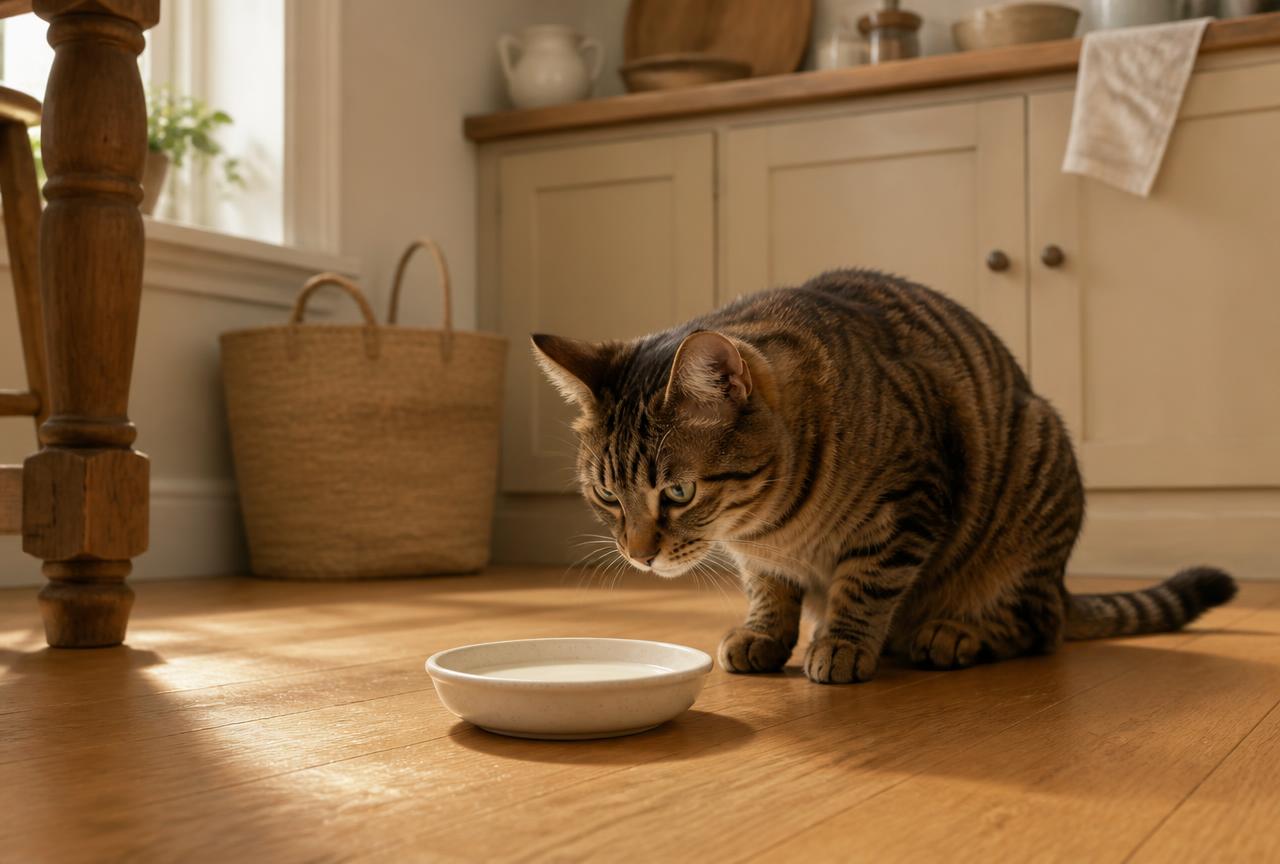
The image is fixed in the culture: a cat, a saucer of milk, a contented kitchen. It survives because cats do, in fact, love the stuff. What the picture leaves out is what happens a few hours later, in the litter tray, to the majority of adult cats who drink it.
The short answer is that kittens can drink milk and most adult cats cannot, at least not the milk that comes from a cow. The long answer is more interesting, because it runs through kittenhood, an enzyme that quietly retires, and a handful of products that sit in a genuine grey area. Here is the whole of it.
The enzyme that retires
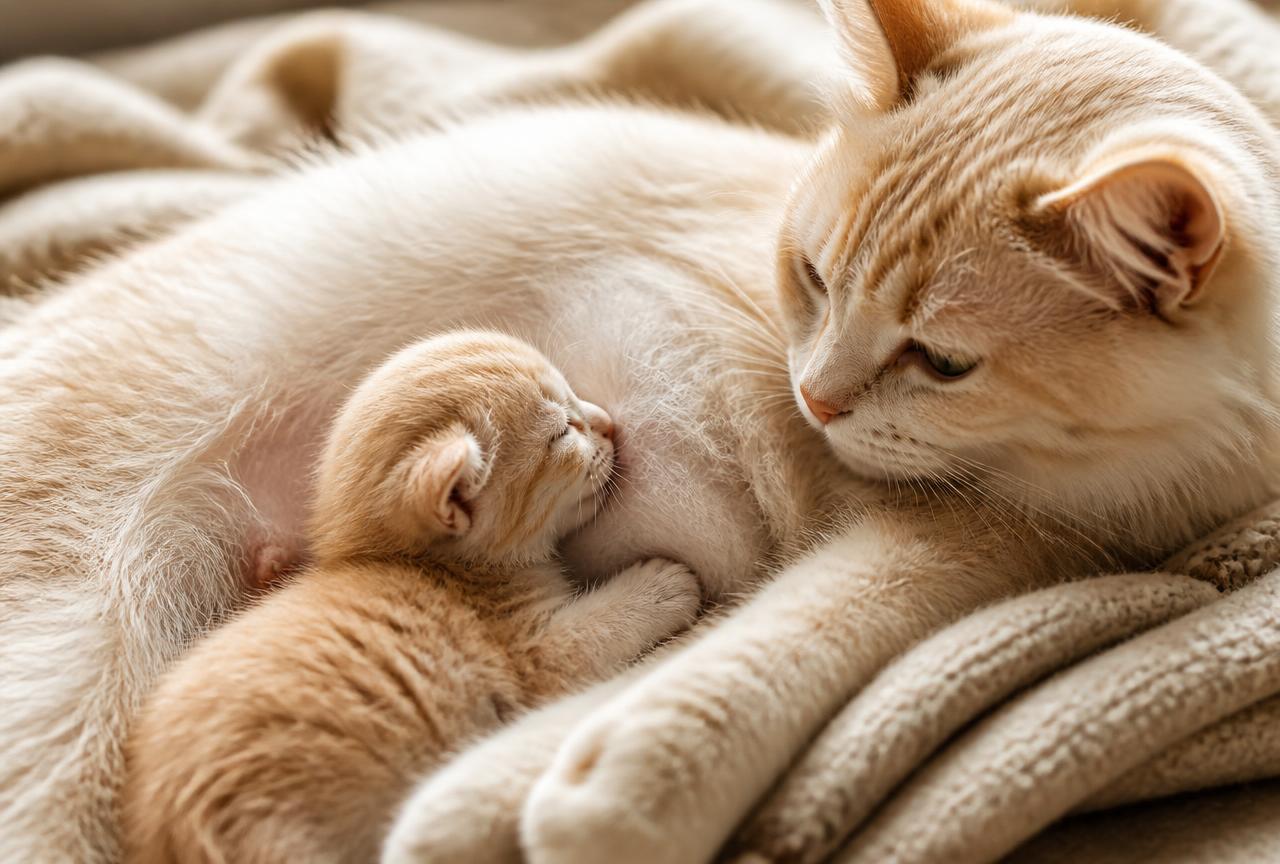
Milk sugar is called lactose, and breaking it down is the job of an enzyme called lactase, produced in the small intestine. Kittens produce it in quantity because their entire early diet is their mother''s milk. Once weaning begins, lactase production tails off, in most mammals, including most humans, it simply is not needed any more.
By adulthood, most cats produce so little lactase that a saucer of cow''s milk arrives in the gut largely undigested. The lactose sits there, draws water into the intestine, and ferments. The result, typically within eight to twelve hours, is gas, cramping and loose stools. This is not an allergy and it is not poisoning. It is a digestive mismatch, and it is the normal state of the adult cat.
A minority of adults retain enough lactase to handle a few laps of milk without drama. You cannot tell which cat you have by looking, which is why the honest advice is not "milk is poison" but "milk is a gamble most cats lose".
Milk by milk: the honest rundown
Not all milks carry the same risk. Lactose content, fat, sugar and additives all matter, and a couple of products on pet shop shelves are designed to get round the problem entirely.
| Milk | Lactose | Verdict for an adult cat |
|---|---|---|
| --- | --- | --- |
| Cow''s milk, whole or semi-skimmed | High | The classic cause of loose stools; a lick is harmless, a saucer is a gamble |
| Goat or sheep milk | High, marginally lower | Same problem in a rustic hat; not meaningfully safer |
| Lactose-free cow''s milk | Negligible | Tolerated by most adults in small amounts, but nutritionally pointless |
| ''Cat milk'' from pet shops | Reduced | Safe as an occasional treat; still counts as calories |
| Plant milks (oat, almond, soya) | None | No lactose, but sugar, thickeners and flavourings a cat does not need; best avoided |
| Kitten milk replacer | Formulated | The only milk for unweaned kittens; cow''s milk can be dangerous for them |
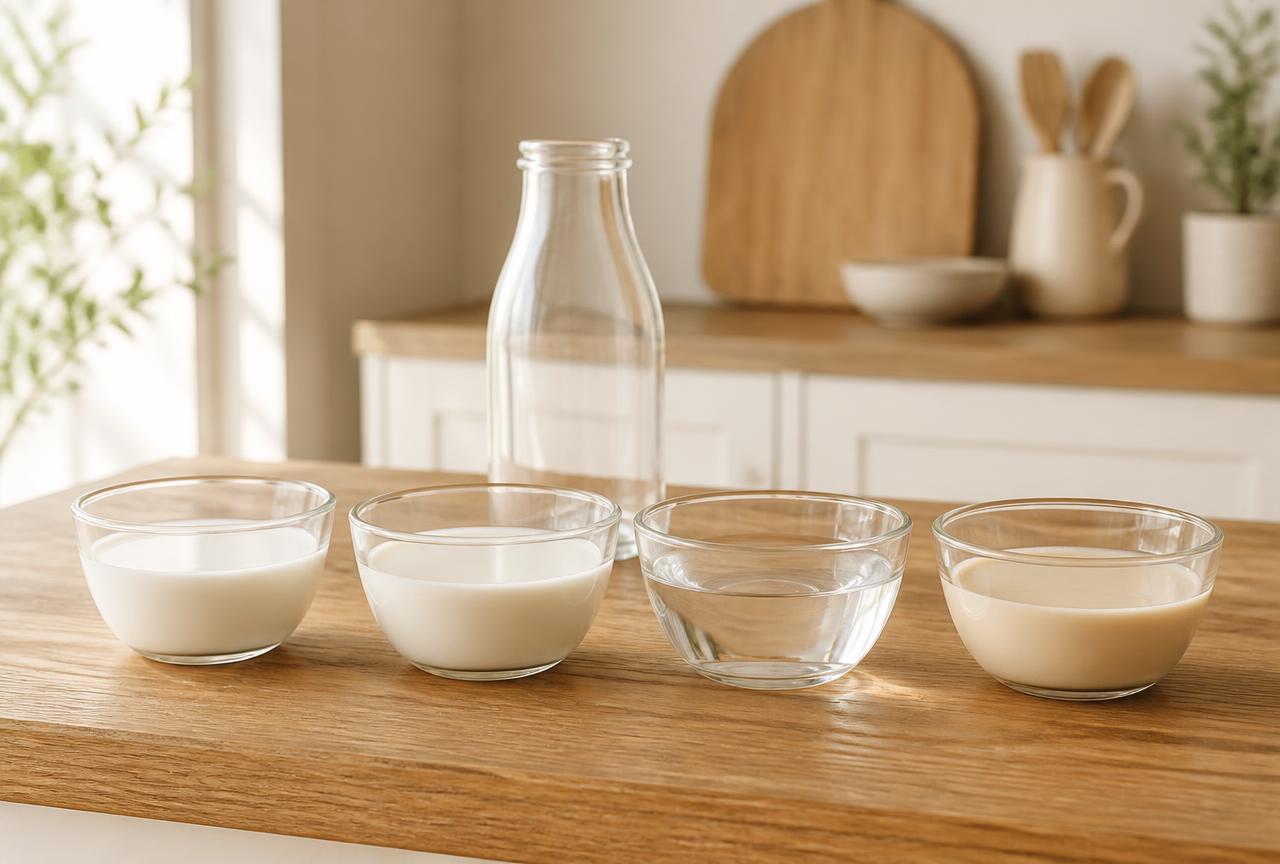
Two things are worth pulling out of that table. First, goat''s milk has a persistent reputation as the gentle alternative, and it does contain slightly less lactose, but not enough less to matter at saucer scale. Second, plant milks dodge the lactose question entirely and fall into a different one: many are sweetened, and some contain flavourings or gums with no place in a cat''s diet. Unsweetened oat milk in a lick will not hurt; none of them offer anything a cat needs.
What the calories quietly do
Even for the minority of cats who digest milk happily, there is a second, slower problem. A saucer of whole milk carries roughly 150 calories. An average adult cat needs somewhere around 200 to 250 calories a day in total, the portion calculator will give you the number for your own cat, and it is usually smaller than people expect.
A daily saucer can therefore be more than half the required intake, delivered with almost none of the nutrients a cat is actually obliged to eat. Cats who fill up on milk eat less of their balanced food, and over months that trade shows up in body condition, coat and teeth. Milk is not a drink for a cat; it is closer to a pudding.
A saucer of milk can be half a cat''s daily calories, with almost none of the nutrients those calories were supposed to buy.
If your cat has already had some
Panicking is not required. Work through this in order.
- 1Note what and how much. Cow''s milk, goat''s milk, a lick, a bowl. The answer changes the expectation, not the urgency.
- 2Remove the milk, keep the water. Fresh water down, milk away. Do not offer more to "settle the stomach".
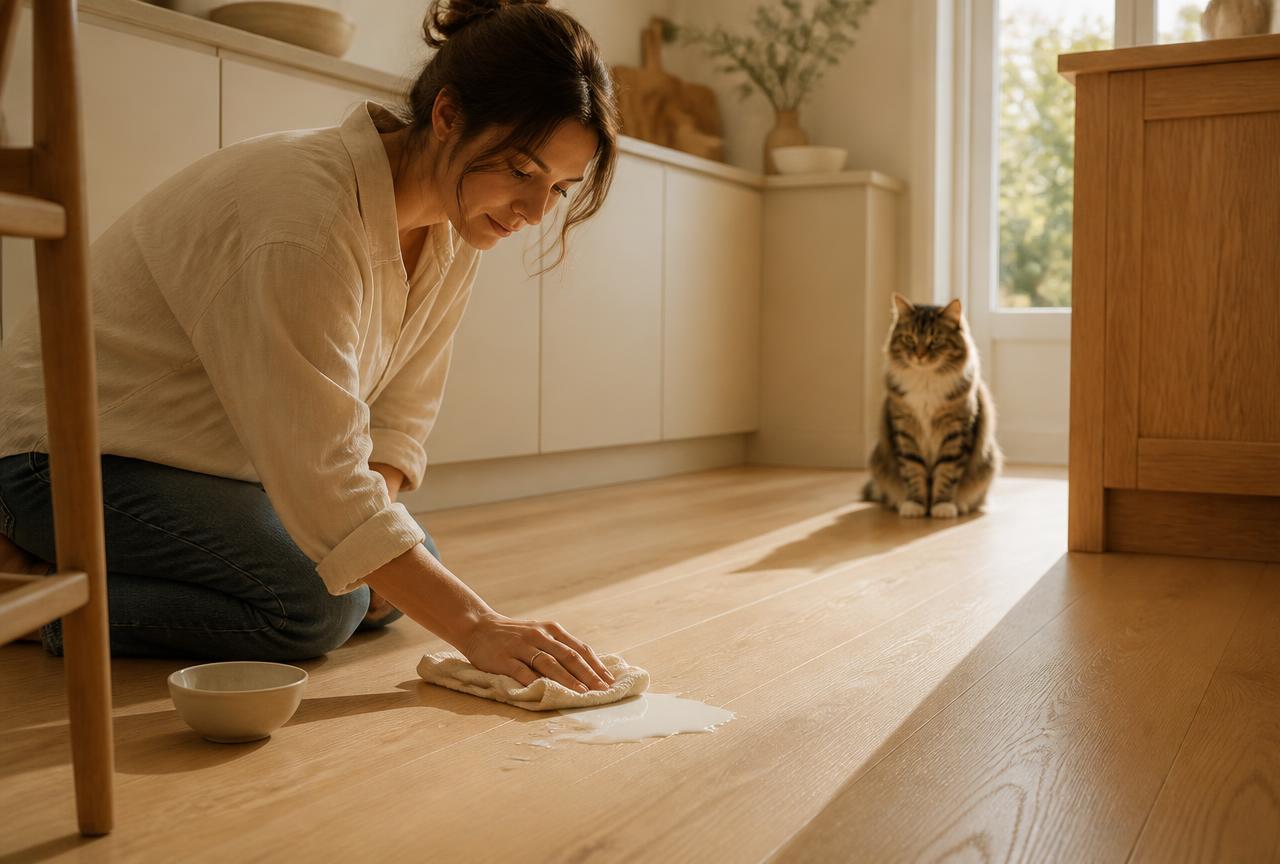
- 3Watch the litter tray for 24 hours. Soft or loose stools within a day are the classic, self-limiting response. Feed normally.
- 4Phone the vet if it goes past 24 hours, if there is vomiting with it, if the cat seems flat, or if a kitten was the one who drank it.
- 5Do not make it a habit. One incident is a story. A weekly saucer is a pattern with consequences.
Kittens are the exception that proves the rule
A kitten under eight weeks is built for milk, but for cat milk, specifically. Cow''s milk is the wrong composition for a kitten: too little protein and fat, too much lactose, and a genuine risk of diarrhoea that a one-kilo animal cannot afford. If you find yourself feeding an unweaned kitten, the only safe option is a kitten milk replacer, bottle-fed on a schedule, and that is a vet-adjacent situation from the first hour. Weaning kittens move onto water as their drink, and there is no stage of life where they need to move back.
The milk checker
Three questions, which milk, how much, what happened since, cover what most vets ask first over the phone. Answer them here and read the verdict.
Interactive
The milk checker
Which milk, how much, and what happened since. The three answers most vets ask first, read back as a verdict.
Verdict
This is the classic pattern that ends in loose stools. Most adult cats are lactose intolerant, and a regular saucer of cow's or goat's milk is enough to trigger it. Water is the right daily drink.
What to do
- Nothing to do. Put the milk back in the fridge and the water bowl back in charge.
Kittens under eight weeks need kitten milk replacer, never cow's milk, whatever the amount.
The verdict, by household
The cat who stole a lick from your cereal bowl. Nothing to do. This is the most common milk incident in the world and it resolves itself.
The cat who gets a saucer every morning and seems fine. You may have one of the lactase-retaining minority, or a cat quietly having soft stools you have attributed to something else. Either way, the calorie maths still applies. Swap the ritual to a measured treat or a few pieces of kibble from the daily ration.
The multi-cat household where milk is a peace offering. Rituals matter to cats, but the substance in the saucer is not the ritual. Warm water with a splash of the juice from a tin of tuna in spring water does the same job with none of the fallout.
The kitten finder. Kitten milk replacer only, and a call to a vet practice today, not when convenient.
If you want a treat that does something useful, a little extra wet food at a meal adds moisture as well as pleasure, which milk never does. And if soft stools have become a recurring theme rather than a one-off, the vomiting and upset-stomach triage is the better next read.
When to call your vet
Milk itself is rarely an emergency. The signs that turn a dietary mishap into a phone call are the usual ones: vomiting or diarrhoea lasting beyond 24 hours, blood in the stool, a cat who goes flat and stops eating, or any of this happening in a kitten. Recurring loose stools that only seem to follow milk still deserve a mention at the next check-up, because "it''s just the milk" is a diagnosis worth confirming rather than assuming.
Frequently asked questions
The questions below cover the ones people actually search for, lactose-free, plant milks, kittens and the cat who seems to be fine with it all.
Questions people actually ask
Can cats drink milk at all?
Most adult cats can manage a lick or two without harm, but a full saucer of cow''s milk usually causes gas and loose stools within 8 to 12 hours, because adults produce too little lactase to digest the lactose. Milk is not toxic; it is a gamble most adult cats lose. Water is the only drink they actually need.
Can cats drink lactose-free milk?
Yes, in small amounts. Lactose-free cow''s milk removes the sugar that causes digestive trouble, so most adult cats tolerate a small saucer occasionally. It still contains calories and no nutrient missing from a complete cat food, so treat it as an occasional extra rather than a regular drink.
Can cats drink almond milk or other plant milks?
A lick of unsweetened almond or oat milk is not dangerous, but plant milks offer cats nothing useful. Many contain added sugar, thickeners or flavourings that have no place in a feline diet, and sweetened versions are best avoided entirely. If your cat likes the ritual, plain water or a little tuna juice in water is the better stand-in.
Are cats lactose intolerant?
Most of them are. Kittens produce plenty of lactase, the enzyme that digests milk sugar, but production falls away after weaning. The typical adult cat cannot break down the lactose in a saucer of milk, so it ferments in the gut and produces gas, cramping and soft stools. A minority retain enough lactase to cope with small amounts.
Can kittens drink cow''s milk?
No. Cow''s milk has the wrong composition for kittens, too little protein and fat and too much lactose, and can cause diarrhoea that is genuinely dangerous for a very small animal. Unweaned kittens need a commercial kitten milk replacer, and a vet practice should be involved from the first day of hand-rearing.
What can I give my cat as a milky treat?
Lactose-reduced ''cat milk'' from pet shops is the safest option, given occasionally and counted as part of the day''s calories. Some owners warm a little water with a spoonful of tuna-in-spring-water juice instead, which gives the same ceremony with no lactose and negligible calories. Either beats a saucer of the real thing.
Why does my cat love milk if it upsets her stomach?
Because taste and digestion are separate systems. Milk is rich in fat and protein, which cats are strongly drawn to, and the gut''s inability to process lactose does nothing to dampen the appeal. Cats will reliably choose things that are bad for them in quantity, that is the owner''s job to manage, not the cat''s.
Sources
- WSAVA Global Nutrition Guidelines, World Small Animal Veterinary Association
- Feeding your cat: the basics, International Cat Care
- Foods that can be poisonous to pets, The Humane Society of the United States
- Selecting the right food for your cat, FEDIAF
- Feeding orphaned kittens, Cornell Feline Health Center
Breeds mentioned
Put it into practice
Read next
How to bathe a cat: when it is needed, and how to survive it
How to bathe a cat without bloodshed: when a bath is genuinely needed, the setup, the step-by-step, and when to call a groomer instead.