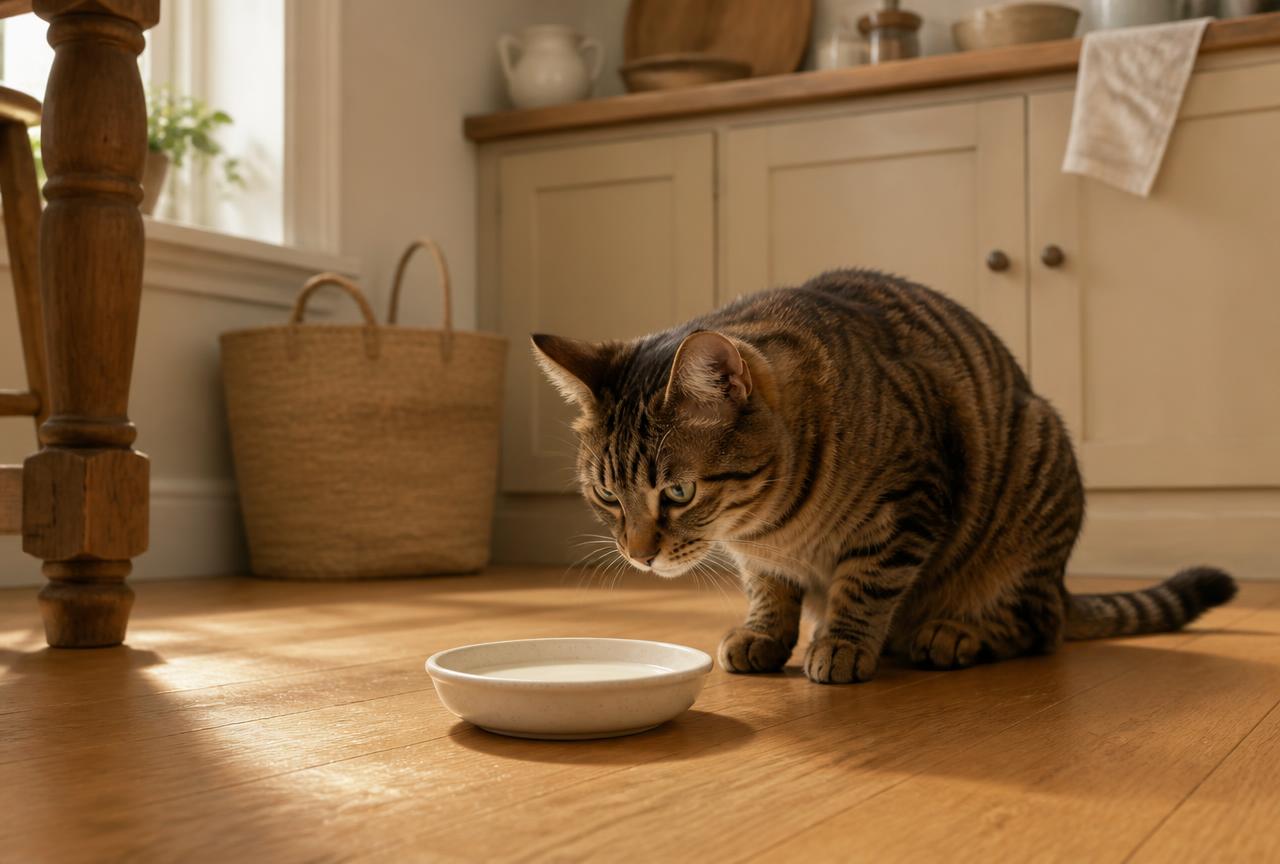
Human foods cats can eat, and the ones to keep off the counter
Plain cooked chicken and egg are genuinely useful. Gravy, onion and a saucer of milk are not. The safe list is short, the dangerous list is shorter, and the portion rule matters more than either.
Marta Silvestri
Feline nutrition writer; certified in companion animal nutrition
Published 20 September 2026

Dr Amara Okonjo, DVM
The short version
- Plain cooked poultry and fully cooked egg are the two most useful safe foods
- Treats of every kind should stay under about a tenth of daily calories
- Onion, garlic and the whole allium family damage feline red blood cells
- Chocolate, caffeine, grapes, raisins, alcohol, xylitol and raw dough are never safe
- Cow milk is not poisonous but most adult cats cannot digest lactose
- Seasoning and gravy, not the meat itself, make most leftovers dangerous
A cat on the worktop, watching you cook, is asking a reasonable question. Most of what we eat is either useless to a cat or actively bad for one, but a handful of plain foods are genuinely safe and occasionally useful: for hiding a tablet, for tempting a cat that has gone off its food, or simply for the pleasure of giving something. The trick is knowing the small safe list, the shorter dangerous list, and the rule that governs both.
The short version
- Plain cooked poultry and fully cooked egg are the two most useful safe foods.
- Treats of all kinds should stay under about a tenth of daily calories.
- Onion, garlic and the rest of the allium family damage feline red blood cells.
- Chocolate, caffeine, grapes, raisins, alcohol, xylitol and raw dough are all off the list.
- Cow's milk is not poisonous but most adult cats cannot digest it.
- Seasoning, not the meat, is what makes most leftovers unsafe.
The rule that matters more than the list
Cats are obligate carnivores with small energy requirements. An average adult cat needs somewhere around 200 to 250 kcal a day, which means a tenth of that budget is about 20 to 25 kcal, which is two thumbnail-sized pieces of chicken. Not a saucer. Not a plateful of what is left.
Everything else must come from a complete food, because a cat's requirements are specific and unforgiving: taurine, arachidonic acid, preformed vitamin A and more, all of which they can only get from animal tissue and all of which a complete food is formulated to supply. A cat fed mostly on human food, however well intentioned, ends up deficient. Our wet versus dry guide covers what that complete base should look like.
Safe, plain, and genuinely useful
Cooked chicken or turkey. Lean, highly digestible, and close to what a cat is built for. No skin, no bones, no salt, no butter, nothing from the roasting tin. This is the food to use when a cat is convalescing or has lost interest in its bowl.
Cooked egg. Scrambled without butter or salt, or hard boiled. Excellent protein, easily digested. Raw egg is a different matter: the raw white binds biotin and both parts carry a salmonella risk.
Cooked white fish or plain salmon. Fine occasionally, cooked and boneless. Keep it occasional. A fish-heavy diet is unbalanced, oily fish in quantity can interfere with vitamin E, and some cats become so fixated on it they refuse their complete food afterwards.
Plain cooked pumpkin or squash. A teaspoon is a useful fibre source, often suggested for sluggish digestion. Plain only, never spiced pie filling.
A few plain cooked vegetables. Green beans, courgette, small amounts of cooked carrot. Nutritionally near pointless for a carnivore, but harmless, and some cats enjoy the texture.
Small amounts of plain cooked liver. Rich in vitamin A, which is precisely why it must stay small: too much over time causes vitamin A toxicity and bone problems.
Occasional at best
Cheese. A fingernail of hard cheese will not hurt most cats and is the classic vehicle for a tablet. But adult cats are largely lactose intolerant, and cheese is dense in fat and salt.
Plain yoghurt. Lower in lactose than milk, tolerated by some cats in tiny amounts. Unsweetened only, and never anything containing sweeteners.
Cooked plain rice or pasta. Filler. Harmless in small amounts, occasionally recommended during a bland-diet phase, of no nutritional interest otherwise.
Tinned fish in spring water. A teaspoon of the fish as a treat is fine. Brine and oil are not, and the habit is easy for a cat to form and hard for an owner to break.
Ham and cooked meats from a packet. Technically meat, practically a salt delivery system, and usually cured with things a cat does not need. Not poison, not a good idea.
The never list
| Food | Why it is dangerous |
|---|---|
| --- | --- |
| Onion, garlic, leek, shallot, chive | Damages red blood cells and causes anaemia, in powdered form as much as fresh |
| Chocolate and cocoa | Theobromine affects the heart and nervous system, dark chocolate worst of all |
| Coffee, tea, energy drinks | Caffeine causes tremors, racing heart and seizures |
| Grapes and raisins | Linked to acute kidney injury, with no established safe dose |
| Alcohol | Toxic in tiny quantities, including in raw dough and uncooked batter |
| Xylitol and other sweeteners | Dangerous in small amounts, common in sugar-free products |
| Raw yeast dough | Rises and ferments in the stomach, producing gas and alcohol |
| Cooked bones | Splinter, and can perforate or obstruct the gut |
| Raw meat and fish | Salmonella, listeria and parasite risk, and raw fish can destroy thiamine |
| Cow's milk and cream | Not toxic, but most adult cats cannot digest lactose |
The single most common mistake is not chocolate, it is gravy. Stock, gravy, stuffing, roast potatoes and most savoury leftovers are built on onion and garlic, which is why the safe answer at a family meal is a piece of plain meat set aside before anything was added to the pan.
Seasoning is the hazard. The meat is rarely the problem.
The five-step routine for offering anything new
- 1Check the list above. If it is not on it, look it up before giving it, not afterwards.
- 2Cook it plainly. No salt, butter, oil, onion, garlic or spice, and no bones.
- 3Offer a thumbnail. One piece, at room temperature, on a plate rather than from the table.
- 4Wait a day. Watch the litter tray and appetite before offering it again. One new food at a time makes any reaction easy to attribute.
- 5Keep the total under a tenth of daily calories, including commercial treats, and take the difference out of the main meal so the daily total does not creep upward.
Verdict by household
One cat, no health conditions. Plain chicken and cooked egg cover everything you would want, and nothing else on the safe list is necessary.
A cat on a prescription diet. Ask the vet before anything. A kidney or urinary diet works because of what it does not contain, and table food undoes it. Our kidney disease piece explains why the margins are narrow.
Households with children. The clearest rule is the easiest to enforce: nothing from the table, ever. Food for the cat comes from the cat's plate in the kitchen.
Busy kitchens and big family meals. Set aside the plain meat before the pan is seasoned, and bin bones and trimmings somewhere a cat cannot reach. Most emergency calls after a holiday meal are about a bin, not a plate.
Multi-cat homes. Treats given by hand to one cat in front of others reliably produce tension. Give them separately or not at all.
When to call your vet
- Anything from the never list has been eaten, in any quantity. Phone rather than watch and wait.
- Vomiting or diarrhoea that lasts more than a day after a new food.
- Pale gums, weakness or breathlessness after allium exposure.
- Tremors, agitation or a racing heart after chocolate or caffeine.
- Any suspicion a bone or a piece of string has been swallowed.
- A cat that stops eating its own food after developing a taste for something else.
Have the name and rough quantity of whatever was eaten ready when you call. With most of this list, timing is what makes the difference.
Questions people actually ask
Sources
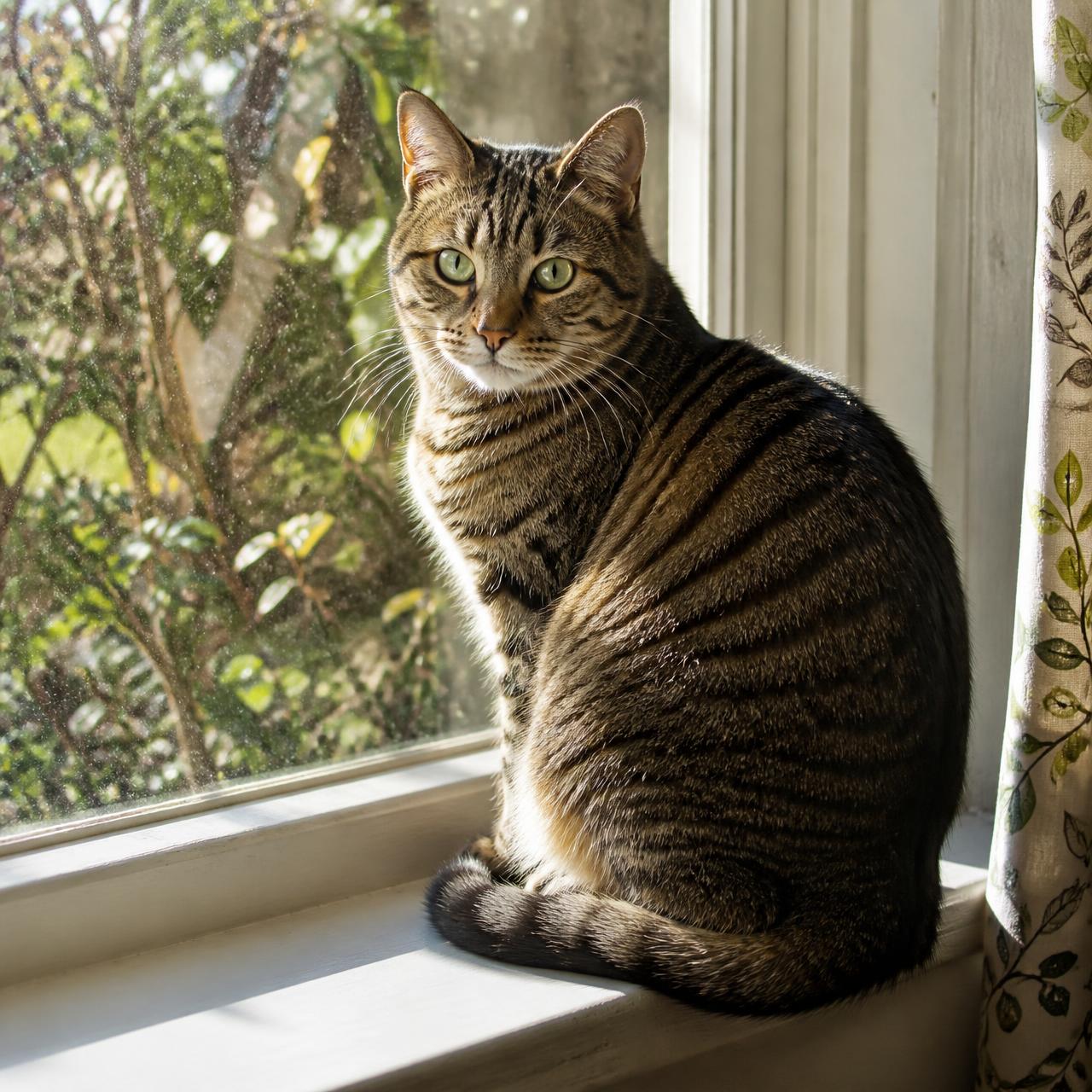
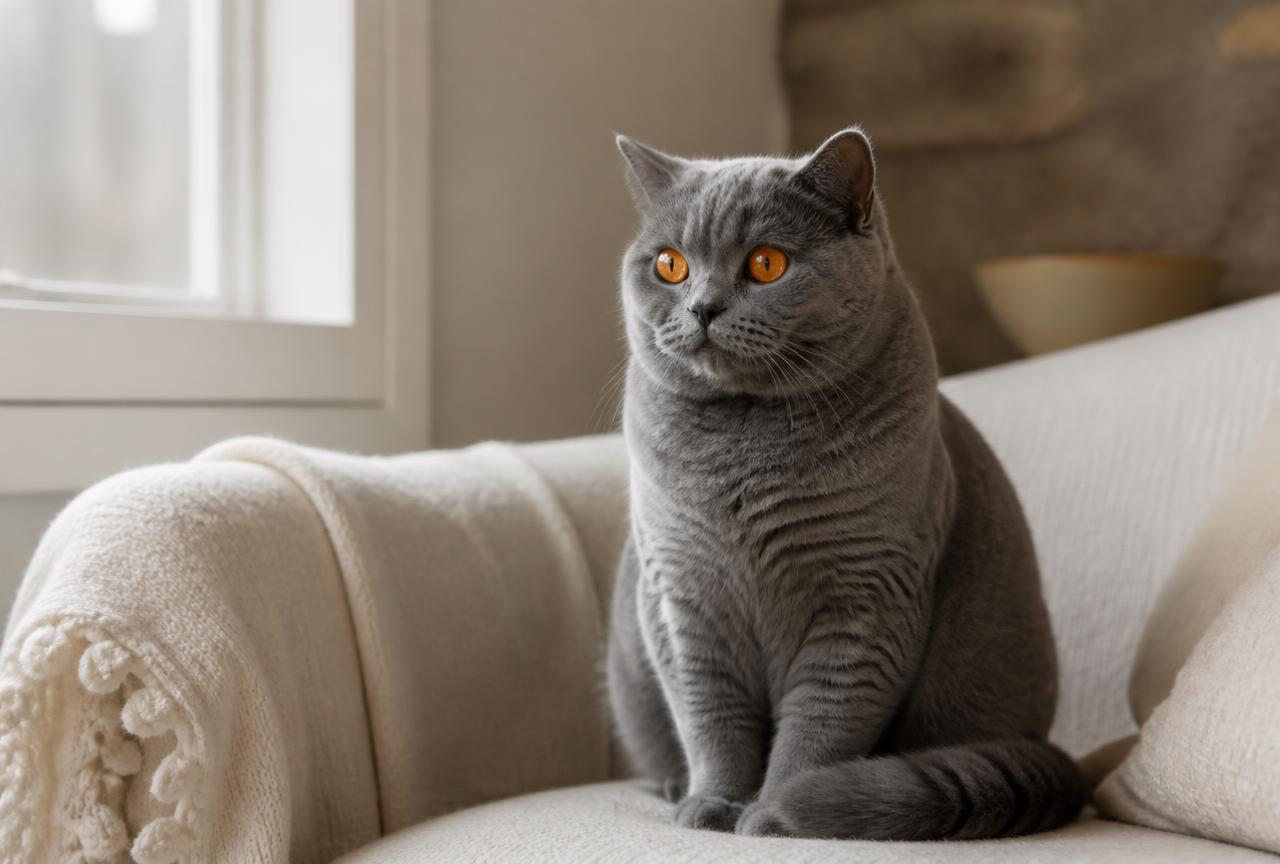
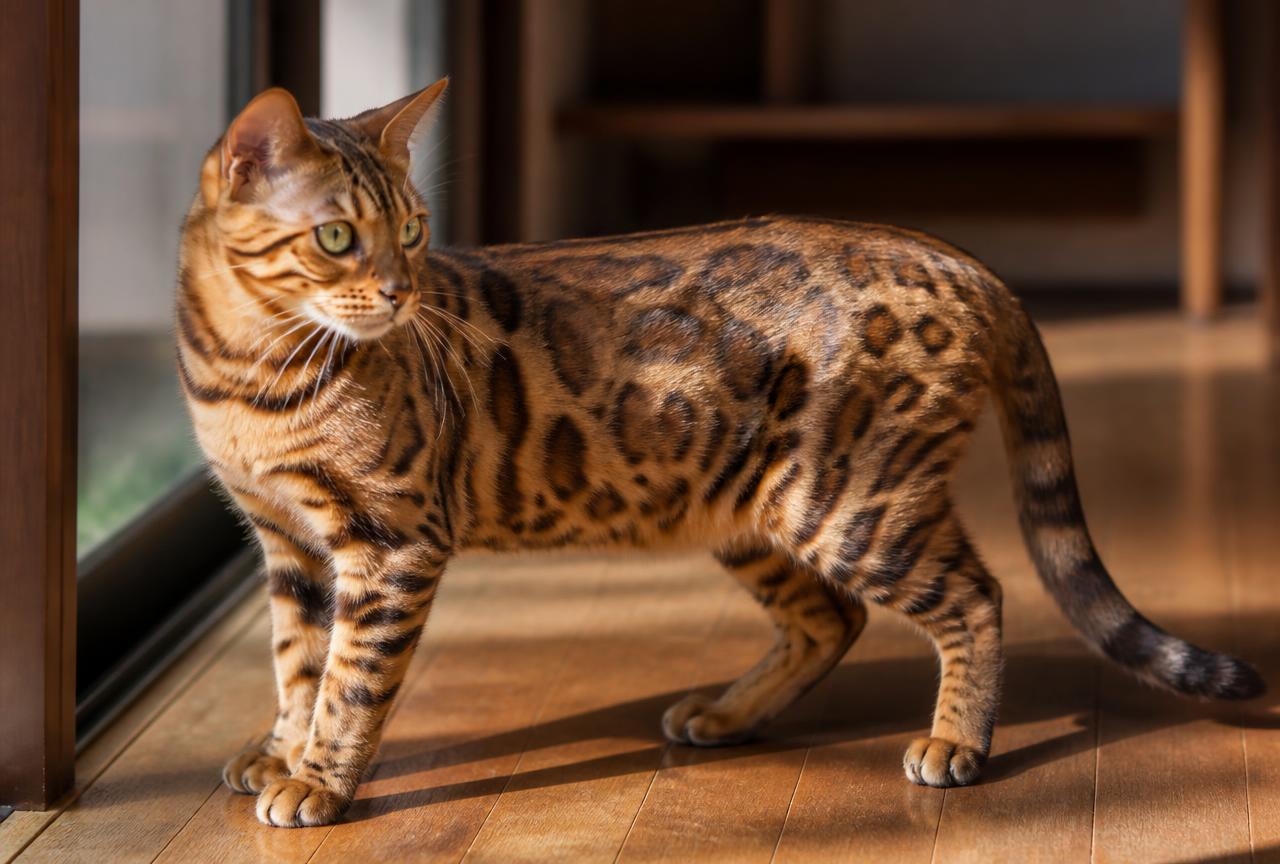
Breeds mentioned
Put it into practice
Read next
Can cats drink milk? What the saucer myth gets wrong
Can cats drink milk? Most adults are lactose intolerant. Which milks are safer, how much is too much, and what to watch for afterwards.