Constipation in cats: the quiet problem hiding behind the litter tray
A cat that stops producing motions rarely announces it with drama. The clues are small, a quiet tray, hard pebbles, a hunched posture, and the fix is usually water, wet food and movement, applied early.
Dr Amara Osei
Feline medicine writer; former veterinary nurse, ten years in small-animal practice
Published 4 September 2026
Dr Tomas Reyes, DVM
The short version
- Know your cat's normal tray rhythm, a change from it matters more than any universal schedule
- Two days without a motion means active home treatment: water stations, wet food, daily play, grooming
- Three days, unproductive straining, or a cat off its food means the vet the same day
- A straining male cat producing nothing may have a blocked bladder, not constipation, an emergency
- Wet food shifts gut water balance more than any other single change
- Human laxatives and home enemas can be fatal to cats, never improvise
Constipation is the least glamorous subject in cat ownership and one of the most useful to understand, because it is common, it creeps, and cats, being cats, would rather hide it than show it. By the time some owners notice, the problem is days old and the fix is no longer a home one.
The good news: caught early, most feline constipation responds to a handful of unglamorous levers, water, wet food, play and grooming. This is how to spot it early, what to do, and when the tray goes from a watching brief to a phone call.
The short version
- Most healthy cats pass a motion roughly once a day; know your cat's own rhythm and watch for change.
- Two days without a motion, or small hard dry pebbles, means act at home now, water, wet food, play.
- Three days, repeated unproductive straining, or a cat off its food means phone the vet the same day.
- Straining with nothing produced at all can be a blocked bladder, not constipation, an emergency, especially in males.
- Dry-food-only cats who rarely drink are the classic set-up; wet food is the biggest single fix.
- Never give human laxatives or home enemas, several are fatal to cats.
What counts as constipated
A normal cat stool is formed but moist, like modelling clay, and most cats produce one daily, though every-other-day can be normal for a particular cat if it is unchanging, effortless and well-formed. The signal is not a calendar; it is a change from your cat's pattern.
Vets divide the territory into three rungs of one ladder. Constipation: infrequent or difficult motions. Obstipation: the colon has essentially stopped producing them. Megacolon: a chronically stretched, weakened colon that has lost its squeeze, the end stage the first two are marching towards if ignored. The point of early action is staying off that ladder entirely.
Why it happens
The causes cluster into a few families:
Dehydration. The colon's job is reabsorbing water, and it does it diligently. A mildly dehydrated cat ends up with dry, hard stools simply because the gut reclaimed every drop. Cats descended from desert hunters, drink reluctantly, and a dry-food diet gives them no dietary water to compensate, kibble runs about ten per cent water against prey's seventy. This is the engine under most feline constipation.
Too little movement. Gut motility follows body activity. The sedentary indoor life, sofa, food bowl, sofa, slows everything, and overweight and elderly cats feel it most. Our indoor enrichment guide has the fixes.
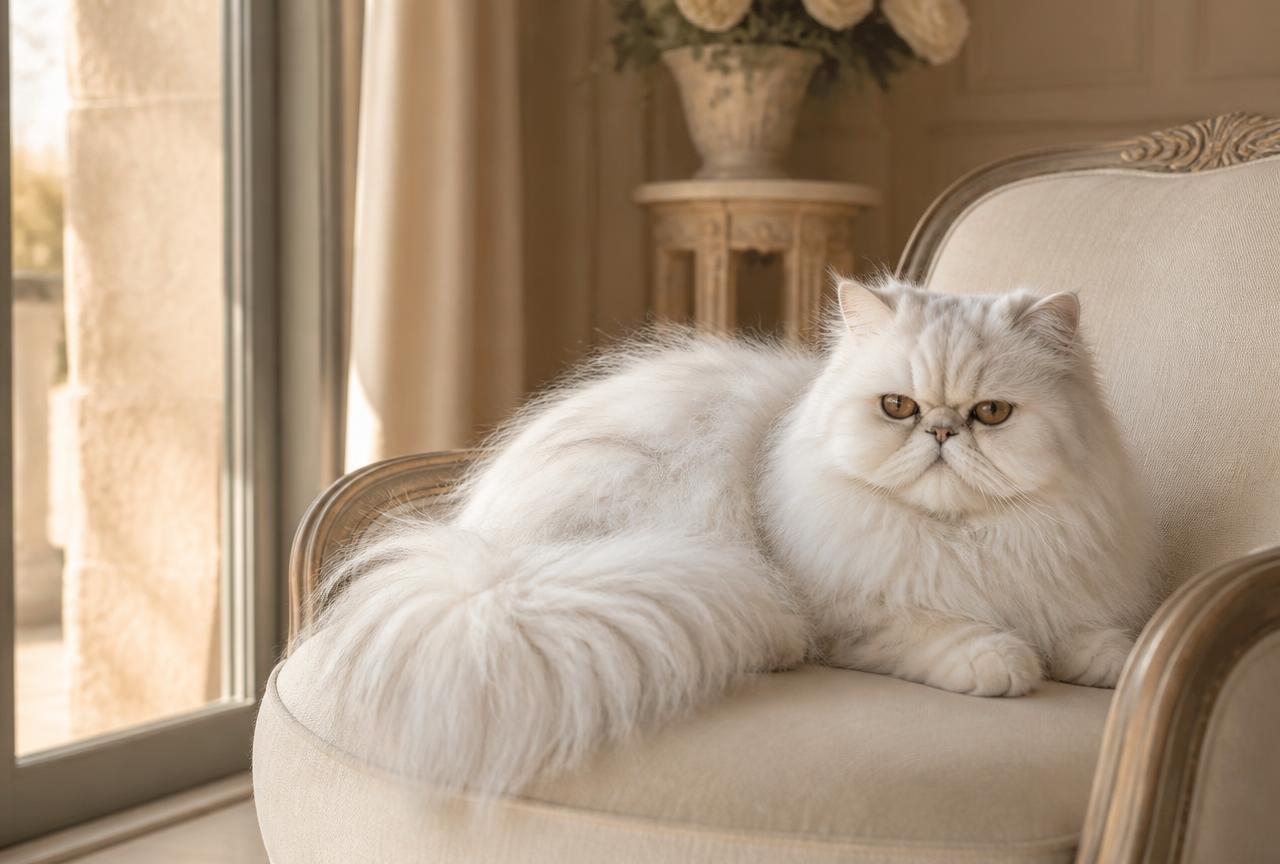
Swallowed fur. Heavy grooming loads the gut with hair, which binds and slows the works, long-haired cats and moulting season worst of all. Ten minutes of brushing a day removes the fur before the cat swallows it; our hairball piece goes deeper.
Pain and avoidance. Arthritis makes the deep squat of the tray position genuinely sore, so the cat postpones it, and postponing dries the stool further. A dirty, crowded or relocated tray produces the same avoidance for behavioural reasons.
The medical list. Kidney disease (via dehydration), thyroid problems, pelvic injuries, swallowed objects, and neurological causes all sit behind some cases, which is why recurrent constipation belongs at the vet, not in another round of home remedies.
The home levers, in order of impact
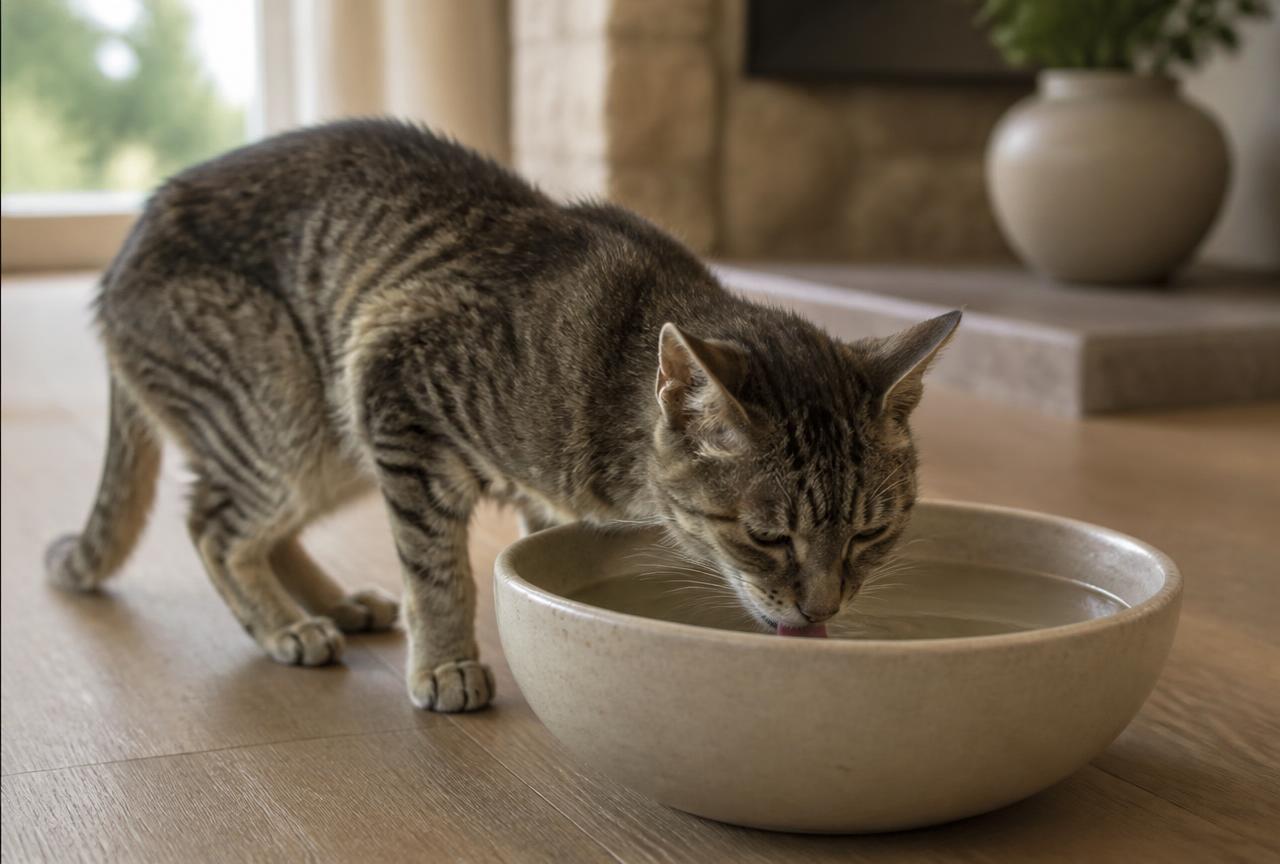
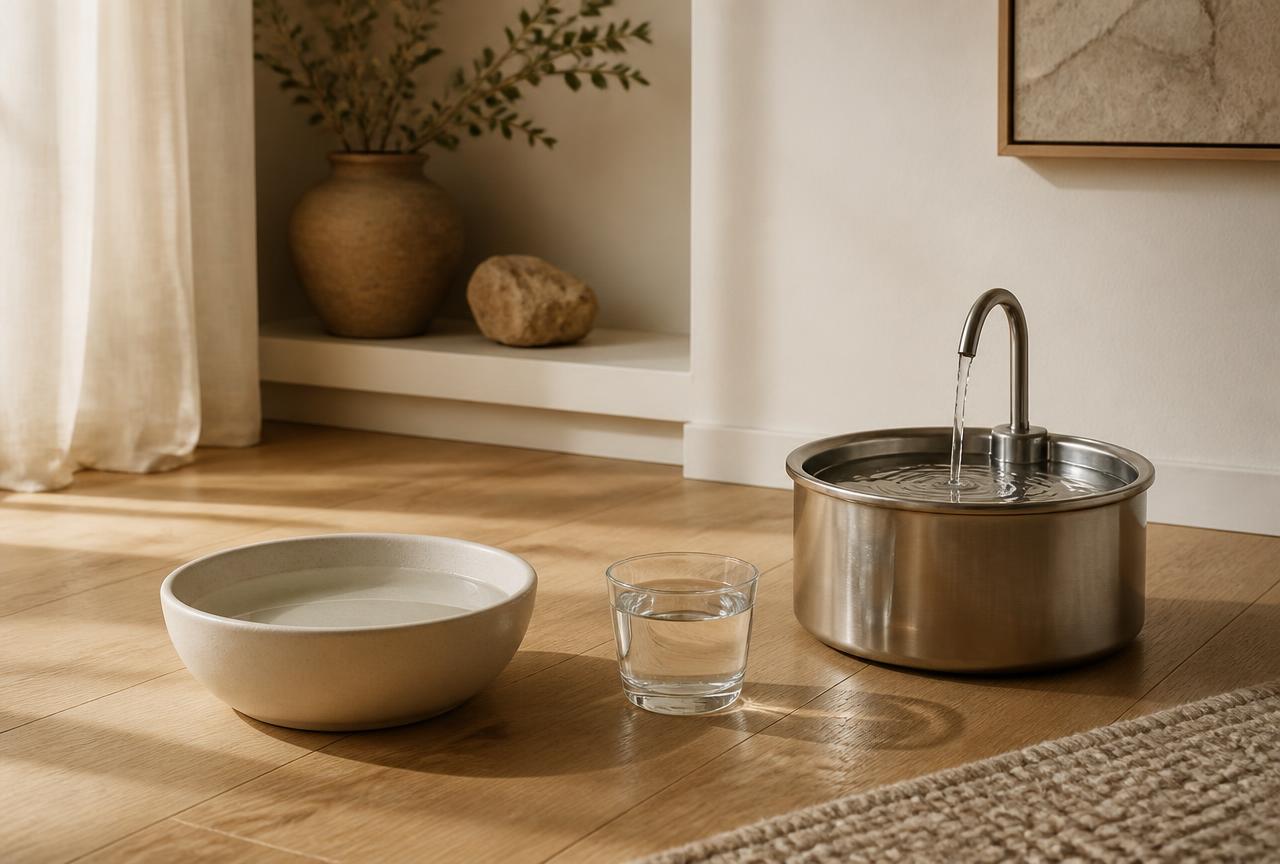
1. Water, everywhere. Multiple bowls in multiple rooms, wide and shallow so whiskers clear the sides, refreshed daily. Many cats prefer running water, a simple fountain earns its place here faster than anywhere else. Our water intake piece has the full picture.
2. Wet food. Moving half or all of the ration to wet food changes gut water balance more than any bowl can. If the diet is currently all-dry, transition over a week, sudden switches swap one gut problem for another, as our wet vs dry guide explains.
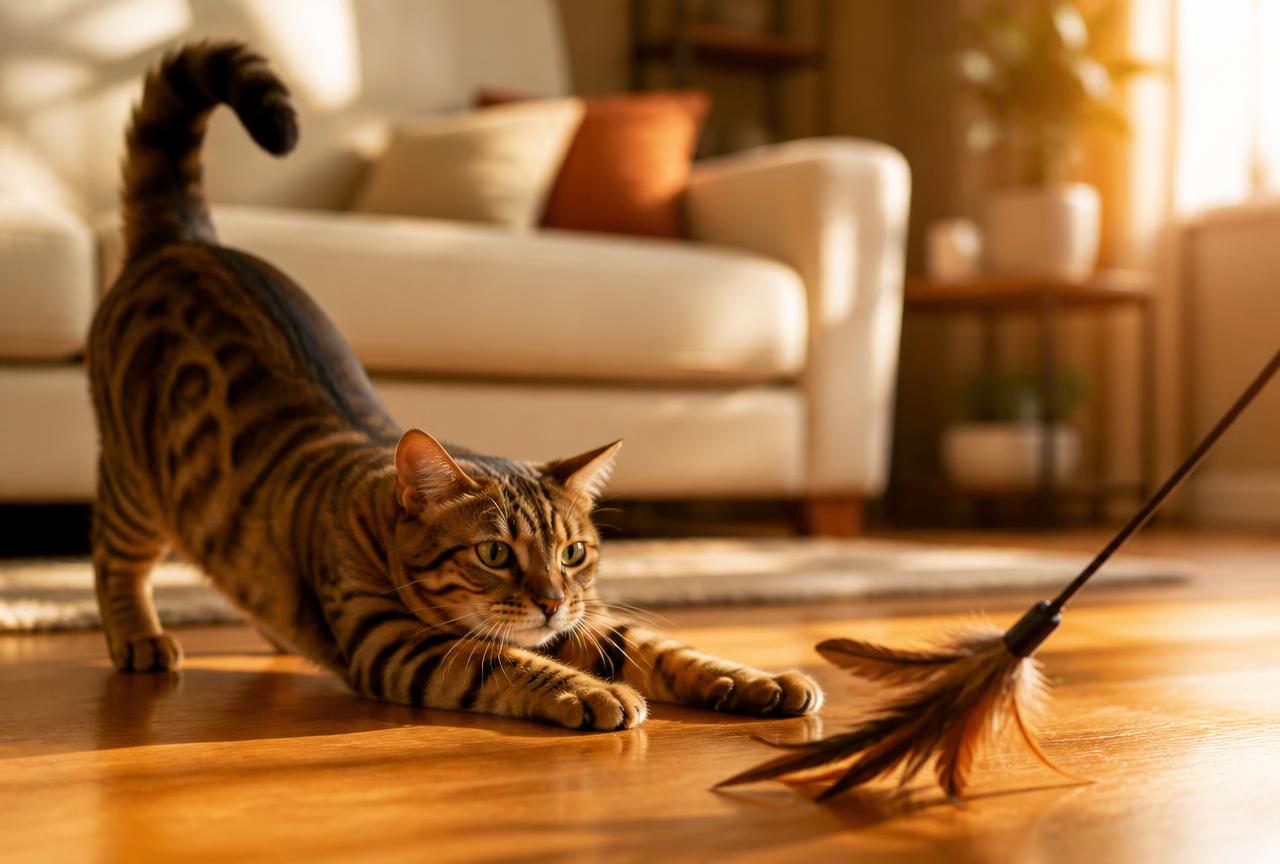
3. Daily play. Two ten-minute hunting sessions a day, chase, pounce, catch, gets the whole animal moving, gut included. It is also the fix with the fastest side benefits.
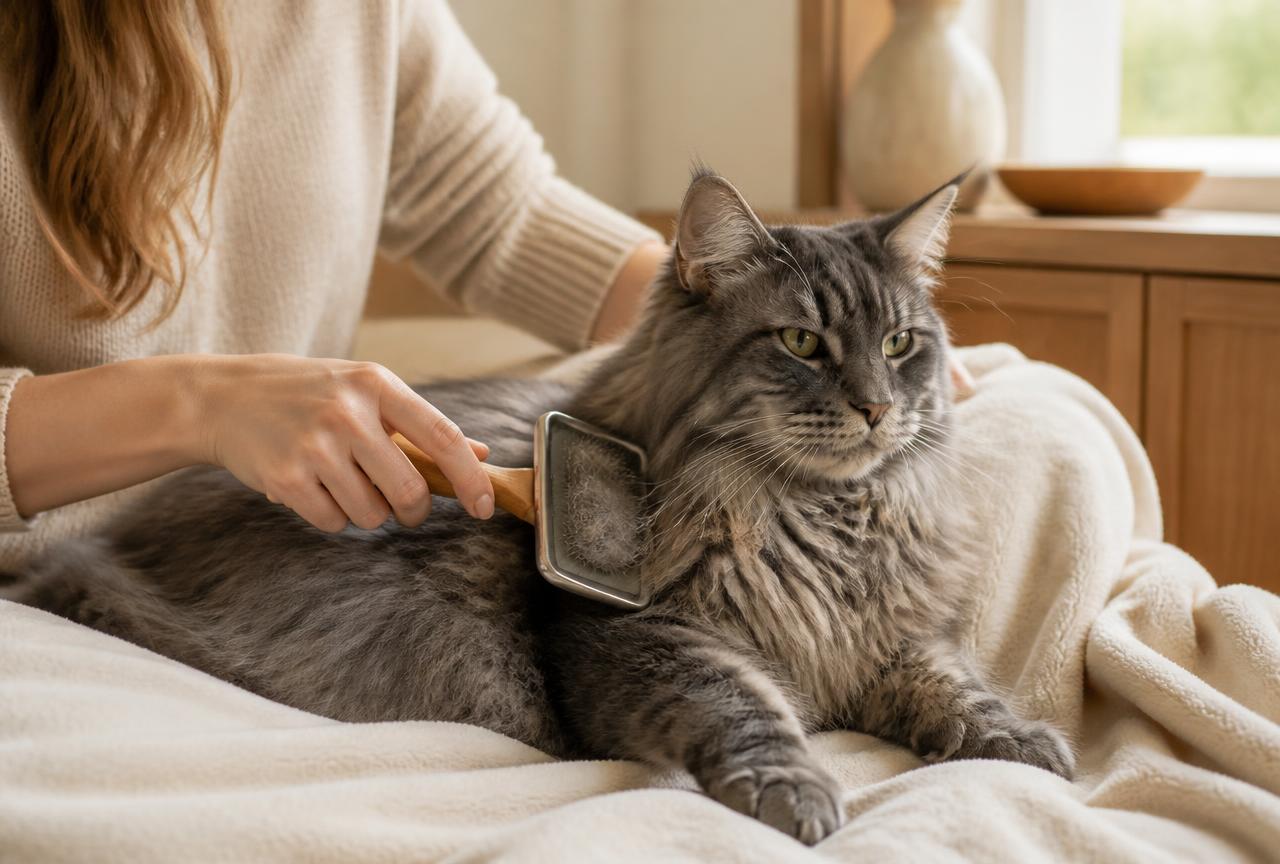
4. Grooming. Especially in moult season and for long coats: daily brushing takes the fibre load off the digestive tract.
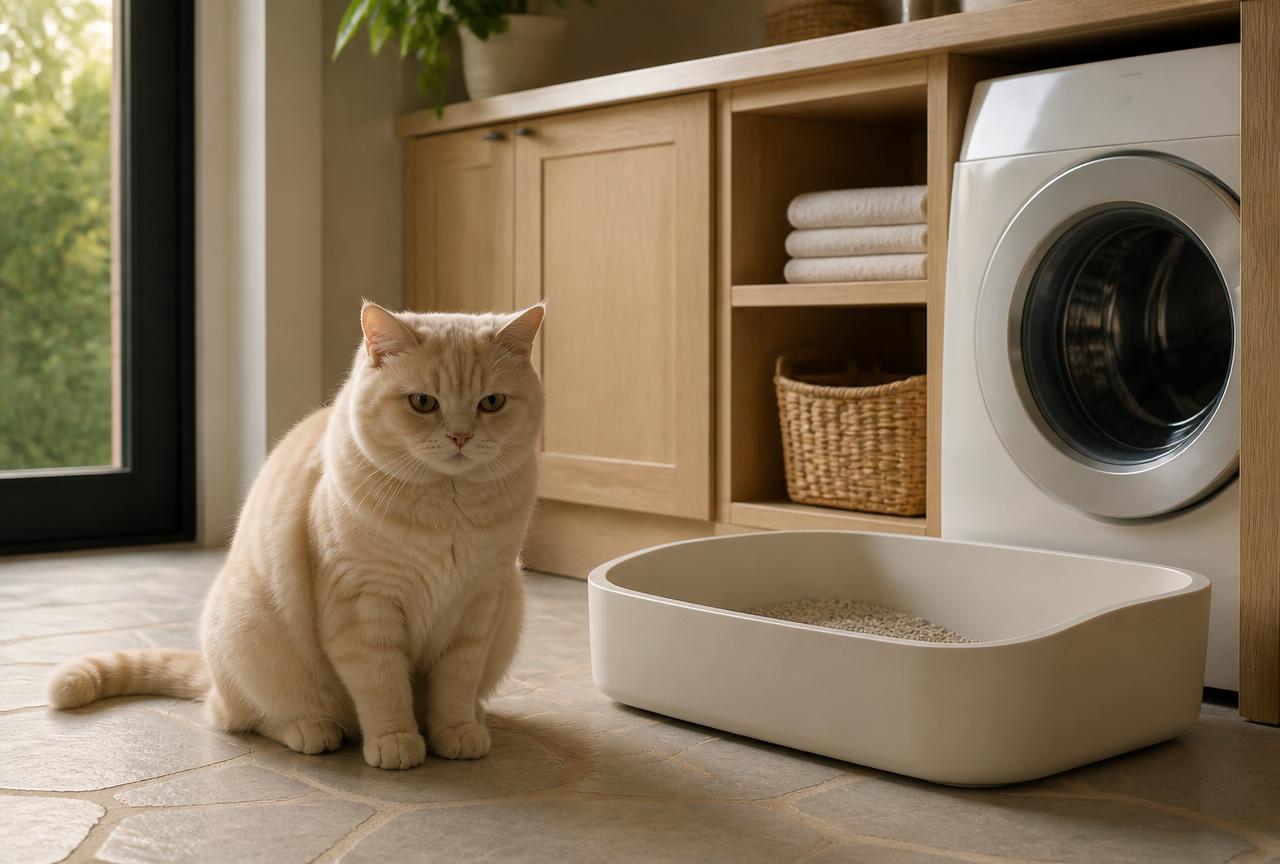
5. Tray management. One tray per cat plus a spare, scooped daily, in a quiet, private, easily reached spot. An arthritic senior needs low entry sides; a cat avoiding the tray needs a reason fixed, not a scolding.
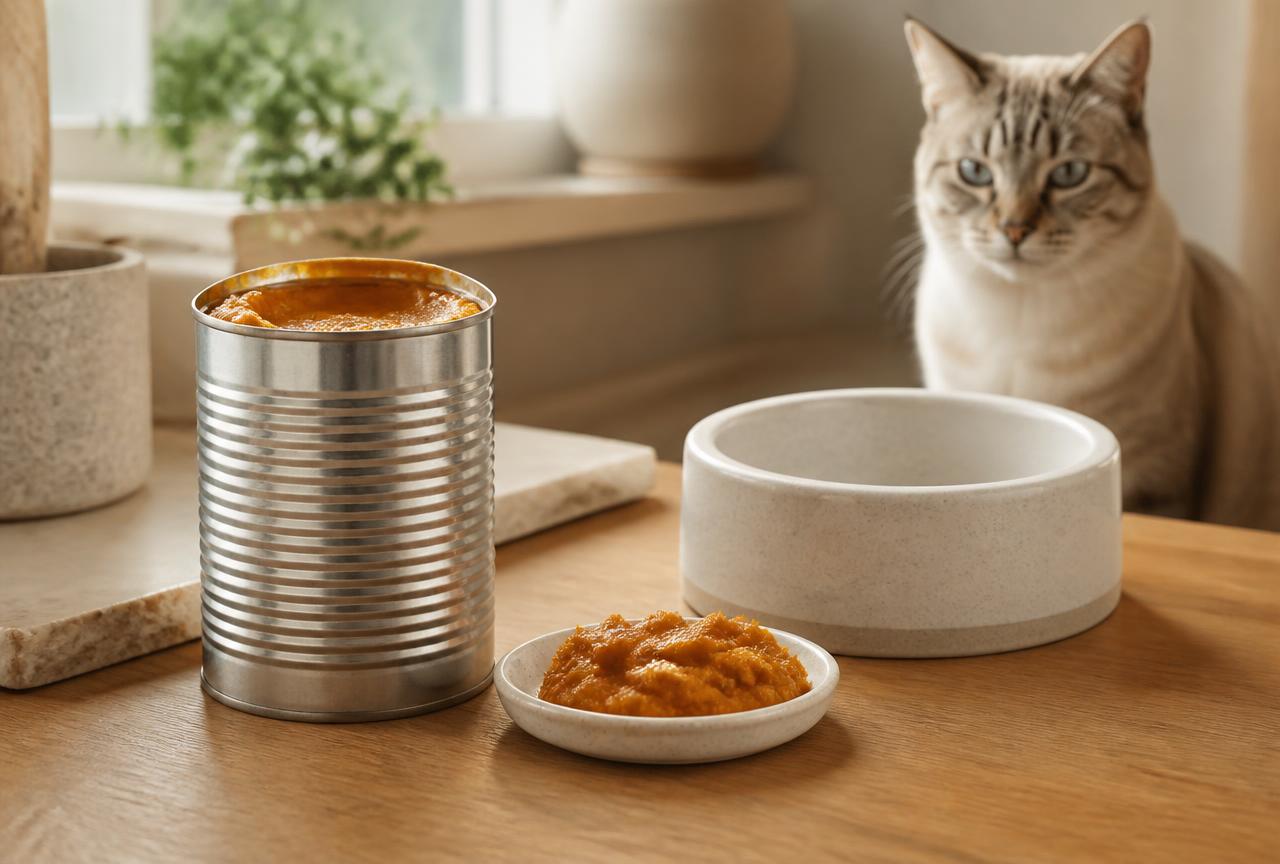
6. Fibre, carefully. A teaspoon of plain pumpkin puree (plain, never pie filling) mixed into food helps some cats; so do vet-formulated fibre supplements. Introduce slowly, too much fibre makes stools worse, not better. Think of it as a garnish on the levers above, not a substitute for them.
The colon is a patient organ. It will reabsorb water from a stalled stool for days, turning a soft problem into a stone one.
The straining trap: bladder or bowel?
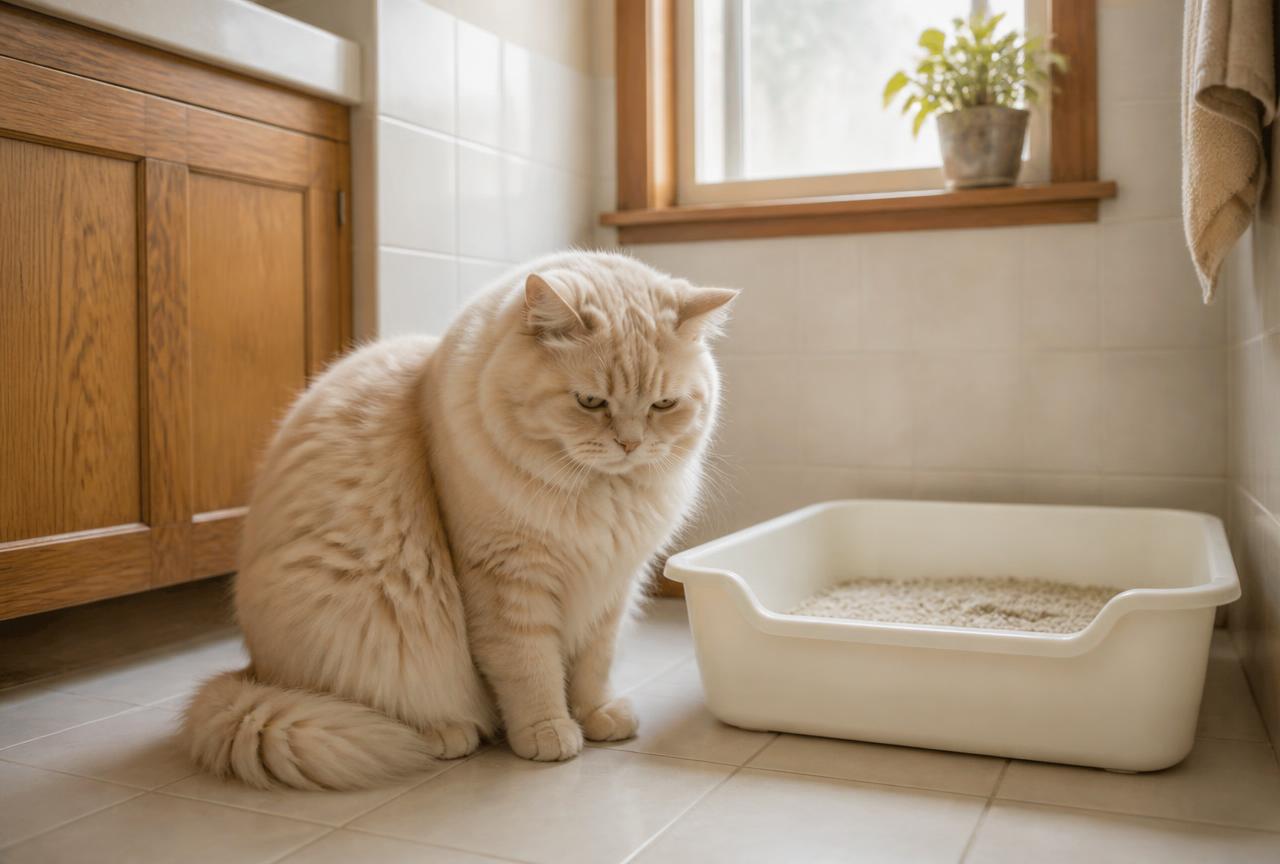
Here is the confusion that matters most in this entire subject. A cat crouching in the tray, straining, producing little or nothing, visiting again and again, that picture has two very different explanations. One is constipation. The other is a blocked bladder, which cannot wait: a male cat with a urethral obstruction can die within a day or two without treatment.
The tells: a constipated cat usually passes *something* eventually, small, hard, dry. A blocked cat passes nothing at all, or drops of urine, and often cries, licks at itself, and deteriorates in front of you. If your male cat is straining in the tray with no result, do not wait to see which it is, phone the vet and say exactly that sentence. The receptionist will hear the urgency in it.
When the vet steps in
Past the home window, the practice has a clear ladder:
- Examination and fluids, the vet can feel the colon, and rehydration alone (sometimes under the skin, sometimes by drip) softens more than any medicine.
- Vet-administered enemas and stool softeners, done properly, under sedation where needed. This is why home enemas are a hard never: products made for humans include ingredients that are fatal to cats.
- X-rays or ultrasound, to check for megacolon, obstructions, or a narrowed pelvis from an old injury.
- Long-term management, prescription diets, motility drugs, and for true megacolon, sometimes surgery.
Costs are indicative and vary by country, but a consultation with fluids typically runs in the 60–150 EUR range, imaging adds a few hundred, and unmanaged constipation that reaches surgery costs far more than any of the early steps. Early is cheap in every sense.
The verdict, by what you are seeing
One missed day, cat otherwise normal: start the home levers today, this is the cheap, easy version of the problem.
Two days, or small hard pebbles: active home treatment, and the 24-hour rule, nothing produced by tomorrow means a phone call.
Three days, straining without result, off food, vomiting, or a bloated painful belly: same-day vet. No exceptions.
Male cat straining with nothing produced: treat as a possible blocked bladder. Same-day, and say so when you phone.
Recurring episodes: stop managing and start investigating, bloods, imaging and a proper look at the underlying list.
The bottom line
Constipation in cats is quiet, common and mostly self-inflicted by the modern indoor life: too little water, too little moisture in the food, too little movement. Catch it at day one with the boring levers and it is a non-event. Let it run to day four and it is a procedure. Watch the tray, know your cat's rhythm, and keep the water bowls full.
Interactive
The motion monitor
How long, how hard, how the cat is doing, the three questions that separate a home fix from a phone call.
Reading
Early, fix the foundations
One missed day with a normal cat is the cheapest constipation you will ever have, and the most fixable. This is the moment for the boring levers, water, wet food, play, grooming, rather than the moment for worry. Keep the tray clean so you can trust what you see tomorrow.
Also worth knowing
- Healthy cats vary: once daily is typical, but every other day can be normal for some. Your cat's own pattern matters more than any chart, what you are watching for is a change from it.
A triage guide, not a diagnosis. Never give a cat a human laxative or an enema at home, some are fatal to cats. When in doubt, phone the practice.
Questions people actually ask
Sources
Breeds mentioned
Put it into practice
Read next
Cat sneezing: colds, dust and the signs that need a vet
Cat sneezing a lot? Dust, viruses, dental roots and foreign bodies, how to sort the harmless from the signs that need a vet.