
Why does my cat lick me? Grooming, bonding and when it is too much
Licking is social grooming, the behaviour cats save for family. Here is what it means, why it ends in a nip, how to redirect it kindly, and the point at which it becomes a veterinary question.
Helen Marsh
Feline behaviour and welfare writer; volunteer rehoming coordinator for twelve years
Published 20 September 2026
Dr Tomas Reyes, DVM
The short version
- Licking a person is social grooming, reserved for cats and people in the group
- It mixes scent, which is how cats mark who belongs together
- The rough feel comes from backward-facing barbs that wick saliva into the coat
- Licking that ends in a nip means the session went on past its natural end
- Demand licking is learned behaviour and fades when the reward is removed
- Bald patches, broken skin or licking that cannot be interrupted needs a vet
A cat settles against your arm, starts licking the back of your hand, and keeps going long past the point where it stops feeling pleasant. It is one of the friendliest things a cat does and one of the least comfortable to receive. Understanding what the behaviour is for makes it easier to enjoy, easier to interrupt without offence, and easier to recognise on the rare occasion when it has turned into something else.
The short version
- Licking a person is social grooming, the behaviour cats reserve for family.
- It mixes scent, which is how cats mark who belongs to the group.
- The sandpaper feel comes from backward-facing barbs on the tongue.
- Licking that ends in a nip usually means the session went on too long.
- Licking as a demand, just before meals, is learned and easily reinforced.
- Compulsive licking, or bald patches on the cat itself, needs a vet rather than interpretation.
What licking means in cat language
Cats that live together groom each other. The technical name is allogrooming, and in colonies it is not evenly distributed: it happens between related cats and between cats that have chosen each other, and it concentrates on the head and neck, the areas a cat cannot easily reach itself. It does two jobs at once. It keeps the coat in order, and it blends individual scents into a shared group scent, so that everyone in the group smells partly of everyone else.
When a cat licks your hand, your hair or your face, it has filed you under group. That is the whole of it, and it is a genuine compliment from an animal that is discriminating about who it touches.
Kittens learn the behaviour from being licked. Their mother grooms them from birth, and grooming becomes permanently associated with safety, warmth and being cared for. An adult cat grooming a person is running that early programme in both directions.
Why it feels like sandpaper
The feline tongue is covered in papillae, backward-facing keratin spines built to comb through fur and strip meat from bone. Recent imaging work has shown that they are scooped rather than solid, wicking saliva down to the skin, which is how a cat cleans itself so effectively with so little water. On your skin, with no fur to pass through, those same spines are simply rough. There is nothing wrong with it and nothing to fix, although the hand you offer for licking may as well be the one with the least sunburn.
A cat that grooms you is telling you which group it thinks you belong to. The texture is incidental.
Five reasons, and how to tell which is which
Affection and group scent. The most common. Comes when the cat is settled and relaxed, often with kneading and a purr, and stops when the cat drifts off.
Taste and smell. Skin carries salt, and hands carry whatever you last touched. Hand cream, butter, sun cream, the faint trace of the food you cooked. This is why the licking sometimes has a very specific focus, and it is worth checking what is on your skin, since some cosmetic ingredients are best not ingested.
A request. Licking that appears exactly when you sit down in the evening, or eleven minutes before the usual feeding time, has been learned. It works, so it continues. It sits in the same family as the solicitation purr and the ankle weave.
Comfort seeking and stress. Some cats groom more when they are anxious, and a few extend that to their people. Licking that has become relentless, joyless and hard to interrupt is worth taking seriously, especially after a house move, a new pet or a change in routine.
Early weaning habits. Cats separated from their mother very early sometimes suckle and lick fabric, wool or skin into adulthood. Harmless in most cases, but fabric chewing that leads to swallowing threads is not.
When licking turns into a nip
Plenty of cats lick a hand for thirty seconds, then grab it and bite, and the owner concludes the cat is unpredictable. It is not. Grooming is a social exchange with a natural end, and cats mark the end with teeth, exactly as they do with each other. What you are seeing is the signal, not a change of heart.
The pattern usually runs: contented licking, a slight tail flick, the ears rotating outward, a stillness, then the grab. Read the tail and end the session a beat earlier and the nip disappears. Our body language guide sets out the full sequence, and the biting piece covers overstimulation in more depth.
Redirecting it without a rebuff
- 1Decide the rule and keep it. Cats learn patterns, not exceptions. Allowing it half the time teaches persistence.
- 2Offer an alternative in the same moment. A soft brush, a wand toy, a grooming mitt. The impulse is social, so give it somewhere to go.
- 3Move rather than scold. Stand up, fold the arm away, end the session calmly. Shouting or flicking the nose damages trust and teaches nothing.
- 4Cut the reward if it is a demand. Feeding on a fixed routine, rather than in response to licking, removes the payoff within a fortnight.
- 5Keep your skin uninteresting. Wash off hand cream and sun cream before a lap session, both for the licking and because a cat should not be ingesting them.
- 6Add a play session in the evening. A well-exercised cat asks for less, in every register. Our enrichment guide covers what actually works.
Verdict by household
One cat, one adult. Usually pure affection, and the only decision is how much of it you want. Consistency is all that is needed.
Households with children. Teach children to offer a hand rather than a face, and to read the tail. A child who learns the pre-nip signals will be bitten far less often, by this cat and every other.
Multi-cat homes. Watch who grooms whom. Cats that groom each other are a bonded pair, and separating them at rehoming or at the vet is harder on them than people expect.
Newly adopted cats. Licking within the first weeks is a strong sign of settling in. Let the cat set the pace and keep sessions short.
Immunocompromised households. Discourage licking of faces and broken skin as a sensible precaution, and keep licking away from wounds.
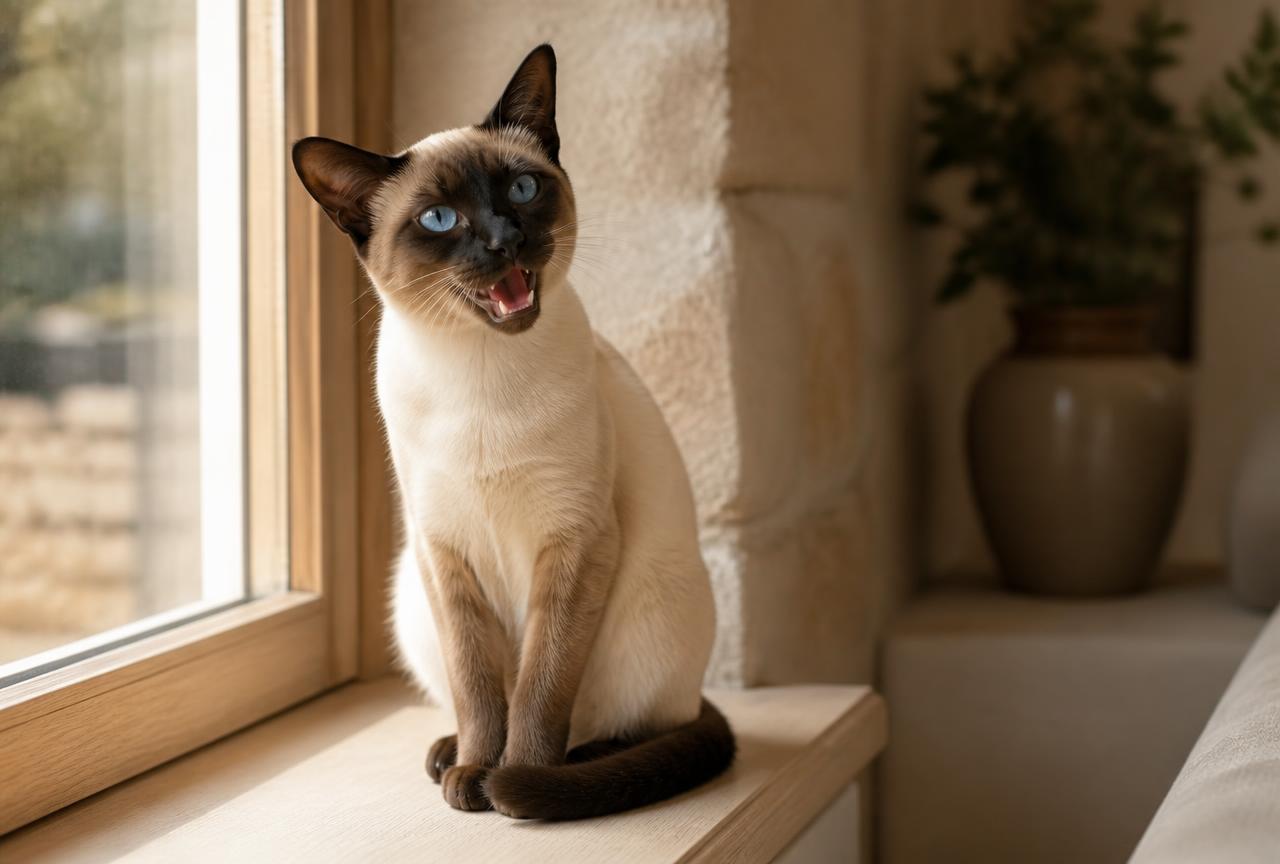
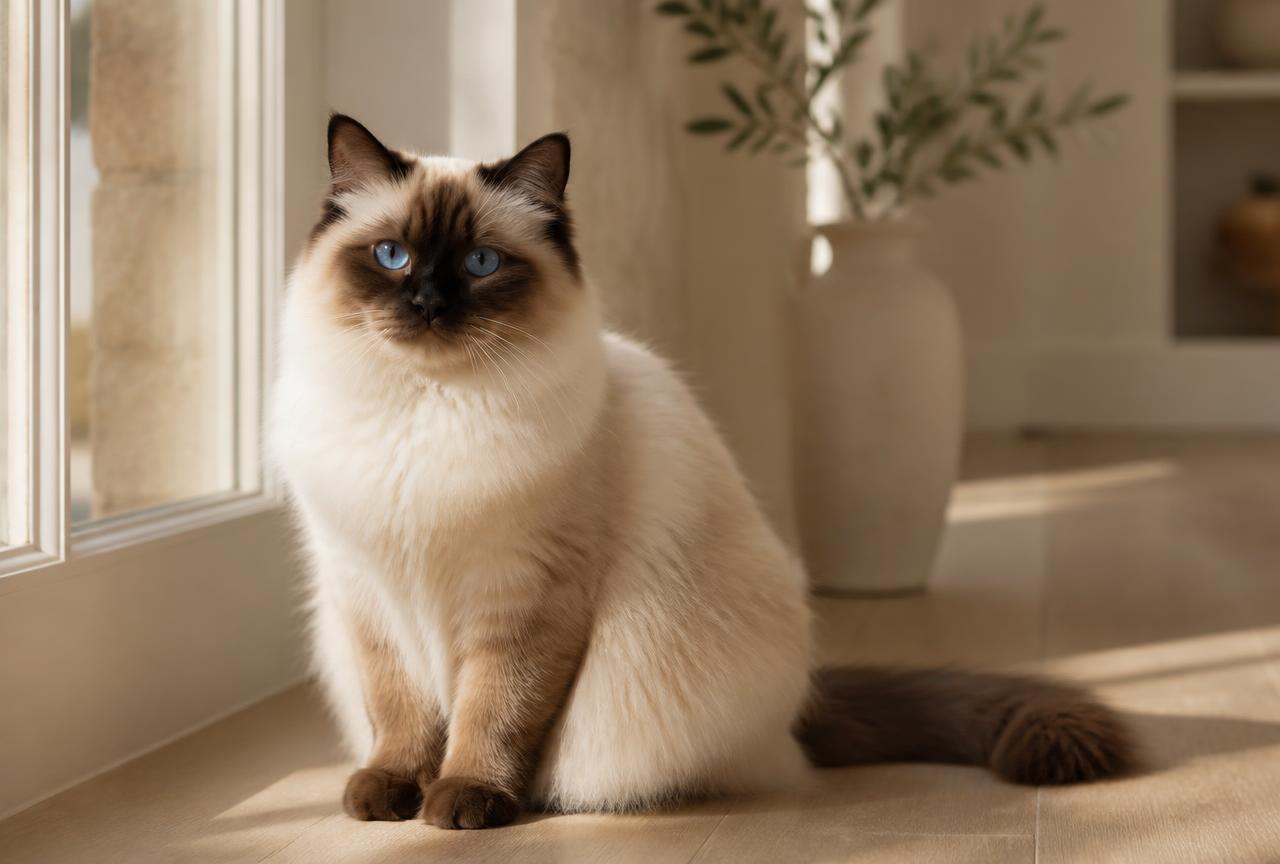
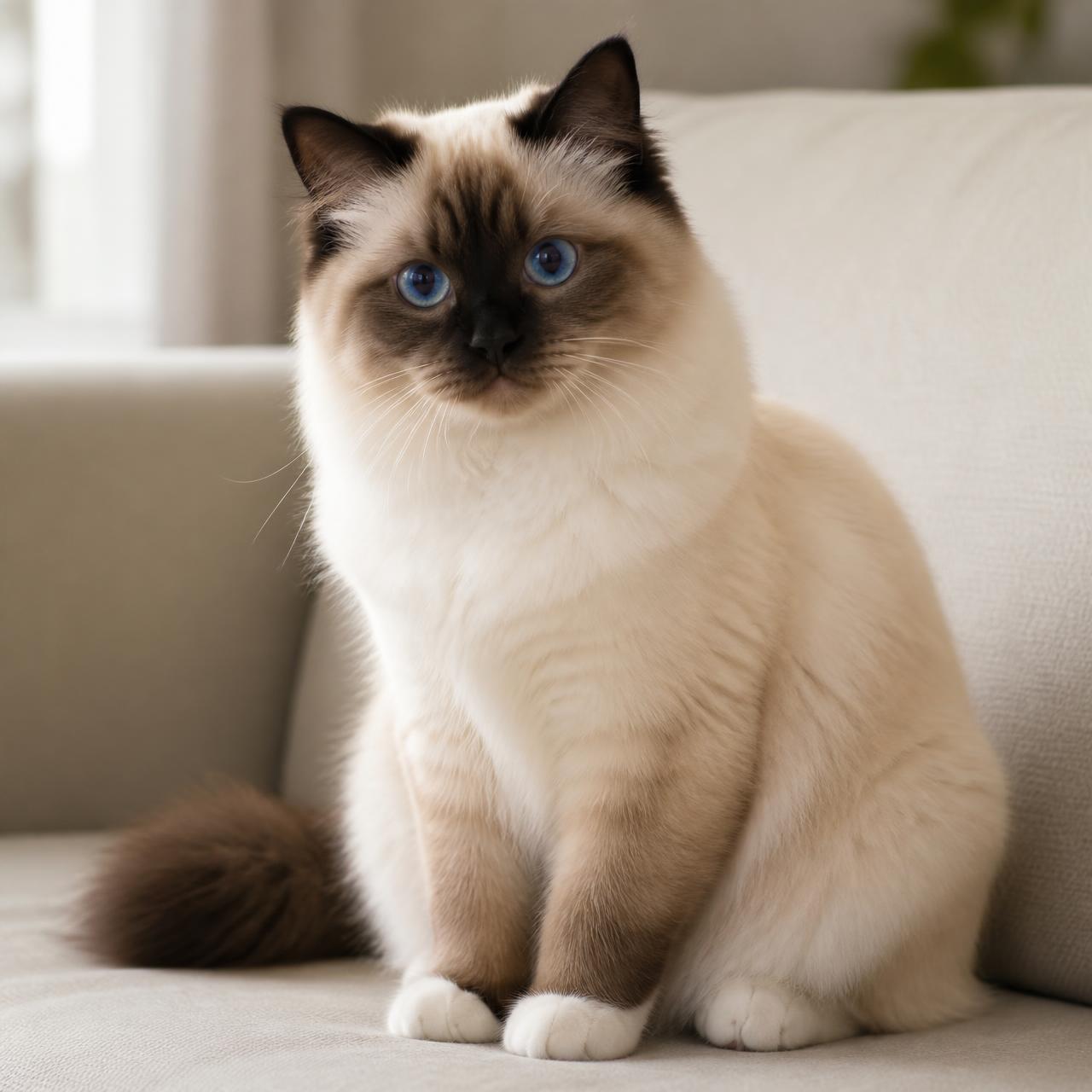
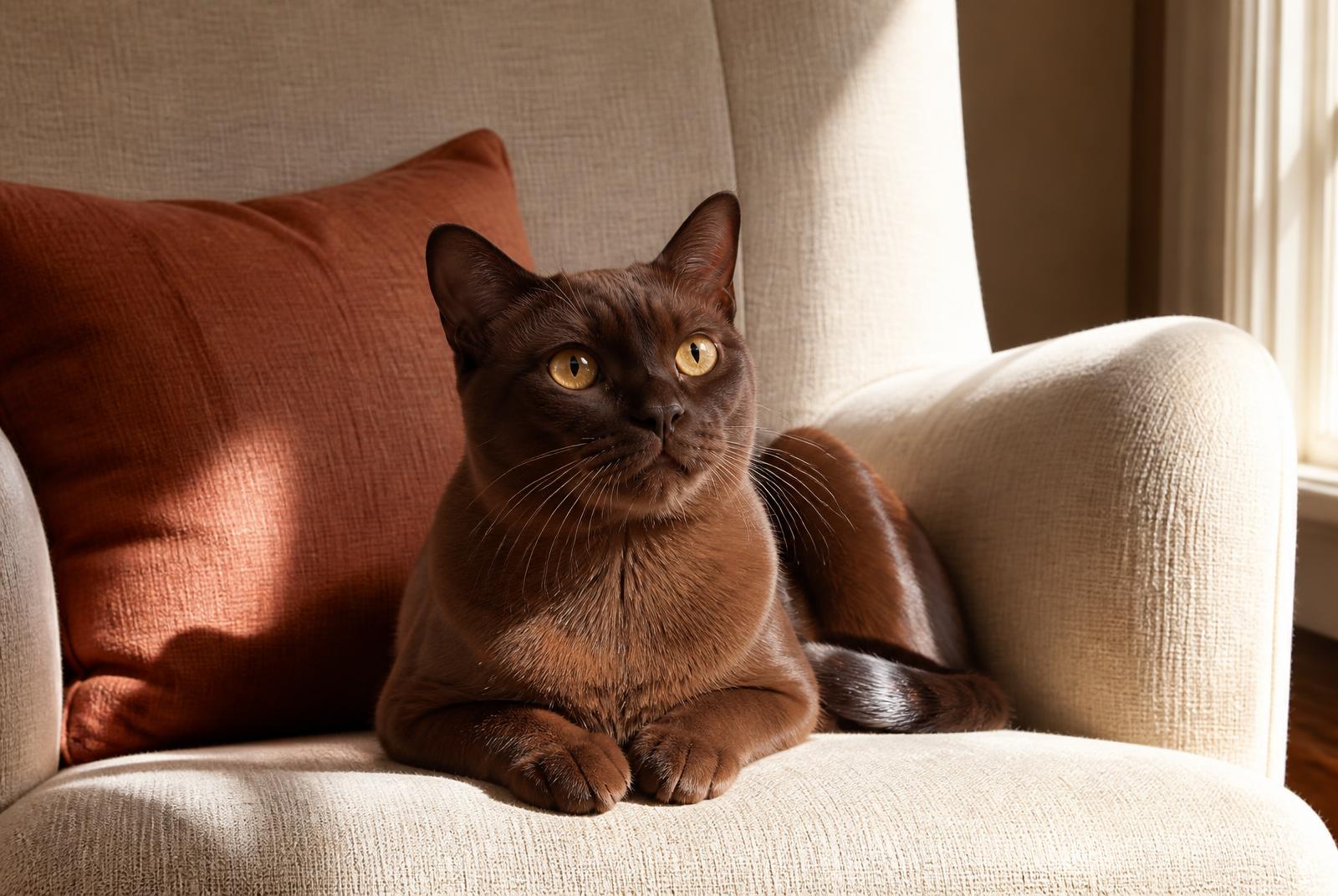
Breeds to expect it from. Ragdoll, Birman, Burmese and Maine Coon owners report more licking than most, simply because these are cats that seek contact.
When licking is a symptom
The behaviour crosses into medicine when it stops being social. Watch for:
- Bald patches or thinning fur on the cat itself, especially on the belly, inner thighs or flanks. That is overgrooming, and the cause is usually fleas, an allergy, pain or stress rather than anxiety alone.
- Licking that cannot be interrupted, or that continues until the skin is broken.
- Fabric or wool eating, since swallowed fibres can obstruct the gut.
- A sudden change in grooming habits, in either direction. A cat that stops grooming is as significant as one that never stops.
- Licking one spot repeatedly, which often marks pain underneath rather than skin trouble.
- Any licking alongside weight loss, increased thirst or hiding.
A vet will check for parasites and skin disease first, then pain, and only then consider a behavioural cause. That order matters, because compulsive grooming is treated very differently depending on what started it, and the physical causes are both more common and more fixable. Our dandruff piece covers the skin side, and the parasite guide the rest.
Most licking needs no intervention at all. It is the part of cat behaviour that most closely resembles being adopted, and the correct response, nine times out of ten, is to sit still and let it happen.
Questions people actually ask
Sources
Breeds mentioned
Put it into practice
Read next
Catnip: why some cats lose their minds, and others shrug
Catnip explained: the genetics behind the response, why a third of cats are immune, how much to give, and the practical jobs it does well.