Why does my cat bite me? From love bites to the real thing
Almost every bite has a cause you can name once you know the categories. Four questions, when, how hard, at whom, at what age, usually settle which one you have.
Jonas Meyer
Certified feline behaviour consultant (IAABC)
Published 5 September 2026
Dr Leonie Brandt, DVM, CertAVP
The short version
- Cat bites fall into a short list of causes: petting threshold, play, handling objection, redirected arousal, or pain.
- Petting bites are advertised in advance by a flicking tail tip, twitching skin or a head tracking your hand, stopping there retrains the cat.
- Play biting is taught, usually by hands-as-toys; the fix is toy-only play plus two daily hunting sessions.
- Redirected bites after window-watching are the hardest and least personal; never handle an aroused cat.
- A new biting habit in an adult or senior cat is a vet appointment before it is a behaviour project.
- Bites that break skin need thorough washing and 48 hours of watching for infection, especially on hands.
One moment the cat is purring under your hand; the next, teeth. It feels like betrayal and it is usually nothing of the sort. Cats bite for a short list of reasons, almost all of them legible, and most of them advertised in advance by a body part nobody was watching.
The mistake is treating "the bite" as one behaviour. A kitten mouthing your wrist in play, a cat nipping your hand after three minutes of stroking and a cat sinking its teeth into whoever walks past the window are three different problems with three different fixes. Getting the category right is most of the work.
The four questions that name the cause
Before anything else, answer these honestly.
- When does it happen? During stroking, during play, when lifted, after window-watching, or apparently at random.
- How hard? A mouth on the skin with no pressure, a pinch that leaves a mark, or a puncture.
- Who gets bitten? Hands and arms during contact, ankles in passing, or anyone in reach.
- How old is the cat, and is this new? A biting kitten is a phase; a biting eight-year-old who never used to is a symptom.
Hold those four answers. Every section below is one of the combinations.
Petting-induced bites: the threshold you cannot feel
This is the most common bite and the most misread. The cat solicits contact, enjoys it, and then crosses a threshold where the sensation tips from pleasant to intolerable, the same nerve input, repeated, until it registers as irritation. Behaviourists call it petting-induced aggression, which is a grand name for a simple idea: cats have a stroke budget, and it varies by cat, by mood and by body part.
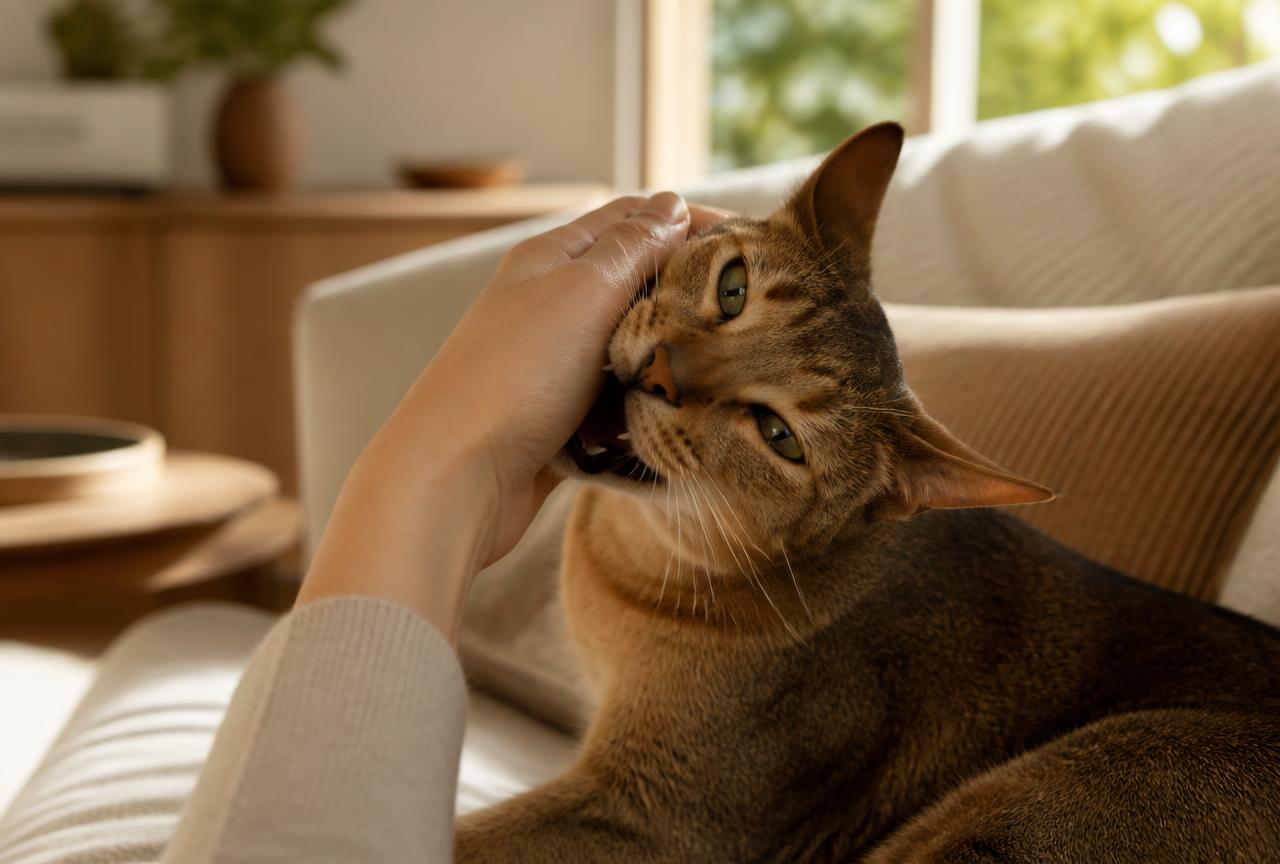
The bite nearly always has a trailer. Ten to thirty seconds beforehand you will see some of: the tail tip starting to flick, the skin rippling or twitching under your hand, the ears rotating sideways, the head turning to track your hand, the body going still. None of these is subtle once you know to look. The cat who "bites out of nowhere while purring" is usually a cat whose warnings went unanswered.
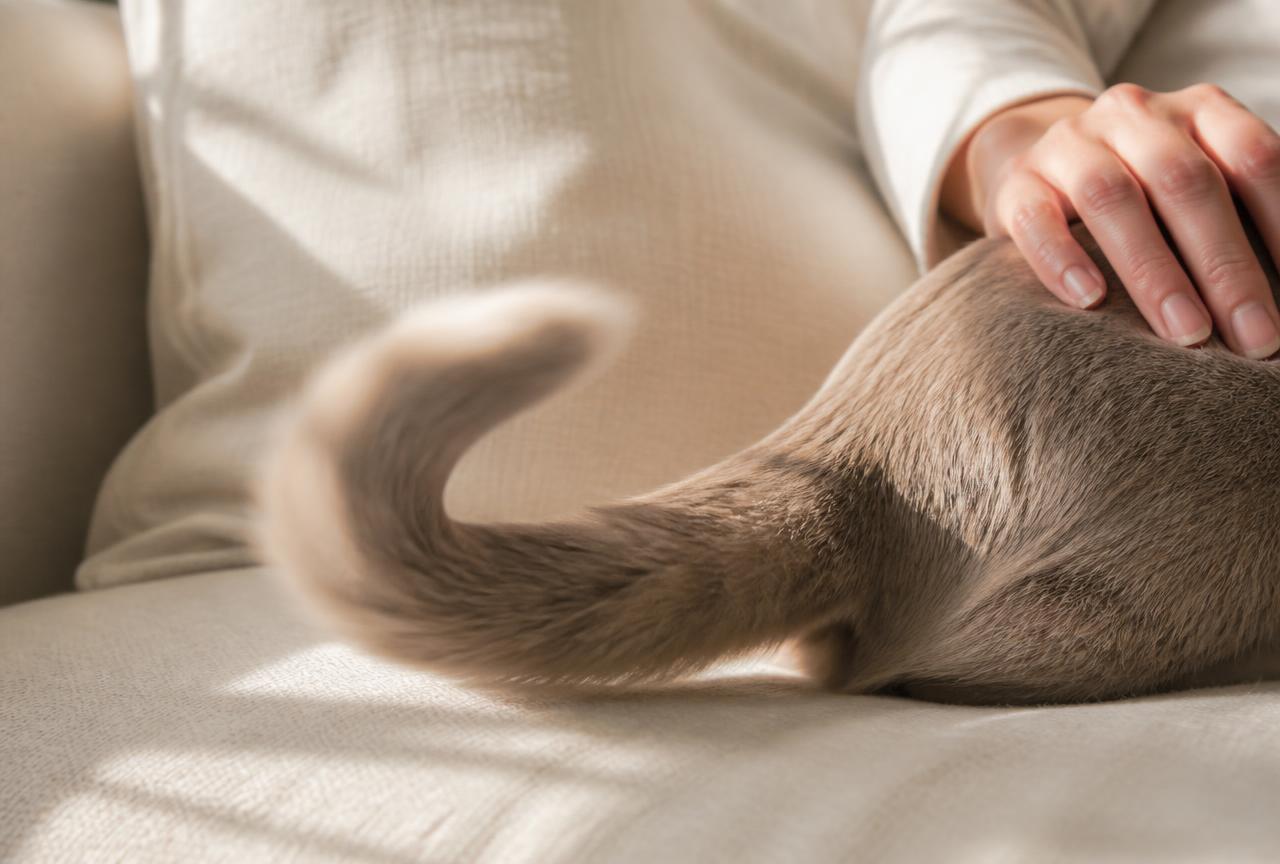
The fix is unglamorous and effective: stop stroking at the first warning sign, not the last one you can get away with. Sessions get longer over weeks, not because the threshold moved much, but because the cat stops needing the bite, the quieter signal started working.
Play bites: the hand that taught the habit
Play aggression is hunting practice aimed at whatever moves, and in most households the thing that moves most reliably is a human hand. Kittens wrestle their littermates and learn bite inhibition from the feedback; kittens raised wrestling a human hand learn that skin is a toy. The behaviour survives into adulthood, bigger teeth and all.
The ankle ambush is the same programme with a location habit. The cat crouches, waits, and launches at passing feet because passing feet behave exactly like prey.
The fix is a strict swap, enforced by everyone:
- 1Hands and feet are never toys. Not once, not "gently", not with the kitten.
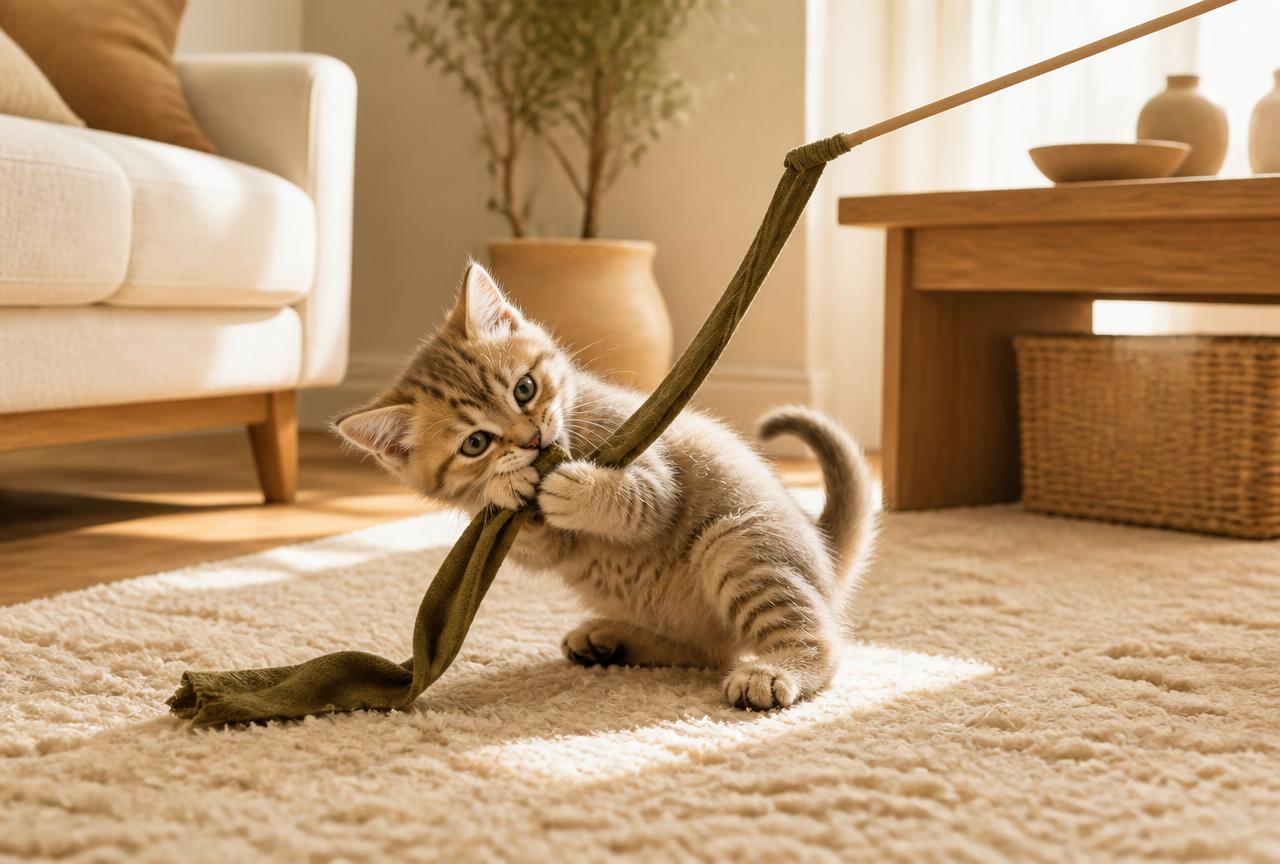
- 2Redirect every lunge onto a wand toy held at arm''s length, so the hunt ends on fabric, not skin.
- 3Run two proper hunting sessions a day, fifteen minutes of chase-pounce-catch, ending with a small meal to close the loop.
- 4Freeze when bitten. Pulling away is what prey does; going limp and boring ends the game.
- 5Never punish. The biter is not being bad; it is doing what it was taught, and punishment only adds fear to the repertoire.
Redirected bites: the hardest ones, and the least personal
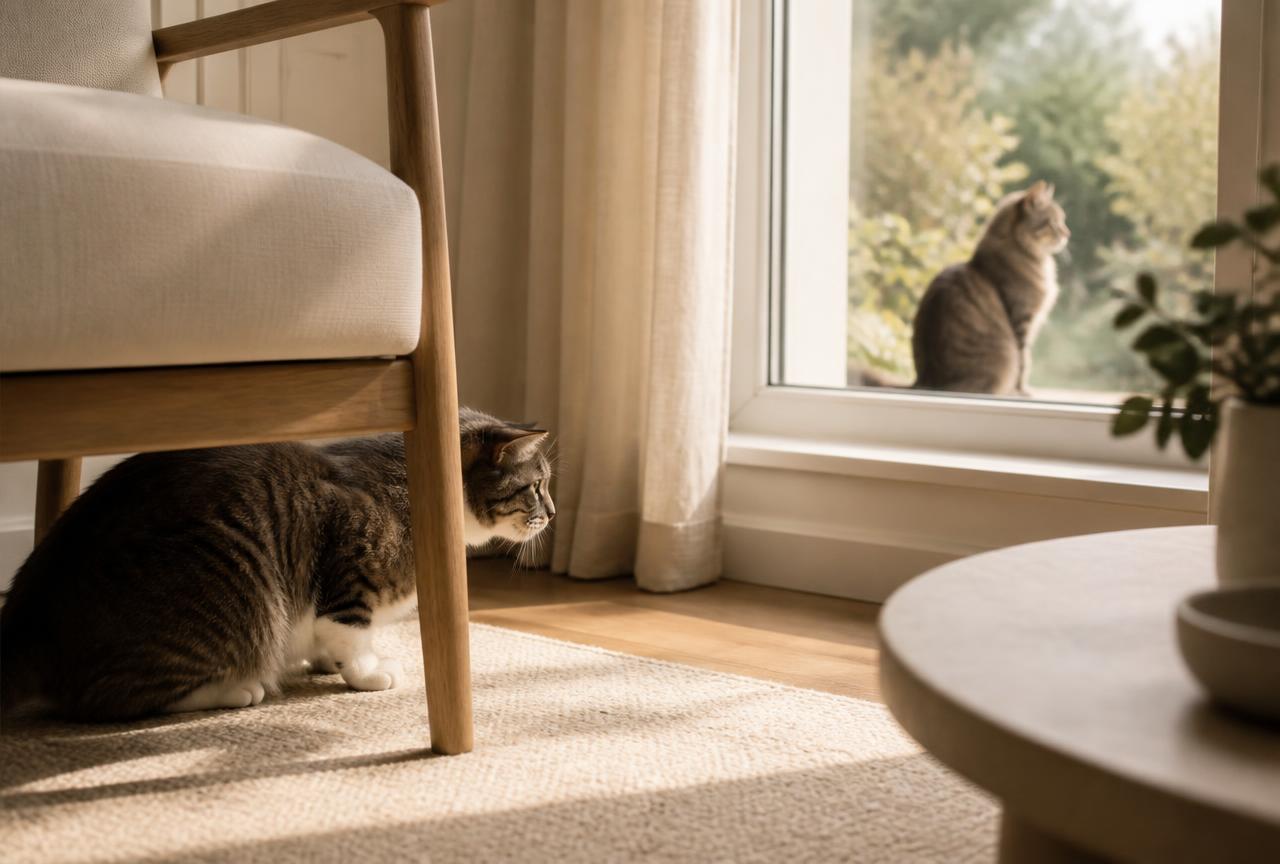
A cat watches a rival through the window, or fails to catch a bird at the feeder, and reaches a pitch of arousal with nowhere to put it. Whoever is nearest, the stroking hand, the passing housemate, the other cat, receives the discharge. These are often the most damaging bites, and they have nothing to do with the victim.
Two rules govern them. In the moment: do not touch, pick up or corner an aroused cat, speak calmly, back off, and give it twenty minutes. Over time: manage the trigger, not the cat. Opaque film across the lower pane, a moved feeding station, or blocking the neighbour cat''s route through the garden all work better than any training.
When the bite is a symptom
A handling bite that is new, in a cat who used to tolerate being picked up, or being touched in one particular spot, is a vet question before it is a behaviour question. Dental pain, arthritis, overactive thyroid and skin disease all lower the threshold for touch, and all are common, treatable and invisible from the outside. The same applies to a general rise in irritability in an older cat.
New aggression in a cat who never used to bite is a medical appointment, not a training plan.
Our body language guide covers the warning postures in more depth, and if bites cluster around handling, it is worth ruling out the physical causes first.
The bite context reader
Answer the four questions from the start of this article and the reader names the most likely cause and the fix that matches it.
Interactive
Bite context reader
When the bite happens, how hard, at whom, and at what age. Four answers usually name the cause.
Most likely cause
Petting-induced overstimulation. The most misread bite of all: the cat asked for contact, enjoyed it, and then crossed a threshold where touch stops feeling good. It is not spite, it is a cat with a lower tolerance than you guessed.
The fix: Watch the tail and skin during strokes: a flicking tail tip, twitching skin or a head that starts tracking your hand are the ten-second warning. End the session there, before the bite, and the cat learns that warning works.
Also worth knowing
- Consistency is the whole treatment: everyone in the household responds the same way, every time, for several weeks.
The verdict, by household
The purr-then-nip cat. Petting threshold. Shorten sessions, watch the tail, stop at the first flick. This one is very fixable.
The kitten with needle teeth. Play programme. Toy-only rules from today, two hunting sessions daily, total household consistency. Most kittens outgrow the worst by a year if nobody trains the habit in.
The ankle ambusher. Play aggression plus a location. Station toys at ambush points, toss ahead of you as you pass, and make sure the cat has vertical space and daily hunting play.
The cat who bites after the window. Redirected arousal. Manage the view and never handle an aroused cat.
The older cat who changed. Vet first, always.
If a bite breaks the skin
Cat bites are puncture wounds and cat mouths carry bacteria that thrive in them. Wash immediately under running water for several minutes, encourage a little bleeding, then dress it. Watch hard for the next 24 to 48 hours: spreading redness, swelling, warmth, pain out of proportion, or any of that in a hand or joint means medical advice the same day. Hand bites in particular have a well-earned reputation, a meaningful share of deep cat bites to the hand become infected.

Frequently asked questions
The searches below, gentle bites, bites while purring, bites during play, are the ones people actually type. The short answers live here; the fixes are above.
Questions people actually ask
Why does my cat bite me gently out of nowhere?
Gentle bites with no pressure are usually social, a holdover from kittenhood mouthing, often mixed into petting or grooming. They rarely mean displeasure. If you would rather not be mouthed, freeze and withdraw attention for a minute each time; the cat learns that skin contact ends the interaction. Watch for the real warning signs, tail flick, skin twitch, which are different and precede harder bites.
Why does my cat bite me when I pet her?
Almost always a petting threshold: the same stroke, repeated, tips from pleasant to overstimulating, and the bite ends the session. The warning signs come ten to thirty seconds earlier, a flicking tail tip, twitching skin, ears rotating, a head tracking your hand. Stop at the first sign for a few weeks and most cats extend their tolerance, because the quieter signal starts working.
Why does my cat lick me then bite me?
The lick-then-bite combination is usually grooming behaviour with a bite threshold inside it. Cats allogroom each other and intersperse licks with gentle nibbles; during human petting the same pattern appears, and it escalates if the cat becomes overstimulated. If the bites stay soft, it is social. If they harden over a session, treat it as a petting-threshold issue and shorten the sessions.
Why does my cat bite me during play?
Because something taught it that human skin is a toy, most often hands-as-toys games in kittenhood. The fix is strict: hands and feet are never playthings, every lunge is redirected onto a wand toy, and the cat gets two fifteen-minute hunting sessions a day so the energy has a legal outlet. Consistency across the whole household matters more than any single technique.
Why does my cat attack my ankles when I walk past?
Ankle ambush is play aggression with a location habit, moving feet behave exactly like prey. Keep a toy stationed near the ambush spot and toss it ahead of you as you pass, so the hunt lands on the toy. Daily interactive play and vertical territory reduce the underlying drive. Never kick out or punish; it adds fear without removing the habit.
Should I be worried about a cat bite that drew blood?
Take it seriously. Cat teeth make puncture wounds that seal bacteria inside, and bites to hands and joints become infected surprisingly often, a substantial share need medical treatment. Wash under running water for several minutes, then watch for 48 hours. Spreading redness, swelling, warmth or worsening pain means same-day medical advice, and deep hand bites justify a call regardless.
Do cats grow out of biting?
Kittens usually soften considerably by about a year old, provided nobody trains the habit in by playing with hands. Cats learn bite inhibition from littermates and from boring, consistent human responses. An adult cat who starts biting after years of not doing so has not failed to grow out of something, something has changed, and that warrants a vet check.
Sources
- Aggression in cats, International Cat Care
- Cat bites and scratches, Cornell Feline Health Center
- Play and playthings, International Cat Care
- When animal bites attack, American Veterinary Medical Association
Breeds mentioned


Put it into practice
Read next
Why do cats sleep so much? Normal hours, odd habits and the red flags
Why do cats sleep so much? What 12–16 hours a day really means, the light doze vs deep sleep, and the changes that actually matter.