Why cats meow: what each sound is actually asking for
Adult cats barely meow at each other. The meow is a tool they built for us, tuned by years of trial and error on your specific household. Learning its settings is easier than you think.
Helen Marsh
Feline behaviourist and ReMews. staff writer
Published 21 September 2026
Dr Tomas Reyes, DVM
The short version
- Adult cats rarely meow at each other; the meow is kitten talk redirected at humans
- Most meows sort into four buckets: greeting, demand, attention and distress
- Feeding a meowing cat trains it to meow: silence, not noise, should predict the bowl
- New night yowling in a cat over ten is a medical question first, commonly thyroid, blood pressure or pain
- Siamese and Oriental cats are born talkative; British Shorthairs are famously quiet
- A sudden change in how much or how your cat vocalises is always worth a vet conversation
Here is a fact that reframes everything else in this article: adult cats almost never meow at each other. Kittens meow at their mothers, and then, in wild life, the sound largely retires. With humans, it never retires. The meow is, to a remarkable degree, a language cats invented for talking to us.
Which means your talkative cat is not being random, and it is not being needy in some abstract way. It is operating a vocal toolkit it has spent its whole life tuning specifically to you. Your job is simply to learn what the settings mean.
Most meows sort into four buckets: hello, I want something, pay attention to me, and something is wrong. This piece walks through each, with the tells that separate them, the breeds that never shut up, and the one change in the soundtrack that should always earn a vet call.
A language aimed at humans
Researchers who have recorded cat-to-cat and cat-to-human vocalisations find the same pattern: the meow is rare in feral adult cats and ubiquitous in pet cats. It appears to be kitten-talk repurposed, a sound that works on mothers, redirected at the species that now provides the food, doors and laps.
And it is tuned individually. Your cat does not have a generic meow; it has a meow that works on you. The specific pitch, length and insistence of your cat's food meow has been shaped, over years, by which version got the food fastest. You trained each other.
The four buckets
Nearly everything your cat says to you falls into one of four categories, and context does most of the decoding.
| Meow type | Sound | Context | What it wants |
|---|---|---|---|
| --- | --- | --- | --- |
| Greeting | Short, bright, often repeated | Door opening, you entering a room | Acknowledgement, a hello back |
| Demand | Longer, insistent, rising | Beside the bowl, the door, the treat cupboard | A specific thing, now |
| Attention | Mid-length, persistent, follows you | You are busy, on the phone, working | Interaction: play, lap, talk |
| Distress | Lower, harsher, or new and different | Any, but especially if new | Investigation, possibly a vet |
The greeting meow is the easy one: it is social glue, and the correct response is simply to respond. Cats who are spoken back to when they greet tend to stay politely conversational. Cats whose greetings are ignored sometimes escalate to the louder categories, because those are the ones that work.
The demand meow, and how it gets trained up
The demand is where households go wrong. A cat meows beside the bowl. A human, wanting quiet, feeds it. The cat files the result: meowing works. Next time it meows sooner, longer, louder. Within a month you do not have a cat with a meowing problem; you have a highly trained human.
The fix is dull and effective: never feed in response to meowing. Feed on a schedule, or wait for a silence of a few seconds before the bowl goes down, so the quiet, not the noise, predicts the food. Expect an extinction burst first, a week or so where the meowing gets worse as the cat tests whether the old trick really has stopped working. Hold the line and it stops.
The reader below turns the sound, the time of day and the setting into a best-guess translation, with the response that will not accidentally train the wrong lesson.
The night yowl
Night-time calling is its own category, because it has three very different causes and the right response depends entirely on which one you have.
Young, energetic cats yowl at night from boredom and an unsatisfied hunting clock. The fix is a proper play session followed by food right before bed, shifting the cat's rhythm to hunt-eat-sleep.
Adult cats who have learned it works yowl because someone, once, got up. The fix is never, ever rewarding it, combined with the evening routine above.
Older cats with new night calling are different, and this is the paragraph to remember. A senior cat who starts yowling at night, especially with a lost, searching quality, is not being annoying. The commonest medical causes are high blood pressure, an overactive thyroid, pain, and the feline equivalent of dementia. New night calling in a cat over ten is a vet appointment, not a training project.
The chatter, the trill and the silent meow
Not everything is a meow. The chattering, teeth-clacking sound a cat makes at a bird through glass is thought to be frustration or a rehearsed killing bite, and it is completely normal. The trill, that rolling brrrp, is the friendliest sound in the catalogue, a greeting cats also use with their kittens. And the silent meow, mouth open, no sound, is real: the cat is vocalising at a pitch you partly cannot hear, and it is usually a high-trust, affectionate signal.
Talking back: the conversation your cat thinks it is having
Because the meow is aimed at you, answering it is not silly; it is the system working as designed. Cats who receive a spoken reply, or even eye contact and a slow blink, to their greeting meows tend to keep their communication at that polite, conversational level. The greeting gets an answer, so the demand meow never needs inventing.
The slow blink deserves special mention. Narrow your eyes slowly at your cat and it will often narrow back: a documented, mutual trust signal, and the closest thing to saying it back in the cat's own language. Combined with a soft verbal reply, it is a complete conversation.
The flip side is worth knowing too. A cat who is chronically ignored does not go quiet; it escalates, because escalation is the volume that works. Much excessive meowing in adult cats is simply a greeting system that was never answered, turned up until someone finally responded. Answer the quiet meow and you rarely meet the loud one.
The talkative breeds
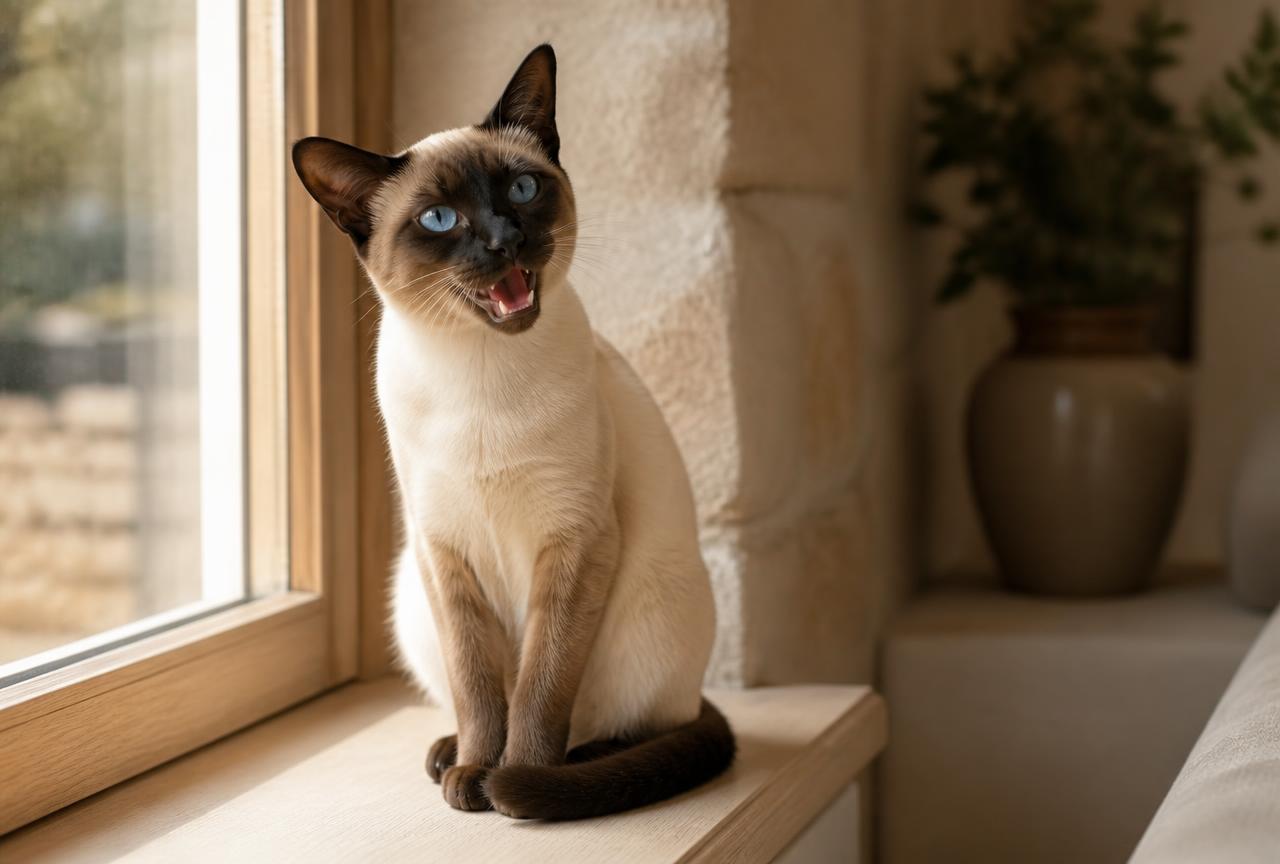
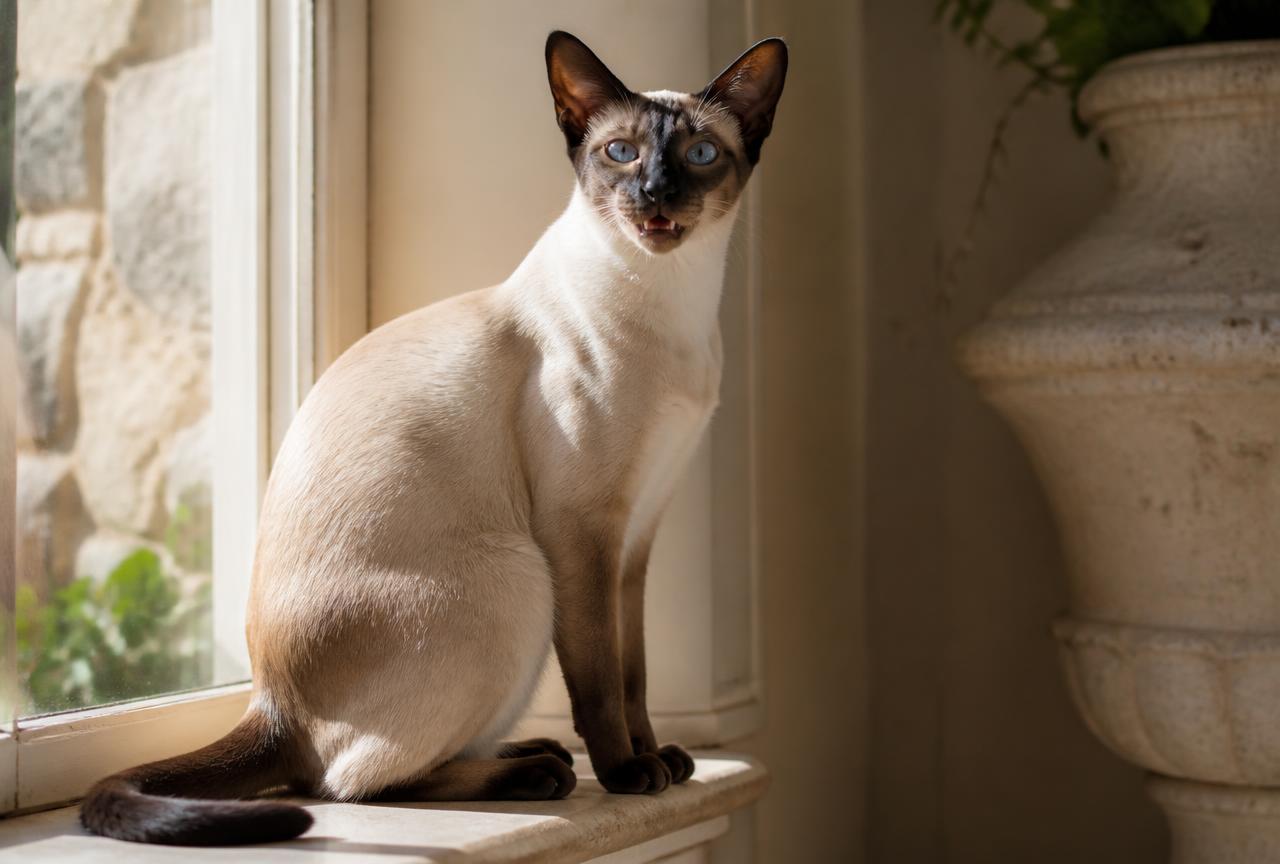
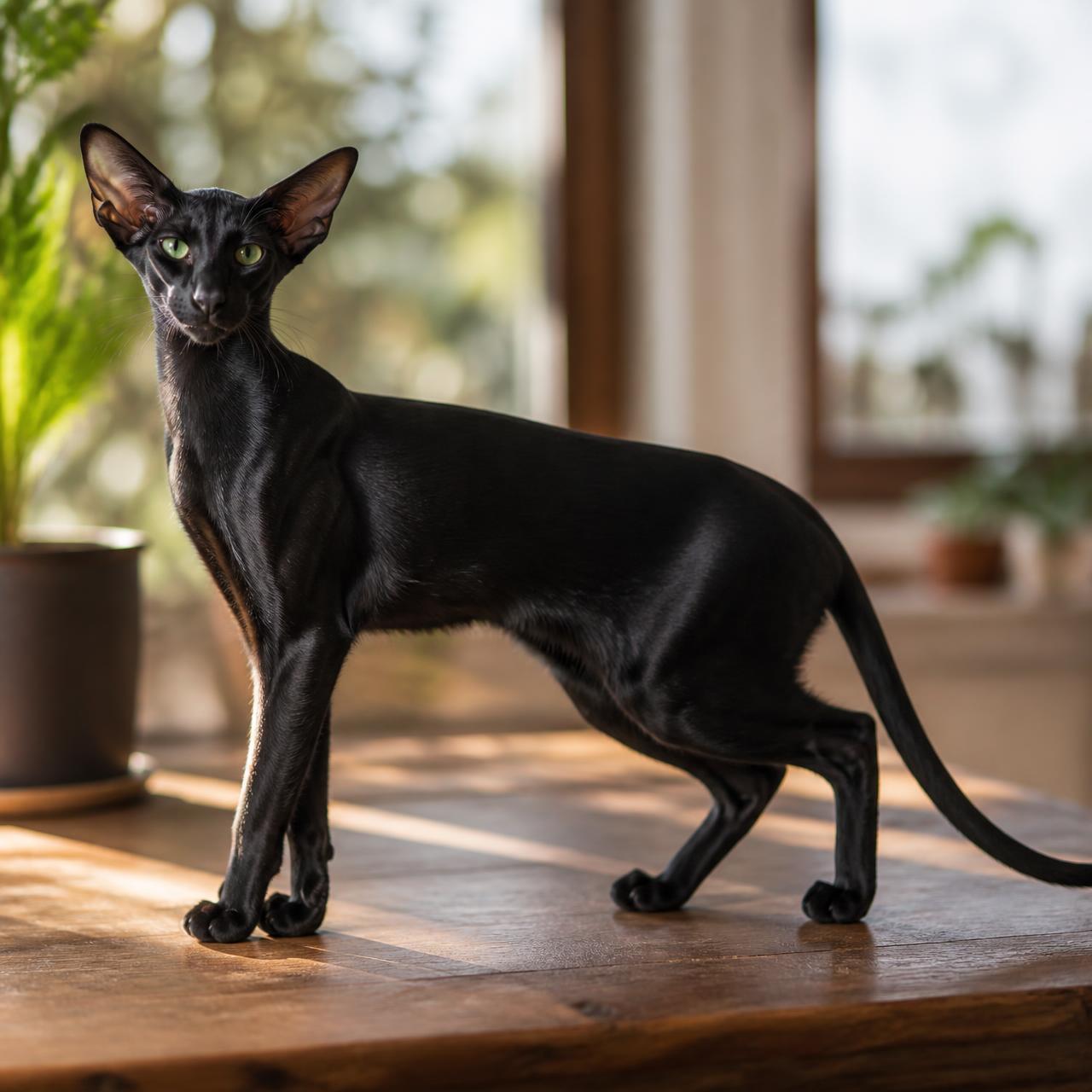
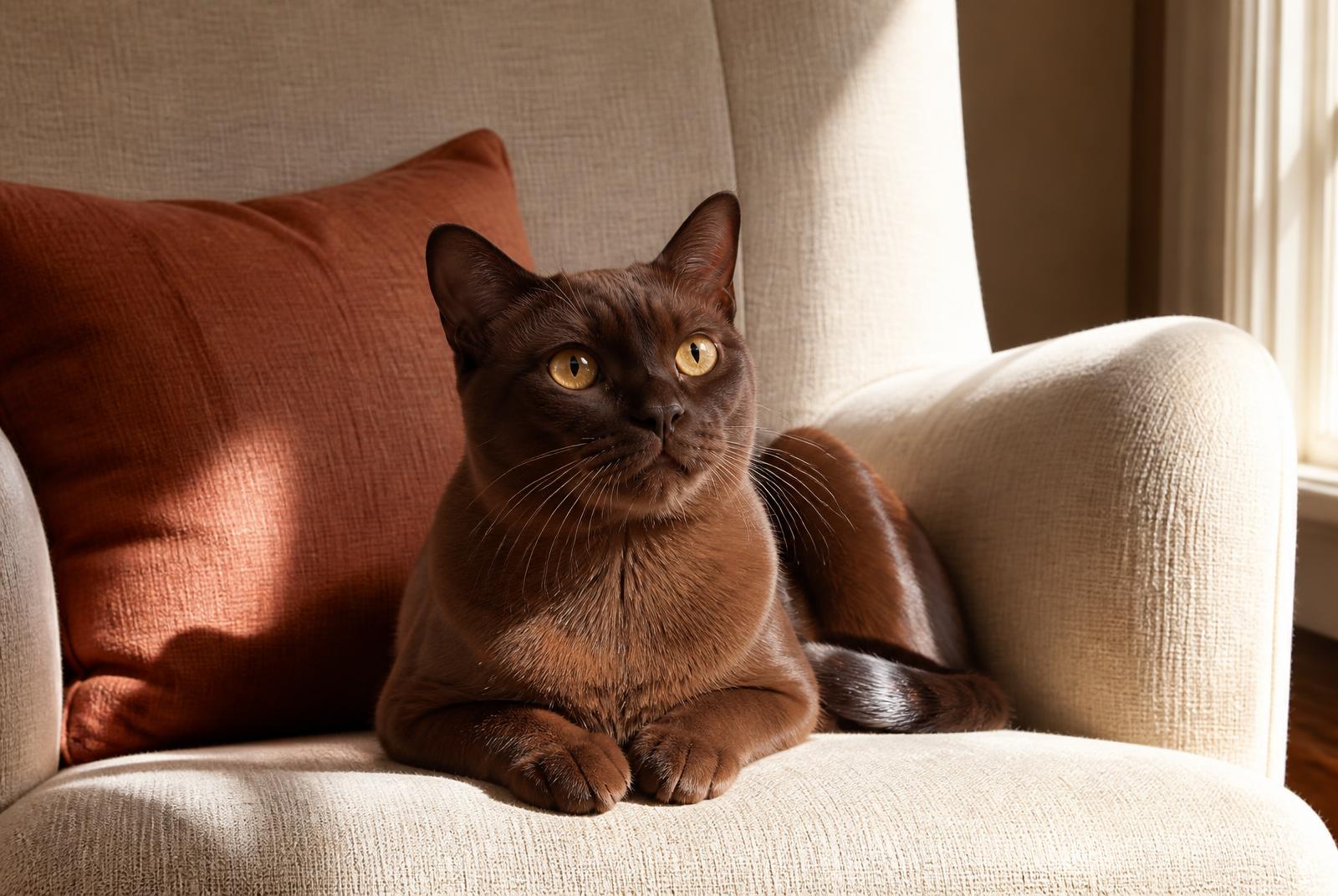
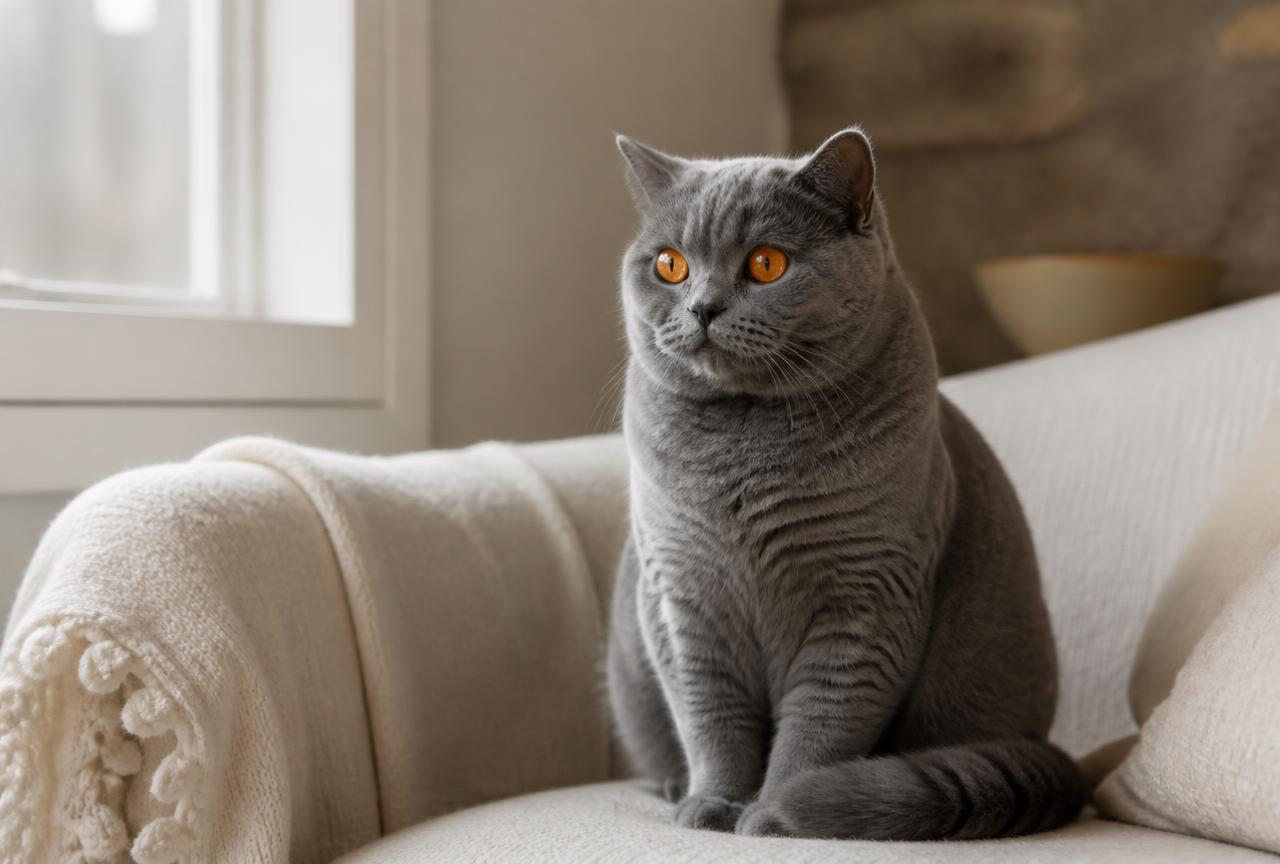
Some cats are simply born with more to say. The Siamese is the standard-bearer, a breed whose loud, low, conversational voice is genuinely part of the package, and whose owners either adore it or should have been warned. Orientals, Burmese, Bengals and Tonkinese follow close behind. At the other end, the British Shorthair and Chartreux are famously near-silent.
If you are choosing a cat and noise matters to you, check the vocality score on the breed page before anything else. It is the one trait owners most often wish they had taken seriously.
Verdict by household
- New kitten home: respond to greetings, never to demands. You are writing the rules the adult cat will use for fifteen years.
- Demand-meowing adult: scheduled feeding, silence predicts food, brace for the extinction burst week.
- Night-yowling youngster: evening hunt-play-feed routine, blackout of rewards at night.
- Senior cat, new night calling: vet first, training never. Blood pressure and thyroid tests are cheap and quick.
- Anyone who values quiet: choose a quiet breed, and remember that chatty cats are made partly by their humans.
When to call your vet
Any sudden change in vocalisation, more, less, or different in quality, is worth a conversation with a vet, because cats announce discomfort through sound before almost anything else. Specifically: new night yowling in a cat over ten, a cat who starts crying in the litter tray, meowing that accompanies restlessness, appetite change or hiding, and any cat whose voice itself changes, going hoarse or weak. Those are symptoms wearing a costume.
Frequently asked questions
The questions people actually search, answered below.
Questions people actually ask
Why do cats meow at humans?
Because it works. Adult cats rarely meow at each other; the meow is kitten communication redirected at people. Each cat tunes its meows over years based on which sounds get the fastest response from its specific household.
Why does my cat meow so much?
Usually because meowing has been rewarded, with food, doors or attention. Breed matters too: Siamese and Oriental cats are naturally talkative. A sudden increase in meowing, especially at night or in an older cat, should be checked by a vet.
Why does my cat yowl at night?
In young cats, usually boredom and an unsatisfied hunting rhythm; an evening play-then-feed routine helps. In cats over ten, new night calling is commonly linked to thyroid disease, high blood pressure, pain or cognitive decline, and needs a vet.
How do I stop my cat meowing for food?
Feed on a schedule and never in response to meowing; wait for a few seconds of quiet before the bowl goes down. Expect the meowing to get worse for about a week first, then stop as the cat learns the old trick no longer pays.
What does it mean when a cat chatters at birds?
The teeth-chattering sound at birds through glass is thought to be predatory frustration or a rehearsed killing bite. It is completely normal hunting behaviour with no outlet, not a sign of distress.
Which cat breeds meow the most?
Siamese are the most famously vocal, followed by Orientals, Burmese, Bengals and Tonkinese. British Shorthairs and Chartreux sit at the quiet end. If noise matters to you, check a breed s vocality before choosing.
Sources
- Cat communication and vocalisation, International Cat Care
- Why cats meow, Cats Protection
- Understanding feline vocal behaviour, American Association of Feline Practitioners
- Cognitive dysfunction in senior cats, Cornell Feline Health Center
Breeds mentioned
Put it into practice
Read next
Why cats hate water, and the breeds that break the rule
Why do cats hate water? It is physics, smell and control, not drama. Which breeds genuinely enjoy it, and when a cat ever actually needs a bath.