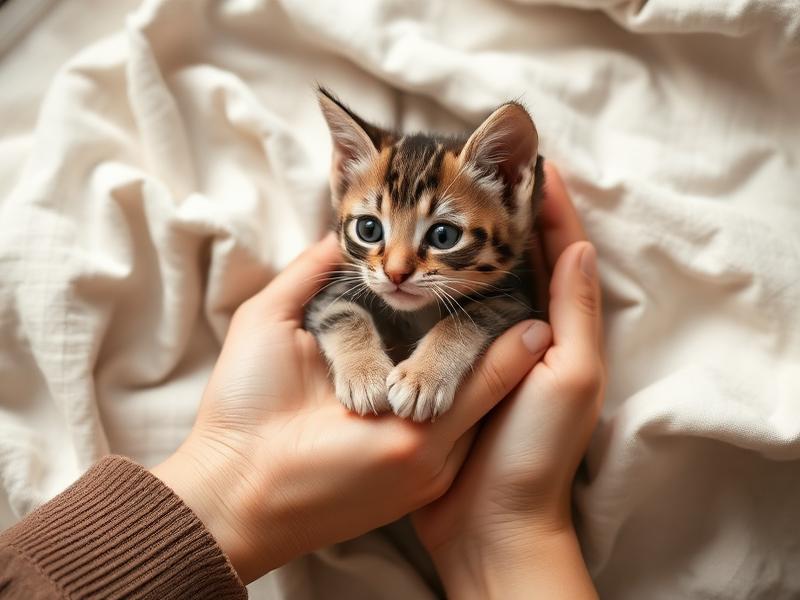
Litter training a kitten, in the first fortnight
Kittens arrive wanting to be clean. Litter training is mostly about not getting in the way of that, and fixing the handful of things that do.
Helen Marsh
Feline behaviour consultant, ISFM-certified
Published 20 September 2026
Dr Amara Okonjo, DVM
The short version
- Kittens are born with the instinct to dig and cover; training means providing the right tray, litter and location, not teaching the act.
- One tray per cat plus a spare, low-sided and uncovered, with fine unscented litter at three to four centimetres deep.
- Under eight weeks, use paper or wood pellets: kittens taste their litter and clumping clay can block a small gut.
- The post-meal, post-nap and post-play tray trips in the first fortnight do almost all of the actual training.
- Never scold accidents: clean with an enzymatic cleaner and fix the environment that caused them.
Kittens arrive wanting to be clean. Litter training is mostly about not getting in the way of that, and fixing the handful of things that do.
Here is the good news first: a kitten's instinct is to dig a hole, use it, and cover the evidence. You are not teaching the behaviour so much as providing the right place for it to land. Most kittens from a good breeder or rescue already arrive tray-trained by their mother, and the rest learn in days, not months.
The fortnight matters because habits set fast in both directions. A kitten that finds a suitable tray every time for two weeks is trained for life. One that has three accidents behind the sofa has learned that the sofa works too. Your job is to make the right choice effortless and the wrong one unmemorable.
Start with the right kit
Three decisions determine almost everything: how many trays, what litter, and where they go. The setup builder below calculates the details for your home, but the principles:
- Tray count: one per cat, plus one spare. For a young kitten in a multi-floor home, add one per floor it can reach.
- Tray style: low-sided and uncovered. A kitten's legs are short, and flaps, hoods and rustling liners put more kittens off than anything else. Upgrade to a covered tray later only if the cat votes for it.
- Litter: fine, unscented, and clumping for kittens over eight weeks, which mimics the soil texture they instinctively seek. Under eight weeks, use paper or wood-based pellets instead, because kittens taste their litter and clumping clay can block a tiny gut.
- Depth: three to four centimetres. Enough to dig, not so much they wade.
Placement is half the training
Put the tray where a kitten would choose a toilet: quiet, low-traffic, with a clear view of approaching threats, and a quick escape route. Corners of busy hallways fail on all counts. So do spots beside the washing machine, which ambushes them mid-use once a week.
Keep trays well away from food and water. Cats avoid toileting near their meals, an instinct worth exploiting: if a kitten keeps soiling one particular corner, put a food bowl there and move the tray somewhere sensible. The corner usually stays clean.
In the first days, confine the kitten's world. One room, with tray, food, water and bed at sensible distances, gives a small animal no chance to get lost en route. Expand the territory room by room as the record stays clean, as we describe in the first 90 days with a kitten.
The daily rhythm that does the training
Kittens need to toilet at predictable moments: right after waking, right after eating, and after intense play. Build the fortnight around those windows:
- 1First thing in the morning, carry the kitten to the tray. Most will use it within a minute.
- 2After every meal, same trip. Digestion triggers the urge within minutes.
- 3After play sessions, once more.
- 4If you catch the kitten squatting elsewhere, lift it calmly mid-act and place it in the tray. No scolding: the kitten cannot connect your anger with the location, only with you.
- 5When it uses the tray, say nothing at all. Calm is the reward; excitement interrupts.
- 6Clean accidents with an enzymatic cleaner. Standard cleaners leave ammonia notes that read as toilet to a kitten's nose, and invite a repeat.
Follow that rhythm and most kittens are reliable within a week, with the occasional lapse into week two.
You are not house-training a kitten. You are giving a tidy animal no reason to improvise.
Keeping the tray worth using
A kitten's standards are higher than yours. Scoop at least once a day, ideally twice during training, and change the litter fully once a week, washing the tray with hot water and a mild, unscented soap. Skip scented litters and tray deodorisers: perfume that masks the smell for you screams chemical to them.
If the kitten starts going beside the tray rather than in it, read it as a review: the tray is dirty, the litter changed, the location got busy, or a housemate is guarding the doorway. Fix the environment before you doubt the training. Persistent tray avoidance in an older cat is a different conversation, covered in litter box problems.
Verdict by household
Single kitten, flat: one low tray, one room to start, meal-and-nap trips for a week. The easiest scenario there is.
Kitten plus adult cat: separate trays from day one, in separate rooms if possible. Adults guard trays, and an ambushed kitten learns to toilet somewhere with better sightlines, like your bed.
Kitten in a house with stairs: a tray on every floor until the kitten is four months and reliable. Small bladders do not do staircases.
Rescue kitten with unknown history: same method, more patience, and a vet check if there is no progress in two weeks, since parasites and urinary irritation can masquerade as training failure.
When to call your vet
Call if a kitten that was using the tray stops without an environmental explanation; if you see straining, crying in the tray, or frequent tiny urinations, which can signal a urinary problem; if there is blood in urine or stools; or if diarrhoea persists beyond a day or two in a young kitten, which dehydrates small bodies fast. Training problems resolve with environment and routine. Medical ones do not, and telling them apart early is the skill that matters.
Questions people actually ask
How long does it take to litter train a kitten?
Most kittens are reliable within a week of consistent routine, with occasional lapses into the second week. Kittens from a breeder or rescue often arrive already trained by their mother, needing only to learn where the tray lives in your home.
What litter is best for kittens?
For kittens over eight weeks, a fine, unscented clumping litter closest mimics the soil texture they instinctively seek. Under eight weeks, use paper or wood-based pellets instead, because kittens mouth their litter and swallowed clumping clay can block the gut.
How many litter trays does a kitten need?
The rule is one tray per cat plus one spare. For a young kitten, add one per floor of your home, and consider an extra near its sleeping area while bladder control develops in the first weeks.
Why is my kitten not using the litter tray?
Read it as a review of the setup: the tray is dirty, the litter changed scent or texture, the location is busy or noisy, the sides are too high, or another pet guards the route. Fix the environment before assuming a training problem.
Should I punish my kitten for accidents?
Never. A kitten cannot connect scolding with the location, only with you, and punishment teaches toileting in secret. Clean accidents with an enzymatic cleaner, and increase the scheduled tray trips after meals and naps.
When should I worry about litter tray problems?
See a vet if a trained kitten stops using the tray without an obvious cause, if there is straining, crying, blood, or frequent tiny urinations, or if diarrhoea lasts more than a day or two in a young kitten, which dehydrates quickly.
Sources
- Litter training kittens, Cats Protection
- Managing your kitten's behaviour, International Cat Care
- Litter box basics, RSPCA
- House-soiling in cats, Cornell Feline Health Center
Breeds mentioned


Put it into practice
Read next
The first 90 days: a kitten socialisation timetable
A week-by-week kitten socialisation timetable: the sensitive period, homecoming, handling, play, carrier training, vaccinations and neutering.