Why does my cat stare at me? Reading the slow blink and the hard stare
A cat's stare is a sentence, not a riddle. The eyes, the body and the hour of the day tell you which one, and most of the time it is either affection, dinner, or a hunting sequence with nowhere to go.
Helen Marsh
Feline behaviour and welfare writer; volunteer rehoming coordinator for twelve years
Published 4 September 2026
Dr Tomas Reyes, DVM
The short version
- A soft stare with slow blinks is trust, slow-blink back and many cats return the gesture
- Staring with pacing or meowing is a trained request; feeding on a schedule, not on demand, unwinds it
- Wide pupils and a crouched body mean hunting arousal, redirect to a wand toy, never hands
- Between cats a hard unblinking stare is a threat; from a relaxed cat to you it is just attention
- Night staring is mostly crepuscular watchfulness, a pre-bed play session and meal settles most of it
- New vacant staring at walls, especially in senior cats, warrants a vet visit
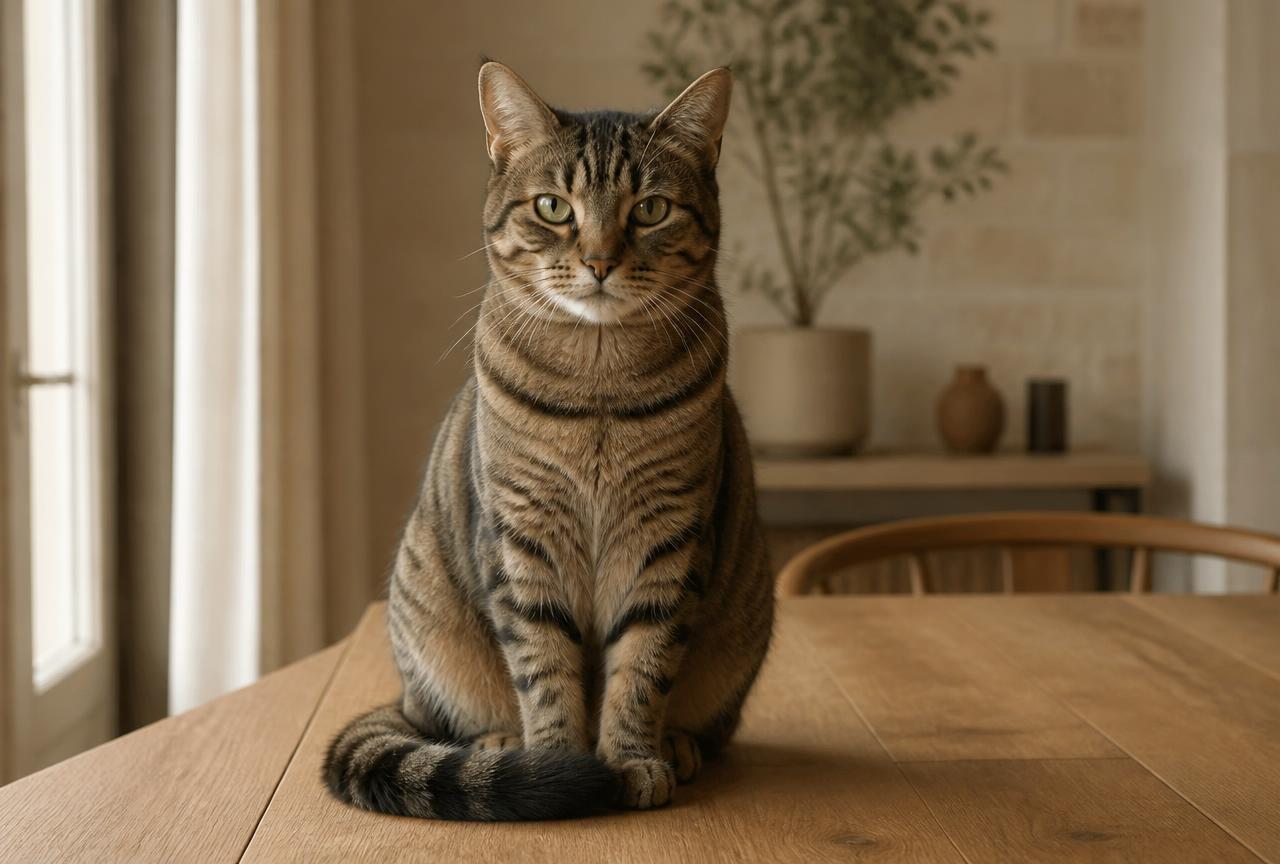
You look up from your book and your cat is doing it again: motionless, unblinking, fixed on you like you owe it money. Few feline behaviours unsettle owners quite like the stare, and few are as easy to decode once you know the grammar.
Cats stare for a short list of reasons: affection, a request, hunting arousal, monitoring, and occasionally a warning. The stare itself is never the message, the eyes, the body around them, and the context are. Learn to read those three together and the midnight staring contest turns from creepy to conversational.
The short version
- A soft, half-closed stare with slow blinks is affection, the cat's version of a handshake. Blink back.
- A stare plus pacing, meowing or a pointed location is a request, usually food or a door.
- Wide pupils and a crouched body mean hunting arousal, play, not affection, and not a time for hands.
- A hard unblinking stare between cats is a threat; aimed at you from a relaxed body it is usually just attention.
- Cats monitor their humans constantly; most staring is simply surveillance of the household's most interesting object.
- A sudden change in staring habits, alongside other behaviour changes, is worth a vet visit.
Why staring means something different for cats
Among cats, sustained direct staring is confrontational, it is how disputes start. But domestic cats have learned that humans are not cats, and that staring at us carries no such risk. More than that, research into cat-human communication shows cats read our gaze and follow it, and that they use eye contact with us in ways they rarely do with each other. The stare is one of the places domestication shows.
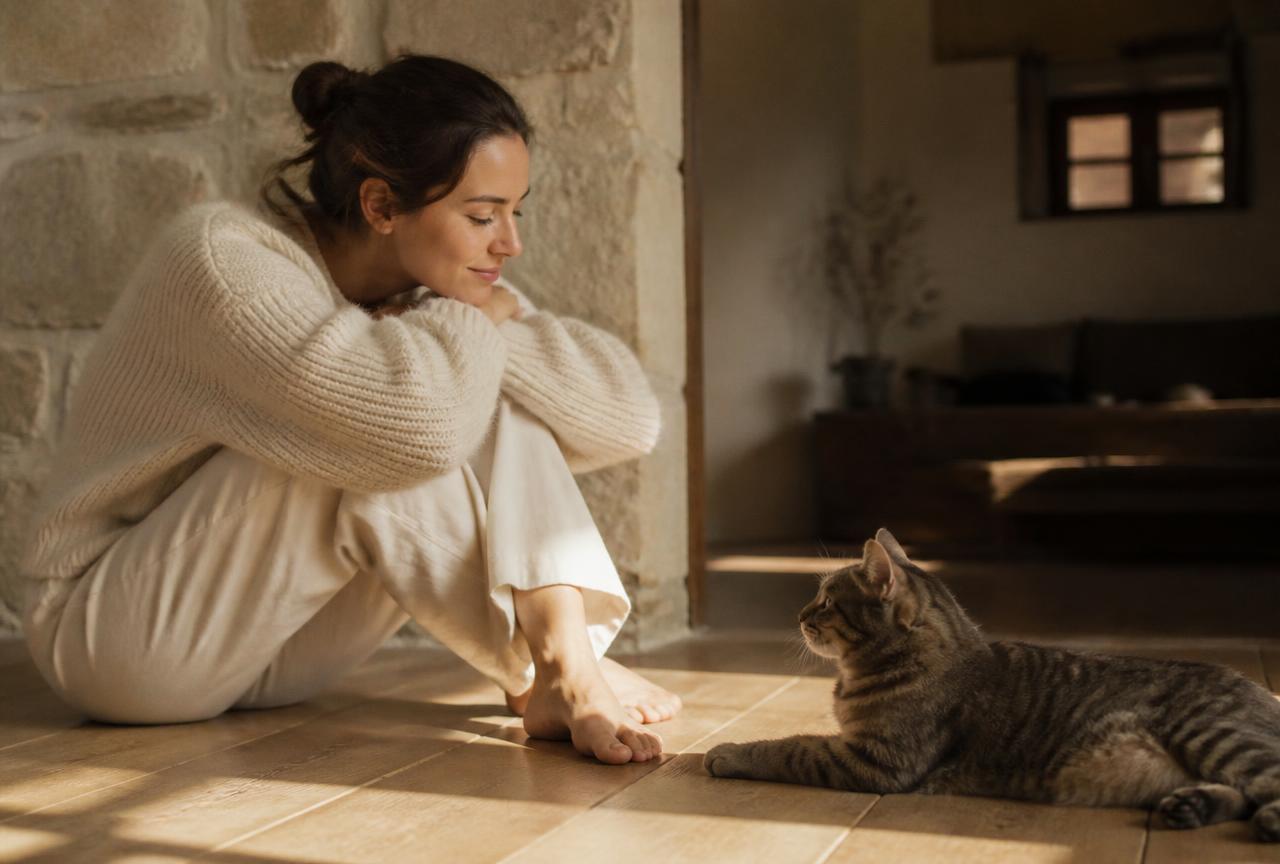
So when your cat looks at you, it is almost never a challenge. It is attention, and attention, from a species that sleeps most of the day and ignores what it finds boring, is worth something.
The slow blink: the good kind of stare
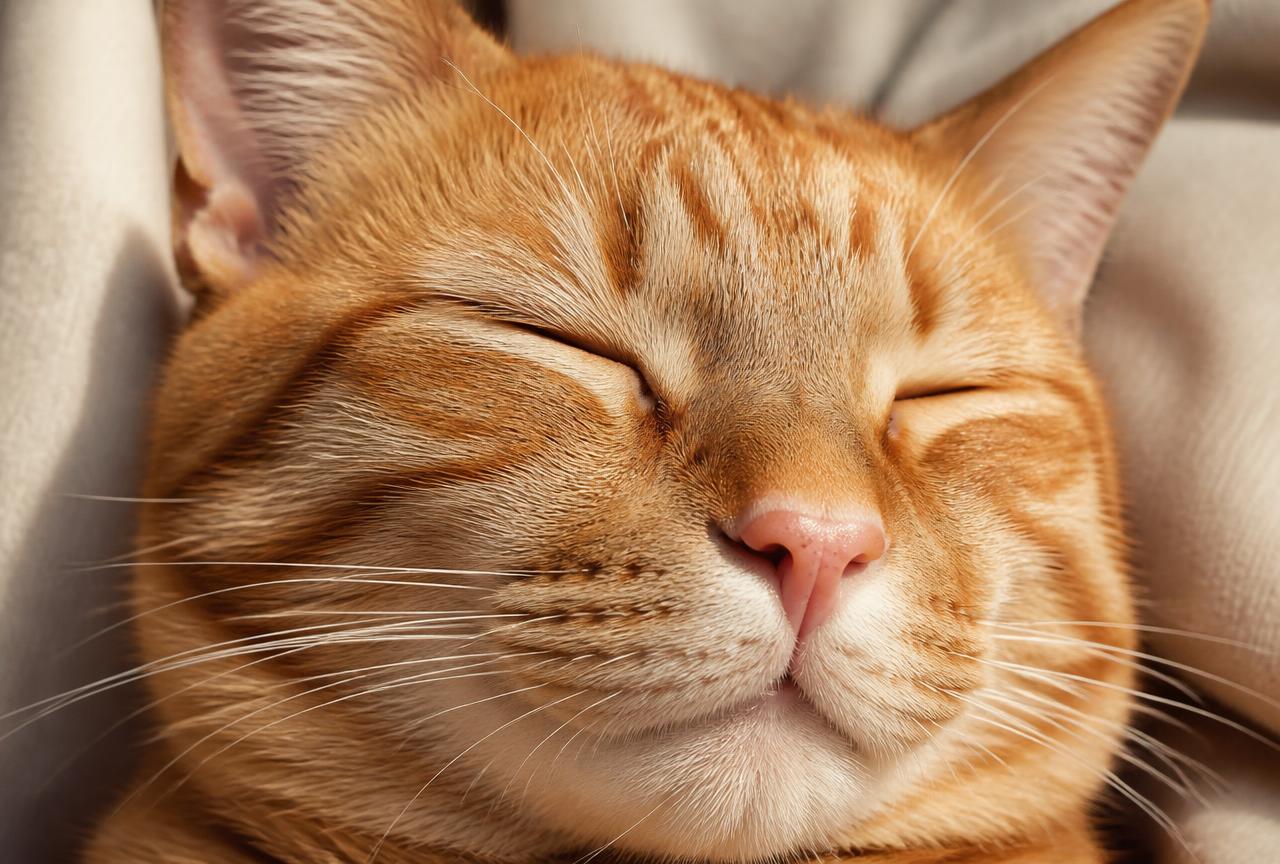
The single most useful signal in the cat's repertoire is the slow blink: a languid, deliberate closing of the eyes, held for a beat, then reopened. In a species where closing your eyes near another animal is a vulnerability, choosing to do it is a statement of trust.
Behavioural studies have confirmed what owners suspected: cats slow-blink more at people who slow-blink at them, and they approach a slow-blinking stranger more readily. It is as close to a shared language as the two species have.
How to hold the conversation:
- 1Catch your cat's eye while it is relaxed, not while it is playing or eating.
- 2Soften your own eyes; no wide-eyed staring.
- 3Close your eyes slowly, hold for a second, open slowly.
- 4Repeat once. Many cats blink back, some cross the room to you.
A slow blink is a cat closing its eyes in your presence and trusting you with the dark.
The request stare: dinner, doors and learned behaviour
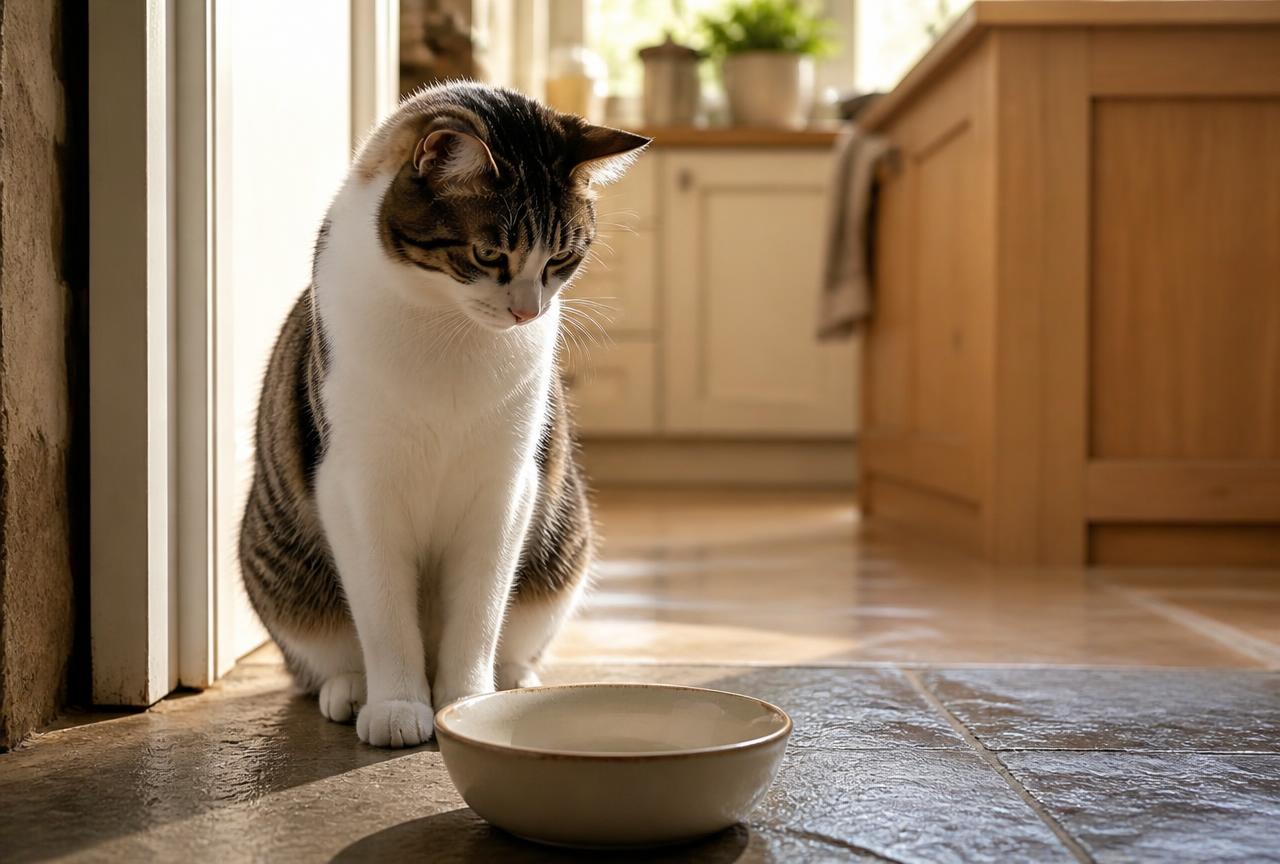
The second category is less romantic: the cat wants something. The giveaway is accompaniment, the stare comes with pacing, meowing, or a pointed position next to the bowl, the door or the treat cupboard.
Here is the part owners underestimate: this behaviour is trained, and you were the trainer. Every time a stare produced food, the stare got stronger. Cats are excellent operant learners, and intermittent rewards, occasionally giving in, build the most persistent behaviour of all. If your cat's evening stare feels relentless, that is not personality; it is a slot machine that paid out once too often.
The fix is dull and effective: feed on a schedule, never in response to the stare, and let the behaviour extinguish over a couple of weeks. Our portion calculator helps if the real question is whether the cat is actually hungry or merely employed in asking.
The hunting stare: wide eyes and a coiled body
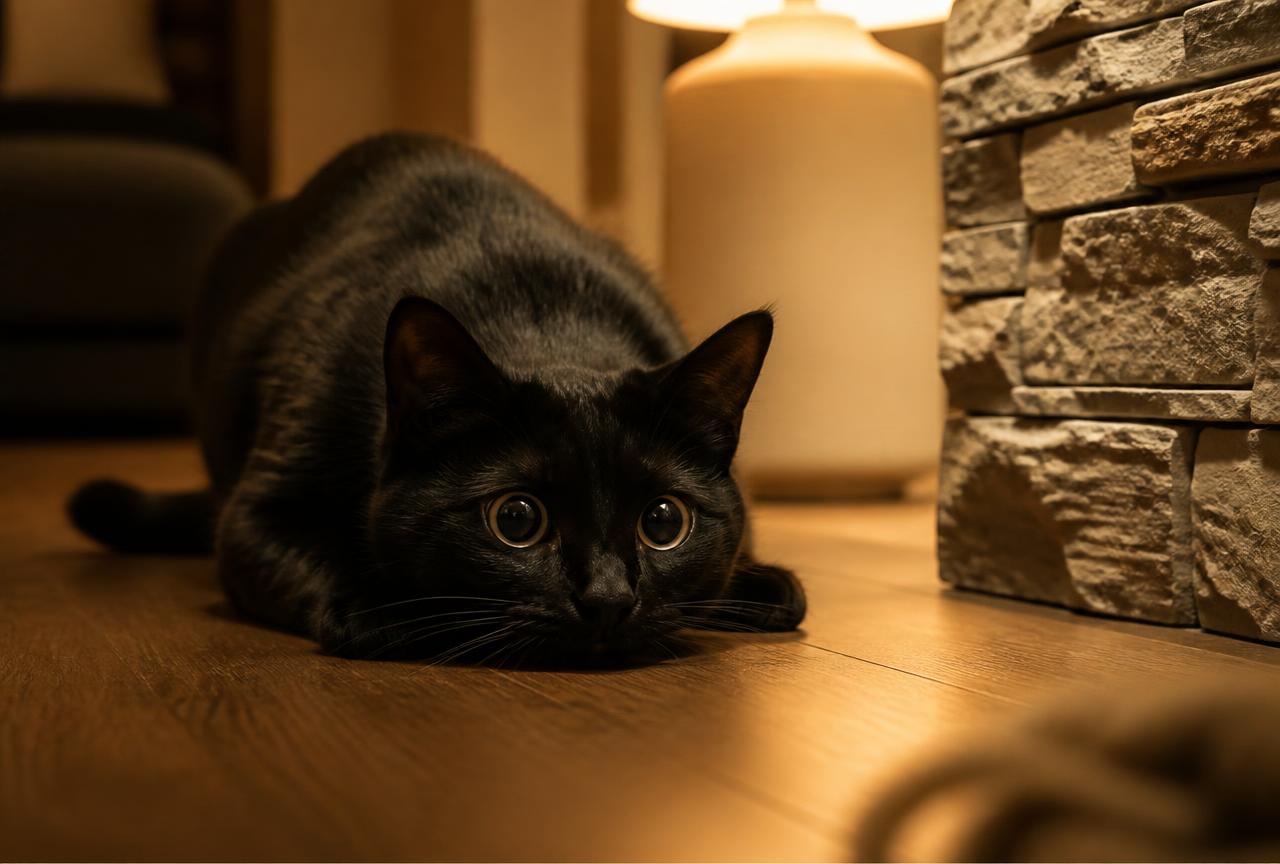
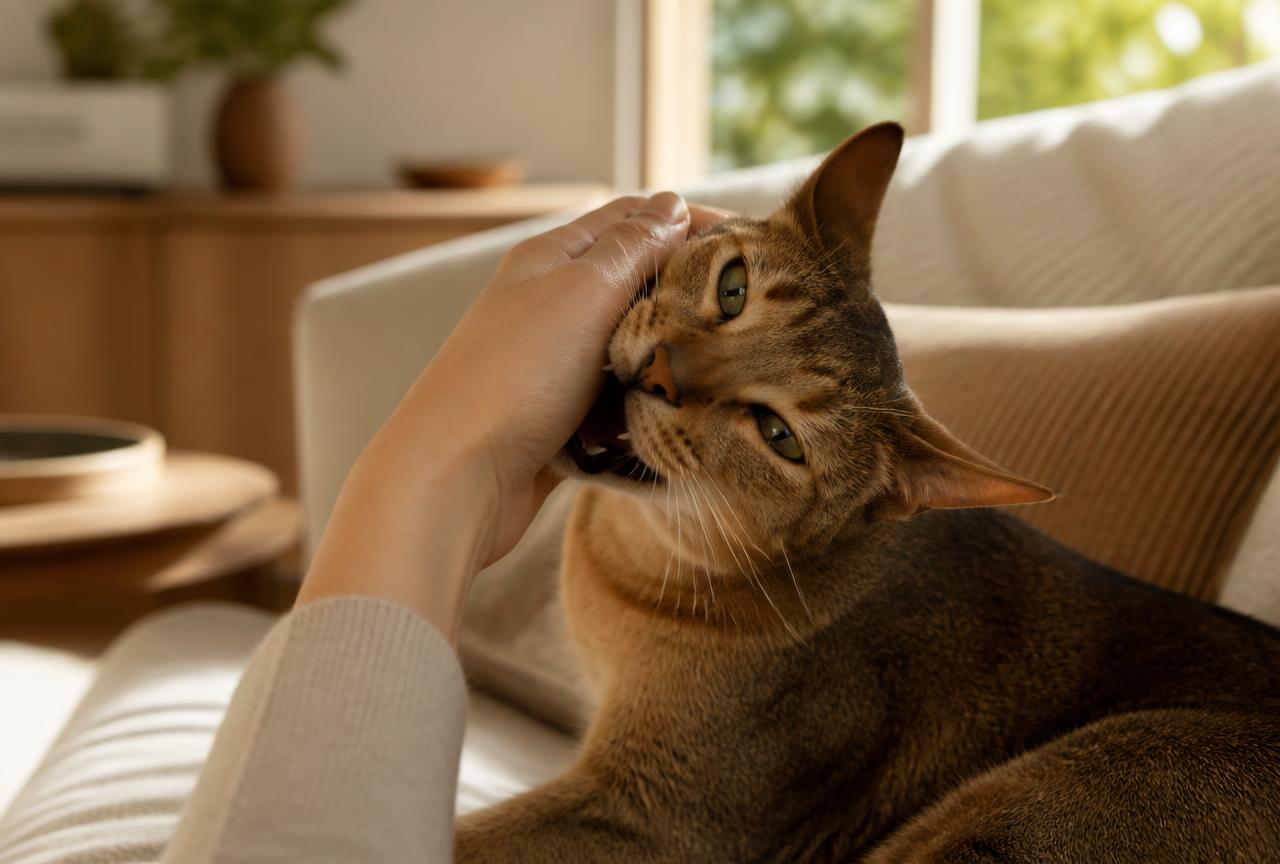
The third stare is physiological. When a cat's hunting sequence engages, at a bird outside, a toy, your feet under the duvet, the pupils blow wide to gather light, the body drops into a crouch and the stare locks onto the target. This is arousal, and it is the state where affectionate households collect accidental scratches: a cat mid-sequence does not distinguish well between a mouse and a hand.
Read the whole animal:
| Signal | Content stare | Hunting stare | Threat stare |
|---|---|---|---|
| --- | --- | --- | --- |
| Eyes | Half-closed, soft | Wide, pupils huge | Hard, unblinking, narrow |
| Body | Loose, paws tucked | Crouched, hindquarters coiled | Stiff, sideways or lowered |
| Tail | Still or gently curled | Tip twitching, then lashing | Low, puffed or thrashing |
| Sound | None, or purring | Silence, then chattering | Growl, yowl, hiss |
| Right response | Blink back, enjoy it | Wand toy, not hands | Break eye contact, give space |
The hunting stare at dusk is also the overture to the zoomies. A ten-minute wand-toy session before bed, hunt, catch, then a small meal, completes the sequence and settles most cats for the night. For more on the full dictionary of tails, ears and whiskers, see our piece on reading cat body language.
The midnight stare: why the dark is different
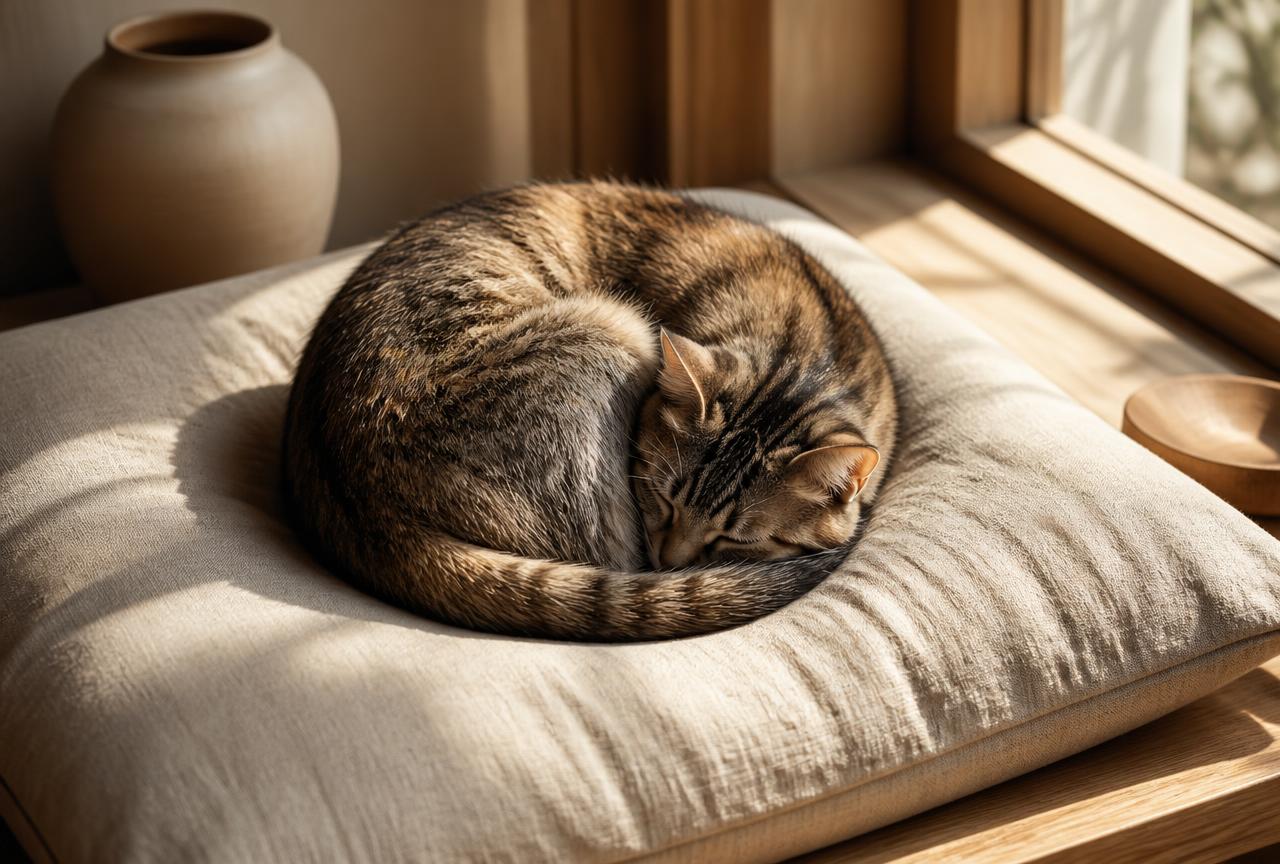
The stare that unnerves people most is the one at 2am. Two things explain it. Cats are crepuscular, most alert at dawn and dusk, so their peaks of watchfulness land when yours are at their lowest. And cats are crepuscular predators with excellent low-light vision: at night they can see you far better than you can see them, and the household's largest, warmest, most interesting object is you.
Most night staring is simply a wakeful animal watching its person, often hoping you will wake up and be entertaining. If it comes with yowling, pacing or restlessness in a senior cat, it belongs in a different conversation, cognitive change and hyperthyroidism both alter night behaviour; our guide to senior cat signals covers the difference.
When a stare is a warning
Between cats, the hard stare is serious, a fixed, unblinking, narrow-eyed look with a stiff body is how fights are announced, and breaking it up calmly (a cushion between sightlines, never hands) is the right move. Aimed at you, a true warning stare is rare and comes with unmistakable company: flattened ears, a low thrashing tail, growling. The correct response is to look away, go still, and give the cat an exit. Staring back escalates; punishment teaches fear.
And one honest veterinary note: a cat that has started staring blankly at walls, pressing its head against surfaces, or seeming lost in familiar rooms is showing something other than communication. New, fixed, vacant staring, especially in an older cat, warrants a vet visit, as does any staring change that arrives with appetite, weight or sleep changes.
The verdict, stare by stare
Soft eyes, slow blink, relaxed body: affection. Blink back. This is the good stuff.
Stare plus pacing or meowing at the bowl or door: a request. Answer on your schedule, not the stare's.
Wide pupils, crouched body, dusk: hunting energy. Ten minutes with a wand toy is the translation it is asking for.
Hard stare, stiff body, growl: a warning. Look away, give space, let it pass.
New, vacant staring at walls in a senior cat: not communication. Book the vet.
The bottom line
Your cat stares because you are the centre of its map, the source of food, warmth, play and safety, and the most unpredictable object in the house. Most of the time the stare is fondness, a request, or a hunter with nothing to hunt. Answer the slow blink, schedule the meals, tire the hunter, and the staring stops being a mystery and becomes the conversation it always was.
Interactive
The stare reader
Eyes, body and context, the three signals that turn an unnerving stare into a readable sentence.
Reading
Contentment, blink back
Soft eyes, a loose body and a slow blink are the cat's way of saying it trusts you. Closing the eyes around another animal is vulnerability, and cats only offer it where they feel safe. Slow-blink back, studies show cats respond to it, and many will return the gesture or approach.
Also worth knowing
- Try the slow-blink conversation: catch your cat's eye, close your eyes slowly, hold a second, open. Many cats blink back. It is the closest thing to a handshake the species offers.
Behavioural guidance, not veterinary advice. A sudden change in staring habits alongside other behaviour changes deserves a vet visit.
Questions people actually ask
Sources
- Scientific Reports, The role of cat eye narrowing movements in cat-human communication (slow-blink study)
- International Cat Care, Understanding feline body language
- American Association of Feline Practitioners, Feline behavior guidelines
- Cornell Feline Health Center, Feline behavior topics
- RSPCA knowledgebase, Understanding cat behaviour and communication
Breeds mentioned
Put it into practice
Read next
Why do cats sleep so much? Normal hours, odd habits and the red flags
Why do cats sleep so much? What 12–16 hours a day really means, the light doze vs deep sleep, and the changes that actually matter.